YouTube AI - 2026-07-11
1. What People Are Talking About
1.1 Cost discipline and owning the stack moved into the mainstream AI story 🡕
Three items supported this theme. Compared with 2026-07-10, when open-weight optionality was mostly framed as provider resilience and routing flexibility, 2026-07-11 pushed harder into explicit budget discipline: recurring AI spend, surprise bills, and the appeal of running more of the stack yourself. That matters because the highest-reach AI video of the day was not a model launch. It was a cost critique.

The Infographics Show supplied the clearest mass-audience version of that argument. Its 14-minute video reached 396,572 views, 10,685 likes, and 1,600 comments while arguing that AI is becoming too expensive to replace human labor at scale. The linked source list includes a Windows Central report on Microsoft's Claude Code pullback toward GitHub Copilot CLI plus outside reporting on AI spending pressure, so the distinctive angle was not anti-AI rhetoric. It was that operating cost is becoming part of the mainstream story around AI adoption (video).
Marina Wyss - AI & Machine Learning carried the same theme into developer tooling. Her 10-minute video reached 9,337 views and framed coding-tool choice around workflow fit, verification, and avoiding surprise bills, while calling out a free Sonar plugin that brings SonarQube analysis directly into Claude Code. The distinctive angle is that "best coding tool" content is shifting away from benchmark tribalism and toward cost control plus real-time verification (video).

Code with Beto showed the most practical ownership path. His 16-minute video reached 8,009 views and used Qwen3.6 27B with LM Studio, MLX, and opencode to build real app features fully offline on a Mac with no subscription required. The distinctive angle is that local coding is now being sold as a daily-use price-control strategy, not a novelty demo (video).
Discussion insight: Across these items, the repeated ask was not to abandon AI. It was to decide which workflows justify ongoing model spend and which should move local, open, or tightly verified.
Comparison to prior day: Compared with 2026-07-10's open-weight optionality theme, 2026-07-11 made subscription avoidance and operating cost much more explicit.
1.2 Verification and safety were framed as engineering control problems 🡕
Two high-reach items supported this theme. Compared with 2026-07-10, when safety discourse spanned cyber-defense, governance, and catastrophic rhetoric at once, 2026-07-11 narrowed toward proof, oversight, and the mechanics of how stronger systems should be evaluated. That matters because the day's strongest safety signal was not a philosophical debate. It was evidence tied to patched software.

Siliconversations supplied the clearest operational evidence. Its 11-minute video reached 78,181 views, 10,948 likes, and 1,100 comments, and Anthropic's linked Project Glasswing page says Claude Mythos Preview identified thousands of zero-day vulnerabilities, including patched flaws in OpenBSD, FFmpeg, and the Linux kernel. The distinctive angle is that safety was presented as defender tooling, trusted access, and patch velocity rather than a vague alignment concern (video).

Bernard Marr translated the same control impulse into a mass-market explainer. His 3-minute video reached 71,871 views and explained reasoning models as systems that break problems into steps, use tools like search and symbolic logic, and still require human oversight for complex tasks. The distinctive angle is that mainstream educational content is now treating "how the model reasons" as a practical product question, not an academic one (video).
Discussion insight: One lane wanted proof in the form of patches and controlled access; the other wanted step-by-step reasoning that humans can supervise. Both point to the same demand: more inspectable AI behavior.
Comparison to prior day: Compared with 2026-07-10's broader mix of governance and extinction framing, 2026-07-11 was more tightly focused on verification and oversight.
1.3 AI sovereignty moved from model bragging to access and chip control 🡕
Three items supported this theme. Compared with 2026-07-10, when China-related coverage was already pushing toward access limits and stack independence, 2026-07-11 widened the sovereignty frame into both policy access and national hardware dependence. That matters because the conversation was no longer just about who had the strongest model. It was about who controls the route to the model.

Matt Wolfe showed the deployment side of that story. His 29-minute video reached 82,188 views, 2,441 likes, and 234 comments while arguing that GLM-5.2's low-cost, 1M-context open-weight setup changes the math for long and code-heavy work. The linked GLM Coding Plan page confirms Z.ai is packaging GLM-5.2 and GLM-5-Turbo specifically for agents and IDEs, so the distinctive signal is optional deployment path - hosted, API, agent harness, or self-hosted - not just raw model quality (video).

Universe of AI made the access risk explicit. Its video reached 9,414 views, and the linked Yahoo/Reuters report says Chinese officials discussed restricting overseas access to advanced AI models from Alibaba, ByteDance, and Z.ai. The distinctive angle is that cheap open-weight supply is now being discussed like a strategic asset that can be withheld, not a permanently global default (video).
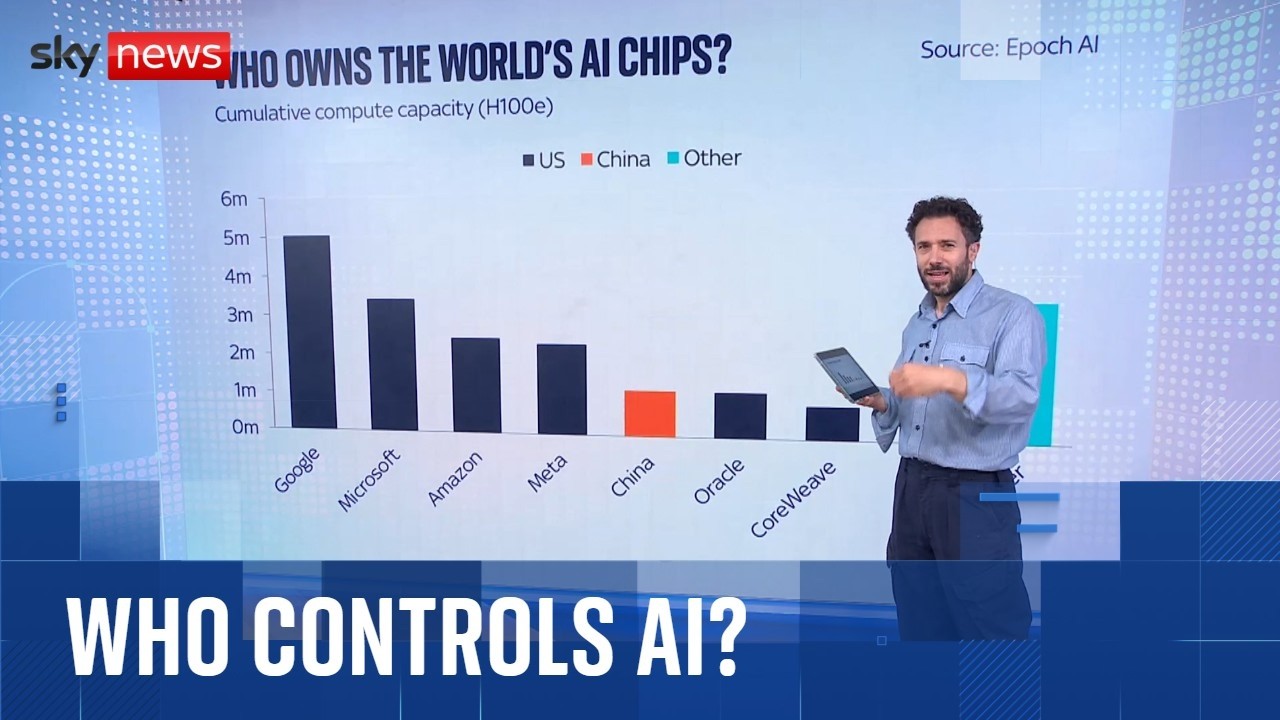
Sky News extended the same logic beyond China. Its 6-minute analysis reached 8,608 views and argued that the UK's AI future depends on chips and hardware supply it does not control, even as Arm remains one of the country's biggest technology winners. The distinctive angle is that sovereignty concerns are now reaching mainstream national-news coverage, not only startup and model commentary (video).
Discussion insight: Across these items, the central question was no longer only which model performs best. It was who controls access, chips, and the rules around where advanced models can run.
Comparison to prior day: Compared with 2026-07-10's China-heavy access story, 2026-07-11 broadened sovereignty into a wider chip-control and national-dependence conversation.
1.4 Local and private assistants became concrete product surfaces 🡕
Three items supported this theme. Compared with 2026-07-10, when local coding agents were the main offline signal, 2026-07-11 extended the local-first story into home automation, dictation, and desktop companions. That matters because "run it yourself" is turning into a product surface, not just a hobbyist preference.

Dad, the engineer supplied the clearest privacy-first build. His 10-minute tutorial reached 9,618 views, 618 likes, and 97 comments while showing a Raspberry Pi 5 plus Home Assistant OS, Ollama, Gemma 4 E2B, Whisper, Piper, openWakeWord, Wyoming, and an ESP32-S3-BOX-3 satellite. The linked worksheet explicitly says the user's voice never leaves the house, making local control - not clever personality - the distinctive angle (video).

Riley Brown carried that same idea into a desktop agent surface. His 21-minute video reached 27,411 views, and the linked RileyJarvis repo describes a local Electron/React/Vite/TypeScript companion with realtime voice, a visual artifact panel, image generation, web search, notes, and optional macOS computer control. The distinctive signal is that the local agent product is the wrapper around voice, artifacts, and action, not only the model underneath it (video).
Better Stack showed the lighter-weight version of the same shift. Its 4-minute video reached 13,137 views and positioned FluidVoice as a free local dictation tool for Mac, while the linked FluidVoice README lists Homebrew install, on-device enhancement, and support for Parakeet, Nemotron, Whisper, and Apple Speech. The distinctive angle is that local-first voice productivity is moving from enthusiast setup into simple app distribution (video).
Discussion insight: Across voice and desktop assistant items, the repeated demand was not more personality. It was inspectability, local control, and useful human-computer I/O that stays close to the device.
Comparison to prior day: Compared with 2026-07-10's local-coding-agent theme, 2026-07-11 widened the local-first story into voice, dictation, and home automation.
1.5 Workflow packaging kept beating raw model talk in both agent and creator content 🡒
Four items supported this theme. Compared with 2026-07-10, this pattern stayed steady: audiences rewarded repeatable systems, guided frameworks, and concrete setup paths more than abstract "best model" claims. That matters because the strongest builder and creator items were all really process stories.
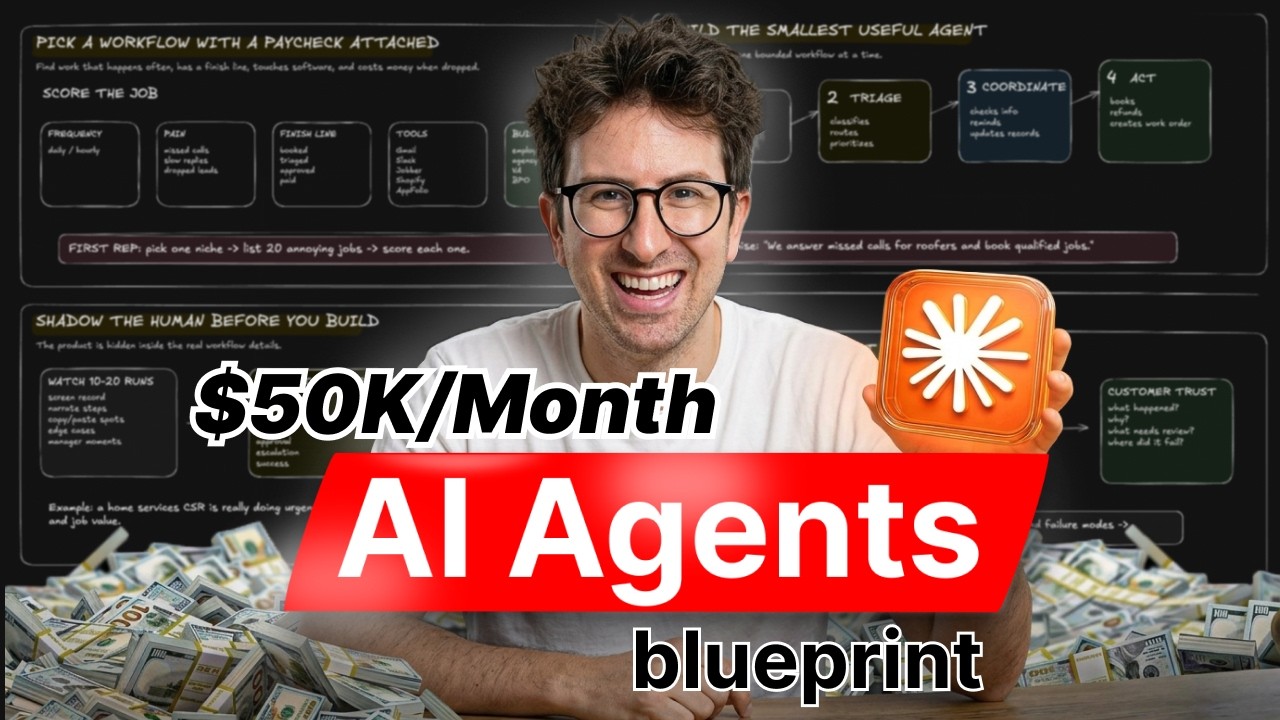
Greg Isenberg supplied the clearest business version of that idea. His 26-minute video reached 87,969 views, 2,492 likes, and 277 comments while arguing that the winning pattern is to find a workflow with a paycheck attached, sell the pilot like labor, and only then productize the repeatable pieces. The distinctive angle is that agentic AI was framed as a go-to-market system, not a feature checklist (video).

IBM Technology turned the same pattern into architecture language. Its 12-minute explainer reached 20,272 views and mapped LangChain, AutoGen, and CrewAI to different workflow, multi-agent, and production constraints rather than treating them as interchangeable buzzwords. The distinctive signal is that framework selection itself is now mainstream educational content (video).

Raj Photo Editing and Much More brought the same packaging logic into creator AI. Its 11-minute tutorial reached 9,724 views, 444 likes, and 54 comments and walked viewers through Higgsfield plus Gemini Omni Flash and Nano Banana 2 Lite to create TV-drama style scenes from prompts and references. The distinctive angle is that creator demand is clustering around end-to-end scene workflows, not only single-click generation (video).
Malva AI completed the pattern from the comparison side. Its video reached 27,668 views, 1,018 likes, and 90 comments by testing several "actually free" generators and explaining the exact setup needed to get useful output. The distinctive angle is that even free-tool videos are no longer just price tips. They are workflow optimization guides (video).
Discussion insight: The day rewarded structured process - sell a workflow, pick a framework, follow a prompt recipe, compare free routes - over vague claims of intelligence.
Comparison to prior day: Compared with 2026-07-10, the workflow-packaging story stayed steady but concentrated even more around repeatable tutorials for both agents and creators.
2. What Frustrates People
AI budgets and subscription fatigue are forcing harder tradeoffs
This is High severity. The Infographics Show, Marina Wyss - AI & Machine Learning, Code with Beto, and Better Stack all point to the same frustration: users like AI outcomes, but they do not want open-ended spend, extra subscriptions, or tool choices that are hard to justify later. The workaround is to compare tools more aggressively, keep some workflows local, and prefer open or free surfaces where possible. This is directly worth building for.
Verification still lags model capability
This is High severity. Siliconversations, Bernard Marr, and Marina Wyss - AI & Machine Learning show the same trust gap from different angles: frontier models can find vulnerabilities, reasoning models need human oversight, and coding tools still need external quality and security checks. The workaround is to add plug-ins, keep humans in the loop, and prefer workflows where reasoning or code output can be inspected before use. This is directly worth building for.
Model and chip access feels fragile under policy and geography
This is High severity. Matt Wolfe, Universe of AI, and Sky News show three versions of the same operating risk: the best low-cost route may depend on a country, a provider, or a hardware supply chain you do not control. The workaround is to keep multiple deployment paths alive at once - hosted, API, self-hosted, and local. This is directly worth building for.
Local-first AI is attractive, but the setup burden is still real
This is Medium severity. Dad, the engineer, Riley Brown, Better Stack, and Code with Beto all make local control look appealing, but each path still involves hardware choices, API keys, permissions, framework glue, or desktop setup. The workaround is to accept more manual assembly in exchange for privacy, lower recurring cost, or inspectability. This is worth building for.
Creator workflows are still fragmented behind "free" and "unlimited" claims
This is Medium severity. Raj Photo Editing and Much More and Malva AI show creators hopping between Higgsfield, prompt packs, comparison videos, and multiple generation modes to avoid paywalls and get controllable results. The workaround is to keep several generation paths ready and optimize around editability, not only headline quality. This is worth building for, but the category is already competitive.
3. What People Wish Existed
Spend-aware AI stack router
The Infographics Show, Marina Wyss - AI & Machine Learning, Code with Beto, and Better Stack all imply demand for one surface that can compare recurring cost, local alternatives, verification overhead, and workflow fit before a team commits to a tool. This is a practical need because cost discipline is already part of how people evaluate AI. Opportunity: direct.
Verification layer for reasoning and coding workflows
Siliconversations, Bernard Marr, and Marina Wyss - AI & Machine Learning imply a missing layer that can show what a model did, how it reasoned, which checks passed, and where security or quality analysis still needs to intervene. The urgency is High because the models are already useful enough to act before users fully trust them. Opportunity: direct.
Sovereignty-aware model access and chip-dependency map
Matt Wolfe, Universe of AI, and Sky News all imply a need for tooling that can show which models are cheap, which are available in a given geography, and where chip or policy dependency creates real operating risk. This is a practical need because model choice is now tied to both economics and national-control questions. Opportunity: direct.
One-click private assistant stack
Dad, the engineer, Riley Brown, Better Stack, and Code with Beto show demand for one route that bundles local voice, local coding, artifact visibility, permissions, and setup defaults into a simpler workstation. This is a practical need because people are clearly willing to trade convenience for control, but they still have to assemble too much by hand. Opportunity: direct.
Creator pipeline for free generation plus editability
Raj Photo Editing and Much More and Malva AI show creators wanting one path that combines low-cost generation, prompt reuse, scene control, and outputs they can keep iterating on without watermark or credit anxiety. The urgency is High because the examples are specific and repeated, but the category is already noisy. Opportunity: competitive.
4. Tools and Methods in Use
| Tool | Category | Sentiment | Strengths | Limitations |
|---|---|---|---|---|
| FluidVoice | Voice dictation app | (+) | Local-first dictation, Homebrew install, multiple speech models, on-device enhancement | macOS-focused, permission-heavy, advanced enhancement layer is not fully open |
| RileyJarvis | Local desktop assistant | (+/-) | Realtime voice, artifact panel, notes, image generation, optional computer control | macOS-only and still dependent on API keys and setup |
| Home Assistant + Ollama + Gemma 4 E2B + Whisper/Piper/openWakeWord | Local voice stack | (+) | Entirely local voice assistant with clear modular pieces | Hardware limits and substantial assembly work |
| Qwen3.6 27B + LM Studio + MLX + opencode | Local coding stack | (+) | Fully offline coding workflow with no subscription | Requires capable hardware and manual stack setup |
| Project Glasswing / Claude Mythos Preview | Cybersecurity workflow | (+/-) | Autonomous vulnerability discovery with concrete defender value | Restricted access and obvious dual-use risk |
| GLM-5.2 / GLM Coding Plan | Open-weight coding model | (+/-) | 1M context and multiple deployment paths for agents and IDEs | Availability depends on provider and policy conditions |
| LangChain / AutoGen / CrewAI | Agent framework layer | (+/-) | Clearer mapping between workflow automation, multi-agent coordination, and production setups | Choice overload and architecture complexity |
| Sonar Claude Code plugin | Code verification | (+/-) | Adds security and code-quality checks directly into Claude Code workflows | Solves only one slice of a broader evaluation problem |
| Higgsfield + Gemini Omni Flash | AI video workflow | (+/-) | Generation, editing, and scene-building inside one creative suite | Fast-moving limits and crowded "free" positioning |
| WUJIHAND2 | Robotics hardware | (+/-) | 20 active DOFs and explicit focus on human-hand mechanics | Dexterity remains the bottleneck and hardware progress is slow |
The most positive sentiment clustered around tools that increase user control: FluidVoice, local Home Assistant voice setups, Qwen-on-Mac coding, and RileyJarvis-style local companions. Sentiment turned mixed whenever value depended on unstable access, heavy orchestration, or policy risk, which is why GLM-5.2, Glasswing, framework stacks, and creator suites were discussed as powerful but not settled defaults.
The most common workaround pattern was to keep more than one path alive at once. People combine local and hosted routes, attach verification to coding workflows, use frameworks only after defining the workflow, and keep several creator pipelines ready so they can switch when pricing or limits change. Migration pressure is visible in three directions: from subscription-first AI toward local or open surfaces, from single-tool loyalty toward side-by-side comparison and routing, and from raw model talk toward packaged workflows that operators can actually repeat.
5. What People Are Building
| Project | Who built it | What it does | Problem it solves | Stack | Stage | Links |
|---|---|---|---|---|---|---|
| FluidVoice | altic-dev | Local macOS dictation app with on-device AI enhancement | Users want private voice input without recurring dictation subscriptions | Native macOS app, Homebrew distribution, Parakeet, Nemotron, Whisper, Apple Speech, optional local enhancement | Shipped | repo, video |
| RileyJarvis | Riley Brown | Local desktop AI companion with voice, artifacts, notes, search, and optional computer control | Builders want an inspectable assistant surface that can talk, show work, and act | Electron, React, Vite, TypeScript, OpenAI Realtime API, Exa | Alpha | repo, video |
| Project Glasswing | Anthropic | Trusted-defender program using Mythos Preview to find and fix vulnerabilities | Defenders need AI-speed vulnerability discovery before attackers get the same edge | Claude Mythos Preview, red-team workflows, partner access | Beta | site, video |
| GLM-5.2 / GLM Coding Plan | Z.ai | Lower-cost long-context model packaged for agents and IDEs | Teams want frontier-adjacent coding and agent performance without frontier pricing | Hosted app, API, agent harness, self-hosting, 1M context | Shipped | site, video |
| Local Home Assistant voice assistant | Dad, the engineer | Tutorialized private voice assistant that keeps speech on local hardware | People want smart-speaker convenience without cloud microphones | Raspberry Pi 5, Home Assistant OS, Ollama, Gemma 4 E2B, Whisper, Piper, openWakeWord, Wyoming, ESP32-S3-BOX-3 | Alpha | worksheet, video |
| Higgsfield creative suite | Higgsfield | AI-native suite for image, video, and voice generation plus editing workflows | Creators want controllable scene-building instead of one-shot output | Web creative suite, Gemini Omni Flash, Nano Banana, creative automation | Shipped | site, video |
| WUJIHAND2 | WUJITECH | Dexterous robot hand designed around human-hand mechanics | Embodied AI still needs fine motor control before broader deployment | Robotic hand hardware, 20 active DOFs, dexterity stack | Beta | site, video |
FluidVoice, RileyJarvis, and the Home Assistant voice build show one repeated pattern: builders are productizing control surfaces around AI, not just exposing a model endpoint. Voice, artifacts, notes, permissions, and local execution are becoming the product.
Project Glasswing and GLM-5.2 show a second repeated pattern: the valuable build is often the operating wrapper around the model. In one case that wrapper is trusted defender access and remediation workflow; in the other it is flexible deployment across agents and IDEs.
Higgsfield and WUJIHAND2 show a third pattern: the real gap is often workflow or hardware control rather than raw generation. Creator tools are competing on editability and scene construction, while robotics builders are still competing on dexterity.
6. New and Notable
Cost realism reached the broadest audience of the day
The Infographics Show is notable because a skeptical video about AI replacement economics reached 396,572 views. The day's biggest AI audience did not go to a new model release. It went to a story about operating cost.
Glasswing kept safety unusually concrete
Siliconversations is notable because the linked Glasswing material claims thousands of zero-days, including patched flaws in OpenBSD, FFmpeg, and the Linux kernel. That is a much more operational safety story than generic "AI risk" coverage.
Local-first assistants stopped looking hypothetical
Dad, the engineer, Riley Brown, and Better Stack are notable together because they cover three different local surfaces - home assistant, desktop companion, and dictation app - with concrete stacks instead of abstract privacy claims.
Higgsfield looked less like a single tool and more like a creator hub
Raj Photo Editing and Much More and Malva AI are notable together because both route creators through Higgsfield-centered workflows rather than just naming a favorite video model. The product surface itself is becoming the story.
AI sovereignty widened beyond China-only coverage
Universe of AI and Sky News are notable together because they link access restrictions, national dependence, and chip control into one operating narrative. The sovereignty frame is no longer limited to specialist China-watch content.
7. Where the Opportunities Are
[+++] Spend-aware local-first AI workbench - The Infographics Show, Marina Wyss - AI & Machine Learning, Code with Beto, and Better Stack show that cost, workflow fit, and local alternatives are now part of everyday AI buying decisions. This is strong because the pain appears across software development, dictation, and general AI commentary at once.
[+++] Verification layer for high-capability AI workflows - Siliconversations, Bernard Marr, and Marina Wyss - AI & Machine Learning all point to a missing control plane for reasoning traces, code quality, and security verification. This is strong because useful systems are already acting before trust catches up.
[+++] Sovereignty-aware routing and procurement map - Matt Wolfe, Universe of AI, and Sky News show model choice, chip dependency, and geography risk collapsing into one operating problem. This is strong because the same pain now appears in startup tooling, national policy coverage, and deployment strategy.
[++] One-click local assistant stack - Dad, the engineer, Riley Brown, Better Stack, and Code with Beto show demand for a cleaner path to private voice, local coding, and artifact-rich assistants. This is moderate because the need is clear, but users can already assemble a version of it if they tolerate setup pain.
[++] Workflow-packaging OS for agents and creators - Greg Isenberg, IBM Technology, Raj Photo Editing and Much More, and Malva AI all show that repeatable process beats raw model talk. This is moderate because the pattern is strong, but the surrounding tool landscape is already crowded and fast-moving.
[+] Dexterity-focused robotics subsystems - PRO ROBOTS adds an emerging signal that embodied AI may unlock faster through narrower components such as dexterous hands than through full humanoid autonomy. This is emerging because the bottleneck is concrete, but the supporting evidence in this dataset is still concentrated.
8. Takeaways
- AI economics became a front-page content angle, not just an internal ops concern. The strongest-reach video of the day argued that operating cost changes the replacement story, while lower-reach developer videos focused on surprise bills and local alternatives. (source, source, source)
- Control and verification are rising alongside capability. The day's strongest safety and reasoning items centered on patched vulnerabilities, trusted access, reasoning steps, and human oversight rather than only abstract AI risk. (source, source)
- Sovereignty is now an access-and-chips problem as much as a model problem. Open-weight deployment flexibility, possible restrictions on overseas access to Chinese models, and UK chip dependence all point to the same operational risk. (source, source, source)
- Local-first AI is broadening into a real product category. The dataset covered private voice assistants, local desktop companions, local dictation, and fully offline coding rather than only one isolated offline demo. (source, source, source, source)
- Workflow packaging keeps outperforming vague model hype. The strongest agent and creator items all won by showing repeatable systems: sell a pilot, choose a framework, follow a creator workflow, or compare several free routes with explicit setup steps. (source, source, source, source)