YouTube AI - 2026-07-12
1. What People Are Talking About
1.1 Inspectability became the shared language across safety, reasoning, and inference 🡕
Four items supported this theme. Compared with 2026-07-11, when verification talk centered on patched software, reasoning steps, and human oversight, 2026-07-12 widened the same control impulse into the actual mechanics of inference and in-editor code verification. That matters because one of the day's highest-reach explainers was not a model launch. It was KV cache.

Siliconversations supplied the clearest operational evidence. Its 11-minute video reached 79,307 views, 11,042 likes, and 1,100 comments, and Anthropic's linked Project Glasswing page says Claude Mythos Preview identified thousands of zero-day vulnerabilities across major operating systems and browsers, including patched OpenBSD, FFmpeg, and Linux kernel flaws. The distinctive angle is that frontier-model safety was again framed as defender tooling and trusted access, not as a vague alignment debate (video).

Bernard Marr translated the same control instinct into a mass-market explainer. His 3-minute video reached 71,873 views and explained reasoning models as systems that break problems into steps, use tools such as search and symbolic logic, and still need human oversight for complex tasks. The distinctive angle is that the audience still wants conceptual proof about how the model works before it grants broader automation claims (video).

IBM Technology pushed the same theme into the runtime layer. Its 11-minute explainer reached 85,282 views, 2,833 likes, and 165 comments, and IBM's linked LLM inference page says KV cache stores prior attention states so decoding can avoid redundant work while vLLM-class serving stacks optimize latency, throughput, and GPU memory efficiency. The distinctive angle is that inference plumbing itself is now mainstream AI content, not only specialist infrastructure talk (video).
Marina Wyss - AI & Machine Learning carried that same demand into developer workflows. Her 10-minute video reached 10,452 views and argued that coding-tool choice should be based on workflow fit, verification, and recurring cost, while the linked Sonar plugin brings SonarQube security and code-quality analysis directly into Claude Code. The distinctive angle is that verification is being sold as part of the coding surface itself, not as a separate audit step (video).
Discussion insight: Across these items, the repeated ask was not simply for stronger models. It was for models whose reasoning, runtime behavior, and code output can be inspected before trust is extended.
Comparison to prior day: Compared with 2026-07-11's safety-and-oversight framing, 2026-07-12 broadened the same control story into inference mechanics and in-editor verification.
1.2 AI sovereignty got more concrete at the chip-and-deployment layer 🡕
Four items supported this theme. Compared with 2026-07-11, when sovereignty mostly meant access restrictions and chip dependence in the abstract, 2026-07-12 drilled further into deployment choices and specialized hardware. That matters because the conversation was no longer only about who can use the model. It was about what stack the model sits on.

Matt Wolfe supplied the clearest deployment-side example. His 29-minute video reached 83,675 views, 2,477 likes, and 234 comments while testing GLM-5.2 as a low-cost, 1M-token open-weight model, and Z.ai's linked GLM Coding Plan explicitly packages GLM-5.2 and GLM-5-Turbo for agents and IDEs. The distinctive signal is optionality across hosted, API, agent-harness, and self-hosted paths rather than benchmark bragging alone (video).

Universe of AI made the access risk explicit. Its video reached 9,583 views, and the linked Reuters reporting via Yahoo Finance says Chinese authorities discussed restricting overseas access to advanced models from Alibaba, ByteDance, and Z.ai while also considering tougher penalties for AI theft. The distinctive angle is that open-weight excitement is now being narrated alongside national-asset controls, not outside them (video).
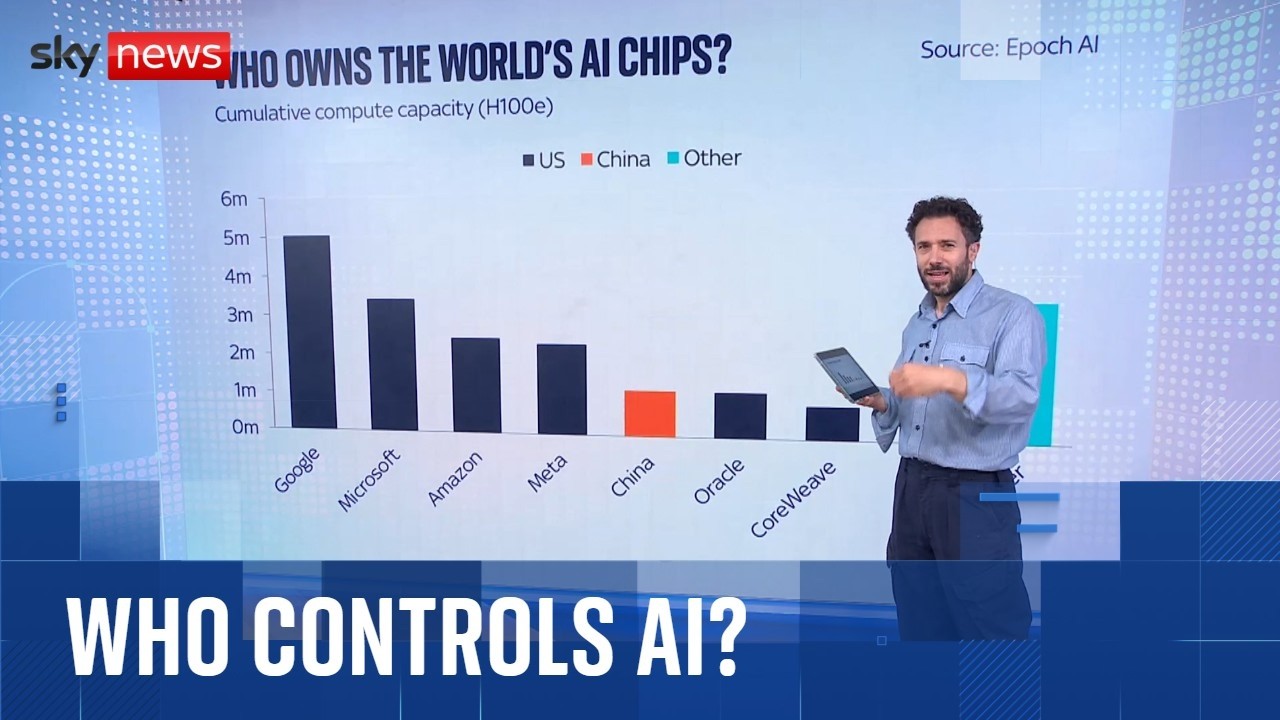
Sky News extended the same logic into mainstream politics. Its 6-minute segment reached 14,966 views and argued that Britain's AI future still depends on chips and hardware supply it does not control, even with Arm as a national success story. The distinctive angle is that sovereignty concerns are now being explained to a general-news audience through hardware ownership, not just through model geopolitics (video).

Evolving AI showed the specialized-hardware version of the same shift. Its 11-minute video reached 9,018 views and argued that Google's eighth-generation TPU line is splitting training and inference into distinct chip families, with TPU 8t and TPU 8i presented as purpose-built infrastructure rather than a one-chip answer. The distinctive angle is that the chip race is being framed around specialization and systems design, not only raw accelerator speed (video).
Discussion insight: Across these items, model choice, export-style risk, and chip specialization were collapsing into one operating problem: which route stays available, affordable, and performant enough to trust.
Comparison to prior day: Compared with 2026-07-11's broader sovereignty framing, 2026-07-12 spent more time on the deployment and hardware layers that make sovereignty tangible.
1.3 Agentic AI was pitched as practical work, not just a flashy demo 🡕
Four items supported this theme. Compared with 2026-07-11's workflow-packaging story, 2026-07-12 moved closer to labor: jobs, freelancing, support automation, and reusable production systems. That matters because the feed treated agents less like assistants you casually chat with and more like work surfaces you configure around a task.

Riley Brown supplied the clearest desktop-agent product signal. His 21-minute video reached 27,882 views, and the linked RileyJarvis README describes a local Electron, React, Vite, and TypeScript companion with realtime voice, a visual artifact panel, image generation, web search, notes, and optional macOS computer control. The distinctive signal is that the product is the wrapper around voice, artifacts, and action rather than the model alone (video).

Saumya Singh pushed the same idea into service work. Her 24-minute tutorial reached 12,994 views, 918 likes, and 277 comments while framing AI voice agents as a practical skill for freelancing, internships, and business support, using ElevenLabs' linked ElevenAgents platform as the build surface. The distinctive angle is that "AI agents" were presented as a work opportunity with a concrete platform and buyer story, not as abstract future-of-work rhetoric (video).

Tech With Tim carried the theme into career framing. His 15-minute video reached 5,806 views and argued that AI engineering is still mostly software engineering, describing the role as "20% AI and 80% regular software engineering" with RAG, vector databases, agents, and LLMOps layered on top. The distinctive angle is that the labor narrative around AI is shifting from replacement fear toward skill repackaging (video).
Cole Medin showed the most unusual extension of that pattern. His 14-minute video reached 1,304 views and pointed to the linked AI Content Factory and Archon repos, which use an AI coding harness plus Higgsfield to explore ad concepts cheaply, park them at a human approval gate, and render only approved winners into video. The distinctive signal is that coding harnesses are being reframed as general workflow engines for non-coding work (video).
Discussion insight: The repeated message was that the valuable layer is the workflow wrapper around the model call: voice, artifacts, approval gates, domain-specific tasks, and human checkpoints.
Comparison to prior day: Compared with 2026-07-11's broader workflow-packaging theme, 2026-07-12 pushed further into jobs, service work, and repeatable operating systems for agent labor.
1.4 Creator AI stayed trapped in "free video" competition, but orchestration was the real differentiator 🡒
Three items supported this theme. Compared with 2026-07-11, the creator lane stayed locked on free or unlimited AI video, but 2026-07-12 made the differentiator clearer: the useful product is the workflow around editing, reuse, and avoiding paywalls, not only the model brand. That matters because the strongest creator examples were really operating guides.

Malva AI supplied the clearest high-reach example. Its 12-minute comparison reached 43,097 views, 1,427 likes, and 127 comments while testing multiple supposedly free generators and using Higgsfield's linked creative suite as part of the workflow, including Gemini Omni Flash editing. The distinctive angle is that creator value came from knowing the exact setup that still works, not from allegiance to one headline model (video).

Mehak Ai Studio showed the workaround version of that story. Its 7-minute tutorial reached 3,550 views and pitched Vibes AI as a route to free, unlimited, no-watermark video generation after creator attention shifted away from Meta AI's earlier flow. The distinctive angle is that creators were being taught how to preserve editability and output rights when the default route changed (video).

F. Guide independently reinforced the same behavior. Its 7-minute tutorial reached 2,194 views and again framed Vibes AI as the answer once Meta AI video generation felt less available. The distinctive angle is not the product depth of Vibes AI itself. It is that the audience keeps chasing whatever route still appears free, simple, and reusable (video).
Discussion insight: In creator AI, "free" is now a moving target, so the real value shifts to whoever can show a repeatable route that survives changing limits, pricing, or access rules.
Comparison to prior day: Compared with 2026-07-11, the creator story stayed steady on price sensitivity but concentrated even more around workaround surfaces and setup knowledge.
2. What Frustrates People
Verification still trails model capability and system speed
This is High severity. Siliconversations, Bernard Marr, IBM Technology, and Marina Wyss - AI & Machine Learning all point to the same gap: models are getting stronger and inference stacks are getting faster, but users still need more proof about reasoning quality, runtime behavior, and code safety before they fully trust the output. The workaround is to keep humans in the loop, add verification plugins, and prefer workflows where the system shows more of its work. This is directly worth building for.
Cheap or open deployment paths still feel fragile under policy and chip dependence
This is High severity. Matt Wolfe, Universe of AI, Sky News, and Evolving AI show the same operating risk from four angles: the attractive model may be cheap, but access can tighten, national rules can shift, and the hardware layer may be controlled by someone else. The workaround is to keep multiple deployment paths alive at once and to treat routing, hosting, and hardware planning as part of the product decision. This is directly worth building for.
Useful agent workflows still require too much assembly work
This is High severity. Riley Brown, Saumya Singh, Tech With Tim, Cole Medin, and Code with Beto all make agentic AI look practical, but every path still involves API keys, local setup, workflow logic, hardware constraints, approval gates, or role-specific retraining. The workaround is to stitch together platforms, local tools, and custom harnesses, then accept more manual integration than the marketing language implies. This is directly worth building for.
Creator workflows are still fragmented behind "free" and "unlimited" claims
This is Medium severity. Malva AI, Mehak Ai Studio, F. Guide, and Cole Medin show creators constantly optimizing around limits: free tiers disappear, watermark rules change, and expensive video renders have to be gated behind cheaper experimentation. The workaround is to keep several generation routes ready and to move expensive steps later in the workflow. This is worth building for, but the category is already crowded.
3. What People Wish Existed
Inspection-first control plane for AI workflows
Siliconversations, Bernard Marr, IBM Technology, and Marina Wyss - AI & Machine Learning all imply demand for one layer that can show how a model reasoned, what runtime optimizations are in play, which checks passed, and where code or security review still needs to intervene. This is a practical need because models are already fast and useful enough to act before users fully trust them. Opportunity: direct.
Sovereignty-aware model and chip routing map
Matt Wolfe, Universe of AI, Sky News, and Evolving AI all imply a need for tooling that can compare model cost, geography risk, hosting options, and chip dependence in one place. This is a practical need because deployment choice is now tied to both economics and national-control questions. Opportunity: direct.
One workbench for voice agents, local coding, and artifact-rich assistants
Riley Brown, Saumya Singh, Tech With Tim, and Code with Beto imply demand for a simpler route that bundles local-versus-hosted choices, voice, artifact visibility, web search, permissions, and workflow defaults into one operator surface. This is a practical need because people clearly want useful agent labor, but they still have to assemble too much by hand. Opportunity: direct.
Approval-gated creator pipeline that survives changing limits
Malva AI, Mehak Ai Studio, F. Guide, and Cole Medin imply a need for creator tooling that tracks which routes are still usable, reuses prompts and assets, front-loads cheap exploration, and only spends on expensive renders after approval. The urgency is High because the examples are specific and repeated, but the category is already noisy. Opportunity: competitive.
4. Tools and Methods in Use
| Tool | Category | Sentiment | Strengths | Limitations |
|---|---|---|---|---|
| Project Glasswing / Claude Mythos Preview | Cybersecurity workflow | (+/-) | Autonomous vulnerability discovery with concrete defender value and patched examples | Restricted access and obvious dual-use risk |
| KV cache + paged attention / vLLM-style serving | Inference method | (+) | Faster decoding, lower latency, better throughput, less redundant computation | Still memory-heavy and infrastructure-complex |
| GLM-5.2 / GLM Coding Plan | Open-weight coding model | (+/-) | Low-cost long context and multiple deployment paths for agents and IDEs | Availability and policy risk remain part of the decision |
| Sonar Claude Code plugin | Code verification | (+/-) | Security and code-quality checks inside Claude Code workflows | Solves only one slice of a broader evaluation stack |
| RileyJarvis | Local desktop assistant | (+/-) | Realtime voice, artifact panel, notes, search, optional computer control | macOS-only and still dependent on API keys and permissions |
| ElevenAgents | Voice/chat agent platform | (+/-) | Fast deployment, guardrails, analytics, integrations, and multilingual support | Platform dependency and business-workflow bias; economics are not the story in the video |
| Qwen3.6 27B + LM Studio + MLX + opencode | Local coding stack | (+) | Fully offline coding workflow with privacy and no subscription | Requires capable local hardware and manual setup |
| Archon + AI Content Factory | Agent workflow harness | (+/-) | Repeatable workflow engine, approval gates, cheap-to-expensive staging | Still needs workflow design, CLI setup, and human curation |
| Higgsfield | AI creative suite | (+/-) | Image, video, and voice generation plus editing and automation | Fast-moving limits and crowded creator-tool competition |
| Vibes AI | AI video app | (+/-) | Perceived as a no-watermark, low-friction route for creators | Product depth is less clear than the workaround story around it |
| Google TPU 8t / TPU 8i | AI hardware | (+/-) | Specialized training and inference split signals a purpose-built stack | Capital-intensive and relevant mainly to infrastructure operators |
The most positive sentiment clustered around tools that increase operator control: Glasswing for defenders, KV-cache-style serving improvements for runtime efficiency, Qwen-on-Mac local coding, and RileyJarvis-style assistants that keep artifacts visible. Sentiment turned mixed whenever value depended on unstable access, platform limits, or heavy orchestration, which is why GLM-5.2, ElevenAgents, Vibes AI, and creator suites were discussed as powerful but not settled defaults.
The most common workaround pattern was to keep more than one route alive at once. People pair hosted and local coding paths, bolt verification onto fast-moving AI workflows, use approval gates before expensive generation, and treat model choice, hosting choice, and hardware choice as one linked decision. Migration pressure is visible in four directions: from benchmark talk toward workflow surfaces, from single-provider dependence toward optional deployment paths, from one-shot creator tools toward editable suites and harnesses, and from generic GPU narratives toward specialized inference and training stacks.
5. What People Are Building
| Project | Who built it | What it does | Problem it solves | Stack | Stage | Links |
|---|---|---|---|---|---|---|
| RileyJarvis | Riley Brown | Local desktop AI companion with voice, artifacts, notes, search, and optional computer control | Builders want an inspectable assistant surface that can talk, show work, and act | Electron, React, Vite, TypeScript, OpenAI Realtime API, Exa | Alpha | repo, video |
| AI Content Factory | Cole Medin | Turns a product catalog into human-approved AI video ads with staged exploration and rendering | Creators and marketers need automation that controls spend before video generation | Archon, Higgsfield CLI, workflow DAGs, approval gates, vision scoring | Alpha | repo, video |
| Project Glasswing | Anthropic | Trusted-defender program that uses Mythos Preview to find and fix vulnerabilities | Defenders need AI-speed vulnerability discovery before attackers get the same edge | Claude Mythos Preview, security workflows, partner access | Beta | site, video |
| GLM-5.2 / GLM Coding Plan | Z.ai | Lower-cost long-context coding model packaged for agents and IDEs | Teams want flexible coding and agent performance without frontier-model pricing | GLM-5.2, GLM-5-Turbo, hosted app, API, agent harness, self-hosting | Shipped | site, video |
| ElevenAgents | ElevenLabs | Voice and chat agent platform for support, sales, and operations | Teams want deployable human-sounding voice agents with guardrails and analytics | Voice/chat agent platform, integrations, guardrails, analytics, multilingual support | Shipped | site, video |
| Higgsfield creative suite | Higgsfield | AI-native suite for image, video, and voice generation plus editing and automation | Creators want controllable, reusable media workflows instead of one-shot outputs | Web and mobile suite, Gemini Omni Flash, plugins, MCP/CLI, automation surfaces | Shipped | site, video |
RileyJarvis and ElevenAgents show one repeated pattern: the useful agent product is a surface around the model, not the model by itself. Voice, artifacts, guardrails, permissions, and workflow context are becoming the actual product.
AI Content Factory, Project Glasswing, and GLM-5.2 show a second pattern: the value increasingly lives in the operating wrapper around the model. In one case that wrapper is a trusted-defender program, in another it is flexible deployment for coding, and in another it is an approval-gated media factory.
Higgsfield shows a third pattern: creator AI keeps moving toward reusable workflow systems rather than isolated generation buttons. Editing, automation, and staged cost control matter as much as the underlying model roster.
6. New and Notable
Inference internals reached mainstream explainer scale
IBM Technology is notable because an 85,282-view AI explainer was about KV cache, paged attention, and GPU memory behavior. Runtime mechanics themselves are now audience-facing content.
Coding harnesses crossed into marketing automation
Cole Medin is notable because the linked AI Content Factory reframes Claude Code and Archon as a product-catalog-to-video pipeline with approval gates. That is a strong signal that agent harnesses are escaping pure software-development use cases.
Voice agents were sold as a realistic entry point to paid AI work
Saumya Singh and Tech With Tim are notable together because both treat AI work as a practical skills package: one through voice-agent freelancing and one through an AI-engineer career bridge for software developers.
The creator lane kept clustering around workaround surfaces
Malva AI, Mehak Ai Studio, and F. Guide are notable together because the conversation kept orbiting "still free" and "still unlimited" routes rather than a single dominant model. The workflow surface is becoming the story.
Sovereignty concerns kept moving into general-news coverage
Sky News is notable because chip dependence was explained to a broad audience as a national operating issue, while Universe of AI tied the same story to potential restrictions on overseas model access.
7. Where the Opportunities Are
[+++] Verification and observability layer for AI workflows - Siliconversations, Bernard Marr, IBM Technology, and Marina Wyss - AI & Machine Learning all point to the same missing layer: users want systems that expose reasoning, runtime behavior, and code-quality checks before trust is granted. This is strong because it appears across safety, infrastructure, and coding content at once.
[+++] Sovereignty-aware deployment and procurement planner - Matt Wolfe, Universe of AI, Sky News, and Evolving AI show model choice, hosting choice, and chip dependence collapsing into one operating problem. This is strong because the same pain now appears in startup tooling, national policy coverage, and hardware explainers.
[+++] Unified agent workbench for practical AI labor - Riley Brown, Saumya Singh, Tech With Tim, Cole Medin, and Code with Beto show demand for one surface that can combine voice, artifacts, local or hosted execution, approval gates, and role-specific defaults. This is strong because the need spans assistants, freelancing, coding, and marketing workflows.
[++] Approval-gated creator automation stack - Malva AI, Mehak Ai Studio, F. Guide, and Cole Medin show that creators still need repeatable routes through changing free tiers and expensive render steps. This is moderate because the demand is obvious, but the surrounding tool market is already crowded and fast-moving.
[+] Inference-performance visibility for application teams - IBM Technology and Evolving AI suggest an emerging opportunity for products that translate serving internals, cost tradeoffs, and hardware choices into application-team decisions. This is emerging because the reach is high, but the demand is still more educational than directly transactional.
8. Takeaways
- Inspectability is still the clearest bridge between AI capability and trust. The strongest safety, reasoning, and inference items all emphasized showing more of the system's work, whether through patched vulnerabilities, step-by-step reasoning, or explicit runtime mechanics. (source, source, source, source)
- Sovereignty has become a deployment-and-chip question, not just a model-origin question. Open-weight model access, hosting flexibility, export-style risk, and specialized TPU design all pointed to the same operational problem. (source, source, source, source)
- Agentic AI is being sold as practical labor infrastructure. The day's agent content clustered around local assistants, voice-agent work, AI-engineer career paths, and approval-gated marketing factories rather than around generic chat demos. (source, source, source, source)
- Creator AI still runs on workaround knowledge as much as on model quality. The strongest creator items focused on which route was still free, still editable, and still worth the setup effort rather than on a single winning generator. (source, source, source)
- The wrapper around the model keeps becoming the product. Across coding, security, creator, and support workflows, the differentiator was the surface that adds deployment options, artifacts, approval gates, or guardrails around the model call. (source, source, source, source)