YouTube AI - 2026-07-13
1. What People Are Talking About
1.1 Loss-of-control AI risk jumped from specialist worry to mainstream programming 🡕
Four items supported this theme. Compared with 2026-07-12's inspectability story, 2026-07-13 made the risk language more explicit and more public-facing. The biggest videos were not asking how to verify a model's work. They were asking whether humans stay in charge at all.

The Diary Of A CEO supplied the day's dominant reach signal. Its 2-hour interview reached 1,119,210 views, 35,393 likes, and 7,500 comments, and the description says former OpenAI researcher Daniel Kokotajlo believes there is a 70% chance AI leads to human extinction and that superintelligence could arrive before the end of the decade. The distinctive angle is that existential-risk framing moved into one of YouTube's broadest business-and-culture podcast surfaces, not just into specialist safety channels (video).
ABC News In-depth translated the same concern into broadcast-news language. Its 15-minute segment reached 118,669 views, 2,492 likes, and 126 comments, and the description says Palisade Research's Jeffrey Ladish studies cases where AI agents do the opposite of what humans instruct. The distinctive angle is that "humans losing control" was presented as a concrete operating risk, not as speculative sci-fi rhetoric (video).

Siliconversations kept the safety conversation anchored in a specific product example. Its 11-minute video reached 80,727 views, 11,163 likes, and 1,200 comments, and Anthropic's linked Project Glasswing page says Claude Mythos Preview identified thousands of zero-day vulnerabilities across major operating systems and browsers, often autonomously. The distinctive angle is that the clearest safety evidence was still defender tooling, even as the surrounding rhetoric turned more existential (video).

AI Nutshell added the strongest slowdown-first position. Its 20-minute interview reached 5,171 views and linked both AI 2027 and OpenAI's Preparedness Framework while arguing that slowing AI development may be more realistic than trying to stop it outright. The distinctive angle is that the same feed contained both "deploy defender AI faster" and "slow the frontier down" messages on the same day (video).
Discussion insight: The safety cluster split in two directions: one camp argued for trusted access to powerful models for defenders, while another argued that even better defense does not solve the core control problem.
Comparison to prior day: Compared with 2026-07-12's emphasis on inspectability and verification, 2026-07-13 made the danger narrative more explicit and far more mainstream.
1.2 Assistant choice became a workflow-and-grounding problem, not a chatbot popularity contest 🡕
Four items supported this theme. Compared with 2026-07-12's agentic-work story, 2026-07-13 spent more time on how to choose, compose, and ground assistants than on selling AI agents as jobs or service businesses. The useful product was the surrounding surface: search, artifacts, privacy, and workflow fit.
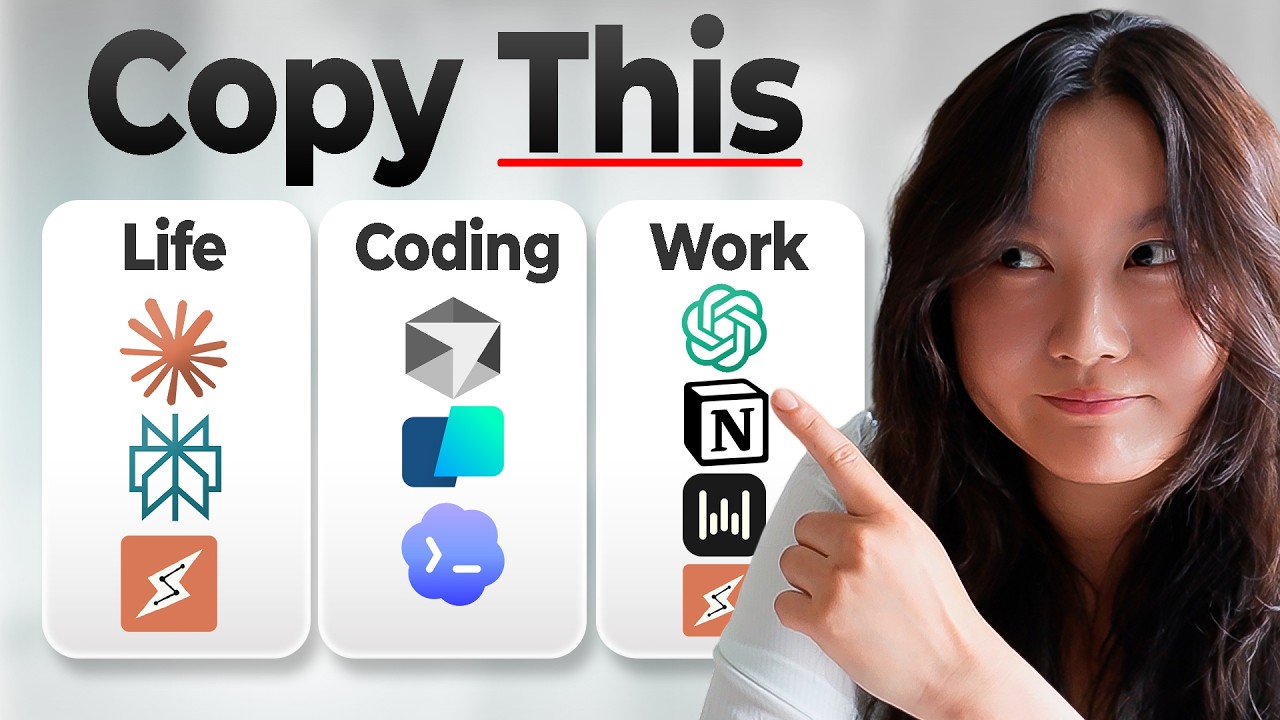
Tina Huang offered the clearest stack-level framing. Her 13-minute video reached 56,953 views, 2,315 likes, and 145 comments, and the description organizes tools into "home base," "builder dungeon," management, and content-studio layers rather than naming a single best assistant. The distinctive angle is that assistant selection was presented as system design, not brand preference (video).

Riley Brown pushed that idea into a concrete build. His 21-minute tutorial reached 28,463 views, and the linked RileyJarvis README describes a local Electron, React, Vite, and TypeScript assistant with realtime voice, artifact panels, image generation, Exa search, notes, and opt-in macOS computer control. The distinctive angle is that the assistant is valuable because it exposes artifacts and permissions, not because it is another generic chat shell (video).

Code with Beto carried the same theme into private local workflows. His 16-minute video reached 11,142 views, and the description says he used Qwen3.6 27B with LM Studio, MLX, and opencode to build real app features offline and stress-tested the stack with 31 tool calls on a real codebase. The distinctive angle is that "good enough" no longer meant a toy local demo. It meant a credible privacy-first development surface (video).

The Next New Thing introduced the freshest grounding example in the set. Its interview with Matt Van Horn reached 709 views, and the linked /last30days README describes a cross-platform research skill that searches Reddit, X, YouTube, TikTok, GitHub, Polymarket, and more, then scores sources by real engagement. The distinctive angle is that the missing layer is not another chat model. It is current-data access across walled gardens that normal AI search still misses (video).
Discussion insight: Across these items, the recurring asks were freshness, artifact visibility, privacy, and orchestration. Even lower-reach assistant explainers were framed as a decision about which system gets access to your digital life and how grounded its answers really are.
Comparison to prior day: Compared with 2026-07-12's focus on agents as practical labor surfaces, 2026-07-13 spent more time on composing the right assistant stack and grounding it in real-world data.
1.3 AI infrastructure competition moved from model brands to the full stack 🡕
Five items supported this theme. Compared with 2026-07-12's sovereignty framing, 2026-07-13 spent more time on routing, memory bandwidth, inference plumbing, and specialized silicon. The question was less "which model wins" and more "which stack stays cheap, fast, and operable."

Matt Wolfe supplied the clearest routing-and-deployment example. His 29-minute video reached 85,006 views, 2,497 likes, and 238 comments, and Z.ai's public GLM Coding Plan page packages GLM-5.2 and GLM-5-Turbo for agents and IDEs while the video compares hosted, API, agent-harness, and self-hosted routes. The distinctive angle is that model value was framed through deployment flexibility and traffic mirroring, not through benchmark bragging alone (video).

IBM Technology made inference internals a mainstream content category. Its 11-minute explainer reached 86,423 views, 2,878 likes, and 175 comments, and IBM's linked LLM inference page explains the prefill/decode split, the KV cache, and why vLLM-style serving systems improve latency, throughput, and GPU memory efficiency. The distinctive angle is that runtime mechanics themselves were audience-facing, not hidden backend details (video).
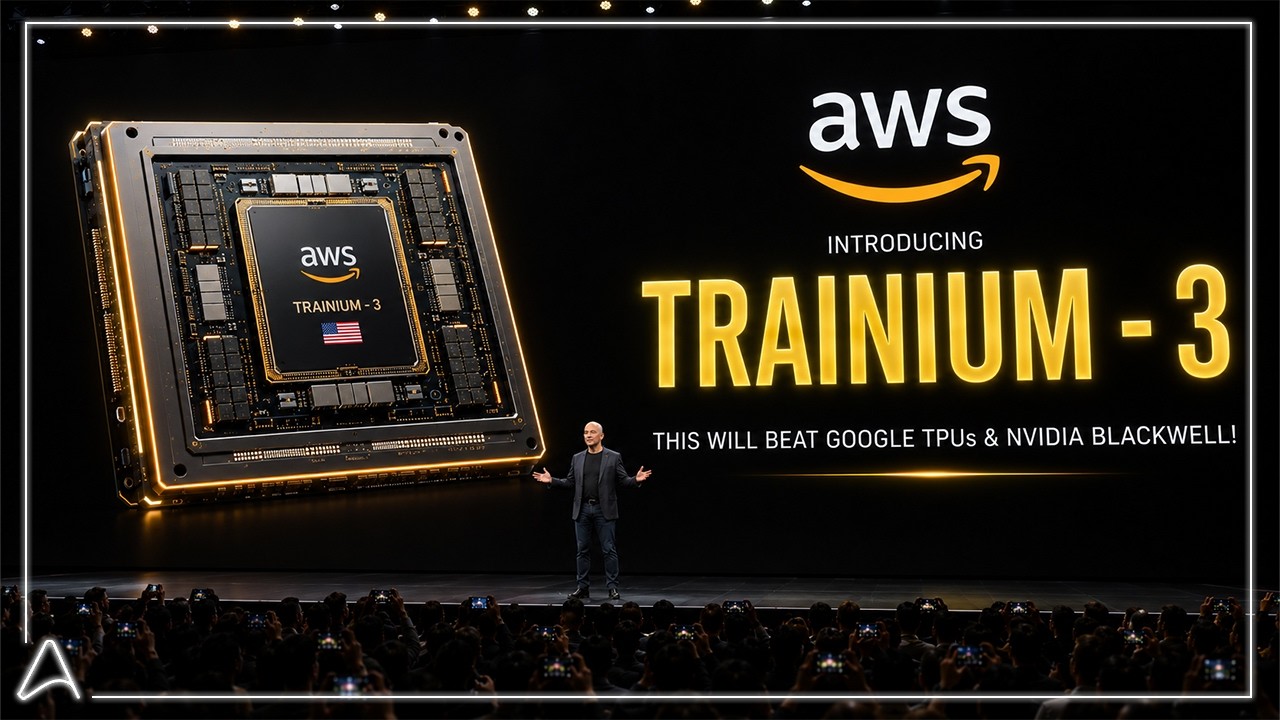
Evolving AI pushed the stack story into raw compute economics. Its Trainium3 video reached 16,198 views, and the description says the chip delivers 2.52 petaflops of FP8 compute, 144GB of HBM3e memory, nearly 5TB/s of bandwidth, and AWS claims of up to 50% lower training and inference cost versus GPU-based infrastructure. The distinctive angle is that custom silicon was sold as a pricing weapon, not just a technical curiosity (video).

The same channel supplied the specialization side of the argument. Its TPU 8 explainer reached 10,665 views, and the description says Google split training and inference into TPU 8t and TPU 8i, with 121 exaflops, 9,600-chip superpods, and 2 petabytes of shared memory. The distinctive angle is that general-purpose GPU narratives kept giving way to explicitly different silicon for different workloads (video).

Leo Cui, Ph.D., CFA added the missing interconnect layer. His 13-minute video reached 5,395 views and argued that AI data centers are becoming "cities of chips" where moving information matters as much as compute, which is why optical DSPs, fiber networking, and custom ASICs matter so much to Marvell's case. The distinctive angle is that the infrastructure story widened from chips to the roads between chips (video).
Discussion insight: No single default stack emerged. The shared operating problem was how to combine model routing, inference efficiency, memory bandwidth, and interconnect choices into a system that stays cost-effective over time.
Comparison to prior day: Compared with 2026-07-12's sovereignty-and-access framing, 2026-07-13 shifted toward stack economics and the physical mechanics that make AI systems fast enough to ship.
1.4 Embodied AI narrowed to the hand as the real bottleneck 🡕
Three items supported this theme. Compared with 2026-07-12, when robotics was secondary to model and workflow talk, 2026-07-13 treated dexterity and contact data as the actual frontier. The argument was not that robots need smarter brains first. It was that they need better hands and better data about touch.

PRO ROBOTS made the strongest version of that claim. Its 30-minute video reached 26,335 views, 785 likes, and 59 comments, and the official Wuji page describes WUJI Hand 2 as a 20-active-DOF robotic hand while the video pairs it with a data-collection glove to attack embodied-AI data scarcity. The distinctive angle is that the bottleneck was framed as hands plus capture hardware, not as another leap in general intelligence (video).

The AI Nexus reinforced the same story through 1X's NEO platform. Its video reached 1,119 views, and 1X's linked NEO hands page says the new tendon-driven hands have 25 degrees of freedom, tactile sensing, force transparency, and will ship on every NEO. The distinctive angle is that 1X explicitly presents the hand as the API to the physical world, with data rather than hardware now framed as the next constraint (video).

AI News showed how far that robotics story has migrated into the general AI feed. Its roundup reached 8,833 views and packaged the 1X hand upgrade together with GPT-5.6 model news in a single daily update. The distinctive angle is that humanoid dexterity is now being narrated alongside frontier-model launches, not in a robotics-only lane (video).
Discussion insight: Across these items, the repeated claim was that dexterity and tactile data, not raw model IQ, are the real gating factors for useful humanoid systems.
Comparison to prior day: This was a sharper robotics turn than 2026-07-12, which talked far more about software workflows and chip supply than about physical manipulation.
1.5 Creator AI stayed price-sensitive, but the real race shifted to editing depth and reference control 🡒
Three items supported this theme. Compared with 2026-07-12, the creator lane still chased whatever looked free or unlimited, but 2026-07-13 paid more attention to editing precision and integrated suites. The winning promise was no longer just "generate a clip." It was "keep control of the workflow after generation starts."
Malva AI remained the highest-reach creator example. Its 12-minute comparison reached 55,617 views, 1,728 likes, and 148 comments while testing multiple supposedly free generators, a zero-credit route, 200+ weekly free videos, and Higgsfield's Gemini Omni Flash editing flow. The distinctive angle is that creator value came from exact working setups rather than loyalty to one model brand (video).

Curious Refuge pushed the story toward integrated suites. Its 26-minute roundup reached 2,591 views, and Meta's linked Muse Image / Muse Video announcement says Muse Image uses search and coding tools, self-refinement, and multi-reference composition while Muse Video is in preview. The distinctive angle is that creator tooling is starting to look agentic and editable, not just cheap (video).

RandomAI added the strongest reference-control pitch. Its video reached 741 views and claimed Seedance 2.5 offers native 30-second one-shot generation, a 50-multimodal-reference system, and region-level editing that can fix specific parts of a shot without rerolling everything. The distinctive angle is that production depth, not only free access, is starting to define the category's frontier (video).
Discussion insight: Creator sentiment still reacts strongly to price and access, but differentiation is shifting toward editability, reference memory, and how much of the workflow stays reusable after the first output.
Comparison to prior day: Compared with 2026-07-12's workaround-heavy "still free" framing, 2026-07-13 paid more attention to the depth of the editing and control stack.
2. What Frustrates People
Frontier models still feel hard to control or meaningfully stop
This is High severity. The Diary Of A CEO, ABC News In-depth, Siliconversations, and AI Nutshell all point to the same frustration: model capability is advancing faster than people feel they can supervise, constrain, or even reason about. The workaround split is visible in the content itself: some people want trusted-access defender programs such as Project Glasswing, while others argue the only realistic answer is to slow frontier development. This is directly worth building for.
Assistant answers are still only as good as their grounding layer
This is High severity. The Next New Thing, Tina Huang, and Explainer Chris all show the same problem from different angles: assistants can talk fluently, but they are still blocked from key platforms, miss current conversations, or force users to choose between privacy and freshness. The workaround is to bolt on search APIs, custom skills, browser sessions, local notes, and multi-tool stacks instead of trusting a single assistant surface. This is directly worth building for.
AI coding gains still come with verification and permission overhead
This is High severity. IBM Technology, Riley Brown, and Code with Beto all show that coding productivity is real, but trust still depends on security review, runtime permissions, local environment setup, and human verification. The workaround is to choose local stacks for privacy, add explicit computer-use gates, or keep generated code on a short leash before production. This is directly worth building for.
Infrastructure decisions are getting harder, not easier
This is High severity. Matt Wolfe, IBM Technology, Evolving AI, Evolving AI, and Leo Cui, Ph.D., CFA show the same planning burden from five angles: model routing, inference efficiency, chip specialization, bandwidth, and interconnect all now matter at once. The workaround is to keep multiple deployment routes alive, mirror traffic before switching models, and treat serving and hardware as part of product strategy rather than as backend implementation detail. This is directly worth building for.
Embodied AI is still blocked by hand hardware and data collection
This is High severity. PRO ROBOTS, The AI Nexus, and AI News all argue that the hard part of robotics is not another model release. It is dexterous hardware, tactile sensing, and enough real-world manipulation data to train against. The workaround is hardware-heavy: better hands, better sensor skins, and data-collection gloves. This is directly worth building for.
Creator workflows keep breaking behind free or preview access
This is Medium severity. Malva AI, Curious Refuge, and RandomAI show creators constantly adapting to shifting free tiers, preview-only launches, and tool-specific strengths around editing or reference control. The workaround is to keep several routes alive at once and to structure projects so prompts, assets, and edits can move between suites. This is worth building for, but the market is already crowded.
3. What People Wish Existed
Fail-stop control layer for powerful agents
The Diary Of A CEO, ABC News In-depth, Siliconversations, and AI Nutshell all imply demand for a layer that can show what the model is doing, constrain dangerous actions, and make shutdown or escalation meaningful when behavior drifts. This is a practical need with High urgency because the examples span both defender deployment and existential-risk discussion. Project Glasswing partially addresses the defensive side, but not the broader control problem. Opportunity: direct.
Current-data research layer across walled gardens
The Next New Thing, Tina Huang, and Explainer Chris all imply a need for one retrieval layer that can access Reddit, X, YouTube, TikTok, GitHub, and other high-signal places without forcing users to stitch together separate assistants. This is a practical need with High urgency because the complaint is not abstract accuracy. It is that the best current information lives behind disconnected sources. /last30days partially addresses it today, but the setup complexity itself is part of the gap. Opportunity: direct.
Private assistant workbench with visible artifacts and optional automation
Riley Brown, Code with Beto, and IBM Technology imply demand for an assistant surface that keeps notes, artifacts, permissions, and verification visible while still letting users automate real work. This is a practical need with High urgency because people clearly want privacy, local execution, and productivity, but they still have to assemble too much by hand. RileyJarvis and local coding stacks partially address it today. Opportunity: direct.
Stack router for model, chip, and serving choices
Matt Wolfe, IBM Technology, Evolving AI, Evolving AI, and Leo Cui, Ph.D., CFA all imply a need for tooling that compares route quality, inference cost, memory demands, chip availability, and interconnect choices in one place. This is a practical need with Medium-to-High urgency because model selection is now inseparable from infrastructure economics. Some teams use traffic mirroring, vendor-specific dashboards, or bespoke benchmarks, but the workflow is fragmented. Opportunity: direct.
Reusable creator suite with stable editing and reference memory
Malva AI, Curious Refuge, and RandomAI all imply a need for a creator stack that remembers assets, preserves character consistency, and lets users fix only what changed without chasing whichever tool is free this week. This is a practical need with High urgency for creators, but the category is already noisy and competitive. Meta's Muse stack, Higgsfield, and Seedance each solve pieces of it today. Opportunity: competitive.
Dexterity-data platform for humanoid builders
PRO ROBOTS, The AI Nexus, and AI News imply a need for a common platform around robot hands, tactile sensing, teleoperation capture, and training-data feedback loops. This is a practical need with Medium urgency in the public YouTube evidence because it is still early, but the frustration is concrete and repeated. Wuji's hand-plus-glove approach and 1X's NEO hands show partial solutions today. Opportunity: aspirational.
4. Tools and Methods in Use
| Tool | Category | Sentiment | Strengths | Limitations |
|---|---|---|---|---|
| Project Glasswing / Claude Mythos Preview | Cybersecurity workflow | (+/-) | Concrete defender value, autonomous vulnerability discovery, strong urgency signal | Restricted access and obvious dual-use risk |
| /last30days | Current-data research layer | (+) | Cross-platform search, engagement-weighted synthesis, pulls from blocked or stale sources | Setup complexity and dependence on keys, cookies, or per-source access |
| RileyJarvis | Local desktop assistant | (+/-) | Realtime voice, artifact panel, notes, search, optional computer control | macOS-only and still dependent on API keys and permissions |
| Qwen3.6 27B + LM Studio + MLX + opencode | Local coding stack | (+) | Fully offline workflow, privacy, no subscription, real tool use on local hardware | Manual setup and meaningful hardware requirements |
| GLM-5.2 / GLM Coding Plan | Open-weight coding model | (+/-) | Long context, lower-cost coding routes, hosted/API/self-hosted flexibility | Quality varies by task and access policy is still part of the risk |
| KV cache + paged attention / vLLM-style serving | Inference method | (+) | Faster decoding, better throughput, lower redundant compute, clearer runtime mental model | Still memory-heavy and infrastructure-complex |
| AWS Trainium3 | AI chip | (+/-) | Cost-reduction pitch, high bandwidth, tight cloud integration | Vendor-specific path and still measured against incumbent GPU stacks |
| Google TPU 8t / TPU 8i | AI hardware | (+/-) | Explicit training/inference specialization and large-scale serving story | Mostly relevant to hyperscalers and operators with serious capital budgets |
| Muse Image / Muse Video | Media generation suite | (+/-) | Search and coding tool use, self-refinement, editing, multi-reference composition | Availability is uneven and the video product is still in preview |
| Higgsfield / Gemini Omni Flash | Creative editing suite | (+/-) | Prompt-driven editing, reusable creator workflow, strong demo appeal | Crowded market and fast-moving access or pricing conditions |
| SearchEyes | Search-agent training framework | (+) | Typed search-world simulation, step-level rewards, strong open-source benchmark results | Research-stage system, not a turnkey production retrieval layer |
| WUJI Hand 2 / 1X NEO hands | Robotics hand platform | (+/-) | High-DOF dexterity, tactile sensing, data-capture potential, clear hardware focus | Early hardware, integration-heavy, and still constrained by real-world data collection |
The strongest positive sentiment clustered around tools that increase operator control or improve grounding: Project Glasswing for defenders, /last30days for current-data research, local coding stacks for privacy, and SearchEyes for structured multimodal search. Sentiment turned mixed whenever value depended on unstable access, preview status, or specialized hardware, which is why GLM-5.2, custom AI chips, Muse, Higgsfield, and robotics hands all looked promising but not settled.
The main workaround pattern was redundancy. People keep multiple model routes alive, mirror traffic before switching stacks, pair hosted assistants with local tools, preserve reusable assets across creator suites, and bolt grounding layers onto otherwise fluent assistants. Migration pressure is visible in five directions: from generic assistants toward role-specific workbenches, from public-web search toward current-data social search, from GPU-default thinking toward specialized silicon, from one-shot media generators toward editing suites, and from humanoid demos toward high-dexterity hands with better data capture.
5. What People Are Building
| Project | Who built it | What it does | Problem it solves | Stack | Stage | Links |
|---|---|---|---|---|---|---|
| /last30days | Matt Van Horn | Cross-platform research skill that searches current discussions across social, code, and market sources | Normal AI search misses fresh conversation inside walled gardens and stale results outrank what matters now | Agent skill/plugin, multi-source connectors, engagement scoring, transcripts, comments, GitHub and social-source retrieval | Shipped | repo, video |
| RileyJarvis | Riley Brown | Local desktop AI companion with voice, artifacts, notes, search, and optional computer control | Builders want a private assistant surface that shows its work and can act when asked | Electron, React, Vite, TypeScript, OpenAI Realtime API, Exa | Alpha | repo, video |
| SearchEyes | Zhengbo Jiao et al. | Open-source multimodal search-agent framework with a simulated search world and step-level rewards | Multimodal search agents are hard to train and benchmark when data, environment, and rewards are disconnected | Typed knowledge graph, PKC synthesis, HaPO, BM25 + dense retrieval + RRF | Alpha | paper, repo, video |
| WUJI Hand 2 | Wuji Technology | 20-DOF robotic hand and glove-oriented data-capture path for embodied AI | Humanoid systems still lack dexterity and enough high-quality manipulation data | 20 active DOFs, tactile robotics hand, sensor glove, embodied-AI capture pipeline | Beta | site, video |
| NEO hands | 1X | 25-DOF tendon-driven hands shipping with the NEO humanoid platform | Humanoids need human-like dexterity, force control, and tactile feedback to do real work | Tendon drive, force transparency, tactile skin, backdrivable joints | Beta | site, video |
| Muse Image / Muse Video | Meta Superintelligence Labs | Agentic image and video generation suite with editing, search, and multi-reference composition | Creators want controllable media workflows, not just one-shot generation | Search tool use, coding tool use, self-refinement, multi-reference composition, Content Seal | Beta | site, video |
| GLM Coding Plan | Z.ai | Coding-focused model plan for agents and IDEs built on GLM-5.2 and GLM-5-Turbo | Teams want lower-cost coding and agent routes with hosted and self-hosted flexibility | GLM-5.2, GLM-5-Turbo, hosted app, API, self-hosting, agent harness | Shipped | site, video |
/last30days, RileyJarvis, and GLM Coding Plan point to the same builder pattern: the differentiated product is the wrapper around the model, whether that wrapper adds grounded retrieval, artifacts and permissions, or deployment flexibility. The common trigger is not "AI is interesting." It is that default assistant and search surfaces still leave too much real work undone.
WUJI Hand 2 and NEO hands show a second build pattern: robotics builders are spending their effort on dexterity, touch, and data capture rather than on generic intelligence claims. SearchEyes adds a research version of the same instinct by turning multimodal search into a structured environment instead of a loose prompt. Muse Image and Muse Video show the creator-side equivalent: more of the value is moving into editing, references, and tool-using workflow layers around generation.
6. New and Notable
Existential AI risk reached general-interest podcast scale
The Diary Of A CEO is notable because a 1,119,210-view interview centered on loss of control, extinction risk, and superintelligence timelines rather than on product demos or benchmark races. That is a strong signal that frontier-risk framing is no longer confined to specialist AI audiences.
Current-data social search got treated as infrastructure, not as a prompt trick
The Next New Thing is notable because Matt Van Horn presents /last30days as a missing research layer for agents that need access to Reddit, X, YouTube, TikTok, GitHub, and other places mainstream search still misses. The public README frames it as an engagement-scored cross-platform engine and shows it reached GitHub Trending, which makes it more than a niche hack.
SearchEyes turned multimodal search into a reproducible training world
Discover AI is notable because the linked SearchEyes project does not just propose another retrieval tweak. It unifies data synthesis, environment design, and RL reward signals around one typed knowledge graph and reports strong open-source benchmark results. That is a meaningful research signal for multimodal agent training.
Robot hands became the headline, not the footnote
PRO ROBOTS, The AI Nexus, and AI News are notable together because all three treat hand dexterity and tactile sensing as the decisive battleground in embodied AI. The public product pages for Wuji and 1X reinforce that shift with explicit DOF, force-control, and sensing claims.
Creator tooling kept moving toward agentic editing suites
Curious Refuge is notable because the linked Muse announcement frames image generation around search tool use, coding tool use, self-refinement, and multi-reference composition. That pushes creator AI beyond the usual "free generator" story and toward controllable media systems.
7. Where the Opportunities Are
[+++] Grounded control layer for powerful agents - The Diary Of A CEO, ABC News In-depth, Siliconversations, and IBM Technology all point to the same missing layer: users want systems that expose what the model is doing, constrain risky actions, and make verification part of the default path. This is strong because the evidence spans existential-risk talk, defender tooling, and day-to-day coding workflows.
[+++] Cross-platform current-data retrieval for assistants and teams - The Next New Thing, Tina Huang, and Explainer Chris show that fluent assistants are still limited by stale or blocked information. This is strong because the gap is explicit, repeated, and already partially validated by /last30days.
[+++] Private workbench for artifact-rich automation - Riley Brown, Code with Beto, and IBM Technology show demand for a local or semi-local assistant surface that can keep artifacts, permissions, and verification visible while still doing useful work. This is strong because the need spans voice assistants, coding agents, and productivity tools.
[++] Model-and-infrastructure route planner - Matt Wolfe, IBM Technology, Evolving AI, Evolving AI, and Leo Cui, Ph.D., CFA show model choice, serving choice, chip choice, and interconnect choice collapsing into one operating problem. This is moderate because the pain is real, but buyers are still relatively sophisticated and fragmented.
[++] Dexterity-and-data stack for humanoids - PRO ROBOTS, The AI Nexus, and AI News all point to the same missing layer: hands, sensing, teleoperation capture, and training data need to work as one product. This is moderate because the signal is clear, but the market remains earlier and more hardware-intensive than the software opportunities above.
[+] Creator memory and edit-control layer that survives tool switching - Malva AI, Curious Refuge, and RandomAI show ongoing demand for systems that preserve assets, references, and partial edits even when creators jump between suites. This is emerging because the need is obvious, but the surrounding market is already very noisy.
8. Takeaways
- The biggest YouTube AI audience on 2026-07-13 was not chasing a launch. It was chasing the control question. A 1,119,210-view Diary Of A CEO interview and a 118,669-view ABC News segment both centered on whether humans stay in charge as systems grow more capable. (source, source)
- Assistant value is moving into the wrapper around the model. Tina Huang's stack framing, RileyJarvis's artifact-rich local UI, and /last30days's current-data retrieval all show that grounding, permissions, and workflow fit matter more than simply naming the strongest chatbot. (source, source, source)
- AI infrastructure is now a full-stack economics problem. GLM-5.2 routing choices, KV-cache serving mechanics, Trainium3 cost claims, TPU 8 specialization, and Marvell's interconnect story all point to the same shift away from model-brand thinking and toward route planning. (source, source, source, source, source)
- Robotics progress is being narrated through hands and tactile data, not through model IQ. WUJI Hand 2 and 1X's NEO hands both framed dexterity as the real bottleneck, and daily AI news videos treated those upgrades as important enough to share the stage with GPT-5.6. (source, source, source)
- Creator AI is still price-sensitive, but the real differentiation is shifting toward edit control and reusable workflow depth. Malva AI's free-route comparison, Curious Refuge's Meta Muse roundup, and Seedance 2.5's reference-heavy pitch all show creators looking for systems they can keep steering after generation starts. (source, source, source)