YouTube AI - 2026-07-15
1. What People Are Talking About
1.1 AI literacy and trust stayed the dominant mass-market frame 🡒
Four items supported this theme. Compared with 2026-07-14's broader trust-crisis story, 2026-07-15 pushed more of that attention into explainers about reasoning, myths, and how much human oversight advanced systems still need.

The Diary Of A CEO supplied the day's dominant reach signal. Its 2-hour interview reached 2,602,638 views, 64,580 likes, and 12,000 comments, and the description says former OpenAI researcher Daniel Kokotajlo believes there is a 70% chance AI leads to human extinction and that superintelligence could arrive before the end of the decade. The distinctive angle is that existential-risk framing stayed on one of YouTube's broadest business-and-culture surfaces, not just on specialist safety channels (video).

Siliconversations grounded the safety story in a concrete defender example. Its 11-minute video reached 84,386 views, 11,450 likes, and 1,200 comments, and Anthropic's linked Project Glasswing page says Claude Mythos Preview identified thousands of zero-day vulnerabilities across major operating systems and browsers, often autonomously. The distinctive angle is that the control argument was not only abstract catastrophe talk; it was also about whether this level of capability can be safely distributed (video).

Bernard Marr translated the same trust question into management-friendly language. His 3-minute explainer reached 71,891 views, 2,062 likes, and 5 comments while arguing that reasoning models solve problems through logical steps and tool use rather than simple next-word guessing, but still need human oversight. The distinctive angle is that "reasoning" itself is now being treated as something audiences need help interpreting, not as a self-explanatory advance (video).
IBM Technology added the most explicit myth-busting layer. Its 14-minute video reached 12,988 views, and IBM's linked AI misinformation article says predictive models will always retain some risk of misinformation and need safeguards to reduce and detect it. The distinctive angle is that the category's credibility problem is now being explained through concrete reliability limits, not only through macro-level criticism (video).
Discussion insight: The trust split now has two layers at once: one camp worries that frontier systems are becoming too powerful to supervise, while another worries that the category is being described more confidently than it actually behaves.
Comparison to prior day: Compared with 2026-07-14's mix of safety alarm and hype backlash, 2026-07-15 sounded more educational: people wanted to understand reasoning, reliability, and why access to the strongest systems is being constrained.
1.2 Open-weight model competition turned geopolitical and route-dependent 🡕
Three items supported this theme. Compared with 2026-07-14's deployability story, 2026-07-15 pulled model choice into national policy, chip independence, and access risk.

Matt Wolfe supplied the clearest open-model route map. His 29-minute video reached 87,440 views, 2,542 likes, and 238 comments, and the description presents GLM-5.2 as a 1 million token, MIT-licensed open-weight model available through a hosted app, an API and agent harness, or self-hosting. The linked GLM Coding Plan page makes the same positioning explicit for agents and IDEs. The distinctive angle is that model value was framed through deployment paths and coding fit, not through benchmark bragging alone (video).

AI Revolution compressed the frontier race into one weekly feed. Its roundup reached 30,951 views, 941 likes, and 49 comments, and OpenAI's linked GPT-5.6 launch page says the family introduces Sol, Terra, and Luna, plus an ultra setting that coordinates multiple agents in parallel. The distinctive angle is that the video mixed model launches, chip strategy, export risk, and world-model research into a single competition narrative rather than treating them as separate beats (video).

Universe of AI added the clearest geopolitical warning. Its 10-minute video reached 9,977 views, 263 likes, and 131 comments, and the linked Yahoo-hosted Reuters report says Chinese authorities held meetings with Alibaba, ByteDance, and Z.ai about potentially restricting overseas access to their most advanced AI models. The distinctive angle is that "open-weight" access itself started to look politically contingent (video).
Discussion insight: Model choice now means choosing an access route, a jurisdiction, and a chip story along with a benchmark profile.
Comparison to prior day: Compared with 2026-07-14's question of whether agentic models are deployable, 2026-07-15 asked whether global access to the best cheap models can stay open at all.
1.3 Useful AI kept moving toward guided, private, and affordable workflows 🡕
Four items supported this theme. Compared with 2026-07-14's production-stack framing, 2026-07-15 pulled the workflow story closer to first-agent tutorials, private home assistants, and price-sensitive creator tooling.
Dan Martell pushed the most explicit "start building now" message. His 22-minute guide reached 25,175 views, 1,576 likes, and 120 comments while arguing that the next wave of work rewards people who build agents that run in the background rather than people who only prompt them occasionally. The distinctive angle is that agent building was framed as a repeatable operating system for small businesses and careers, not as an experimental side project (video).

Riley Brown supplied the clearest assistant artifact. His tutorial reached 29,504 views, 782 likes, and 82 comments, and the linked RileyJarvis README describes a local Electron desktop AI companion with realtime voice, an artifact panel, web search, local notes, and opt-in macOS computer control. The distinctive angle is that the assistant becomes useful because artifacts, permissions, and tool calls stay visible, not because it hides more of the workflow (video).

Dad, the engineer translated that idea into the home. His 11-minute tutorial reached 10,436 views, 653 likes, and 103 comments, and the companion worksheet turns a local-only assistant into a reproducible stack built from Raspberry Pi 5, Home Assistant OS, Ollama, Gemma 4 E2B, Whisper, Piper, openWakeWord, and an ESP32 satellite. The distinctive angle is that privacy-first voice AI is now being taught as an appliance recipe, not as a lab demo (video).
Malva AI kept creator economics inside the same workflow story. Its comparison video reached 79,066 views, 2,265 likes, and 177 comments, and Higgsfield's linked creative-suite page says Gemini Omni Flash can generate and edit video from any input. The distinctive angle is that creator demand still starts with whether the workflow stays cheap and editable after the first result, not with abstract model quality alone (video).
Discussion insight: The winning promise was not raw model IQ. It was whether the workflow stays reusable, private, or cheap enough to keep using after the demo ends.
Comparison to prior day: Compared with 2026-07-14's verification-heavy engineering story, 2026-07-15 showed more end-user and SMB framing: first agents, household assistants, and free creator routes.
1.4 Embodied AI narrowed back to hands, control loops, and factory rollout 🡒
Two items supported this theme. Compared with 2026-07-14's broader companionship and adoption framing, 2026-07-15 returned to dexterity hardware and manufacturing readiness.

PRO ROBOTS made the hand bottleneck explicit again. Its 30-minute video reached 27,202 views, 808 likes, and 61 comments, and the official WUJI Hand 2 page says the platform offers 20 active degrees of freedom inspired by human hand mechanics. The distinctive angle is that the video pairs dexterity hardware with a data-collection glove, so the real story is not only better hands but better training data for embodied systems (video).
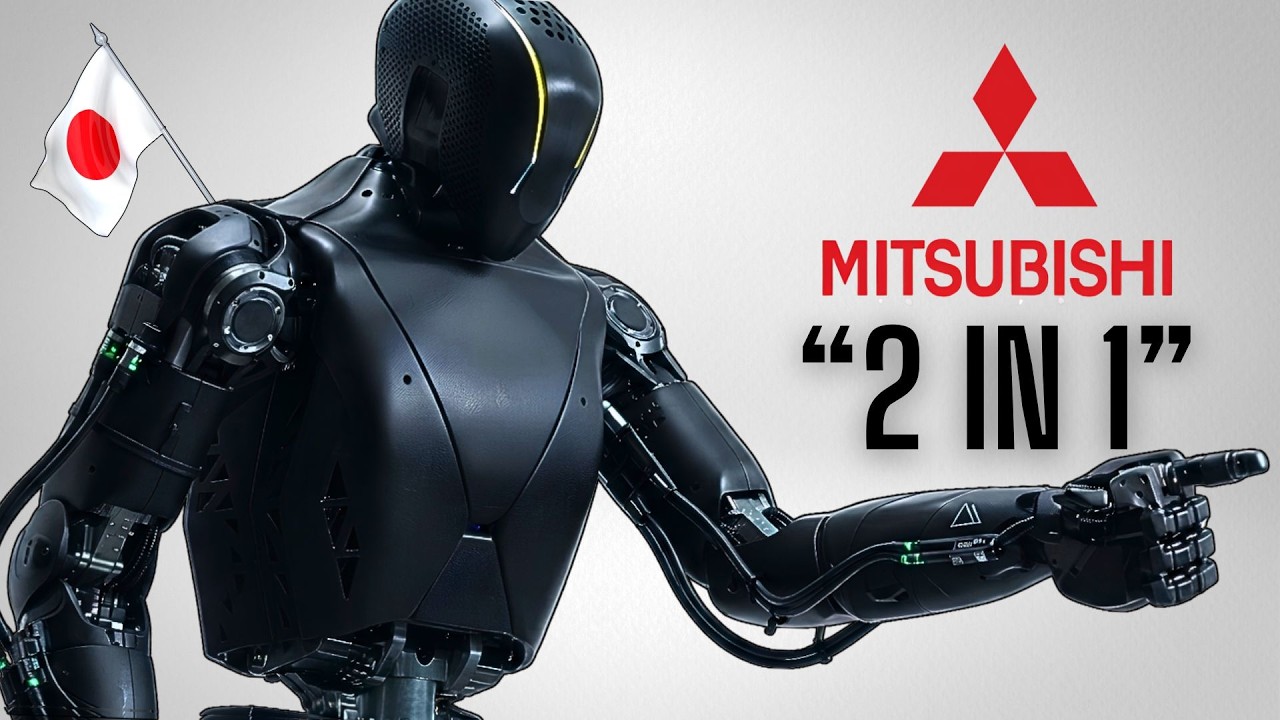
AI News pushed the same idea into factory planning. Its 8-minute roundup reached 7,222 views, and Mitsubishi's linked July 9 release says Mitsubishi and Highlanders signed an MOU to use humanoid robots in Mitsubishi facilities and explore production at the Kyoto plant from early 2027. The distinctive angle is that the video adds a stronger operational frame around Highlanders' Kepler v1.0 control stack and a 1,000-units-per-month target, making humanoids sound more like a manufacturing program than a conference demo (video).
Discussion insight: Both items treat robot intelligence as inseparable from the hand, the control loop, and the data flywheel behind the deployment.
Comparison to prior day: Compared with 2026-07-14's consumer and companionship talk, 2026-07-15 sounded more like operations, sensors, and factories.
2. What Frustrates People
AI claims still feel bigger than the proof behind them
This is High severity. The Diary Of A CEO, Siliconversations, Bernard Marr, IBM Technology, and IBM Technology all point to the same trust gap: people hear grand claims about superintelligence, reasoning, and coding productivity, but they still need myth-busting, safeguards, and human review before the systems feel grounded. The workaround split is visible in the videos themselves: some argue for tighter access and stronger safety controls, while others argue for clearer explanations and verification layers around the models. This is directly worth building for.
Open-model access is getting harder to treat as stable infrastructure
This is High severity. Matt Wolfe, AI Revolution, and Universe of AI all show the same problem: developers want cheap, long-context, open-weight model routes, but availability is now entangled with export controls, chip strategy, provider policies, and geopolitics. The workaround is to keep multiple providers, hosted routes, and self-hosting options alive at the same time. This is directly worth building for.
Useful assistants still require too much glue, setup, and permission management
This is High severity. Dan Martell, Riley Brown, Dad, the engineer, Discover AI, and IBM Technology all show that practical assistants still depend on prompt scaffolds, API keys, local hardware, search layers, speech pipelines, and explicit review before they feel dependable. The workaround is to assemble DIY templates, local-first stacks, and visible artifact panels rather than trusting a single black-box assistant. This is directly worth building for.
Creator AI still breaks on credits and workflow continuity
This is Medium-to-High severity. Malva AI shows creators still chase "free and unlimited" claims because paywalls and credit caps interrupt usable workflows too quickly. The workaround is to stitch together zero-credit routes and suites such as Higgsfield that combine generation and editing in one place. This is worth building for, but the market is already competitive.
Humanoid AI still needs better hands and more real-world data
This is Medium-to-High severity. PRO ROBOTS and AI News both show that dexterous hands, tactile data, and production integration remain the gating factors for embodied AI. The workaround is hardware-heavy: teleoperation gloves, richer sensor loops, and manufacturing partners willing to run pilots in real facilities. This is worth building for, but the operational burden is much higher than in software-only categories.
3. What People Wish Existed
Honest capability translation and verification layer
The Diary Of A CEO, Bernard Marr, IBM Technology, IBM Technology, and Siliconversations all imply demand for a layer that distinguishes polished AI language from grounded capability, surfaces where human oversight is still required, and explains what safeguards are doing. This is a practical need with High urgency because the trust problem now spans extinction talk, reasoning hype, and everyday code generation. Project Glasswing and IBM's safeguard framing solve pieces of the problem today, but not the full translation layer users seem to want. Opportunity: direct.
Provider-agnostic open-model router with access-risk visibility
Matt Wolfe, AI Revolution, and Universe of AI all imply a need for one surface that compares price, context length, deployment route, benchmark fit, jurisdiction, and access risk across fast-moving model options. This is a practical need with High urgency because model choice is no longer only a quality question; it is also a policy and infrastructure question. GLM Coding Plan and self-hosting paths address slices of this today, but users still stitch the full picture together themselves. Opportunity: direct.
Private multimodal assistant kit for home and small teams
Riley Brown, Dad, the engineer, and Dan Martell all imply demand for a packaged assistant stack that keeps voice, artifacts, permissions, and search visible without defaulting to cloud capture. This is both a practical and emotional need with High urgency because the value proposition is convenience plus control, not convenience alone. RileyJarvis and Home Assistant plus Ollama solve pieces today, but the assembly cost is still high. Opportunity: direct.
Search-grounded agent scaffolds beyond classic RAG
Discover AI, Riley Brown, and Dan Martell all imply a need for reusable templates that combine multimodal search, tool use, and step-level grounding instead of relying on brittle prompt chains. This is a practical need with Medium-to-High urgency because agent workflows are clearly spreading, but grounding and orchestration are still mostly DIY. SearchEyes provides a research direction today rather than a turnkey product. Opportunity: direct.
Portable creator control layer that survives pricing shifts
Malva AI implies demand for a creator layer that preserves edits, references, and reusable assets even when a provider's free tier or pricing policy changes. This is a practical need with High urgency for creators because cost cliffs still break otherwise workable video pipelines. Higgsfield and similar suites partially address the issue today, but the market is crowded and users still bounce between tools. Opportunity: competitive.
Dexterity-and-data platform for humanoid rollout
PRO ROBOTS and AI News imply a need for one platform that combines better hands, richer sensor data capture, and operational tooling for factory deployment. This is a practical need with Medium urgency in the public evidence because the signals are concrete but still early. WUJI Hand 2 and Mitsubishi's partnership with Highlanders solve parts of the stack today, but not the whole deployment-and-learning loop. Opportunity: aspirational.
4. Tools and Methods in Use
| Tool | Category | Sentiment | Strengths | Limitations |
|---|---|---|---|---|
| Claude Mythos Preview / Project Glasswing | Defensive AI security | (+/-) | Autonomous zero-day discovery, strong defender utility, concrete urgency signal | Restricted access, dual-use risk, heavy policy controls |
| GPT-5.6 Sol / Terra / Luna | Frontier LLM family | (+/-) | Strong coding and multi-agent workflow story, better performance-per-dollar framing | Still vendor-bound, launch claims need user-specific validation, access depends on provider policy |
| GLM-5.2 / GLM Coding Plan | Open-weight coding model | (+/-) | 1M context, MIT license, hosted/API/self-host routes for agents and IDEs | Availability may shift with policy, and route choice still requires infrastructure judgment |
| RileyJarvis | Local assistant shell | (+) | Realtime voice, artifact panel, optional search and computer control, local data storage | macOS-focused and still setup-heavy |
| Home Assistant + Ollama + Gemma 4 E2B | Private voice assistant stack | (+/-) | Fully local audio pipeline, no cloud speech, modular components | Raspberry Pi and ESP32 setup, LAN security concerns, hardware limits |
| SearchEyes | Multimodal search-agent method | (+/-) | Unified search world, step-level rewards, strong benchmark story | Research-stage, not a simple product drop-in |
| Higgsfield / Gemini Omni Flash | Creator video suite | (+/-) | Generate and edit video from multiple inputs, integrated workflow, strong free-route appeal | Free access instability and a crowded market |
| WUJI Hand 2 | Robotics hand platform | (+/-) | 20 active DOFs, explicit dexterity focus, strong fit for data-collection workflows | Hardware-heavy and still dependent on a broader control and data stack |
| Highlanders Kepler v1.0 | Physical-AI control model | (+/-) | Dual-brain planning/control framing, factory-data loop, deployment tie-in | Early-stage public evidence and heavy dependence on partner rollout |
| AI code generators | Developer method | (+/-) | Faster scaffolding, multi-language support, reusable coding patterns | Requires security, reliability, and human review before production use |
The most positive sentiment clustered around tools that increased operator visibility: local assistant shells, local voice stacks, long-context open models, and benchmark-backed methods such as SearchEyes. People liked systems that exposed routes, artifacts, or real behavior instead of hiding it.
Sentiment turned mixed whenever value depended on preview access, export or safety policy, free-tier generosity, or hardware-heavy deployment. That is why Project Glasswing, GPT-5.6, GLM-5.2, Higgsfield, and Kepler all looked promising but unsettled in different ways.
The main workaround pattern was composition. People keep multiple providers live, self-host when possible, pair code generation with manual review, keep voice AI local, and treat benchmarks as the start of evaluation rather than the end. Migration pressure is visible from generic chatbots toward assistant shells and agent stacks, from cloud-default voice toward local Home Assistant builds, from simple RAG toward multimodal search agents, and from flashy robot demos toward hands plus factory data loops.
5. What People Are Building
| Project | Who built it | What it does | Problem it solves | Stack | Stage | Links |
|---|---|---|---|---|---|---|
| Project Glasswing | Anthropic | Defender program using Claude Mythos Preview to identify and exploit previously unknown vulnerabilities for security teams | Defenders need to find and patch critical software flaws faster than attackers can use them | Claude Mythos Preview, autonomous vulnerability discovery, partner security program | Beta | site, video |
| GLM Coding Plan | Z.ai | Coding access layer for GLM-5.2 and GLM-5-Turbo across hosted, API, self-hosted, and agent-harness routes | Teams want cheaper long-context coding models without committing to one deployment path | GLM-5.2, GLM-5-Turbo, hosted app, API, self-hosting, agent harness | Shipped | site, video |
| RileyJarvis | Riley Brown | Local desktop AI companion with realtime voice, artifact panels, web search, notes, and optional computer control | Users want assistants that expose tools, permissions, and intermediate work instead of hiding them | Electron, React, Vite, TypeScript, OpenAI Realtime API, Exa | Beta | repo, video |
| Local Home Assistant voice assistant | Dad, the engineer | Local-only smart speaker and assistant stack for the home | Users want voice control without sending household audio to cloud providers | Home Assistant OS, Ollama, Gemma 4 E2B, Whisper, Piper, openWakeWord, ESP32-S3-BOX-3 | Alpha | worksheet, video |
| SearchEyes | Alibaba DAMO Academy et al. | Multimodal deep-search agent training framework and benchmark suite | Classic RAG and search agents lack a unified search world and strong step-level rewards | Typed knowledge graph, self-contained search world, SFT, HaPO | Alpha | paper, repo, video |
| WUJI Hand 2 | Wuji Technology | 20-DOF robotic hand platform paired with data-collection workflows for embodied AI | Humanoid systems still lack dexterity and enough manipulation data | 20 active DOFs, hand mechanics, glove-oriented data capture | Beta | site, video |
| Highlanders N / Kepler v1.0 | Highlanders | Humanoid robot and control stack headed toward Mitsubishi factory deployment | Manufacturers need physical AI that can learn from operations and scale into production | Kepler v1.0, factory data loop, humanoid hardware, Mitsubishi production partner | Beta | Kepler, Mitsubishi, video |
Project Glasswing, GLM Coding Plan, RileyJarvis, and the local Home Assistant stack all point to the same builder pattern: the differentiated product is the surface around the model. The value is in routing, permissions, artifacts, and trust boundaries rather than in raw model access alone.
SearchEyes pushes that same logic into research. Better search agents need a structured world, reward design, and repeatable evaluation, not just larger embeddings or more retrieval calls.
WUJI Hand 2 and Highlanders plus Mitsubishi show the hardware version of the same instinct. Data capture and control loops are the moat, and manufacturing partnerships are starting to matter as much as flashy humanoid demos.
6. New and Notable
A 2.6M-view existential-risk interview remained the day's biggest AI signal
The Diary Of A CEO is notable because the single biggest reach signal in the dataset was not a model launch or benchmark. It was a warning about superintelligence, extinction risk, and how little time people may have to react.
Open-weight AI suddenly looked less global and more governed
Universe of AI is notable because the linked Reuters report via Yahoo suggests Beijing may curb overseas access to its top AI models. That turns "open-weight" access into a policy question, not just a technical one.
Local voice assistants became concrete, not aspirational
Dad, the engineer is notable because the linked worksheet makes a private home assistant reproducible with specific hardware, software, and network warnings. That is a stronger signal than a generic "local AI" demo.
SearchEyes pushed RAG talk into multimodal search-world training
Discover AI is notable because the linked SearchEyes paper and repo frame the next search-agent step as a self-contained multimodal world with hop-anchored rewards, not just another retrieval stack.
Humanoid deployment got a real manufacturing partner
AI News is notable because Mitsubishi's linked July 9 release moves humanoid robotics from conference footage toward factory use and production planning.
Creator demand still clusters around "free and unlimited"
Malva AI is notable because a nearly 80,000-view creator video still wins attention by teaching exact free routes and credit-saving setups. Cost remains one of the first filters creators apply to AI tools.
7. Where the Opportunities Are
[+++] Verification and capability-translation layer - The Diary Of A CEO, Siliconversations, Bernard Marr, and IBM Technology all point to the same gap: users want grounded explanations, oversight checkpoints, and trust surfaces around AI claims. This is strong because the need appears in both mass-market commentary and practical developer content.
[+++] Provider-agnostic open-model control plane - Matt Wolfe, AI Revolution, and Universe of AI show model choice collapsing into a combined problem of price, context, deployment route, and cross-border access risk. This is strong because the pain now spans both ordinary builders and geopolitical headlines.
[++] Private local assistant appliance - Riley Brown, Dad, the engineer, and Dan Martell show demand for assistants with voice, search, artifacts, and explicit permissions that do not default to cloud capture. This is moderate because the demand is clear, but setup tolerance still varies by user.
[++] Multimodal search-grounding toolkit - Discover AI, Riley Brown, and Dan Martell all imply a gap around grounded tool use and search-backed workflows rather than brittle prompt memory. This is moderate because the research direction is strong, but the product pattern is still forming.
[++] Workflow-preserving creator control layer - Malva AI and Higgsfield's creative-suite surface show repeated demand for systems that keep edits and assets usable when pricing, credits, or providers shift. This is moderate because the creator pain is obvious, but the market is crowded.
[+] Dexterity and factory-data platform for humanoids - PRO ROBOTS and AI News point to the same emerging gap: better hands, richer sensor loops, and production pilots need to work together. This is emerging because the signal is concrete, but the capital and timelines are heavy.
8. Takeaways
- The biggest YouTube AI signal on 2026-07-15 was still about trust, not just product novelty. A 2,602,638-view Diary Of A CEO interview, Bernard Marr's reasoning explainer, and IBM's myth-busting video all show audiences trying to understand what advanced systems can actually be trusted to do. (source, source, source)
- Open-weight model competition is now entangled with policy and access risk. GLM-5.2's multi-route coding story, AI Revolution's frontier roundup, and Reuters-backed reporting on possible Chinese access restrictions all point to the same shift: model choice now includes jurisdiction and availability. (source, source, source)
- Practical AI adoption keeps moving toward visible workflows instead of opaque assistants. Dan Martell's first-agent guide, Riley Brown's local assistant shell, and Dad, the engineer's private Home Assistant stack all show users preferring surfaces where tools, artifacts, and permissions stay explicit. (source, source, source)
- Search agents are being framed as something beyond classic RAG. Discover AI's SearchEyes review shows growing interest in multimodal search worlds, step-level rewards, and stronger grounding for tool-using agents. (source)
- Creator AI still wins attention by solving cost and workflow friction first. Malva AI's nearly 80,000-view comparison shows that "free," "unlimited," and editable workflows still matter more than raw model branding for many creators. (source)
- Humanoid progress is still being judged through hands, data, and factory partners. PRO ROBOTS' WUJI coverage and AI News' Mitsubishi-Highlanders story both show that physical AI still depends on dexterity hardware and deployment loops more than on abstract model rhetoric. (source, source)