YouTube AI - 2026-07-17
1. What People Are Talking About
1.1 Open-weight frontier AI became a Kimi K3 versus Inkling week 🡕
Six items supported this theme. Compared with 2026-07-16's mix of open-model scale, compute controls, and chip politics, 2026-07-17 turned the conversation into direct model-vs-model routing: Kimi K3 dominated benchmark and coding comparisons, while Inkling arrived as a Western open-weight alternative optimized for customization rather than bragging rights.
AI Search supplied the strongest reach signal in this cluster. Its 30-minute review reached 189,138 views, 7,338 likes, and 986 comments while running Kimi K3 through coding, liquid-physics, Blender, 3D, and deep-research tests. Moonshot's linked Kimi K3 blog says the model is a 2.8T-parameter, 1M-context, open 3T-class system available through Kimi.com, Kimi Work, Kimi Code, and the Kimi API, with full weights scheduled for 2026-07-27. The distinctive angle is that open-model credibility was being sold through concrete workflow tests, not abstract open-source positioning (video).

WorldofAI reinforced the same shift from scores to workflows. Its 18-minute video reached 28,307 views, 895 likes, and 118 comments and framed Kimi K3 through browser-agent benchmarks, frontend demos, price-quality tradeoffs, and Kimi Code CLI usage. The distinctive angle is that head-to-head model judging now looks like product evaluation for coding workflows, not only benchmark recitation (video).
AI Revolution supplied the strongest counter-signal to the Kimi wave. Its 16-minute video reached 18,733 views, 768 likes, and 51 comments, and Thinking Machines' linked Inkling launch post plus model card say Inkling is a 975B-total, 41B-active open-weight multimodal model with 1M context, Apache 2.0 licensing, and fine-tuning on Tinker. The distinctive angle is that a Western open-weight launch was pitched as a customization base rather than as the strongest overall model (video).

Turing Post TV contributed the densest deployment detail even with only 580 views. Its comparison video says K3 uses an 896-expert architecture, that Moonshot recommends at least 64 accelerators, and that Inkling's quantized and BF16 checkpoints change the hardware threshold materially. The distinctive angle is that the real separator was no longer only benchmark rank; it was who could actually deploy or adapt the model (video).
Discussion insight: The open-weight conversation split into two buyer questions at once: which model wins visible coding and frontend tests, and which model gives enough control to fine-tune or self-host inside realistic hardware budgets.
Comparison to prior day: Compared with 2026-07-16's focus on Kimi-scale ambition and chip-control politics, 2026-07-17 centered on head-to-head comparisons and Western customization alternatives.
1.2 AI skepticism shifted from broad hype backlash to explicit cost and control critiques 🡕
Three items supported this theme. Compared with 2026-07-16's infrastructure-control story, 2026-07-17 made the reality check more explicit: adoption was criticized on operating cost, GPU scarcity, and the governance required for stronger systems.

The Infographics Show carried the day's biggest single reach signal. Its 14-minute explainer reached 445,442 views, 11,519 likes, and 1,700 comments while arguing that AI is becoming too expensive to replace humans, breaking the problem into token costs, an inference wall, margin collapse, and an efficiency paradox. The distinctive angle is that the mass-market AI story was not another launch recap; it was an economic rebuttal to automation promises (video).

CNBC Television pushed the same reality check into executive media. Its 4-minute clip reached 4,033 views, and the public title says Databricks is hosting open-source models like Kimi while running out of GPUs. The distinctive angle is that infrastructure scarcity was stated directly by a platform CEO, not inferred from model-card math alone (video).
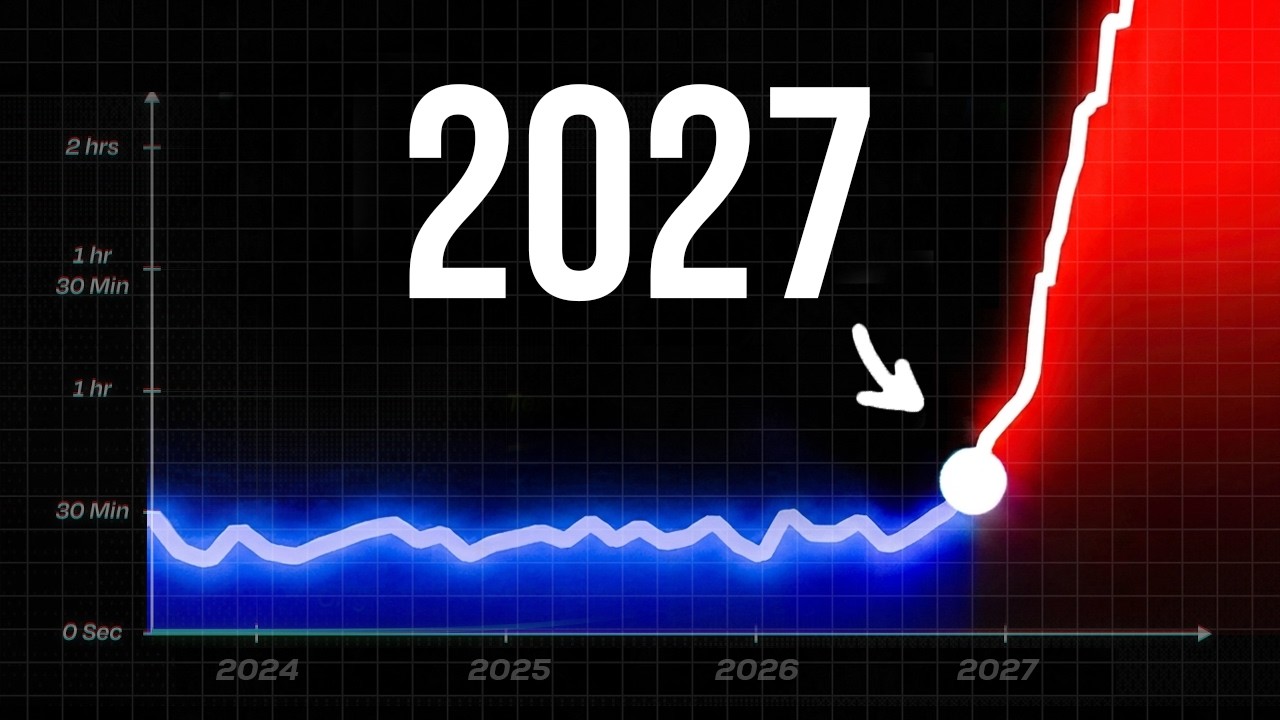
Future of Life Institute supplied the control version of the same skepticism. Its 16-minute interview reached 32,479 views, 1,020 likes, and 315 comments, and the description says Nora Ammann sees concentrated power and a capability race as the key failure modes and argues for formal verification and proof-carrying code as missing infrastructure. The distinctive angle is that the trust problem was framed as an engineering and governance stack, not only as a cultural fear (video).
Discussion insight: Skepticism no longer lived only in anti-AI corners. It showed up as economics questions, GPU-availability questions, and calls for stronger verification before capability scales further.
Comparison to prior day: Compared with 2026-07-16's focus on chip smuggling and restricted capability access, 2026-07-17 asked whether anyone can afford or safely justify the next deployment wave.
1.3 Agent education stayed operational rather than inspirational 🡒
Two items supported this theme. Compared with 2026-07-16's operating-doctrine theme, 2026-07-17 kept agent building practical and route-oriented rather than celebratory.
Dan Martell provided the broadest business-facing recipe. His 22-minute guide reached 103,857 views, 4,223 likes, and 290 comments, and the description includes SOUL, IDENTITY, and USER prompts plus a manager agent that spins up one specialist sub-agent per job. The distinctive angle is that agent building was taught as role design and delegation architecture for work, not as a chatbot upgrade (video).
Tech With Tim supplied the clearest route map. His 21-minute video reached 22,440 views, 912 likes, and 27 comments and defines an agent as "a language model that can use tools, running in a loop until it finishes a job," then walks through no-code, low-code, agent-harness, and full-code build paths. The distinctive angle is that audiences wanted taxonomy and route choice more than another autonomy demo (video).
Discussion insight: The repeated pattern was decomposition: define roles, keep the loop explicit, choose the right build tier, and review outputs instead of treating agents as magic autonomy.
Comparison to prior day: Compared with 2026-07-16's emphasis on what an agent is, 2026-07-17 spent more time on the operator playbook - prompt files, manager and specialist boundaries, and concrete route selection.
1.4 Creator AI still rewarded free, editable, creator-owned workflows 🡒
Three items supported this theme. Compared with 2026-07-16's free-and-editable workflow theme, 2026-07-17 added more creator-owned control layers on top of the free-tool hunt.
Malva AI still carried the biggest creator reach signal. Its 11-minute video reached 93,351 views, 2,525 likes, and 199 comments while testing zero-credit generations, 200-plus free videos per week, talking avatars, and prompt-driven editing inside Higgsfield. Higgsfield's site describes Gemini Omni Flash as a way to generate and edit video from any input. The distinctive angle is that creator value still started with cost control but became sticky through editable workflows (video).

Malva AI reinforced the same demand from a newer workflow walkthrough. Its 9-minute video reached 21,882 views, 790 likes, and 95 comments while focusing on horizontal 16:9 output, scene extension, consistent characters, timeline editing, and watermark-free downloads. The distinctive angle is that continuity and clean export were explicit purchase criteria, not bonus features (video).

Theoretically Media added the most builder-heavy creator signal. Its 20-minute video reached 31,539 views, 1,465 likes, and 185 comments while combining Meta Muse Image and Muse Video coverage with a free pose-plus-depth motion-control tool and source code for downstream video workflows. The distinctive angle is that creators were not only comparing vendors; they were shipping their own control utilities on top of them (video).
Discussion insight: Creator demand still began with price, but the stickier value now came from scene continuity, motion control, and whether edits survived across providers.
Comparison to prior day: Compared with 2026-07-16's emphasis on free routes and integrated editing, 2026-07-17 added more explicit control surfaces - 16:9 output, pose and depth guidance, and downloadable creator-made utilities.
2. What Frustrates People
Open models are reaching users faster than practical hardware budgets
This is High severity. AI Search, WorldofAI, CNBC Television, and Turing Post TV all point to the same friction: Kimi K3 looks attractive because it behaves like a frontier coding model, but Moonshot's own materials say it targets 64-plus-accelerator supernodes, CNBC frames open-model demand as a GPU shortage question at Databricks, and Inkling's model card still starts at 600GB to 2TB of aggregated VRAM depending on checkpoint format. The workaround is to stay on hosted routes, wait for optimized or quantized releases, and keep multiple providers alive instead of betting on one self-host plan. This is directly worth building for.
AI automation still looks shakier in unit economics than in demo videos
This is High severity. The Infographics Show argues that token costs, inference expense, and margin compression make AI replacement harder than promised, while CNBC Television adds a live infrastructure-capacity angle from Databricks. The workaround is to narrow AI to high-value workflows, cap agent loops, and measure cost per completed task instead of celebrating raw automation potential. This is directly worth building for.
Useful agents still require too much manual architecture
This is High severity. Dan Martell and Tech With Tim both show that users still need to define roles, choose between no-code and full-code routes, wire tool access, and keep review in the loop before an agent feels dependable. The workaround is to reuse manager and specialist templates, keep one agent per lane, and start with harnesses rather than full custom systems. This is directly worth building for.
Creator video AI still depends on unstable free tiers and workaround-heavy editing
This is High severity. Malva AI, Malva AI, and Theoretically Media all show creators still chasing zero-credit routes, scene extension, clean exports, and motion control because pricing, watermarks, or model rotation break usable workflows quickly. The workaround is to combine Higgsfield, Meta, and creator-built utilities rather than trusting a single provider. This is worth building for, but the market is already competitive.
Trusting stronger systems still lacks mainstream verification infrastructure
This is Medium-to-High severity. Future of Life Institute argues that formal verification and proof-carrying code are the missing infrastructure for trusting more capable systems, and Inkling's model card still recommends human oversight and application-layer safeguards for high-stakes use cases. The workaround today is defense-in-depth: moderation layers, human review, and narrower deployment scopes. This is directly worth building for, but it is technically demanding.
3. What People Wish Existed
Cost-and-capacity planner for AI deployment
The Infographics Show, CNBC Television, AI Search, and Turing Post TV all imply a need for one surface that compares model quality, token pricing, hardware requirements, and whether self-hosting is realistic for a specific team. This is a practical need with High urgency because demand is clearly outrunning clarity on real operating cost. Hosted APIs and model pages solve slices of the problem today, but they do not turn deployment fit into one decision surface. Opportunity: direct.
Provider-agnostic open-model router with customization paths
AI Search, WorldofAI, AI Revolution, and Turing Post TV all imply a need for a route planner that compares Kimi K3, Inkling, and the next wave of open models across coding fit, multimodal support, fine-tuning options, hardware thresholds, and weight availability. This is a practical need with High urgency because the conversation has already moved beyond "open or closed" into "which route should I actually use?" Kimi Code and Tinker solve parts of this today, not the full cross-model decision problem. Opportunity: direct.
Agent builder with reusable role files and review checkpoints
Dan Martell and Tech With Tim imply demand for a workbench that turns intent into identity files, manager and specialist boundaries, build-tier recommendations, and review loops without forcing users to invent the operating pattern themselves. This is a practical need with High urgency because the builder playbook is increasingly explicit but still highly manual. Tutorials and prompt snippets address pieces today, not the end-to-end workflow. Opportunity: direct.
Portable creator continuity and motion-control layer
Malva AI, Malva AI, and Theoretically Media imply demand for a layer that preserves scenes, characters, edits, and motion control across changing video models, free tiers, and export rules. This is a practical need with High urgency because creators are clearly optimizing for continuity and control rather than one-shot generation. Higgsfield, Meta, and creator-built utilities solve meaningful pieces today, but users still stitch the whole workflow together themselves. Opportunity: competitive.
Verification middleware for capable multimodal systems
Future of Life Institute, AI Revolution, and Inkling's model card all imply a need for safeguards that combine evaluation, proof-carrying claims, moderation, and deployment policy for open-weight multimodal systems. This is a practical need with Medium-to-High urgency because control concerns are explicit in the evidence, but the likely buyer set is still narrower than the deployment or creator markets. Model cards and application-layer moderation solve slices of the problem today, not the full trust stack. Opportunity: aspirational.
4. Tools and Methods in Use
| Tool | Category | Sentiment | Strengths | Limitations |
|---|---|---|---|---|
| Kimi K3 / Kimi Code | Open-weight foundation model | (+/-) | 2.8T scale, 1M context, strong coding and visual-reasoning story, multiple access surfaces | Full weights were still pending on 2026-07-17, and the hardware and cost story remains heavy |
| Inkling + Tinker | Open-weight customization stack | (+/-) | Multimodal, 1M context, Apache 2.0, explicit fine-tuning and customization story | Not pitched as the strongest overall model, and self-host hardware requirements are still large |
| Manager / specialist sub-agent pattern | Agent method | (+) | Clear delegation boundaries, reusable prompt scaffolds, easy to map onto business workflows | Requires prompt design, routing judgment, and human review |
| Agent tool loop and build-tier ladder | Agent method | (+) | Clear definition of what an agent is, reusable route from no-code to full-code, explicit tool use | Still leaves users to choose the right tier and assemble the stack |
| Higgsfield / Gemini Omni Flash / Seedance | Creator video suite | (+/-) | Generate-and-edit workflow, free-mode discovery, continuity-friendly editing, 4K and community surfaces | Free tiers, policies, and evidence are all promo-heavy and can change quickly |
| Meta Muse Image / Muse Video | Creator model family | (+/-) | Free surface, visible "thinking" style evaluation, real released video direction | Current evidence still treats it as weaker than leading image incumbents, and product detail is thin |
| TheoreticallyMotion Control | Creator control tool | (+) | Pose-plus-depth guidance, source code, multi-character and in/out-point control | Depends on pairing with other video models and a more technical workflow |
| Formal verification / proof-carrying code | Safety method | (+/-) | Concrete trust mechanism for more capable systems, stronger than generic "be careful" guidance | Still research-heavy and far from normal deployment infrastructure |
The strongest positive sentiment clustered around tools that increased operator control: open weights with clear access routes, fine-tuning surfaces, explicit agent role scaffolds, and creator suites that kept editing visible.
Sentiment turned mixed whenever value depended on very large hardware budgets, moving free tiers, or trust mechanisms that still live closer to research than to product. That is why Kimi K3, Inkling, Higgsfield, and Meta Muse all looked promising but still unsettled in different ways.
The main workaround pattern was layering. People stay on hosted inference before self-hosting, wrap agents in role files and harnesses, and pair free video models with separate control utilities. Migration pressure is visible from generic model hype toward route-aware model selection, from vague agent talk toward explicit loops and delegation, and from one-shot video generation toward editable, motion-aware pipelines.
5. What People Are Building
| Project | Who built it | What it does | Problem it solves | Stack | Stage | Links |
|---|---|---|---|---|---|---|
| Kimi K3 | Kimi | Open 3T-class model for long-horizon coding, reasoning, and multimodal work | Teams want frontier-like capability with open-model access and multiple deployment routes | Kimi Delta Attention, Attention Residuals, Stable LatentMoE, 1M context, Kimi Code, Kimi API | Beta | blog, video 1, video 2 |
| Inkling / Tinker | Thinking Machines | Open-weight multimodal base model and fine-tuning platform for customization | Organizations want a Western open-weight alternative they can adapt rather than only consume through a closed API | 975B total and 41B active MoE, text-image-audio inputs, 1M context, Tinker, Apache 2.0 | Shipped | launch, model card, video |
| TheoreticallyMotion Control | Theoretically Media | Free pose-plus-depth tool for controlling video-to-video AI workflows | Creators need finer motion, framing, and multi-character control than text prompts alone provide | OpenPose skeletons, Video Depth Anything, Gumroad distribution, works with Seedance and Runway-style workflows | Shipped | tool, video |
| Higgsfield creator workflow | Higgsfield | Generate-and-edit AI video suite with free-mode discovery, continuity features, and creator-facing export flow | Creators want affordable AI video pipelines that stay editable after the first generation | Gemini Omni Flash, Seedance 2.0, Supercomputer, project views, community examples | Shipped | site, video 1, video 2 |
Kimi K3 and Inkling point to the same frontier builder pattern: the differentiator is no longer only raw model strength. It is whether a model can be routed through coding tools, adapted to a workflow, and justified against real deployment constraints.
TheoreticallyMotion Control and Higgsfield show the same pattern at the creator layer. The differentiator is the wrapper around the model - continuity controls, pose and depth guidance, clean exports, and visible editing surfaces - not the base generator alone.
Dan Martell and Tech With Tim added the meta-pattern around both markets: many of the most useful "builds" are orchestration layers such as role files, manager prompts, and harness choices rather than new base models.
6. New and Notable
The biggest audience signal was economic skepticism, not launch hype
The Infographics Show is notable because the day's highest-reach video did not celebrate a new model. It framed AI as too expensive to replace humans at scale and made unit economics the headline.
Kimi K3 pushed open models into an unmistakably frontier frame
AI Search and WorldofAI are notable because they treated Kimi K3 as a real competitor in coding, browser-use, and frontend workflows, not as a niche open-source curiosity. Moonshot's blog makes the scale jump explicit at 2.8T parameters and 1M context.
Inkling launched as a customization-first Western open-weight alternative
AI Revolution is notable because the linked Inkling launch post and model card pitch the model as broad, multimodal, and fine-tunable on Tinker rather than as the single strongest benchmark winner.
GPU scarcity surfaced in executive media
CNBC Television is notable because the title puts a plain capacity warning into mainstream business coverage: Databricks is hosting open-source models like Kimi and running out of GPUs. That is a stronger market signal than abstract discussion of future hardware shortages.
A creator shipped a free motion-control utility instead of waiting for vendors
Theoretically Media is notable because the signal was not only another model comparison. It was a free pose-plus-depth tool with source code for controlling downstream AI video workflows.
Formal verification entered the YouTube AI mainstream
Future of Life Institute is notable because it named formal verification and proof-carrying code as missing infrastructure for trusting more capable systems. That pushes the trust conversation into concrete engineering language.
7. Where the Opportunities Are
[+++] Cost-and-capacity control plane - The Infographics Show, CNBC Television, AI Search, and Turing Post TV all point to the same gap: teams need one surface that explains whether a model is economically and operationally viable before they commit to it. This is strong because the pain spans token economics, GPU scarcity, and hardware-fit uncertainty.
[+++] Open-model router and customization console - AI Search, WorldofAI, AI Revolution, and Turing Post TV show that model choice now means choosing between coding fit, customization, self-host feasibility, and weight availability. This is strong because Kimi K3 and Inkling were discussed less as isolated launches than as competing routes.
[++] Agent operating system with review built in - Dan Martell and Tech With Tim show that useful agents still require role files, route selection, and explicit review loops. This is moderate because the pattern is clear and repeated, but many builders are already teaching pieces of it.
[++] Creator continuity and motion-control layer - Malva AI, Malva AI, and Theoretically Media show repeated demand for systems that preserve scenes, characters, edits, and control signals while free tiers and model choices keep changing. This is moderate because the need is obvious, but creator tooling is already a crowded market.
[+] Verification middleware for multimodal and open-weight deployments - Future of Life Institute and Inkling's model card point to an emerging gap around proving, constraining, and monitoring more capable systems after deployment. This is emerging because the need is explicit, but the public evidence is still more architectural than commercial.
8. Takeaways
- Open-weight frontier AI was the dominant YouTube AI story on 2026-07-17. Kimi K3 drove the most repeated comparison content, while Inkling gave viewers a second route built around customization rather than maximum benchmark bragging. (source, source, source, source)
- The largest audience signal was an economics critique, not a launch celebration. A 445,442-view explainer argued that AI replacement is cost-constrained, and CNBC added a live GPU-capacity warning from Databricks. (source, source)
- Agent education stayed focused on orchestration, not autonomy theater. The clearest tutorials taught reusable role files, manager and specialist boundaries, tool loops, and route selection from no-code to full-code. (source, source)
- Creator AI still competes on free access plus editability and control before anything else. The strongest creator videos revolved around zero-credit routes, scene continuity, motion control, watermark-free export, and creator-built utilities rather than raw model branding. (source, source, source)
- Trust and deployment questions got more technical. Formal verification, proof-carrying code, large-VRAM checkpoints, and accelerator counts all surfaced as practical constraints around using stronger models safely and affordably. (source, source, source)