YouTube AI - 2026-07-19
1. What People Are Talking About
1.1 Kimi K3 hype turned into an evaluation-and-deployment debate 🡕
Four videos supported this theme. Compared with 2026-07-18's framing of Kimi K3 as the default open-model reference point, 2026-07-19 pushed harder on two follow-up questions: does it really beat the best proprietary models in practice, and who can actually serve or run it once the benchmark excitement fades?

AI Search carried the largest reach signal. Its 30-minute review reached 285,428 views, 9,421 likes, and 1,200 comments while running Kimi K3 through coding, Blender, financial-explainer, deep-research, and science-adjacent tests. Kimi's public K3 blog says the model is a 2.8T-parameter open 3T-class system with a 1M-token context window, Kimi.com/Kimi Work/Kimi Code/Kimi API availability, and full weights planned for 2026-07-27. The distinctive angle is that open-model credibility was being argued through long workflow demos and product surfaces, not only through leaderboards (video).

Matthew Berman supplied the strongest correction pressure inside the same cycle. His 12-minute video reached 82,210 views, 3,153 likes, and 403 comments, and the description links Kimi's quickstart docs, Arena status, and deepswe. The distinctive angle is that the question is no longer whether Kimi K3 is newsworthy; it is whether the "beat Fable" claim survives closer scrutiny (video).

AI Revolution extended the same story into geopolitics. Its 14-minute video reached 56,237 views, 1,798 likes, and 193 comments, and the description ties Kimi K3 to Reuters reporting about China closing in on top U.S. systems and Xi using open technology to reshape the global AI order. The distinctive angle is that Kimi K3 was being sold as both a model release and a China-positioning event (video).
Discussion insight: Kimi's own quickstart docs and blog say K3 still trails Claude Fable 5 and GPT 5.6 Sol overall, that full weights were still pending for 2026-07-27, and that deployment works best on supernode configurations with 64 or more accelerators. CNBC's Databricks clip pushes the same constraint into plain language: hosted demand for models like Kimi is already running into GPU scarcity.
Comparison to prior day: Compared with 2026-07-18, the Kimi story shifted from "this is the open model to beat" toward "show me the workloads, the caveats, and the serving path."
1.2 AI operator tools were judged on guardrails, grounding, and hardware reality 🡕
Three videos supported this theme. Compared with 2026-07-18's agent-workflow tutorials, 2026-07-19 moved one layer down into where systems actually fail: conflicting documents, risky config writes, expensive local hardware, and IDE compatibility.

Paul Hibbert (Hibbert Home Tech) provided the strongest builder-facing example. Its 18-minute video reached 61,677 views, 3,524 likes, and 442 comments while arguing that OpenCode makes Home Assistant usable through plain English instead of raw YAML and templates. OpenCode's public GitHub repo says the add-on supports 75+ AI providers, 37 tools, validated config writes, and automatic backup/restore, while the README explicitly warns that the add-on has read/write access to the Home Assistant configuration directory. The distinctive angle is that usefulness and safety are being sold together, not separately (video).
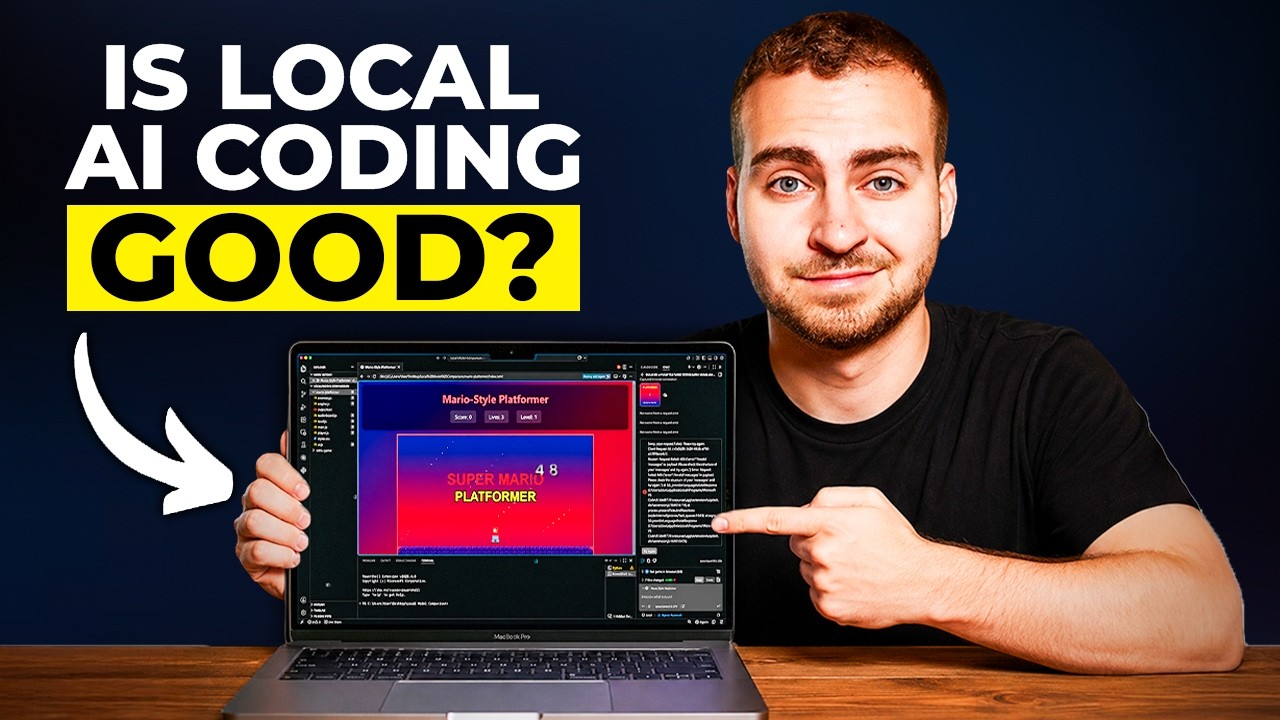
Tech With Tim turned the same trust question toward developers. His 21-minute test reached 27,984 views, 788 likes, and 123 comments and says the evaluation was done on an RTX 4090 with 24 GB VRAM and an M5 Max with 64 GB unified memory, with explicit sections on LM Studio setup, IDE compatibility, and comparison to paid Claude models. The distinctive angle is that local AI coding was treated as a hardware-fit and workflow-fit question, not an ideology (video).

IBM Technology supplied the cleanest failure-mode explanation. Its video says RAG systems fail when documents contradict each other and evolve over time, and IBM's linked RAG overview adds that knowledge bases must be continually updated to preserve quality and relevance. The distinctive angle is that accuracy breaks here because the corpus is messy and changing, not because the model simply needs a better prompt (video).
Discussion insight: The linked MindsHub page argues that chat alone is insufficient for real knowledge work because users need connected data, swappable harnesses and models, and a place for results to live. That matches the rest of the theme: OpenCode adds validation and rollback, IBM insists on ambiguity-aware retrieval, and local-coding videos keep testing compatibility rather than raw model IQ.
Comparison to prior day: Compared with 2026-07-18's operator playbooks, 2026-07-19 concentrated more on the control surfaces and failure cases that determine whether those playbooks hold up.
1.3 Creator video AI kept rewarding free routes, but editability remained the deciding layer 🡒
Two videos supported this theme. Compared with 2026-07-18's model-hopping creator pipelines, 2026-07-19 narrowed the conversation into concrete instructions for staying off paid plans without giving up useful editing control.

Malva AI provided the largest creator signal. Its 11-minute video reached 100,406 views, 2,676 likes, and 198 comments and says creators can get zero-credit generations, more than 200 free videos a week, prompt-based clip edits, talking avatars, and simple multi-model workflows. The distinctive angle is that Higgsfield and Gemini Omni Flash are being judged less as one-shot generators than as editable workbenches that can preserve most of an existing scene while changing specific elements (video).

Backlash made the routing logic even more explicit. Its 5-minute tutorial reached 11,124 views, 209 likes, and 12 comments and maps three free Veo 3 paths: Google Flow for daily credits, Google Vids inside Workspace, and SnapGen AI as a no-account route. The distinctive angle is that "free AI video" is no longer a vague promise here; it is a fallback map across several services (video).
Discussion insight: Malva's own disclaimer says that free tiers, pricing, and policies can change at any time. That helps explain why the parallel Veo 3 tutorial spreads usage across Flow, Vids, and SnapGen instead of trusting any one provider to remain free or stable.
Comparison to prior day: Compared with 2026-07-18, creator interest stayed price-sensitive but became even more operational: the value was in route selection and edit preservation, not just in finding another branded model.
1.4 China’s AI story widened from model launches to chips and job-replacing robots 🡕
Two videos supported this theme, and the Kimi K3 coverage reinforced it from the model side. Compared with 2026-07-18's broader governance-and-control framing, 2026-07-19 made the China story more physical: semiconductors crossing borders and robots appearing on the conference floor.

Financial Times supplied the clearest hardware-layer signal. Its 19-minute film reached 38,668 views, 952 likes, and 84 comments, and the description says resellers are bypassing U.S. export controls so advanced AI semiconductors can still reach China. The distinctive angle is that AI competition was framed as an enforcement and logistics problem, not just a model-quality problem (video).

1M65 provided the most concrete embodied-AI labor signal. Its WAIC dispatch says robots were serving customers, performing tasks, and assisting people on the ground, then reframes the issue from whether AI will replace jobs to whether viewers will adapt fast enough. The distinctive angle is that the labor threat is presented as current conference-floor evidence rather than distant futurism (video).
Discussion insight: AI Revolution ties Kimi K3 to Reuters reporting on China's attempt to reshape the AI order, while the FT video shows the chip-supply side of the same contest. The China story was being told across open-weight models, smuggled hardware, and live robotics demos at the same time.
Comparison to prior day: Compared with 2026-07-18, the China and power story became more concrete and more embodied: less about abstract control risk, more about hardware access and visible automation.
2. What Frustrates People
Frontier open models still outpace clear deployment fit
This is High severity because four videos in the review set treated Kimi K3 as important, but the current public evidence still splits between benchmark excitement and operational caveats. AI Search, Matthew Berman, AI Revolution, CNBC's Databricks clip, and Kimi's public K3 blog all point at the same friction: evaluation claims move faster than answers about hosted capacity, final weights, and feasible serving hardware. The workaround is to stay on Kimi.com, Kimi Code, or managed-hosting surfaces first, validate against real workloads, and postpone self-hosting promises until the weight release and hardware path are clearer. This is directly worth building for.
AI systems still break when the environment is messy or safety-critical
This is High severity because the operator examples span smart-home control, local coding, and enterprise retrieval rather than one niche. Paul Hibbert (Hibbert Home Tech), IBM Technology, Tech With Tim, the OpenCode repo, and IBM's RAG overview all show the same constraint: natural-language control becomes risky when config writes are real, documents contradict each other, or the local setup differs from the benchmark setup. The workaround is validation pipelines, backup and restore, narrower scopes, and ambiguity-aware retrieval instead of raw vector search. This is directly worth building for.
Creator AI still works like a free-tier routing game
This is Medium-to-High severity because both creator videos spend more time on access gymnastics than on storytelling itself. Malva AI and Backlash both teach users how to rotate through zero-credit setups, daily credits, Workspace entry points, and no-account tools, and Malva explicitly warns that "free" and "unlimited" can disappear at any time. The workaround is to keep assets portable, preserve editable intermediates, and never depend on one free route. This is worth building for, but the market is already competitive.
3. What People Wish Existed
Open-model evaluation and deployment control plane
AI Search, Matthew Berman, AI Revolution, CNBC's Databricks clip, and Kimi's public K3 blog all imply demand for one surface that compares benchmark claims, hosted routes, API surfaces, weight-release status, and serving requirements before a team commits to a stack. This is a practical need with High urgency because Kimi K3 was everywhere in the dataset, but fit still looked fragmented across videos, docs, and infrastructure commentary. Kimi.com, Kimi Code, and managed hosts solve pieces of the problem today, not the deployment-choice problem itself. Opportunity: direct.
Safe operator workspace for config, retrieval, and local execution
Paul Hibbert (Hibbert Home Tech), IBM Technology, Tech With Tim, OpenCode, and MindsHub imply demand for one workbench that combines natural-language control, validation, rollback, ambiguity-aware retrieval, and honest hardware-fit guidance by default. This is a practical need with High urgency because users clearly want AI to touch real systems, but the current evidence says those systems stay trustworthy only when control boundaries are explicit. OpenCode, IBM guidance, and agent workspaces solve meaningful slices today, not the full operator surface. Opportunity: direct.
Portable creator routing and editability layer
Malva AI and Backlash imply demand for a layer that preserves scenes, editable assets, and working prompts while routing generation across whichever free or cheap video provider still works. This is a practical need with High urgency because the strongest creator evidence is still about avoiding paywalls, preserving edits, and moving between tools when credits or policies change. Higgsfield, Google Flow, Google Vids, and SnapGen AI solve parts of the workflow today, but users still stitch the route map together themselves. Opportunity: competitive.
AI supply-chain and automation exposure monitor
AI Revolution, Financial Times, and 1M65 imply a need for one surface that tracks open-model shifts, chip-access bottlenecks, and visible automation rollouts in the same place. This is a practical need with Medium urgency because the current dataset is already mixing model releases, export-control leakage, and the question "Will you learn AI fast enough to stay ahead?" into one operating story, but the evidence still arrives through scattered media clips. Newsletters and industry coverage solve parts of the problem today, not the integrated picture. Opportunity: direct.
4. Tools and Methods in Use
| Tool | Category | Sentiment | Strengths | Limitations |
|---|---|---|---|---|
| Kimi K3 / Kimi Code | Open-weight foundation model | (+/-) | 2.8T scale, 1M context, multiple public access surfaces, strong coding and visual-reasoning story | Still trails top proprietary models overall, full weights were still pending on 2026-07-19, and deployment is best on 64+ accelerators |
| Databricks-hosted open models | Managed AI infrastructure | (+/-) | Gives teams a hosted route for models like Kimi without self-serving everything | GPU supply is already tight, which limits scale and availability |
| Local coding on LM Studio-style stacks | Local developer stack | (+/-) | Private experimentation, explicit hardware tests, and IDE-compatibility checks | Needs high-end hardware and is still judged against paid Claude workflows |
| OpenCode for Home Assistant | Agentic configuration assistant | (+/-) | Natural-language config editing, 75+ providers, 37 tools, validation, and automatic restore | High-trust system access requires careful review and explicit safety boundaries |
| MindsHub Cowork | Agent workspace | (+) | Swappable open-source harnesses and models, connected data, and a workspace beyond chat transcripts | Per-task agent choice and mobile support were still marked as coming soon |
| Ambiguity-aware RAG | Retrieval method | (+/-) | Directly addresses contradictory and evolving documents, which reduces false hallucinations | More complex than naive vector-database pipelines and still requires continual knowledge-base updates |
| Higgsfield / Gemini Omni Flash | Creator video suite | (+/-) | Prompt-based clip edits, avatars, sound-aware generation, and scene preservation | The current evidence is sponsor-heavy, and free access can change quickly |
| Google Flow / Google Vids / SnapGen AI | Creator video routing surfaces | (+/-) | Multiple free entry points, daily credits, a Workspace path, and a no-account fallback route | Credits, access rules, and policy stability vary enough that users still route manually |
The strongest positive sentiment clustered around tools that added control and optionality: multiple Kimi access surfaces, validation before config writes, explicit agent workspaces, and creator tools that keep clips editable after generation.
Sentiment turned mixed whenever the tool depended on scarce hardware, shifting free tiers, or giving an AI real power over a production system. That is why Kimi K3, local coding stacks, OpenCode, and creator-video surfaces all looked useful but still operationally unsettled.
The main workaround pattern was layering. Users start on hosted routes before exploring local ones, wrap agent actions in validation and rollback, and keep multiple creator-video paths ready so a change in credits or policy does not stop the workflow. Migration pressure is moving from benchmark hype toward deployability checks, from plain chat toward dedicated workspaces, and from single video generators toward routing and edit-preservation layers.
5. What People Are Building
| Project | Who built it | What it does | Problem it solves | Stack | Stage | Links |
|---|---|---|---|---|---|---|
| Kimi K3 | Kimi | Open 3T-class model for long-horizon coding, knowledge work, and visual reasoning | Teams want frontier open-model performance with multiple public access surfaces | Kimi Delta Attention, Attention Residuals, Stable LatentMoE, 1M context, Kimi Work, Kimi Code, Kimi API | Beta | blog, video 1, video 2 |
| OpenCode | magnusoverli | Home Assistant add-on that lets AI edit and troubleshoot configuration in natural language | Home Assistant users want power without raw YAML and broken configs | OpenCode AI agent, MCP, Home Assistant Builder CLI, validation pipeline, backup/restore, 75+ providers | Shipped | repo, video |
| MindsHub Cowork | MindsHub | Workspace for open-source agents with swappable harnesses, models, and connected data | Users want agent workflows that outgrow a simple chat transcript | Anton and Hermes harnesses, model switching, connectors, credentials vault, web and desktop app | Shipped | site, video |
| Higgsfield creator workflow | Higgsfield | Generates and edits clips, avatars, and scene changes through prompts | Creators want low-cost video generation that stays editable after the first pass | Higgsfield suite, Gemini Omni Flash, prompt editing, scene preservation, sound-aware generation | Shipped | site, video |
Kimi K3 and OpenCode point to the same builder pattern from opposite ends of the stack. Raw model quality matters, but the real product story is whether the model arrives inside a surface that users can route through safely and repeatedly.
MindsHub and Higgsfield show the same wrapper logic in agent workspaces and creator tooling. The durable value sits in the control plane around model choice, connected data, rollback, or clip editing rather than in the base model alone.
Across the current dataset, the repeated build pattern was packaging: access layers, safety layers, and editability layers were more concrete than any new generic chatbot pitch.
6. New and Notable
Kimi K3 hype started carrying its own caveats
AI Search, Matthew Berman, and Kimi's public docs are notable because the same launch cycle now includes both performance praise and explicit caveats about overall ranking, full-weight timing, and serving requirements.
Home Assistant got an installable AI control surface with rollback
Paul Hibbert (Hibbert Home Tech) is notable because the linked OpenCode repo does not stop at a concept demo. It packages plain-English configuration editing with validation, backup and restore, and a broad provider surface inside a real Home Assistant add-on.
IBM turned RAG failure into a contradictory-documents problem
IBM Technology is notable because it frames retrieval failure around evolving and conflicting documents rather than generic "hallucinations." That is a more concrete and actionable reliability diagnosis than most high-level AI accuracy commentary.
Free creator-video routing became a concrete playbook
Malva AI and Backlash are notable because they do not just say "there are free tools." They spell out zero-credit setups, daily-credit routes, no-account fallbacks, and the need to keep clips editable after generation.
China's AI story moved from model weights to chips and robots
Financial Times, 1M65, and AI Revolution are notable because they connect three layers of the same narrative at once: frontier open models, gray-market chip access, and visible robotics deployment at WAIC.
7. Where the Opportunities Are
[+++] Open-model evaluation and deployment control plane - AI Search, Matthew Berman, AI Revolution, CNBC's Databricks clip, and Kimi's public K3 blog all point to the same gap: teams need one surface that compares claims, caveats, hosted routes, and serving requirements before they commit. This is strong because the pain appears across launch coverage, skepticism, and infrastructure constraints at once.
[+++] Safe operator workspace with validation, rollback, and ambiguity-aware retrieval - Paul Hibbert (Hibbert Home Tech), IBM Technology, Tech With Tim, OpenCode, and MindsHub show that useful AI still depends on explicit control boundaries. This is strong because the same need repeats across smart homes, local coding, and enterprise retrieval rather than living in one niche.
[++] Creator-video routing and edit-preservation layer - Malva AI and Backlash show repeated demand for systems that preserve scenes, prompts, and editable assets while routing work across changing free or low-cost video providers. This is moderate because the pain is obvious, but creator tooling is already crowded and fast-moving.
[++] AI supply-chain and automation exposure dashboard - AI Revolution, Financial Times, and 1M65 show an emerging need to watch model shifts, chip-access bottlenecks, and public automation rollouts in one place instead of through scattered media clips. This is moderate because the signal is real, but the buyer and workflow are still less standardized than for developer or creator tools.
[+] Plain-English home automation copilot with strong guardrails - Paul Hibbert (Hibbert Home Tech) and the linked OpenCode repo point to a concrete but narrower opportunity around making Home Assistant-style systems editable through natural language without giving up validation, backup, or review. This is emerging because the product signal is concrete, but the market is still more specialized than the broader AI operator space.
8. Takeaways
- Kimi K3 remained the dominant YouTube AI story, but the conversation got less celebratory and more operational. The strongest items no longer stopped at "best open model"; they asked whether Kimi really beat Fable, when full weights arrive, and who has the GPU capacity to serve it. (source, source, source, source)
- AI tools that touch real systems were judged on guardrails before raw intelligence. The clearest operator evidence centered on validation, rollback, ambiguity-aware retrieval, hardware fit, and IDE compatibility rather than on abstract autonomy. (source, source, source, source)
- Creator video AI still competed on free access, but editability and route redundancy mattered more than model branding alone. The strongest tutorials were about zero-credit paths, daily-credit fallbacks, no-account routes, and the ability to preserve an existing scene while editing parts of it. (source, source)
- China's AI narrative became more physical through chips and robots, not just model releases. The current feed connected Kimi K3's geopolitical framing to gray-market semiconductor flows and visible robotics deployment at WAIC. (source, source, source)
- The most actionable product opportunities still sat in wrapper layers around models. Deployment evaluators, rollback-first operator workbenches, and creator routing/editability layers looked more concrete in this dataset than another generic AI assistant surface. (source, source, source, source)