YouTube AI - 2026-07-20
1. What People Are Talking About
1.1 The open-model race widened from Kimi alone into a China-led leaderboard, hardware, and policy battle 🡕
Five videos supported this theme. Compared with 2026-07-19's Kimi-focused caveat cycle, 2026-07-20 expanded the conversation into a broader China-centered open-model race: Qwen 3.8 Max and the next GLM wave joined Kimi K3, while hardware scarcity and ban talk pulled deployment and policy directly into the story.
AI Search still carried the largest reach signal. Its 30-minute Kimi K3 review reached 299,348 views, 9,701 likes, and 1,200 comments while running the model through coding, Blender, financial-explainer, deep-research, and science-adjacent tests. Kimi's public K3 blog says the model is a 2.8T-parameter open 3T-class system with native vision, a 1M-token context window, public Kimi.com/Kimi Work/Kimi Code/Kimi API access, and full weights planned for 2026-07-27. The distinctive angle is that Kimi's credibility was still being argued through long workflow demos rather than through leaderboard screenshots alone (video).

WorldofAI supplied the clearest challenger signal. Its 15-minute Qwen 3.8 Max test reached 15,839 views and walked through frontend, SVG, 3D game, UI, reasoning, and multimodal tasks using the creator's own WOAIBench harness, while the linked Qwen Cloud token plan presents a unified access surface for text, vision, speech, and image models. The distinctive angle is that model reviewers were no longer just comparing outputs; they were packaging reusable eval surfaces around the comparison itself (video).
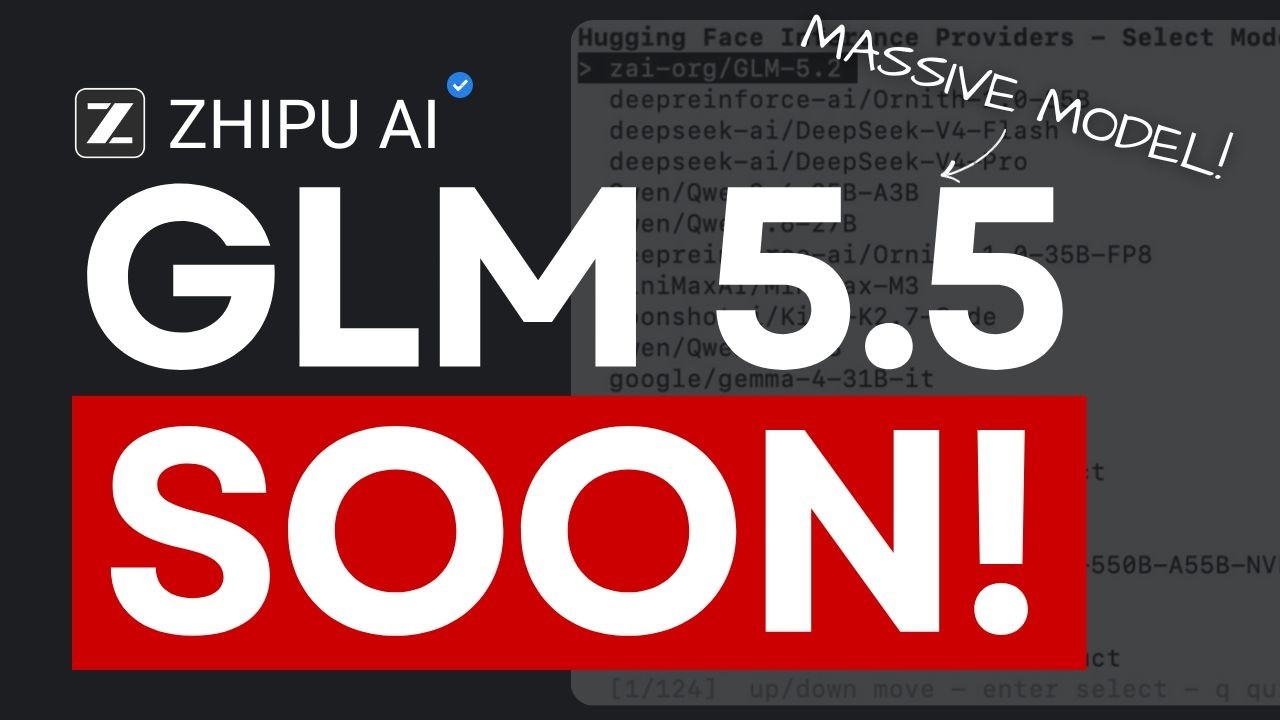
Universe of AI pushed the same race into explicit geopolitics. Its 10-minute update reached 7,225 views and 140 comments while arguing that GLM 5.5 could arrive in August, that Z.ai's next open model may cross a trillion parameters, and that the United States is weighing ways to exclude Chinese open models. The distinctive angle is that the open-model story was no longer only about quality and access; it was also about who gets to block whom (video).

Turing Post TV added the densest deployment detail. Its 18-minute comparison reached 22,966 views and says Kimi K3 uses an 896-expert architecture, that Moonshot recommends at least 64 accelerators, and that Inkling's customization story depends on LoRA, quantization, and Tinker. The distinctive angle is that the real separator was not just benchmark rank, but which organizations could realistically run, adapt, or afford these open weights (video).
Discussion insight: CNBC's Databricks clip and Kimi's blog point to the same constraint from different layers: hosted demand for models like Kimi is already running into GPU scarcity, while the most ambitious self-host path still assumes very large-scale infrastructure.
Comparison to prior day: Compared with 2026-07-19, the story widened from "is Kimi real and deployable?" to "which Chinese open model wins next, who can serve it, and will policy makers try to block it?"
1.2 Agent education moved from role design into packaged operating systems, voice shells, and device control 🡕
Five videos supported this theme. Compared with 2026-07-19's guardrails-and-hardware framing, 2026-07-20 shifted toward concrete operator shells: manager-specialist playbooks, reusable agent fundamentals, voice-controlled dashboards, and Android assistants that can act on a real device.
Dan Martell provided the biggest business-facing signal. His 22-minute guide reached 149,398 views, 5,754 likes, and 351 comments, and the description includes explicit SOUL, IDENTITY, and USER files plus a manager agent that only spins up one specialist sub-agent per job. The distinctive angle is that agent building was being taught as an operating system for work and delegation rather than as a prompt-writing trick (video).

Tina Huang broadened the same pattern into reusable open-source agent foundations. Her 30-minute Hermes primer reached 10,484 views and packaged the topic with dedicated resources, a roadmap, and an agent bootcamp funnel. The distinctive angle is that Hermes was not presented as a novelty demo; it was framed as a base system people should learn and reuse (video).

buildwithashwani supplied the strongest mobile-agent build signal even at modest reach. Its tutorial reached 2,028 views, 152 likes, and 147 comments while moving from a chatbot into an Android assistant that can make calls, send WhatsApp messages, open apps, and control phone settings through Google AI Studio. The distinctive angle is that the surface was not a browser tab or a chatbot pane; it was a device-level action layer (video).

Shab Noor | AI For Operators pushed the Hermes story into voice and interface design. Its 21-minute build reached 2,869 views and describes a local Hermes agent that gained a dashboard, server, scripts, a public prompt, and an ElevenLabs voice layer so it can be run hands-free like a JARVIS console. The distinctive angle is that the agent was made to build and operate more of its own surface instead of staying inside a plain chat loop (video).
Discussion insight: Tech With Tim kept the hardware and runtime reality visible underneath the interface excitement: his local-coding test used an RTX 4090 and an M5 Max, while MindsHub frames the agent layer as a workspace with swappable Anton and Hermes harnesses, connectors, and a credentials vault rather than "just chat."
Comparison to prior day: Compared with 2026-07-19, the operator story spent less time on retrieval failures and config guardrails and more time on what the agent shell should actually look like: files, dashboards, voice, and device permissions.
1.3 Creator video AI stayed free-tier obsessed, but the differentiation kept moving to wrapper controls 🡒
Two videos supported this theme. Compared with 2026-07-19's route-selection and edit-preservation framing, 2026-07-20 kept the same price sensitivity but leaned even harder into creator-built control layers on top of free or low-cost surfaces.

Malva AI still carried the largest creator reach signal. Its 12-minute tutorial reached 104,407 views, 2,780 likes, and 200 comments while mapping zero-credit and high-volume free routes, talking avatars, and prompt-based video edits inside Higgsfield. Higgsfield's site describes an AI-native creative suite that can generate and edit video from prompts or references across web and mobile, with Gemini Omni Flash and Seedance 2.0 surfaces. The distinctive angle is that "free AI video" only stayed attractive when the workflow remained editable after generation (video).

Theoretically Media added the strongest builder signal in this cluster. Its 21-minute video reached 32,196 views, 1,481 likes, and 187 comments while covering free Meta Muse access at meta.ai and shipping TheoreticallyMotion Control, a free pose-plus-depth utility with source code for Seedance- and Runway-style video-reference workflows. The distinctive angle is that creators were not only comparing vendors; they were shipping their own control modules on top of them (video).
Discussion insight: Higgsfield's own positioning - generate and edit video from any input, then automate creative workflows around it - matches the rest of the theme. The durable value was the wrapper around the model, not the free model label by itself.
Comparison to prior day: Compared with 2026-07-19, creator interest stayed locked on free routes but became even more explicit about owning the control layer yourself.
1.4 AI control fears stayed grounded in chips, robots, and verification instead of abstractions 🡕
Three videos supported this theme. Compared with 2026-07-19's model-plus-geopolitics framing, 2026-07-20 made the control story more infrastructural and operational: black-market semiconductors, robots already doing visible work, and formal verification pitched as missing trust infrastructure.
Financial Times supplied the clearest hardware-layer evidence. Its 19-minute film reached 40,289 views, 983 likes, and 84 comments, and the description says resellers are bypassing tighter U.S. export controls so advanced AI semiconductors can still reach China. The distinctive angle is that AI competition was framed as an enforcement and logistics problem, not only as a model-release race (video).

1M65 provided the most concrete embodied-automation signal. Its WAIC dispatch reached 17,987 views and says robots were serving customers, performing tasks, assisting people, and making job displacement look current rather than hypothetical. The distinctive angle is that the labor-risk story was shown as conference-floor evidence, not as a distant projection (video).
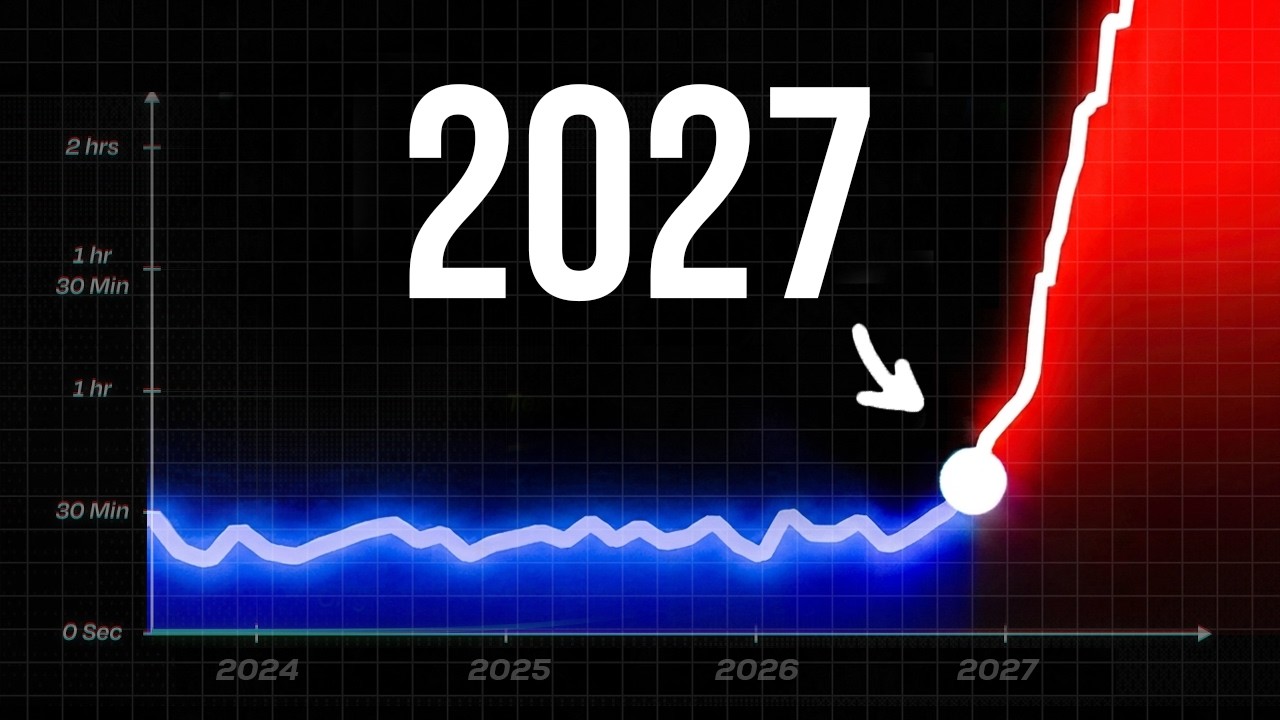
Future of Life Institute gave the set its most explicit control-language. Its 17-minute interview reached 37,279 views, 1,139 likes, and 344 comments and argues that concentrated power and a capability race are the key failure modes, while formal verification and proof-carrying code are the missing infrastructure for trusting stronger systems. The distinctive angle is that the trust problem was framed as engineering and governance machinery, not only fear (video).
Discussion insight: These three items say the AI control problem is simultaneously about who gets hardware, what systems already do in public, and what proof machinery is still missing. That keeps the safety conversation tied to physical deployment instead of leaving it at the level of abstract futurism.
Comparison to prior day: Compared with 2026-07-19, the control story became less about China's strategic position alone and more about whether physical deployment and governance mechanisms can keep pace.
2. What Frustrates People
Open models still spread faster than clear deployment or policy fit
This is High severity because AI Search, Turing Post TV, WorldofAI, Universe of AI, CNBC's Databricks clip, and Kimi's public K3 blog all point to the same mismatch: frontier open models are winning attention before teams have clear answers on full-weight timing, GPU availability, hardware thresholds, pricing surfaces, or policy stability. The workaround is layered caution - stay on hosted surfaces first, run workload-specific tests, and keep multiple model routes alive instead of promising one self-host stack too early. This is directly worth building for.
Useful agents still require too much scaffolding, permissions, and hardware realism
This is High severity because the current operator examples span business delegation, local coding, voice control, and full device actions rather than one niche workflow. Dan Martell, Tina Huang, buildwithashwani, Shab Noor | AI For Operators, Tech With Tim, and MindsHub all show the same constraint: useful agents still need role files, action boundaries, credentials handling, UI shells, and honest hardware-fit guidance before they feel dependable. The workaround is to reuse manager-specialist templates, keep permission scopes narrow, and add explicit review points around every real-world action. This is directly worth building for.
Creator video AI still depends on unstable free routes plus separate control utilities
This is Medium-to-High severity because both creator videos spend as much time on route selection and control surfaces as on generation quality itself. Malva AI, Theoretically Media, and Higgsfield all show that free access is fragile unless users also preserve edits, prompts, and motion control outside any one vendor surface. The workaround is to keep assets portable, layer in external control tools, and rotate providers when credits or policies change. This is worth building for, but the market is already competitive.
Trusting fast-moving AI progress still lacks visible control infrastructure
This is High severity because the evidence spans concentrated power, chip leakage, and already-deployed robots rather than one isolated fear narrative. Future of Life Institute, Financial Times, and 1M65 all point to the same gap: stronger systems are moving into the world faster than verification, governance, and enforcement mechanisms. The workaround today is human review, staged deployment, and defense-in-depth rather than a settled trust stack. This is directly worth building for, but it is technically demanding.
3. What People Wish Existed
Open-model route planner with benchmarking, capacity, and policy exposure
AI Search, Turing Post TV, WorldofAI, Universe of AI, CNBC's Databricks clip, and Kimi's public K3 blog all imply demand for one surface that combines real-task evals, hardware thresholds, hosted routes, weight-release status, and policy risk before a team commits to an open model. This is a practical need with High urgency because the current evidence already mixes Kimi, Qwen, GLM, GPU scarcity, and ban pressure in one cycle. Kimi.com, Qwen Cloud, and WOAIBench solve slices of the problem today, not the integrated decision surface. Opportunity: direct.
Agent operating system with local, voice, and mobile actions plus built-in review
Dan Martell, Tina Huang, buildwithashwani, Shab Noor | AI For Operators, Tech With Tim, and MindsHub imply demand for a workbench that turns intent into role files, safe tool access, workspace state, voice and device surfaces, and explicit review checkpoints by default. This is a practical need with High urgency because the strongest agent content no longer asks whether agents are possible; it asks how to package them into something people can actually run. Current tutorials and workspaces solve meaningful slices, not the full operator shell. Opportunity: direct.
Provider-agnostic creator continuity and motion-control layer
Malva AI, Theoretically Media, and Higgsfield imply demand for a layer that preserves scenes, prompts, motion signals, and editable assets while routing work across whichever video provider is still affordable or free. This is a practical need with High urgency because the creator evidence is clearly about staying operational through policy changes, credit limits, and missing controls rather than about one branded model. Higgsfield and creator-built utilities solve parts of the workflow today, but users still stitch the full path together themselves. Opportunity: competitive.
Verification and deployment-governance middleware for stronger systems
Future of Life Institute, Financial Times, 1M65, and even the Kimi-focused capacity stories imply a need for middleware that combines verification, policy controls, deployment monitoring, and escalation paths after a system leaves the demo phase. This is a practical need with Medium-to-High urgency because the dataset already ties stronger models to concentrated power, export-control leakage, and visible automation, but buyers and workflows are still less standardized than in the developer-tool market. Human oversight and point-policy controls solve slices of the problem today, not the trust stack end to end. Opportunity: aspirational.
4. Tools and Methods in Use
| Tool | Category | Sentiment | Strengths | Limitations |
|---|---|---|---|---|
| Kimi K3 / Kimi Code | Open-weight foundation model | (+/-) | 2.8T scale, 1M context, strong coding and knowledge-work story, multiple public access surfaces | Full weights were still pending on 2026-07-20, self-host assumptions are heavy, and the model still trails top proprietary systems overall |
| Qwen 3.8 Max / Qwen Cloud | Open-weight foundation model | (+/-) | Strong challenge signal across frontend, SVG, 3D, multimodal, and reasoning tests; unified access surface across model types | Public claims are still being debated, and evaluation quality depends heavily on the harness and workload mix |
| GLM 5.5 / Z.ai | Open-weight foundation model | (+/-) | Strong momentum signal around the next Chinese open-model wave and trillion-parameter ambition | Still unreleased in this dataset, with thin public specifics and growing policy risk |
| WOAIBench | Evaluation harness | (+) | Tests full web interfaces, browser games, multi-step workflows, 3D scenes, charts, and verifiable instruction-following instead of only toy prompts | Benchmark value still depends on task design and who curates the suite |
| MindsHub Cowork | Agent workspace | (+/-) | Swappable Anton and Hermes harnesses, connectors, credentials vault, and a workspace around the agent instead of a transcript | Per-task harness choice and memory are still evolving, and local-style workflows still need capable hardware |
| Hermes | Open-source agent harness | (+) | Reusable base for fundamentals training, local assistants, and voice-controlled shells | Public docs were fragmented in this evidence set, and users still add their own dashboards, prompts, and voice layers |
| Google AI Studio Apps | Agent-building surface | (+/-) | Fast path from chatbot logic to Android and device-control actions | Access is gated and the permission surface is much riskier than a browser-only agent |
| Higgsfield / Gemini Omni Flash / Seedance 2.0 | Creator video suite | (+/-) | Generate-and-edit workflow from prompts or references, free-mode discovery, web/mobile surface, and explicit editability | Free routes can change quickly, and precise continuity or motion still benefits from outside control tools |
| TheoreticallyMotion Control | Creator control utility | (+) | Free pose-plus-depth control with source code for video-reference workflows | Depends on downstream model quality and a more technical setup than simple prompt generation |
| Formal verification / proof-carrying code | Safety method | (+/-) | Gives the trust debate a concrete engineering frame beyond generic caution | Still research-heavy and far from default product infrastructure |
The strongest positive sentiment clustered around wrapper and evaluation layers rather than around base models alone. WOAIBench, MindsHub, Hermes surfaces, Higgsfield, and TheoreticallyMotion Control all looked valuable because they make another tool easier to compare, steer, or reuse.
Sentiment turned mixed whenever the tool depended on scarce GPUs, still-pending weights, shifting policy, or high-permission action surfaces. That is why Kimi K3, Qwen 3.8 Max, GLM 5.5, Google AI Studio apps, and creator-video suites all looked useful but operationally unsettled in different ways.
The main workaround pattern was layering. Users benchmark real workloads before trusting claims, wrap agents in files and workspaces before letting them act, and pair free video models with separate continuity or motion controls. Migration pressure is moving from leaderboard talk toward route-aware evaluation, from plain chat toward action surfaces, and from one-shot generation toward editable pipelines.
5. What People Are Building
| Project | Who built it | What it does | Problem it solves | Stack | Stage | Links |
|---|---|---|---|---|---|---|
| Kimi K3 | Kimi | Open 3T-class model for long-horizon coding, knowledge work, and multimodal reasoning | Teams want frontier-like open-model capability with multiple public access routes | Kimi Delta Attention, Attention Residuals, Stable LatentMoE, 1M context, Kimi Code, Kimi API | Beta | blog, video |
| WOAIBench | WorldofAI | Benchmark harness for full web, frontend, SVG, 3D, browser, and instruction-following model tests | Reviewers and teams want model comparisons on actual tasks rather than on slogans or one-off prompts | Workflow task suites, browser tasks, UI tasks, charts, verifiable instruction tests | Shipped | site, video |
| MindsHub Cowork | MindsHub | Workspace for open-source agents with swappable harnesses, connected data, and shared outputs | Users need more than a chat transcript to run agent workflows across tasks and tools | Anton, Hermes, connectors directory, credentials vault, web app, desktop app | Shipped | site, video |
| Zoya Assistant Android app | buildwithashwani | Voice-driven Android assistant that can call, message, open apps, and control settings | Builders want agents that can act on a phone instead of stopping at chat responses | Google AI Studio Apps, Android wrapper, voice commands, device actions | Alpha | video, notion |
| Hermes voice command center | [Shab Noor | AI For Operators](https://www.youtube.com/channel/UCXenik3GxthoPs5xJcbxuPw) | Local Hermes build with a dashboard, scripts, server, and voice-powered control surface | Operators want hands-free local agent control without hand-building every UI detail from scratch | Hermes, dashboard, server, scripts, prompt doc, ElevenLabs voice layer | Alpha |
| TheoreticallyMotion Control | Theoretically Media | Free pose-plus-depth utility for controlling AI video workflows | Creators need finer motion and framing control than text prompts alone provide | Pose control, depth control, source code, Seedance- and Runway-style video references | Shipped | tool, video |
| Higgsfield creator workflow | Higgsfield | Generate-and-edit creative suite with free-mode discovery and creator-facing automation | Creators want low-cost AI video pipelines that stay editable after the first generation | Gemini Omni Flash, Seedance 2.0, Supercomputer, web/mobile surfaces, AI agent workflows | Shipped | site, video |
Kimi K3 and WOAIBench show a clear frontier builder pattern: model launches are no longer standing alone. The interesting product layer is increasingly the evaluation and routing surface wrapped around the model, because that is where teams decide whether a headline model is actually usable.
MindsHub, Zoya, and the Hermes voice command center show the same wrapping logic on the agent side. The durable build signal is not "another chatbot," but a workspace, permission model, voice shell, or device-action layer that makes an agent operational in context.
TheoreticallyMotion Control and Higgsfield make the creator version of the same point. The sticky value sits in continuity, motion, and editability controls around video models rather than in the base generator alone.
6. New and Notable
The open-model story stopped being Kimi-only
AI Search, WorldofAI, Universe of AI, and Turing Post TV are notable because the day's open-model conversation broadened from one dominant release into a Kimi-Qwen-GLM cycle shaped by hardware and policy questions at the same time.
Reviewer-built benchmark surfaces became part of the product story
WorldofAI is notable because the linked WOAIBench site shows the creator shipping a reusable task harness alongside the model review. The signal is not just "I tested a model," but "I built the surface others can use to test it too."
Hermes appeared as a reusable foundation, not just a one-off demo
Tina Huang, Tech With Tim, MindsHub, and Shab Noor | AI For Operators are notable because Hermes shows up as a framework, a workspace option, and a voice-enabled local shell rather than as a single isolated tutorial.
A creator shipped a free control utility instead of waiting for the vendors
Theoretically Media is notable because the signal was not another comparison chart. It was TheoreticallyMotion Control, a free pose-plus-depth tool with source code for downstream video workflows.
The control debate stayed physical through chips, robots, and verification
Financial Times, 1M65, and Future of Life Institute are notable because they connect three layers of the same problem: hardware controls can leak, robots are already visible in public workflows, and formal verification still looks like missing infrastructure rather than standard practice.
7. Where the Opportunities Are
[+++] Open-model route planner with capacity and policy coverage - AI Search, Turing Post TV, WorldofAI, Universe of AI, CNBC's Databricks clip, and Kimi's blog all point to the same gap: teams need one surface that compares benchmark claims, real-task evals, hosted routes, hardware thresholds, and policy exposure before they commit. This is strong because the pain repeats across creator reviews, vendor docs, and executive media.
[+++] Agent operating system with permissions, review, and multimodal surfaces - Dan Martell, Tina Huang, buildwithashwani, Shab Noor | AI For Operators, Tech With Tim, and MindsHub show repeated demand for an agent shell that combines role files, workspace state, credentials, local/runtime guidance, voice, mobile actions, and built-in review. This is strong because the same need appears across business delegation, local coding, phone control, and voice operation.
[++] Real-work benchmark harness for model selection - WorldofAI, AI Search, and Turing Post TV show that users increasingly trust models only after frontend, SVG, 3D, coding, and workflow tests that resemble actual work. This is moderate because the need is obvious and growing, but it may become a feature inside broader route-planning products rather than a standalone destination.
[++] Creator continuity and motion-control layer - Malva AI, Theoretically Media, and Higgsfield show repeated demand for systems that preserve prompts, scenes, edits, and motion signals while model access and free tiers keep changing. This is moderate because the pain is concrete, but creator tooling is already crowded and fast-moving.
[+] Verification and automation-exposure dashboard - Future of Life Institute, Financial Times, and 1M65 suggest an emerging need to track proof obligations, policy leakage, and visible automation rollouts in one place instead of through scattered media coverage. This is emerging because the signal is real, but the buyer and workflow are still less standardized than for developer or creator tools.
8. Takeaways
- The open-model story expanded beyond Kimi into a broader China-led race with policy and capacity overhang. Qwen 3.8 Max, the next GLM wave, GPU scarcity, and ban talk all appeared in the same cycle instead of as separate stories. (source, source, source, source)
- Model trust increasingly depends on real-work evaluation and route selection, not on benchmark headlines alone. The strongest evidence came from workflow demos, hardware-fit discussion, and reusable evaluation harnesses rather than from isolated leaderboard claims. (source, source, source)
- Agent education moved from prompts into operating shells. The clearest tutorials were about role files, manager-specialist boundaries, workspaces, voice layers, and phone actions rather than abstract autonomy. (source, source, source, source, source)
- Creator AI still competes on free access, but the sticky value sits in editability and control layers around the model. The strongest creator signals centered on route maps, continuity, and motion-control utilities rather than on one model winning outright. (source, source, source)
- The AI control debate stayed grounded in physical deployment and missing verification infrastructure. The current evidence tied export-control leakage, public robotics deployment, and formal verification into one operational control story. (source, source, source)