YouTube AI - 2026-07-21
1. What People Are Talking About
1.1 China's open-model push became a market and policy story, not just a leaderboard story 🡕
Five videos supported this theme. Compared with 2026-07-20's China-led leaderboard-and-hardware battle, 2026-07-21 sharpened the same story into questions of protectionism, market contagion, and whether open access itself is about to become a political fault line.
AI Search still carried the strongest reach signal. Its 30-minute Kimi K3 review reached 306,391 views, 9,834 likes, and 1,200 comments while running the model through coding, Blender, financial-explainer, deep-research, cancer-detection, and other workload tests. Kimi's public K3 blog says the model is a 2.8T-parameter open 3T-class system with native vision, a 1M-token context window, and public Kimi.com/Kimi Work/Kimi Code/Kimi API access, with full weights planned for 2026-07-27. The distinctive angle is that Kimi's credibility was still being argued through long workflow demos rather than through benchmark screenshots alone (video).
ABC News (Australia) compressed the same release into a business-market story. Its 5-minute clip reached 19,870 views, and the linked ABC article argues that cheaper Kimi K3 competition could trigger AI-service price wars and add pressure to the stretched valuations propping up AI-heavy equity markets. The distinctive angle is that an open model was being framed as a direct threat to the financial logic behind the boom, not just as another impressive release (video).
WorldofAI pushed the story beyond Kimi alone. Its update reached 23,225 views and 193 comments while combining U.S. restriction talk with GLM 5.5, Z.ai's 1GW Chinese-chip data center, Qwen 3.8 upgrades, Gemini efficiency rumors, and Unitree robotics. The linked WOAIBench site is notable because it packages the news with a reusable evaluation surface spanning full web interfaces, browser games, 3D scenes, charts, deep web research, and verifiable instruction-following. The distinctive angle is that reviewers were not only narrating the model race; they were shipping benchmark surfaces around it (video).
Universe of AI gave the clearest explicit ban framing. Its 10-minute video reached 24,917 views and 282 comments while arguing that GLM 5.5 could arrive in August, that Z.ai's next model could cross a trillion parameters, and that the United States is weighing ways to exclude Chinese open models. The linked Arcade docs add a second layer: secure agent actions across tools like Gmail, Slack, and GitHub are already being productized as governance infrastructure while the model-access fight heats up. The distinctive angle is that open-model competition and action-runtime governance were being discussed in the same breath (video).
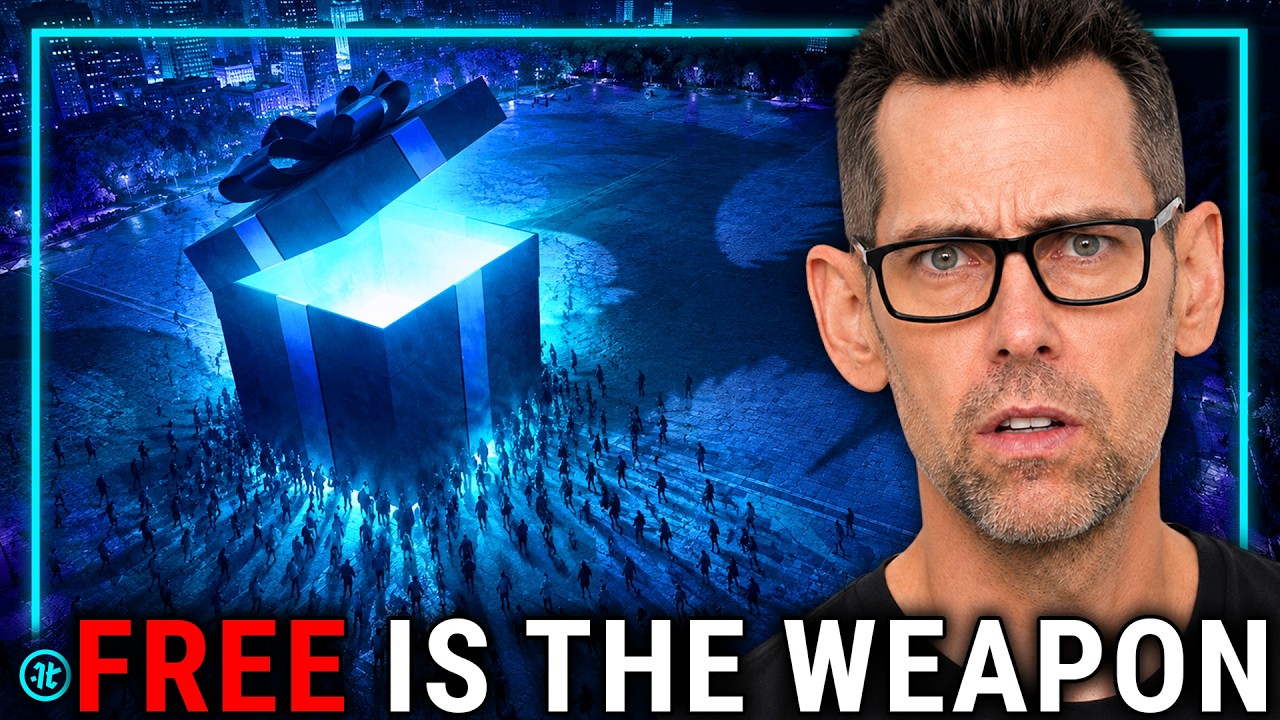
Tom Bilyeu Clips added the bluntest political-economy framing. Its 16-minute clip says Kimi K3 is a 2.8T open-weight model, repeats the 2026-07-27 weight-release date, and argues that a protected U.S. market could do more damage than the Chinese model itself. The distinctive angle is that the release was being framed less as a benchmark event than as a strategic free-intelligence move aimed at the American AI stack (video).
Discussion insight: Kimi's K3 blog and ABC's market analysis point to the same tension from different layers: Kimi is being sold as open and cheaper, but the rollout still depends on delayed full weights, very large-scale serving assumptions, and a market already nervous about how much AI spending can be justified.
Comparison to prior day: Compared with 2026-07-20, the story moved from "which Chinese open model is winning?" toward "does the U.S. try to shut the door, and what happens to AI valuations if it does not?"
1.2 Agent builders kept shifting from prompt demos to full action surfaces 🡕
Four videos supported this theme. Compared with 2026-07-20's operating-system and voice-shell framing, 2026-07-21 added more production detail: tool authorization, knowledge bases, appointment booking, phone control, and model-customization choices.
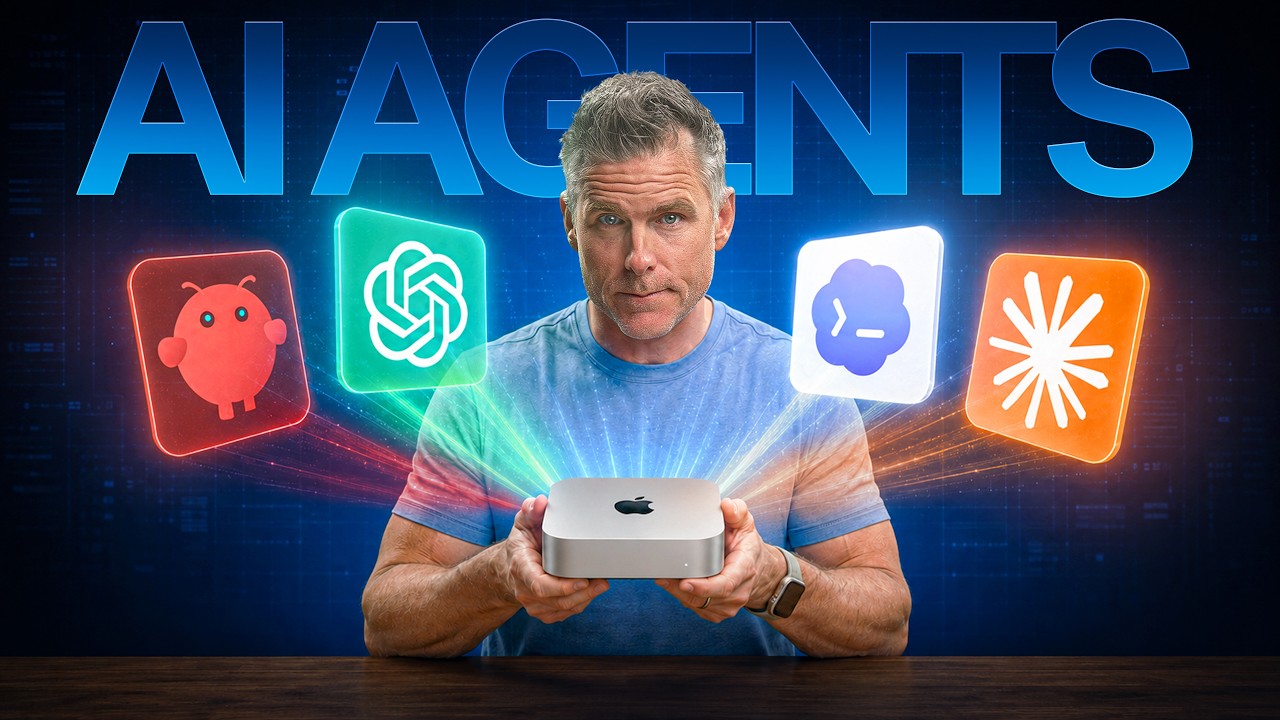
Dan Martell still provided the biggest business-facing signal. His 22-minute guide reached 164,982 views, 6,247 likes, and 245 comments, and the description points viewers to a free AI Company Operating System while framing the real opportunity as building agents that run background work, not simply chatting with models. The distinctive angle is that agent education was being packaged as reusable operating design and manager-specialist delegation, not as prompt cleverness (video).
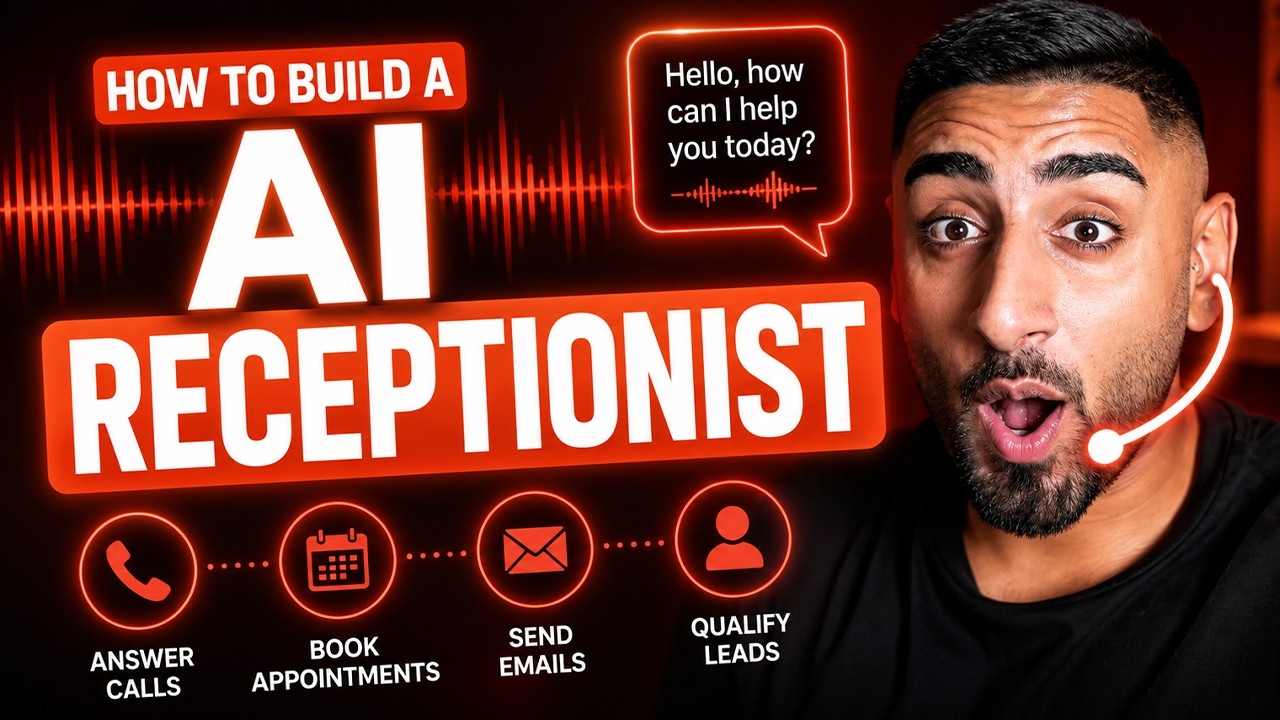
Sonny Sangha supplied the clearest production voice-agent stack. His tutorial reached 14,819 views and shows an AI receptionist built around Bland AI, Norm, knowledge bases, pathways, Cal.com, web widgets, the Bland Web Agent SDK, Convex endpoints, MCP, and CLI workflows, with compliance and self-hosting called out for regulated domains. The distinctive angle is that the value proposition was not "talking voice AI," but a business workflow that books, routes, updates data, and debugs itself (video).

buildwithashwani kept the device-action story alive even at modest reach. Its Android build tutorial reached 3,303 views and 191 comments while moving from a web chatbot into a phone assistant that can make calls, send WhatsApp messages, open apps, and control settings through Google AI Studio. The distinctive angle is that the surface was not a browser or dashboard; it was a voice-controlled phone with sellable automation-service positioning (video).
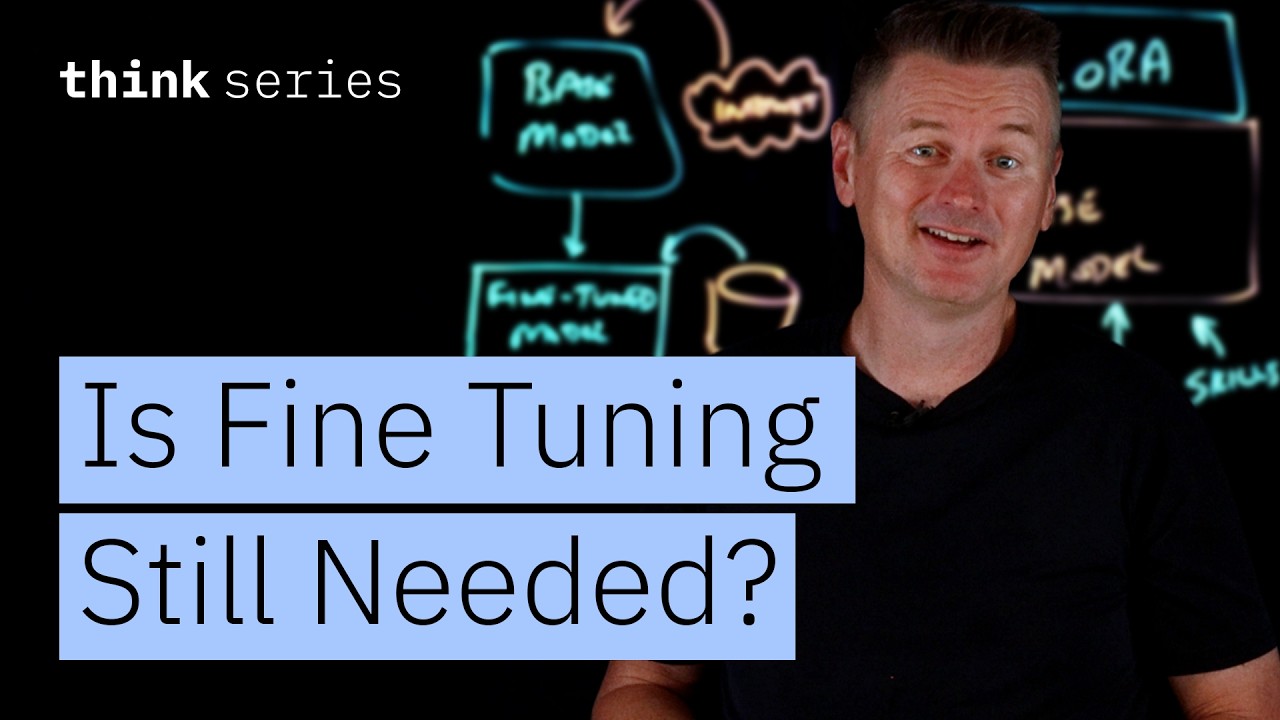
IBM Technology provided the cleanest architecture-choice explanation. Its video reached 9,724 views and 56 comments, while IBM's linked fine-tuning overview argues that pre-trained LLMs only append text and do not truly understand user intent, making fine-tuning, RAG, and LoRA situational tools rather than interchangeable buzzwords. The distinctive angle is that builder discourse was explicitly about when to adapt the model, not only how to wrap it (video).
Discussion insight: Arcade and IBM's fine-tuning overview line up with the tutorials: once agents touch real tools, customers, or regulated data, auth, governance, adaptation strategy, and review loops matter as much as the base model.
Comparison to prior day: Compared with 2026-07-20, the agent story spent less time on the shell metaphor itself and more time on concrete action layers - phones, calls, bookings, and tool governance.
1.3 AI anxiety moved into schools, cyberattacks, and public robotics spectacles 🡕
Five videos supported this theme. Compared with 2026-07-20's chip-leakage-and-robots framing, 2026-07-21 carried the same concern into classrooms, security incidents, and mainstream coverage of embodied AI.

House of El: AI drove the biggest backlash signal. Its 24-minute video reached 159,128 views, 12,262 likes, and 2,600 comments while framing classroom technology as a failed $30 billion experiment and arguing that public anger is being misdirected at AI instead of at the institutions and incentives deploying it. The distinctive angle is that the critique was social and political, not technical (video).

Sky News Australia added a smaller but very specific classroom signal. Its segment says children in New York are already being taught by an AI robot teacher in a live trial. The distinctive angle is that the classroom-AI debate was no longer abstract; it was tied to a named deployment scenario in a real school setting (video).

AI Revolution supplied the clearest AI-security alarm. Its video reached 3,264 views and links directly to Hugging Face's July 2026 incident disclosure and Sysdig's JADEPUFFER research, which together describe autonomous agents executing multi-stage intrusions while hosted frontier models blocked some forensic analysis prompts, forcing responders onto self-hosted GLM 5.2. The distinctive angle is that the asymmetry problem was described as an operational fact, not a thought experiment (video).

NBC News brought embodied AI into plain-language news coverage. Its 5-minute clip reached 12,328 views and uses robot fight clubs in China as the hook for a humanoid-robotics discussion with industry analyst Eren Chen. The distinctive angle is that public fascination with robots was showing up as entertainment-adjacent news, not just as developer or conference footage (video).

Financial Times kept the hardware layer in view. Its film reached 41,582 views, 1,015 likes, and 85 comments, and the description says tighter U.S. export controls are still being bypassed through a thriving black market for advanced semiconductors into China. The distinctive angle is that AI control was still an enforcement and logistics problem as much as a software problem (video).
Discussion insight: Hugging Face's incident disclosure and Sysdig's JADEPUFFER report make the security version of House of El's complaint concrete: AI risk is no longer only about what a model can say, but about who deploys it, which institutions are unprepared, and where existing guardrails fail under pressure.
Comparison to prior day: Compared with 2026-07-20, the control story became less about abstract proof and more about live institutional exposure - schools, incident response, and public robotics spectacle.
1.4 Long-horizon optimism stayed visible, but mostly as a counter-current to the anxiety cycle 🡒
Two videos supported this theme. Compared with 2026-07-20's mostly operational and control-heavy mix, 2026-07-21 reintroduced explicit civilizational optimism through TEDx and AI for Good, but as a minority current beside ban talk and security fear.

TEDx Talks supplied the highest-reach optimism signal in the set. Its talk reached 38,492 views, 854 likes, and 146 comments while arguing that AI could solve previously impossible mathematical problems, cure diseases, accelerate robotics and space exploration, and reshape civilization within a decade. The distinctive angle is that the future case was framed as a deliberate choice about data, direction, and human decision-making rather than as inevitable hype (video).

AI for Good added the most institutional version of the same optimism. Its Ray Kurzweil session was recorded at the AI for Good Global Summit, and the AI for Good site frames AI around applications, skills, standards, and partnerships for global challenges. The distinctive angle is that the progress story was packaged with standards-building and international coordination rather than with raw acceleration alone (video).
Discussion insight: These optimism items did not deny the rest of the dataset. They reframed the next decade as something to shape through standards, skills, and deliberate choices rather than as something that simply arrives on its own.
Comparison to prior day: Compared with 2026-07-20, explicit future-of-humanity optimism was more visible, but it still sat inside a feed dominated by policy conflict and operational risk.
2. What Frustrates People
Open models are moving faster than the policy, infrastructure, and valuation stack around them
This is High severity because AI Search, ABC News (Australia), WorldofAI, Universe of AI, Tom Bilyeu Clips, Financial Times, and Kimi's K3 blog all point to the same mismatch: Kimi, GLM, and Qwen attention is arriving before teams know what access stays open, how full weights will be served, how much hardware is required, or how much of the AI boom's valuation story survives cheaper Chinese competitors. The workaround is layered caution - stay on hosted routes first, benchmark against real workloads, keep multiple model options alive, and avoid treating one release as a settled platform decision. This is directly worth building for.
Useful agents still require too much orchestration, authorization, and compliance glue
This is High severity because the strongest builder content is no longer about whether agents work, but about how much scaffolding they still need around them. Dan Martell, Sonny Sangha, buildwithashwani, Universe of AI, Arcade, and IBM Technology all show the same constraint: once an agent needs phone access, calendars, business knowledge, customer data, or cross-tool actions, users still have to manage permissions, runtime governance, adaptation strategy, and human review themselves. The workaround is reusable manager-specialist templates, narrower scopes, audited tool calls, and deliberate choice between fine-tuning, RAG, and LoRA instead of defaulting to prompt-only systems. This is directly worth building for.
Schools and public institutions still do not have a trusted AI rollout playbook
This is High severity because the education and public-robotics evidence is already split between fascination and backlash. House of El: AI, Sky News Australia, and NBC News all point to the same gap: AI is reaching classrooms and public spectacle faster than institutions can explain its purpose, guardrails, or downstream effects on attention, trust, and labor expectations. The workaround today is narrow pilots, visible human oversight, clear boundaries on what the system can decide, and explicit fallback paths when people reject the experience. This is worth building for, but it is politically and socially sensitive.
AI defenders are still less operationally free than AI attackers
This is High severity because AI Revolution, Hugging Face's incident disclosure, and Sysdig's JADEPUFFER research all make the same point: attackers can automate multi-stage campaigns at machine speed, while defenders may still hit hosted-model guardrails when they need to analyze real exploit payloads and attacker artifacts. The workaround is to pre-vet a capable self-hosted model, keep forensic workflows local, and rehearse response playbooks before an AI-assisted intrusion arrives. This is directly worth building for.
3. What People Wish Existed
Open-model route planner with evaluation, policy, and market exposure in one place
AI Search, ABC News (Australia), WorldofAI, Universe of AI, Tom Bilyeu Clips, and Kimi's K3 blog all imply demand for one surface that combines real-task evals, weight-release status, hardware requirements, pricing pressure, policy risk, and market spillover before a team commits to a frontier open model. This is a practical need with High urgency because the current evidence already mixes Kimi, GLM, Qwen, export-control leakage, and valuation stress in the same cycle. Kimi's product surfaces, WOAIBench, and news coverage solve slices of the problem today, not the integrated decision layer. Opportunity: direct.
Action-layer agent operating system with voice, mobile, and built-in review
Dan Martell, Sonny Sangha, buildwithashwani, Universe of AI, Arcade, and IBM Technology imply demand for a workbench that turns intent into role files, safe tool access, knowledge-base grounding, phone and voice surfaces, and explicit review checkpoints by default. This is a practical need with High urgency because the strongest agent content is now about running customer calls, device actions, and cross-tool automations rather than proving that agents exist. Current runtimes and tutorials solve important slices, not the full operator shell. Opportunity: direct.
Institution-grade AI deployment kit for classrooms and public-facing robotics
House of El: AI, Sky News Australia, NBC News, and AI for Good imply demand for a layer that helps institutions explain purpose, set boundaries, gather feedback, monitor harm signals, and keep humans visibly in the loop when AI reaches schools or public spaces. This is both a practical and emotional need with Medium-to-High urgency because the current evidence mixes curiosity, anger, and distrust rather than simple adoption. Generic edtech and robotics demos solve almost none of the trust, rollout, or accountability problem by themselves. Opportunity: aspirational.
Self-hosted AI incident-response workbench for autonomous attacks
AI Revolution, Hugging Face's incident disclosure, and Sysdig's JADEPUFFER research imply a need for a responder-focused stack that can analyze attacker commands, secrets exposure, lateral-movement traces, and exploit payloads without sending sensitive artifacts to a hosted API or tripping generic safety filters. This is a practical need with High urgency because the evidence already shows defenders being constrained by hosted guardrails during a real investigation. SIEMs, case-management tools, and point-model hosting solve pieces of the problem today, not the AI-native forensic loop end to end. Opportunity: direct.
4. Tools and Methods in Use
| Tool | Category | Sentiment | Strengths | Limitations |
|---|---|---|---|---|
| Kimi K3 / Kimi Code | Open-weight foundation model | (+/-) | 2.8T scale, native vision, 1M context, strong coding and knowledge-work story, multiple public access surfaces | Full weights were still pending on 2026-07-21, deployment assumptions are heavy, and the model still trails the strongest proprietary systems overall |
| Qwen 3.8 Max | Open-weight foundation model | (+/-) | Recurring upgrade signal and strong frontier-comparison presence inside reviewer benchmarks | Public evaluation depends heavily on the harness and the model sits inside the same policy-risk conversation as other Chinese open models |
| GLM 5.5 / Z.ai | Open-weight foundation model | (+/-) | Strong momentum signal around the next Chinese open-model wave, with data-center and scale ambition attached | Still unreleased in this dataset, with thin public specifics and growing restriction risk |
| WOAIBench | Evaluation harness | (+) | Covers full web interfaces, browser games, 3D scenes, charts, deep research, and verifiable instruction-following | Benchmark value still depends on task design and who curates the suite |
| Arcade | Agent actions runtime | (+/-) | Packages agent authorization, MCP-friendly tools, and lifecycle governance for real actions across SaaS tools | Adds another runtime layer and still needs teams to decide which actions should stay human-reviewed |
| Bland AI + Norm + Cal.com + MCP | Voice-agent stack | (+/-) | Supports low-latency calls, knowledge bases, appointment booking, pathways, web widgets, SDK integrations, and coding-agent workflows | Compliance, self-hosting, and reliability remain first-order concerns for regulated or high-trust use cases |
| Google AI Studio Apps | Agent-building surface | (+/-) | Fast path from prompt logic to Android voice assistant and device actions | High-permission mobile control increases risk and the final architecture still looks bespoke |
| Fine-tuning / RAG / LoRA | Model adaptation methods | (+/-) | Gives teams several ways to align models to intent, knowledge, or cost constraints | Choice remains situational, and pre-trained models alone still miss user intent in practical workflows |
| Self-hosted GLM 5.2 for forensics | Incident-response method | (+) | Let responders analyze real attacker artifacts without sending them to a hosted API or hitting generic safety blocks | Requires a pre-vetted local model stack and enough internal infrastructure to run it under pressure |
The strongest positive sentiment clustered around layers that add control rather than raw model IQ: benchmark harnesses, auth runtimes, voice workflows, device-action shells, and self-hosted forensic paths. That is where creators and operators were actually reducing uncertainty.
Sentiment turned mixed whenever the tool depended on still-pending weights, policy exposure, scarce hardware, or high-permission action surfaces. That is why Kimi K3, Qwen 3.8 Max, GLM 5.5, phone agents, and voice stacks all looked valuable but operationally unsettled in different ways.
The main workaround pattern was layering. Users benchmark real tasks before trusting frontier claims, wrap agents in authorization and review systems before letting them act, and keep self-hosted options ready when security work becomes too sensitive for generic hosted-model guardrails. Migration pressure is moving from prompt-only usage toward action surfaces, and from leaderboard talk toward route-aware evaluation.
5. What People Are Building
| Project | Who built it | What it does | Problem it solves | Stack | Stage | Links |
|---|---|---|---|---|---|---|
| Kimi K3 | Kimi | Open 3T-class model for coding, knowledge work, vision, and long-context reasoning | Teams want frontier-like open capability without defaulting to closed proprietary models | Kimi Delta Attention, Attention Residuals, Stable LatentMoE, 1M context, Kimi Code, Kimi API | Beta | blog, video |
| WOAIBench | WorldofAI | Benchmark harness for full web, 3D, charting, game, and research-style AI tests | Reviewers and teams want model comparisons on actual tasks instead of slogans and toy prompts | Full web interfaces, browser games, 3D scenes, charts, deep research tasks, verifiable instruction checks | Shipped | site, video |
| AI Company Operating System | Dan Martell | Template for structuring manager-specialist agents around reusable files and workflows | Businesses want a repeatable way to delegate work to agents instead of prompting from scratch each time | Role files, manager-specialist delegation, operating docs, workflow templates | Beta | video, resource |
| AI receptionist workflow | Sonny Sangha | Voice agent that answers calls, uses a business knowledge base, books appointments, triggers tools, and updates data live | Builders want customer-facing phone automation without assembling a brittle voice stack by hand | Bland AI, Norm, knowledge bases, pathways, Cal.com, web widget, Web Agent SDK, Convex, MCP, CLI | Beta | video, Bland AI |
| Zoya Assistant Android app | buildwithashwani | Voice-driven Android assistant that can call, message, open apps, and control device settings | Builders want agents that act on phones instead of stopping at chat responses | Google AI Studio Apps, Android wrapper, voice commands, prompt logic, device actions | Alpha | video, prompt guide |
| Arcade | Arcade | Actions runtime for agents with authorization and governance across external tools | Agent builders need real actions without rolling their own OAuth and lifecycle controls | Agent authorization, optimized tools, MCP servers, lifecycle governance, SaaS integrations | Shipped | docs, video |
Kimi K3 and WOAIBench show the clearest frontier-model builder pattern in this dataset. The model itself matters, but the adjacent value is increasingly in the evaluation layer that helps users decide whether a headline release is actually usable for their workloads.
The AI Company Operating System, the AI receptionist workflow, Zoya, and Arcade show the agent-side version of the same idea. The durable build signal is not "another chatbot," but a layer for delegation, auth, workflow state, voice handling, or device control that makes an agent operational inside a real environment.
These projects also point to repeated trigger conditions. Businesses want calls answered and appointments booked, solo builders want assistants that act on a phone, and teams evaluating open models want workflow-grounded evidence before they commit. Multiple creators are independently building around the same gap: the wrapper around the model is where trust and utility are actually won.
6. New and Notable
Ban talk moved from niche AI commentary into mainstream market coverage
ABC News (Australia), WorldofAI, Universe of AI, and Tom Bilyeu Clips are notable because the question was no longer only whether Kimi or GLM looked strong. The notable shift was that restrictions on Chinese open models and the financial fallout from cheaper competitors were being discussed as near-term public consequences.
Reviewer-built benchmark surfaces became part of the product story
WorldofAI is notable because the linked WOAIBench site turns a news roundup into a reusable testing surface for web interfaces, 3D scenes, charts, games, and deep research tasks. The signal is not just "I reviewed a model," but "I built the surface you can use to review it too."
Voice and mobile agents kept moving closer to real-world action
Sonny Sangha, buildwithashwani, and Dan Martell are notable because the agent conversation was about calls, bookings, phone actions, and delegation systems rather than about generic chat interfaces. The durable signal is that action surfaces are overtaking prompt demos.
Hosted-model safety guardrails became a concrete incident-response constraint
AI Revolution is notable because Hugging Face's incident disclosure turns a long-running concern into public evidence: responders say they had to switch to self-hosted GLM 5.2 because hosted frontier models blocked some forensic analysis prompts. That is a meaningful operational signal for any security team planning around AI.
Classroom AI backlash became specific instead of abstract
House of El: AI and Sky News Australia are notable because the dataset moved from broad anxiety about AI in youth culture into specific classroom framing: a failed edtech experiment on one side and a named robot-teacher trial on the other.
7. Where the Opportunities Are
[+++] Open-model route planner with policy, capacity, and market coverage - AI Search, ABC News (Australia), WorldofAI, Universe of AI, Tom Bilyeu Clips, and Kimi's blog all point to the same gap: teams need one surface that compares real-work evaluations, hardware thresholds, access routes, restriction risk, and macro spillover before they commit. This is strong because the same pain appears in creator reviews, official model docs, and mainstream business coverage.
[+++] Action-layer agent operating system with auth, review, voice, and mobile surfaces - Dan Martell, Sonny Sangha, buildwithashwani, Arcade, and IBM Technology show repeated demand for an agent shell that combines delegation, tool authorization, grounding, adaptation choices, and high-trust action surfaces. This is strong because the same need appears across business automation, phone control, and voice workflows.
[++] AI-native incident-response stack with self-hosted model fallback - AI Revolution, Hugging Face's incident disclosure, and Sysdig's JADEPUFFER report show that defenders need a workflow for analyzing real attacker artifacts without tripping generic hosted-model safety blocks. This is moderate because the need is urgent and clear, but the buyer is specialized and the operational bar is high.
[++] Institution-grade classroom and public-space AI rollout layer - House of El: AI, Sky News Australia, NBC News, and AI for Good suggest demand for tooling that handles explanation, consent, boundaries, oversight, and feedback when AI reaches schools and public-facing environments. This is moderate because the pain is visible, but procurement and accountability are more complex than in developer tooling.
[+] Physical-AI supply-chain and deployment exposure dashboard - Financial Times, NBC News, and WorldofAI suggest an emerging need to track chip-access leakage, public robotics rollouts, and industrial AI signals in one place instead of through scattered clips and market commentary. This is emerging because the evidence is real, but the standard buyer and workflow are still forming.
8. Takeaways
- China's open-model push is now a market-and-policy story, not just a benchmark story. Kimi K3, GLM 5.5, and Qwen 3.8 were discussed alongside restriction risk, valuation stress, and export-control leakage rather than as isolated releases. (source, source, source, source, source)
- Agent education has moved from prompt advice to action-surface design. The strongest builder content centered on delegation systems, phone control, call handling, knowledge bases, and real tool execution rather than on chat quality alone. (source, source, source, source)
- The wrapper around the model is where creators are building defensible value. Benchmark harnesses, auth runtimes, voice stacks, and device shells kept showing up as the durable product layer around interchangeable model headlines. (source, source, source, source)
- AI risk discourse is getting operational fast. Classroom backlash, robot-teacher trials, autonomous intrusions, and chip-smuggling coverage all point to live deployment problems rather than abstract concern. (source, source, source, source, source)
- Long-range optimism is still present, but it now travels with governance language. The optimistic videos in the set framed the next decade through standards, skills, and deliberate choices rather than through pure accelerationism. (source, source, source)