YouTube AI - 2026-07-27
1. What People Are Talking About
1.1 AI warning coverage stayed huge, but the fresh edge was democratic legitimacy, jobs, and formal regulation 🡕
Four items supported this theme. Compared with 2026-07-26's mix of existential warning, power concentration, and peer-governance proposals, 2026-07-27 kept the same blockbuster risk interview but added more direct democracy, jobs, and regulation language.

The Diary Of A CEO still owned the day's reach signal. Its Daniel Kokotajlo interview reached 5,097,535 views, 113,982 likes, and 18,000 comments while centering his claim that superintelligence could arrive before the end of the decade, that extinction risk is already material, and that AI could automate a large share of cognitive work. The distinctive angle is that a mass-audience podcast kept treating AI risk, jobs, elections, and AI-dividend politics as immediate planning questions rather than abstract philosophy (video).

The Financial Express supplied the sharpest institutional version of the same concern. Its Bernie Sanders clip reached 32,966 views, 1,078 likes, and 418 comments while framing AI as a concentration-of-power problem touching democracy, privacy, jobs, and economic equality. The distinctive angle is that the warning moved from founder and researcher language into explicit Senate-floor politics (video).

TEDx Talks provided the clearest optimism counterweight. Its Alexander Wissner-Gross talk reached 58,879 views, 1,203 likes, and 214 comments while arguing that AI can accelerate scientific discovery, robotics, medicine, and space exploration rather than end in catastrophe. The distinctive angle is that the optimistic case was not "AI is harmless," but "AI is transformative enough that we should aim it toward abundance" (video).
Discussion insight: Bloomberg Television added a same-day regulation signal by airing Sen. Mark Warner's warning that the clock is ticking on AI safeguards and that graduates could face severe job disruption. The disagreement was not whether AI matters; it was whether the right response is acceleration, guardrails, or structural limits on platform power.
Comparison to prior day: Compared with 2026-07-26, the debate lost some of the self-regulation framing carried by Musk and The Economist and picked up more formal democracy and employment language from elected officials and political coverage.
1.2 Open-model competition spilled into 3D workflows, rollout instructions, and chip-politics accusations 🡕
Six items supported this theme. Compared with 2026-07-26's routing-and-distribution framing, 2026-07-27 made the same Kimi K3 story more practical and more political: people were benchmarking it inside 3D pipelines, teaching non-technical setup, warning about GPU limits, and arguing over Chinese model politics.
AI Search still carried the most visible model-evaluation signal. Its Kimi K3 review reached 319,931 views, 10,073 likes, and 1,200 comments, and Kimi's K3 blog describes a 2.8T-parameter open 3T-class model with native vision, a 1M-token context window, and Kimi Work, Kimi Code, and API surfaces, with full weights planned for 2026-07-27. The distinctive angle is that Kimi was still being sold through deployable workflow surfaces and long-horizon coding ability rather than benchmark screenshots alone (video).

All-In Podcast turned the model story into an industry-structure fight. Its episode reached 328,138 views, 6,603 likes, and 906 comments while bundling Kimi K3 panic, regulatory-capture claims, Anthropic's $1.5 billion payout, and AI-capex anxiety into one conversation. The distinctive angle is that open models were being treated as a policy, capital, and market-share battle rather than only a technical release (video).
Stefan 3D AI supplied the clearest domain-specific proof. Its video reached 82,885 views, 2,462 likes, and 140 comments while comparing Kimi K3 with Claude Fable 5 and GPT-5.6 on Blender, Godot, shaders, rigging, and game-development tasks. The distinctive angle is that model choice was being judged by whether it can survive real creative-production workflows, not only benchmark tables (video).
Discussion insight: Albert Olgaard pushed the same story down-market with a 51,744-view, step-by-step Kimi K3 setup guide for non-technical users, while CNBC Television said Databricks is running out of GPUs while hosting open models like Kimi, and Bloomberg Television covered a White House official's accusation that Moonshot used banned Nvidia chips and U.S. models. The open-model story now spans onboarding, serving constraints, and geopolitics at the same time.
Comparison to prior day: Compared with 2026-07-26, the model story became more practical and more politicized. The question was no longer only which model fits a harness, but also who can install it, who can serve it, and what national-technology narrative rides on top of it.
1.3 Agent videos converged on supervision, selective use, and repeatable operating systems instead of autonomy theater 🡕
Six items supported this theme. Compared with 2026-07-26's emphasis on operators and real-time-interface discipline, 2026-07-27 moved another step away from autonomy theater toward explicit supervision boundaries, rules-versus-agents choices, and reusable operating systems.
Dan Martell still carried the biggest operator signal. His guide reached 222,300 views, 7,959 likes, and 298 comments while packaging an AI Company Operating System around role files, manager-specialist delegation, and background execution. The distinctive angle is that the product being sold is operating doctrine for agents, not a smarter chatbot (video).
Greg Isenberg provided the clearest verticalized example. His Ryan Carson interview reached 47,713 views, 1,515 likes, and 159 comments and described running Untangle for divorce-law workflows with cloud agents in parallel, model routing, and 22 to 40 pull requests a day, while Untangle's site says attorneys remain responsible for supervising use and reviewing AI-assisted outputs. The distinctive angle is that "agent operator" was framed as a professional workflow role with explicit review obligations, not as prompt wizardry (video).
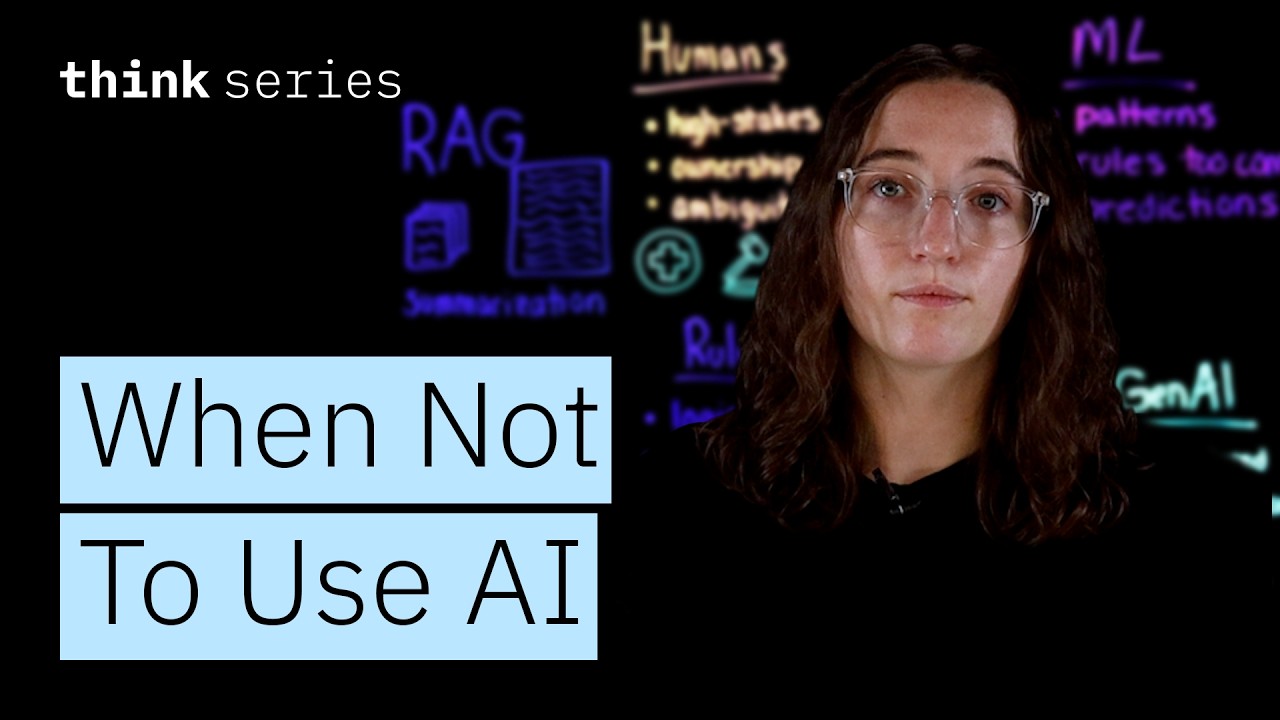
IBM Technology added the sharpest anti-hype constraint. Its explainer reached 25,145 views, 1,313 likes, and 45 comments while arguing that some system-design problems still belong to rules, machine learning, or human judgment rather than agents. The distinctive angle is that "when not to use AI" became a high-signal topic in its own right (video).
Discussion insight: Tech With Tim, Sonny Sangha, and Owain Lewis reinforced the same point from different ends of the funnel: the useful part is the workflow wrapper around the model — tool use, live data, ticket queues, permissions, and review loops — not the word "agent" on its own.
Comparison to prior day: Compared with 2026-07-26, the cluster became more explicit about where humans stay responsible and where deterministic software still beats an agent loop. The emphasis shifted from "how to run more agents" toward "how to bound the ones that matter."
1.4 Chips, data centers, and engineering infrastructure broke out as a standalone AI cluster 🡕
Five items supported this theme. Compared with 2026-07-26, infrastructure stopped being background context and became a standalone content cluster about the physical and engineering stack underneath AI.

Leo Cui, Ph.D., CFA supplied the clearest end-to-end explainer. His video reached 59,486 views, 2,288 likes, and 125 comments while tracing a prompt through fiber, electricity, GPUs, high-bandwidth memory, cooling, networking, storage, and software. The distinctive angle is that AI infrastructure was presented as a physical "token factory" readers are expected to understand, not as invisible cloud magic (video).

SandboxAQ linked infrastructure directly to geopolitics and defense. Its CNBC clip reached 82,661 views and argued that AI leadership depends on secure infrastructure, scalable compute, and resilient semiconductor supply chains, using a recent OpenAI/Hugging Face security incident as the hook. The distinctive angle is that security and the global AI race were treated as infrastructure problems first and model problems second (video).

NVIDIA turned that stack into product surface. Its short reached 9,316 views and the linked Agent Toolkit announcement says NVIDIA is adding PhysicsNeMo and CUDA-X libraries so autonomous AI engineers can work across chip design, verification, packaging, and systems. The distinctive angle is that infrastructure talk progressed from finance and supply headlines into concrete engineering-agent tooling (video).
Discussion insight: CNBC Television and Bloomberg Television kept pulling the model story back down to serving capacity and semiconductor access. People are increasingly trying to understand AI as a physical supply chain, not just as chat output.
Comparison to prior day: Compared with 2026-07-26, infrastructure moved from subtext to first-class content. The audience was not only being told that compute matters; it was being given explainers and product surfaces for how the stack actually works.
2. What Frustrates People
Governance, labor transition, and platform power still have no operational surface
This is High severity because The Diary Of A CEO, The Financial Express, Bloomberg Television, and TEDx Talks all circle the same gap: people can describe extinction risk, democracy risk, or job displacement, but the visible responses are still interviews, floor speeches, and broad safeguard talk rather than a shared operating layer for planning. The workaround is scenario-writing, public warning, and ad hoc regulation proposals instead of an institution-grade decision system. This is worth building for, but the likely buyer is a government, board, university, or large employer rather than a consumer.
Open-model adoption is still fragmented by rollout timing, serving constraints, and geopolitics
This is High severity because AI Search, All-In Podcast, Albert Olgaard, CNBC Television, Bloomberg Television, and Kimi's K3 blog show the same burden from different angles: teams can see Kimi K3's promise, but still have to navigate full-weight timing, installation know-how, GPU availability, policy noise, and trust in who can actually host the model at scale. The workaround is to keep multiple model paths open, run narrow pilots, and treat each new release as provisional instead of platform-defining. This is directly worth building for.
Useful agents still require humans to stitch together the supervision layer by hand
This is High severity because Dan Martell, Greg Isenberg, IBM Technology, Tech With Tim, Sonny Sangha, and Owain Lewis all point to the same gap: real agent systems still need role design, queueing, approvals, live-data connectors, review loops, and explicit "use rules or humans instead" boundaries before they can touch real work. The workaround is to keep the first job narrow, keep human ownership at the decision boundary, and build agent wrappers out of docs, tickets, and permission scopes. This is directly worth building for.
AI infrastructure is becoming unavoidable, but it is still too opaque for most builders and operators
This is Medium-to-High severity because Leo Cui, Ph.D., CFA, SandboxAQ, NVIDIA, CNBC Television, and Bloomberg Television each expose a different part of the same problem: understanding AI now means understanding electricity, GPUs, cooling, security, supply chains, and engineering-tool stacks, yet most people only see fragments through news clips or vendor messaging. The workaround is to rely on explainers, vendor docs, and specialists, which makes infrastructure knowledge uneven and reactive. This is worth building for, especially in enterprise and technical education.
Cheap and local creator AI remains a patchwork of brittle offers and workflow craft
This is Medium-to-High severity because Vaibhav Sisinty, PixelArtistry, and Malva AI all show the same burden: creators want lower-cost AI video, image, voice, and 3D workflows, but they still have to stitch together open tools, one-click wrappers, free trials, prompt tricks, and local installs before the output is dependable. The workaround is to stack multiple tools and keep community-distributed guides nearby. This is worth building for and already competitive.
3. What People Wish Existed
Governance, jobs, and regulation planning cockpit
The Diary Of A CEO, The Financial Express, Bloomberg Television, and TEDx Talks imply demand for one surface that can model AI upside, job displacement, control risk, and policy options before institutions commit to a path. This is both a practical and emotional need with High urgency because the evidence assumes leaders can see the stakes and still lack a trusted way to reason through them together. Scenario documents, interviews, and policy papers solve slices of the problem today, not the shared operating layer. Opportunity: aspirational.
Open-model deployment and routing control plane
AI Search, All-In Podcast, Albert Olgaard, CNBC Television, Bloomberg Television, and Kimi's K3 blog imply demand for a control plane that combines benchmark evidence, install friction, serving capacity, cost, and geopolitical exposure before a team commits to a model path. This is a practical need with High urgency because the same decision now mixes developer workflow, infrastructure risk, and policy uncertainty. Model reviews, leaderboard sites, and vendor pages solve slices of the problem today, not the routing layer end to end. Opportunity: direct.
Supervised agent operations console with explicit fallback rules
Dan Martell, Greg Isenberg, IBM Technology, Tech With Tim, Sonny Sangha, and Owain Lewis imply demand for a workbench that turns intent into reusable roles, approvals, tickets, tool permissions, live-data connectors, and explicit fallback to rules, ML, or human judgment where agents should stop. This is a practical need with High urgency because the strongest agent evidence is no longer about proving agents exist; it is about keeping real workflows legible and reviewable. Templates, no-code automations, and orchestration frameworks solve slices of the problem today, not the full supervision layer. Opportunity: direct.
Infrastructure literacy and compute-planning cockpit
Leo Cui, Ph.D., CFA, SandboxAQ, NVIDIA, CNBC Television, and Bloomberg Television imply demand for one surface that explains and simulates the power, GPU, cooling, security, semiconductor, and engineering-tool dependencies behind AI systems. This is a practical need with High urgency because infrastructure is now shaping what models people can actually use, not just what they admire. Vendor docs, cloud calculators, and financial news solve slices of the problem today, not the shared planning layer. Opportunity: direct.
Local creator-production fabric for video and 3D workflows
Vaibhav Sisinty, PixelArtistry, and Malva AI imply demand for one fabric that keeps free or local models, prompt assets, one-click installs, asset pipelines, and render steps coherent across video, voice, image, and 3D work. This is a practical need with Medium-to-High urgency because the desire for lower-cost production is obvious, but the stack still lives across too many separate guides and wrappers. Tool directories and creator communities solve slices of the problem today, not the production layer itself. Opportunity: competitive.
Real-time collaboration layer for assistants that stay present while background agents work
Julia Turc, Thinking Machines' interaction-models preview, Greg Isenberg, and Sonny Sangha imply demand for assistants that can talk, listen, and respond in real time while still handing deeper tasks to background systems. This is a practical need with Medium urgency because users clearly want more natural collaboration, but the production shape is still emerging. Voice assistants and agent harnesses solve halves of the problem today, not the combined presence-plus-handoff layer. Opportunity: direct.
4. Tools and Methods in Use
| Tool | Category | Sentiment | Strengths | Limitations |
|---|---|---|---|---|
| Kimi K3 / Kimi Code | Foundation model / coding surface | (+/-) | Open 3T-class scale, 1M context, native vision, and clear Work/Code/API surfaces | Full weights were still rolling out in the linked materials, the serving story is GPU-sensitive, and the geopolitical narrative remains noisy |
| AI Company Operating System | Agent operating method | (+) | Reusable role files, manager-specialist delegation, and background execution discipline | Teams still have to wire tools, permissions, and review loops themselves |
| Untangle | Vertical legal workflow software | (+/-) | Clear team-of-one leverage and explicit attorney supervision over AI-assisted outputs | Narrow vertical and lawyers remain accountable for every result |
| Bland AI + Norm + Cal.com | Voice-agent stack | (+/-) | Covers phone calls, bookings, knowledge bases, tool triggers, and live data, with an enterprise-compliance angle from Bland AI | Customer-facing trust, reliability, and compliance remain first-order problems |
| Interaction models / GPT Live / Moshi | Real-time assistant method | (+/-) | Full-duplex audio, video, and text collaboration with a background-model handoff for deeper work | Still preview territory with no settled production default |
| Factory | Agent orchestration / control plane | (+) | Trusted ticket queue, isolated workspaces, durable tasks, and a human-review shipping boundary | Depends on high-quality ticketing and repository-specific workflows |
| Flint / flint-chart-mcp | Agent-ready visualization layer | (+) | Compact semantic chart specs, multiple chart backends, and an MCP server for validation and rendering | Still a new category, and the Python port is only a source preview today |
| NVIDIA Agent Toolkit + PhysicsNeMo/CUDA-X | Engineering-agent stack | (+/-) | Connects agents to physics, simulation, sparse solvers, and chip/system workflows | Infrastructure-heavy, vendor-centered, and aimed at specialized engineering teams |
| 3D Gen Studio | Local 3D production layer | (+) | Orchestrates text-to-image, editing, mesh generation, UV unwrapping, and texturing in one workspace | Still a multi-step production stack built around ComfyUI and external APIs |
| Free/local replacement stacks | Local-first creator method | (+/-) | Lower recurring spend and increase control across image, voice, video, coding, and automation tools | Fragmented across wrappers, prompts, and community-distributed setup guides |
The strongest positive sentiment clustered around layers that add control: reusable agent roles, explicit review boundaries, semantic chart compilers, local 3D workspaces, and lower-cost creator stacks. People were not only chasing raw model IQ; they were rewarding whatever reduced glue code, lock-in, or blind trust.
Sentiment turned mixed whenever the tool depended on scarce GPUs, customer-facing reliability, or a vendor-heavy infrastructure stack. That is why Kimi K3, voice-agent stacks, and NVIDIA's engineering stack all looked valuable while still feeling operationally unsettled in different ways.
The main workaround pattern was layering. Teams keep more than one model path alive, wrap agents in tickets and approvals, route only the tasks that deserve agency, and fall back to rules, ML, or local tools when the workflow needs more predictability than a generic agent loop can offer.
5. What People Are Building
| Project | Who built it | What it does | Problem it solves | Stack | Stage | Links |
|---|---|---|---|---|---|---|
| Kimi K3 | Kimi | Open 3T-class model for coding, vision, long-context reasoning, and knowledge work | Teams want frontier-scale open capability without defaulting to closed APIs | Kimi Delta Attention, Attention Residuals, Stable LatentMoE, 1M context, Kimi Work/Code/API | Beta | blog, video |
| AI Company Operating System | Dan Martell | Reusable framework for delegating work to manager and specialist agents | Solo operators want repeatable background execution instead of prompt juggling | Role files, manager-specialist delegation, workflow templates | Beta | video |
| Untangle | Ryan Carson | Legal workflow software for divorce attorneys and law firms | Small legal teams want AI leverage with explicit supervision | Cloud agents, model routing, supervised legal workflow | Shipped | site, video |
| AI receptionist workflow | Sonny Sangha | Voice receptionist that answers calls, books appointments, and updates live data | Businesses want customer-facing automation without stitching every integration by hand | Bland AI, Norm, knowledge bases, pathways, Cal.com, live data updates | Beta | video, Bland AI |
| Factory | Owain Lewis | Ticket-driven software factory that runs coding agents in isolated workspaces | Teams want repeatable agent execution instead of one-off terminal sessions | Rust, trusted issue queue, markdown workflows, isolated workspaces, gh/git |
Beta | repo, video |
| Flint | Microsoft Research | Visualization language and MCP server for reliable chart generation by agents | Agents struggle with verbose, fragile chart configuration and rendering | TypeScript, semantic chart specs, Vega-Lite/ECharts/Chart.js/Plotly/Excel backends, MCP | Beta | repo, site, video |
| 3D Gen Studio | visualbruno | Open-source AI-powered 3D production layer | Creators want a local 3D pipeline instead of many disconnected tools | JavaScript, ComfyUI, image editing, mesh generation, UV unwrapping, texturing, desktop app | Beta | repo, video |
| NVIDIA Agent Toolkit for engineering | NVIDIA | Agent-ready engineering toolkit for chip and system design workflows | Engineering teams want autonomous assistants that can reason with physics and simulation tools | Agent Toolkit, PhysicsNeMo, CUDA-X, Nemotron, sparse solvers | Beta | announcement, video |
| Interaction models | Thinking Machines | Real-time interaction model paired with background reasoning | Users want assistants that stay present while deeper work runs asynchronously | Multi-stream micro-turn audio/video/text interaction, asynchronous background model | Alpha | preview, video |
Kimi K3 and Flint show two versions of the same builder pattern. It is no longer enough to ship a capable model or library on its own; the product now needs a dependable surface for how people or agents actually use it, whether that means coding workflows or semantically constrained chart generation.
Untangle, the AI Company Operating System, the receptionist workflow, and Factory show the workflow-side equivalent. The recurring build signal is not "another assistant," but a wrapper around delegation, routing, tickets, approvals, and review that makes small teams feel larger without pretending supervision is optional.
The open-source repo signals reinforce that pattern. Factory is a 72-star Rust repo, Flint is a 2,330-star TypeScript repo, and 3D Gen Studio is a 361-star JavaScript repo; each turns a messy agent or creator workflow into a more opinionated production layer rather than asking users to assemble everything from scratch.
6. New and Notable
AI warning content sounded more institutional than founder-led
The Diary Of A CEO, The Financial Express, and Bloomberg Television are notable because the biggest warning content of the day was no longer only founder, researcher, or pundit discourse. The signal is that democracy, jobs, and regulation language is moving into more formal political channels.
Kimi K3 became a workflow, onboarding, and geopolitics story at the same time
AI Search, Stefan 3D AI, Albert Olgaard, CNBC Television, and Bloomberg Television are notable because one model release now supports five separate narratives at once: benchmark quality, real creative-production use, non-technical setup, GPU scarcity, and chip-politics accusations.
AI infrastructure explainers became a first-class content category
Leo Cui, Ph.D., CFA and SandboxAQ are notable because they treated AI as a physical and security stack that viewers should learn, not an invisible service they should merely consume.
"When not to use AI" became a signal, not just a disclaimer
IBM Technology and Tech With Tim are notable because they made constraint and task selection part of the content itself. The signal is that agent education is maturing from enthusiasm into system-design judgment.
Agent-ready charting became its own product category
Better Stack and Flint are notable because they framed data visualization not as "have the model write Vega-Lite," but as "give the model a semantic language and an MCP toolchain it can use reliably." The signal is that more categories may split into agent-specific intermediate layers.
Local creator pipelines kept shifting from tool shopping to production systems
Vaibhav Sisinty, PixelArtistry, and Malva AI are notable because the conversation was less about discovering one magical app and more about assembling repeatable video and 3D workflows with lower recurring spend.
7. Where the Opportunities Are
[+++] Open-model deployment and routing control plane - AI Search, All-In Podcast, Albert Olgaard, CNBC Television, Bloomberg Television, and Kimi's K3 blog all point to the same gap: teams need one place to compare workflow proof, setup friction, serving capacity, cost, and geopolitical risk before they commit to a model path. This is strong because the pain recurs across creator reviews, market coverage, and vendor materials.
[+++] Supervised agent operations console - Dan Martell, Greg Isenberg, IBM Technology, Tech With Tim, Sonny Sangha, and Owain Lewis all show repeated demand for a layer that combines roles, tickets, approvals, permissions, routing, and explicit fallback rules. This is strong because the same need appears across legal work, customer calls, internal software delivery, and general agent education.
[+++] Infrastructure planning and engineering workspace - Leo Cui, Ph.D., CFA, SandboxAQ, NVIDIA, CNBC Television, and Bloomberg Television all suggest a need for products that turn compute, semiconductors, power, cooling, security, and engineering-tool dependencies into something planners and operators can actually reason about. This is strong because infrastructure now shapes both what teams can build and what markets think matters.
[++] Local creator-production fabric for video and 3D - Vaibhav Sisinty, PixelArtistry, Malva AI, and Stefan 3D AI all point to the same buyer need: cheaper, more controllable AI production without juggling too many separate tools and prompts. This is moderate because the demand is concrete and repeated, but the space is already competitive.
[++] AI governance and workforce-planning cockpit - The Diary Of A CEO, The Financial Express, Bloomberg Television, and TEDx Talks all suggest a need for tools that help institutions reason about upside, job disruption, platform power, and regulation before they commit. This is moderate because the signal is large, but the buyer and implementation path are more complex than in software workflow markets.
[+] Real-time collaboration layer with human-in-loop handoff - Julia Turc, Thinking Machines' interaction-models preview, Greg Isenberg, and Sonny Sangha suggest an emerging need for assistants that feel present in conversation while deeper agent work continues in the background. This is emerging because the desire is visible, but the winning product shape is still forming.
8. Takeaways
- The biggest AI audience was still clustering around risk, power, and jobs rather than feature launches. Daniel Kokotajlo's interview, Bernie Sanders's speech, and Mark Warner's regulation warning show that the highest-energy conversation stayed centered on who controls AI and who absorbs the downside. (source, source, source)
- Open-model competition is no longer just benchmark talk. Kimi K3 was simultaneously a benchmark story, a 3D-production story, a non-technical setup story, a GPU-capacity story, and a geopolitics story. (source, source, source, source, source, source)
- Agent education is settling into supervised systems with explicit boundaries. The strongest material emphasized role design, tickets, review obligations, and knowing when to use rules or humans instead of an agent. (source, source, source, source)
- Infrastructure literacy is becoming part of mainstream AI discourse. People were not just hearing that compute matters; they were being taught how the data-center, chip, and engineering stack actually works and where it breaks. (source, source, source, source)
- Creator demand still favors cheaper and more local production, but the gap is now workflow integration rather than raw access. The recurring need was not one more flashy app; it was a repeatable stack for video and 3D work that costs less and behaves predictably. (source, source, source)