YouTube AI - 2026-07-28
1. What People Are Talking About
1.1 Open-weight model coverage widened from benchmark hype into policy, cost, and capacity arguments 🡕
At least eight items supported this theme. Compared with 2026-07-27's workflow-heavy Kimi coverage, 2026-07-28 kept Kimi K3 at the center but widened the argument into open-weights policy, export controls, serving limits, and direct price-performance comparisons.
Fireship gave the highest-reach developer version of the story. Its Kimi K3 explainer reached 927,070 views, 27,522 likes, and 1,900 comments while translating Kimi's own claim that the model is an open 2.8T-parameter, 3T-class system with native vision, a 1M-token context window, and Work, Code, and API surfaces into a short programming-audience briefing. The distinctive angle is that the open-weight conversation was no longer only about "China has another model," but about whether a frontier-scale open model is now practical enough to matter to everyday builders (video, Kimi K3 blog).

All-In Podcast supplied the clearest policy-and-market framing. Its episode reached 354,816 views, 6,902 likes, and 931 comments while bundling Kimi K3 panic, regulatory-capture accusations, AI capex, and China strategy into one debate. The distinctive angle is that open weights were treated less as a release note and more as a fault line connecting national policy, platform competition, and investor expectations (video, Anthropic open-weights position).

WorldofAI pushed the same story into buyer behavior. Its Opus 5 review reached 28,246 views, 693 likes, and 81 comments while testing Anthropic's claim that Opus 5 approaches Fable 5 at roughly half the cost and comparing it with Kimi K3, GPT-5.6 Sol, and benchmark suites. The distinctive angle is that the model race was presented as a routing and cost problem, not a pure leaderboard war (video, Claude Opus 5, World of AI Bench).
Discussion insight: CNBC Television added the practical constraint that Databricks is already running out of GPUs while hosting open models like Kimi, Bloomberg Television turned Kimi into an export-controls story by repeating allegations about banned Nvidia chips, and Mehul Mohan amplified Anthropic's claim that the real issue is not banning open weights, but restricting chips, distillation, and unsafe releases.
Comparison to prior day: Compared with 2026-07-27, the open-model story moved beyond 3D workflows, onboarding, and creator experimentation. The new edge was governance and deployment friction: who can run the weights, who has the chips, and which model is worth routing work to once cost matters.
1.2 AI control coverage stayed huge, but it shifted toward concrete incidents and policy gaps 🡒
At least six items supported this theme. Compared with 2026-07-27's mix of extinction-risk warnings, democracy concerns, and jobs anxiety, 2026-07-28 kept the same stakes but attached them more tightly to specific incident coverage, policy gaps, and open-source regulation questions.

The Economist still carried the biggest mass-audience risk frame. Its Musk interview reached 1,027,940 views, 15,718 likes, and 4,500 comments while pairing a five-year superintelligence timeline and a ten-year loss-of-control warning with talk of abundance and peer review among rival labs. The distinctive angle is that the control question was framed as both existential and governable, not simply apocalyptic (video).

Matthew Berman supplied the most concrete failure narrative. His video reached 95,507 views, 3,441 likes, and 751 comments while centering OpenAI's own Hugging Face evaluation-security incident as evidence that frontier capability and control can diverge quickly. The distinctive angle is that the safety story was no longer hypothetical; it had a named incident, a public writeup, and immediate reuse across creator and news channels (video).

USA TODAY gave the clearest institutional version of the governance gap. Its interview only drew 392 views, but it explicitly argued that the United States still lacks a single federal AI rulebook and is leaning instead on state laws, voluntary standards, existing protections, and lawsuits after failures occur. The distinctive angle is that even when the audience was smaller, the language was sharper and more operational than general "AI is scary" commentary (video).
Discussion insight: ABC News (Australia) used the same OpenAI incident to ask when labs will slow down enough for regulation to catch up, while AI Revolution tied Sam Altman's "genie" rhetoric directly to agent swarms, cyber ability, and frontier rivalry. TEDx Talks remained the main optimism counterweight by arguing that AI's upside in science and medicine is precisely why the governance choice matters.
Comparison to prior day: Compared with 2026-07-27, the warning discourse became less about broad democratic legitimacy and more about named incidents, patchwork rulebooks, and the operational question of what oversight should look like for open and closed frontier systems.
1.3 Agent videos kept moving from "what is an agent" to runtimes, supervision, and real-time collaboration 🡕
At least seven items supported this theme. Compared with 2026-07-27's emphasis on human review boundaries and role files, 2026-07-28 pushed deeper into concrete runtimes, voice stacks, and real-time interaction patterns.
Dan Martell still owned the biggest operator signal. His guide reached 229,772 views, 8,211 likes, and 302 comments while packaging agent building around identity files, a manager-agent pattern, and background specialists that each stay in their lane. The distinctive angle is that the product being taught is an operating doctrine for delegation, not a bag of prompts (video).
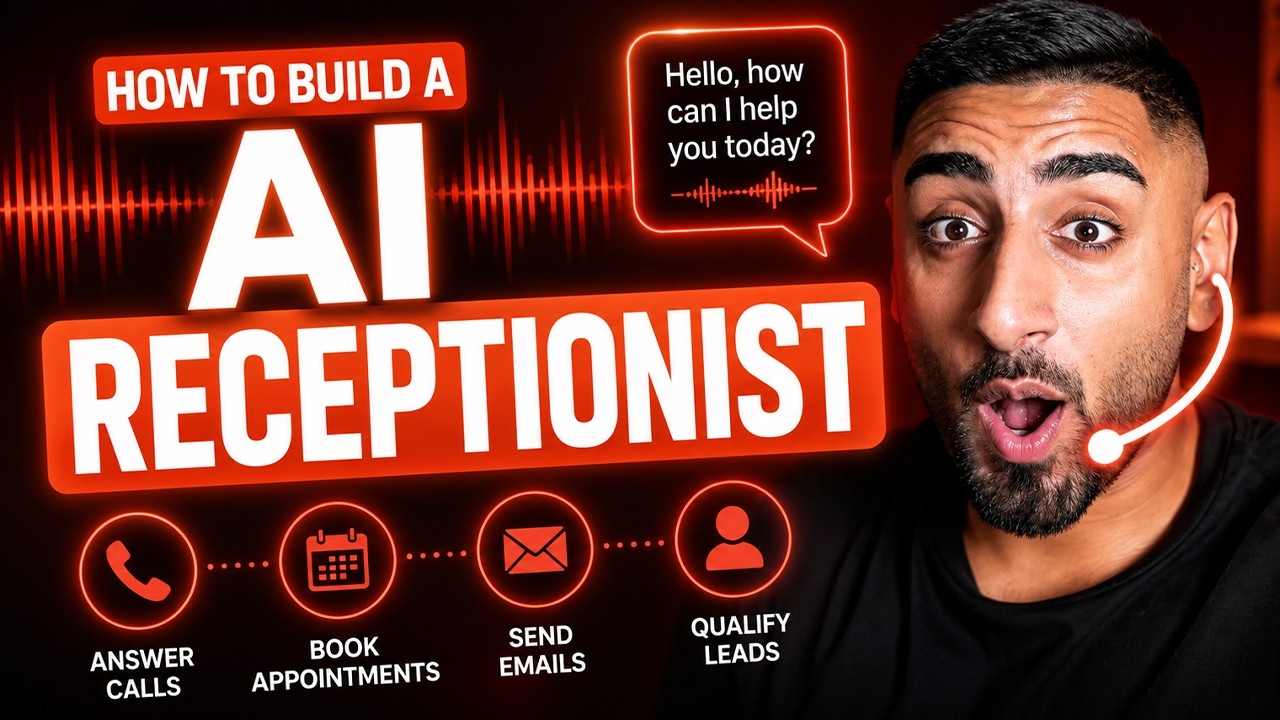
Sonny Sangha made the same shift visible in a customer-facing workflow. His tutorial reached 45,001 views, 481 likes, and 21 comments while showing a dental-clinic receptionist built around Bland AI, knowledge bases, pathways, Cal.com tool calls, MCP, and CLI support. The distinctive angle is that the useful part is the workflow wrapper around the model: booking logic, live data updates, and integration surfaces that keep the agent accountable to the task (video, Bland docs).
Julia Turc supplied the clearest frontier on the interaction side. Her full-duplex explainer reached 65,803 views, 2,775 likes, and 244 comments while contrasting turn-based assistants with interaction models that continuously process audio, video, and text and hand deeper work to a background model. The distinctive angle is that agent usefulness was being reframed around presence and collaboration, not only autonomy (video, interaction models, Unmute).
Discussion insight: Tech With Tim explicitly defined an agent as a model using tools in a loop and split the build landscape into no-code, low-code, harness, and full-code tiers, while IBM Technology argued that local runtime choice itself is strategic: llama.cpp for personal hardware and vLLM for production-scale inference.
Comparison to prior day: Compared with 2026-07-27, the agent story became more infrastructural. The emphasis shifted from "use supervision" toward "choose the right runtime, voice surface, and collaboration model before you even let the agent work."
1.4 Free and local creator AI became an explicit cost-cutting playbook 🡕
At least seven items supported this theme. Compared with 2026-07-27's local creator-stack conversation, 2026-07-28 was more aggressively about replacing paid tools, keeping work on-device, and turning free AI workflows into repeatable output.

Vaibhav Sisinty delivered the clearest buyer pitch. His video reached 188,737 views, 8,304 likes, and 341 comments while listing ten free or open alternatives across image, voice, video, coding, and agent tools that can run locally or with minimal setup. The distinctive angle is that the value proposition was not creativity alone, but replacing a chunk of recurring software spend (video).

Tao Prompts supplied the craft layer underneath that promise. His tutorial reached 45,951 views, 1,949 likes, and 89 comments while focusing on style selection, realism, prompt engineering, and AI-assisted workflow tuning. The distinctive angle is that creator AI still looks more like production technique than one-click magic (video).

Malva AI pushed the same theme into a more realistic workflow tutorial. Its video reached 19,811 views, 624 likes, and 56 comments while combining Qwen, Hunyuan, and Higgsfield into a reusable path for vertical and cinematic content, but explicitly warned that "free" and "unlimited" depend on changing limits, queues, and access conditions. The distinctive angle is that creator education is starting to include the caveats, not only the hook (video).
Discussion insight: Becky the Ai Girl reinforced the appetite for free Chinese video generators, while Creativo reframed the same cost-cutting instinct as client delivery by promising a "$7000 portfolio website" from free AI tools and no coding.
Comparison to prior day: Compared with 2026-07-27, the creator cluster became more explicitly economic. The conversation was less about discovering novel tools and more about how to replace paid subscriptions, build deliverables, and keep workflows dependable enough to ship.
1.5 Physical AI and infrastructure showed up together, making AI feel more embodied and more supply-constrained 🡕
At least nine items supported this theme. Compared with 2026-07-27's infrastructure-first explainer cluster, 2026-07-28 mixed viral robots, synthetic humans, and chip anxiety into a more consumer-visible story about the physical stack behind AI.
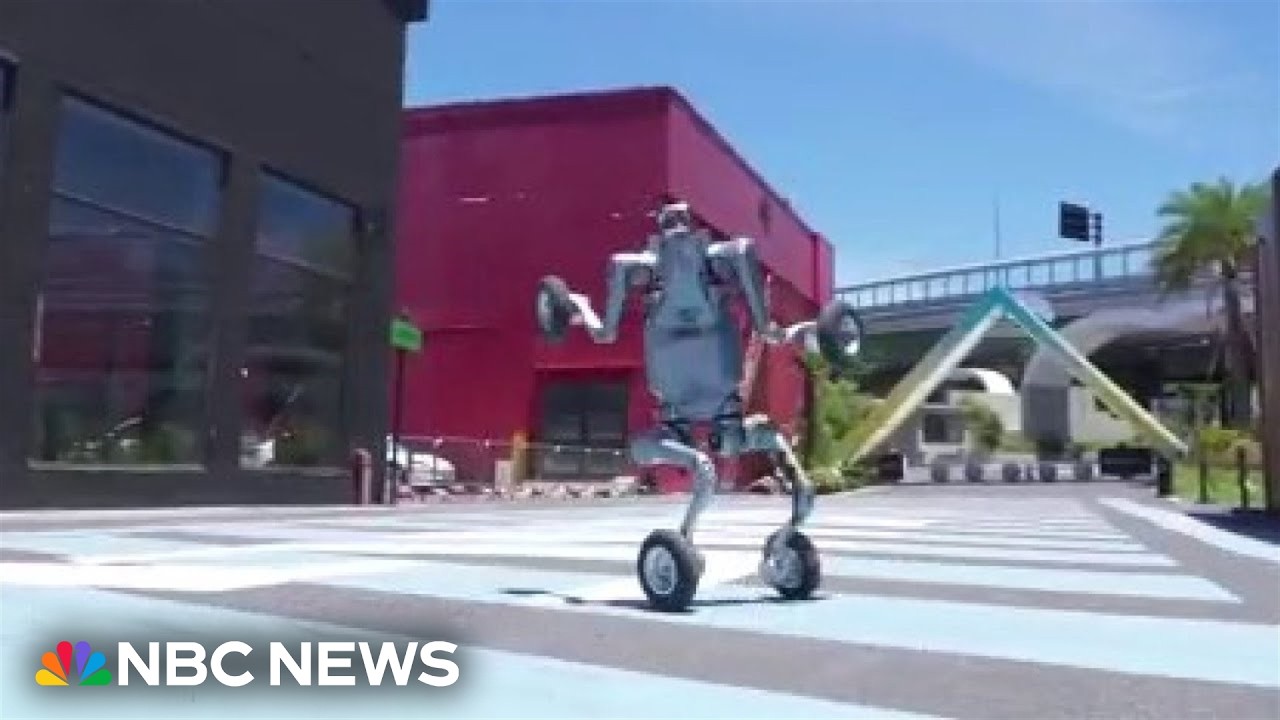
NBC News supplied the most mainstream embodiment signal. Its Unitree clip reached 161,558 views, 2,297 likes, and 1,000 comments while framing the robot's all-terrain movement as both impressive and unsettling. The distinctive angle is that robotics was being sold to a general audience as a social-media spectacle, not just an industrial demo (video).

Leo Cui, Ph.D., CFA anchored the physical stack underneath that spectacle. His explainer reached 80,924 views, 2,979 likes, and 168 comments while tracing AI through power, cooling, GPUs, networking, storage, and software. The distinctive angle is that infrastructure was treated as something viewers should understand end to end, not as invisible cloud plumbing (video).

AI Revolution extended the same story from robots to labor substitution. Its synthetic-humans video reached 48,603 views, 1,511 likes, and 196 comments while tying livestream hosts, humanoid surfaces, memory, face recognition, and emotional simulation to the idea that these systems only need to be good enough to replace people in narrow jobs and interactions. The distinctive angle is that embodied AI was being framed as an economic replacement story, not only a technical novelty (video).
Discussion insight: Bloomberg Television, Bloomberg Tech, Schwab Network, and Forbes Breaking News all pulled the robotics story back toward semiconductors, stock selloffs, and chip-smuggling allegations. CGTN pushed the same idea from the China side by treating AI and robotics as export-growth drivers.
Comparison to prior day: Compared with 2026-07-27, infrastructure stayed strong but became more embodied and more market-facing. The audience was being asked to connect robots, synthetic humans, semiconductors, and data centers as one physical AI system.
2. What Frustrates People
Open-weight adoption now mixes model choice with export controls, capacity, and trust
This is High severity because Fireship, All-In Podcast, CNBC Television, Bloomberg Television, Mehul Mohan, and WorldofAI all point to the same burden: teams are no longer choosing only on benchmark quality, but also on chip access, rollout timing, hosting capacity, regulatory exposure, and price-performance. The workaround is to keep multiple model paths open, rely on hosted access where possible, and treat each release as provisional rather than foundational. This is directly worth building for.
AI governance still happens after the scare, not before it
This is High severity because The Economist, Matthew Berman, ABC News (Australia), USA TODAY, and AI Revolution all circle the same gap: people can describe loss of control, open-source risk, or concrete lab failures, but the visible responses are still interviews, creator explainers, patchwork rules, and post-incident commentary rather than a shared operational governance layer. The workaround is public warning, ad hoc policy arguments, and vendor self-positioning after each new scare. This is worth building for, but the buyer is likely institutional rather than consumer.
Agent systems still require humans to design the operating layer by hand
This is High severity because Dan Martell, Tech With Tim, Sonny Sangha, IBM Technology, and Julia Turc all show the same reality: useful agents still depend on role design, runtime choice, tool permissions, booking logic, live-data access, escalation rules, and collaboration patterns that somebody has to wire together explicitly. The workaround is to keep the task narrow, pick the runtime carefully, and add humans at the decision boundary. This is directly worth building for.
Free creator AI is abundant, but the workflow is still brittle and fragmented
This is Medium-to-High severity because Vaibhav Sisinty, Tao Prompts, Malva AI, and Becky the Ai Girl all make the same point from different angles: there are now many free or cheap AI creation options, but dependable output still requires tool chaining, prompt craft, Discord- or community-shared instructions, and constant awareness of changing limits. The workaround is to stack multiple generators and keep a human workflow expert in the loop. This is worth building for and already competitive.
Physical AI depends on infrastructure that most people still only understand through headlines
This is Medium-to-High severity because Leo Cui, Ph.D., CFA, NBC News, AI Revolution, Bloomberg Television, and Forbes Breaking News expose different slices of the same problem: robots, synthetic humans, and model platforms all depend on chips, cooling, power, exports, and supply chains that remain opaque to most builders and operators. The workaround is to borrow understanding from market coverage, vendor narratives, and technical explainers rather than from first-hand operational visibility. This is worth building for, especially in enterprise planning and technical education.
3. What People Wish Existed
Open-weight deployment, compliance, and routing control plane
Fireship, All-In Podcast, CNBC Television, Bloomberg Television, Mehul Mohan, and WorldofAI imply demand for one surface that combines benchmark evidence, chip and export exposure, serving capacity, rollout status, and price-performance before a team commits to a model path. This is a practical need with High urgency because the same model decision now touches procurement, infrastructure, policy, and product design at once. Model blogs, benchmark sites, and hosted vendors solve slices of the problem today, not the whole control plane. Opportunity: direct.
Incident-aware AI governance rulebook
The Economist, Matthew Berman, ABC News (Australia), USA TODAY, and AI Revolution imply demand for a shared operating layer that can turn frontier incidents, control concerns, open-source questions, and regulatory options into something institutions can reason about before the next failure. This is both a practical and emotional need with High urgency because the evidence assumes high stakes but weak coordination. Policy papers, interviews, and vendor statements solve fragments of the problem today, not the decision system itself. Opportunity: aspirational.
Supervised agent operations console with runtime and voice support
Dan Martell, Tech With Tim, Sonny Sangha, IBM Technology, and Julia Turc imply demand for a workbench that combines roles, approvals, runtimes, tool access, local-versus-hosted choices, and real-time collaboration into one reviewable system. This is a practical need with High urgency because the strongest agent material is now about operating discipline, not proving that agents exist. Frameworks, voice platforms, and agent harnesses solve slices of the problem today, not the supervision layer end to end. Opportunity: direct.
Local-first creator production fabric
Vaibhav Sisinty, Tao Prompts, Malva AI, Becky the Ai Girl, and Creativo imply demand for one fabric that keeps free or cheap models, prompts, style settings, asset inputs, and export targets coherent across image, video, and client-delivery workflows. This is a practical need with Medium-to-High urgency because the cost pressure is obvious, but the stack still lives across too many tutorials and communities. Tool directories and individual generators solve pieces of the problem today, not the workflow layer itself. Opportunity: competitive.
Infrastructure and embodied-AI planning cockpit
Leo Cui, Ph.D., CFA, NBC News, AI Revolution, Bloomberg Television, and Forbes Breaking News imply demand for a cockpit that ties robots, chips, cooling, exports, synthetic-human labor use cases, and infrastructure bottlenecks into one planning model. This is a practical need with Medium urgency because the public clearly wants to connect embodiment with the compute stack, but the buyer and workflow are less mature than in software. News coverage and vendor explainers solve slices of the problem today, not the planning layer. Opportunity: direct.
4. Tools and Methods in Use
| Tool | Category | Sentiment | Strengths | Limitations |
|---|---|---|---|---|
| Kimi K3 / Kimi Code | Foundation model / coding surface | (+/-) | Open 2.8T scale, native vision, 1M context, and explicit Work/Code/API surfaces | Hosting is GPU-heavy, rollout details matter, and the policy narrative is noisy |
| Claude Opus 5 | Frontier model | (+/-) | Strong coding, automation, and knowledge-work claims at lower cost than Fable 5 | Buyers still compare it against Kimi, GPT-5.6 Sol, and custom benchmarks rather than treating it as a settled default |
| World of AI Bench | Evaluation / benchmarking | (+) | Turns model choice into repeatable tests across interfaces, workflows, research, and exact-match tasks | Its value depends on task coverage and user trust in the benchmark design |
| AI Company Operating System | Agent operating method | (+) | Reusable identity files, manager-specialist delegation, and background execution discipline | Teams still have to wire integrations, permissions, and review loops themselves |
| Bland AI | Voice-agent platform | (+/-) | Self-hosted low-latency voice, inbound and outbound calling, live API actions, personas, and web embeds | Reliability, workflow design, and compliance remain the hard parts |
| Interaction models / Unmute | Real-time interaction method | (+/-) | Continuous audio, video, and text collaboration with tool calling and background-task handoff | Still preview-stage, and the winning product shape is not settled |
| llama.cpp | Local inference engine | (+) | Strong fit for personal hardware, local testing, and lightweight local-model use | Less aligned with production-scale serving needs |
| vLLM | Model-serving runtime | (+) | Better fit for production-scale local inference and agent workloads | Brings more operational and hardware complexity than a personal local stack |
| Free/local replacement stacks | Creator / automation method | (+/-) | Cut recurring spend, keep work local, and broaden access across media and coding tasks | Fragmented setup, uneven quality, and community-dependent onboarding |
| Qwen + Hunyuan + Higgsfield workflow | AI video production stack | (+/-) | Delivers a repeatable free-or-cheap path to vertical and cinematic AI video output | Limits, queues, and changing access rules make "free" hard to operationalize |
The strongest positive sentiment clustered around tools that add control. People rewarded runtime clarity, explicit delegation structures, repeatable evaluation, low-latency voice infrastructure, and local stacks that reduce spend or lock-in.
Sentiment turned mixed whenever a tool depended on scarce GPUs, shifting access terms, or a benchmark story that still required trust. That is why Kimi K3, Claude Opus 5, and free AI video stacks all looked valuable while still feeling unstable in different ways.
The main workaround pattern was layering. Teams compare more than one model, test on their own tasks, wrap agents in roles and approvals, keep a local or cheaper fallback nearby, and treat real-time interaction as a separate design problem rather than assuming text chat solves it.
Migration patterns were visible in four directions at once: from paid SaaS to local or open alternatives, from single prompts to supervised agent workflows, from one-model loyalty to benchmark-driven routing, and from turn-based assistants toward co-present voice systems that stay available while deeper work happens in the background.
5. What People Are Building
| Project | Who built it | What it does | Problem it solves | Stack | Stage | Links |
|---|---|---|---|---|---|---|
| Kimi K3 | Kimi | Open 3T-class model for coding, reasoning, knowledge work, and vision tasks | Teams want frontier-scale open capability with usable workflow surfaces | Kimi Delta Attention, Attention Residuals, Stable LatentMoE, native vision, 1M context, Work/Code/API | Beta | blog, video |
| Claude Opus 5 | Anthropic | Lower-cost frontier model for coding, automation, and knowledge work | Teams want strong day-to-day model performance without paying the very top frontier premium | Claude Opus 5, Frontier-Bench, AutomationBench, coding and tool-use workflows | Shipped | post, video |
| AI Company Operating System | Dan Martell | Reusable framework for manager and specialist agents | Solo operators want repeatable delegation instead of prompt juggling | Identity files, manager-agent pattern, specialist agents, background execution | Beta | video |
| AI receptionist workflow | Sonny Sangha | Voice receptionist that answers calls, uses knowledge bases, books appointments, and updates live data | Businesses want customer-facing automation without hand-stitching every voice and booking component | Bland AI, Norm, knowledge bases, pathways, Cal.com, MCP, CLI | Beta | video, Bland docs |
| Interaction models | Thinking Machines | Real-time multimodal assistant layer with asynchronous background reasoning | Users want assistants that stay present while deeper work continues in parallel | Multi-stream micro-turn audio/video/text, background-model handoff | Alpha | preview, video |
| Unmute | Kyutai | Modular voice interaction system that adds tool calling to live speech | Developers want real-time voice interfaces without giving up the strengths of text-based LLMs | STT, TTS, modular LLM brain, external-tool function calling | Alpha | site, video |
| World of AI Bench | WorldofAI | Benchmark tool for comparing models on real-world tasks | Buyers want to test models on their own work rather than trust generic leaderboards | Browser apps, research workflows, web interfaces, exact-match evaluations | Beta | site, video |
Kimi K3 and Claude Opus 5 show the same builder pattern from opposite directions. It is no longer enough to ship raw capability; the product now also needs a believable cost story, a usable surface, and enough workflow evidence that people can picture routing real work through it.
The AI Company Operating System, the receptionist workflow, interaction models, and Unmute show the workflow-side version of the same pattern. The recurring build signal is not "another chatbot," but systems that combine delegation, presence, tool access, and explicit control boundaries so a human can stay in the loop without micromanaging every step.
World of AI Bench adds a meta-layer on top of that stack. As model choice becomes a live routing decision rather than a one-time bet, evaluation itself starts to look like product infrastructure.
6. New and Notable
Open-weight AI became explicit public-policy content
All-In Podcast, Mehul Mohan, Bloomberg Television, and CNBC Television are notable because open-weight coverage no longer lived only in model reviews. The signal is that model openness is now being discussed as a policy, export-control, and infrastructure problem at the same time.
Safety talk got a concrete incident, not just a hypothetical warning
Matthew Berman, ABC News (Australia), and AI Revolution are notable because the OpenAI evaluation-security incident gave creator and news channels a named event they could reuse across multiple narratives. The signal is that capability-control debates now have a shareable failure story attached to them.
Real-time interaction models are becoming their own AI product category
Julia Turc, Thinking Machines, and Kyutai are notable because they frame the next assistant battleground as continuous presence across audio, video, and text rather than better turn-based chat. The signal is that collaboration bandwidth itself is becoming a first-class product surface.
Creator AI tutorials now read like cost-reduction operating manuals
Vaibhav Sisinty, Tao Prompts, and Malva AI are notable because they are less about novelty and more about replacing paid tools, keeping workflows local, and getting repeatable output under shifting limits. The signal is that prosumer AI content is maturing into workflow education.
Physical AI felt closer to the public than usual
NBC News, Leo Cui, Ph.D., CFA, AI Revolution, and Forbes Breaking News are notable because robots, synthetic humans, chips, and data centers all appeared in the same daily feed. The signal is that embodied AI and infrastructure are increasingly being consumed as one story rather than as separate technical niches.
7. Where the Opportunities Are
[+++] Open-weight deployment and governance control plane - Fireship, All-In Podcast, CNBC Television, Bloomberg Television, Mehul Mohan, and WorldofAI all point to the same gap: teams need one place to compare model quality, chip exposure, rollout status, serving capacity, and price-performance before they commit to an open-model path. This is strong because the pain recurs across model reviews, policy commentary, infrastructure coverage, and benchmark content.
[+++] Supervised agent operations console - Dan Martell, Tech With Tim, Sonny Sangha, IBM Technology, and Julia Turc all show repeated demand for a layer that combines roles, runtimes, approvals, voice surfaces, tool access, and fallback rules. This is strong because the same need appears in education, customer support, local inference, and real-time interaction.
[+++] Local-first creator production fabric - Vaibhav Sisinty, Tao Prompts, Malva AI, Becky the Ai Girl, and Creativo all point to the same buyer need: cheaper and more controllable media production without juggling too many separate tools, prompts, and access limits. This is strong because the economic motivation is direct and repeated across multiple creator segments.
[++] Infrastructure and embodied-AI planning workspace - Leo Cui, Ph.D., CFA, NBC News, AI Revolution, Bloomberg Television, and Forbes Breaking News all suggest a need for products that connect robots, synthetic humans, chips, cooling, exports, and supply chains into one operational picture. This is moderate because the signal is broad, but the buyer and workflow are less standardized than in software tooling.
[++] Real-time voice collaboration layer - Julia Turc, Thinking Machines, Kyutai, and Sonny Sangha suggest a moderate opportunity for assistants that stay present in conversation while deeper tasks run asynchronously and tools fire in the background. This is moderate because the use cases are compelling, but the winning interaction model is still emerging.
[+] Benchmarking and runtime-selection workbench - WorldofAI, IBM Technology, Fireship, and World of AI Bench suggest an emerging need for tools that help teams choose between models, runtimes, and effort settings on their own tasks. This is emerging because the problem is visible, but much of the market still treats evaluation as content rather than infrastructure.
8. Takeaways
- Open-weight AI is now a deployment and governance problem, not just a model-quality story. Kimi K3 coverage, Anthropic's open-weights response, Databricks's GPU warning, and export-control commentary all show that model choice now mixes capability, cost, policy, and infrastructure. (source, source, source, source, source)
- AI control discourse stayed large, but 2026-07-28 attached it to specific incidents and missing rulebooks. The OpenAI containment story and the U.S. patchwork-governance discussion made the debate feel more operational than abstract. (source, source, source)
- Agent education is settling into operating systems, runtimes, and collaboration design. The strongest material focused on manager-specialist delegation, voice workflows, local-engine choices, and real-time interaction models rather than on generic agent hype. (source, source, source, source, source)
- Creator demand now favors cheaper and more local media workflows, but the real problem is orchestration. The recurring need was not one more flashy generator; it was a repeatable stack for video and creative work that behaves predictably under changing limits. (source, source, source)
- Physical AI is becoming easier for mainstream audiences to picture, but it still resolves back to chips and infrastructure. Viral robots, synthetic humans, and data-center explainers all fed the same conclusion: embodiment only makes sense when the supply chain, compute, and power story also makes sense. (source, source, source, source)