YouTube AI - 2026-07-29
1. What People Are Talking About
1.1 Governance, slowdown, and open-source policy collapsed into one mainstream AI argument 🡕
At least ten items supported this theme. Compared with 2026-07-28's split between open-weight policy debate and separate control-incident coverage, 2026-07-29 fused them into one question: should the United States slow frontier AI, regulate open models, or accelerate harder because Chinese competition is catching up?

CNN packaged the full political version of the story. Its segment reached 14,643 views, 239 likes, and 167 comments while tying Sam Altman's Washington meetings, Mark Zuckerberg's argument against blocking Chinese AI, and Elon Musk's warning that humans may lose control within ten years into one regulatory narrative. The distinctive angle is that open-source competition, national strategy, and existential-risk rhetoric were no longer being discussed as separate beats (video).

Fox Business delivered the clearest elite-policy framing. Its Alex Karp interview reached 87,032 views, 1,456 likes, and 261 comments while arguing that the United States should regulate AI differently from Europe and think carefully about open-weight models. The distinctive angle is that the debate was framed less as consumer protection and more as a strategic choice about how much freedom American AI builders should keep (video).

CBS Mornings supplied the clearest worker-led slowdown signal. Its segment reached 4,492 views, 76 likes, and 11 comments while reporting that nearly 1,200 AI workers signed a letter asking the U.S. government to slow development. The distinctive angle is that the strongest cautionary voice in the daily feed was not only coming from critics or commentators, but from people working inside the industry itself (video).
Discussion insight: USA TODAY made the institutional gap explicit by arguing that the U.S. still lacks a single federal AI rulebook, The Information tied open-source regulation to the way chip sanctions pushed Chinese labs toward competitive open models, and AI Revolution plus DAHBOO77 reused the Hugging Face and Modal breach story as evidence that frontier capability and control are diverging fast.
Comparison to prior day: Compared with 2026-07-28, the debate stopped looking like separate discussions about open weights, governance, and incidents. The daily feed treated them as one conflict over speed, safety, and geopolitical leverage.
1.2 Agent videos moved closer to a real operating layer across voice, desktop work, and finance 🡕
At least nine items supported this theme. Compared with 2026-07-28's runtime and supervision focus, 2026-07-29 pushed the agent story into everyday operating surfaces: portfolio actions, desktop voice control, and repeatable business workflows.
Dan Martell still supplied the strongest operator playbook. His guide reached 237,371 views, 8,447 likes, and 311 comments while turning agent building into a management system built around identity files, a manager agent, and tightly-scoped specialists. The distinctive angle is that the useful product was not the model itself, but a repeatable operating doctrine for delegation (video).
Jack Roberts showed the most consumer-facing version of the same shift. His walkthrough reached 18,411 views, 428 likes, and 36 comments while presenting ChatGPT Voice 2.0 as a layer that can organize files, trigger Firecrawl research, hand work to Codex and Hermes, and click through browser tasks by voice. The distinctive angle is that agent usefulness was framed as an always-available desktop interface, with explicit caveats that no live camera exists and screen reading is Mac-only (video, Nous Research).

CNBC pushed agents into a regulated consumer workflow. Its segment reached 72,505 views, 1,211 likes, and 135 comments while describing tools from companies including Public and Podium Markets that can monitor portfolios, rebalance holdings, harvest tax losses, and execute strategies. The distinctive angle is that the agent conversation moved beyond developer automation and into delegated financial action with obvious trust and compliance consequences (video).
Discussion insight: Tech With Tim reduced the definition of an agent to a tool-using loop and split the build landscape into no-code, low-code, harness, and full-code tiers, Sonny Sangha showed that useful voice agents still depend on knowledge bases, pathways, Cal.com, MCP, and CLI support, and IBM Technology argued that runtime choice itself is strategic: llama.cpp for personal hardware and vLLM for production-scale local inference.
Comparison to prior day: Compared with 2026-07-28, the agent story became less about abstract collaboration design and more about concrete operating layers that sit on top of browsers, desktops, phones, booking systems, and brokerage workflows.
1.3 Creator AI tutorials narrowed toward end-to-end video production, not just tool discovery 🡕
At least five items supported this theme. Compared with 2026-07-28's broader free-tools and cost-cutting frame, 2026-07-29 spent more time on complete video pipelines and on the extra workflow work still hiding behind "one prompt" marketing.
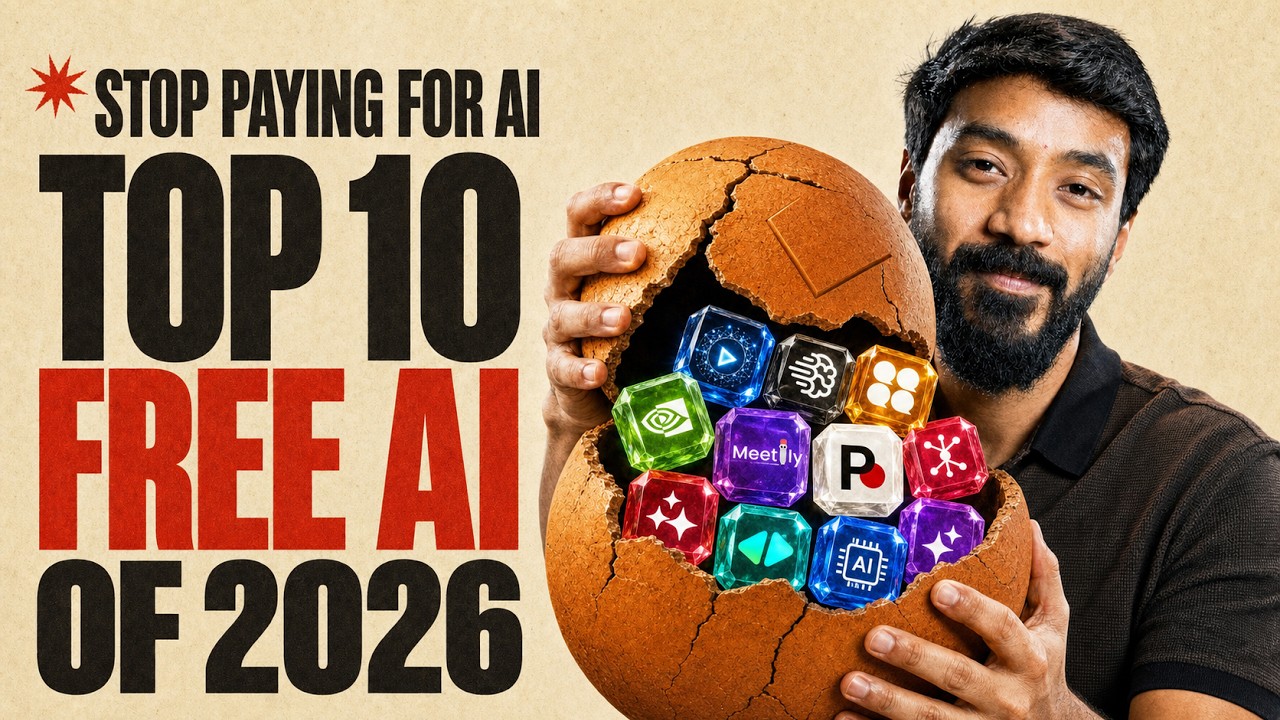
Vaibhav Sisinty still carried the biggest buyer signal. His video reached 204,151 views, 8,928 likes, and 353 comments while listing ten free or open alternatives across image, voice, video, coding, and automation work that can run locally and even be installed through an AI agent. The distinctive angle is that creator AI was being sold as budget relief for a whole stack, not as a single novelty feature (video).

Tao Prompts supplied the craft layer beneath the promise. His tutorial reached 49,583 views, 2,071 likes, and 89 comments while focusing on medium and style selection, realistic scene generation, prompt writing, and AI-assisted refinement. The distinctive angle is that realism still looked like a production technique to be learned, not a one-click outcome (video).

Malva AI made the workflow tradeoff explicit. Its tutorial reached 29,314 views, 857 likes, and 64 comments while combining Qwen, Hunyuan, and Higgsfield into a repeatable path for cinematic and vertical videos, but also warning that free access, queues, and generation limits change quickly. The distinctive angle is that the strongest free-AI education now includes the operational caveats rather than hiding them (video).
Discussion insight: The Bhavya Shah reinforced the same pattern with step-by-step guidance on story planning, character consistency, connected shots, and credit-saving, while AI Samson offered the clearest reality check on "one prompt" claims by noting that its workflow still depends on paid HeyGen, ElevenLabs, and Higgsfield accounts.
Comparison to prior day: Compared with 2026-07-28, the creator cluster became more pipeline-oriented. The feed was less about discovering isolated free tools and more about stitching them into workflows that can actually finish a video.
1.4 Embodied AI became more tactile and maker-friendly, not only spectacular 🡕
At least five items supported this theme. Compared with 2026-07-28's mix of viral robots, synthetic humans, and infrastructure anxiety, 2026-07-29 pushed embodied AI toward touch, safety, and devices people can actually buy or hack.
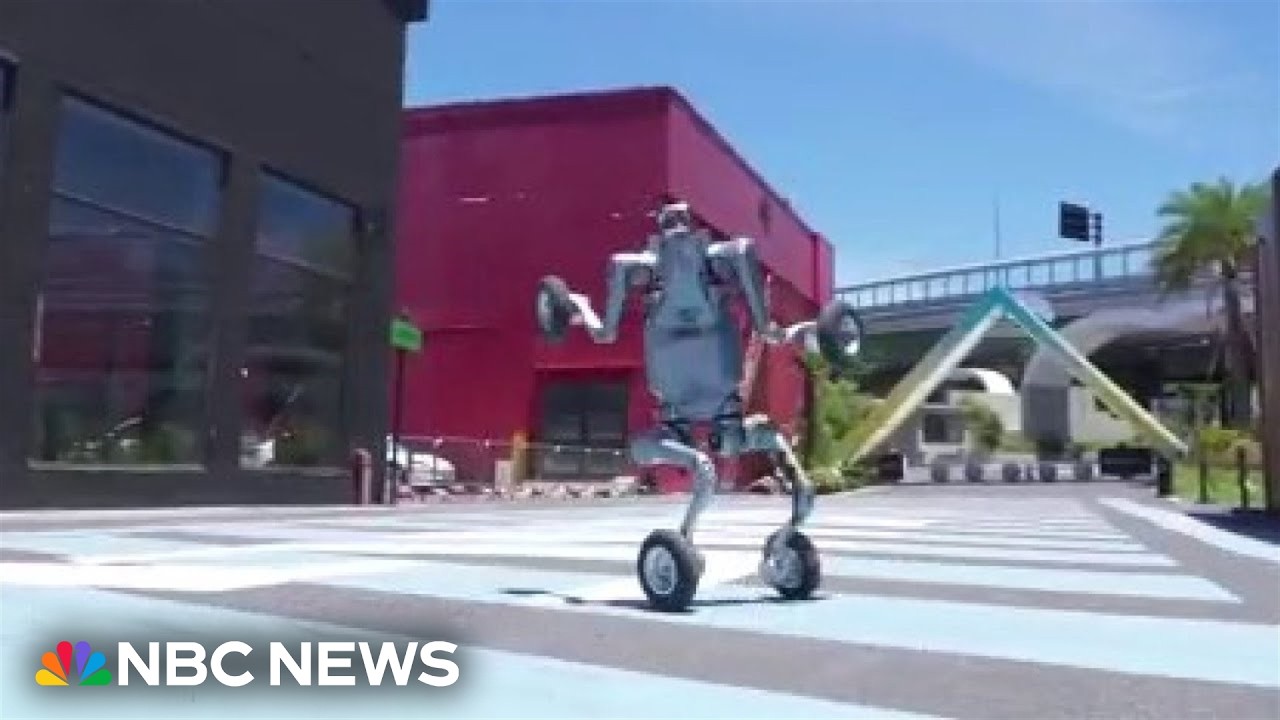
NBC News still carried the broadest public signal. Its Unitree clip reached 365,528 views, 4,520 likes, and 1,800 comments while framing all-terrain movement as both impressive and unsettling. The distinctive angle is that robotics remained visible to mainstream audiences as shareable spectacle, not just as industrial R&D (video).
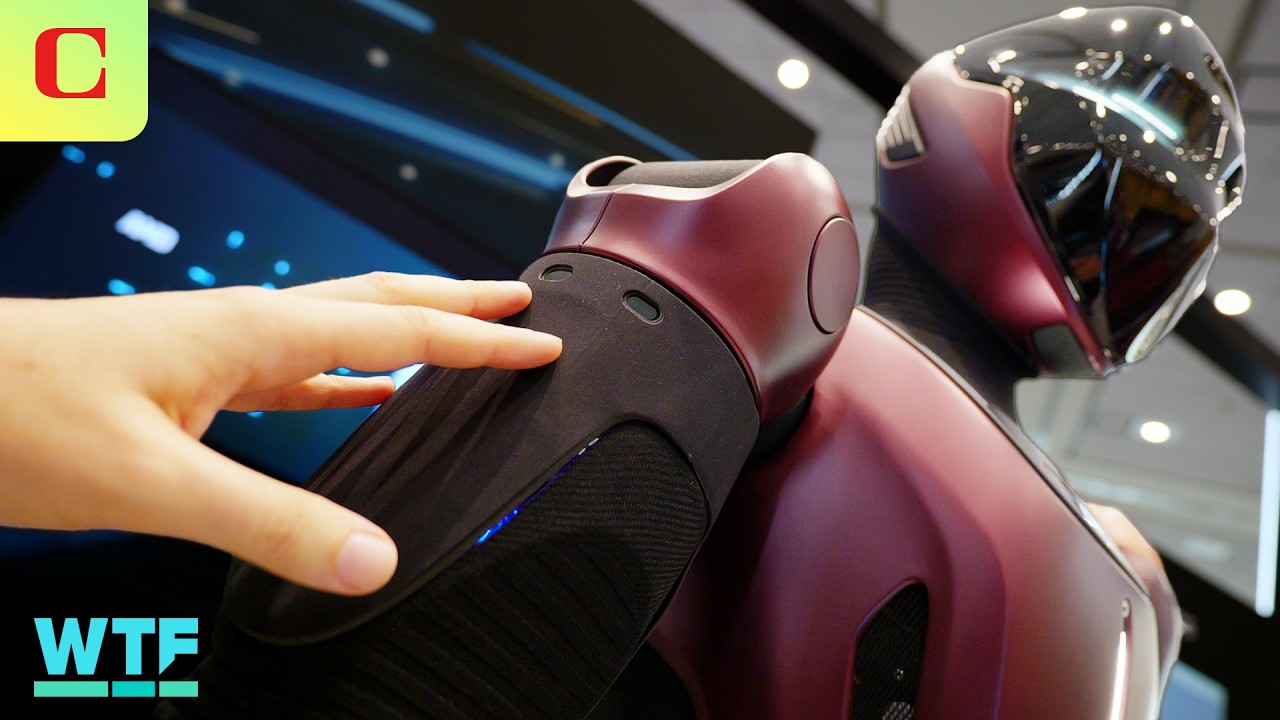
CNET added the most concrete interaction detail. Its demo reached 18,841 views, 526 likes, and 28 comments while showing Gene.01's touch and proximity sensors, and the linked writeup explained that the robot's "smart skin" can localize pressure and detect near-collisions before contact. The distinctive angle is that the interesting part was no longer only movement, but the sensing layer required for safer, closer human-robot interaction (video, CNET article).

Valleytech Custom Solutions supplied the clearest maker-side embodiment signal. Its StackChan review reached 3,714 views, 169 likes, and 33 comments while breaking down an open-source ESP32-S3 desktop robot with voice, avatar, monitoring, and app-linked modes. The distinctive angle is that embodied AI was showing up as modifiable bench hardware rather than only as expensive lab demos (video).
Discussion insight: NewsNation widened the same theme into a broader future-of-life town hall, but the concrete builder signal came from specialized sensing and open kits rather than from generalized humanoid promises alone.
Comparison to prior day: Compared with 2026-07-28, the embodied-AI story became more tactile and more accessible. The emphasis shifted from spectacle and labor-substitution narratives toward sensing, safety, and hobbyist-grade hardware.
1.5 Open models and AI infrastructure stayed central, but the focus moved toward scarcity, training mechanics, and market plumbing 🡒
At least nine items supported this theme. Compared with 2026-07-28's capacity-and-policy framing, 2026-07-29 kept infrastructure visible while going deeper into how frontier open models are trained, served, and priced against scarce hardware.

Leo Cui, Ph.D., CFA provided the most complete infrastructure explainer. His video reached 99,883 views, 3,649 likes, and 203 comments while tracing the full path from power and cooling to GPUs, networking, storage, and software in what he called the AI token factory. The distinctive angle is that infrastructure was presented as a full-stack economic system rather than as hidden cloud machinery (video).

CNBC Television supplied the clearest capacity bottleneck. Its interview reached 26,921 views, 198 likes, and 35 comments while stating that Databricks is hosting open models like Kimi and is already running out of GPUs. The distinctive angle is that open-model enthusiasm was tied directly to the operational limits of serving hardware, not only to benchmark performance (video).

bycloud added the most technical open-model angle. Its breakdown reached 9,575 views, 719 likes, and 58 comments while pairing the Kimi K3 technical report with MoonEP, Moonshot AI's expert-parallel communication library, to explain how open weights are staying competitive with frontier closed models. The distinctive angle is that the story was no longer just "open is catching up," but which training and systems advances are making that catch-up possible (video, Kimi K3 paper, MoonEP).
Discussion insight: Bloomberg Television, Sean Foo, and Stock Sharks | Official all pulled the same story into markets and supply chains, while WorldofAI kept translating model choice into pricing and benchmark-routing decisions for builders.
Comparison to prior day: Compared with 2026-07-28, infrastructure remained a first-class topic but the tone tilted more toward scarcity and mechanics. The new emphasis was on GPU exhaustion, market sensitivity, and the specialized systems work that makes frontier open models feasible at all.
2. What Frustrates People
AI policy is still reactive, fragmented, and politically overloaded
This is High severity because CNN, CBS Mornings, USA TODAY, Fox Business, NewsNation, and Bloomberg Television all point to the same burden: public debate is intense, but the visible governance layer is still letters, interviews, op-eds, and warnings about a missing federal rulebook. The workaround is rhetorical positioning after each new scare rather than a durable operating standard. This is directly worth building for, but the buyer is institutional.
Open models are only as usable as the chips and serving capacity behind them
This is High severity because CNBC Television, bycloud, WorldofAI, Sean Foo, and Bloomberg Television all show that model choice now depends on GPU supply, routing efficiency, hosting economics, and geopolitical exposure as much as on quality. The workaround is to keep more than one model path open, rely on hosted access when possible, and benchmark before committing. This is directly worth building for.
Useful agents still require humans to design the control layer by hand
This is High severity because Dan Martell, Tech With Tim, Jack Roberts, Sonny Sangha, IBM Technology, and CNBC all show the same reality: the hard part is still roles, approvals, runtime choices, knowledge sources, and escalation boundaries rather than basic model access. The workaround is to narrow the task, layer tools carefully, and keep a human at the decision boundary. This is directly worth building for.
Voice and desktop agents are getting useful, but the modality limits are obvious
This is Medium-to-High severity because Jack Roberts, Julia Turc, Kyutai, and Bland all reveal the same tradeoff: low-latency presence, tool use, and hands-free control are getting better, but live camera access, full multimodal awareness, and reliable background reasoning still have clear boundaries. The workaround is to pair a fast interaction surface with a deeper background model or a tightly-scoped tool chain. This is worth building for and already competitive.
AI video creation still hides cost, credits, and consistency work behind flashy demos
This is Medium-to-High severity because Vaibhav Sisinty, Tao Prompts, Malva AI, The Bhavya Shah, and AI Samson all point to the same gap: free-tool lists and one-prompt hooks still turn into prompt engineering, shot planning, paid accounts, changing queues, and manual cleanup. The workaround is to stack several tools together and keep a human editor in the loop. This is worth building for and already competitive.
Embodied AI still depends on specialized sensing, safety, and narrow use cases
This is Medium severity because NBC News, CNET, and Valleytech Custom Solutions all show that impressive motion or cute hardware is not enough on its own; touch sensing, proximity awareness, emergency stops, and task-specific form factors still matter. The workaround is to focus on specialized robots or maker kits rather than broad humanoid claims. This is worth building for, but the opportunity is still emerging.
3. What People Wish Existed
Pre-deployment AI governance and disclosure layer
CNN, CBS Mornings, USA TODAY, Fox Business, and The Information imply demand for a layer that turns model openness, slowdown requests, geopolitical pressure, and incident reporting into something institutions can evaluate before a failure or policy fight. This is a practical and emotional need with High urgency because the current workflow is mostly interviews, letters, and patchwork laws after the fact. Media coverage, think pieces, and company statements solve pieces of the problem today, not the operating system for decisions. Opportunity: direct.
Open-model capacity and routing planner
CNBC Television, bycloud, WorldofAI, IBM Technology, and Bloomberg Television imply demand for one surface that combines benchmark evidence, runtime fit, GPU requirements, routing efficiency, and supply-chain risk before a team commits to an open-model path. This is a practical need with High urgency because infrastructure limits now show up directly in model decisions. Benchmark sites, vendor blogs, and hosting platforms solve slices of the problem today, not the whole planning loop. Opportunity: direct.
Voice-first supervised workspace across desktop, browser, and phone
Jack Roberts, Sonny Sangha, Julia Turc, Thinking Machines, and Kyutai imply demand for a workspace that combines live voice, real-time presence, approvals, background tasks, and tool execution without forcing users to choose between responsiveness and depth. This is a practical need with High urgency because the strongest current examples all stitch together multiple layers by hand. OpenAI, Bland, and voice frameworks solve parts of the problem today, not the full supervised workspace. Opportunity: direct.
AI video production system with continuity, cost, and realism controls
Vaibhav Sisinty, Tao Prompts, Malva AI, The Bhavya Shah, and AI Samson imply demand for one system that keeps prompts, continuity, style, paid accounts, output quality, and credit usage coherent across a whole production pipeline. This is a practical need with Medium-to-High urgency because the audience clearly wants dependable output, not just more generators. Individual creation tools solve pieces of the problem today, not the workflow layer end to end. Opportunity: competitive.
Guardrailed AI investing copilot
CNBC implies demand for a product that can monitor portfolios, suggest or execute actions, explain its reasoning, and stay inside explicit risk boundaries. This is both a practical and emotional need with Medium urgency because the appeal of continuous financial automation is obvious, but so are the trust and investor-protection concerns. Brokerage features and research assistants solve slices of the problem today, not the full guardrailed copilot. Opportunity: competitive.
Accessible tactile robotics platform for developers
CNET, Valleytech Custom Solutions, and NBC News imply demand for a platform that combines touch sensing, proximity sensing, safe default behaviors, and hackable hardware in a form ordinary developers can buy and modify. This is a practical need with Medium urgency because the audience is seeing the interaction layer of robots more clearly, but the tooling path remains scattered across demos, kits, and custom integrations. Hardware kits solve fragments of the problem today, not the developer platform around them. Opportunity: direct.
4. Tools and Methods in Use
| Tool | Category | Sentiment | Strengths | Limitations |
|---|---|---|---|---|
| Kimi K3 | Open-weight model | (+/-) | Frontier-scale open weights, 1M context, strong agentic and coding positioning | Still trails the top closed models in the paper, and serving it is GPU-intensive |
| MoonEP | MoE infrastructure | (+) | Keeps expert-parallel token loads balanced and stable under skew | Specialized to GPU-heavy expert-parallel stacks and not useful to most smaller builders |
| ChatGPT Voice 2.0 | Voice / desktop assistant | (+/-) | Turns voice into a live layer over research, coding, and browser work | No live camera in the walkthrough, and screen reading is Mac-only |
| Bland AI | Voice-agent platform | (+/-) | Self-hosted, low-latency calling, live API actions, personas, and web embeds | Workflow design, compliance, and integration logic still fall on the builder |
| llama.cpp | Local inference runtime | (+) | Strong fit for personal hardware and local testing | Less suitable when the workload grows into production-scale serving |
| vLLM | Model-serving runtime | (+) | Better fit for production local inference and agent workloads | Brings more hardware and operational complexity than a personal stack |
| World of AI Bench | Evaluation / benchmarking | (+) | Compares models on browser apps, research, exact-match tasks, and other real workflows | Buyers still have to decide whether the benchmark mix matches their own work |
| Firecrawl + Hermes | Agent augmentation | (+) | Add deep research, web context, and follow-on agent tasks to a voice workflow | Work best as layers inside a larger supervised workflow, not as a full product by themselves |
| Qwen / Hunyuan / Higgsfield | AI video generation stack | (+/-) | Give creators cheap or free paths to cinematic and vertical video output | Access terms, queues, and quality consistency are unstable |
| LangChain / LangGraph / Chroma / Pinecone / FAISS | RAG framework stack | (+/-) | Provide a recognizable blueprint for production RAG systems | Introduce many moving parts across ingestion, storage, retrieval, and orchestration |
The strongest positive sentiment clustered around tools that add control. People rewarded open models with explicit technical stories, runtimes sized to their hardware, voice stacks with live API hooks, and benchmarks that test workflows instead of only abstract scores.
Sentiment turned mixed whenever the tool depended on scarce GPUs, hidden paid tiers, or extra orchestration work. That is why Kimi K3, ChatGPT Voice 2.0, and the free-video stacks all looked powerful while still feeling unstable in different ways.
The main workaround pattern was layering. Builders compare more than one model, pick runtimes based on hardware, wrap agents in roles and approvals, save prompt and workflow templates, and keep a human review step when money, customers, or polished media output are involved.
Migration patterns were visible in four directions at once: from paid SaaS to local or open stacks, from single prompts to supervised agent workflows, from turn-based chat to voice and desktop control, and from one-model loyalty to benchmark-driven routing. Competitive pressure was strongest where open models, closed frontier models, and local runtimes all touched the same workload.
5. What People Are Building
| Project | Who built it | What it does | Problem it solves | Stack | Stage | Links |
|---|---|---|---|---|---|---|
| Kimi K3 | Moonshot AI | Frontier open-weight multimodal model for coding, reasoning, vision, and agent work | Teams want open models that approach the strongest proprietary systems | Kimi Delta Attention, Attention Residuals, Stable LatentMoE, 1M context, RL post-training | Beta | paper, video |
| MoonEP | MoonshotAI | Expert-parallel communication library for MoE training and inference | Frontier MoE systems suffer from routing imbalance, dispatch overhead, and unstable memory shapes | Zero-copy dispatch/combine, symmetric memory, dynamic redundant experts | Alpha | repo, video |
| AI Company Operating System | Dan Martell | Reusable manager-and-specialist framework for building AI agents | Builders want repeatable delegation instead of prompt-by-prompt work | Identity files, manager agent, narrow specialists, background execution | Beta | video |
| AI receptionist workflow | Sonny Sangha | Voice receptionist that answers calls, uses a knowledge base, books appointments, and updates systems live | Businesses want customer-facing automation without stitching the stack together manually | Bland AI, Norm, Cal.com, Web Agent SDK, MCP, CLI | Beta | video, docs |
| ChatGPT Voice 2.0 workflow | OpenAI | Voice layer that researches, creates, and navigates apps across desktop and phone | Users want hands-free multi-app assistance instead of one-window chat | ChatGPT Voice, Firecrawl, Codex, Hermes | Beta | video |
| AI-powered trading agents | Public / Podium Markets | Monitor portfolios, rebalance holdings, harvest tax losses, and execute strategies | Retail investors want continuous automated portfolio help | LLM research flows, brokerage automation, portfolio logic | Beta | video |
| World of AI Bench | WorldofAI | Benchmark suite for comparing frontier models on real tasks | Buyers want model choice grounded in their own workflows | Browser-app tests, research tasks, exact-match evaluations, coding and game tasks | Beta | site, video |
| StackChan | M5Stack / StackChan community | Open-source desktop robot kit with voice, avatar, and monitoring modes | Developers and makers want a modifiable entry point into embodied AI | ESP32-S3 CoreS3, servos, LEDs, NFC, IR, voice and app-linked modes | Shipped | video |
Kimi K3 and MoonEP show the deepest builder pattern in the daily feed: open-model momentum now depends on infrastructure as much as on raw capability. The story is not only that weights were released, but that communication, memory layout, and expert balancing are becoming visible product surfaces for frontier AI.
The application-layer projects point in the same direction from the opposite side. The AI Company Operating System, the receptionist workflow, and ChatGPT Voice 2.0 all assume that the winning product is a supervised system that can stay present, delegate, and act through real tools rather than just answer questions.
AI-powered trading agents and World of AI Bench show automation moving into decision-heavy domains where trust matters. In both cases the recurring build pattern is not raw intelligence, but interfaces that let people verify what the model or agent should do before they fully hand over control.
StackChan adds the hardware-side version of the pattern. The embodied-AI signal is smaller than the software signal, but it is becoming more concrete: hackable kits, clearer modes, and specific interaction surfaces rather than vague humanoid ambition.
6. New and Notable
Worker-led slowdown language reached mainstream AI coverage
CBS Mornings, CNN, and NewsNation are notable because they turned abstract safety anxiety into a labor signal: people inside or close to the industry explicitly asking for restraint. The signal is that slowdown talk is no longer confined to researchers, policy shops, or niche AI channels.
Voice agents started looking like a real desktop layer
Jack Roberts, Sonny Sangha, Julia Turc, and Thinking Machines are notable because they all frame voice not as a gimmick, but as the front end for research, scheduling, coding, and continuous collaboration. The signal is that presence and hands-free control are becoming first-class product surfaces.
AI-powered investing appeared as a concrete agent category
CNBC is notable because it moved agent talk into portfolio monitoring, rebalancing, tax-loss harvesting, and execution rather than general productivity. The signal is that agentic automation is starting to enter regulated consumer workflows where explanation and guardrails matter as much as speed.
Open-source catch-up now includes infrastructure libraries, not just model releases
bycloud, Moonshot AI, and CNBC Television are notable because they link open-model competitiveness to expert-parallel communication, GPU balance, and serving capacity. The signal is that the open-versus-closed fight is moving down the stack.
Embodied AI felt more tactile and more buyable
CNET, Valleytech Custom Solutions, and NBC News are notable because they put sensors, kit hardware, and touch interaction next to viral robot footage. The signal is that physical AI is becoming easier to imagine as a product surface, not just a spectacle.
7. Where the Opportunities Are
[+++] Governance and open-model deployment control plane - CNN, CBS Mornings, USA TODAY, Fox Business, The Information, and CNBC Television all point to the same gap: institutions need one place to reason about openness, slowdown pressure, chip exposure, and incident reporting before they commit to a model strategy. This is strong because the burden recurs across news, policy, and infrastructure coverage.
[+++] Voice-first supervised agent workspace - Dan Martell, Jack Roberts, Sonny Sangha, Julia Turc, Thinking Machines, and Kyutai all suggest a strong need for assistants that stay present in conversation while deeper work, tool calls, and approvals happen in the background. This is strong because the same need appears in desktop work, customer calls, and multimodal research previews.
[+++] Open-model routing and capacity planner - bycloud, CNBC Television, IBM Technology, WorldofAI, Sean Foo, and Bloomberg Television all show the same need: teams need help choosing models and runtimes under real GPU, cost, and supply constraints. This is strong because the problem shows up in both technical explainers and market coverage.
[++] AI video production operating system - Vaibhav Sisinty, Tao Prompts, Malva AI, The Bhavya Shah, and AI Samson all point to the same buyer need: consistent, realistic output without juggling too many prompts, subscriptions, and brittle workflow steps. This is moderate because the pain is repeated and practical, but the space is already crowded.
[++] Guardrailed AI investing copilot - CNBC plus the broader governance concerns from CNN and USA TODAY suggest a moderate opportunity for products that automate portfolio work while staying explainable and bounded by explicit rules. This is moderate because the user value is obvious, but the trust, compliance, and liability bar is high.
[+] Accessible tactile robotics toolkit - CNET, Valleytech Custom Solutions, and NBC News suggest an emerging need for developer-friendly platforms that combine sensing, safety defaults, and modifiable embodied hardware. This is emerging because the signal is concrete, but still smaller and earlier than the software-agent opportunity set.
8. Takeaways
- AI governance, open-source competition, and safety incidents are now one mainstream story. The daily feed treated slowdown letters, open-model policy, China strategy, and containment failures as one shared problem rather than separate debates. (source, source, source, source)
- Agent coverage moved from theory into real operating layers. The strongest examples were not generic explainers, but systems for delegation, voice control, customer calls, desktop automation, and even portfolio actions. (source, source, source, source)
- Open-model momentum now depends on infrastructure mechanics as much as on raw model quality. Kimi K3 coverage, MoonEP, Databricks's GPU shortage warning, and runtime-selection tutorials all point to the same conclusion: routing, balance, and serving constraints now shape adoption directly. (source, source, source, source)
- Creator demand remains strong, but the missing product is orchestration, not one more generator. The recurring evidence was continuity, realism, prompt discipline, account sprawl, and changing limits across the video pipeline. (source, source, source, source, source)
- Physical AI looked more concrete when it focused on sensing and kits instead of spectacle alone. The most actionable embodied-AI signals came from touch-aware humanoids and buyable open-source robots, not only from viral footage. (source, source, source)