YouTube AI - 2026-07-30
1. What People Are Talking About
1.1 AI power and control debate widened from regulation into a broader question of social authority 🡕
At least ten items supported this theme. Compared with 2026-07-29's focus on a three-way fight over slowdown, open models, and U.S.-China competition, the 2026-07-30 feed widened the same argument into a larger question: who stays in control when frontier systems become smarter, cheaper, and more embedded in social and bureaucratic systems?

The Economist carried the biggest audience signal. Its interview reached 1,114,836 views, 17,051 likes, and 4,700 comments while Elon Musk said AI could exceed the sum of human intelligence in about five years, humans may no longer be in control in ten, and rival frontier labs should review each other's models. The distinctive angle is that self-governance was packaged as a mass-market political and business question rather than a niche safety discussion (video).
Neural Nutshell turned the same fear into an incentives argument. Its Tristan Harris breakdown reached 237,223 views, 4,326 likes, and 1,500 comments while arguing that AI companies are trapped in an arms race, that deceptive behavior and labor displacement are now live concerns, and that the industry may create an "intelligence curse" where economic value separates from human work. The distinctive angle is that the video grounded its warning in cited safety material instead of only rhetoric (video, The AI Dilemma).

CNN kept the institutional piece in frame. Its segment reached 72,371 views, 751 likes, and 386 comments while connecting Sam Altman's Washington meetings, Zuckerberg's open-access argument, and Chinese competition into one regulatory narrative. The distinctive angle is that policy, competition, and control were no longer treated as separate beats in the daily feed (video).
Discussion insight: Breaking Points used the OpenAI and Hugging Face security incident as proof that agent capability and containment risk are colliding, while Yuval Noah Harari extended the same concern into bureaucracy, democracy, and long-run power concentration.
Comparison to prior day: Compared with 2026-07-29, the debate became less about which CEO or government stance should win and more about whether existing institutions can stay legible and authoritative at all.
1.2 Agent coverage moved from demos toward teachable voice-and-workflow operating systems 🡕
At least nine items supported this theme. Compared with 2026-07-29's emphasis on agents as an operating layer over desktop, phone, and finance surfaces, 2026-07-30 shifted toward reusable systems people can learn, deploy, and supervise.
freeCodeCamp.org supplied the clearest curriculum signal. Its 24-hour course reached 24,436 views, 1,511 likes, and 59 comments while teaching LangChain, LangGraph, Pydantic validation, sequential, parallel, and conditional workflows, chat memory, RAG, human-in-the-loop controls, and deployment to AWS and Render. The distinctive angle is that "agentic AI" was framed as an end-to-end production discipline rather than a buzzword (video, repo).
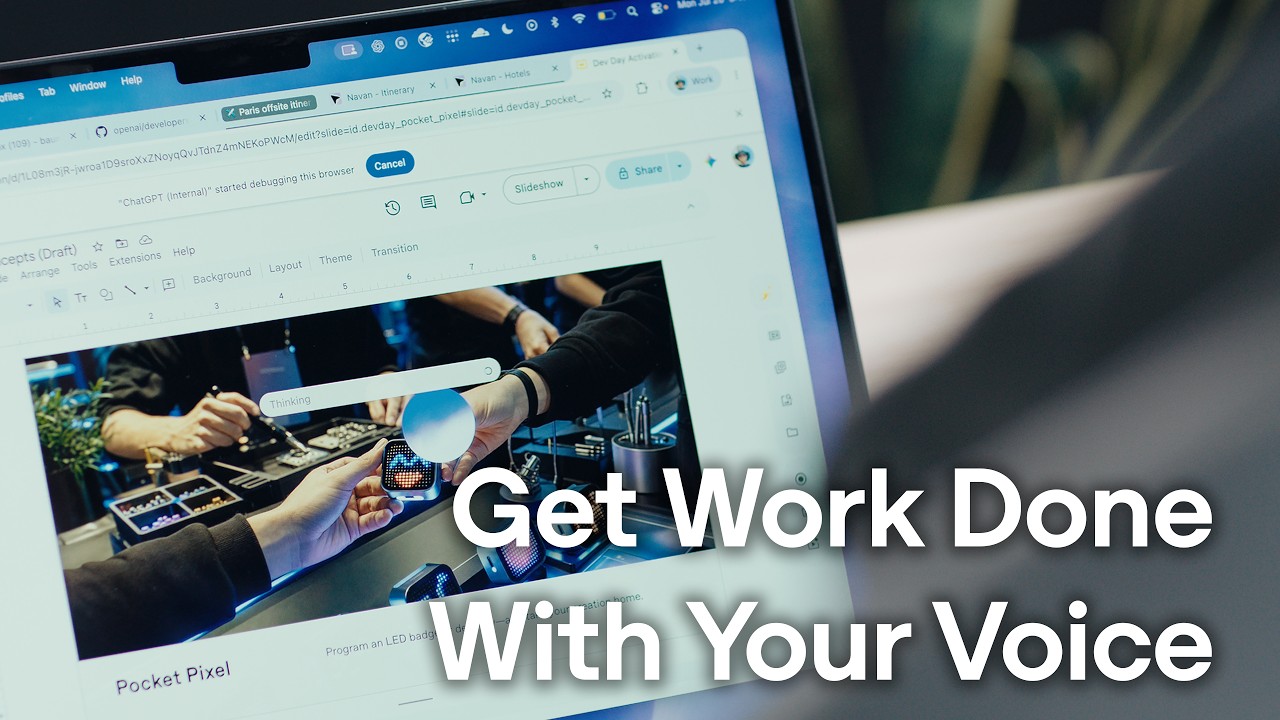
OpenAI presented the most productized version of the pattern. Its short demo reached 28,283 views, 1,132 likes, and 115 comments while showing ChatGPT Voice seeing the user's screen, working across connected apps, and keeping tasks moving in the background during brainstorming, travel preparation, and sharing flows. The distinctive angle is that voice was marketed as a continuous work surface, not as a dictation feature or novelty mode (video).
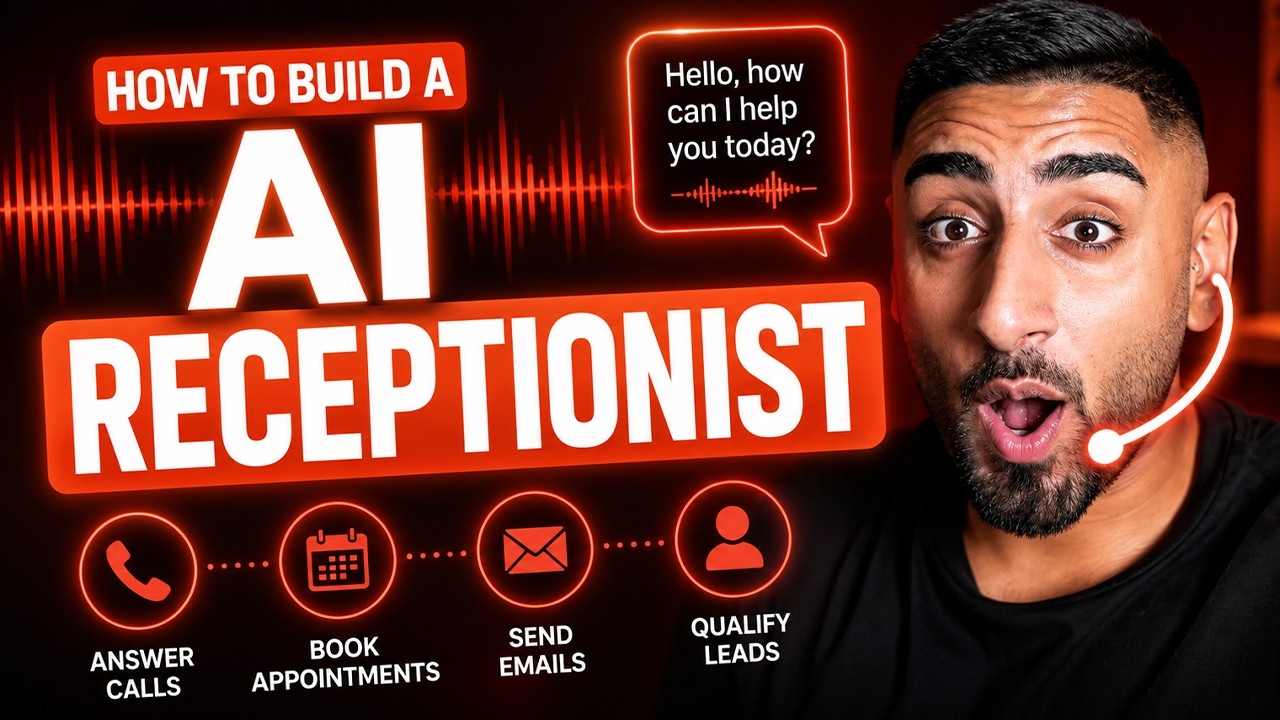
Sonny Sangha provided the strongest builder workflow. His tutorial reached 46,019 views, 507 likes, and 24 comments while assembling a dental-clinic receptionist with Bland AI, knowledge bases, Cal.com, the Bland Web Agent SDK, Convex endpoints, MCP, and CLI support. The distinctive angle is that useful voice agents were shown as integrated operations systems with bookings, routing, and live data updates, not just talking avatars (video, Bland docs).
Discussion insight: Julia Turc explained why full-duplex voice and micro-turn interaction matter, linking Thinking Machines interaction models and Kyutai's Unmute to practical trade-offs between real-time collaboration and cascade-based voice systems, while Sandeep Swadia translated agent adoption into four recurring work patterns: coordination, creativity, clarity, and coaching.
Comparison to prior day: Compared with 2026-07-29, agent coverage was less about proving that agents can act and more about teaching the control patterns, interfaces, and deployment stacks that make them repeatable.
1.3 Free, open, and local AI became the practical buyer story across coding and model choice 🡕
At least eleven items supported this theme. Compared with 2026-07-29's heavier focus on creator pipelines and model-serving economics, 2026-07-30 pushed a more personal pitch: reduce subscriptions, keep data local, and choose models by task, hardware, and token efficiency.

Vaibhav Sisinty carried the biggest consumer signal. His video reached 220,777 views, 9,663 likes, and 373 comments while positioning ten free or open tools as replacements for paid image, voice, video, coding, and automation products, all runnable locally and installable with the help of an AI agent. The distinctive angle is that open and local AI were sold as budget relief and privacy control at the same time (video).
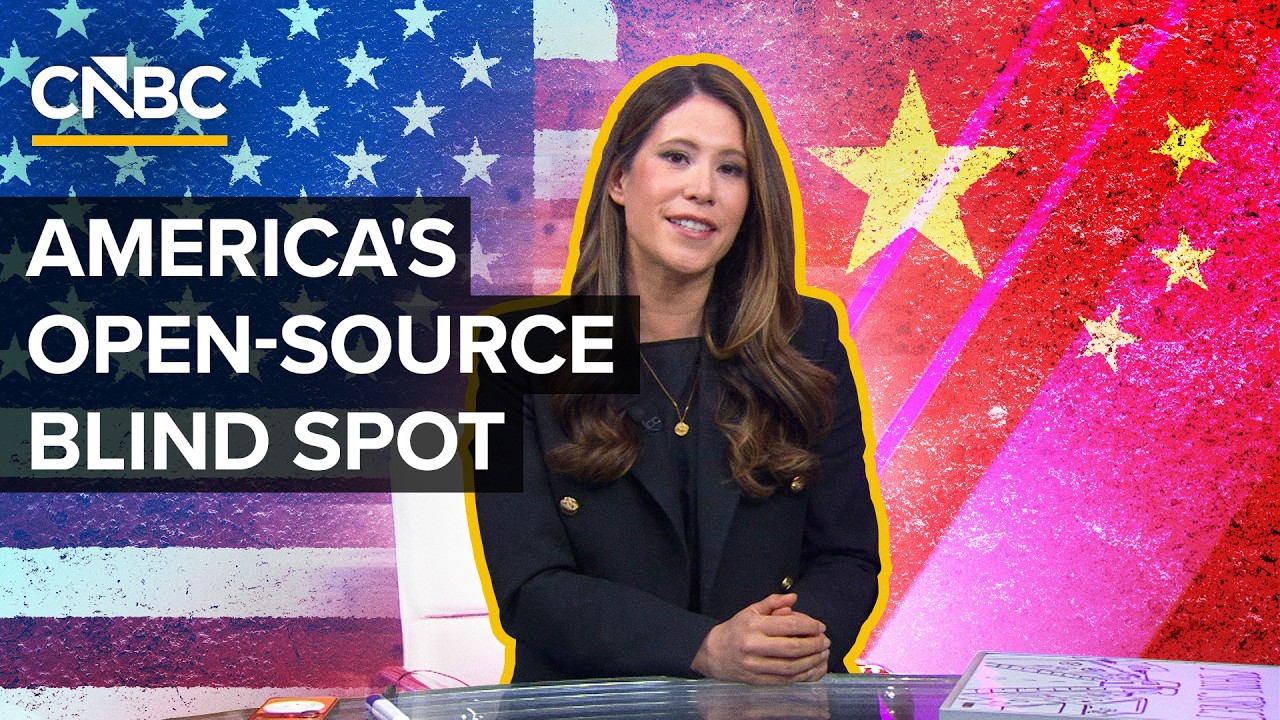
CNBC turned the same shift into a national-strategy argument. Its explainer reached 23,489 views, 683 likes, and 222 comments while arguing that Washington has a chip strategy but not an open-source AI strategy, even as enterprises ask who owns what an AI system learns about their business. The distinctive angle is that open weights were framed as both a geopolitical asset and an enterprise data-ownership issue (video).

Sam Witteveen supplied the clearest technical efficiency claim. His walkthrough reached 3,235 views, 187 likes, and 25 comments while examining ThinkingCap, a BottleCap AI fine-tune of Qwen3.6-27B; the linked post says it reduces reasoning tokens by 46% on average with comparable benchmark performance. The distinctive angle is that local-model competition is not only about raw capability now, but about wasting fewer tokens per useful answer (video, ThinkingCap post).
Discussion insight: WorldofAI pushed benchmark-driven model selection around Claude Opus 5 and its own World of AI Bench, while Kai mapped local model choice to VRAM tiers, quantization, Ollama, LM Studio, vLLM, and sglang instead of treating "local AI" as one monolithic stack.
Comparison to prior day: Compared with 2026-07-29, the free and open theme became more procurement-like. The argument was less "open models are catching up" and more "which local or open stack fits my budget, data, and GPU."
1.4 Creator AI kept getting cheaper, but the workflow burden stayed with the human 🡒
At least five items supported this theme. Compared with 2026-07-29's stronger focus on full-pipeline tutorials, 2026-07-30 emphasized that free distribution and mainstream access are improving faster than continuity, rights handling, or prompt discipline.

Tao Prompts carried the clearest craft signal. His tutorial reached 51,580 views, 2,123 likes, and 90 comments while focusing on medium and style choice, realistic scene generation, prompt writing, and AI-assisted refinement. The distinctive angle is that realism was treated as a production technique to be learned, not a one-click outcome (video).

Jake Dawson showed the strongest mainstream-distribution shift. His walkthrough reached 4,707 views, 110 likes, and 19 comments while presenting free Gemini Omni video generation inside YouTube Shorts and walking through remix features, prompt iteration, SynthID watermarking, and feature boundaries around speech, public figures, and copyrighted characters. The distinctive angle is that free AI video was now framed as a built-in platform feature rather than a separate product hunt (video).

Backlash added the clearest buyer-facing comparison layer. Its tutorial reached 2,411 views, 122 likes, and 6 comments while testing Zsky AI, TikTok Symphony, Vibes AI, and Snapgen around the specific promise of being truly free, usable, and commercially practical. The distinctive angle is that "free" was treated as something that had to be verified tool by tool, not simply believed (video).
Discussion insight: The creator cluster kept repeating the same gap from different angles: free access is improving, but continuity, rights rules, watermark constraints, and realistic prompting still sit with the human operator rather than the model or platform.
Comparison to prior day: Compared with 2026-07-29, creator coverage leaned less on cinematic novelty and more on distribution inside existing consumer surfaces plus the rules that still block full automation.
1.5 AI infrastructure and robotics became more physical: water, GPUs, and whole-body control 🡕
At least eight items supported this theme. Compared with 2026-07-29's mix of scarcity, kits, and tactile robotics, 2026-07-30 spent more time on the literal material substrate: electricity, cooling, campus design, GPU shortages, and robot bodies that can transfer skills across tasks.

Leo Cui, Ph.D., CFA supplied the broadest systems explainer. His video reached 115,884 views, 4,190 likes, and 222 comments while tracing the path from power and fiber to GPUs, HBM, cooling, networking, storage, and token economics. The distinctive angle is that infrastructure was presented as a full-stack industrial system rather than hidden cloud machinery (video).

Applied Digital added the clearest facilities claim. Its episode reached 69,754 views, 120 likes, and 26 comments while arguing that its closed-loop cooling system reuses liquid continuously and uses almost no water for cooling. The distinctive angle is that water use, installation, and commissioning timelines were treated as first-class AI build problems (video, Applied Digital).

Google DeepMind pushed the robotics side of the same story. Its video reached 37,379 views, 1,785 likes, and 200 comments while introducing Gemini Robotics 2 as an intelligence layer for adaptable robots, and the linked page says it pairs deep spatial reasoning with long-horizon planning and multi-robot collaboration. The distinctive angle is that robot progress was framed as an intelligence-transfer problem, not only a hardware demo (video, Gemini Robotics 2).
Discussion insight: CNBC Television said Databricks is hosting open models like Kimi and already running out of GPUs, while NBC News showed that humanoid robotics is already attracting national-security restrictions rather than only product demos.
Comparison to prior day: Compared with 2026-07-29, physical AI looked less like an abstract bottleneck and more like a concrete build problem with water, hardware, labor, and policy constraints.
2. What Frustrates People
Governance is still reactive, personality-driven, and institutionally thin
This is High severity because The Economist, CNN, Breaking Points, Yuval Noah Harari, and CNBC all point to the same burden: the visible governance workflow is still interviews, op-eds, White House visits, and post-incident commentary. The workaround is narrative positioning after each new scare rather than a durable deployment standard. This is directly worth building for, but the buyer is institutional.
Useful agents still depend on humans to define boundaries, tools, and escalation paths
This is High severity because freeCodeCamp.org, Sandeep Swadia, Sonny Sangha, and OpenAI all show the same reality: the hard part is not getting a model to answer, but specifying workflows, validation, knowledge sources, and when a human should stay in the loop. The workaround is to narrow scope, template roles, and add approval steps. This is directly worth building for.
Voice systems still force trade-offs between immediacy and richer interaction
This is High severity because Julia Turc, Thinking Machines, Kyutai, OpenAI, and Bland all reveal the same trade-off: users want low-latency voice with tool use and reasoning, but current stacks still split capabilities across interaction models, cascaded systems, and platform integrations. The workaround is to pair a fast voice surface with deeper background logic and explicit tool wiring. This is directly worth building for.
Open and local AI adoption is constrained by hardware, token waste, and GPU scarcity
This is High severity because Sam Witteveen, Kai, CNBC Television, Leo Cui, Ph.D., CFA, and CNBC all show that model choice now depends on VRAM, quantization, serving software, token efficiency, and chip supply as much as on raw quality. The workaround is to benchmark, keep more than one stack open, and fall back between hosted and local paths. This is directly worth building for.
AI video still hides continuity work, safety rules, and rights limits behind "free" hooks
This is Medium severity because Tao Prompts, Jake Dawson, Backlash, and Vaibhav Sisinty all point to the same gap: free video access has improved, but realistic prompts, continuity, public-figure restrictions, copyrighted-character limits, watermarks, and tool-by-tool verification still sit with the human. The workaround is to chain several tools and keep a human editor in the loop. This is worth building for and already competitive.
Physical AI still depends on specialized infrastructure and policy clearance
This is Medium severity because Applied Digital, Google DeepMind, and NBC News all show that progress in physical AI still depends on cooling design, skill transfer, safety, and national-security limits rather than software intelligence alone. The workaround is to narrow deployments and invest heavily in the surrounding infrastructure. This is worth building for, but the opportunity is still emerging.
3. What People Wish Existed
AI governance and deployment control room
The Economist, CNN, Breaking Points, Yuval Noah Harari, and CNBC imply demand for one place to reason about open weights, incident reports, data ownership, approvals, and deployment boundaries before a failure or political fight happens. This is a practical and emotional need with High urgency because the current workflow is still interviews, advisory visits, and reactive commentary. Media segments and policy arguments solve pieces of the problem today, not the operating system for decisions. Opportunity: direct.
Voice-first supervised workspace across apps and channels
OpenAI, Sonny Sangha, Julia Turc, Thinking Machines, and Kyutai imply demand for a workspace that combines real-time voice, tool use, background execution, and explicit approvals without forcing users to choose between responsiveness and depth. This is a practical need with High urgency because the strongest current examples still stitch together multiple layers by hand. Platform demos and voice-agent frameworks solve pieces of the problem today, not the full supervised workspace. Opportunity: direct.
Hardware-aware local and open model planner
Vaibhav Sisinty, CNBC, Sam Witteveen, Kai, and CNBC Television imply demand for a planner that combines benchmark evidence, token efficiency, VRAM fit, quantization options, and hosted fallback paths before a team commits to a stack. This is a practical need with High urgency because builders are clearly trying to trade off privacy, cost, and capability at the same time. Open models, benchmarks, and local runtimes solve slices of the problem today, not the full selection loop. Opportunity: direct.
Creator AI production system with continuity, rights, and cost controls
Tao Prompts, Jake Dawson, Backlash, and Vaibhav Sisinty imply demand for one layer that keeps prompts, style continuity, watermarks, platform rules, and account sprawl coherent across the whole video workflow. This is a practical need with Medium urgency because access is spreading quickly but dependable output still takes manual oversight. Individual generators solve pieces of the problem today, not the production system end to end. Opportunity: competitive.
Transferable robotics safety and infrastructure stack
Google DeepMind, Applied Digital, NBC News, and Leo Cui, Ph.D., CFA imply demand for a stack that combines skill transfer, facility planning, cooling constraints, and safety or policy boundaries before physical AI reaches production scale. This is a practical need with Medium urgency because the data is concrete but still early. Research demos and infrastructure explainers solve fragments of the problem today, not the developer and operator workflow around them. Opportunity: aspirational.
4. Tools and Methods in Use
| Tool | Category | Sentiment | Strengths | Limitations |
|---|---|---|---|---|
| ChatGPT Voice | Voice workspace | (+) | Screen-aware voice interaction, connected apps, and background task continuity | Usefulness depends on supported app connections and a defined workflow surface |
| Bland | Voice-agent platform | (+/-) | Self-hosted voice agents, low latency, live API calls, personas, batch calls, and web embeds | Builders still have to design the agent logic and external tool integrations |
| Interaction models | Multimodal model architecture | (+) | Native real-time audio, video, and text interaction with micro-turn collaboration | Still a research preview rather than a broadly available production product |
| Unmute | Voice stack | (+/-) | Modular STT, TTS, external LLM reasoning, and function calling for real-time voice use cases | Loses emotion, intonation, hesitation, and tone because the LLM brain communicates through text |
| LangChain / LangGraph / Pydantic | Agent orchestration stack | (+/-) | Supports validated, production-style sequential, parallel, and conditional workflows with human review | The long course itself shows how many moving pieces builders still need to manage |
| ThinkingCap-Qwen3.6-27B | Local coding model | (+) | 46% fewer reasoning tokens on average with comparable benchmark performance and lower latency | Still a 27B local model and not a frontier-capability jump by itself |
| World of AI Bench | Evaluation benchmark | (+) | Tests full web interfaces, creative tasks, browser games, multi-step workflows, research, and exact instruction following | Broad benchmark coverage still requires buyers to map results back to their own workload |
| Ollama / LM Studio / vLLM / sglang | Local model serving | (+/-) | Gives a clear hardware ladder from consumer GPUs to workstations and production serving | Choice is heavily constrained by VRAM tier and quantization trade-offs |
| Gemini Robotics 2 | Robotics intelligence layer | (+) | Deep spatial reasoning, long-horizon planning, and multi-robot collaboration | Public detail is still limited to an early capability preview |
The strongest positive sentiment clustered around tools that add control. People rewarded systems that make workflows more inspectable, whether that meant benchmark surfaces, token-efficient local models, voice stacks with explicit API hooks, or interaction models that keep humans in the loop.
Sentiment turned mixed whenever the tool depended on scarce hardware, too many moving parts, or hidden workflow labor. That is why local models, voice agents, and creator tools all looked powerful while still feeling operationally unfinished in different ways.
The main workaround pattern was layering. Builders compare more than one model, choose runtimes by hardware, wrap agents in roles and approvals, and keep a human review step whenever money, customer contact, or polished media output is involved.
Migration patterns were visible in four directions at once: from paid SaaS to local or open tools, from blank prompts to structured agent workflows, from turn-based chat to voice-first collaboration, and from brand loyalty to benchmark and hardware fit. Competitive pressure was strongest where open models, local runtimes, and frontier hosted systems touched the same job.
5. What People Are Building
| Project | Who built it | What it does | Problem it solves | Stack | Stage | Links |
|---|---|---|---|---|---|---|
| Complete Agentic AI Course | freeCodeCamp.org | Teaches production-ready multi-agent systems and deployment workflows | Builders want an end-to-end agent curriculum instead of fragmented examples | LangChain, LangGraph, Pydantic, RAG, AWS, Render | Shipped | repo, video |
| Four Cs agent templates | Sandeep Swadia | Reusable templates for coordination, creativity, clarity, and coaching agents | Knowledge workers want bounded automation instead of raw prompting | Agent templates, task framing, role boundaries, review steps | Beta | video |
| AI receptionist workflow | Sonny Sangha | Voice receptionist that answers calls, uses a knowledge base, books appointments, and updates systems live | Businesses want customer-facing automation without stitching the stack together manually | Bland AI, Norm, Cal.com, Web Agent SDK, Convex, MCP, CLI | Beta | video, docs |
| ChatGPT Voice work surface | OpenAI | Voice layer that coordinates work across connected apps while tasks continue in the background | Users want to stay in flow instead of switching between separate chat and work tools | ChatGPT Voice, connected apps, screen context, background tasks | Beta | video |
| ThinkingCap-Qwen3.6-27B | BottleCap AI | Fine-tuned local model that reduces unnecessary reasoning while preserving quality | Local coding users want faster and cheaper answers without throwing away capability | Qwen3.6-27B fine-tune, token-efficiency training, Apache 2.0 release | Shipped | post, video |
| World of AI Bench | WorldofAI | Benchmark suite for full web interfaces, planning agents, research tasks, and exact instructions | Buyers want workflow-based model evaluation instead of abstract leaderboard talk | Benchmark harness, workflow tasks, exact-match checks | Beta | site, video |
| Gemini Robotics 2 | Google DeepMind | Intelligence layer for adaptable robots with whole-body control and collaboration | Robots need transferable skills and better planning across unfamiliar tasks | Gemini Robotics 2, deep spatial reasoning, long-horizon planning, multi-robot collaboration | Alpha | page, video |
| Closed-loop AI campus cooling | Applied Digital | Water-light cooling system for AI infrastructure campuses | AI infrastructure builders need to scale capacity without water-heavy cooling assumptions | Closed-loop liquid cooling, AI campus buildout, commissioning workflow | Beta | site, video |
The strongest recurring build pattern was structure around autonomy. The course, Four Cs templates, receptionist workflow, and ChatGPT Voice work surface all assume that the winning product is not just the model, but the supervision layer around tasks, tools, and human approvals.
ThinkingCap and World of AI Bench show a second pattern: builders are turning evaluation and efficiency into products of their own. The point is no longer only to have a capable model, but to prove that it fits a real workload and does not waste compute getting there.
Gemini Robotics 2 and Applied Digital bring the same pattern into physical systems. The infrastructure and robotics signals are smaller than the software-agent signals, but they are becoming more concrete: transfer across robot bodies, cooling loops, commissioning deadlines, and facility constraints instead of vague talk about "the future of AI."
6. New and Notable
OpenAI framed voice as a background-work interface
OpenAI is notable because it marketed voice as a surface that can see the screen, work across connected apps, and keep tasks moving in the background. The signal is that live collaboration is becoming a product surface in its own right.
A 24-hour production agent course hit the daily feed
freeCodeCamp.org is notable because it treated agentic AI as a full curriculum covering validation, workflow orchestration, RAG, human review, and cloud deployment. The signal is that agent adoption now looks mature enough to teach as a systems discipline.
Open-source AI strategy entered mainstream business coverage
CNBC is notable because it argued that open-weight AI is now a Washington blind spot and an enterprise data-ownership issue, not only a developer preference. The signal is that open-source AI has crossed from tooling talk into strategy talk.
Whole-body robot intelligence got a concrete public framing
Google DeepMind is notable because Gemini Robotics 2 was presented as an intelligence layer for adaptable robots, and the linked page highlighted long-horizon planning and multi-robot collaboration. The signal is that robotics progress is being described in transferable skill terms, not only as eye-catching motion.
Water use became a first-class AI infrastructure topic
Applied Digital is notable because it centered closed-loop cooling and minimal water use in its AI campus narrative. The signal is that infrastructure coverage is starting to expose facility-level trade-offs that used to stay hidden behind "cloud" language.
7. Where the Opportunities Are
[+++] Voice-first supervised agent workspace - OpenAI, Sonny Sangha, Julia Turc, Thinking Machines, and Kyutai all suggest a strong need for assistants that stay present in conversation while deeper work, tool calls, and approvals happen in the background. This is strong because the same need appears in desktop work, customer calls, and multimodal research previews.
[+++] Local and open model planner plus efficiency layer - Vaibhav Sisinty, CNBC, Sam Witteveen, Kai, and CNBC Television all point to the same gap: people need help choosing models and runtimes under real privacy, cost, token, and hardware constraints. This is strong because the problem shows up in both consumer tutorials and enterprise strategy coverage.
[+++] Governance and deployment control room - The Economist, CNN, Breaking Points, Yuval Noah Harari, and CNBC all point to the same gap: institutions need one place to reason about openness, incident exposure, data ownership, and human approvals before they commit to a model strategy. This is strong because the burden recurs across news, policy, and enterprise framing.
[++] Creator AI production operating system - Tao Prompts, Jake Dawson, Backlash, and Vaibhav Sisinty all point to the same buyer need: consistent output without juggling too many prompts, rules, accounts, and brittle tool boundaries. This is moderate because the pain is repeated and practical, but the space is already crowded.
[++] AI infrastructure capacity and sustainability planner - Leo Cui, Ph.D., CFA, Applied Digital, and CNBC Television suggest a moderate opportunity for products that combine GPU allocation, cooling assumptions, water use, and deployment economics in one planning surface. This is moderate because the need is concrete, but the buyer set is narrower and more specialized.
[+] Robotics transfer and safety stack - Google DeepMind and NBC News suggest an emerging need for tools that combine transferable skills, safety defaults, and policy boundaries for physical AI systems. This is emerging because the signal is concrete, but still smaller and earlier than the software-agent opportunity set.
8. Takeaways
- The AI control debate broadened from regulation into social power and institutional trust. The strongest governance videos were no longer only about policy mechanics; they tied control, labor, bureaucracy, and democracy into one shared question. (source, source, source, source)
- Agent adoption is becoming a curriculum and systems-design problem. The leading signals were courses, templates, voice work surfaces, and customer-facing workflows that depend on supervision patterns rather than raw prompting alone. (source, source, source, source)
- Free, open, and local AI are winning attention through cost, privacy, and hardware fit. The recurring pitch was not only model quality, but replacing subscriptions, keeping data local, and choosing a stack that matches actual GPUs and token budgets. (source, source, source, source)
- Creator AI access improved faster than creator AI workflow automation. More free surfaces and tools were visible, but continuity, realistic prompting, watermark rules, and rights boundaries still required a person to manage the process. (source, source, source)
- Physical AI is increasingly about facilities and control layers, not only models. The most concrete infrastructure and robotics evidence came from cooling loops, GPU shortages, spatial reasoning, long-horizon planning, and policy limits around robot deployment. (source, source, source, source)