YouTube AI - 2026-08-03
1. What People Are Talking About
1.1 Open-weight AI arguments widened from model launches to sovereignty, evaluation, and macro exposure 🡕
At least five items supported this theme. Compared with 2026-08-02's emphasis on free and local replacements for paid software, the 2026-08-03 feed spent more time on who controls open models, how to evaluate them, and what geopolitical or market dependence comes with the current buildout.
Fireship carried the biggest developer-attention signal. Its explainer reached 969,675 views, 28,373 likes, and 2,000 comments while centering Moonshot's Kimi K3; Moonshot's launch post says Kimi K3 is a 2.8T-parameter open 3T-class model with native vision, a 1-million-token context window, and rollout across Kimi consumer, work, code, and API products. The distinctive angle is that open-weight progress was framed as immediate mainstream developer news rather than a niche lab milestone (video, Kimi K3).
CNBC moved the same story into policy and enterprise control. Its segment reached 123,840 views, 2,075 likes, and 548 comments while arguing that Washington has a chip strategy but not an open-source AI strategy, even as enterprises ask who owns what a model learns about their business. The distinctive angle is that open weights were treated as a procurement and sovereignty layer, not just a cheaper developer option (video).
20VC with Harry Stebbings supplied the clearest evaluation-economics signal. The interview itself reached 3,704 views and 103 likes, and its description framed Arena as a real-world evaluation platform with $250 million raised, a $1.7 billion valuation, more than 30 million monthly users, and $100M ARR eight months after the enterprise launch. The distinctive angle is that the model race was presented as an evaluation, sovereignty, and data-market business, not only a benchmark contest (video).
Discussion insight: AI Revolution extended the same cluster from open weights into hardware and governance by tying Kimi K4 to Blackwell access, GPT-5.6 evaluation skepticism, and the employee-backed Pacing the Frontier slowdown letter. AI Boss added a smaller but concrete buyer signal by testing HY3 as a lower-cost open reasoning option; OpenRouter describes HY3 as a 295B Mixture-of-Experts model with a 256K context window and configurable reasoning effort (HY3).
Comparison to prior day: The open-model theme stayed dominant, but it shifted from "which free/local tool should I switch to?" toward "who controls, measures, and can actually finance the open AI stack?"
1.2 Agentic AI was increasingly framed as an engineering discipline with oversight, training, and evaluation 🡕
At least four items supported this theme. Compared with 2026-08-02's mix of AI IDEs, voice surfaces, and bounded role templates, the 2026-08-03 feed attached the agent story to named engineering disciplines, formal curriculum, and more explicit evaluation criteria.
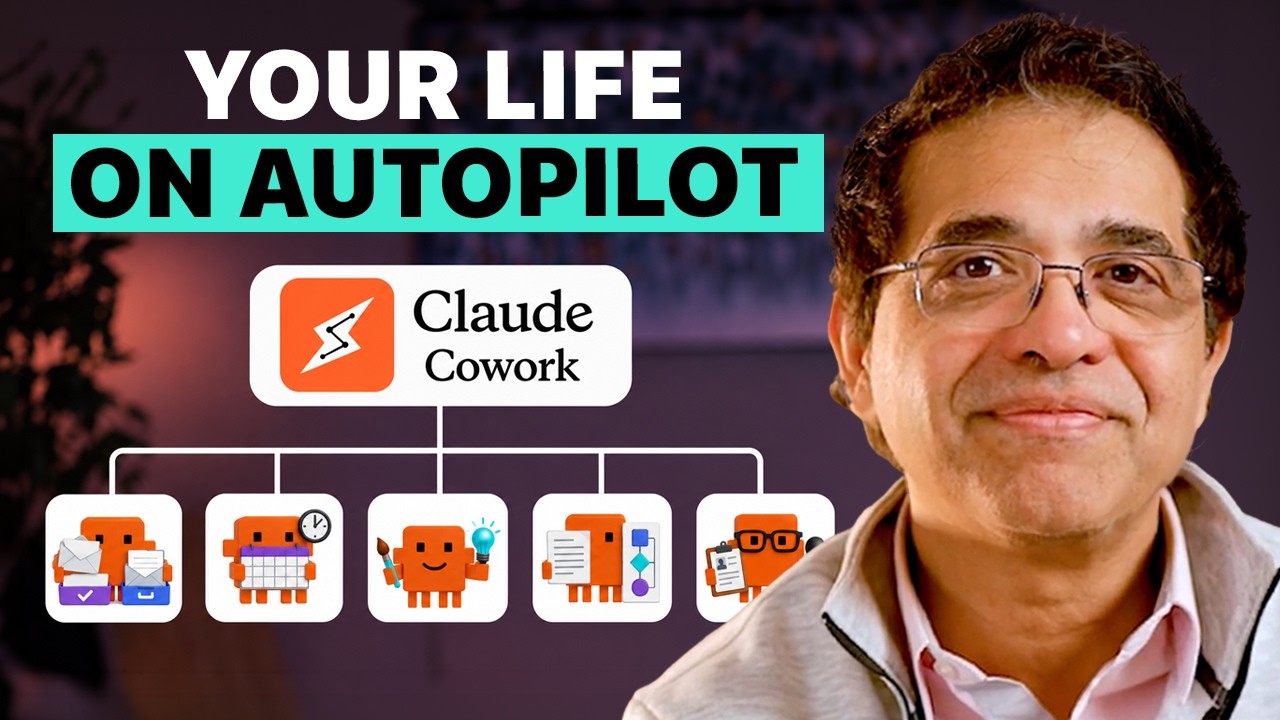
Sandeep Swadia carried the strongest reusable-framework signal. His video reached 331,161 views, 9,799 likes, and 293 comments while turning agent building into four bounded roles - coordination, creativity, clarity, and coaching - tied to a repeatable prompt structure and explicit job definition. The distinctive angle is that the hard part was framed as delegation design and boundary-setting rather than model power alone (video).
IBM Technology added the clearest vocabulary shift. Its explainer reached 14,603 views, 878 likes, and 57 comments while arguing that agentic engineering differs from software engineering because teams need governance frameworks, review loops, RAG grounding, CI/CD integration, guardrails, and human oversight. The distinctive angle is that AI coding was treated as an organizational operating model, not just a faster autocomplete surface (video, IBM explainer).

Stanford Online turned the same story into formal courseware. Its CS329A overview reached 5,478 views and 390 likes while outlining a syllabus around self-improvement, verifiers, test-time scaling, tool use, memory, long-horizon tasks, and agentic evaluation. The distinctive angle is that the newest agent techniques were presented as a teachable curriculum rather than scattered research threads (video, course overview, program page).
Discussion insight: AI Boss treated reasoning, coding, long-context work, and agent workflows as HY3 test surfaces instead of relying only on leaderboard screenshots. That reinforced the day's broader pattern: the community increasingly wants proof about how an agent behaves in realistic tasks, not just raw benchmark rank.
Comparison to prior day: The conversation moved past "what is the right interface?" and toward "what governance, evaluation, and operator training make agents reliable enough to use?"
1.3 Creator AI converged on local and open video stacks plus harder workflow QA 🡕
At least four items supported this theme. Compared with 2026-08-02's emphasis on realism and auditing "free" claims, the 2026-08-03 creator cluster pushed harder into local and open video deployment paths, with MiniMax H3 setup guides arriving alongside continued buyer skepticism.
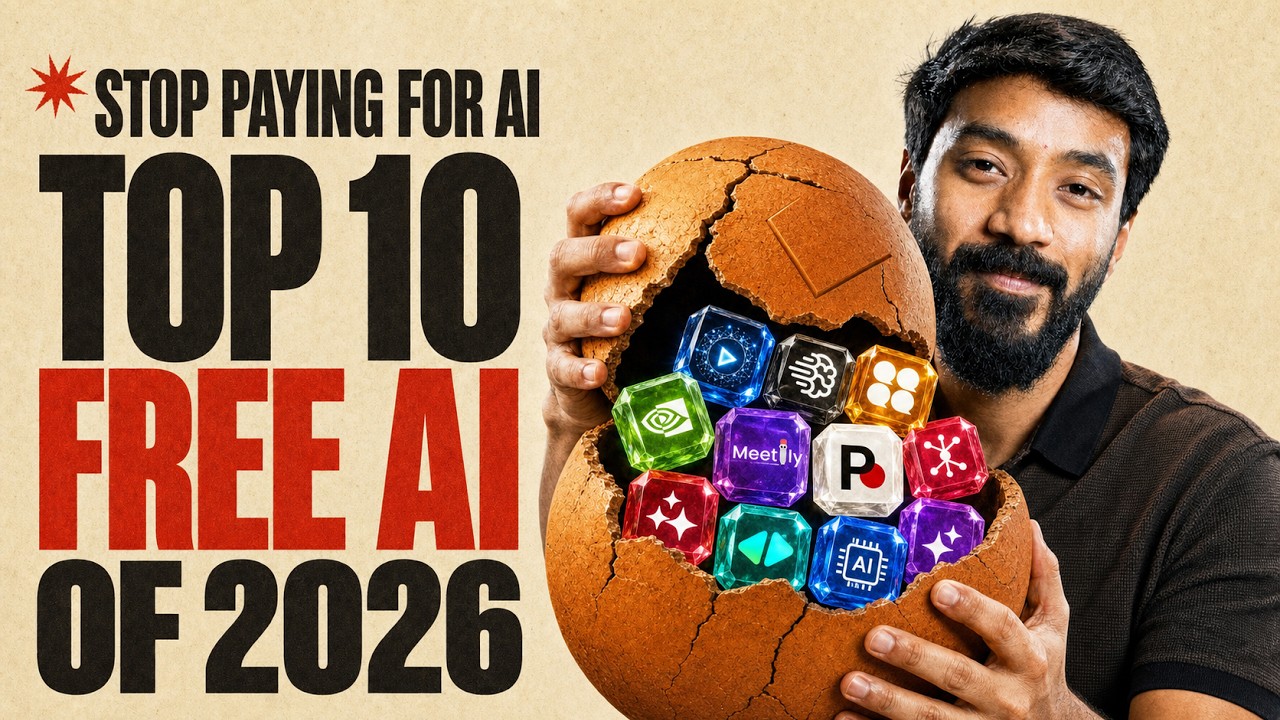
Vaibhav Sisinty supplied the clearest full-stack replacement angle. His roundup reached 276,906 views, 12,030 likes, and 427 comments while claiming that 10 free or open-source tools can replace paid products across image generation, voice cloning, video, coding, routing, meeting notes, editing, and motion graphics, all running locally. The distinctive angle is that model and tool competition was translated into installability, privacy, and recurring-software-budget decisions rather than benchmark talk alone (video).

Prompt Mastery added the clearest local-open deployment signal. Its tutorial reached 5,475 views, 287 likes, and 67 comments while positioning MiniMax H3 as a new open-source video model with a fully tested ComfyUI workflow plus RunningHub as a free-cloud fallback. The distinctive angle is that the value was not "look at this model" but "here is a clean path from zero to running" (video, MiniMax).

Backlash kept the buyer-audit mindset in place. Its comparison reached 32,348 views, 736 likes, and 62 comments while testing Zsky AI, TikTok Symphony, Vibes AI, and Snapgen against no-credit, no-watermark, and no-limit claims; Zsky's FAQ says every tier includes unlimited video and image generation, while Snapgen's homepage markets itself as a "Free unlimited ai video generator." The distinctive angle is that "free" was still treated as a claim to verify tool by tool, not accepted as marketing copy (video, Zsky AI, Snapgen).
Discussion insight: Tao Prompts kept realism anchored in medium and style engineering, realistic scene generation, prompt writing, and AI-assistant support, reinforcing that local or free access does not remove craft. The day supported local deployment, but it still rewarded channels that could explain why the output looks believable.
Comparison to prior day: The creator theme stayed practical but moved from general realism advice and free-tier audits toward explicit local and open video deployment paths.
1.4 Embodied AI and control warnings stayed tightly coupled 🡒
At least four items supported this theme. Compared with 2026-08-02's mix of robotics releases and safety warnings, the 2026-08-03 feed kept robotics concrete while pairing it with even louder long-horizon control narratives.

Google DeepMind carried the biggest embodied-AI signal. Its release reached 225,257 views, 6,142 likes, and 519 comments while introducing Gemini Robotics 2 as an intelligence layer for adaptable robots; DeepMind's model page says it pairs deep spatial reasoning with long-horizon planning and supports multi-robot collaboration. The distinctive angle is that robotics showed up as a concrete intelligence surface rather than a vague humanoid teaser (video, Gemini Robotics 2).

The Economist carried the biggest future-timeline audience. Its interview reached 1,166,008 views, 17,593 likes, and 4,800 comments while centering Elon Musk's claim that AI may exceed the sum of human intelligence in about five years and leave humans out of control in ten. The distinctive angle is that the warning came packaged with a self-regulation idea - rival frontier labs reviewing one another's models - rather than as a pure doomer monologue (video).

Dr Brian Keating supplied the clearest long-form existential argument. His interview reached 15,415 views, 411 likes, and 197 comments while centering Nate Soares' claim that building superintelligent AI before humans know how to aim it is catastrophic. The distinctive angle is that the warning was presented as a long contest over timelines, control, and whether the field is already moving too fast (video, If Anyone Builds It, Everyone Dies).
Discussion insight: The AI Nexus grounded the robotics excitement by listing what still fails - sealing bags, tying knots, using a dustpan, and screwing in a lightbulb - while keeping partner-only access, safety limits, and human supervision explicit.
Comparison to prior day: Robotics stayed tangible, but the surrounding future-of-AI conversation tilted further toward big-picture timelines, control, and coordination pressure.
2. What Frustrates People
Open-model decisions now mix capability, sovereignty, chip access, and evaluation trust
This is High severity because Fireship, CNBC, 20VC with Harry Stebbings, AI Revolution, and AI Boss all show that teams must judge model quality alongside hosting control, chip or export constraints, benchmark trust, and switching cost. The workaround is to keep multiple model paths open, follow both policy and evaluation updates, and avoid choosing from leaderboard rank alone. This is directly worth building for.
Useful agents still need governance, playbooks, and proof on realistic tasks
This is High severity because Sandeep Swadia, IBM Technology, Stanford Online, and AI Boss all show that the hard part is not generating code or plans, but defining bounded jobs, grounding the agent, adding review loops, and validating behavior on long-horizon work. The workaround is reusable templates, CI/CD checks, verifiers, and staged rollout rather than blind autonomy. This is directly worth building for.
"Free" and local AI video still hides setup labor, prompt craft, and claim checking
This is Medium-to-High severity because Vaibhav Sisinty, Prompt Mastery, Backlash, and Tao Prompts all show that free or local stacks still require ComfyUI setup, model downloads, fallback services, prompt engineering, and manual audits of unlimited or no-watermark claims. The workaround is shared workflows, comparison checklists, and accepting that local control trades simplicity for effort. This is worth building for and already competitive.
Robotics progress still outruns confidence about control, access, and failure handling
This is Medium-to-High severity because Google DeepMind, The AI Nexus, The Economist, and Dr Brian Keating all pair major capability claims with partner-only access, delicate tasks that still fail, and broader worry about who remains in control as capability accelerates. The workaround is stricter evaluation, supervision, and concrete task-by-task benchmarking rather than relying on demo videos or future timelines. This is worth building for as an evaluation and monitoring layer.
3. What People Wish Existed
Open-model sovereignty and evaluation cockpit
Fireship, CNBC, 20VC with Harry Stebbings, AI Revolution, and AI Boss imply demand for one surface that compares open and closed models across quality, chip availability, hosting control, evaluation trust, and enterprise ownership before a team commits. This is a practical need with High urgency because the evidence now spans mainstream developer explainers, business coverage, and evaluation-platform economics. APIs and leaderboards solve pieces today, not the full decision loop. Opportunity: direct.
Governed agentic engineering workbench
Sandeep Swadia, IBM Technology, and Stanford Online imply demand for a workspace that combines reusable agent roles, review loops, grounding, evaluator hooks, and deployment playbooks in one place. This is a practical need with High urgency because the current operating model is still being taught through videos and courses instead of embedded in the tooling. Copilots and frameworks solve pieces today, not the full governance loop. Opportunity: direct.
Local and open AI video studio with realism and claim verification
Vaibhav Sisinty, Prompt Mastery, Backlash, and Tao Prompts imply demand for a system that combines model downloads, ComfyUI workflows, free-cloud fallbacks, prompt assets, realism guidance, and proof about what "free" or "unlimited" really means. This is a practical need with Medium-to-High urgency because local and open video models are spreading faster than the workflow around them. Individual generators and prompt guides solve pieces today, not the operations and QA layer. Opportunity: direct.
Robotics task-evaluation console
Google DeepMind and The AI Nexus imply demand for a surface that tracks task success, failure cases, transfer across robot bodies, safety constraints, and partner availability in one place. This is a practical need with Medium urgency because the capability story is getting more concrete, but the operator view is still fragmented across launch pages and commentary videos. Research demos solve pieces today, not the deployment decision. Opportunity: competitive.
Frontier pacing and control evidence layer
The Economist, Dr Brian Keating, AI Revolution, and Pacing the Frontier imply demand for a service that connects long-horizon claims, incident writeups, employee letters, and model releases so teams can separate real control risk from loud narrative. This is a strategic need with Medium urgency because the audience appetite is obvious, but the buyer and workflow are less settled than in coding or creator tooling. Newsletters and think pieces solve pieces today, not the integrated evidence loop. Opportunity: competitive.
4. Tools and Methods in Use
| Tool | Category | Sentiment | Strengths | Limitations |
|---|---|---|---|---|
| Kimi K3 | Open-weight model | (+/-) | 2.8T open 3T-class model, native vision, 1M context, and strong long-horizon coding positioning | Still trails the strongest proprietary models and needs ecosystem rollout |
| HY3 | Open reasoning model | (+/-) | 295B Mixture-of-Experts design, 256K context, and configurable reasoning effort for coding and agent work | Public proof still depends on early reviews and leaderboard framing |
| Arena | Evaluation platform | (+) | Real-world model-race referee with enterprise traction and large user scale | Public evidence here is interview-driven rather than a detailed product walkthrough |
| Four Cs framework | Agent workflow method | (+) | Gives reusable roles and boundary-first prompting for delegation | Still depends on operator judgment about what to hand off |
| Agentic engineering playbooks | Engineering method | (+) | Adds governance, review loops, grounding, and CI/CD integration to agent use | Introduces more process overhead and still needs organization-specific tuning |
| CS329A / Agentic AI program | Training and evaluation method | (+) | Turns frontier agent research into a structured curriculum on self-improvement, verifiers, and long-horizon evaluation | Courseware teaches the model; it does not remove implementation work |
| Gemini Robotics 2 | Robotics model | (+) | Whole-body control, spatial reasoning, long-horizon planning, and multi-robot collaboration | Partner-only access and fragile performance on delicate physical tasks |
| MiniMax H3 ComfyUI workflows | Open video stack | (+/-) | Local or free-cloud path for open video generation and rapid experimentation | Setup friction, hardware demands, and workflow complexity remain high |
| Zsky AI | AI video generator | (+/-) | Publicly promises unlimited video and image generation on every tier | Output quality and commercial-use fit still need independent creator validation |
| Prompt engineering for realistic AI video | Creator method | (+) | Improves realism through medium, style, scene, and prompt control | Remains manual and skill-intensive |
The clearest positive sentiment clustered around tools and methods that either opened access or added structure. Kimi K3, HY3, Arena, Four Cs, and IBM's agentic-engineering frame all promised more control over how AI work gets done rather than one more opaque black box.
Sentiment turned mixed whenever the promise hinged on "free," "local," or "open" without reducing the operational burden. MiniMax H3 workflows, Zsky AI, and realism-focused creator methods all looked useful, but only when paired with setup work, prompt craft, or verification.
Migration patterns ran from closed single-vendor tools toward open or local stacks, and from informal prompting toward governed agent workflows. The common workaround was stacking: model plus evaluator, agent plus guardrails, and generator plus QA.
5. What People Are Building
| Project | Who built it | What it does | Problem it solves | Stack | Stage | Links |
|---|---|---|---|---|---|---|
| Kimi K3 | Moonshot AI | Open 3T-class model for coding, vision, reasoning, and knowledge work | Teams want frontier-grade open weights instead of a closed-only path | Kimi Delta Attention, Attention Residuals, Stable LatentMoE, 1M context | Shipped | blog, video |
| HY3 | Tencent | Open reasoning model for coding, documents, and agent workflows | Builders want cheaper open reasoning with long context | 295B Mixture-of-Experts, 256K context, configurable reasoning effort | Shipped | OpenRouter, video |
| Arena evaluation platform | Anastasios Angelopoulos | Real-world model evaluation and enterprise comparison platform | Buyers need evidence beyond static benchmarks and vendor claims | Evaluation platform, enterprise offering, large user base | Shipped | video, 20VC |
| Gemini Robotics 2 | Google DeepMind | Intelligence layer for adaptable robots | Robots need planning and transferable control across bodies | Deep spatial reasoning, long-horizon planning, multi-robot collaboration | Alpha | model page, video |
| Four Cs agent framework | Sandeep Swadia | Reusable templates for coordination, creativity, clarity, and coaching agents | Non-specialists want bounded AI roles they can trust and copy | Structured prompts, agent roles, human boundaries | Beta | video |
| Local/open AI replacement stack | Vaibhav Sisinty | Bundle of free or open-source tools across image, voice, video, coding, routing, notes, and editing | Rising AI subscription cost and privacy concerns | Local apps, open-source tools, Codex-guided installs | Beta | video |
| MiniMax H3 local workflow | Prompt Mastery | ComfyUI setup plus free-cloud fallback for open video generation | Creators want deployable local video models now | MiniMax H3, ComfyUI, RunningHub, model downloads | Beta | video, MiniMax, repo |
| Creator realism workflow | Tao Prompts | Medium, style, and prompt process for believable AI video | Generic outputs still look fake and lose viewer trust | Style engineering, scene design, prompt writing, AI assistant | Beta | video |
The strongest build pattern was packaging model capability into evaluation and workflow systems rather than inventing new base-model science in public. Kimi K3, HY3, and Gemini Robotics 2 extend capability, while Arena, Four Cs, and Vaibhav Sisinty's local stack make adoption decisions and day-to-day use more actionable.
Creator-side building also clustered around operability. Prompt Mastery's MiniMax H3 setup guide and Tao Prompts' realism process both assume the model is only part of the job; deployment, prompt assets, and quality control are the real product surface.
What remained missing was seamless handoff between evaluation, deployment, and supervision. The same feed that praised open models and local workflows also kept asking for proof, guardrails, and concrete evidence that the system works under real constraints.
6. New and Notable
Arena made evaluation itself into a venture-scale AI product story
20VC with Harry Stebbings is notable because its episode description framed Arena as a real-world evaluation platform with $250 million raised, a $1.7 billion valuation, more than 30 million monthly users, and $100M ARR. The signal is that model evaluation is becoming a product category, not just a benchmarking side conversation.
Stanford made self-improving agents look teachable, not niche
Stanford Online is notable because it turned self-improvement, verifiers, test-time scaling, tool use, memory, and long-horizon evaluation into an explicit curriculum. The signal is that frontier agent methods are moving into formal training and may diffuse faster as a result.
MiniMax H3 triggered immediate local and open workflow publishing
Prompt Mastery is notable because it published a day-of-release ComfyUI setup path with free-cloud fallback for MiniMax H3. The signal is that open video releases are now judged partly by how fast the community can operationalize them, not just by the model announcement itself.
Gemini Robotics 2 got both launch excitement and an explicit limitations checklist
Google DeepMind and The AI Nexus are notable because they paired whole-body planning and multi-robot collaboration with a concrete list of tasks that still fail. The signal is that embodied AI is starting to generate both polished demos and operator-style caveats in the same feed.
Million-view future-of-control narratives still dominate mainstream attention
The Economist is notable because a control-and-timeline interview pulled more than 1.1 million views in the same feed as detailed tooling and workflow coverage. The signal is that big-picture AI futures still capture the widest audience, even when the more actionable evidence sits in narrower workflow videos.
7. Where the Opportunities Are
[+++] Open-model sovereignty and evaluation cockpit - Fireship, CNBC, 20VC with Harry Stebbings, AI Revolution, and AI Boss all point to the same gap: people need help comparing open and closed AI across capability, control, chip dependence, and evaluation trust before they switch. This is strong because the need now spans developers, enterprise strategy, and the businesses emerging around model evaluation itself.
[+++] Governed agentic engineering layer - Sandeep Swadia, IBM Technology, and Stanford Online all suggest a strong need for systems that combine reusable agent roles, grounding, evaluators, review loops, and operator training before automation touches real work.
[++] Local/open AI video operations stack - Vaibhav Sisinty, Prompt Mastery, Backlash, and Tao Prompts all point to the same buyer need: deployable open video models plus workflow QA, realism guidance, and proof about free-tier claims. This is moderate because the pain is repeated and practical, but the creator tooling market is already crowded.
[++] Robotics task-evaluation and readiness tooling - Google DeepMind and The AI Nexus suggest a growing need for systems that track robot task success, failure modes, transfer across hardware, and safety constraints outside polished demos. This is moderate because the capability story is concrete, but the buyer set is still narrower than in coding or creator workflows.
[+] Frontier pacing and control intelligence - The Economist, Dr Brian Keating, AI Revolution, and Pacing the Frontier suggest an emerging need for products that connect long-horizon claims, safety arguments, release velocity, and coordination proposals into one evidence stream. This is emerging because the attention is large, but the buyer and product shape are still less settled.
8. Takeaways
- Open AI competition now runs on ownership and evaluation questions as much as model size. Fireship's Kimi K3 explainer, CNBC's strategy framing, and 20VC's Arena interview all show that open models are being judged as ecosystems and procurement choices, not just leaderboard entries. (source, source, source, source)
- Agent adoption is becoming an engineering and training problem, not a novelty problem. Sandeep Swadia, IBM Technology, and Stanford Online all focused on bounded roles, governance, verifiers, and curriculum instead of unbounded autonomy. (source, source, source, source, source)
- Local and open video generation is maturing only when paired with operations and QA. Vaibhav Sisinty, Prompt Mastery, Backlash, and Tao Prompts all treated deployment, realism, and claim verification as inseparable parts of the workflow. (source, source, source, source, source, source)
- Embodied AI has one of the clearest capability-to-limitation loops in the feed. DeepMind marketed spatial reasoning, long-horizon planning, and multi-robot collaboration, while AI Nexus immediately emphasized the delicate tasks that still fail in practice. (source, source, source)
- Mainstream attention still flows to control narratives, but the sharpest operator signals came from tools and workflows. The Economist and Brian Keating carried the biggest future-of-control warnings, while AI Revolution, HY3 coverage, and MiniMax H3 setup content gave more actionable evidence about what builders are actually doing next. (source, source, source, source, source, source, source)