YouTube AI - 2026-08-04
1. What People Are Talking About
1.1 Open-source AI started to look like the competitive center of the market, not the discount tier 🡕
At least six items supported this theme. Compared with 2026-08-03's focus on sovereignty and evaluation, the 2026-08-04 feed spent more time on named open-model challengers and on whether proprietary leaders can keep their edge once open alternatives get close enough on real tasks.
Fireship carried the biggest attention signal. Its explainer reached 973,534 views, 28,450 likes, and 2,000 comments while centering Moonshot's Kimi K3; Moonshot's launch post says Kimi K3 is a 2.8T-parameter open 3T-class model with native vision, a 1-million-token context window, and rollout across Kimi consumer, work, code, and API products. The distinctive angle is that an open model was treated as mainstream developer news with closed-model-level ambition, not as a niche research release (video, Kimi K3).
CNBC moved the same story into national strategy and enterprise procurement. Its segment reached 129,646 views, 2,150 likes, and 568 comments while arguing that Washington has a chip strategy but not an open-source AI strategy, even as enterprises ask who owns what a model learns about their business. The distinctive angle is that open weights were framed as strategic infrastructure rather than just a cheaper developer option (video).
WorldofAI supplied the clearest workload-testing signal. Its review reached 18,363 views and 459 likes while pitching Qwen 3.8 Max as a flagship open model and testing it across coding, frontend development, Three.js, agent workflows, research, and visual reasoning against frontier alternatives. The distinctive angle is that the open-model story was grounded in concrete task evaluation, not only launch headlines (video).
Discussion insight: Matthew Berman packaged the same turn as a winner narrative by linking a Qwen benchmark page and official Qwen blog, while AI Boss kept the buyer-comparison angle practical by testing HY3 on reasoning, coding, long-context work, and agent workflows; OpenRouter describes HY3 as a 295B-parameter Mixture-of-Experts model with a 256K context window and configurable reasoning effort (benchmarks, HY3).
Comparison to prior day: The open-model theme stayed dominant, but it shifted from sovereignty and evaluation talk toward a direct multi-front model war featuring Kimi, Qwen, and HY3 as practical alternatives to closed labs.
1.2 AI moved further from generic chat into specialized operating surfaces - agents, voice, developer tools, and robot control 🡕
At least five items supported this theme. Compared with 2026-08-03's framing of agentic AI as an engineering discipline, the 2026-08-04 feed attached AI to concrete operating surfaces with a job to do: bounded agents, voice interfaces, coding environments, structured-data models, and robot controllers.
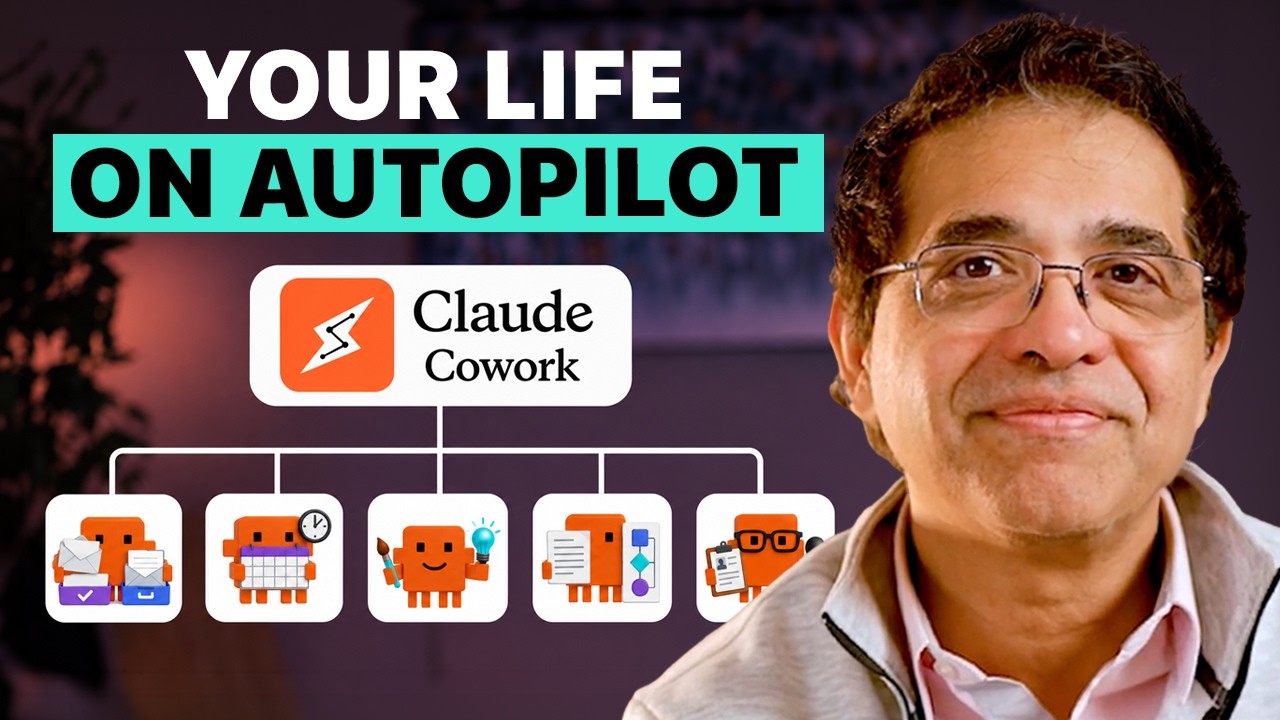
Sandeep Swadia carried the strongest bounded-agent signal. His video reached 388,888 views, 11,271 likes, and 316 comments while turning agent building into four reusable roles - coordination, creativity, clarity, and coaching - that ordinary users can set up today. The distinctive angle is that agent value was framed as explicit delegation design rather than magic autonomy (video).

The AI Advantage pushed the same shift into interaction design. Its roundup reached 30,433 views and 838 likes while pitching ChatGPT Voice as a cross-device surface across web, mobile, and desktop, then pairing that with Anthropic's Economic Index connector, which lets Claude answer occupation and task questions directly from the index data. The distinctive angle is that interface and grounded data access were bundled together as the product (video, Anthropic Economic Index connector).

IBM Technology added the clearest developer-workflow vocabulary. Its explainer reached 19,090 views and 547 likes while treating the AI IDE as a distinct surface for coding, debugging, refactoring, and developer productivity; IBM's IDE page also emphasizes the tradeoff between local control and setup burden or environment drift. The distinctive angle is that AI coding was framed as a workflow category with operational tradeoffs, not just one assistant button (video, IBM IDE page).

Google DeepMind stretched the same idea into physical-world control. Its launch reached 234,130 views, 6,319 likes, and 527 comments while introducing Gemini Robotics 2 as an intelligence layer for adaptable robots; DeepMind's model page says it pairs deep spatial reasoning with long-horizon planning and supports multi-robot collaboration on complex unfamiliar tasks. The distinctive angle is that the interface was not chat at all, but whole-body action (video, Gemini Robotics 2).
Discussion insight: IBM's large database model story pushed the same specialization deeper into enterprise data. IBM's Think article says Swiss Mobiliar trained SQL DI on about 15 million insurance-quote records and improved closing rate by 7% over six months, suggesting AI is moving closer to systems of record rather than staying in standalone chat windows (video, IBM LDMs).
Comparison to prior day: Yesterday's governance-heavy agent story became a more concrete interface story, with AI increasingly sold as a domain-specific operating layer for code, voice, data, and physical action.
1.3 Creator AI shifted from "free tools" talk to direct generator shootouts and packaged workflows 🡕
At least three items supported this theme. Compared with 2026-08-03's emphasis on local and open deployment paths, the 2026-08-04 feed spent more time on direct generator comparisons and on tutorials that turn those generators into repeatable creator workflows.

Vaibhav Sisinty carried the largest creator-adoption signal. His roundup reached 289,344 views, 12,529 likes, and 439 comments while claiming that 10 free or open-source tools can replace paid products across image, voice, video, coding, and automation, all with local operation and no-code setup as the core promise. The distinctive angle is that creator tooling was framed as a subscription-replacement stack, not a single model demo (video).

AI Search supplied the clearest head-to-head evaluator mindset. Its comparison reached 73,636 views, 2,814 likes, and 578 comments while directly pitting Seedance 2.5 against MiniMax H3 across multimodal features, 3D action, instruction following, sketch-to-animation, storyboard-to-commercial, UI motion graphics, music video, and language tests. The distinctive angle is that "best" creator AI was judged workflow by workflow, not from a single hero sample (video).

Learn AI with Ritika represented the lighter-weight creator path. Her tutorial reached 14,619 views, 682 likes, and 184 comments while combining ChatGPT and Google Flow to make free long 3D cartoon animation with voice, then wrapping that path in a masterclass and community funnel. The distinctive angle is that creator AI was sold as a packaged workflow any learner could copy, not only an expert local stack (video, Google Flow).
Discussion insight: The creator story now spans both heavier local stacks and lighter hosted paths. Vaibhav sold the whole stack as a free local alternative, AI Search ran explicit model-routing tests, and Ritika wrapped a low-friction path in education and community, reinforcing that the distribution layer around the tools matters almost as much as the models themselves.
Comparison to prior day: The creator theme stayed practical but moved from "can I run this locally?" toward "which generator wins this workflow, and which tutorial path gets me shipping fastest?"
1.4 AI hype kept getting audited through pricing durability, value-chain pressure, and control risk 🡕
At least three items supported this theme. Compared with 2026-08-03's more philosophical control warnings, the 2026-08-04 feed tied skepticism to concrete claims about margins, value-chain pressure, and whether humans stay in control.

The Infographics Show supplied the clearest unit-economics warning. Its same-day upload reached 42,043 views, 1,942 likes, and 371 comments while arguing that cheap AI prices are being subsidized by investors and that thousands of wrapper businesses could break once model providers raise prices to cover infrastructure costs. The distinctive angle is that AI hype was audited through margin structure rather than benchmark scores (video).

CNBC International Live added the sharpest value-chain compression claim. Its segment argued that Chinese labs open-sourcing their strongest systems will push U.S. labs toward releasing degraded open models and competing at the lower end of the value chain. The distinctive angle is that the open-model race was presented as a margin and positioning problem, not only a technology race (video).

Dr Brian Keating stretched the same skepticism out to the long horizon. His interview reached 15,625 views and 415 likes while centering Nate Soares's argument that building superintelligent AI before humans know how to aim it is catastrophic. The distinctive angle is that the demand for stronger control evidence was explicit, not implied (video, If Anyone Builds It, Everyone Dies).
Discussion insight: The skepticism covered different timescales - CNBC International made it about value-chain compression now, Infographics made it about wrapper margins next, and Brian Keating made it about control later - but the common demand was clearer evidence about who pays, who controls, and who gets squeezed as models scale.
Comparison to prior day: The anxiety shifted from broad future-of-AI rhetoric toward more immediate questions about margins, market position, and whether current leaders can keep leverage as the field opens up.
2. What Frustrates People
Open-model decisions now mix quality, control, geopolitics, and pricing durability
This is High severity because Fireship, CNBC, WorldofAI, Matthew Berman, AI Boss, CNBC International Live, and The Infographics Show all show that people are no longer comparing models on benchmark quality alone. They are also weighing who controls the weights, how durable today's cheap pricing is, whether U.S. and Chinese labs force one another downmarket, and how much real-task proof exists. The workaround is constant benchmark watching, real-workload testing, and keeping multiple model paths open instead of committing from one headline. This is directly worth building for.
Useful AI interfaces still need boundaries, grounding, and domain-specific context
This is High severity because Sandeep Swadia, The AI Advantage, IBM Technology, IBM's large database model article, and Google DeepMind all show that the hard part is not getting AI access but giving it the right surface, permissions, data, and task boundaries. The workaround is bounded agent roles, source-grounded connectors, IDE visibility, structured-data access, and narrowly defined robot-control goals instead of one generic chat surface. This is directly worth building for.
Creator AI video still hides setup, routing, and QA behind "free" or "best" claims
This is Medium-to-High severity because Vaibhav Sisinty, AI Search, and Learn AI with Ritika all show that creators still need model routing, workflow setup, prompt craft, and manual quality review even when the pitch is free, open, or no-code. The workaround is community packs, tutorial bundles, explicit comparison tests, and accepting that the workflow is still more complex than the marketing suggests. This is worth building for and already competitive.
AI business models and control stories still feel unstable
This is Medium severity because The Infographics Show, CNBC International Live, CNBC, and Dr Brian Keating all show uncertainty about subsidized pricing, value-chain compression, and whether the field can remain controllable as capability rises. The workaround is diversification, closer monitoring of provider economics, and treating control and safety evidence as first-class procurement input rather than optional reading. This is worth building for as a monitoring layer.
3. What People Wish Existed
Open-model comparison and durability cockpit
Fireship, CNBC, WorldofAI, Matthew Berman, AI Boss, and The Infographics Show imply demand for one surface that compares open and closed models across real-task quality, context window, rollout maturity, hosting control, geopolitical exposure, and pricing durability before a team commits. This is a practical need with High urgency because the open-model field is moving too quickly for ad hoc channel watching. Blogs, benchmark pages, and leaderboards solve pieces today, not the switch decision. Opportunity: direct.
Governed multi-surface AI workspace
Sandeep Swadia, The AI Advantage, IBM Technology, Google DeepMind, and IBM's large database model article imply demand for a workspace that combines bounded agents, voice, IDE visibility, structured-data access, and approval trails in one place. This is a practical need with High urgency because AI is splintering across surfaces faster than teams can govern it. Copilots, chat apps, and connectors solve pieces today, not the full operating layer. Opportunity: direct.
Creator video model router and QA layer
Vaibhav Sisinty, AI Search, and Learn AI with Ritika imply demand for a system that routes between local, open, and no-code video tools, stores reusable prompts and workflows, and records quality judgments across tasks such as sketch-to-animation, storyboards, long-form cartoons, and voice. This is a practical need with Medium-to-High urgency because the workflow is fragmented across community links, affiliate pages, and tutorials. Individual generators solve pieces today, not the cross-tool operations layer. Opportunity: competitive.
Database-native enterprise AI surface
IBM Technology and IBM's large database model article imply demand for AI that can search and reason over relational data without moving it into a separate application layer. This is a practical need with Medium urgency because the evidence is concrete - IBM described production-style insurance and retail usage - but the category is still early and enterprise-heavy. General LLM apps solve pieces today, not the structured-data-native path. Opportunity: direct.
AI vendor-risk and token-economics monitor
The Infographics Show, CNBC International Live, and Dr Brian Keating imply demand for a service that tracks subsidy exposure, value-chain compression, and control risk alongside capability news. This is a strategic need with Medium urgency because the audience clearly wants it, but the buyer and workflow are less settled than in coding or creator tooling. News roundups solve pieces today, not the integrated risk layer. Opportunity: competitive.
4. Tools and Methods in Use
| Tool | Category | Sentiment | Strengths | Limitations |
|---|---|---|---|---|
| Kimi K3 | Open-weight model | (+/-) | 2.8T open 3T-class model, native vision, 1M context, and frontier coding ambition | Still trails the strongest proprietary models and broader ecosystem rollout is still underway |
| Qwen 3.8 Max | Open-weight model | (+/-) | Presented as a flagship open model with strong coding, agent, and visual-workload testing | Public evidence in the feed still leans on reviewer tests and benchmark tracking more than a clear official technical brief |
| HY3 | Open reasoning model | (+/-) | 295B Mixture-of-Experts design, 256K context, configurable reasoning effort, and agent/coding focus | Public proof is still early and largely reviewer-led |
| Four Cs framework | Agent workflow method | (+) | Reusable coordination, creativity, clarity, and coaching roles with explicit boundaries | Still depends on operator judgment about where each role should stop |
| ChatGPT Voice | Voice workspace | (+/-) | Cross-device, hands-free interaction and faster work loops | Needs trustworthy permissions, context, and grounding to be reliably useful |
| Anthropic Economic Index connector | Data connector | (+) | Grounds Claude answers in occupation and task data with accessible source backing | Scope is Claude-usage data, not the whole labor market |
| AI IDE | Developer workflow category | (+) | Combines coding, debugging, refactoring, and productivity in one surface | Local setup burden and environment drift remain real tradeoffs |
| Large Database Models / SQL DI | Database AI method | (+) | Brings AI directly into relational data via embeddings and semantic queries without moving data | Specialized category with narrower fit and early enterprise-heavy adoption |
| Gemini Robotics 2 | Robotics model | (+/-) | Deep spatial reasoning, long-horizon planning, and multi-robot collaboration | Real-world transfer across unfamiliar tasks remains the exact hard problem the model is trying to solve |
| Local/open AI replacement stack | Creator and productivity stack | (+/-) | Replaces paid tools across image, voice, video, coding, and automation with local or open options | Users still need community packs, setup help, and workflow stitching |
| Seedance 2.5 and MiniMax H3 | AI video stack | (+/-) | Strong enough to justify side-by-side workflow testing across multiple creative tasks | Selection, QA, and routing remain manual and prompt-heavy |
| Google Flow | Hosted creator workflow tool | (+/-) | Low-friction path to long-form animated video when paired with ChatGPT and tutorial scaffolding | In practice it still appears as one piece of a broader community and workflow bundle |
The strongest positive sentiment clustered around tools that either opened access or made AI easier to operate inside a specific surface. Kimi K3, Qwen 3.8 Max, HY3, the Four Cs framework, AI IDEs, and the Anthropic connector all promised more control over how AI work gets done instead of one more opaque black box.
Sentiment turned mixed when the promise depended on setup labor, economic durability, or manual evaluation. Local/open replacement stacks, video generators, and even voice-first workflows all looked useful, but only when paired with benchmarks, tutorials, or community packaging that explained how to use them safely.
Migration patterns ran from generic chat and paid single-vendor tools toward open models plus domain-specific operating surfaces. The common workaround was stacking: model plus benchmark page, voice plus data connector, generator plus workflow tutorial, and AI access plus human review.
5. What People Are Building
| Project | Who built it | What it does | Problem it solves | Stack | Stage | Links |
|---|---|---|---|---|---|---|
| Kimi K3 | Moonshot AI | Open 3T-class model for coding, knowledge work, reasoning, and vision | Teams want frontier-grade open weights instead of a closed-only path | Kimi Delta Attention, Attention Residuals, Stable LatentMoE, 1M context | Shipped | blog, video |
| Qwen 3.8 Max | Qwen team | Open model pitched for coding, agent workflows, research, and visual reasoning | Builders want an open model that can compete with Claude, GPT, and Gemini on real tasks | Open-weight frontier model, multimodal evaluation, coding and agent focus | Shipped | video, benchmarks |
| HY3 | Tencent | Lower-cost open reasoning model for coding and long-context work | Builders want cheaper reasoning and agent workflows without giving up context | 295B Mixture-of-Experts, 256K context, configurable reasoning effort | Shipped | OpenRouter, video |
| Four Cs agent framework | Sandeep Swadia | Reusable coordination, creativity, clarity, and coaching agents | Non-specialists want bounded AI roles they can trust and repeat | Structured prompts, role templates, human boundaries | Beta | video |
| SQL DI / LDM deployments | IBM | Semantic search and AI over relational data without moving it | Enterprises want AI to reach structured data already inside SQL systems | Large database models, embeddings, semantic queries, relational databases | Shipped | article, video |
| Gemini Robotics 2 | Google DeepMind | Intelligence layer for adaptable robots with spatial reasoning and planning | Robots need transferable control across complex unfamiliar tasks | Deep spatial reasoning, long-horizon planning, multi-robot collaboration | Alpha | model page, video |
| Local/open AI replacement stack | Vaibhav Sisinty | Bundle of free or open tools for image, voice, video, coding, and automation | Users want to cut subscription cost and keep data local | Local apps, open-source tools, prompts, community distribution | Beta | video |
| Google Flow long-form creator workflow | Learn AI with Ritika | Tutorialized path to free long 3D cartoon animation with voice | Creators want accessible long-form AI video without a heavy local stack | ChatGPT, Google Flow, course funnel, creator community | Beta | video, Google Flow |
The strongest build pattern was packaging model capability into usable workflows rather than inventing a brand-new base model every time. Kimi K3, Qwen 3.8 Max, and HY3 extend capability, while Sisinty, Swadia, and Ritika turn capability into repeatable adoption paths.
Structured data and physical-world control were the clearest non-chat expansion surfaces. IBM's LDM story shows AI moving directly into SQL-backed enterprise workflows, while Gemini Robotics 2 pushes AI into multi-step action and coordination in the physical world.
What remained missing was a clean bridge from evaluation to deployment to supervision. The same feed that praised open models, voice interfaces, and creator workflows also kept asking for benchmarks, economic clarity, and stronger control boundaries before people trust them.
6. New and Notable
Qwen 3.8 Max turned open-model competition into a same-day winner narrative
Matthew Berman and WorldofAI are notable because the feed did not treat Qwen 3.8 Max as just another release. One video framed it as proof that open source is winning, while the other immediately stress-tested it across coding, visual reasoning, research, and agent workflows. The signal is that open-model launches now trigger immediate narrative and evaluation cycles on YouTube.
IBM made database-native AI feel like a concrete enterprise category
IBM Technology and IBM's large database model article are notable because they moved AI-for-data from abstraction to a measurable operating story. The signal is the Swiss Mobiliar example: about 15 million quote records and a reported 7% improvement in closing rate over six months.
ChatGPT Voice plus the Economic Index connector pushed AI closer to ambient work interfaces
The AI Advantage is notable because it bundled hands-free voice interaction with a data-grounded connector for answering labor and task questions. The signal is that interface and retrieval are converging into the same product surface rather than staying in separate tools.
Token pricing itself became a mainstream AI warning
The Infographics Show is notable because a same-day upload about investor-subsidized token economics drew meaningful attention alongside flashy model coverage. The signal is that audiences are now willing to spend time on AI margin structure, not only capabilities.
Robotics stayed inside the main AI feed instead of drifting into a separate niche
Google DeepMind is notable because Gemini Robotics 2 sat comfortably in the same conversation as open models, creator workflows, and voice interfaces. The signal is that embodied AI is increasingly treated as part of the mainstream AI product story.
7. Where the Opportunities Are
[+++] Open-model procurement and durability cockpit - Fireship, CNBC, WorldofAI, Matthew Berman, AI Boss, CNBC International Live, and The Infographics Show all point to the same gap: teams need help comparing quality, openness, deployment control, geopolitical pressure, and pricing durability before they switch. This is strong because the need now spans developers, enterprise strategy, and economic risk.
[+++] Governed multi-surface AI workspace - Sandeep Swadia, The AI Advantage, IBM Technology, IBM's large database model article, and Google DeepMind all suggest a strong need for systems that combine bounded agents, voice, structured-data access, developer visibility, and approval trails before AI touches real work.
[++] Creator video model router and workflow QA layer - Vaibhav Sisinty, AI Search, and Learn AI with Ritika point to the same practical gap: people need help choosing the right generator, storing reusable workflows, and evaluating output quality across different video tasks. This is moderate because the pain is repeated and practical, but the creator-tooling market is already crowded.
[++] Database-native enterprise AI layer - IBM Technology and IBM's large database model article suggest a growing opportunity for products that keep AI close to relational systems of record instead of forcing enterprises through a separate app or ETL path. This is moderate because the evidence is concrete, but the buyer set is narrower and enterprise-heavy.
[+] AI vendor-risk and token-economics intelligence - The Infographics Show, CNBC International Live, and Dr Brian Keating suggest an emerging need for products that connect subsidy risk, value-chain pressure, and control narratives into one evidence stream. This is emerging because the audience appetite is clear, but the buyer and product shape are still less settled.
8. Takeaways
- Open models are now framed as direct substitutes for frontier closed systems, not experimental sidecars. Fireship's Kimi K3 explainer, CNBC's strategy framing, WorldofAI's Qwen test, and AI Boss's HY3 review all treated open models as practical options for real work. (source, source, source, source, source, source)
- AI adoption is fragmenting into specialized operating surfaces. Sandeep Swadia's Four Cs, ChatGPT Voice plus Anthropic's connector, IBM's AI IDE framing, IBM's SQL-native LDM story, and DeepMind's robotics model all pushed AI beyond one generic chat window. (source, source, source, source, source, source, source)
- Creator AI competition is shifting from hero demos to workflow routing and packaged education. Vaibhav Sisinty treated the market as a free-stack replacement problem, AI Search compared generators task by task, and Ritika turned ChatGPT plus Google Flow into a copyable workflow with community support. (source, source, source, source)
- Structured enterprise data is becoming one of the clearest non-chat expansion surfaces for AI. IBM's LDM material made the story concrete with semantic queries over relational data and a reported 7% closing-rate lift at Swiss Mobiliar after training on about 15 million quote records. (source, source)
- The market still does not trust today's cost structure or control story. The Infographics Show warned that cheap AI may be subsidy-dependent, CNBC International raised value-chain pressure from Chinese open models, and Brian Keating's Nate Soares interview kept control risk on the table. (source, source, source, source)