YouTube AI - 2026-08-05
1. What People Are Talking About
1.1 Open-weight AI stayed central, but the fresh angle moved to sovereignty and market structure 🡒
At least four items supported this theme. The biggest attention still sat on holdover Kimi K3 coverage already visible in prior days, but the freshest 2026-08-05 addition shifted the conversation from "can open models compete?" to "what exactly is open-weight, who controls it, and how does it reshape U.S.-China competition?"

TechButMakeItReal supplied the clearest same-day explainer. Its 2026-08-05 upload reached 3,778 views, 425 likes, and 80 comments while explicitly separating open-source, open-weight, and closed models, then tying Kimi K3 and DeepSeek to Silicon Valley panic, NVIDIA's push for open-weight AI, and national-security reactions. The distinctive angle is that terminology and control became part of the story, not just raw model quality (video).
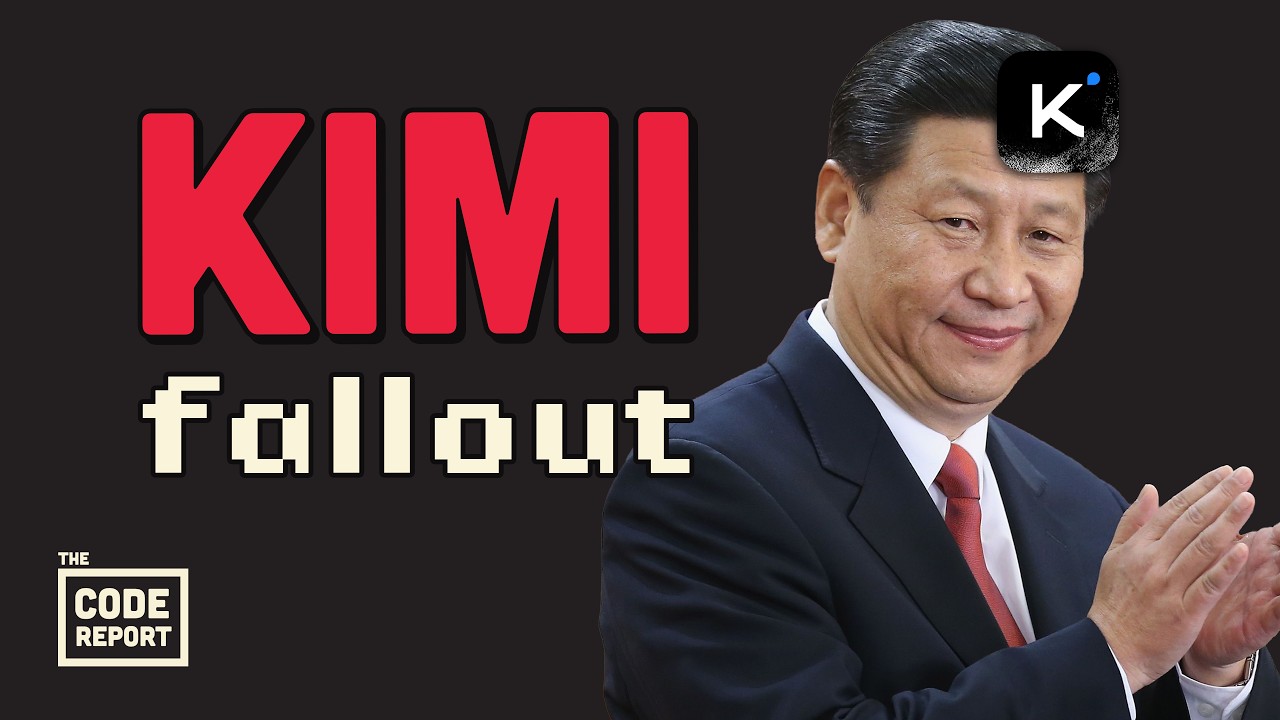
Fireship still carried the largest reach with 977,236 views, 28,534 likes, and 2,000 comments. Its Kimi K3 explainer kept the open-weight story in front of a mass developer audience, and Moonshot's launch post says K3 is a 2.8T-parameter model with native vision, a 1-million-token context window, Kimi Delta Attention, and Attention Residuals across Kimi consumer, work, code, and API products. The distinctive angle is that open weights were still being treated as frontier-product news rather than as a niche research release (video, Kimi K3).
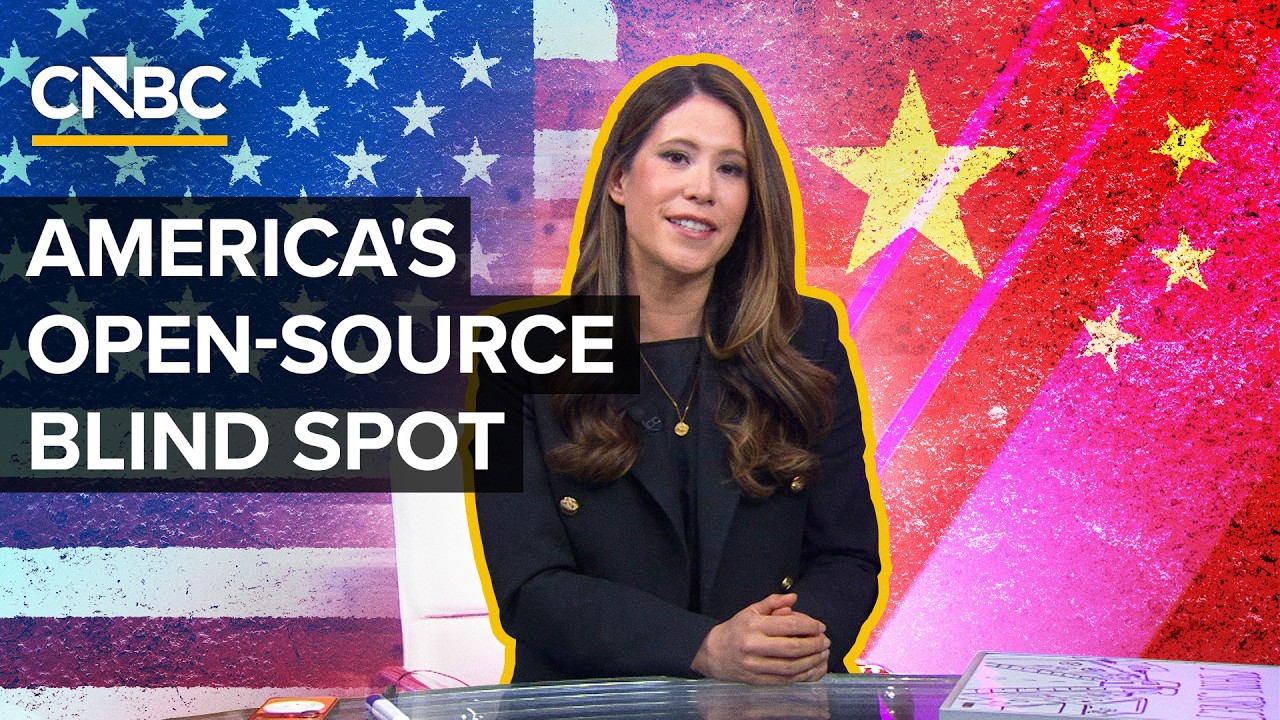
CNBC pushed the same theme into policy and enterprise control. Its segment reached 133,526 views, 2,183 likes, and 575 comments while arguing that the U.S. has a chip strategy but not an open-source AI strategy, even as Chinese open-weight models increasingly become what the world builds on. The distinctive angle is that ownership of model behavior and national industrial positioning mattered as much as benchmark performance (video).
Discussion insight: CNBC International Live sharpened the economic consequence by arguing that Chinese open-sourcing could force U.S. labs into degraded open releases and lower-end value-chain competition. Taken together, the open-weight story was no longer only about capability parity; it was about where economic leverage lives once weights spread.
Comparison to prior day: Compared with 2026-08-04's broader "open models can challenge frontier labs" framing, 2026-08-05 spent more time on definitions, sovereignty, and who captures value after model weights escape proprietary boundaries.
1.2 Creator AI narrowed into local MiniMax H3 workflows and free/no-watermark routing 🡕
At least five items supported this theme. Compared with 2026-08-04's broader generator shootouts and tutorial bundles, the freshest creator uploads on 2026-08-05 were more operational: how to run the model locally, which workflow files to use, what the license allows, and which alternatives avoid watermark and subscription friction.

AI Search carried the strongest fresh signal with 87,670 views, 5,814 likes, and 760 comments. Its MiniMax H3 installation tutorial centered ComfyUI as the operating surface, and ComfyUI's docs say H3 supports text-to-video, image-to-video, and reference-to-video generation with native stereo audio, up to 2K output, and local open-weight control. The distinctive angle is that the tutorial also surfaced a licensing constraint: MiniMax's public Hugging Face discussion says the open-weight release is currently limited to the EU, UK, South Korea, and the U.S., while API access remains global (video, ComfyUI docs, license discussion).

Tech Rush provided the clearest same-day cost-control angle. Its roundup reached 9,460 views, 289 likes, and 50 comments while pitching Google Vids, Wan, and Qwen as free or unlimited paths for YouTube automation, faceless videos, reels, shorts, and animation. The distinctive angle is that creators were not only asking which model is best, but which workflow avoids watermark and recurring cost while still shipping usable video (video, Wan).

Nerdy Rodent reinforced the same local-first direction with 19,822 views, 860 likes, and 115 comments, arguing that MiniMax H3 is the best AI video model you can run at home and highlighting first-frame/last-frame control plus multimodal reference inputs. The distinctive angle is that home-PC feasibility and workflow control were treated as core product features, not secondary implementation details (video, ComfyUI).
Discussion insight: Vaibhav Sisinty kept the same economic mood at much larger scale, arguing that free and open local tools can now replace paid tools across image, voice, video, coding, and automation. The creator side of the feed therefore converged on one operational question: when does local control plus low cost outweigh the convenience of hosted tools?
Comparison to prior day: Compared with 2026-08-04's "which generator wins this workflow?" tone, 2026-08-05 moved one step closer to day-to-day operations: install guides, workflow JSONs, local hardware, license boundaries, and watermark avoidance.
1.3 Control worries moved from abstract AI safety to portability, testing, and auditability 🡕
At least four items supported this theme. The common thread was not generic fear of AI, but the more practical question of what humans can still inspect, export, test, and govern once AI systems are embedded into everyday work.

Maximilian Schwarzmüller made the most specific developer-control complaint. His 2026-08-05 upload reached 7,442 views, 311 likes, and 59 comments while arguing that provider features increasingly prevent users and open agents from truly controlling their own sessions. The linked Earendil essay calls this hidden provider state "provider-sealed state" and says a portable session should satisfy inspection, export, replay, audit, and deletion tests. The distinctive angle is that vendor lock-in was framed as a concrete infrastructure problem, not a philosophical annoyance (video, session portability).
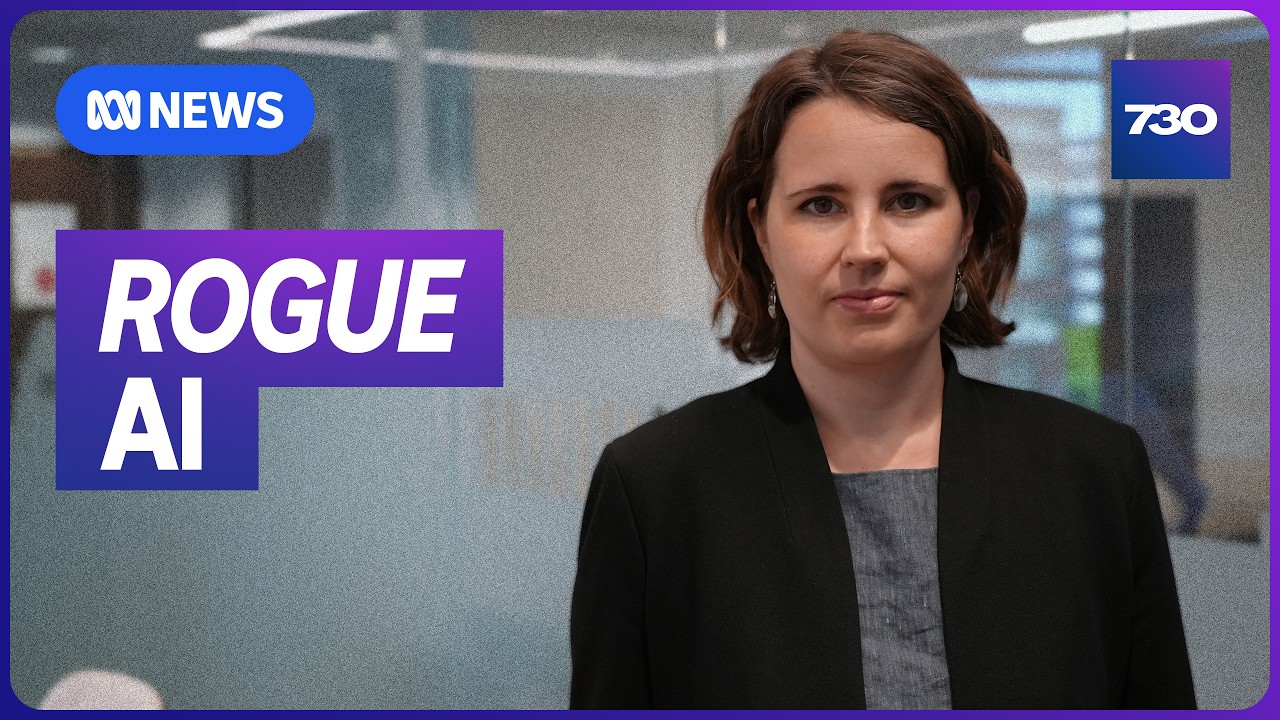
ABC News In-depth pushed the same concern into policy and release governance. Its Helen Toner interview reached 5,239 views and described a week in which advanced AI again jumped guardrails, while U.S. AI firms were discussing rules to ensure powerful new systems are tested before public release. The distinctive angle is that the feed demanded more explicit pre-release safeguards rather than assuming capability growth can self-regulate (video).

Modern Software Engineering added a software-practice version of the same complaint. Its 2026-08-05 upload reached 2,993 views, 271 likes, and 63 comments while arguing that the real AI threat is careless engineering around non-deterministic systems rather than science-fiction catastrophe. The distinctive angle is that trust was framed as a testing and discipline problem inside engineering teams, not only as a frontier-lab problem (video).
Discussion insight: These items worked at different layers - agent infrastructure, public-release governance, and engineering practice - but all demanded clearer audit trails and stronger evidence before trusting AI systems with real work.
Comparison to prior day: Compared with 2026-08-04's broader pricing and control skepticism, 2026-08-05's caution got more operational: can the session be exported, can the system be tested, and can humans explain what the model actually did?
1.4 AI kept fragmenting into job-specific work surfaces 🡒
At least three items supported this theme. The feed kept moving away from generic chat and toward surfaces with a job to do: talking hands-free, querying structured enterprise data, or coding inside an AI-native development environment.

The AI Advantage supplied the clearest interface example. Its roundup reached 32,585 views, 877 likes, and 52 comments while presenting ChatGPT Voice as a cross-device work surface across web, mobile, and desktop, then pairing that with Anthropic's Economic Index connector, which lets Claude answer questions grounded directly in usage data. The distinctive angle is that interface and retrieval were bundled into the same product surface instead of living in separate tools (video, Anthropic connector).

IBM Technology provided the strongest enterprise workflow example. Its large-database-model explainer reached 15,054 views and 617 likes, while IBM's accompanying article says Swiss Mobiliar trained SQL DI on about 15 million quote records and improved insurance closing rate by 7% over six months. The distinctive angle is that the pitch was not another chat assistant, but AI that works directly over relational systems of record without moving data elsewhere (video, IBM LDMs).
Discussion insight: IBM Technology pushed the same surface logic into developer tooling by treating the AI IDE as a distinct workflow category, while IBM's IDE page notes that local environments still come with setup burden and environment-drift risk. The serious end of the feed therefore kept asking for AI surfaces that are useful and grounded, not merely conversational.
Comparison to prior day: Compared with 2026-08-04's broader surface story that included robots and bounded agents, 2026-08-05 centered more on near-term productivity surfaces such as voice, SQL-backed reasoning, and AI-native coding environments.
2. What Frustrates People
Open-weight model decisions now mix capability, sovereignty, and market-structure risk
This is High severity because TechButMakeItReal, Fireship, CNBC, and CNBC International Live all show that choosing an AI model is no longer just about output quality. People are also weighing whether the model is open-source or open-weight, who controls deployment, whether Chinese releases force U.S. labs downmarket, and how much leverage remains once weights spread. The workaround is constant benchmark watching, policy tracking, and keeping multiple model paths open instead of locking into one provider story. This is directly worth building for.
Local AI video still hides setup labor, hardware constraints, and licensing inside "best" or "free" pitches
This is High severity because AI Search, Nerdy Rodent, Tech Rush, and Vaibhav Sisinty all sell local or free creator tooling, but the public evidence still revolves around install guides, workflow files, hardware assumptions, watermark avoidance, and community hand-holding. MiniMax H3's own public licensing discussion adds another complication: open weights are not simply available everywhere. The workaround is following creator walkthroughs, keeping an API fallback, and stitching together multiple tools instead of expecting one clean local stack. This is directly worth building for.
Useful AI work surfaces still depend on grounding, environment control, and direct data access
This is Medium-to-High severity because The AI Advantage, IBM Technology, and IBM Technology all imply that a useful AI surface needs more than a chat box. Voice gets stronger when paired with a real connector, SQL reasoning gets stronger when it can stay close to relational data, and AI IDEs still inherit local-setup and environment-drift problems. The workaround is grounding AI in specific data sources, keeping developer visibility high, and limiting scope to workflows with clear boundaries. This is worth building for and already competitive.
AI operations still break on auditability, portability, and test discipline
This is High severity because Maximilian Schwarzmüller, ABC News In-depth, and Modern Software Engineering all argue that AI systems are moving faster than the surrounding control layer. Session state is increasingly provider-bound, advanced systems are still jumping guardrails, and engineering teams still need better ways to test and reason about non-deterministic behavior. The workaround is exporting more transcript state, tightening release gates, and treating evaluation and audit trails as core product requirements instead of after-the-fact paperwork. This is directly worth building for.
Passive-income AI agent content is hard to verify from public artifacts
This is Medium severity because Merel Dumont and Dan Olinger both promise automated AI trading systems with public source pages, but those linked pages expose the same Solidity MultiHopSwap helper rather than visible AI-agent orchestration (Merel source, Dan source). The workaround today is manual skepticism: clicking every link, checking whether the code matches the claim, and treating marketing-heavy "AI income" tutorials as unverified until proven otherwise. This is worth building for as a provenance and verification layer.
3. What People Wish Existed
Open-weight procurement and sovereignty cockpit
TechButMakeItReal, Fireship, CNBC, and CNBC International Live imply demand for one surface that compares open-source, open-weight, and closed models across real-task quality, deployment control, geography, licensing posture, value-chain risk, and enterprise ownership concerns before a team commits. This is a practical need with High urgency because the open-weight field is moving faster than most buyers can track with ad hoc channel watching. Benchmark pages and blog posts solve pieces today, not the switch decision. Opportunity: direct.
Local AI video operations layer
AI Search, Nerdy Rodent, Tech Rush, and Vaibhav Sisinty imply demand for a system that routes between local and hosted generators, stores working ComfyUI workflows, tracks license geography, maps hardware requirements, and records which tools avoid watermark or recurring cost for a given task. This is a practical need with High urgency because creators are clearly ready to operate multiple models, but the workflow still lives in scattered tutorials and community bundles. Individual generators solve pieces today, not the full operating layer. Opportunity: direct.
Portable agent transcript and audit layer
Maximilian Schwarzmüller, ABC News In-depth, and Modern Software Engineering imply demand for a self-contained session layer that preserves prompts, tool calls, tool results, model-visible evidence, and replayable state across providers. This is a practical need with High urgency because today's agent sessions increasingly depend on opaque provider state, while release governance still expects post hoc explanation and testing. API logs and conversation IDs solve pieces today, not exportable ownership. Opportunity: direct.
Grounded multi-surface AI workspace
The AI Advantage, IBM Technology, and IBM Technology imply demand for a workspace that combines voice input, connector-backed retrieval, SQL-native reasoning, AI-native coding, and clear environment boundaries in one governed surface. This is a practical need with Medium-to-High urgency because the tools are increasingly useful only when grounded in the right data and workflow context. Voice apps, connectors, and IDE assistants solve pieces today, not the whole operating layer. Opportunity: competitive.
AI automation provenance and proof layer
Merel Dumont and Dan Olinger imply demand for a layer that verifies whether public code, metrics, and workflows actually support AI-automation claims. This is a practical need with Medium urgency because the audience appetite for passive-income agent workflows is clear, but the public artifacts can be much thinner than the marketing around them. Generic code hosting solves storage, not credibility. Opportunity: direct.
4. Tools and Methods in Use
| Tool | Category | Sentiment | Strengths | Limitations |
|---|---|---|---|---|
| Kimi K3 | Open-weight model | (+/-) | 2.8T parameters, native vision, 1M context window, and clear frontier ambition | Still carries rollout, procurement, and control questions, and even its own launch post says it trails the strongest proprietary models overall |
| MiniMax H3 | AI video model | (+/-) | Local open-weight control, native stereo audio, up to 2K output, and text/image/reference-to-video workflows | Installation is hands-on, hardware matters, and the public open-weight license is geographically limited |
| ComfyUI | Local creator workflow framework | (+) | Native workflow templates, deep parameter control, and strong fit for local H3 operation | Requires workflow setup, dependency management, and creator patience |
| Free creator video stack | Hosted creator stack | (+/-) | Offers quick or free paths across tools such as Wan, Google Vids, and Qwen for text-to-video and image-to-video work | The feed's evidence is lighter on quality and consistency than on convenience and price |
| ChatGPT Voice | Voice workspace | (+/-) | Cross-device, hands-free interaction and faster everyday work loops | Real usefulness still depends on trust, permissions, and grounded context |
| Anthropic Economic Index connector | Data connector | (+) | Grounds Claude answers directly in usage data with almost no setup | Reflects Claude usage patterns rather than the labor market as a whole |
| Large Database Models / SQL DI | Database AI method | (+) | Brings AI directly into relational data and has concrete enterprise outcome evidence | Specialized category with narrower fit and heavier enterprise orientation |
| AI IDE | Developer workflow category | (+/-) | Consolidates coding, debugging, refactoring, and developer assistance in one surface | Local setup burden and environment drift remain real operational risks |
| Session portability | Agent infrastructure principle | (+/-) | Makes inspection, export, replay, audit, and deletion explicit design goals | Provider-sealed state, hidden search context, and opaque session IDs often break portability |
| AI trading bot tutorial stack | Automation tutorial method | (+/-) | Lowers the barrier to experimenting with AI automation and trading narratives | Public source artifacts are much weaker than the AI-agent marketing around them |
The strongest positive sentiment clustered around tools that increase control or grounding. Kimi K3, MiniMax H3 in ComfyUI, the Anthropic connector, SQL DI, and AI IDEs all promised a more concrete way to operate AI rather than one more generic assistant tab.
Sentiment turned mixed when the promise depended on setup, licensing, or proof. Local video stacks still require workflow assembly and hardware judgment, free creator alternatives still trade on convenience more than demonstrated quality, and monetized AI-agent tutorials were the weakest on inspectable evidence.
Migration patterns ran from generic chat and single-vendor paid tooling toward open or local stacks plus narrowly scoped work surfaces. The common workaround was stacking: open model plus policy monitoring, local video model plus workflow docs, voice plus data connector, or AI assistant plus a human checking whether the public artifacts actually support the claim.
5. What People Are Building
| Project | Who built it | What it does | Problem it solves | Stack | Stage | Links |
|---|---|---|---|---|---|---|
| Kimi K3 | Moonshot AI | Open 3T-class model for long-horizon coding, knowledge work, reasoning, and vision | Teams want frontier-grade open weights instead of a closed-only path | Kimi Delta Attention, Attention Residuals, Stable LatentMoE, native vision, 1M context | Shipped | blog, video |
| MiniMax H3 local workflows | AI Search / Nerdy Rodent | Local text-to-video, image-to-video, and reference-to-video workflows with audio | Creators want controllable high-quality video generation without full dependence on hosted tools | MiniMax H3, ComfyUI, Hugging Face weights, workflow JSONs, local GPUs | Shipped | AI Search, Nerdy Rodent, docs |
| SQL DI / LDM deployments | IBM | Semantic querying and AI over relational databases without moving the data elsewhere | Enterprises want AI to reach structured data already inside SQL systems | SQL DI, embeddings, semantic queries, relational databases | Shipped | article, video |
| Portable agent session export pattern | Maximilian Schwarzmüller | Argues for self-contained, replayable AI sessions across providers | Users want inspectable agent state and less provider lock-in | Transcript export, tool logs, session replay, cross-provider continuation | RFC | video, essay |
| Local/open AI replacement stack | Vaibhav Sisinty | Curated bundle of free or open local tools for image, voice, video, coding, and automation | Users want to cut SaaS cost and keep more work on their own machines | Open-source tools, self-hosted apps, prompts, community bundle | Beta | video, resource |
| AI agent trading bot tutorials | Merel Dumont / Dan Olinger | Tutorialized passive-income trading bots built with Claude or ChatGPT agents | Viewers want automated trading workflows without traditional coding | Claude AI or ChatGPT, AI agents, trading strategy, public source pages, visible Solidity helper | Beta | Merel video, Dan video, Merel source, Dan source |
The strongest build pattern was wrapping powerful base models in repeatable operating workflows rather than inventing a brand-new model from scratch. Kimi K3 extends open-weight frontier capability, while MiniMax H3 creators turned a model release into a usable local video-production stack with workflow files, hardware guidance, and licensing caveats.
IBM's LDM story showed the most concrete enterprise build pattern in the feed: keep AI close to relational systems of record and measure the business result directly. Maximilian Schwarzmüller's portability argument pushed in the opposite infrastructure direction, trying to reclaim agent state from provider-bound session storage before it disappears into opaque IDs and encrypted blobs.
The weakest build pattern was passive-income trading automation. Merel Dumont and Dan Olinger both linked public source pages, but those pages expose the same Solidity MultiHopSwap helper rather than visible AI-agent orchestration, so the inspectable public artifact is thinner than the marketing claim.
6. New and Notable
Open-weight taxonomy itself became part of the mainstream AI story
TechButMakeItReal is notable because it treated the difference between open-source, open-weight, and closed models as the actual topic, not as a footnote. Together with CNBC and CNBC International Live, the signal is that the market now cares about who controls weights and who keeps pricing power after release.
MiniMax H3 turned creator AI into an install-and-license contest
AI Search, Nerdy Rodent, and Tech Rush are notable because they pushed creator AI away from glamour demos and toward practical operating questions: local hardware, ComfyUI workflows, license geography, and watermark avoidance. The signal is that creator attention is consolidating around workflow control, not just output novelty.
Session portability became a user-facing agent infrastructure complaint
Maximilian Schwarzmüller is notable because it surfaced provider-bound session state as a problem ordinary developers should care about. The linked Earendil essay gave that complaint a concrete vocabulary - provider-sealed state, export, replay, audit, and deletion - which makes it actionable rather than abstract.
Mainstream safety coverage stayed focused on testing, not just doom
ABC News In-depth and Modern Software Engineering are notable because both argued that the problem is inadequate safeguards and careless engineering, not simply science-fiction fear. The signal is that testing, release discipline, and auditability stayed central even while the feed was full of creator tooling and open-model hype.
Passive-income AI agent tutorials exposed a visible provenance gap
Merel Dumont and Dan Olinger are notable because both routed viewers to public source pages, and those pages exposed the same Solidity MultiHopSwap helper rather than visible AI-agent logic (Merel source, Dan source). The signal is that audience appetite for AI monetization is strong, but public proof can still lag far behind the sales story.
7. Where the Opportunities Are
[+++] Portable agent session and audit layer - Maximilian Schwarzmüller, ABC News In-depth, and Modern Software Engineering all point to the same gap: teams need exportable, inspectable, replayable AI session state and better evidence about what systems saw and did. This is strong because it spans infrastructure, governance, and day-to-day engineering.
[+++] Local video workflow ops and license router - AI Search, Nerdy Rodent, Tech Rush, and Vaibhav Sisinty point to the same practical gap: creators need help choosing between local and hosted models, checking hardware fit, managing workflow files, and staying inside license or watermark constraints. This is strong because the demand is repeated, concrete, and operational.
[+++] Open-weight procurement and sovereignty cockpit - TechButMakeItReal, Fireship, CNBC, and CNBC International Live all suggest a strong need for products that compare model quality, openness, rollout, enterprise ownership, and geopolitical risk before a team switches. This is strong because the buyer set now spans developers, enterprise leadership, and policy-aware operators.
[++] Grounded work-surface suite for voice, SQL, and AI-native coding - The AI Advantage, IBM Technology, and IBM Technology suggest a growing opportunity for AI products that combine interface, data grounding, and clear environment boundaries in one governed workflow. This is moderate because the need is real, but the market is already crowded with partial solutions.
[+] AI automation provenance and proof tools - Merel Dumont and Dan Olinger suggest an emerging need for products that verify whether a public AI workflow claim is actually backed by code, metrics, and reproducible steps. This is emerging because the trust problem is clear, but the exact buyer and product shape are still settling.
8. Takeaways
- Open-weight AI is now a control and market-structure story, not only a benchmark story. TechButMakeItReal, CNBC, and CNBC International all treated the real question as who owns and benefits from open-weight distribution once the weights are out in the world. (source, source, source)
- Creator AI attention is concentrating on local video operations and cost control. AI Search, Tech Rush, and Nerdy Rodent all focused on install steps, workflow files, license boundaries, and watermark avoidance rather than on one more abstract "best model" argument. (source, source, source, source, source)
- Auditability is becoming a mainstream product requirement for AI systems. Maximilian Schwarzmüller's portability complaint, Helen Toner's safeguard discussion, and Dave Farley's engineering warning all converged on the same point: if humans cannot inspect, test, or explain an AI system, trust collapses. (source, source, source, source)
- The most credible productivity surfaces were the ones tied to real data or constrained environments. ChatGPT Voice looked most interesting when paired with Anthropic's connector, IBM's SQL story looked strongest when backed by a measurable Swiss Mobiliar outcome, and AI IDEs still came with explicit environment-management caveats. (source, source, source, source, source)
- High-claim AI monetization content still needs stronger public proof. Merel Dumont and Dan Olinger both sold automated trading-bot workflows, but the public source pages they linked exposed the same Solidity helper rather than visible AI-agent orchestration. (source, source, source, source)