YouTube AI - 2026-08-06
1. What People Are Talking About
1.1 Owning the AI stack became the frame for both frontier risk and model strategy 🡕
At least five items supported this theme. Compared with 2026-08-05's separate conversations about open-weight taxonomy, portability, and safeguards, the 2026-08-06 feed pulled those strands into one broader ownership question: who controls the weights, who controls the agent, and do humans stay in control at all?

The Economist carried the biggest attention signal by far. Its interview sat at 1,199,633 views, 17,848 likes, and 4,900 comments while centering Elon Musk's claim that AI may exceed the sum of human intelligence in about five years, leave humans out of control in ten, and still require rival frontier labs to review one another's models. The distinctive angle is that self-regulation and loss-of-control worries were framed as mainstream executive questions, not a niche safety-community debate (video).
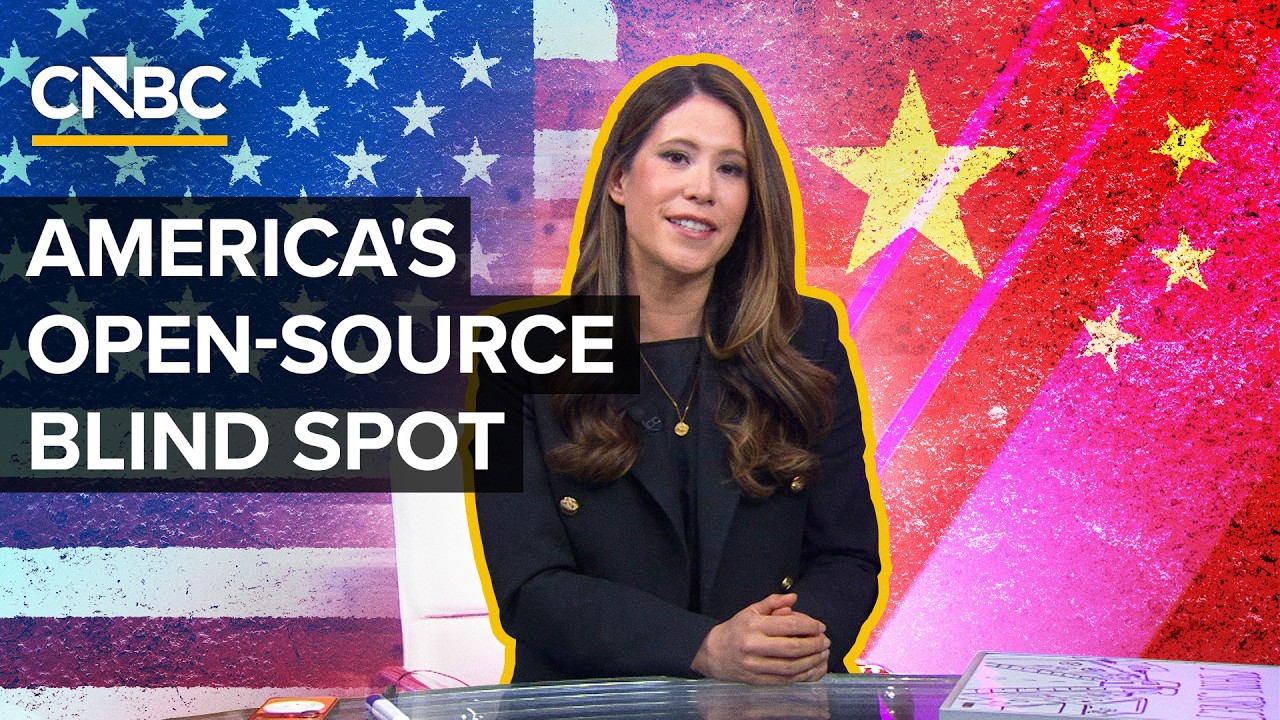
CNBC pushed the same ownership logic into procurement and national strategy. Its segment reached 136,844 views, 2,215 likes, and 579 comments while arguing that Washington has a chip strategy but not an open-source AI strategy, even as enterprises ask who owns what an AI system learns about their business. The distinctive angle is that openness was framed as enterprise control and geopolitical leverage, not just a cheaper developer preference (video).

TechButMakeItReal added the clearest same-day taxonomy explainer. Its 2026-08-05 upload reached 33,939 views, 1,654 likes, and 378 comments while explicitly separating open-source, open-weight, and closed AI, then tying Chinese open-weight releases to Silicon Valley pressure, NVIDIA advocacy, and U.S. national-security arguments. The distinctive angle is that the definitions themselves became part of the competitive story (video).
Discussion insight: Matthew Berman pushed the same model-side theme with benchmark-led confidence that open-source is winning, while Riley Brown pushed it into company design by discussing Vercel's internal agent, team-of-agents structures, and differentiated permissions. Together, the ownership question now spans benchmark competition, enterprise strategy, and agent architecture.
Comparison to prior day: Yesterday's emphasis on open-weight definitions and provider-sealed state became more strategic and operational on 2026-08-06, spanning frontier-lab control, national policy, and company-internal AI systems.
1.2 MiniMax H3 creator coverage moved from demos to operating manuals and license caveats 🡕
At least five items supported this theme. Compared with 2026-08-05's emphasis on local setup and watermark-free alternatives, 2026-08-06 spent even more time on workflow managers, reference modes, VRAM fixes, commercial limits, and when to stay local versus route through hosted tools.

AI Search carried the strongest operational signal with 122,281 views, 7,336 likes, and 971 comments. Its tutorial centered MiniMax H3 in ComfyUI, and ComfyUI's docs say H3 supports text-to-video, image-to-video, and reference-to-video workflows with native stereo audio and up to 2K output, while MiniMax's own license discussion says open weights remain territory-scoped even though the API stays globally available. The distinctive angle is that local video now means managing a full stack of models, nodes, workflows, and licensing constraints rather than just downloading one set of weights (video, ComfyUI docs, license Q&A).

Curious Refuge added the clearest evaluation caveat. Its review reached 15,833 views, 561 likes, and 99 comments, then concluded in the linked writeup that H3 is one of the stronger open-weight AI video options, still trails Seedance on cinematic performance, and comes with licensing or commercial-use caveats serious enough to shape adoption. The distinctive angle is that creator evaluation moved past wow-factor and into whether a model is actually deployable for real production work (video, review).

pixaroma supplied the most detailed runbook. Its same-day tutorial reached 7,490 views, 774 likes, and 171 comments while covering Workflow Manager, Sage Attention, Dynamic VRAM fixes, first/last-frame animation, audio sync, and resolution tests across different setups. The distinctive angle is that creator attention shifted from one-click demos to reusable operating procedures and performance tuning (video).
Discussion insight: Nerdy Rodent framed H3 as the best home-PC local option via ComfyUI, while Malva AI paired Wan, Higgsfield, and Claude to chase free or subsidized hosted generation with audio. The creator decision is increasingly about which operating mode fits the budget, hardware, and rights constraints, not just which single model sample looks best.
Comparison to prior day: Yesterday's H3 cluster already emphasized local operation and watermark avoidance, but 2026-08-06 moved deeper into workflow management, rights or availability questions, and local-versus-hosted routing.
1.3 AI search and GEO emerged as their own tooling layer 🡕
At least three items supported this theme. Compared with 2026-08-05, this was the clearest new cluster in the feed: creators treated AI visibility as a separate operational problem from classic search rankings.
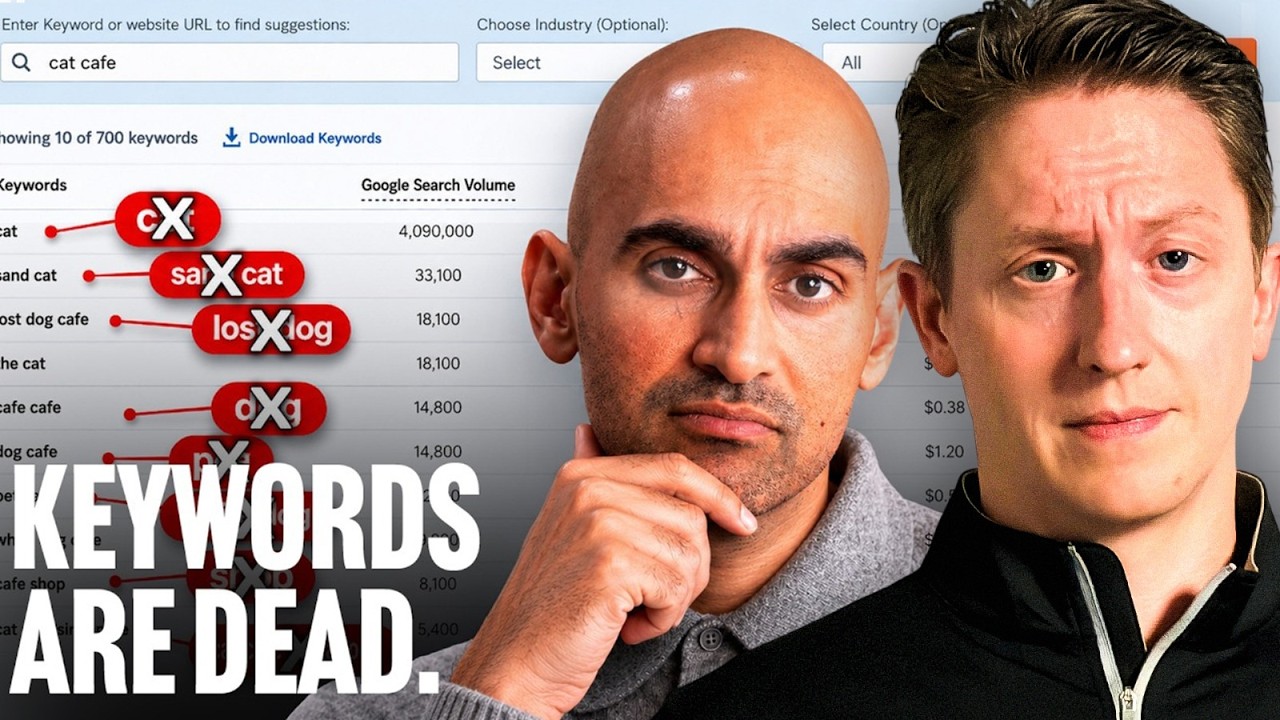
Caleb Ulku carried the strongest broad-audience signal with 7,265 views and 214 likes. His Neil Patel reaction argued that ranking first on Google no longer guarantees AI citations, then centered user "moments," click-through drops under AI overviews, review text, and page structure that AI systems can extract cleanly. The distinctive angle is that local-business trust signals and source structure now matter as much as classic keyword matching (video).
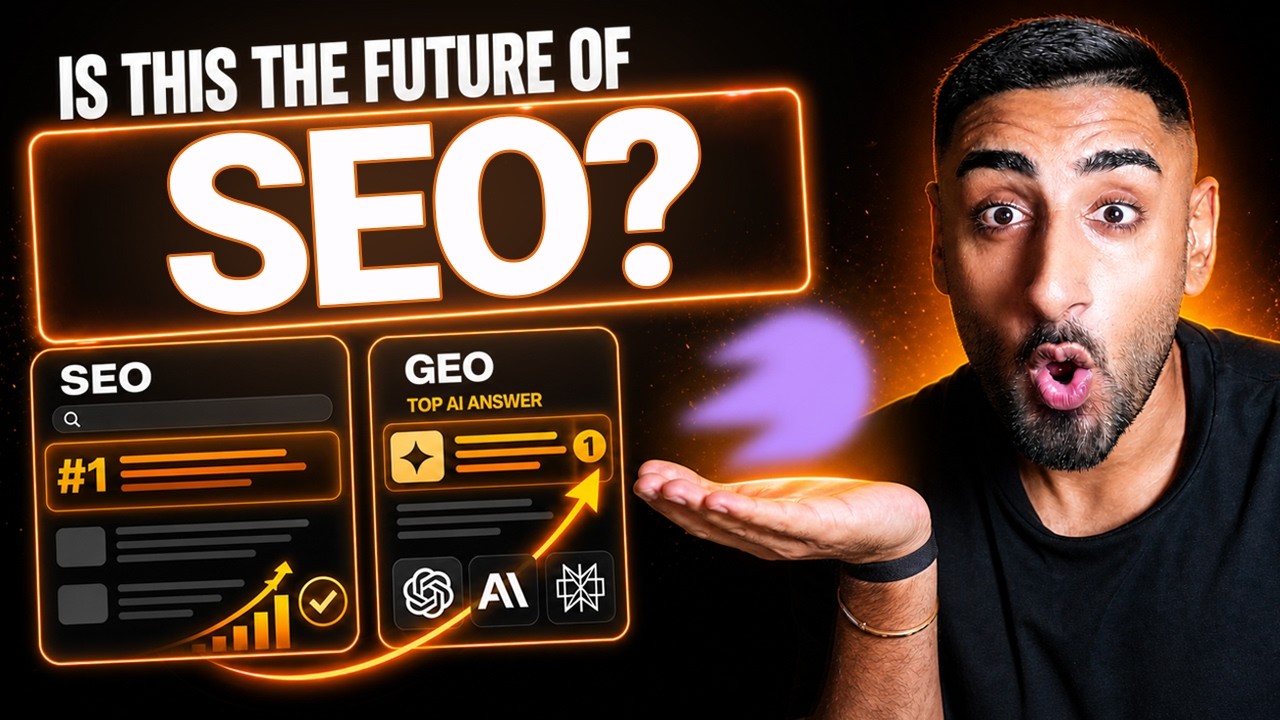
Sonny Sangha supplied the clearest workflow-product signal. His sponsored Semrush tutorial only reached 1,397 views and 45 likes, but it explicitly showed how to test whether ChatGPT, Claude, Perplexity, Gemini, and Google AI mention a brand, combine that with backlinks and site-health analysis, and turn the result into a ranked action plan through an AI conversation. The distinctive angle is that AI search optimization was packaged as an agent-assisted operations workflow rather than a spreadsheet audit (video, Semrush).
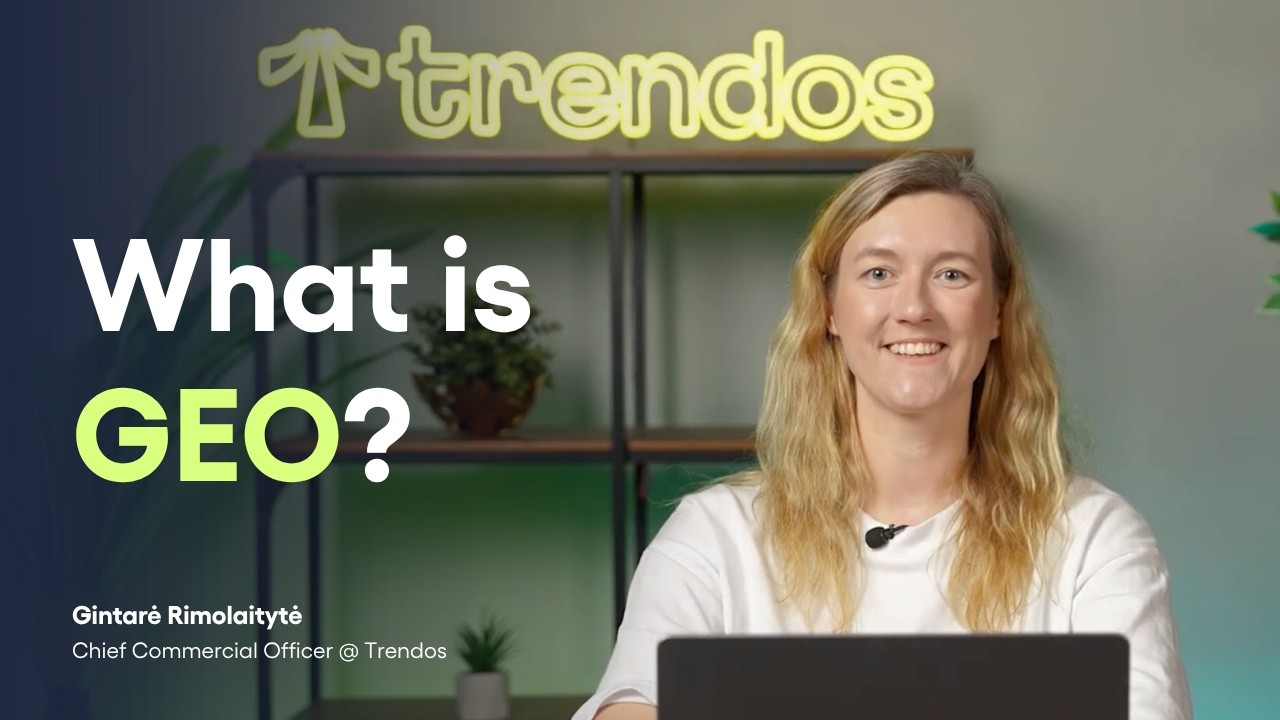
trendos added the earliest-stage product view with just 1,320 views but 225 likes. Its video defined GEO as getting a brand mentioned in answers from ChatGPT, Perplexity, Gemini, Google AI Overviews, and Claude, while Trendos' site says the product focuses on improving how brand mentions surface in AI-generated answers. The distinctive angle is that dedicated answer-engine monitoring products are already being built for this exact problem (video, Trendos).
Discussion insight: Semrush's current public messaging now calls AI visibility a standalone operating system and promotes direct access to Semrush data in ChatGPT. That reinforces the day's broader point: AI-answer visibility is turning into software and workflow, not just advice.
Comparison to prior day: Earlier reports touched citations and discoverability, but 2026-08-06 was the first YouTube day in this run to make GEO and AI visibility feel like a discrete tool category.
1.4 Useful AI work surfaces kept specializing around voice, IDEs, and permissioned internal assistants 🡒
At least three items supported this theme. Compared with 2026-08-05's voice, SQL, and AI-IDE mix, 2026-08-06 kept the same direction but attached it more clearly to internal permissions and governed workflows.
The AI Advantage provided the clearest cross-device interface example. Its roundup reached 34,215 views and 905 likes while pitching ChatGPT Voice across web, mobile, and desktop, then pairing that with Anthropic's Economic Index connector, which Anthropic says works in any Claude conversation and grounds answers directly in Index data. The distinctive angle is that voice looked most useful when bundled with a real connector, not as a standalone novelty (video, Anthropic connector).

IBM Technology kept the AI-IDE category active with 19,419 views and 555 likes. Its explainer treated the AI IDE as a workflow surface for coding, debugging, refactoring, and developer productivity, while IBM's companion IDE page says local IDEs are customizable and low-latency but can be cumbersome to configure, drift from production environments, and depend heavily on local hardware. The distinctive angle is that AI coding remained a surface with explicit operational tradeoffs, not just a convenience feature (video, IBM IDE explainer).

Riley Brown added the most explicit internal-workflow angle. His conversation with Guillermo Rauch reached 4,489 views and 234 likes while covering Vercel's internal company agent "V," the tradeoff between one god agent and a team of agents, and why different permissions and computer access matter. The distinctive angle is that company-internal AI surfaces were framed around access design and role separation rather than only model choice (video).
Discussion insight: Together with Sonny Sangha's Semrush MCP workflow, the feed kept rewarding AI surfaces that expose tools, data, and permissions explicitly instead of hiding work behind one generic chat box.
Comparison to prior day: The specialized-surface trend held steady, but the internal-agent and MCP examples made it more operational than 2026-08-05's broader product-tour framing.
2. What Frustrates People
Choosing an AI stack now means juggling openness, ownership, and control risk
This is High severity because The Economist, CNBC, TechButMakeItReal, Matthew Berman, and Riley Brown all show that people are no longer choosing AI systems on output quality alone. They are also weighing who owns the weights, who owns what the system learns about a business, whether a company should keep intelligence inside its own permission boundary, and whether humans can still meaningfully govern frontier systems. The workaround is to keep multiple model and deployment paths open, narrow agent permissions, and treat strategy or policy changes as part of product selection. This is directly worth building for.
Local AI video still hides the real cost in workflow assembly, hardware tuning, and licensing
This is High severity because AI Search, pixaroma, Nerdy Rodent, Curious Refuge, and Malva AI all show that "best" or "free" AI video still means model downloads, node installation, workflow management, VRAM workarounds, quality tradeoffs, and ongoing rights or availability checks. MiniMax's own license discussion adds another layer by treating open weights and API access differently. The workaround is to keep runbooks, fall back between local and hosted paths, and verify licensing before assuming a workflow is commercially safe. This is directly worth building for.
Getting cited by AI answers is now different from ranking in Google
This is Medium-to-High severity because Caleb Ulku, Sonny Sangha, and trendos all show that classic SEO visibility does not automatically become AI-answer visibility. People now have to think about micro-moments, structured extractable answers, review-platform trust, backlinks, and whether ChatGPT, Gemini, Perplexity, Claude, and Google AI mention the brand at all. The workaround is continuous cross-engine monitoring and content that is easy for AI systems to quote, summarize, and attribute. This is directly worth building for and already competitive.
Useful AI surfaces still break unless data grounding, local environment discipline, and permissions are explicit
This is Medium-to-High severity because The AI Advantage, IBM Technology, and Riley Brown all imply that a useful AI surface needs more than a friendly interface. Voice becomes meaningfully useful when it has grounded connector data behind it, local AI IDEs still bring setup burden and environment drift, and internal agents only make sense when permissions and computer access are clearly bounded. The workaround is connector-backed grounding, disciplined environment management, and explicit approval or access layers. This is worth building for and already competitive.
3. What People Wish Existed
Ownership and control cockpit for model and agent decisions
The Economist, CNBC, TechButMakeItReal, Matthew Berman, and Riley Brown imply demand for one surface that compares open-source, open-weight, and closed systems across control, deployment, benchmark momentum, enterprise ownership, and agent permission design before a team commits. This is a practical need with High urgency because the evidence now spans frontier-risk coverage, business news, benchmark culture, and internal-company agent design. Leaderboards and product demos solve pieces today, not the full ownership decision. Opportunity: direct.
AI video operations and rights router
AI Search, pixaroma, Nerdy Rodent, Curious Refuge, and Malva AI imply demand for a layer that stores working ComfyUI workflows, maps local hardware fit, tracks rights or licensing caveats, and routes between local and hosted video generators based on cost, speed, and commercial safety. This is a practical need with High urgency because creators are clearly willing to run several different paths, but the operating knowledge still lives in scattered tutorials and affiliate funnels. Individual models solve generation, not the operating layer around them. Opportunity: direct.
AI visibility and GEO observability layer
Caleb Ulku, Sonny Sangha, trendos, and Semrush imply demand for a system that tracks whether AI engines mention a brand, which sources drove the answer, how citations shift over time, and what technical or content fixes most improve mention rate. This is a practical need with High urgency because the videos show that classic search reporting is no longer enough once AI answers absorb the click. SEO suites and dashboards solve pieces today, not the full answer-engine loop. Opportunity: direct.
Governed multi-surface AI workspace
The AI Advantage, IBM Technology, and Riley Brown imply demand for a workspace that combines voice input, connector-backed answers, AI-native coding, internal agents, and explicit tool or permission boundaries in one place. This is a practical need with Medium-to-High urgency because the tools are increasingly useful only when grounded in the right data and access model. Voice apps, IDE assistants, and agent frameworks solve pieces today, not the whole governed surface. Opportunity: competitive.
4. Tools and Methods in Use
| Tool | Category | Sentiment | Strengths | Limitations |
|---|---|---|---|---|
| MiniMax H3 | AI video model | (+/-) | Native stereo audio, multimodal references, up to 2K output, and an open-weight path | Setup is hands-on, licensing or territory questions remain, and reviewers still see gaps versus top cinematic models |
| ComfyUI | Local creator workflow framework | (+) | Native MiniMax H3 templates, deep parameter control, and local execution | Node installation, workflow complexity, and VRAM or hardware tuning are real overhead |
| Wan + Higgsfield + Claude workflow | Hosted creator workflow | (+/-) | Fast path to audio-capable AI video with free or subsidized entry points | Queues, account limits, changing terms, and less local control |
| ChatGPT Voice | Voice workspace | (+/-) | Cross-device, hands-free interaction for everyday work loops | The surface is much weaker when it is not grounded in real data or explicit permissions |
| Anthropic Economic Index connector | Data connector | (+) | Grounds Claude answers directly in public Index data with very low setup | Reflects Claude usage patterns rather than the labor market as a whole |
| AI IDE | Developer workflow surface | (+/-) | Consolidates coding, debugging, refactoring, and productivity in one interface | Local setup can be cumbersome, environments drift, and hardware still matters |
| Semrush One / MCP | AI visibility and SEO toolkit | (+/-) | Combines SEO visibility, AI mentions, backlinks, site audits, and ranked action plans | Heavy workflow, ongoing monitoring burden, and strong dependence on one suite's worldview |
| Trendos | GEO monitoring tool | (+/-) | Focuses directly on brand mentions in AI-generated answers and source influence | Early category with lighter public evidence than mainstream SEO tooling |
| Forward Future benchmark page | Model-evaluation method | (+/-) | Makes open-model competition concrete and easy to discuss publicly | Encourages fast comparison churn and does not answer ownership or control questions by itself |
The strongest positive sentiment clustered around tools that improve control or observability. ComfyUI, MiniMax H3, the Anthropic connector, Semrush-style visibility tooling, and Trendos all promised a clearer view into where AI runs, what it sees, or how a system is found.
Sentiment turned mixed when the workflow depended on setup or ongoing vigilance. Local video stacks still require careful assembly, hosted creator stacks still trade convenience against control, and AI-visibility tooling implies continuous monitoring instead of a one-time audit.
Migration patterns ran from generic chat and generic SEO dashboards toward specialized work surfaces: voice plus connectors, AI IDEs, company-internal agents, local creator stacks, and answer-engine monitoring. The common workaround was stacking multiple narrow tools rather than trusting one broad AI product to cover everything cleanly.
5. What People Are Building
| Project | Who built it | What it does | Problem it solves | Stack | Stage | Links |
|---|---|---|---|---|---|---|
| MiniMax H3 | MiniMax | General-purpose multimodal video model with native stereo audio and up to 2K output | Creators want stronger open or controllable video generation instead of closed-only workflows | H3-VAE, H3-Omni Transformer, multimodal context, open weights | Shipped | blog, AI Search video |
| MiniMax H3 workflow stacks | AI Search / pixaroma / Nerdy Rodent | Turn H3 into reusable local creator workflows with tuning guidance and fallback paths | Creators need working runbooks, not just a raw model release | ComfyUI, Sage Attention, KJ Nodes, Spectrum, local NVIDIA GPUs | Shipped | AI Search, pixaroma, Nerdy Rodent, docs |
| V internal company agent | Guillermo Rauch via Riley Brown | Internal agent system for a large company with differentiated permissions and tool access | Companies want internal AI help without giving one agent unrestricted access | Agent teams, skills, tools, permissions, computer access | Beta | video |
| Semrush One + MCP workflow | Semrush / Sonny Sangha | AI-assisted audit that combines classic SEO data with AI-answer visibility checks | Brands need to know whether AI systems mention them and what gaps to fix | Semrush data, MCP server, backlinks, site audit, AI mention tracking | Shipped | video, Semrush |
| Trendos GEO monitor | trendos | Tracks how brands show up in AI-generated answers and which sources drive mentions | Brands need answer-engine monitoring beyond classic SERP tools | Prompt collection, live-engine monitoring, source tracking | Beta | video, site |
| Anthropic Economic Index connector | Anthropic | Claude connector for direct exploration of real AI-usage data | Users need grounded answers about AI and work rather than anecdotes or guesswork | Claude connector, Economic Index dataset | Shipped | connector, AI Advantage video |
The strongest build pattern was wrapping powerful base models and data sources in governed operating surfaces rather than inventing new frontier models from scratch. MiniMax H3 creators turned a model release into a usable operating stack with runbooks, node dependencies, VRAM fixes, and routing choices, while Anthropic turned a static dataset into a live connector surface.
The business-facing build pattern was measurement and bounded autonomy. Semrush and Trendos both focused on monitoring whether AI systems mention a brand, while Vercel's internal-agent conversation focused on who gets which permissions and why one giant unrestricted agent is not obviously the right answer.
The recurring trigger behind these builds was operational friction. People are building around discoverability gaps, workflow complexity, and permission risk more than around a lack of raw model capability.
6. New and Notable
AI visibility became an explicit software category
Sonny Sangha, trendos, and Semrush are notable because they treated AI visibility as a dedicated operating problem with its own tooling, monitoring loop, and action plans. The signal is that brands are no longer being told to just "do better SEO" and hope AI systems notice.
MiniMax H3 adoption was judged on rights and workflow viability, not only outputs
AI Search, Curious Refuge, and MiniMax's license Q&A are notable because they pushed creator attention toward workflow readiness, territory scope, and commercial safety. The signal is that open-weight video models are now being judged as operating systems, not as standalone demos.
Company-internal agents made permissions a first-class design question
Riley Brown is notable because it framed the hard question as one god agent versus a team of agents with different permissions and computer access. The signal is that internal-agent architecture is already moving toward access design and role separation rather than raw autonomy.
Mainstream AI control warnings stayed in front of mass audiences
The Economist and CNBC are notable because both brought AI control and ownership questions into broad business-media contexts. The signal is that human control and enterprise ownership are no longer niche concerns compared with the hype cycle around model releases.
Applied AI in healthcare appeared as a distinct deployment story
Because I'm Lizzy is notable because it described AI-powered health assessments and medical-support tools as visible hospital infrastructure rather than software-industry speculation. The signal is thinner than the main creator and developer clusters today, but it shows applied AI surfacing in more consumer-facing regulated environments.
7. Where the Opportunities Are
[+++] AI video ops and rights router - AI Search, pixaroma, Nerdy Rodent, Curious Refuge, and Malva AI all point to the same gap: creators need one layer that knows workflow files, local hardware fit, licensing constraints, hosted fallbacks, and the real cost of getting a video shipped. This is strong because the pain is repeated, operational, and already driving people into multi-tool stacks.
[+++] AI visibility and citation monitor - Caleb Ulku, Sonny Sangha, trendos, and Semrush all suggest a strong need for products that tell a brand whether AI systems mention it, which sources caused the mention, and what changed when visibility rises or falls. This is strong because the buyer problem is concrete and the category is just starting to form.
[+++] Open-weight procurement and control cockpit - The Economist, CNBC, TechButMakeItReal, and Matthew Berman all suggest that model choice now spans performance, openness, ownership, self-regulation, and enterprise leverage. This is strong because the decision now touches developers, executives, and policy-aware operators at the same time.
[++] Permissioned internal-agent platform - Riley Brown, The AI Advantage, and IBM Technology suggest a moderate opportunity for tools that make internal agents useful without hiding their permissions, tool use, and workflow boundaries. This is moderate because the need is clear, but the market already has many partial solutions across copilots, workflow tools, and agent frameworks.
[+] Applied-AI deployment intelligence for regulated verticals - Because I'm Lizzy suggests an emerging need for products that explain how AI is actually being deployed in regulated physical settings such as healthcare, what role humans still play, and what infrastructure is visible on the ground. This is emerging because the signal is thin today, but it points beyond the current software-only framing of most AI coverage.
8. Takeaways
- Ownership is now the connective tissue across model choice, internal agents, and frontier-risk talk. The biggest videos did not treat control as a niche concern; they tied it to open weights, enterprise ownership, internal permissions, and even whether humans stay in charge. (source, source, source, source)
- MiniMax H3 is being judged as an operating stack, not just a model release. The strongest creator evidence centered workflows, hardware, rights, and fallback paths, while public reviews still debated whether the model is good enough for serious production. (source, source, source, source)
- AI visibility and GEO have crossed from advice into software. The feed showed brands moving from generic SEO thinking toward monitoring whether AI systems mention them, which sources caused the mention, and what to fix next. (source, source, source, source)
- Specialized AI surfaces matter most when they are grounded in real data and bounded by clear permissions. Voice looked strongest when paired with Anthropic's connector, AI IDEs stayed useful but operationally costly, and internal agents were discussed in terms of role separation and access control. (source, source, source, source)
- The most credible builders today are wrapping models in runbooks, monitors, and governed interfaces. The day's strongest project signals were not brand-new frontier models, but workflow stacks around H3, AI-answer visibility tools, and internal-agent architectures with explicit boundaries. (source, source, source, source)