YouTube AI - 2026-08-07
1. What People Are Talking About
1.1 MiniMax H3 stayed the clearest creator operating stack, not just a flashy model demo 🡒
At least four items supported this theme. Compared with 2026-08-06's emphasis on workflow managers and license caveats, the 2026-08-07 feed kept the same MiniMax H3 cluster in place and deepened the operational detail around low-VRAM setup, reference-driven workflows, two-stage 2K output, and whether the open-weight release is actually usable for commercial work.

AI Search carried the biggest engagement signal with 145,661 views, 8,174 likes, and 1,100 comments. Its tutorial centered MiniMax H3 in ComfyUI, and ComfyUI's docs say H3 ships with native text-to-video, image-to-video, and reference-to-video workflows, open weights, native stereo audio, and up to 2K output. The distinctive angle is that the "best local model" story now depends on node packs, workflow JSONs, low-VRAM tactics, and API fallbacks rather than on one download alone (video, ComfyUI docs).
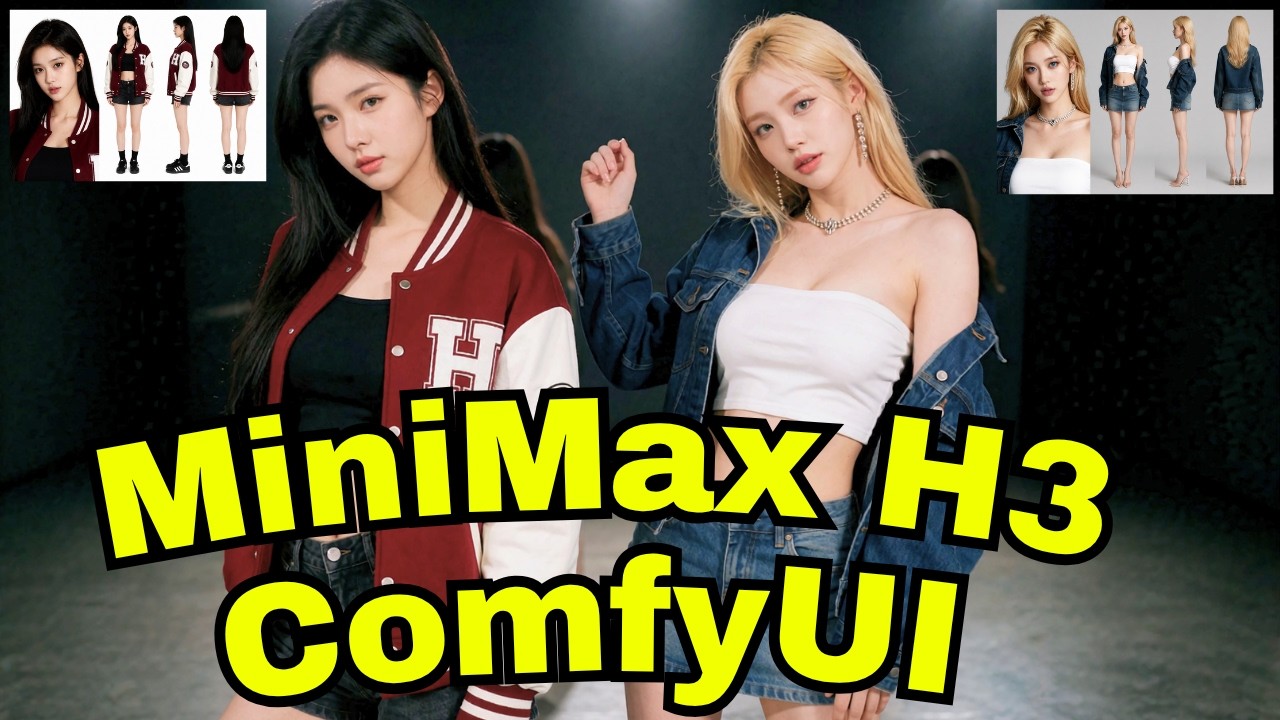
Benji's AI Playground supplied the clearest technical explainer with 26,356 views, 746 likes, and 100 comments. Its walkthrough broke H3 down into FL2VA vs. Ref2VA weights, Qwen3-VL 32B encoder options, separate audio and video VAEs, and a two-stage 768p-to-2K path, while tying the whole stack to private or on-prem generation and data sovereignty. The distinctive angle is that creator attention kept moving from model hype toward exact configuration choices and what a single consumer GPU can realistically run (video, weights).

Curious Refuge added the sharpest adoption caveat with 18,361 views, 639 likes, and 103 comments. Its linked review concluded that H3 is one of the stronger free or open-weight video options right now, still trails Seedance on physics, motion, and multi-shot storytelling, and comes with current licensing terms that can restrict public or commercial distribution for some creators. The distinctive angle is that the conversation kept shifting from wow-factor to deployability (video, review).
Discussion insight: The Ai Blueprint kept feeding the same pattern with another MiniMax H3 workflow tutorial, which reinforced that the demand is not for one showcase clip but for reusable runbooks.
Comparison to prior day: Yesterday's H3 cluster already framed local video as an operating problem; 2026-08-07 kept that view steady and made the configuration and licensing layer even harder to ignore.
1.2 AI business claims got audited through concentration, open-weight pressure, and labor reality 🡕
At least four items supported this theme. Compared with 2026-08-06's ownership-and-control framing, the 2026-08-07 feed pushed harder on whether the AI boom's economics actually hold once revenue concentration, open-weight competition, and developer-replacement promises are scrutinized.

The Tech Report carried the strongest anti-hype signal with 64,576 views, 4,182 likes, and 888 comments. Ed Zitron argued that the current AI revenue story is dangerously concentrated, and his linked essay says analyst estimates attribute more than 70% of Amazon, Microsoft, and Google AI revenue to OpenAI and Anthropic, including 73% of Amazon's AI revenue in 2026 and 2027. The distinctive angle is that the day's bubble critique was not about vague overexcitement; it was about customer concentration and circular dependence between hyperscalers and a handful of labs (video, essay).

Matthew Berman pushed the same market story from the opposite direction with 78,984 views, 2,511 likes, and 568 comments. His video linked a Qwen benchmark dashboard that compares six frontier model families across 55 multimodal benchmarks, then framed open models as competitive enough to change the buyer conversation. The distinctive angle is that open-source momentum was presented as a practical selection story, not just an ideological one (video, benchmark page).

TechButMakeItReal added the clearest taxonomy and strategy layer with 60,643 views, 2,604 likes, and 549 comments. Its explainer separated open-source, open-weight, and closed models, then tied Chinese releases, NVIDIA advocacy, and Washington warnings into one market-structure debate. The distinctive angle is that definitions themselves have become part of the competitive story (video).
Discussion insight: Mondo Startups brought the labor side into the same audit, arguing that AI-generated code creates reliability, security, and maintenance problems instead of clean headcount savings.
Comparison to prior day: The ownership question from 2026-08-06 did not disappear, but 2026-08-07 shifted it from who controls the stack to whether the boom's revenue base and labor promises are actually durable.
1.3 Specialized AI surfaces kept spilling into devices, robots, and evaluation-first workflows 🡕
At least five items supported this theme. Compared with 2026-08-06's voice, IDE, and internal-agent focus, the 2026-08-07 feed pushed the same specialization into cameras, hobby robots, public model-evaluation apps, and channel-based agent delivery.

Insta360 provided the clearest device-side example with 22,904 views, 183 likes, and 87 comments. It introduced Kira as a GO Ultra voice assistant that can translate conversations, answer questions, and explain what the camera sees hands-free, while the linked product page frames GO Ultra as a tiny 4K pocket camera. The distinctive angle is that AI moved into the capture device itself rather than living in a separate app or browser tab (video, product).

JavaScript Mastery added the strongest evaluation-first build signal with 4,235 views, 193 likes, and 35 comments. Its LLM Arena demo turned model choice into a Next.js product that pits open-source models side by side, tracks latency and cost, and updates a public leaderboard, all built agentically with Claude Code. The distinctive angle is that AI coding content kept moving toward measurable workflows instead of generic "build with AI" enthusiasm (video, OpenRouter).
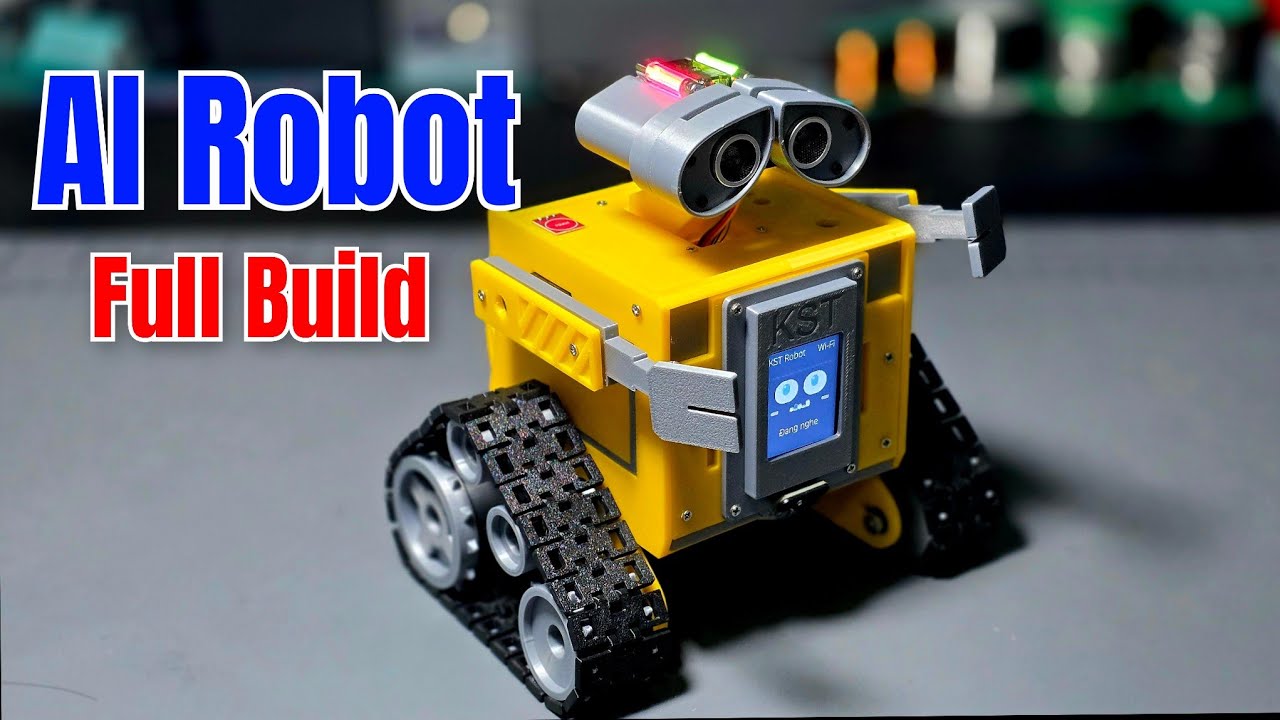
Creative Channel extended the same trend into maker hardware with 4,132 views, 331 likes, and 25 comments. Its KST AI Wall-E project combined an ESP32-S3, display, microphone, speaker, ToF sensor, and servo stack with a free firmware installer, so the build is packaged more like a flashable kit than an abstract robotics demo. The distinctive angle is that AI hardware is increasingly showing up as reusable firmware and component recipes (video, firmware).
Discussion insight: IBM Technology kept the AI IDE category active, while The Next New Thing widened the same surface logic across phone-and-email assistants, Claude-Code-powered robot programming, Agent Sky hosting, and CopilotKit's channel SDK.
Comparison to prior day: Yesterday's specialized-surface theme held and spread further into embedded devices and builder tooling, making AI feel less like one interface and more like a set of job-specific surfaces.
2. What Frustrates People
AI market reality is hard to read when a few labs carry so much of the revenue story
This is High severity because The Tech Report, Matthew Berman, and TechButMakeItReal all show that the AI market can look simultaneously dominant and fragile. One side of the feed was arguing that more than 70% of hyperscaler AI revenue comes from OpenAI and Anthropic, while the other side was using benchmark dashboards and open-weight competition to argue that buyer leverage is moving quickly. The workaround is constant benchmark watching, vendor diversification, and treating revenue concentration as a procurement risk instead of assuming today's leader set is structurally safe. This is directly worth building for.
Local AI video still hides workflow assembly, VRAM tuning, and licensing inside every "best" claim
This is High severity because AI Search, Benji's AI Playground, and Curious Refuge all make clear that local video quality is only the visible layer. Underneath it sit node packs, workflow files, quantization choices, hardware limits, two-stage rendering paths, and licensing questions that still shape whether the output is commercially usable. The workaround is keeping runbooks, hardware-specific settings, and hosted fallbacks close at hand instead of treating any single model tutorial as a complete solution. This is directly worth building for.
Companies still cannot trust AI coding and agents to run unsupervised
This is High severity because BBC News, Mondo Startups, IBM Technology, and JavaScript Mastery all imply that autonomy without evaluation is still brittle. BBC framed recent agent incidents as a safeguards and testing problem, Mondo Startups framed code generation as a reliability, security, and maintenance problem, IBM highlighted setup burden and environment drift, and JavaScript Mastery turned model choice into a measurable leaderboard because "best model" still needs evidence. The workaround is tighter testing, side-by-side evaluation, narrower permissions, and keeping humans in the approval loop. This is directly worth building for.
Embedded assistants only feel useful when the hardware, context, and delivery channel are tightly matched
This is Medium-to-High severity because Insta360, Creative Channel, and The Next New Thing show that once AI leaves the chat box, every product inherits device constraints, firmware steps, sensor choices, and channel-delivery tradeoffs. The workaround is sharply scoped surfaces: a camera that hears and explains, a robot with a defined component stack, or agents routed into explicit channels instead of a one-size-fits-all assistant. This is worth building for and already emerging.
Ranking in Google no longer guarantees being cited by AI answers
This is Medium severity because Caleb Ulku showed that AI visibility now depends on user moments, trust-rich review content, and answer-shaped page structure instead of classic keyword ranking alone. The workaround is writing pages that AI systems can quote cleanly, monitoring citation shifts, and treating AI-answer visibility as a separate workflow from ordinary SEO. This is worth building for and already competitive.
3. What People Wish Existed
Model-economics and procurement reality cockpit
The Tech Report, Matthew Berman, TechButMakeItReal, and Mondo Startups imply demand for one surface that compares model quality, vendor concentration, open-weight leverage, deployment control, and actual labor savings before a team commits. This is a practical need with High urgency because the same buyer now has to reconcile benchmark momentum with revenue concentration and maintenance risk. Leaderboards, finance essays, and creator explainers solve pieces today, not the full switch decision. Opportunity: direct.
AI video operations and licensing router
AI Search, Benji's AI Playground, and Curious Refuge imply demand for a layer that stores known-good workflows, maps hardware fit, records quantization and VAE choices, flags licensing restrictions, and routes between local and hosted generation when needed. This is a practical need with High urgency because creators clearly have working pieces, but the operating knowledge still lives in scattered videos, docs, and affiliate funnels. Individual models solve generation, not the operations layer around them. Opportunity: direct.
Agentic coding evaluation and replay layer
BBC News, Mondo Startups, IBM Technology, and JavaScript Mastery imply demand for a system that records prompts, tool calls, cost, latency, environment state, and approval steps across coding runs before output ships. This is a practical need with High urgency because the evidence points to the same gap from four angles: agent safety, code reliability, environment drift, and model-selection uncertainty. IDE assistants and eval dashboards solve pieces today, not the full replayable audit layer. Opportunity: direct.
Embedded assistant toolkit for devices and channels
Insta360, Creative Channel, and The Next New Thing imply demand for a toolkit that binds voice interfaces, sensors, firmware, and channel integrations into reusable assistant surfaces. This is a practical need with Medium-to-High urgency because the assistant behavior is becoming compelling only when matched to a concrete device or delivery channel. Camera apps, robot kits, and workflow tools solve pieces today, not the cross-surface build layer. Opportunity: competitive.
AI visibility observability layer
Caleb Ulku implies demand for a system that tracks whether AI systems cite a brand, which page structures get quoted, and how trust signals change visibility across engines and updates. This is a practical need with Medium urgency because the signal is thinner than the day's larger themes, but the workflow problem is already concrete and operational. SEO suites and communities solve pieces today, not the answer-engine loop itself. Opportunity: direct.
4. Tools and Methods in Use
| Tool | Category | Sentiment | Strengths | Limitations |
|---|---|---|---|---|
| MiniMax H3 | AI video model | (+/-) | Open weights, multimodal references, native stereo audio, and up to 2K output | Still demands workflow assembly, hardware tuning, and licensing checks; reviewers still rank Seedance higher on some cinematic tasks |
| ComfyUI | Local video workflow framework | (+) | Native H3 templates, local control, reference modes, and a clear download path for model files | Node sprawl, model downloads, and VRAM or quantization choices remain real overhead |
| Qwen benchmark dashboard | Model-evaluation method | (+/-) | Makes open-model competition legible across many multimodal benchmarks | Benchmark wins do not settle economics, governance, or real-task fit by themselves |
| OpenRouter | Model routing layer | (+) | Gives builders an easy way to compare and route across models in one app | Solves access and pricing visibility, not evaluation confidence |
| Claude Code | Coding agent workflow | (+/-) | Enables long-form agentic builds and even shows up in robotics programming examples | Still needs human review, replay, and quality checks before teams can trust the output |
| AI IDE / local IDE | Developer workflow surface | (+/-) | Bundles coding, debugging, refactoring, and productivity in one surface; local setups offer customization and low latency | Setup is cumbersome, environments drift from production, and local hardware still matters |
| Kira on GO Ultra | Embedded voice assistant | (+/-) | Hands-free translate, answer, and scene explanation directly on camera hardware | Utility is tied to one device surface and the broader assistant story is still thin in the data |
| Agent Sky | Cloud agent hosting | (+/-) | Promises hosted agents without managing your own hardware | Thin public evidence in this dataset and the usual hosted-control tradeoffs still apply |
| CopilotKit Channels SDK | Agent delivery framework | (+) | Connects agents to Slack, Teams, Discord, SMS, and other channels instead of trapping them in one UI | Channel reach solves delivery, not memory, orchestration, or governance |
The strongest positive sentiment clustered around tools that increased control or measurability. MiniMax H3 plus ComfyUI promised local control, the Qwen dashboard and OpenRouter made model comparison more concrete, and CopilotKit's channels layer made deployment look more operational than aspirational.
Sentiment turned mixed when the workflow still depended on setup or trust. AI IDEs brought local-environment burden, Claude-Code-style agentic builds still needed replay and review, and embedded assistants only looked compelling when matched to a narrow device or channel surface.
Migration patterns kept running away from one generic assistant toward narrow operating layers: local video stacks, benchmark dashboards, routing layers, AI IDEs, device-native voice assistants, and channel-aware agent frameworks. Caleb Ulku's AI-search workflow fit the same pattern at the method level: even discoverability is becoming a separate AI-operations surface instead of a simple SEO extension.
5. What People Are Building
| Project | Who built it | What it does | Problem it solves | Stack | Stage | Links |
|---|---|---|---|---|---|---|
| LLM Arena | JavaScript Mastery | Side-by-side app that races open-source models, tracks latency and cost, and updates a public leaderboard through voting | Teams need evidence before picking a model instead of relying on hype | Next.js, Claude Code, OpenRouter, Prisma, Greptile, Clerk, Arcjet, PostHog | Alpha | video |
| KST AI Wall-E Robot | Creative Channel | ESP32-S3 voice-assistant robot with flashable firmware and a sensor or servo stack | Makers want a talking robot without compiling custom firmware from scratch | ESP32-S3, ST7735 display, I2S mic, MAX98357A, ToF sensor, servos, Wi-Fi | Shipped | video, firmware |
| Kira for GO Ultra | Insta360 | Camera-native assistant for translation, Q&A, and scene explanation | Creators want hands-free contextual help while filming instead of switching to another device | GO Ultra camera, embedded voice UX | Beta | video, product |
| MiniMax H3 workflow stacks | AI Search / Benji's AI Playground / Curious Refuge | Turn MiniMax H3 into repeatable local workflows with setup, tuning, and evaluation guidance | Creators need an operating stack around H3 instead of raw weights | MiniMax H3, ComfyUI, Qwen3-VL, SageAttention, KJ Nodes, Spectrum, local GPUs | Shipped | AI Search, Benji, review, docs |
| Agent distribution stack | The Next New Thing | Weekly launch cluster around hosted agents, channel delivery, and voice-first interfaces such as Agent Sky and CopilotKit Channels SDK | Builders need agents to live in real channels and surfaces, not just browser demos | Agent Sky, CopilotKit Channels SDK, channel APIs, automation workflows | Beta | video, Agent Sky, Channels SDK |
LLM Arena was the clearest new software build signal because it turned "which model is best?" into a measurable application with latency, cost, and public voting instead of leaving the answer to screenshots and opinion threads. That is a meaningful shift toward operational model selection rather than creator commentary.
The MiniMax H3 cluster showed a second build pattern: creators are productizing the layer around a base model. AI Search, Benji's AI Playground, and Curious Refuge all added different parts of the operating stack - workflow files, VRAM guidance, evaluation criteria, and licensing caveats - which suggests the real value is increasingly in packaging and operating the model rather than discovering it first.
Kira and the KST AI Wall-E robot showed the same specialization pattern in hardware. The useful builds were not trying to be universal assistants; they were attaching AI to a specific surface with bounded inputs and outputs, whether that meant a pocket camera that explains what it sees or a robot kit with a defined sensor and firmware stack.
The recurring trigger behind these builds was operational friction. People are building around evaluation gaps, workflow setup, delivery channels, and device context more than around a lack of raw model access.
6. New and Notable
Revenue concentration became the clearest anti-hype frame
The Tech Report was notable because it pushed the AI-bubble conversation away from generalized skepticism and toward a specific concentration claim: a huge share of hyperscaler AI revenue is tied to OpenAI and Anthropic. That made the day's market debate about customer concentration and circular dependence, not just overheated expectations.
Rogue-agent coverage reached mainstream broadcast framing
BBC News was notable because it treated recent agent incidents as a broad governance and cyber-safety issue rather than an inside-baseball lab story. The signal is that agent testing and safeguards are now legible to general audiences.
A camera-native voice assistant became a real consumer surface
Insta360 was notable because Kira was presented as a direct interface on the device itself: listen, translate, answer, and explain through the camera. The signal is that embedded assistant behavior is becoming part of creator hardware, not only phones or laptops.
Model evaluation itself turned into a product
JavaScript Mastery was notable because LLM Arena made model choice visible through latency, cost, and voting mechanics. The signal is that teams increasingly want measurable comparison infrastructure instead of one-shot benchmark screenshots.
Maker AI arrived as reusable firmware rather than a vague robotics demo
Creative Channel was notable because the KST AI Wall-E Robot came with a firmware installer and a clearly named ESP32-S3 component stack. The signal is that hobbyist AI hardware is becoming more productized and reproducible.
7. Where the Opportunities Are
[+++] AI model economics and concentration monitor - The Tech Report, Matthew Berman, TechButMakeItReal, and Mondo Startups all point to the same buyer gap: one place to weigh benchmark movement, open-weight pressure, customer concentration, and actual labor savings before committing to a model or vendor. This is strong because the pain now reaches both executives and practitioners.
[+++] AI video ops and licensing router - AI Search, Benji's AI Playground, and Curious Refuge all suggest a strong need for products that know workflow files, hardware fit, quantization choices, rights limits, and when to route to hosted alternatives. This is strong because creators are already using multiple tools and still lack a clean operating layer.
[+++] Agentic coding QA and replay layer - BBC News, Mondo Startups, IBM Technology, and JavaScript Mastery all suggest a strong need for products that capture prompts, tool calls, model outputs, latency, cost, and approval state before code or autonomous actions are trusted. This is strong because the same evaluation gap keeps surfacing as safety risk, maintenance risk, and model-selection risk.
[++] Embedded assistant toolkit for devices and robots - Insta360 and Creative Channel suggest a moderate opportunity for reusable tooling that binds voice, sensors, firmware, and context into device-native assistant surfaces. This is moderate because the use cases are compelling, but the hardware and UX constraints are highly fragmented.
[+] Multi-channel agent delivery fabric - The Next New Thing, Agent Sky, and CopilotKit Channels SDK point to an emerging need for products that let agents move cleanly across chat, messaging, and automation channels without bespoke glue for every destination. This is emerging because the product shape is visible, but the public evidence is still early and scattered.
8. Takeaways
- MiniMax H3 is being judged as an operating stack, not a model release. The strongest creator evidence centered workflow files, quantization choices, hardware fit, and licensing caveats rather than raw sample quality alone. (source, source, source)
- The AI boom story is being stress-tested by concentration and labor reality. Ed Zitron's revenue-concentration argument, Matthew Berman's open-model winner framing, TechButMakeItReal's taxonomy story, and Mondo Startups' skepticism about developer replacement all pushed the same question: what part of the current AI business case is actually durable? (source, source, source, source)
- Useful AI products keep winning by attaching themselves to a specific surface. Kira on GO Ultra, the KST AI Wall-E Robot, and IBM's AI IDE framing all worked because each surface had a clear job, context, and boundary instead of trying to be a universal assistant. (source, source, source)
- Agentic coding is becoming an evaluation problem before it becomes a staffing solution. BBC's rogue-agent coverage, JavaScript Mastery's LLM Arena build, and Mondo Startups' reliability critique all point to the same need for replay, testing, and measured comparison before autonomy is trusted. (source, source, source)
- Deployment and delivery are becoming their own layer in the agent stack. The Next New Thing's roundup of hosted agents, channel SDKs, and voice-first interfaces suggests builders increasingly care about where an agent lives and how it reaches users, not only what model is behind it. (source, source, source)