YouTube AI - 2026-08-09
1. What People Are Talking About
1.1 Local AI video stayed the clearest creator operating stack, and packaging mattered as much as model quality 🡒
At least four items supported this theme. Compared with 2026-08-08's mix of free generators, local MiniMax H3 workflows, and licensing-safe distribution, the 2026-08-09 feed kept MiniMax H3 and free-routing near the center, but spent more of its explanatory effort on repeatable templates, easier workflow surfaces, and clearer tradeoffs between hosted convenience and local control.

AI Search carried the biggest creator-operations signal with 169,453 views, 8,993 likes, and 1,200 comments. Its tutorial centered MiniMax H3 inside ComfyUI, and ComfyUI's docs say H3 ships with native text-to-video, image-to-video, and reference-to-video workflows, native stereo audio, open weights, and up to 2K output. The distinctive angle is that local video still wins attention when it comes with a known workflow shape instead of a vague run-it-yourself promise (video, docs).

Backlash kept the hosted side of the same market visible with 46,792 views, 1,026 likes, and 89 comments. Its roundup framed Zsky AI, TikTok Symphony, Vibes AI, and Snapgen as ways around credit traps, watermarks, and hard usage caps, so the value proposition was not cinematic novelty so much as a lower-friction route to getting output at all (video).

Curious Refuge supplied the strongest evaluation caveat with 20,725 views, 707 likes, and 105 comments. Its linked review says MiniMax H3's multi-reference workflows, native 2K output, and downloadable open weights make it one of the more interesting free options right now, but it still trails Seedance on physics, motion, and multi-shot storytelling, and current licensing terms restrict public distribution in the U.S., EU, UK, and South Korea. The distinctive angle is that creators are still deciding on rights and workflow burden as much as on visual quality (video, review).
Discussion insight: The feed kept splitting into two buyer types. Backlash optimized for people who want free hosted routes right now, while AI Search and Curious Refuge optimized for people willing to learn a local stack if it buys them more control.
Comparison to prior day: 2026-08-08 already made local H3 workflows and free-routing comparisons central. 2026-08-09 kept the same tradeoff steady and put more emphasis on packaged templates and repeatable operating paths.
1.2 Open-weight AI turned into a strategy, efficiency, and runtime story rather than a pure benchmark story 🡕
At least four items supported this theme. Compared with 2026-08-08's focus on open-model benchmarks and inference infrastructure, the 2026-08-09 feed pushed the same story outward into national strategy and inward into token-efficiency engineering.
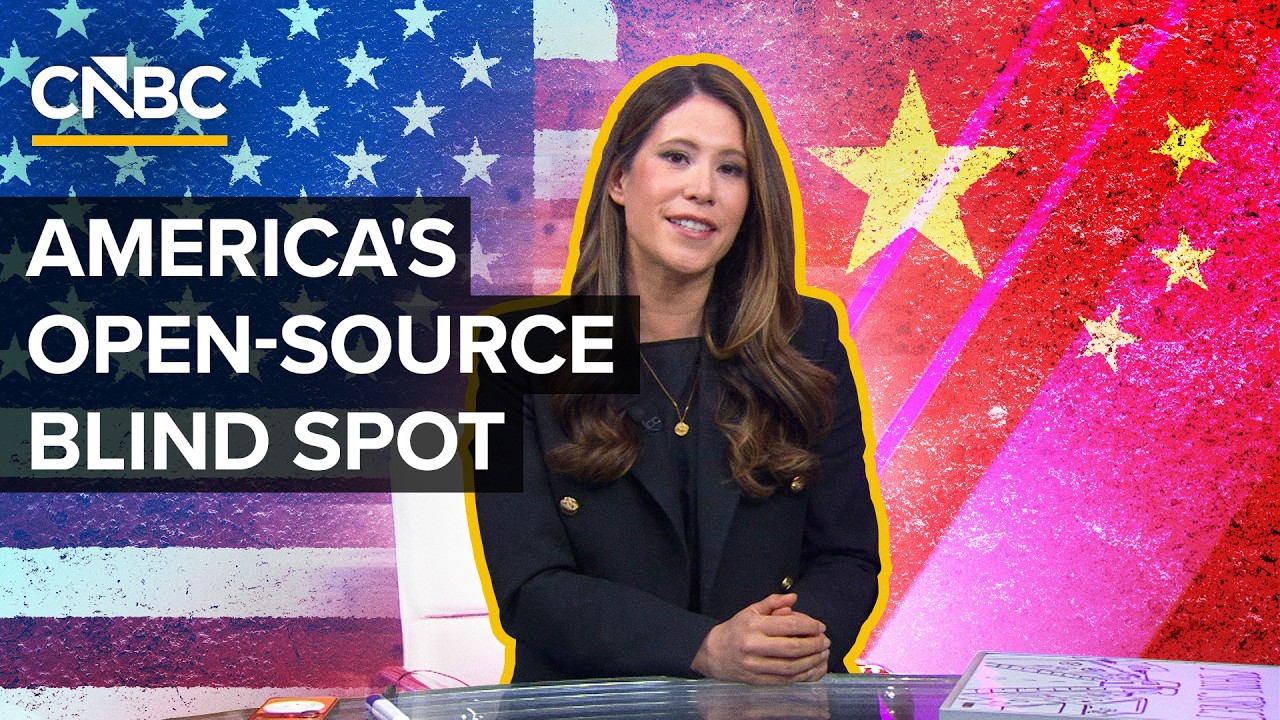
CNBC brought the broadest mainstream framing with 143,731 views, 2,271 likes, and 587 comments. Its segment argued that the U.S. has a chip strategy but no open-source AI strategy, while the models people increasingly build on are coming from China, and it tied that to enterprise questions about who owns what AI learns about a business. The distinctive angle is that open weights were treated as national and corporate leverage, not just as developer preference (video).
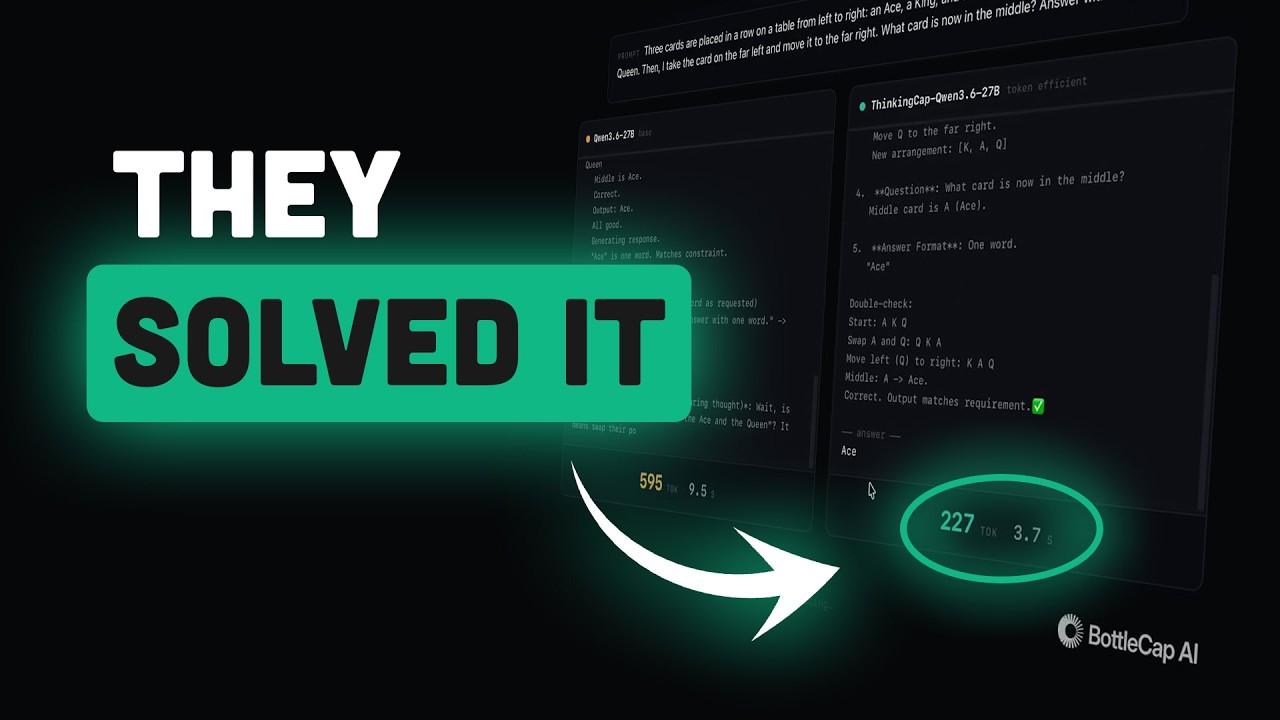
Better Stack supplied the clearest efficiency-upgrade story with 15,374 views, 632 likes, and 46 comments. BottleCap's linked post says its ThinkingCap-Qwen3.6-27B release uses about 45.8% fewer reasoning tokens on average across out-of-domain benchmarks with roughly a 0.7 percentage-point average accuracy difference, and it released the model under Apache 2.0. The distinctive angle is that one of the day's most concrete open-weight wins was not a smarter base model, but a cheaper and faster one (video, post).

Latent Space added the strongest production layer with 30,923 views, 213 likes, and 13 comments. Baseten's guide maps inference engineering across runtime, infrastructure, and tooling, and calls out quantization, speculative decoding, KV cache reuse, vLLM, SGLang, TensorRT-LLM, Dynamo, and multimodal serving as the work that starts after a good model is released. The distinctive angle is that open-model progress kept translating into systems-design labor rather than frictionless adoption (video, guide).
Discussion insight: Syntax pushed the same theme into taxonomy and risk. Its explainer separated direct model downloads, API access, and third-party access, then tied open weights to sanctions, copyright, and IP disputes, which suggests the audience still needs a procurement map before open becomes operational (video).
Comparison to prior day: 2026-08-08 treated open-model momentum mainly as a benchmark and serving question. 2026-08-09 widened the same story into sovereignty, licensing, and token-budget efficiency.
1.3 Agentic AI moved closer to everyday work, but every surface still came with tight boundaries 🡕
At least six items supported this theme. Compared with 2026-08-08's more general theme of AI fragmenting across governance, robots, and coding surfaces, the 2026-08-09 feed moved toward explicit delegation patterns: personal agents, bounded coding workflows, structure-aware document agents, and high-level robot brains.
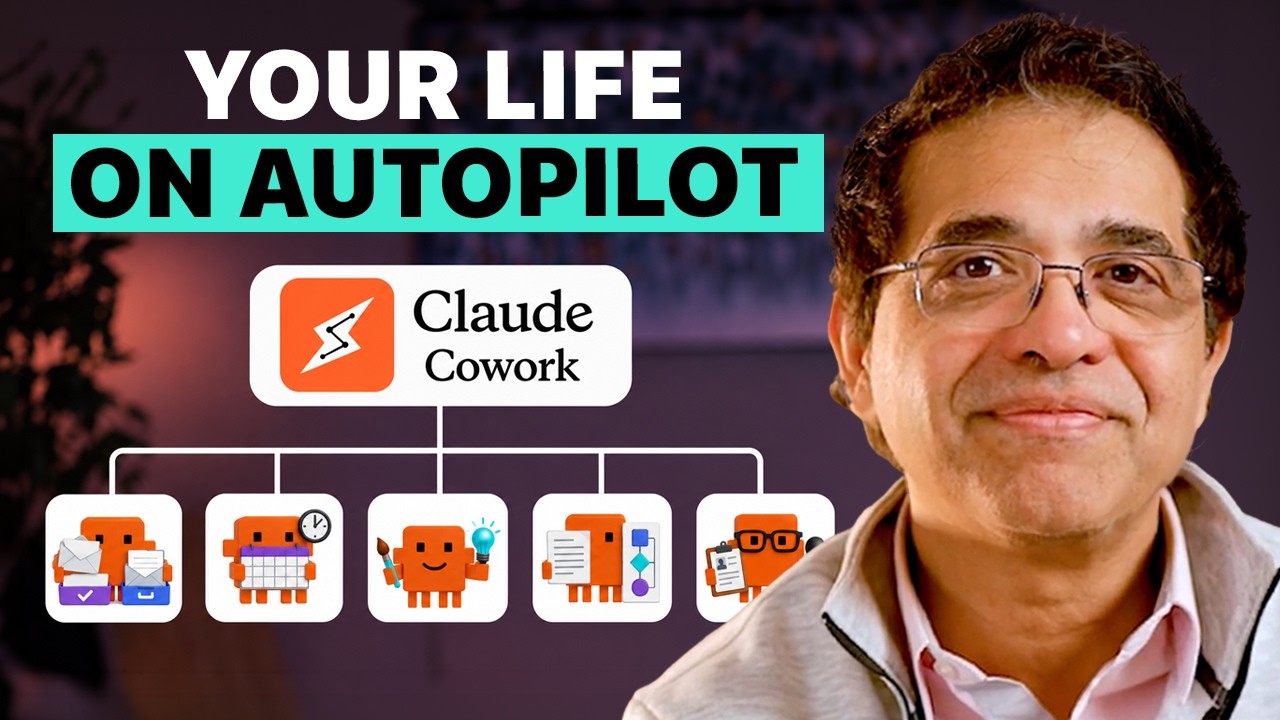
Sandeep Swadia carried the biggest broad-interest signal in the entire dataset with 560,125 views, 15,617 likes, and 397 comments. Its Four Cs framework turned agent use into coordination, creativity, clarity, and coaching tasks, with explicit boundaries around inbox management, draft generation, contract review, and rehearsal. The distinctive angle is that agent education is no longer mostly developer content; it is being packaged as an everyday delegation skill (video).

TheAIGRID brought the clearest physical-agent signal with 33,687 views, 596 likes, and 48 comments. Google's linked launch says Gemini Robotics ER 2 is a high-level embodied reasoning model that can chat, plan multi-step tasks, call tools, watch continuous video, self-correct, and collaborate across multiple robots while handing low-level motion to other controllers. The distinctive angle is that the agent is not the motor system itself; it is the orchestration layer around physical work (video, launch).
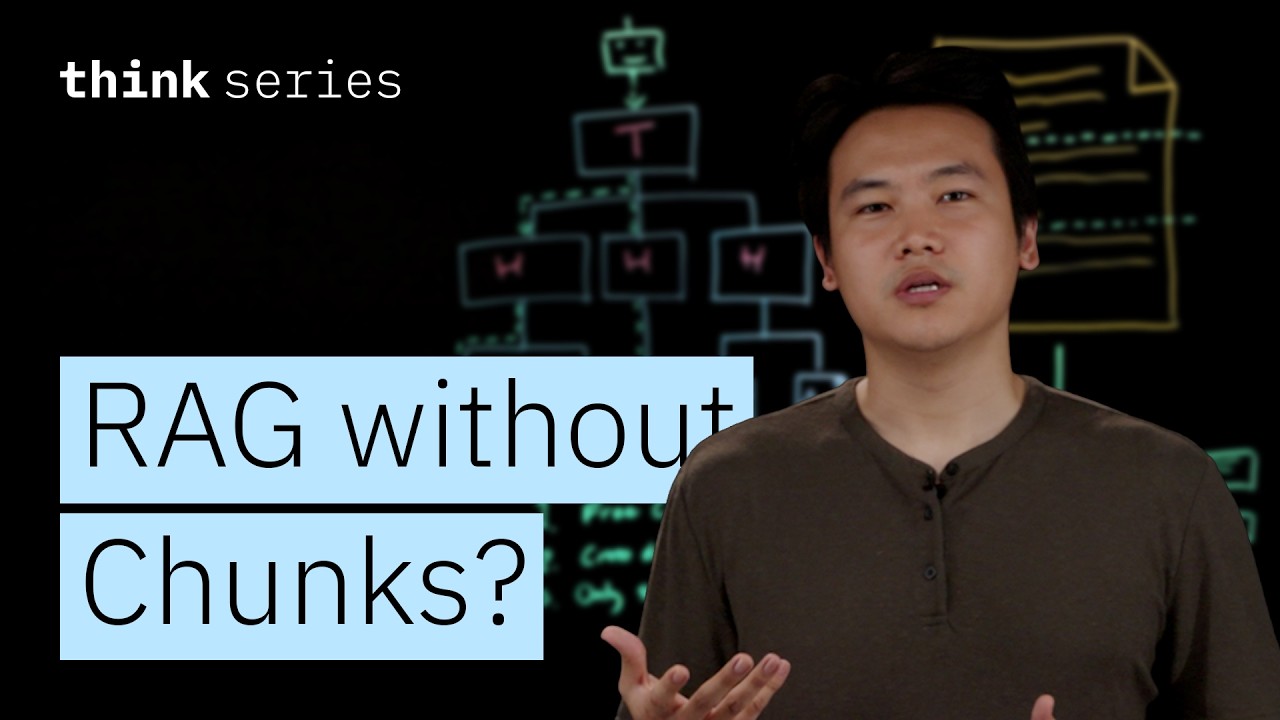
IBM Technology added the clearest document-agent signal with 11,887 views and 562 likes. Its explainer argued that chunkless RAG uses document structure and AI agents instead of relying only on chunking and similarity search, while the linked Docling Agent project focuses on writing, editing, extraction, and enrichment and still labels itself immature. The distinctive angle is that richer context handling is becoming the point of the product, not just an implementation detail (video, repo).
Discussion insight: The same surface expansion kept running into cost and reliability boundaries. Mondo Startups argued that AI coding creates reliability, security, and maintenance problems, Maddy Zhang framed token budgets, routing, caching, and policy changes as the new constraint set, and IBM's AI IDE explainer says local IDEs remain configurable and low-latency but still inherit setup burden and environment drift (video, video, IBM IDE explainer).
Comparison to prior day: 2026-08-08 made specialized AI surfaces more explicit. 2026-08-09 kept that trend moving and made the boundaries more concrete: what to delegate, what context to preserve, and what should stay tightly scoped.
2. What Frustrates People
Local AI video still forces creators to choose between control, simplicity, and distribution safety
This is High severity because AI Search, Backlash, and Curious Refuge all point to the same burden from different sides. One side of the feed wants a fully local H3 workflow with known templates, another wants free hosted tools without caps or watermarks, and the strongest review still says attractive open weights can run into distribution restrictions in major markets. The workaround is routing between hosted tools, local templates, and licensing caveats instead of trusting one stack. This is directly worth building for.
Open-weight AI still becomes a deployment, policy, and efficiency problem as soon as teams want to use it
This is High severity because CNBC, Better Stack, Latent Space, and Syntax all show that open access does not remove the work. Teams still have to decide whether the model is strategically safe, whether it wastes tokens, and what serving stack is needed to run it well. The workaround is a mix of lighter-weight model swaps, inference engineering, and policy interpretation rather than plug-and-play adoption. This is directly worth building for.
AI coding adoption keeps turning into token budgets, maintenance debt, and trust issues
This is High severity because Mondo Startups, Maddy Zhang, and IBM Technology all frame the same problem differently. One side says AI coding creates reliability, security, and maintenance trouble, another says companies are discovering unexpectedly large AI bills and changing internal tool usage, and IBM adds that local IDEs can still drift from production and be cumbersome to configure. The workaround is more routing, caching, review, budget controls, and clearer boundaries on when not to use an agent. This is directly worth building for.
Outside the chat box, agents only look credible when context is richly structured or physically grounded
This is Medium-to-High severity because Sandeep Swadia, IBM Technology, TheAIGRID, and Electronic Clinic all imply that generic prompting is not enough. Practical agents need document structure, clear delegation boundaries, robot control loops, sensor triggers, or room context before they feel reliable. The workaround is narrow surfaces with better context handoff instead of a universal assistant. This is worth building for and already emerging.
3. What People Wish Existed
AI video operations and rights router
AI Search, Backlash, and Curious Refuge imply demand for one surface that compares local MiniMax H3 workflows, hosted free generators, setup burden, rights limitations, and output quality before a creator starts generating. This is a practical need with High urgency because the feed still splits across templates, reviews, and free-tool roundups. Workflow docs and reviews solve pieces today, not the routing decision itself. Opportunity: direct.
Open-weight deployment and efficiency control plane
CNBC, Better Stack, Latent Space, and Syntax imply demand for a layer that tracks strategic provenance, access mode, token efficiency, serving design, and cost after a model release. This is a practical need with High urgency because the same operator now has to reconcile sovereignty, inference engineering, and token budgets. Benchmark pages and blog posts solve pieces today, not the operating decision. Opportunity: direct.
Coding-agent spend, routing, and reliability cockpit
Sandeep Swadia, Mondo Startups, Maddy Zhang, and IBM Technology imply demand for tooling that records where agents are used, what prompts, tools, and costs they consume, what outputs required rework, and which tasks should remain human-owned. This is a practical need with High urgency because mass-market adoption and enterprise skepticism are arriving at the same time. IDE assistants and internal dashboards solve pieces today, not the full control loop. Opportunity: direct.
Structure-aware document agent layer
IBM Technology implies demand for document-native agents that preserve layout and structure, then write, edit, and extract without flattening everything into chunks. This is a practical need with Medium urgency because the signal is narrower than video or coding, but the failure mode is concrete and technical. RAG frameworks solve pieces today, not the end-to-end structure-preserving workflow. Opportunity: competitive.
Embodied agent orchestration kit
TheAIGRID and Electronic Clinic imply demand for a layer that binds sensors, cameras, tools, safety boundaries, and high-level reasoning into reusable embodied assistants. This is a practical need with Medium urgency because the demos are compelling, but hardware and control stacks remain fragmented. Robotics platforms solve pieces today, not the simplified orchestration layer. Opportunity: aspirational.
4. Tools and Methods in Use
| Tool | Category | Sentiment | Strengths | Limitations |
|---|---|---|---|---|
| MiniMax H3 | AI video model | (+/-) | Open weights, native 2K output, stereo audio, and reference-driven workflows keep it central to creator experiments | Still demands setup work, and current licensing plus motion-quality tradeoffs limit straightforward adoption |
| ComfyUI workflows | Local AI video workflow framework | (+) | Gives creators a repeatable local operating path for text-to-video, image-to-video, and reference-to-video | Still depends on model downloads, GPU capacity, and workflow discipline |
| Zsky AI / TikTok Symphony / Vibes AI / Snapgen | Hosted video generator bundle | (+/-) | Offers free or low-friction creator routes without immediately forcing a local stack | Quality, rights, and workflow fit remain fragmented across providers |
| ThinkingCap-Qwen3.6-27B | Open-weight reasoning model | (+) | Cuts reasoning-token use sharply while keeping performance near the base model and ships under Apache 2.0 | Teams still need to validate the swap against their own workloads |
| Inference engineering stack | Runtime method | (+/-) | Makes quantization, KV cache reuse, speculative decoding, engine choice, and multimodal serving explicit optimization levers | Requires specialized infrastructure knowledge and shifts work from model choice to systems design |
| AI IDE workflows | Coding assistant surface | (+/-) | Promise coding, debugging, refactoring, and productivity gains in one surface | Reliability, maintenance, environment drift, and spend can erase naive savings |
| Chunkless RAG / Docling Agent | Document retrieval and agent toolkit | (+) | Preserves document structure and supports writing, editing, extraction, and enrichment | The linked project still calls itself immature and work-in-progress |
| Gemini Robotics ER 2 | Embodied reasoning model | (+/-) | Adds multi-step planning, tool use, self-correction, and multi-robot collaboration to physical agents | Still depends on lower-level control stacks and preview-stage deployment paths |
| mmWave radar + ChatGPT assistant stack | Embedded assistant stack | (+) | Combines presence detection, vision, voice, translation, and GPIO control into a concrete room-aware assistant | Hardware-specific and explicitly not suited to every real-time industrial task |
The strongest positive sentiment sat with tools that reduced ambiguity. ThinkingCap cut token waste without requiring a new model family, ComfyUI gave H3 a clear operating path, and chunkless document tooling treated structure loss as a solvable product problem.
Sentiment turned mixed whenever the operator still inherited too many hidden decisions. MiniMax H3, hosted video bundles, inference engineering, and AI IDE workflows all looked useful, but they mostly shift the burden from what can AI do to how do I serve it, govern it, budget it, or legally distribute the output.
Migration patterns favored narrower surfaces and better routing rather than one universal assistant. The recurring workaround was not blind automation; it was packaging, evaluation, and explicit control over when to keep a human in the loop.
5. What People Are Building
| Project | Who built it | What it does | Problem it solves | Stack | Stage | Links |
|---|---|---|---|---|---|---|
| ThinkingCap-Qwen3.6-27B | BottleCap AI | Fine-tuned Qwen variant that reduces reasoning tokens while keeping accuracy near the base model | Reasoning models overthink, which drives latency and inference cost | Qwen3.6-27B, fine-tuning, Hugging Face distribution | Shipped | video, post |
| MiniMax H3 workflow stack | Comfy-Org | Local open-weight video workflows for text-, image-, and reference-to-video with native audio | Creators need repeatable local video generation instead of ad hoc setup hunts | MiniMax H3, ComfyUI, workflow templates, local GPUs | Shipped | tutorial, docs, review |
| Gemini Robotics ER 2 | Google DeepMind | High-level embodied reasoning model that plans tasks and hands motion to lower-level controllers | Robots need multi-step planning, self-correction, and tool use in real time | Gemini Robotics ER 2, Gemini API, tool calling, VLA handoff | Beta | video, blog |
| Docling Agent | docling-project | Structure-aware document agent for writing, editing, extraction, and enrichment | Chunked retrieval can discard document structure and context | DoclingDocument, model-agnostic agent backends, optional tool integrations | Alpha | video, repo |
| Radar-triggered voice assistant | Electronic Clinic | No-wake-word assistant that uses radar, vision, voice, translation, and GPIO control | Hands-free room-aware assistance and hardware control still need a full sensor-to-action recipe | RD-03D mmWave radar, Xiao ESP32-C3, RDK X5, GPT-4o vision, ElevenLabs, GPIO | Alpha | video, resources, site |
ThinkingCap was the clearest optimize-the-base-model build in the dataset. Its value came from compressing reasoning cost without changing the broader operating model, which is a different kind of build from chasing a new frontier release.
The MiniMax H3 stack showed a second build pattern: packaging the messy layer around a capable base model. The value is not just the weights; it is the template, the workflow, and the clearer path from model download to usable output.
Docling Agent and Gemini Robotics ER 2 pointed to the same pattern higher in the stack. Both treat the agent as an orchestrator inside a bounded environment, one around structured documents and the other around physical tasks, instead of pretending that a generic chatbot surface is enough.
Electronic Clinic's radar assistant showed how embodied AI gets compelling when the full recipe is present. Sensors, trigger logic, room perception, voice, and hardware control all had to be bundled before the assistant felt like a real product rather than a one-off demo.
6. New and Notable
Agent tutorials reached mass-market self-improvement scale
Sandeep Swadia was notable because a 20-minute, 560,125-view video turned agents into a practical life-automation lesson instead of a niche builder walkthrough. The signal is that delegation patterns are becoming mainstream content.
Open-weight AI became mainstream business-news framing
CNBC was notable because it treated open-source AI strategy as a national competitiveness and enterprise-ownership story, not only as a developer preference debate. The signal is that open weights now register at policy and boardroom level.
Token-efficiency tuning became a product story of its own
Better Stack was notable because the headline value was fewer reasoning tokens, lower latency, and lower cost, not a new model family. The signal is that optimization layers around existing open models are becoming first-class products.
Physical agents moved onto public developer surfaces
TheAIGRID was notable because Gemini Robotics ER 2 was presented as a publicly accessible developer model with tool use, self-correction, and multi-robot collaboration. The signal is that embodied AI is being productized beyond private lab demos.
Structure-aware retrieval became a concrete product argument
IBM Technology was notable because it framed chunkless RAG as a direct answer to context loss from chunking, then pointed to a real document-agent toolkit. The signal is that document structure itself is becoming a competitive feature.
7. Where the Opportunities Are
[+++] AI video ops and rights router - AI Search, Backlash, and Curious Refuge all imply a strong need for one place to compare local workflows, hosted alternatives, setup burden, and licensing constraints before creators commit time and GPU budget. This is strong because the fragmentation is recurring and operational today.
[+++] Open-weight deployment and efficiency control plane - CNBC, Better Stack, Latent Space, and Syntax all point to a strong need for products that connect provenance, access mode, token efficiency, and serving design after a model release. This is strong because the control burden is visible at both strategic and implementation layers.
[+++] Coding-agent spend and reliability observability - Sandeep Swadia, Mondo Startups, Maddy Zhang, and IBM Technology all point to a strong need for products that record where agents help, where they create rework, and how much cost or drift they introduce. This is strong because adoption pressure and skepticism are both already present.
[++] Structure-aware document agent platform - IBM Technology and docling-project suggest a moderate opportunity for systems that preserve layout, structure, and richer document context rather than flattening everything into chunks. This is moderate because the need is concrete, but the category is still early.
[++] Embodied assistant orchestration kits - TheAIGRID and Electronic Clinic suggest a moderate opportunity for reusable kits that bundle sensors, cameras, voice, tool calls, and safety boundaries into working assistant surfaces. This is moderate because the demos are compelling, but hardware fragmentation still narrows the immediate market.
8. Takeaways
- Creator AI video is still an operations and routing market more than a single-model market. The strongest creator items compared local H3 workflows, free hosted routes, and licensing constraints rather than simply declaring one model the winner. (source, source, source)
- Open weights now matter because they touch strategy, efficiency, and infrastructure at the same time. CNBC framed them as a policy and ownership issue, BottleCap framed them as a token-efficiency upgrade, and Baseten framed them as a runtime-engineering challenge. (source, source, source)
- Agentic productivity is mainstream enough for lifestyle-style tutorials, but coding autonomy still needs tighter controls. Sandeep's delegation playbook, Mondo's backlash framing, and Maddy Zhang's cost discussion all point to the same pattern. (source, source, source)
- The most credible non-chat agents were the ones with richer context surfaces. Chunkless document agents, embodied robot planners, and radar-triggered assistants all looked stronger because they had explicit structure or sensor grounding. (source, source, source)
- Builders keep packaging the control layer around AI rather than only shipping another base model. MiniMax H3 workflows, ThinkingCap, Docling Agent, and Gemini Robotics ER 2 all productize how AI is operated, constrained, and embedded. (source, source, source, source)