YouTube AI - 2026-08-18
1. What People Are Talking About
1.1 AI's business case got dragged into the open: layoffs, capital spending, and token efficiency became one story 🡕
At least five videos supported this theme. Compared with 2026-08-17, when the feed mostly framed open models as a supply-chain and deployment contest, the 2026-08-18 file pulled the economic consequences to the front: layoffs, chip capex, reasoning-token waste, and inference architecture were all presented as costs someone eventually pays.
GEN delivered the dominant mainstream version with 384,313 views, 16,237 likes, and 1,900 comments. Its description links Ford's partial reversal of AI-driven layoffs, mandates at Shopify and Coinbase, Amazon's failed AI leaderboard, Chegg's collapse, and Allbirds' chip pivot into one explicit argument that labor replacement and AI cost cutting have not produced clean wins. The distinctive angle is that the day's highest-reach AI video was an ROI backlash story rather than a model demo (video).
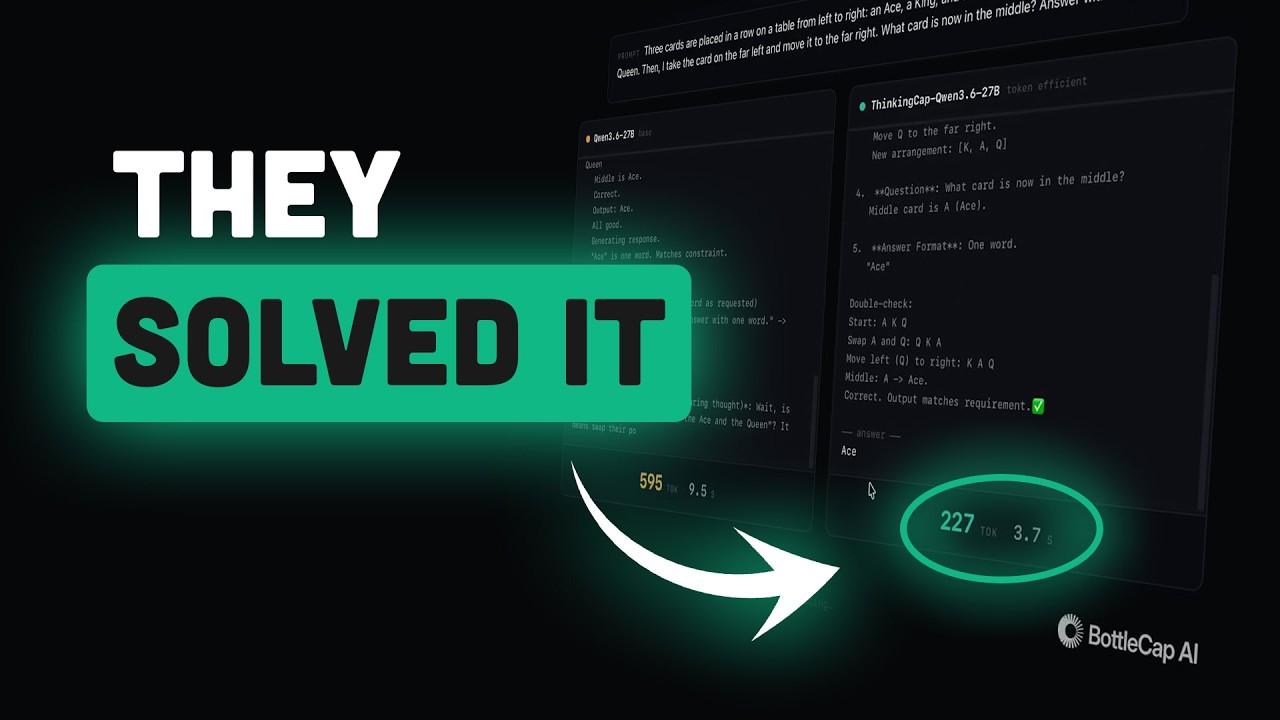
Better Stack added the clearest microeconomic layer with 31,467 views. Its ThinkingCap breakdown says a Qwen3.6-27B derivative cut reasoning tokens by 46% on average while keeping benchmark performance close to baseline, making latency and inference spend part of the core product pitch instead of a backend detail (video, post).

PRO ROBOTS pushed the same theme into hardware markets. Its chip-industry explainer frames AMD's MI455X versus Nvidia Vera Rubin race around pricing, equity deals with OpenAI, Meta, Microsoft, and Anthropic, and the claim that even a small hardware win can force redesigns and move stocks. The distinctive angle is that AI economics in the feed now includes who owns the chip margin, not just who ships the best model (video).
Discussion insight: KodeKloud turned the cost story into infrastructure mechanics by framing prefill, decode, KV cache, batching, vLLM, and LLM-D as the real reasons products feel fast or hit capacity limits, while Google Cloud Tech showed why enterprises care: once agents touch Gmail, Drive, Calendar, Docs, and Slides, the operating question becomes connector design and workflow grounding, not just model quality (codelab).
Comparison to prior day: 2026-08-17 emphasized open-model supply chains and harnesses. On 2026-08-18, that same contest broadened into who pays for AI, who gets replaced, and which efficiency layers make the economics work.
1.2 Creator AI stayed a workflow-routing market, but the unit of competition became packaged production surfaces 🡒
At least five videos supported this theme. Compared with 2026-08-17, when the feed was already split between local MiniMax H3 stacks and hosted Seedance-style routes, the 2026-08-18 file kept the split in place but leaned even harder into setup shape: install maps, low-VRAM accelerators, hidden free paths, and rights constraints.

AI Search delivered the strongest local-workflow signal with 215,209 views, 10,113 likes, and 1,300 comments. Its description is an install map more than a model review: ComfyUI workflows, MiniMax H3 weights, the MiniMax API, SageAttention, KJNodes, and license notes, while ComfyUI's docs confirm open-weight T2V, I2V, and R2V workflows with native stereo audio and up to 2K output. The distinctive angle is that creators were being sold a complete local operating stack, not just a better sample reel (video, docs).
AI Search followed with 128,375 views and 4,972 likes and added the clearest optimization layer. The second tutorial pivots to low-VRAM operation, live preview, Turbo LoRAs, and reference workflows; Spectrum says it reduces expensive H3 transformer evaluations during sampling, while ComfyUI-MiniMaxH3-Easy packages mixed-media references and prompt guides into a smaller surface. The distinctive angle is that the creator workflow battle is now about accelerators and ergonomics as much as image quality (video).

Malva AI supplied the hosted counter-route with 32,781 views. Its tutorial emphasizes Hailuo AI setup, free 16:9 source images with Meta AI, and Seedance 2.5 on Higgsfield for 1080p video with sound, multiple scenes, and camera changes, plus even VPN workarounds when the workflow breaks. The distinctive angle is that the hosted side is winning attention by collapsing generation into a low-friction "just make it work" path (video).
Discussion insight: Curious Refuge kept the quality and rights reality check in view: its review says MiniMax H3's multi-reference workflows and open weights are strong, but Seedance still wins on physics, motion, and multi-shot storytelling, and the open-weight version carries public-distribution restrictions in the United States, EU, UK, and South Korea (review).
Comparison to prior day: 2026-08-17 framed this as a workflow war. On 2026-08-18, the war stayed steady but the competitive surface got even more packaged: install shells, accelerators, free-access tricks, and licensing boundaries mattered more than abstract model rankings.
1.3 Open-weight AI kept winning attention only when paired with concrete shells: local fit, agent harnesses, benchmark surfaces, and project wrappers 🡒
At least six videos supported this theme. Compared with 2026-08-17, when open models were framed as a full supply chain of demos, quantization, harnesses, and serving architecture, the 2026-08-18 file kept the open-weight story hot but pushed attention further up the stack into wrappers and supporting surfaces.

WorldofAI delivered the clearest local-fit proof point with 72,849 views, 1,625 likes, and 225 comments. Its test frames Qwen 3.8 27B as a 24GB-VRAM local model that can run through Unsloth Dynamic 4-bit quantization and Open WebUI while still being compared directly with Claude Opus-class coding quality. The distinctive angle is that "frontier" is being sold through consumer-hardware fit, not just benchmark rhetoric (video, collection).
WorldofAI returned with the strongest price-to-performance claim around DeepSeek V4 Pro. The video runs frontend, agentic coding, 3D/Three.js, and one-shot generation tests, then argues the model stays especially attractive when combined with a harness layer; DeepSeek Harness confirms an open-source plugin-based web UI in active developer preview. The distinctive angle is that the open-model case is now inseparable from the shell around it (video).
Matthew Berman added the clearest wrapper-layer evidence with 50,516 views and six linked repos. Instead of celebrating one model, the video highlights Unsloth, Obsidian Skills, Buzz, and other open-source projects that help people run models locally, package agent abilities, or collaborate with agents inside a dedicated workspace. The distinctive angle is that builders are shipping surfaces around model capabilities almost as fast as they ship models themselves (video).
Discussion insight: AI Search kept the benchmark-and-demo side alive with GLM 5.3 framed through Windows replica, 3D, deep research, and cybersecurity chapters, while Better Stack showed that token-efficiency wrappers can create their own adoption story even when the base model stays the same (post).
Comparison to prior day: 2026-08-17 already treated open weights as an operational contest. On 2026-08-18, that contest stayed steady but moved further toward wrappers, local setup, and efficiency layers around the core model.
1.4 Agent adoption got more operational across enterprise connectors, personal devices, and beginner coding surfaces 🡕
At least six videos supported this theme. Compared with 2026-08-17, when the feed focused on exact developer stacks, local home agents, and Android APKs, the 2026-08-18 file widened the market: the same "make it concrete" pressure now showed up in enterprise admin surfaces, beginner coding tools, and tightly bounded assistants.
Google Cloud Tech supplied the clearest enterprise version even at low current reach. Its session shows Gemini Enterprise admins configuring Workspace connectors and APIs so agents can work across Gmail, Drive, Calendar, Docs, and Slides through Apps Script, REST APIs, add-ons, and no-code GWS Studio flows; Google's codelab confirms those pieces map to Workspace data stores, MCP servers, Agent Development Kit, and Agent Engine. The distinctive angle is that enterprise agent building is being framed as connector and host-surface design, not just prompt writing (video, codelab).
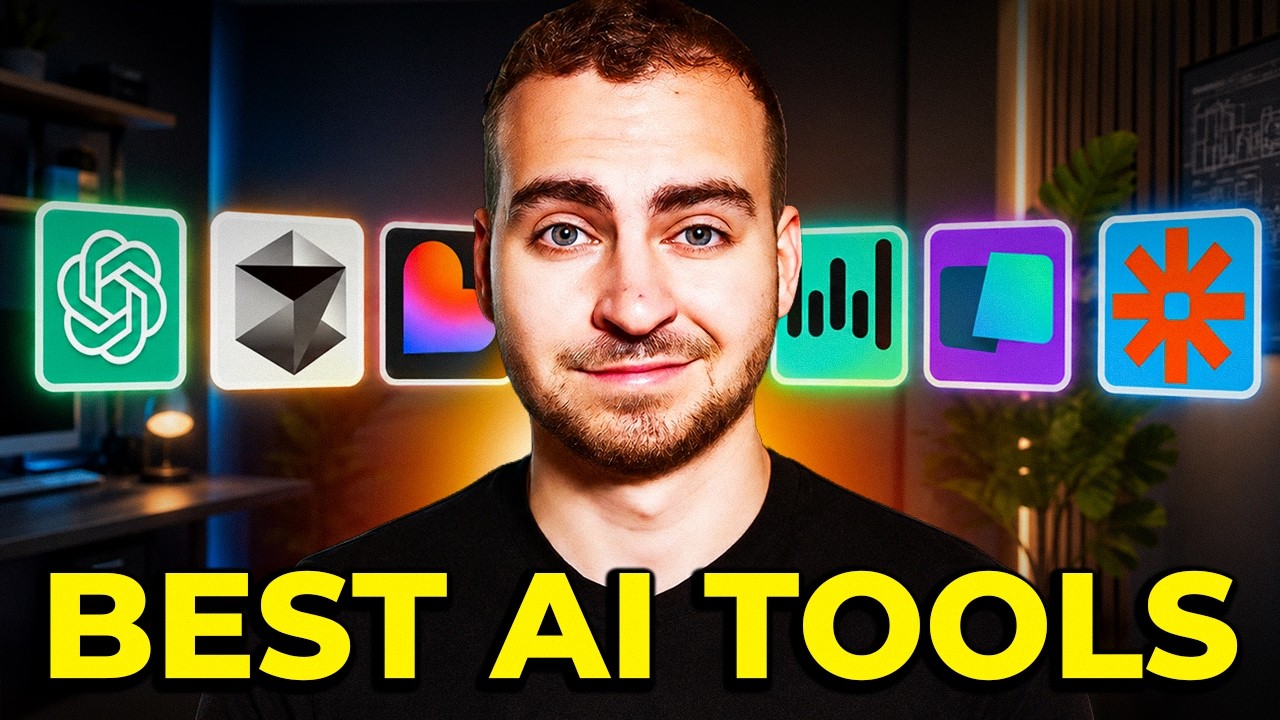
Tech With Tim provided the broadest developer-stack framing with 22,445 views. Its video promises the exact AI stack running on one machine across seven categories and more than twenty tools, and the tags make the layer cake concrete: Claude Code, Codex, Hermes Agent, Cursor, LangGraph, Supabase, Composio, Zapier MCP, Lovable, GenSpark, and more. The distinctive angle is that adoption is being narrated as deliberate stack architecture rather than one killer app (video).

buildwithashwani supplied the strongest phone-side jump. ZOYA is positioned as an Android APK with device control for calls, WhatsApp, music, and system actions, then extended into a multi-personality AI podcast studio and future memory-backed assistant. The distinctive angle is that the builder is moving an agent from web chat to a device surface with real actions and a media business model attached (video, app).
Discussion insight: Automation Addict kept the trust boundary explicit by limiting which Home Assistant entities a local Ollama assistant can see and by being direct about iGPU limits and possible eGPU upgrades, while Next Evolution AI showed the beginner packaging layer with Copilot, Cursor, Lovable, Replit AI, and Claude presented as the starter kit for learning to code with AI.
Comparison to prior day: 2026-08-17 focused on exact stacks and bounded assistants. On 2026-08-18, the same theme expanded outward into enterprise connectors and beginner-friendly entry points.
2. What Frustrates People
AI cost-cutting rhetoric still runs ahead of trustworthy operating proof
This is High severity because GEN, Better Stack, PRO ROBOTS, and KodeKloud all expose different sides of the same burden. One video argues that layoffs and AI mandates already produced expensive reversals and damaged businesses, another says reasoning waste still has to be engineered out at the model layer, another frames AI chips as a capex and pricing war, and another shows that "at capacity" is really a systems-design problem around memory, routing, and batching. The visible workaround is constant triangulation across labor narratives, token-efficiency patches, infrastructure explainers, and chip-market analysis rather than any settled proof that the economics are simple. This is directly worth building for.
Creator AI video still forces routing among local control, workflow depth, free access, and distribution rights
This is High severity because AI Search, AI Search, Malva AI, and Curious Refuge all describe the same decision from different angles. Local MiniMax H3 workflows offer open weights, reference-driven control, native stereo audio, and increasingly rich ComfyUI shells, but they immediately bring downloads, VRAM workarounds, acceleration layers, and licensing constraints; the hosted Hailuo and Seedance path removes setup but turns the workflow into a credits, availability, and platform-terms question. The visible workaround is route-switching between local and hosted systems instead of trusting one stable creator pipeline. This is directly worth building for.
Open-weight models still dump benchmarking, quantization, and harness choice on the operator
This is High severity because AI Search, WorldofAI, WorldofAI, Better Stack, and Matthew Berman all reinforce the same burden. Users are still expected to decide whether a model truly fits 24GB-class hardware, whether quantization changes the tradeoff too much, whether a harness or wrapper is mature enough to trust, and whether benchmark-driven claims will survive real workloads. The visible workaround is a secondary stack of quantization tools, harnesses, benchmark surfaces, and wrapper projects rather than straightforward model adoption. This is directly worth building for.
Useful agents still require connector work and explicit scope before they feel safe
This is High severity because Google Cloud Tech, Tech With Tim, Automation Addict, and buildwithashwani all show that the hard part is no longer "can a model answer?" but "what can it see, where can it act, and how is it hosted?" Enterprise builders have to wire Workspace connectors, APIs, add-ons, and admin surfaces; local smart-home builders have to limit entities and tune hardware; mobile builders have to define device actions and persona logic explicitly. The visible workaround is careful scoping, adapter layers, and custom glue code rather than broad autonomous trust. This is directly worth building for.
Provenance and hidden-state trust gaps remain unresolved
This is Medium severity because Matthew Berman surfaces Claude watermarking and other output-integrity news in the same roundup as speed and model releases, while Jia-Bin Huang shows that hidden reasoning traces could still be replayed across model families and decoded. The visible workaround is documentation, watermarking, and more manual review rather than confidence that the underlying state and outputs are fully controllable. This is worth building for and still emerging.
3. What People Wish Existed
AI ROI and labor-accountability dashboard
GEN, Better Stack, PRO ROBOTS, and KodeKloud imply demand for one surface that joins layoffs and mandate narratives, token-efficiency improvements, chip-market capex, and serving-architecture cost into one legible operating picture. This is a practical need with High urgency because the strongest evidence of the day was not that AI is cheap or expensive in the abstract, but that the cost picture is fragmented across business stories, model wrappers, infrastructure explainers, and hardware competition. Finance dashboards, benchmark posts, and observability tools solve pieces today, not the full ROI and accountability loop. Opportunity: direct.
Creator workflow and rights router
AI Search, AI Search, Malva AI, and Curious Refuge imply demand for a product that compares local and hosted video routes by setup burden, VRAM fit, acceleration options, output quality, access friction, and distribution rights. This is a practical need with High urgency because creators are still choosing the workflow shape before they choose the model. Tutorials and review channels solve pieces today, not the route-selection problem. Opportunity: direct.
Open-model deployment and benchmark cockpit
AI Search, WorldofAI, WorldofAI, Better Stack, and Matthew Berman imply demand for one surface that joins local hardware fit, quantization choices, harness maturity, benchmark evidence, token efficiency, and wrapper projects around open models. This is a practical need with High urgency because open-weight momentum is clearly real, but the adoption work is still scattered across creator tests, repos, and derivative projects. Leaderboards and individual repos solve pieces today, not the full release-to-deployment decision loop. Opportunity: direct.
Agent permissions and connector plane across enterprise, home, and mobile surfaces
Google Cloud Tech, Tech With Tim, Automation Addict, and buildwithashwani imply demand for an explicit layer that shows what context an agent can access, which tools and connectors it can call, what actions it can take, and how to replay or revoke those permissions. This is a practical need with High urgency because the market now spans Workspace connectors, Home Assistant entities, and Android device actions, but each surface still requires custom scoping and glue. Existing platform consoles, MCP servers, and no-code tools solve pieces today, not the cross-surface permissions problem. Opportunity: direct.
Beginner-safe AI coding workspace
Next Evolution AI and Tech With Tim imply demand for a guided environment that matches models, coding tools, and project types to user skill level instead of forcing beginners to assemble a stack from tags, tutorials, and brand names. This is a practical need with Medium urgency because entry-level demand is visible, but the field is already crowded with assistant brands. IDEs and tutorials solve pieces today, not the onboarding and stack-selection problem end to end. Opportunity: competitive.
Provenance and reasoning-state audit layer
Matthew Berman and Jia-Bin Huang imply demand for tools that show whether content was AI-generated, how it was marked, what hidden state persisted across model boundaries, and where a reasoning leak or output-integrity failure entered the flow. This is a practical need with Medium urgency because today's evidence couples output marking with a concrete reasoning-trace leak, but the operational surface is still early. Provider docs and academic papers solve pieces today, not the audit and replay workflow. Opportunity: direct.
4. Tools and Methods in Use
| Tool | Category | Sentiment | Strengths | Limitations |
|---|---|---|---|---|
| MiniMax H3 + ComfyUI workflows | Local video workflow | (+/-) | Open-weight T2V/I2V/R2V, native stereo audio, reference workflows, and up to 2K output | Setup burden, VRAM pressure, and licensing constraints still slow adoption |
| ComfyUI Spectrum MiniMax H3 | Sampling accelerator | (+/-) | Reduces expensive H3 transformer evaluations and makes local workflows faster | It is an approximate accelerator, so outputs can differ from native H3 |
| Hailuo AI + Seedance 2.5 via Higgsfield | Hosted video workflow | (+) | 1080p with sound, multi-scene generation, and low-friction access | Depends on credits, platform terms, and in some cases VPN-style workarounds |
| Qwen 3.8 27B | Local open model | (+) | Strong local-fit story on 24GB-class hardware, direct frontier comparison, and privacy-friendly local use | Still benchmark-heavy and requires quantization plus local setup skill |
| DeepSeek V4 Pro + DeepSeek Harness | Open coding model + agent harness | (+/-) | Strong price-to-performance narrative, agentic coding tests, and a plugin-based harness surface | Model claims are still creator-run and the harness is in developer preview |
| ThinkingCap-Qwen3.6-27B | Reasoning efficiency wrapper | (+) | 46% fewer reasoning tokens on average, lower latency, and lower inference cost | Still depends on Qwen deployment choices and workload-specific validation |
| WOAIBench | Benchmark harness | (+/-) | Lets creators test models on the specific coding and generation tasks they care about | The signal is still creator-driven rather than a neutral shared standard |
| Gemini Enterprise + Google Workspace connectors | Enterprise agent platform | (+/-) | Workspace data access, actions, add-ons, Apps Script, REST APIs, and no-code flows | Requires admin setup, connector design, and platform-specific integration work |
| Developer AI stack: Claude Code, Codex, Hermes Agent, Cursor, LangGraph, Supabase, Composio, Zapier MCP, Lovable, GenSpark (video) | Coding stack | (+/-) | Covers the full path from model to editor to workflow and backend | Users still have to curate and stitch the stack together themselves |
| Ollama + Home Assistant | Local voice assistant stack | (+/-) | Local control, explicit entity scoping, and no required cloud LLM | Performance is still imperfect on integrated graphics and can push builders toward more hardware |
The strongest positive sentiment sat with tools that made tradeoffs visible instead of promising magic. MiniMax H3's documented workflow surface, Spectrum's explicit approximation, ThinkingCap's token-efficiency claim, and bounded local assistants all succeed by telling users what they gain and what they give up.
Sentiment turned mixed whenever the operator inherited hidden burden. Hosted video tools removed setup but added terms and access friction, open models brought quantization and harness choice, and enterprise agents required connector and permissions work before they looked reliable.
Migration patterns favored routing over one-tool defaults. Creators still bounced between local MiniMax H3 and hosted Hailuo/Seedance workflows, model watchers kept triangulating across Qwen, GLM, and DeepSeek with separate benchmark surfaces, and agent builders kept narrowing scope through Workspace connectors, Home Assistant entity filters, or device-specific action lists rather than trusting broad autonomy.
5. What People Are Building
| Project | Who built it | What it does | Problem it solves | Stack | Stage | Links |
|---|---|---|---|---|---|---|
| ComfyUI Spectrum MiniMax H3 | xmarre | Training-free forecasting accelerator for MiniMax H3 sampling | Makes local H3 video runs faster and cheaper | ComfyUI, Python, MiniMax H3 | Beta | repo |
| ComfyUI-MiniMaxH3-Easy | nkxx188 | Compact mixed-media workflow surface for H3 generation | Reduces local H3 workflow complexity and reference sprawl | ComfyUI, Python, MiniMax H3 | Beta | repo |
| DeepSeek Harness | DeepSeek AI | Plugin-based open-source agent harness with web UI | Gives open models a flexible shell for tool use and workflows | Node.js, Cordis, plugin architecture | Alpha | repo |
| Unsloth Desktop / Start | Unsloth | Local model runtime, training desktop, and bridge to Claude Code, Codex, and MCP agents | Simplifies running, training, and connecting local models to agent tools | Desktop app, local models, OpenAI-compatible API | Beta | repo |
| Obsidian Skills | kepano | Reusable agent skills for Obsidian workflows | Packages note-taking and vault tasks into reusable agent abilities | Agent Skills, Obsidian | Shipped | repo |
| Buzz | Block | Self-hostable workspace where humans and agents share channels, workflows, and an audit trail | Gives teams a dedicated collaboration surface around agents | Workspace app, relay, CLI, agents | Beta | repo |
| ZOYA Android assistant | buildwithashwani | Android AI assistant with calls, WhatsApp, music, and persona-driven podcast workflows | Moves agents from web chat into device control and media automation | Google AI Studio, Android APK, function calling | Alpha | app, video |
The clearest repeated build pattern was not a new foundation model. It was the wrapper layer around one: ComfyUI Spectrum MiniMax H3 attacks the sampling-cost bottleneck in local video generation, while ComfyUI-MiniMaxH3-Easy compresses the user interface, media handling, and prompt surface for the same model family.
DeepSeek Harness, Unsloth, Obsidian Skills, and Buzz show the same wrapper logic in the broader agent ecosystem. The interesting build trend is not "another agent demo" but packaging: a local runtime, a plugin shell, a vault-native skill pack, or a collaboration room where agents live alongside humans with an explicit audit trail.
ZOYA shows how that wrapper logic escapes the desktop. Once the assistant is packaged as an Android APK with fixed actions and a media-production angle, the product is no longer just a chat interface; it becomes a device surface and a business model.
6. New and Notable
AI backlash became a mainstream YouTube story, not just a niche technical complaint
GEN was the single biggest signal in the file because it turned layoffs, mandates, failed internal contests, and stock-market pain into a general-audience AI critique with 384,313 views and 1,900 comments. That matters because the most visible AI story of the day was not a release benchmark or a new assistant; it was whether the business case itself is breaking under scrutiny.
Speed, provenance, and local-agent competition collapsed into one creator news loop
Matthew Berman grouped ChatGPT Ultrafast, Claude watermarking, Grok 4.6, GLM-5.3, DeepSeek V4 Pro, and Muse Glimmer into one short roundup, which is itself a signal about how the market is being compared. Meta's Muse Glimmer blog sharpened that by positioning a 30B open-weight model for always-on local agent workflows on consumer GPUs, with 4-bit compression and speculative decoding as core product features rather than lab details.
Hidden reasoning-trace leakage stayed technically concrete
Jia-Bin Huang kept one of the clearest safety mechanisms in circulation: encrypted reasoning traces replayed into weaker models from the same provider family so they decode hidden reasoning. The important signal is not generalized safety anxiety, but that a specific architectural failure mode was being explained to practitioners with a paper and project site attached (paper).
Enterprise agent building now has a teachable recipe
Google Cloud Tech and Google's Workspace + Vertex AI codelab show that enterprise agents are no longer framed only as demos. The new signal is repeatable architecture: Workspace data stores, connectors, MCP servers, add-ons, Agent Development Kit, Agent Engine, and multiple UI surfaces that meet users inside existing tools.
7. Where the Opportunities Are
[+++] AI ROI and labor-accountability layer — Evidence spans the highest-reach backlash story of the day (GEN), reasoning-efficiency work (Better Stack), chip-market economics (PRO ROBOTS), and infrastructure mechanics (KodeKloud). This is strong because the pain is visible from executive narrative down to token and GPU cost.
[+++] Open-model deployment and routing cockpit — AI Search, WorldofAI, WorldofAI, Better Stack, and Matthew Berman all show that open-model adoption still depends on quantization, harnesses, benchmark surfaces, and wrapper projects. This is strong because the same burden appears across multiple model families and project types.
[++] Creator workflow and rights router — AI Search, AI Search, Malva AI, and Curious Refuge all point to the same unresolved route selection among local control, hosted convenience, output quality, and licensing. This is moderate because the need is obvious, but the space is already crowded and fast-moving.
[++] Agent permissions, connectors, and audit surface — Google Cloud Tech, Tech With Tim, Automation Addict, buildwithashwani, and Jia-Bin Huang together show that agent value still depends on explicit connector design, action boundaries, and replay or trust tooling. This is moderate because the need is broad, but it touches platform-specific surfaces that may fragment the market.
[+] Beginner-safe AI coding workspace — Next Evolution AI and Tech With Tim show an emerging gap between tool abundance and beginner legibility. This is emerging because the demand is clear, but the strongest evidence today is still early packaging rather than repeated switching pain.
8. Takeaways
- AI's business case became the biggest story in the file. The highest-reach signal was a backlash narrative about layoffs, mandates, reversals, and damaged companies rather than a product launch or a benchmark result. (source)
- Creator AI is still a workflow-routing contest, not a settled model market. Local MiniMax H3 stacks and hosted Hailuo or Seedance routes both keep winning attention because they solve different parts of the workflow burden. (source)
- Open-weight momentum now depends on the shell around the model. Qwen, DeepSeek, and GLM are being sold through local fit, benchmark surfaces, efficiency wrappers, and harnesses rather than through weights alone. (source)
- Agent adoption is being judged on connectors, scope, and action surfaces. Workspace integrations, Home Assistant entity filters, and Android device actions all point to the same reality: the packaging around the model determines whether the assistant feels usable. (source)
- Builder energy is clustering around packaging layers. The strongest projects in the file wrapped existing model capabilities with faster sampling, cleaner UIs, local runtimes, skills, or collaboration spaces instead of trying to replace the base model itself. (source)