YouTube AI - 2026-08-19
1. What People Are Talking About
1.1 Open-weight AI was sold as a whole operating stack: model, harness, benchmark, and local runtime 🡕
At least seven videos supported this theme. Compared with 2026-08-18, when wrappers were already gaining attention around open models, the 2026-08-19 file pushed the idea even further: the question was less "which model won?" and more "which full stack makes the model usable?" DeepSeek Harness, local Qwen and GLM routes, benchmark surfaces, and wrapper projects all mattered as much as the weights themselves.

AI Search delivered the highest-reach version of the theme with 112,910 views, 3,557 likes, and 476 comments. Its GLM 5.3 video sells the "frontier" claim through a Windows replica, Blender work, 3D game output, deep-research chapters, and cybersecurity use rather than a single leaderboard screenshot. The distinctive angle is that application breadth and coding surface became the proof of quality, not just a benchmark number (video).

Prompt Engineering supplied the clearest stack-level packaging with 15,860 views. Its description links the base Qwen 3.8-27B weights, a vLLM recipe, a 4-bit MLX build, and the DeepSeek Harness repo, while the harness README says everything is a plugin and the web UI is still in developer preview. The distinctive angle is that the model is being pitched as one part of a local reasoning-and-tools stack rather than as a standalone release (video).
Matthew Berman added the strongest wrapper-layer evidence with 65,305 views and six linked repos. Instead of centering one model, the video rounds up Unsloth, Obsidian Skills, Buzz, and other projects that help people run models locally, package reusable skills, or collaborate with agents in a dedicated workspace. The distinctive angle is that builder mindshare is clustering around shells and operating surfaces just as fast as it is clustering around model families (video).
Discussion insight: Better Stack made the same theme quantitative by pointing to ThinkingCap-Qwen3.6-27B, which says it uses 46% fewer reasoning tokens on average while keeping benchmark performance close to baseline. WorldofAI kept the focus on model-plus-shell economics by tying DeepSeek V4 Pro to WoAIBench, agentic coding tests, and DeepSeek Harness rather than to raw benchmark bragging.
Comparison to prior day: 2026-08-18 already treated wrappers as important. On 2026-08-19, the wrapper became the product itself: the harness, local runtime, benchmark surface, and efficiency layer all moved into the headline.
1.2 Creator video AI stayed a routing market, but the promise shifted toward end-to-end workflow compression 🡒
At least five videos supported this theme. Compared with 2026-08-18, when the creator market already revolved around packaged local and hosted surfaces, the 2026-08-19 file kept the split in place but leaned harder into one promise: take an idea all the way to finished footage with fewer handoffs.

AI Search remained the strongest local-workflow signal with 217,509 views, 10,157 likes, and 1,300 comments. Its description reads like an install map - MiniMax H3 weights, ComfyUI docs, SageAttention, KJNodes, Spectrum, and MiniMax API links - while the ComfyUI docs confirm native T2V, I2V, and R2V workflows with stereo audio and up to 2K output. The distinctive angle is that creators are being sold an inspectable production stack, not just a prettier sample reel (video).

Malva AI carried the hosted counter-route with 42,924 views. Its tutorial emphasizes Hailuo AI setup, free 16:9 images from Meta AI, and Seedance 2.5 on Higgsfield for 1080p video with sound and multi-scene output, plus even VPN workarounds when the route breaks. The distinctive angle is that hosted tools are still winning attention by collapsing the stack into a "just make it work" path (video).
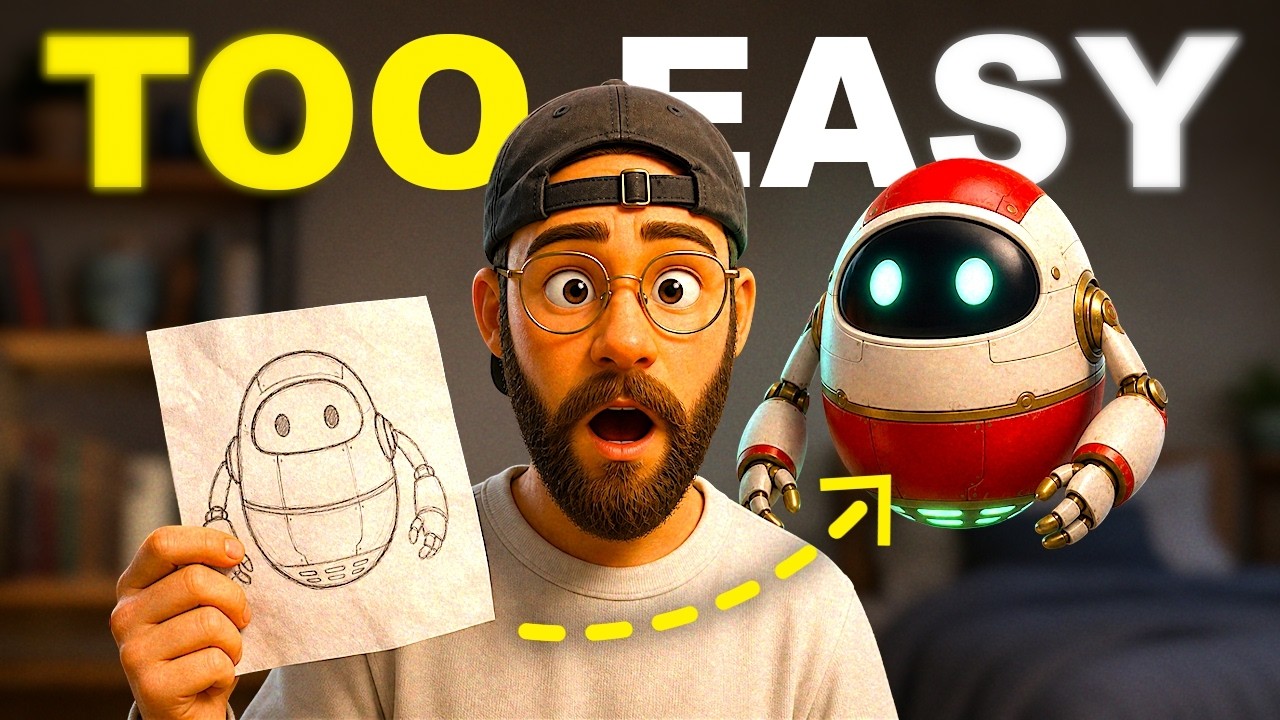
Jack Vs. AI pushed the strongest end-to-end workflow claim even at lower reach. The video packages OpenArt, GPT-Image 2, Claude prompt expansion, and Seedance 2.5 into a single "idea to finished film" flow, with explicit attention to character consistency and the tradeoff between Seedance 2.5 and 2.0. The distinctive angle is that workflow compression itself is now the sales pitch (video).
Discussion insight: Curious Refuge kept the reality check in view. Its review says MiniMax H3's multi-reference workflows and open weights are strong, but Seedance still leads on physics, motion, and multi-shot storytelling, and public distribution of open-weight outputs is restricted in the US, EU, UK, and South Korea.
Comparison to prior day: 2026-08-18 emphasized packaged production surfaces. On 2026-08-19, the market stayed split between local and hosted routes but pushed harder on the promise that one workflow can carry a project from prompt to publishable clip.
1.3 Agent and coding adoption moved toward interface design: beginner stacks, live voice loops, and explicit tool surfaces 🡕
At least five videos supported this theme. Compared with 2026-08-18, when the feed emphasized enterprise connectors, personal devices, and beginner coding tools, the 2026-08-19 file moved one level closer to the interaction loop itself: how agents speak, see, remember, interrupt, and fit into developer workflows.
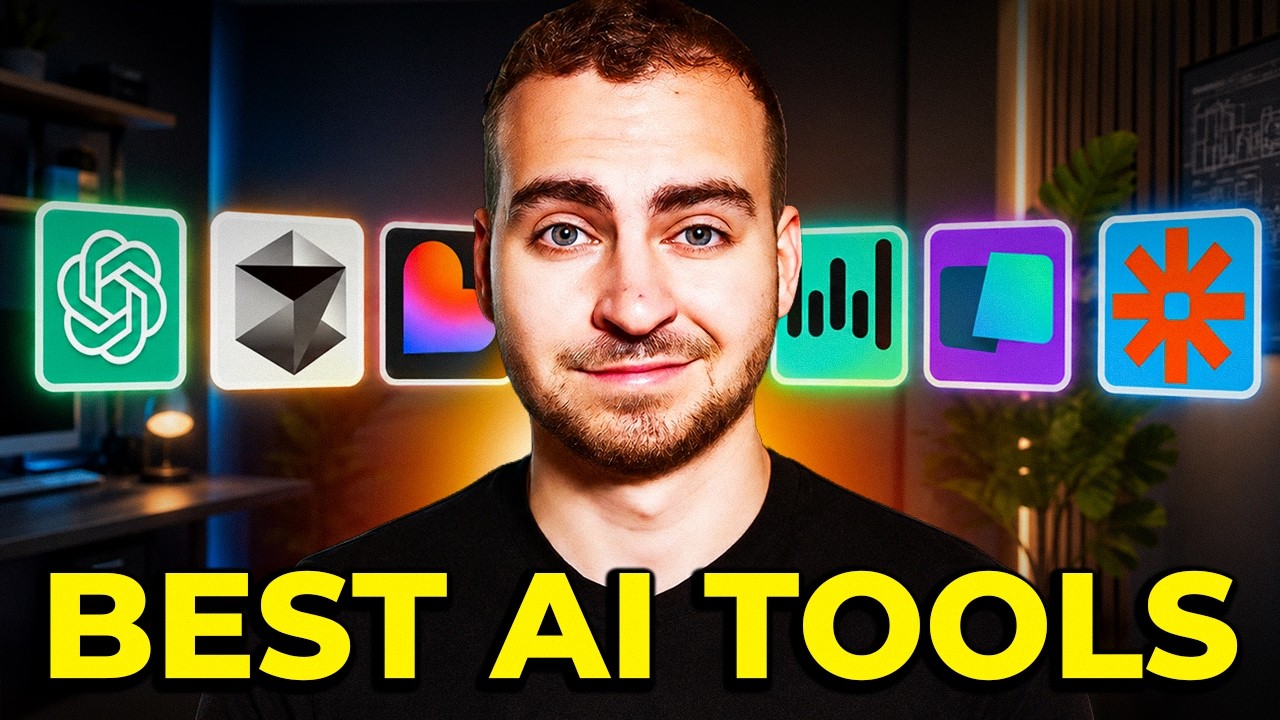
Tech With Tim supplied the broadest professional-stack framing with 23,580 views. Its tags make the exact layer cake concrete: Claude Code, Codex, Hermes Agent, Cursor, LangGraph, Supabase, Composio, Zapier MCP, Lovable, and GenSpark all sit inside one creator's working environment. The distinctive angle is that adoption is being narrated as deliberate stack architecture rather than one magical tool (video).

Google Cloud Tech contributed the clearest interface shift even at low current reach. Its description says the target agent hears the user, sees the page, remembers context, talks back, and moves a real browser while the person is still speaking, then breaks the build path into voice, framework, tool calling, UI, memory, and browser-control episodes. The distinctive angle is that agent value is being framed around live interaction design, not just model choice (video).

Next Evolution AI showed the same market from the onboarding side with 30,643 views. Its beginner list - GitHub Copilot, Cursor, Lovable, Replit AI, and Claude - packages AI coding as a bounded starter kit for understanding code, building projects, and debugging without assuming expert stack knowledge. The distinctive angle is that the market now has a visible beginner-facing packaging layer alongside the expert stack (video).
Discussion insight: The nuance across these videos is audience split. Google Cloud Tech treats interruption, tool latency, memory, and browser control as the real design work, while Next Evolution AI treats tool selection itself as the main problem for newcomers.
Comparison to prior day: 2026-08-18 emphasized connector setup and bounded assistant surfaces. On 2026-08-19, the same adoption story shifted toward continuous interaction loops and simpler entry-point packaging.
1.4 Embodied AI and compute supply moved from side story to explicit market narrative 🡕
At least six videos supported this theme. Compared with 2026-08-18, when hardware mostly appeared as a chip-economics subplot, the 2026-08-19 file widened into robot bodies, price anchors, supply bottlenecks, and the capital structure behind who gets compute.
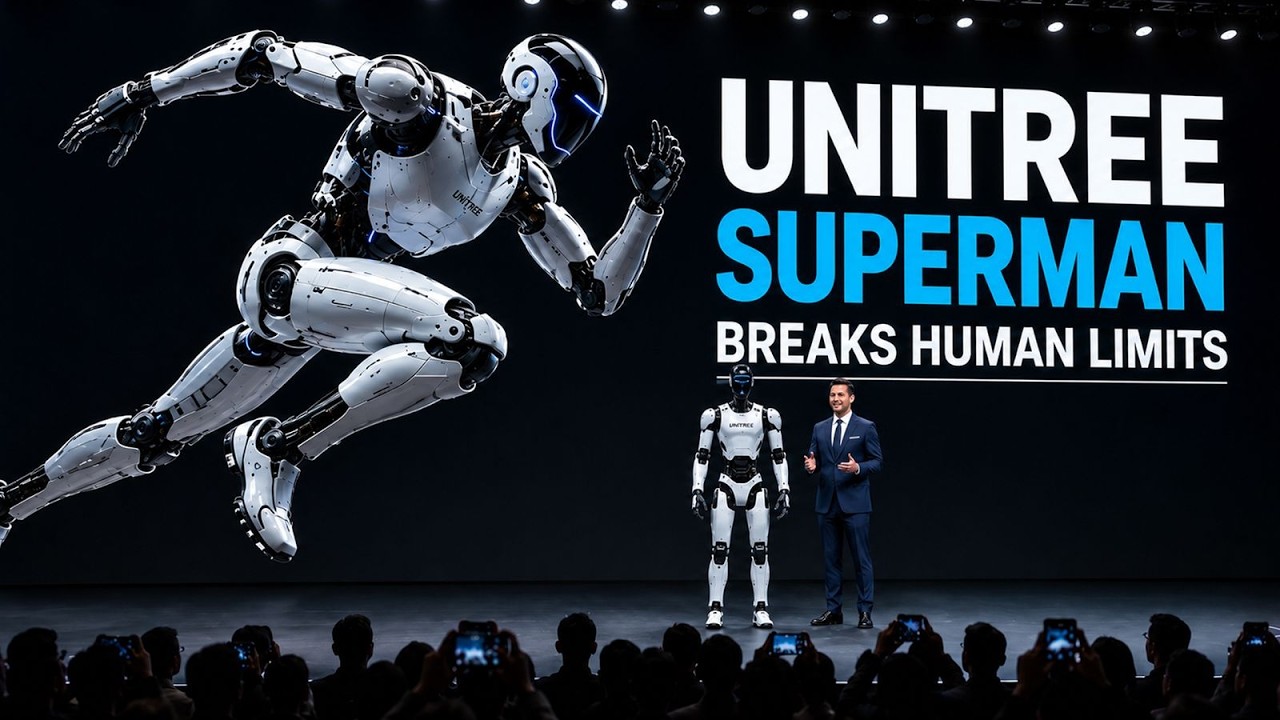
AI Revolution delivered the highest-reach robot signal with 20,646 views, 633 likes, and 72 comments. Its description cites Reuters on Unitree's Superman robot hitting 12.66 m/s, jumping two meters, and arriving just before a Shanghai IPO, then pairs that with links about border-monitoring humanoids and cross-embodiment robot learning. The distinctive angle is that the robot story now bundles spectacle, deployment, and financing in one frame (video).
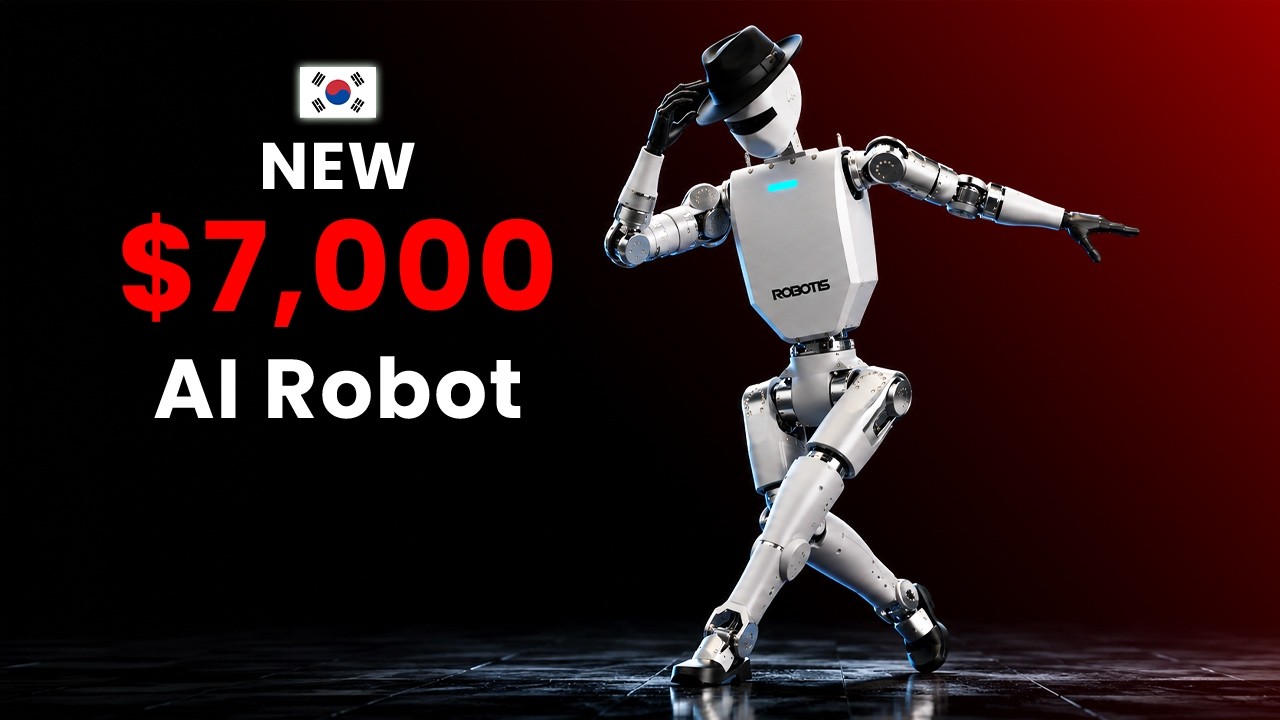
The AI Nexus added the clearest price-war framing. Its roundup says South Korea's ROBOTIS K1 is targeting roughly $7,000, about half the price of Unitree's G1, while pairing that with all-terrain robots and AI systems that learn by watching humans. The distinctive angle is that embodied AI is starting to be compared on cost and form factor the way models are compared on latency and benchmark fit (video).
AI Master pulled the same theme back into compute finance. Its description centers Nvidia, AWS Trainium, and Google TPU bets, reported compute commitments, HBM3e shortages, and TSMC's 2028 backlog as the hidden structure behind Claude's competitive position. The distinctive angle is that provider competition is being narrated as hardware exposure and supply-chain strategy, not just as model releases (video).
Discussion insight: The common thread across these items is control. The stories are no longer only about whether AI systems can do more; they are also about who can afford the hardware, how physical systems get deployed, and where humans still remain in the loop.
Comparison to prior day: 2026-08-18 treated hardware as an economic layer under software competition. On 2026-08-19, hardware itself became a visible product and market narrative.
2. What Frustrates People
Creator video workflows still force routing among local control, free access, rights, and workflow handoffs
This is High severity because AI Search, Malva AI, Jack Vs. AI, and Curious Refuge all describe different sides of the same burden. Local MiniMax H3 workflows offer open weights, references, stereo audio, and more control, but they also bring installs, acceleration layers, prompt-management complexity, and distribution restrictions; the hosted Hailuo and Seedance route removes setup but turns the workflow into a credits, access, and platform-terms question. The visible workaround is workflow routing - creators switch among local ComfyUI stacks, hosted generators, and prompt-material communities instead of trusting one stable pipeline. This is directly worth building for.
Open-model adoption still pushes harness choice, benchmark trust, and inference efficiency work onto the operator
This is High severity because AI Search, Prompt Engineering, WorldofAI, Better Stack, and KodeKloud all reinforce the same burden. Users are still expected to decide which model really deserves the "frontier" label, whether DeepSeek Harness is mature enough, whether a local 4-bit route changes the tradeoff too much, and how much token-efficiency or serving work is needed before the model feels economical. The visible workaround is a secondary stack of harnesses, benchmark sites, efficiency wrappers, and inference explainers rather than straightforward model adoption. This is directly worth building for.
Useful agents still require interface-loop and tool-surface design before they feel trustworthy
This is High severity because Google Cloud Tech, Tech With Tim, and Next Evolution AI all show that the hard part is no longer "can a model respond?" but "how does the loop work?" Live voice agents introduce interruption, latency, tool-calling, memory, and browser-control design problems, while even simpler AI coding adoption still starts with picking a bounded stack that matches the user's skill level. The visible workaround is curation, scaffolding, and explicit interface design rather than broad autonomous trust. This is directly worth building for.
Once hardware and robot bodies matter, control and capital become part of the product problem
This is Medium severity because AI Revolution, The AI Nexus, and AI Master all push AI discussion outside pure software. On one side, humanoid-robot coverage is already mixed with surveillance, labor, and price-war framing; on the other, chip strategy coverage says provider competition depends on supplier bets, memory shortages, and long manufacturing backlogs. The visible workaround is still human supervision, procurement guesswork, and narrative comparison rather than a shared control or exposure surface. This is worth building for and still emerging.
3. What People Wish Existed
Creator workflow and rights router
AI Search, Malva AI, Jack Vs. AI, and Curious Refuge imply demand for one surface that compares local and hosted video routes by setup burden, prompt workflow, acceleration options, output quality, access friction, and distribution rights. This is a practical need with High urgency because creators are still choosing the workflow shape before they choose the model. Tutorials and review channels solve pieces today, not the routing decision end to end. Opportunity: direct.
Open-model deployment and harness cockpit
AI Search, Prompt Engineering, WorldofAI, Better Stack, and KodeKloud imply demand for one surface that joins release claims, local-fit options, harness choice, benchmark evidence, token-efficiency tradeoffs, and serving architecture. This is a practical need with High urgency because the evidence is fragmented across creators, repo READMEs, benchmark tools, and infrastructure explainers. Harnesses, leaderboards, and model cards solve pieces today, not the full release-to-usable-stack loop. Opportunity: direct.
Real-time multimodal agent builder plane
Google Cloud Tech and Tech With Tim imply demand for a builder surface that makes interruption, voice I/O, page perception, tool calls, memory, browser actions, and stack selection visible in one place. This is a practical need with High urgency because the clearest voice-agent evidence of the day was about loop design rather than model intelligence. SDKs, agent frameworks, and cloud consoles solve pieces today, not the end-to-end interaction plane. Opportunity: direct.
Beginner-safe AI coding workspace
Next Evolution AI and Tech With Tim imply demand for a guided environment that matches AI coding tools to skill level, project type, and desired depth instead of making new users assemble a stack from brand names and tutorials. This is a practical need with Medium urgency because beginner demand is visible, but the field is already crowded with assistant products and IDEs. Tutorials and coding agents solve pieces today, not the onboarding and tool-selection problem end to end. Opportunity: competitive.
Embodied AI control and compute exposure dashboard
AI Revolution, The AI Nexus, and AI Master imply demand for a product that shows what robot systems can safely do, what humans still need to supervise, and how compute suppliers and bottlenecks shape what providers can actually ship. This is a practical need with Medium urgency because today's evidence mixes robot deployment, price compression, and chip scarcity into one emerging risk surface. News videos and investor commentary solve pieces today, not the control-and-exposure workflow. Opportunity: direct.
4. Tools and Methods in Use
| Tool | Category | Sentiment | Strengths | Limitations |
|---|---|---|---|---|
| MiniMax H3 + ComfyUI workflows | Local video workflow | (+/-) | Open weights, reference-driven control, native stereo audio, and up to 2K output | Install burden, workflow complexity, and distribution-rights limits still matter |
| ComfyUI Spectrum MiniMax H3 | Sampling accelerator | (+/-) | Reduces expensive H3 transformer evaluations and speeds local runs | It is an approximate accelerator, so outputs can differ from native H3 |
| Hailuo AI + Seedance 2.5 via Higgsfield | Hosted video workflow | (+) | 1080p with sound, multi-scene generation, and low-friction access | Depends on credits, access quirks, and platform terms |
| Qwen 3.8-27B + DeepSeek Harness | Local open model stack | (+/-) | Local reasoning levels, vision support, plugin-based harness, and multiple deployment routes | Harness is still in developer preview and setup burden stays high |
| DeepSeek V4 Pro + WoAIBench | Open coding model + benchmark surface | (+/-) | Strong price-to-performance framing, repeatable agentic coding tests, and side-by-side comparisons | Benchmark trust is still creator-driven and the model still depends on a shell around it |
| ThinkingCap-Qwen3.6-27B | Reasoning-efficiency wrapper | (+) | 46% fewer reasoning tokens on average, lower latency, and lower inference cost | Still depends on Qwen deployment choices and workload-specific validation |
| vLLM + LLM-D | Inference stack | (+/-) | Makes batching, KV cache, prefill, decode, and serving scale legible | Operational complexity remains high once teams move beyond one GPU |
| Gemini Live API + Google ADK | Voice-agent framework | (+/-) | Live multimodal interaction, tool calling, memory design, and browser control in one loop | Latency, interruption handling, UI design, and action boundaries are still hard |
| Claude Code, Codex, Hermes Agent, Cursor, LangGraph, Supabase, Composio, Zapier MCP, Lovable, GenSpark (video) | Developer AI stack | (+/-) | Covers the full path from model to IDE to workflow and backend | Users still have to curate and stitch the stack together themselves |
| Unsloth | Local runtime and agent bridge | (+) | Runs and trains local models, exposes an OpenAI-compatible API, and bridges Claude Code, Codex, and other agents to local models | Adds another runtime surface that developers have to learn and operate |
The strongest positive sentiment sat with tools that made tradeoffs visible and shipped a complete surface. MiniMax H3's documented workflows, Spectrum's explicit approximation, ThinkingCap's token-efficiency claim, and Unsloth's local-agent bridge all gained credibility by being concrete about what they do.
Sentiment turned mixed whenever the operator inherited hidden burden. Hosted video routes removed setup but added access friction, open models added harness and benchmark decisions, and voice-agent frameworks shifted the hard work into interruption, memory, UI, and browser-control design.
Migration patterns still favored routing over one-tool defaults. Creators bounced between local H3 stacks and hosted Hailuo or Seedance paths, model watchers triangulated across GLM, Qwen, and DeepSeek with separate harnesses and benchmark surfaces, and developers kept assembling layered stacks instead of converging on a single winner.
5. What People Are Building
| Project | Who built it | What it does | Problem it solves | Stack | Stage | Links |
|---|---|---|---|---|---|---|
| ComfyUI Spectrum MiniMax H3 | xmarre | Training-free forecasting accelerator for MiniMax H3 sampling | Makes local H3 video generation faster and cheaper | ComfyUI, Python, MiniMax H3 | Beta | repo |
| ComfyUI-MiniMaxH3-Easy | nkxx188 | Compact workflow surface for text, image, first/last-frame, and reference video generation | Reduces media-handling and prompt complexity in local H3 workflows | ComfyUI, Python, MiniMax H3 | Beta | repo |
| DeepSeek Harness | DeepSeek AI | Plugin-based open-source agent harness with a web UI | Gives open models a tool-using shell instead of leaving them as raw chat endpoints | Node.js, Cordis, plugin architecture | Alpha | repo |
| Unsloth | Unsloth AI | Local desktop/runtime plus one-command bridges from local models into coding agents | Simplifies running, training, and connecting local models to agent workflows | Desktop app, local models, OpenAI-compatible API | Beta | repo |
| Obsidian Skills | kepano | Reusable agent skills for Obsidian and other skills-compatible agents | Packages note and vault tasks into reusable capabilities instead of ad hoc prompts | Agent Skills, Obsidian, Markdown | Shipped | repo |
| Buzz | Block | Self-hostable workspace where humans and agents share rooms, workflows, and an audit trail | Gives teams a dedicated collaboration surface around agents and project memory | Rust, relay, desktop app, buzz-cli | Beta | repo |
The clearest repeated build pattern was not a new foundation model. It was the wrapper layer around one. ComfyUI Spectrum MiniMax H3 attacks the sampling-cost bottleneck in local video generation, while ComfyUI-MiniMaxH3-Easy compresses the user interface, media wiring, and prompt surface for the same model family.
DeepSeek Harness, Unsloth, Obsidian Skills, and Buzz show the same wrapper logic in the broader agent market. The repeated move is not "make another model," but package the model into a harness, a local runtime, a reusable skill pack, or a workspace where humans and agents can actually work together.
The repeated trigger behind these builds is operational burden. Local video creators need fewer steps, open-model users need a shell, and teams need a place where agent work is visible and reusable. Multiple builders are converging on packaging because that is where the friction in this file actually lives.
6. New and Notable
DeepSeek Harness crossed from repo mention to stack headline
Prompt Engineering framed Qwen 3.8-27B plus DeepSeek Harness as "the open-source AI stack to beat," while WorldofAI treated the same harness layer as part of DeepSeek V4 Pro's value. That matters because the conversation moved past raw weights and into the shell that makes them usable.
Real-time voice agents got a build path instead of a demo reel
Google Cloud Tech turned live multimodal agents into a roadmap: voice, framework, tool calling, UI, memory, and browser control. The important signal is that the hard part is now being taught as interaction architecture rather than prompt craft.
Humanoid robot competition started to sound like a consumer price war
The AI Nexus put a roughly $7,000 target on the ROBOTIS K1, while AI Revolution tied Unitree's Superman robot to both performance spectacle and IPO timing. That matters because embodied AI is beginning to pick up the same price and positioning language that software products already live in.
Provenance and local-agent deployment landed in the same news loop
Matthew Berman grouped Claude watermarking, DeepSeek V4 Pro, GLM-5.3, and Muse Glimmer into one short roundup. Anthropic's watermark note says the watermark is invisible and does not add tokens, while Meta's Muse Glimmer blog frames a 30B open-weight model around always-on local agents on consumer hardware. The signal is that authenticity and local deployment are now being compared inside the same product conversation.
7. Where the Opportunities Are
[+++] Open-model deployment and harness cockpit - AI Search, Prompt Engineering, WorldofAI, Better Stack, and KodeKloud all show that the real burden sits between the model and the user: harnesses, benchmark trust, local-fit choices, token efficiency, and serving mechanics. This is strong because the same pain appears across multiple model families and multiple levels of the stack.
[+++] Creator workflow and rights router - AI Search, Malva AI, Jack Vs. AI, and Curious Refuge all point to the same unresolved routing problem across local control, hosted convenience, workflow compression, and distribution rights. This is strong because creators are still selecting the path before they select the model.
[++] Real-time multimodal agent builder plane - Google Cloud Tech and Tech With Tim show that live voice, perception, tool calls, memory, browser control, and stack choice are becoming one product problem. This is moderate because the need is clear, but the implementation surface is still fragmented across frameworks and clouds.
[++] Embodied AI control and compute exposure layer - AI Revolution, The AI Nexus, and AI Master together show a new class of questions around robot supervision, price compression, supplier bets, and hardware bottlenecks. This is moderate because the evidence is emerging, but the surface is broad and still early.
[+] Beginner-safe AI coding workspace - Next Evolution AI and Tech With Tim show a real gap between tool abundance and tool legibility. This is emerging because the demand is visible, but the market is already crowded and the strongest evidence today is still packaging rather than repeated switching pain.
8. Takeaways
- Open-weight AI is being judged as a stack, not just a model. The strongest evidence of the day linked weights to harnesses, local runtimes, benchmark surfaces, and efficiency layers instead of treating any model as self-sufficient. (source)
- Creator video AI is still a routing contest between local control and hosted convenience. MiniMax H3, Hailuo, Seedance, and end-to-end prompt-to-film workflows all stayed relevant because they solve different pieces of the same production burden. (source)
- Agent adoption is moving from connector talk toward live interaction design. Voice, interruption, tool latency, memory, and browser control now show up as first-class product questions rather than implementation details. (source)
- Builder energy is clustering around packaging layers. The most concrete projects in the file were accelerators, harnesses, skill packs, local runtimes, and collaboration workspaces around existing model capabilities. (source)
- Hardware and robot positioning are becoming part of the mainstream AI story. Humanoid speed and price claims, chip bottlenecks, and compute supplier bets all appeared in the same daily feed instead of staying in separate specialist conversations. (source)