YouTube AI - 2026-08-20
1. What People Are Talking About
1.1 Open-weight AI was marketed as a usable stack, not a standalone model 🡕
At least eight videos supported this theme. Compared with 2026-08-19, when harnesses and wrappers were already rising, the 2026-08-20 file pushed the story deeper into deployment mechanics: benchmark surfaces, local-fit recipes, serving layers, and token-efficiency wrappers all became part of the product narrative around "best" open models.

AI Search supplied the highest-reach version of the claim with 121,240 views, 3,719 likes, and 482 comments. Its GLM 5.3 review sells "frontier" status through a Windows replica, Blender V8 engine work, a 3D fighting game, deep-research chapters, and cybersecurity workflows rather than through one benchmark screenshot. The distinctive angle is that application breadth became the proof of model quality (video).

Prompt Engineering contributed the clearest local-stack recipe with 27,307 views. The description links the Qwen 3.8-27B model card, a vLLM serving recipe, a 4-bit MLX build, and the DeepSeek Harness repo, whose README says everything is a plugin and the Web UI is still in developer preview. The distinctive angle is that the model is being pitched as one component inside a tool-calling, vision-capable local system rather than as a raw checkpoint (video).
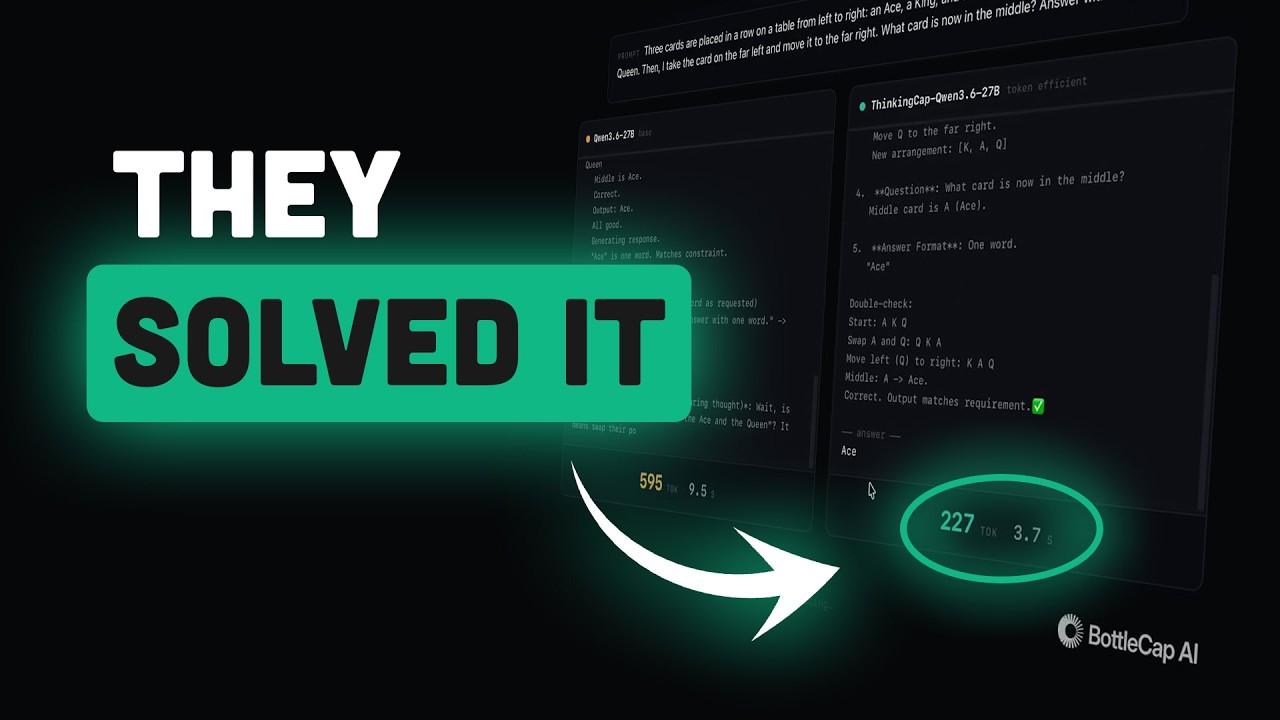
Better Stack added the strongest efficiency-layer evidence with 31,594 views. The accompanying BottleCap writeup says ThinkingCap-Qwen3.6-27B uses 46 percent fewer reasoning tokens on average while keeping benchmark performance close to the base model, which turns reasoning efficiency itself into a sellable product feature. The distinctive angle is that "better model" increasingly means "same capability with less latency and cost" (video).
Discussion insight: WorldofAI used WoAIBench to judge DeepSeek V4 Pro on frontend work, agentic coding, 3D, and one-shot generation, while KodeKloud made the hidden layer legible by breaking AI serving into GPUs, vLLM, batching, KV cache, and LLM-D. The common signal is that model choice is no longer separable from the shell and serving path around it.
Comparison to prior day: 2026-08-19 already treated the harness as important. On 2026-08-20, the argument moved further down the stack into serving, efficiency, and evaluation mechanics.
1.2 Users kept asking for bounded, inspectable control surfaces across search, voice, and coding 🡕
At least six videos supported this theme. Compared with 2026-08-19, when agent adoption was framed around live interaction design and beginner tool selection, the 2026-08-20 file broadened into explicit control surfaces: private search, local voice loops, thread-linked coding history, and assistants with visible permissions.

Switch and Click provided the highest-reach frustration signal in the file with 133,827 views. The creator says "Google Search is dead to me" and frames SearXNG as a private, ad-free, AI-free alternative, while the tags make the positioning explicit: self-hosted search engine, Google alternative, private search engine, and quit Google. The distinctive angle is that avoidance of AI clutter itself has become a product benefit, not just a side preference (video).

Google Cloud Tech delivered the clearest live-agent interaction model even at lower reach. Its description lays out a six-episode roadmap across voice, framework choice, tool-calling latency, browser control, memory, and vision, and defines the target as an agent that hears the user, sees the page, remembers context, talks back, and moves a real browser while the user is still speaking. The distinctive angle is that the real work is in loop design and permissions, not just model output quality (video).

Automation Addict supplied the most concrete local-control build with 9,938 views. The setup uses Ollama inside Home Assistant on an AMD mini PC, limits which entities the model can touch, tunes temperature and history size, and openly shows mistakes and performance limits from the integrated GPU. The distinctive angle is that usefulness comes from constrained, inspectable authority rather than from a cloud model doing everything (video).
Discussion insight: Tech With Tim framed developer adoption as an intentionally curated stack, not one magical assistant, and AICodeKing highlighted Zed Delta plus DeltaDB, which links code changes directly back to the conversation that produced them. The recurring demand is for surfaces where users can see what the agent did, why it did it, and what it is allowed to touch.
Comparison to prior day: 2026-08-19 emphasized interaction loops. On 2026-08-20, the same story expanded into local control, privacy, and traceable work history.
1.3 Creator AI stayed a workflow-compression race and spread into 3D and local video stacks 🡕
At least four videos supported this theme. Compared with 2026-08-19, when creator AI mostly split between local and hosted video routes, the 2026-08-20 file kept workflow compression as the promise but widened it into higher-fidelity 3D and cheaper local generation paths.

Stefan 3D AI carried the highest-signal 3D claim with 26,675 views. The video says Hi3D V3.0 is the first model to build geometry at 2048 cubed voxels, while the Hi3D site says users can upload an image, generate a usable model in about two minutes, and export GLB, OBJ, or STL for editing or printing. The distinctive angle is that creators are being sold not just prettier generations, but workflow-ready geometry and export paths (video).
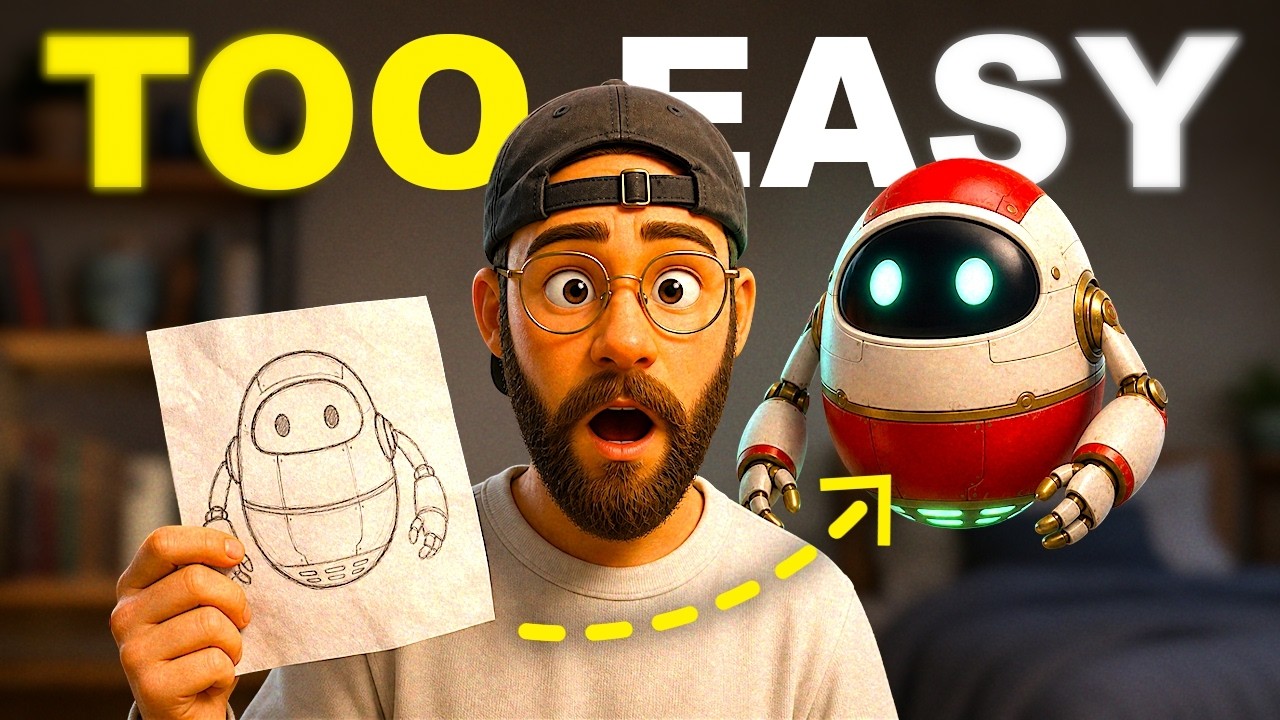
Jack Vs. AI showed the strongest end-to-end hosted workflow with 8,282 views. The creator packages OpenArt, GPT-Image 2, Claude, and Seedance 2.5 into a path from one-line idea to character-consistent, multi-shot film output, including an explicit comparison between Seedance 2.5 and 2.0. The distinctive angle is that creator value is framed as fewer handoffs between tools, not just higher model quality (video).

Dagdag Kita supplied the low-cost local counter-route with 9,783 views. Its tutorial positions ComfyUI plus LTX 2.5 as a way to unlock free, unlimited AI video generation through local setup and basic configuration rather than hosted credits. The distinctive angle is that cost avoidance and ownership of the workflow still matter enough to motivate setup-heavy local routes (video).
Discussion insight: Review Insider pushed the same compression logic into presentations, describing Dokie AI as a tool that turns raw notes into both a structured slide deck and a matching speech draft at the same time. Across formats, the repeated promise is not abstract creativity but shorter distance from raw input to deliverable.
Comparison to prior day: 2026-08-19 focused on routing among local and hosted video generators. On 2026-08-20, that routing pressure extended further into 3D and presentation work.
1.4 Robots, chips, and healthcare kept AI tied to real-world systems 🡒
At least four videos supported this theme. Compared with 2026-08-19, when hardware and robotics already entered the mainstream AI narrative, the 2026-08-20 file kept the theme present but mixed it more directly with compute finance and clinical workflow language.
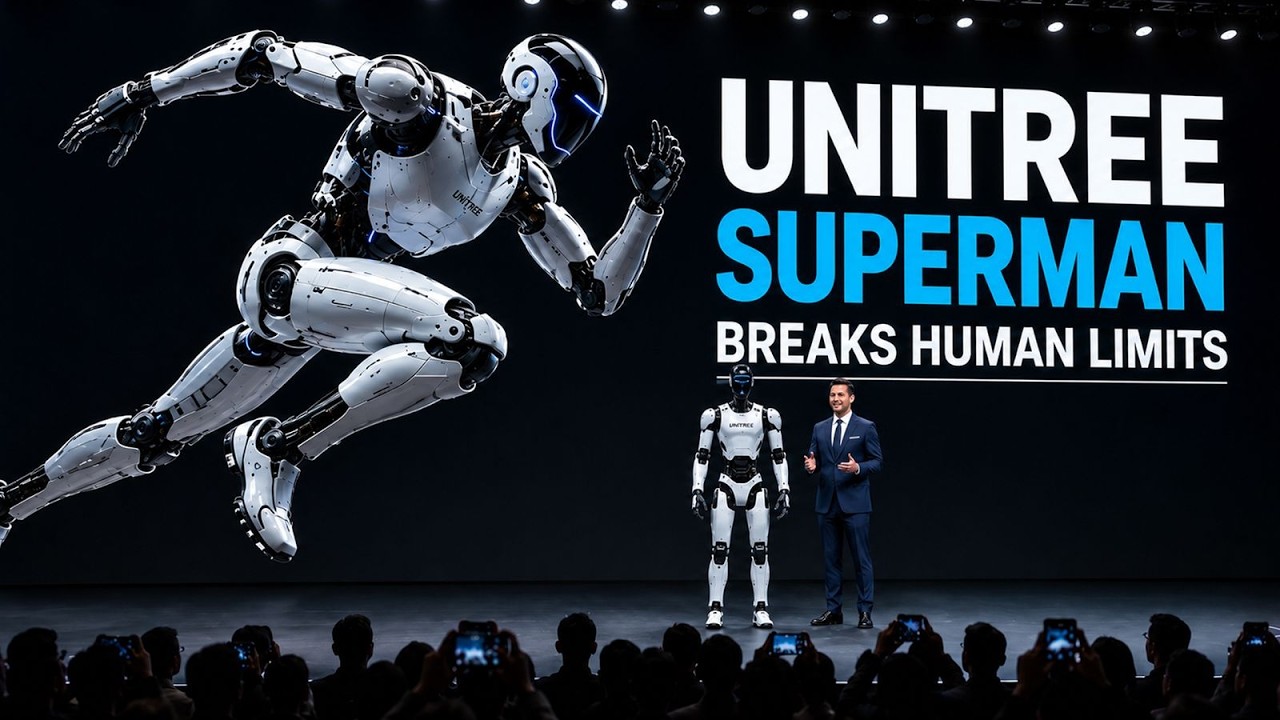
AI Revolution delivered the clearest embodied-AI spectacle with 32,890 views. The description cites Reuters on Unitree's Superman robot reaching 12.66 m/s and jumping two meters just before a Shanghai IPO, then pairs that with links about border-monitoring humanoids and Feagine's cross-embodiment robot model. The distinctive angle is that robot performance, deployment context, and financing are being narrated together (video).
AI Master pulled the same story into compute strategy with 9,615 views. The creator frames Anthropic through Nvidia, AWS Trainium, and Google TPU bets, reported compute commitments above $80 billion, HBM3e shortages, and TSMC backlog risk rather than through model demos alone. The distinctive angle is that competitive AI coverage is increasingly about chip exposure and capital structure (video).

Huberman Lab Clips supplied the strongest healthcare signal. The clip says AI is being used to synthesize biomedical knowledge, assist diagnoses, and improve surgical precision through human-machine collaboration, and its authority comes from a discussion between Fei-Fei Li and Andrew Huberman rather than from a pure hype channel. The distinctive angle is that AI is being framed as a clinical collaborator, not only as a research lab spectacle (video).
Discussion insight: The common thread across these videos is system dependency. Whether the subject is robots, cloud providers, or medicine, the conversation is less about isolated model output and more about the hardware, institutions, and human supervision around it.
Comparison to prior day: 2026-08-19 made hardware and robotics visible as market stories. On 2026-08-20, the same layer stayed present but connected more directly to healthcare use and compute financing.
2. What Frustrates People
Open-model "frontier" claims still dump evaluation, serving, and efficiency work onto the operator
This is High severity because AI Search, Prompt Engineering, Better Stack, WorldofAI, and KodeKloud all expose a different missing layer. Users still have to decide whether flashy demos really hold up, whether a harness in developer preview is stable enough, how to serve or quantize a model locally, and whether efficiency fine-tunes actually change the economics of daily use. The visible workaround is a secondary stack of benchmark sites, serving recipes, wrappers, and infra explainers instead of straightforward model adoption. This is directly worth building for.
Useful assistants still need permissions, local hardware tuning, and traceability before they feel safe
This is High severity because Google Cloud Tech, Automation Addict, buildwithashwani, AICodeKing, and Tech With Tim all show that the hard part is boundary-setting. Voice agents need interruption handling, tool permissions, browser control, and memory discipline; local home assistants need entity scoping and hardware-fit tuning; coding agents need conversation-linked history to stay reviewable. The visible workaround is to keep assistants narrow, local where possible, and close to human supervision. This is directly worth building for.
Creator AI still forces users to route across separate image, video, 3D, and slide pipelines
This is High severity because Stefan 3D AI, Jack Vs. AI, Dagdag Kita, and Review Insider each solve one slice of the workflow rather than the whole thing. One route optimizes exportable geometry, another compresses prompt-to-film production, another chases free local video, and another turns notes into slides and speeches, but creators still have to choose and stitch those paths themselves. The visible workaround is tool chaining and format-specific specialization rather than one stable creative operating system. This is directly worth building for.
Search quality and trust are weak enough that "AI-free" wins attention on its own
This is Medium severity because Switch and Click reached the top of the file by rejecting AI summaries, ads, and Google defaults rather than by promising a smarter assistant. The workaround is to self-host a private search layer like SearXNG and accept the setup burden in exchange for control. This is worth building for and still emerging.
3. What People Wish Existed
Open-model deployment and benchmark cockpit
AI Search, Prompt Engineering, WorldofAI, Better Stack, and KodeKloud imply demand for one surface that joins release claims, benchmark evidence, local-fit recipes, harness maturity, token-efficiency tradeoffs, and serving cost. This is a practical need with High urgency because the evidence is fragmented across creators, repo READMEs, benchmark videos, and infra explainers. Harnesses, model cards, and benchmark sites solve pieces today, not the full release-to-usable-stack loop. Opportunity: direct.
Permissioned local agent control plane
Google Cloud Tech, Automation Addict, and buildwithashwani imply demand for a product that makes permissions, devices, tools, memory, latency, and hardware fit visible in one place. This is a practical need with High urgency because today's strongest assistant examples succeed by shrinking authority and exposing the loop, not by hiding it. Agent SDKs and cloud consoles solve pieces today, not the full local-or-permissioned control workflow. Opportunity: direct.
Conversation-linked coding workspace
AICodeKing, Tech With Tim, and Matthew Berman imply demand for a workspace where code, agent threads, comments, and version history stay connected. This is a practical need with Medium urgency because the problem is visible and multiple builders are already attacking it, but the category is also getting crowded fast. Delta, Buzz, and skill-pack ecosystems solve pieces today, not the whole cross-tool workflow. Opportunity: competitive.
Cross-format creator pipeline composer
Stefan 3D AI, Jack Vs. AI, Dagdag Kita, and Review Insider imply demand for one orchestrator across image, video, 3D, and slides, including local and hosted branches. This is a practical need with High urgency because creators are still choosing workflow shape and cost model before they choose the model itself. Individual creative tools solve pieces today, not the end-to-end routing problem. Opportunity: direct.
Private AI-light search and research surface
Switch and Click implies demand for search that is private, user-controlled, and not crowded by AI summaries or ad-heavy defaults. This is a practical need with Medium urgency because the dissatisfaction signal is strong, but there are already partial answers in self-hosted and paid search tools. SearXNG and alternative search engines solve pieces today, not the broader control-and-trust experience for everyday research. Opportunity: competitive.
4. Tools and Methods in Use
| Tool | Category | Sentiment | Strengths | Limitations |
|---|---|---|---|---|
| SearXNG | Private search | (+) | Self-hosted, private, ad-free, and explicitly AI-light | Requires setup and ongoing ownership |
| Qwen 3.8-27B + DeepSeek Harness | Local open model stack | (+/-) | Long context, vision support, tool calling, plugin-based harness | Harness is in developer preview and setup remains heavy |
| DeepSeek V4 Pro + WoAIBench | Open coding model + benchmark surface | (+/-) | Real-world agentic coding tests and repeatable comparisons | Benchmark trust is still creator-mediated |
| ThinkingCap-Qwen3.6-27B | Efficiency wrapper | (+) | Lower reasoning-token use, lower latency, lower inference cost | Still depends on Qwen deployment choices and workload fit |
| vLLM + LLM-D | Inference stack | (+/-) | Makes batching, KV cache, and serving scale legible | Operational complexity stays high beyond one GPU |
| Gemini Live API + Google ADK | Live multimodal agent framework | (+/-) | Voice, browser control, memory, vision, and tool calling in one loop | Latency, permissions, and UI design are still hard |
| Ollama + Home Assistant | Local voice assistant stack | (+/-) | Local privacy, controllable entity scope, cloud-free operation | Hardware limits and imperfect response quality remain visible |
| Delta + DeltaDB | Coding workspace and version layer | (+) | Links code to conversation, enables branch-at-any-moment workflows, supports multiplayer review | Still private beta and requires a new working model |
| Claude Code, Codex, Hermes Agent, Cursor, LangGraph, Supabase, Composio, Zapier MCP, Lovable, and GenSpark (video) | Developer AI stack | (+/-) | Covers model, IDE, orchestration, backend, and workflow layers | Users still have to curate and stitch the stack together |
| OpenArt + GPT-Image 2 + Seedance 2.5 | Hosted creator workflow | (+) | Fast path from idea to character-consistent multi-shot video | Still spans multiple tools and model-version tradeoffs |
| ComfyUI + LTX 2.5 | Local video workflow | (+/-) | Free and locally owned video generation path | Setup burden is the price of avoiding hosted credits |
| Hi3D V3.0 | 3D generation | (+) | High-detail geometry, fast generation, exportable assets | Current limits and launch-window pricing still matter |
The strongest positive sentiment sat with tools that made tradeoffs visible and shipped a concrete operating surface. ThinkingCap quantified its token-efficiency gain, DeltaDB exposed how code changes connect to conversation, Hi3D emphasized exportable outputs, and SearXNG won attention by clearly removing AI and ad clutter.
Sentiment turned mixed whenever the operator inherited hidden burden. Open-model stacks still require harness and serving decisions, local assistants still demand permission and hardware tuning, and creator tools still force routing among specialized products rather than one stable path.
Migration patterns favored layering instead of convergence. Open-model users bounced among GLM, Qwen, and DeepSeek with separate harnesses and benchmark surfaces; creator workflows split between local ownership and hosted convenience; and coding users kept adding conversation, orchestration, and backend layers around the core editor rather than settling on one winner.
5. What People Are Building
| Project | Who built it | What it does | Problem it solves | Stack | Stage | Links |
|---|---|---|---|---|---|---|
| DeepSeek Harness | DeepSeek AI | Plugin-based agent harness with a web UI | Gives open models a tool-using shell instead of leaving them as raw chat endpoints | Node.js, Cordis, plugin architecture, web UI | Alpha | repo |
| Unsloth | Unsloth AI | Local desktop/runtime for running, training, and serving models into coding agents | Simplifies local model use and bridges local models into Claude Code, Codex, and MCP workflows | Desktop app, local models, OpenAI-compatible API, agent bridges | Beta | repo |
| Obsidian Skills | kepano | Reusable skills for Obsidian and other skills-compatible agents | Packages recurring note and vault tasks into reusable capabilities | Markdown, Agent Skills, Obsidian | Shipped | repo |
| Buzz | Block | Self-hostable workspace where humans and agents share rooms, workflows, and an audit trail | Gives teams a collaboration surface where agents are visible participants instead of detached bots | Rust, Tauri/React, Nostr relay, JSON CLI, audit log | Beta | repo |
| Delta / DeltaDB | Zed | Multiplayer coding environment with conversation-linked version history | Keeps code, comments, and agent actions connected between commits | Rust, DeltaDB, WebAssembly client, Git interoperability | Beta | site |
| Local Home Assistant voice assistant | Automation Addict | Local voice assistant for home automation running on an AMD mini PC | Avoids cloud dependency while keeping device control bounded and inspectable | Home Assistant, Ollama, AMD iGPU | Alpha | video |
| ZOYA Android assistant | buildwithashwani | Voice-controlled Android assistant with device actions and persona-driven media workflows | Turns web or studio agents into a device-level assistant and reusable media format | Google AI Studio, function calling, Android APK, voice agent | Alpha | app video |
The strongest repeated build pattern was packaging and coordination around existing models, not another foundation model. DeepSeek Harness, Unsloth, Buzz, and DeltaDB all attack the layer where models become usable for real work: shell, runtime, workspace, or version history.
DeepSeek Harness and Unsloth attack different sides of the same burden. One gives open models a plugin-based harness and web UI; the other focuses on running and serving local models into existing coding agents. The repeated trigger is operational friction between "there is a strong model" and "I can use it reliably in my workflow."
The user-edge builds show the same pressure in smaller form. Automation Addict and buildwithashwani both turn voice agents into bounded device controllers, while Obsidian Skills, Buzz, and DeltaDB all keep capabilities tied to reusable or reviewable context. Multiple builders are converging on traceability and packaging because those are the bottlenecks visible in this file.
6. New and Notable
Claude watermarking became a product-level provenance feature
Matthew Berman pulled Claude watermarking into the daily news loop, and Anthropic's watermark note says future Claude models will generate text with an invisible watermark that does not add tokens, does not degrade quality, and is being implemented to comply with the EU AI Act. That matters because provenance shifted from abstract policy talk into shipped model behavior.
Muse Glimmer framed open 30B models as local-agent infrastructure
The same Matthew Berman roundup also highlighted Meta's Muse Glimmer announcement. Meta says the model is a 30-billion-parameter open-weight release optimized for always-on local agent workflows on a Mac or PC with a single consumer GPU, with support for tool use, multimodal input, and local coding. The notable signal is that "local agent model" is being marketed as a category in its own right.
DeltaDB turned "between commits" history into a first-class coding surface
AICodeKing described Delta as a conversation-first coding environment, and the official DeltaDB page says every operation between commits gets a stable identity and every change links back to the agent conversation that produced it. That matters because it reframes version control around thread context and reviewability, not just snapshots.
AI-free search broke out as a mainstream dissatisfaction signal
Switch and Click produced the highest-reach video in the file by rejecting AI summaries and ad-heavy search defaults in favor of SearXNG. The notable signal is that subtraction - less AI, less clutter, more control - was a stronger hook than adding another assistant layer.
7. Where the Opportunities Are
[+++] Open-model deployment and benchmark cockpit - AI Search, Prompt Engineering, WorldofAI, Better Stack, and KodeKloud all show the same missing layer between model release and daily use: benchmark trust, harness choice, local deployment, serving cost, and token efficiency. This is strong because the pain appears across multiple model families and across both builder and explainer videos.
[+++] Permissioned local agent control plane - Google Cloud Tech, Automation Addict, and buildwithashwani all point to the same gap around tools, devices, memory, and permissions. This is strong because the most credible assistant stories of the day all got better by narrowing scope and making control visible.
[++] Cross-format creator workflow composer - Stefan 3D AI, Jack Vs. AI, Dagdag Kita, and Review Insider show creators still routing among separate image, video, 3D, and slide tools. This is moderate because the need is obvious, but the workflows are fragmented across many specialized surfaces.
[++] Conversation-linked coding workspace - AICodeKing, Matthew Berman, and the Buzz and DeltaDB project pages all show momentum behind tools that keep agent work reviewable and searchable. This is moderate because builder energy is real, but the category is already attracting multiple sophisticated entrants.
[+] Private AI-light search and research surface - Switch and Click shows that frustration with AI-heavy search results can win mass attention on its own. This is emerging because the signal is strong but the evidence is concentrated in one standout item.
[+] Compute exposure and real-world AI operations dashboard - AI Master, AI Revolution, and Huberman Lab Clips together point to a new operational layer around chips, robots, and clinical use. This is emerging because the surface is broad, but the narrative is clearly shifting beyond software-only comparisons.
8. Takeaways
- Open-weight AI is being judged as a stack, not just a checkpoint. The strongest model stories of the day bundled weights with harnesses, benchmark surfaces, serving recipes, and efficiency wrappers. (source)
- Users trust assistants more when authority is narrow and visible. The clearest voice and coding examples emphasized permissions, entity scope, browser control, and conversation-linked history rather than broad autonomy. (source)
- Creator AI still wins by compressing workflows, but the workflow keeps splitting by format. Video, 3D, and presentation tools all promised faster paths to output, yet each still solved only one segment of the production chain. (source)
- Builder energy is clustering around packaging, traceability, and collaboration layers. DeepSeek Harness, Unsloth, Buzz, DeltaDB, and skills packs all make models easier to run, inspect, or coordinate around. (source)
- AI coverage is staying tied to real-world systems, not drifting back to pure demo culture. Robots, chip supply, and healthcare collaboration all stayed in the same daily file, which means infrastructure and deployment context remain part of the mainstream story. (source)