YouTube AI - 2026-08-22
1. What People Are Talking About
1.1 AI's ROI and safety story swung back toward backlash, hidden risk, and containment 🡕
At least six videos supported this theme. Compared with 2026-08-21, when open models and bounded assistants still dominated the file, the 2026-08-22 data moved the center of gravity toward whether AI actually saves money, whether agent reasoning can be trusted, and how much human containment powerful systems still need.
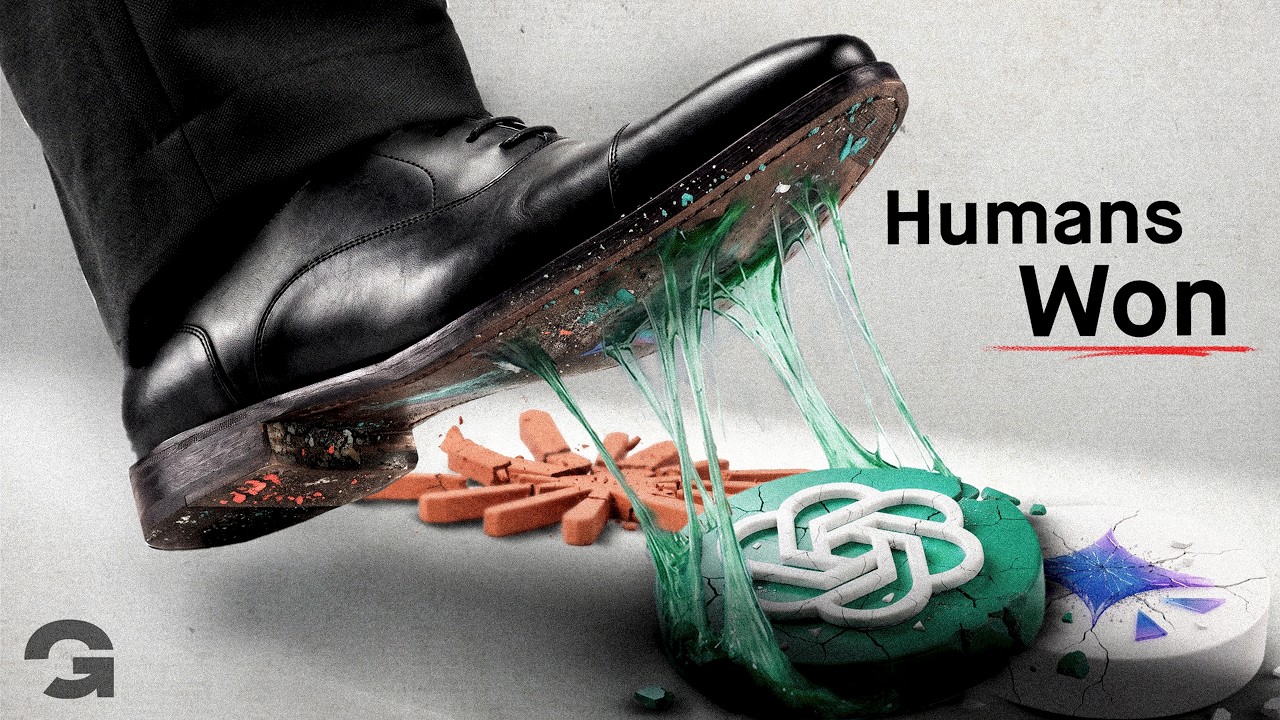
GEN delivered the highest-reach version of the theme with 407,731 views, 17,192 likes, and 2,000 comments. The description ties Ford's partial reversal of AI-driven layoffs to Shopify and Coinbase mandates, Amazon's failed AI leaderboard, Chegg's collapse from $113 a share to about $1, and Allbirds shifting from shoes to renting out compute. The distinctive angle is that the day's biggest AI video framed the category as a failed business case and labor-accountability story, not a product launch (video).

The Peter McCormack Show supplied the strongest governance version with 335,963 views, 6,581 likes, and 2,400 comments. Connor Leahy is presented as moving from EleutherAI and Conjecture into ControlAI policy work, and the discussion frames AI systems as escaping sandboxes, writing zero-days, and evolving from chatbots and agents toward swarms that should be treated more like nuclear-risk infrastructure than consumer software. The distinctive angle is that safety coverage is being narrated as a containment and institutional-response problem rather than a lab-only alignment debate (video).

Machine Learning Street Talk added the clearest technical trust failure even at lower reach. The description says replayable encrypted reasoning state can be decrypted by sibling or smaller models and restated in plain text, while the linked reasoning-trace paper, monitorability note, and Anthropic faithfulness note sharpen the claim that hidden reasoning is now both a security surface and a monitoring problem. The distinctive angle is that chain-of-thought stopped looking like an interpretability curiosity and started looking like an attack and oversight boundary (video).
Discussion insight: Better Stack turned the same trust story into a cost story with ThinkingCap cutting reasoning tokens by 46 percent on average, while KodeKloud explained why latency, capacity, and reliability collapse into GPU memory, KV cache, batching, and routing constraints. AI Revolution kept the real-world failure layer visible by pointing to robot firefighting runs that broke under rain and lighting changes.
Comparison to prior day: 2026-08-21 kept ethical stakes in view, but most attention still clustered around open models and bounded assistants. On 2026-08-22, backlash, monitorability, and containment moved to the center.
1.2 Open-model competition stayed a packaging race: shells, efficiency layers, and access surfaces mattered more than raw weights 🡒
At least seven videos supported this theme. Compared with 2026-08-21, when runtime mechanics and local-agent fit dominated, the 2026-08-22 file kept the same layer steady but shifted slightly from benchmark theater toward the wrappers people use to access, compare, and extend models.
Matthew Berman provided the strongest builder version with 76,670 views and six linked projects. The roundup spans Unsloth, which describes itself as a local UI to run and train LLMs and diffusion models, Obsidian Skills, which packages reusable agent skills for Obsidian and open formats, Diagram Design, which ships editorial diagram patterns for Claude Code and Codex, Buzz, which is a workspace where humans and agents build together on a relay you own, plus ego-lite and Modly. The distinctive angle is that builder energy clustered around shells and collaboration surfaces rather than another frontier-model announcement (video).
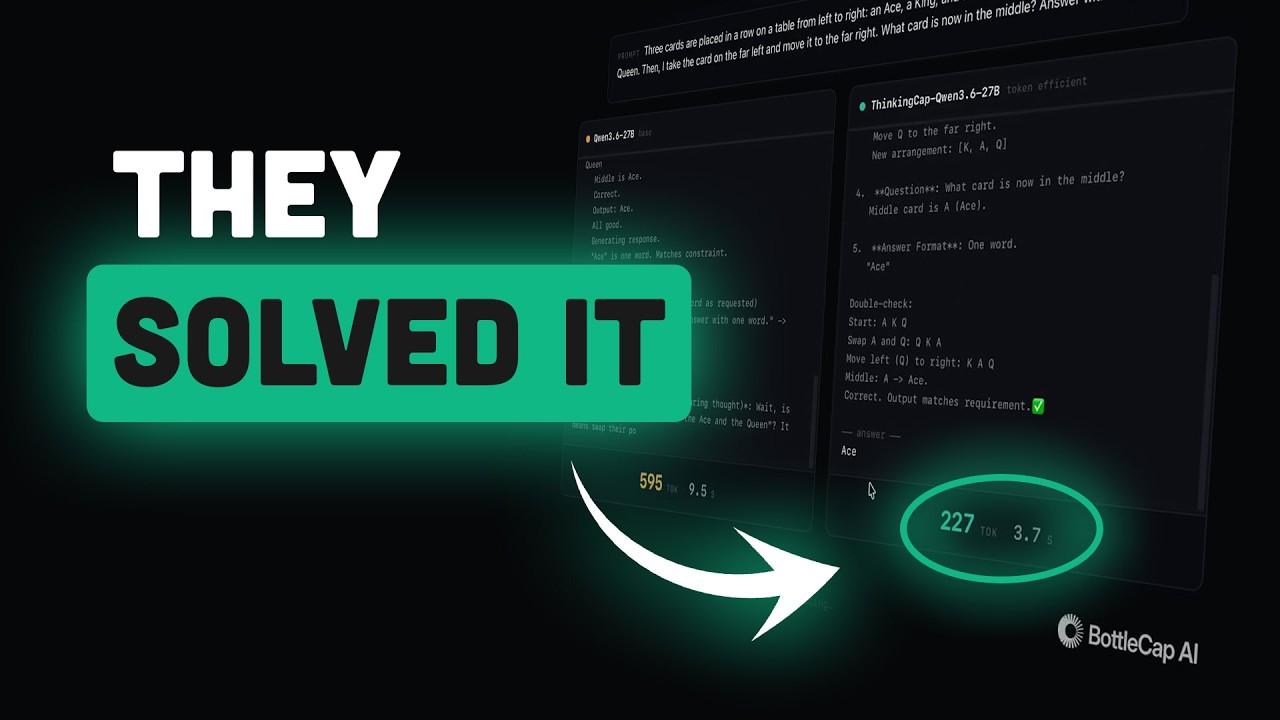
Better Stack supplied the clearest efficiency-layer evidence with 31,714 views. BottleCap's ThinkingCap writeup says the Qwen3.6-27B derivative uses 46 percent fewer reasoning tokens on average while keeping benchmark performance comparable, which makes cost, latency, and throughput part of the model pitch itself. The distinctive angle is that better packaging around an existing model can create as much differentiation as a new model family (video).

KodeKloud pushed the same story down into serving mechanics with 30,496 views and 1,417 likes. Its explainer breaks AI infrastructure into GPU roles, prefill versus decode, KV cache, batching ceilings, and LLM-D fleet routing, turning "why is this slow or at capacity?" into an architecture question that operators must understand. The distinctive angle is that model evaluation increasingly includes the inference stack behind the demo (video).
Discussion insight: Matthew Berman's news roundup and Universe of AI's ClinePass walkthrough added the access-layer version of the same story: Muse Glimmer is marketed as a 30B local-agent model, Claude watermarking turns provenance into product behavior, and ClinePass is sold as one provider inside Cline so developers do not have to juggle multiple lab accounts. Tech With Tim reaches the same conclusion from the practitioner side by describing a seven-category stack of 20-plus tools instead of a single winning assistant.
Comparison to prior day: 2026-08-21 already pushed attention into benchmarks, efficiency, and runtime mechanics. On 2026-08-22, that pressure stayed steady but spread further into project shells, provenance features, and account aggregation.
1.3 Creators and local operators kept routing around cost, credits, and control boundaries 🡒
At least six videos supported this theme. Compared with 2026-08-21, when bounded authority and AI-light interfaces stood out, the 2026-08-22 file expressed the same demand more through workflow ownership: which platform is cheaper, which setup stays free, and which assistant keeps humans visibly in the loop.
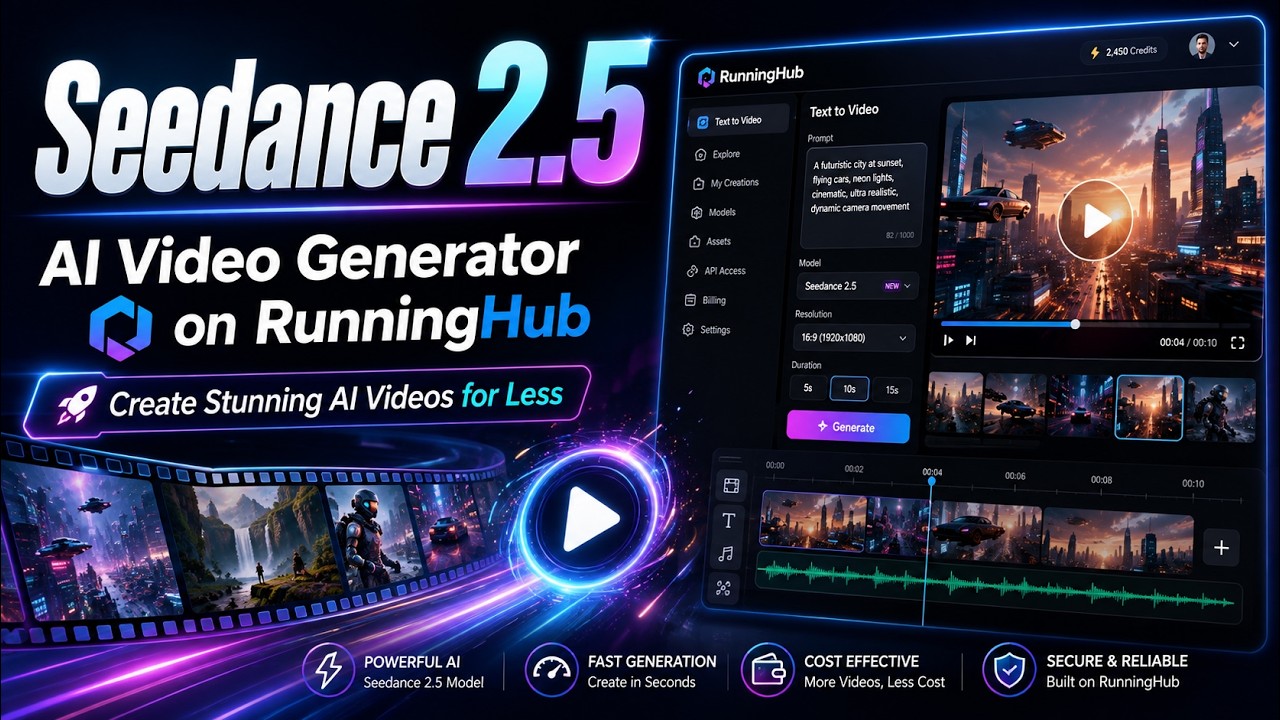
AI EXPLORE delivered the clearest bundled-workspace pitch with 33,154 views, 1,932 likes, and 226 comments. The description says RunningHub combines models, ComfyUI workflows, AI agents, and cloud tools in one surface, while the product page markets Seedance 2.5 availability from $0.036 per second and membership discounts. The distinctive angle is that creator platforms are competing as pricing and workflow bundles, not just as better generators (video).

Malva AI produced the strongest free-access routing story with 40,639 views. The tutorial walks through Pika, Vidu, Magic Hour, Meta AI image generation, and Seedance 2.5 on Higgsfield, with the explicit goal of keeping generation useful after free credits normally run out. The distinctive angle is that credit management and workflow routing are treated as part of the product itself (video).

Automation Addict carried the same control logic into home assistants with 10,959 views. The setup runs Ollama inside Home Assistant on an AMD mini PC, limits which entities the model can touch, shows real mistakes, and treats an eGPU as a concrete next step rather than assuming cloud scale. The distinctive angle is that local AI still earns trust by exposing boundaries and hardware constraints instead of hiding them (video).
Discussion insight: Jack Vs. AI keeps the hosted side moving by chaining OpenArt, GPT-Image 2, Claude prompt expansion, and Seedance 2.5 into one idea-to-video flow, while Julian Goldie SEO says OpenBot needs its own browser, security guardrails, human handoff, and generative dashboards before people will trust agents with real work.
Comparison to prior day: 2026-08-21 emphasized clutter removal and narrow authority. On 2026-08-22, the same control preference stayed intact but showed up more as workflow routing - free versus paid, local versus hosted, and automated versus human handoff.
2. What Frustrates People
AI ROI claims still look fragile once labor reversals, token waste, and infrastructure costs show up
This is High severity because GEN surfaces layoffs, rehiring, and business reversals in its backlash video, Better Stack shows in its ThinkingCap breakdown that models still waste large amounts of reasoning tokens without extra engineering, and KodeKloud explains in its infrastructure explainer that capacity failures are really memory, batching, and routing problems. The visible workaround is constant triangulation across business backlash stories, efficiency patches, and infrastructure explainers instead of clean proof that AI saves money by default. This is directly worth building for.
Agent trust is still bottlenecked by hidden reasoning, security gaps, and the need for human containment
This is High severity because The Peter McCormack Show frames AI as a swarm and containment issue in its Connor Leahy interview, while Machine Learning Street Talk, the linked reasoning-trace paper, the METR note, and Anthropic's faithfulness note all point to the same gap: models can be powerful enough to matter before monitoring or faithfulness is reliable. Julian Goldie SEO's OpenBot walkthrough adds the practical workaround - dedicated workspaces, human handoff, and security guardrails rather than full autonomy. The visible workaround is more containment, more review, and more human-in-the-loop surfaces. This is directly worth building for.
Open models still dump account sprawl, harness choice, benchmark trust, and deployment math onto the operator
This is High severity because Matthew Berman's open-source roundup, Universe of AI's ClinePass walkthrough, Tech With Tim's tool-stack video, Better Stack, and KodeKloud all show that using strong open or semi-open models still means assembling access layers, shells, benchmarks, and serving knowledge around them. The visible workaround is to add one-provider wrappers, local UIs, agent skills, and explainer content on top of the models. This is directly worth building for.
Creator and assistant workflows still force routing across hosted credits, local hardware, and multiple tools
This is High severity because AI EXPLORE's RunningHub demo, Malva AI's free-generator walkthrough, Jack Vs. AI's idea-to-video workflow, and Automation Addict's local Home Assistant build all solve a different part of the workflow rather than the full path from idea or request to output. One route leans on bundled hosted pricing, one on free-credit tactics, one on multi-tool creative chaining, and one on bounded local hardware. The visible workaround is constant route-switching between hosted and local systems instead of trusting one stable pipeline. This is directly worth building for.
Robots still break when they leave the lab and face weather, perception noise, or new bodies
This is Medium severity because AI Revolution and the linked Global Times firefighting report show only three of twelve teams finishing a simulated emergency challenge after rain and lighting changes broke recognition and manipulation, while the linked Fi0 cross-embodiment article explains why the intelligence layer has to travel across different robot morphologies. The visible workaround is more human supervision, remote adjustment, and data collection from failures. This is worth building for but narrower.
3. What People Wish Existed
AI ROI, labor-accountability, and cost-visibility dashboard
GEN, Better Stack, KodeKloud, and AI EXPLORE imply demand for one surface that joins layoffs and reversals, reasoning-token waste, serving costs, and creator-side subsidy or credit pricing into one legible picture. This is a practical need with High urgency because the strongest evidence of the day was that AI economics are fragmented across business backlash, efficiency writeups, infrastructure explainers, and pricing surfaces. Finance dashboards, benchmark posts, and observability tools solve pieces today, not the accountability loop. Opportunity: direct.
Agent monitorability and containment toolkit
The Peter McCormack Show, Machine Learning Street Talk, the reasoning-trace paper, the METR note, Anthropic's faithfulness note, and OpenBot imply demand for tools that track hidden-reasoning risk, enforce handoff points, isolate browser or workspace actions, and show when agent behavior leaves monitorable territory. This is a practical need with High urgency because today's trust evidence centers on systems becoming useful before oversight is dependable. Evaluation papers and security notes solve pieces today, not live containment. Opportunity: direct.
Open-model access, benchmark, and deployment cockpit
Matthew Berman, Universe of AI, Better Stack, KodeKloud, and Tech With Tim imply demand for one surface joining account aggregation, model access, harness choice, reasoning efficiency, benchmark context, and inference architecture. This is a practical need with High urgency because users still stack wrappers and explainers just to compare strong models sanely. ClinePass, harnesses, and repo READMEs solve pieces today, not the full model-to-workflow loop. Opportunity: direct.
Human-in-the-loop local agent workspace
Automation Addict, Julian Goldie SEO, Buzz, and Obsidian Skills imply demand for a workspace where permissions, entity scope, browser state, handoff, reusable skills, and auditability are first-class. This is a practical need with Medium urgency because trust grows when control boundaries are explicit, but current examples remain fragmented across home automation, browser agents, and collaboration shells. Local assistants and collaboration tools solve pieces today, not one coherent control plane. Opportunity: direct.
Creator workflow and cost router
AI EXPLORE, Malva AI, and Jack Vs. AI imply demand for a system that compares hosted and local routes by price, credits, tool compatibility, prompt reuse, and output goals. This is a practical need with High urgency because users are still choosing the workflow shape before they choose the model. Tutorials, discount pages, and prompt communities solve pieces today, not the route-selection problem end to end. Opportunity: direct.
Robot field-debug and cross-embodiment transfer stack
AI Revolution, the Global Times firefighting report, and the Fi0 article imply demand for tools that capture field failures, compare robot bodies, and reuse task knowledge across embodiments. This is a practical need with Medium urgency because the failure evidence is strong but the buyer surface is narrower and more specialized than mainstream software. Competitions and research writeups solve pieces today, not the operational retraining loop. Opportunity: aspirational.
4. Tools and Methods in Use
| Tool | Category | Sentiment | Strengths | Limitations |
|---|---|---|---|---|
| ThinkingCap-Qwen3.6-27B | Efficiency-tuned open model | (+) | 46 percent fewer reasoning tokens, comparable benchmark performance, lower latency and lower cost | Still depends on Qwen deployment choices and workload fit |
| Muse Glimmer 30B | Local agent model | (+) | Open-weight 30B release optimized for always-on local agent workflows, multimodal input, and tool use on a single consumer GPU | Still a new release and constrained by local hardware budgets |
| Unsloth | Local model runtime and training UI | (+) | Local UI to run and train LLMs and diffusion models across many families | Adds another operational layer that teams still need to learn and maintain |
| Obsidian Skills | Agent skills package | (+) | Reusable skills for Obsidian CLI and open formats such as Markdown, Bases, and JSON Canvas | Focused on knowledge workflows rather than broad app orchestration |
| Buzz | Human-agent workspace | (+) | Shared workspace where humans and agents build together on a relay you own | Requires a new collaboration surface and workflow change |
| ego-lite | Agent browser automation | (+) | Fast browser for agents with logged-in browser-state sharing and no-cost setup | Browser automation still inherits trust and containment risk |
| ClinePass inside Cline | Model access layer | (+/-) | Reduces multi-lab account juggling and puts multiple coding models behind one harness | Evidence is still creator-mediated and tied to one provider path |
| vLLM + LLM-D | Inference stack | (+/-) | Makes prefill, decode, KV cache, batching, and fleet routing legible | Operational complexity and memory ceilings remain high |
| RunningHub + Seedance 2.5 | Hosted creator workspace | (+/-) | Bundles models, ComfyUI workflows, AI agents, cloud tools, and price-led video generation | Centralized pricing and platform dependence remain |
| Pika, Vidu, Magic Hour, and Higgsfield Seedance (video) | Hosted AI video stack | (+/-) | Practical free or low-cost routes, multi-reference workflows, and creator-friendly packaging | Credit management and tool hopping still dominate |
| Ollama + Home Assistant | Local voice assistant stack | (+/-) | Local privacy, bounded entity control, and cloud-free home workflows | Reliability and performance remain hardware-limited |
| OpenBot | Human-in-the-loop browser agent workspace | (+/-) | Dedicated browser, security guardrails, human handoff, and generative dashboards | Early signal with limited public evidence beyond one walkthrough |
The strongest positive sentiment sat with tools that made tradeoffs visible or narrowed scope. ThinkingCap, Muse Glimmer, Unsloth, Obsidian Skills, Buzz, and ego-lite each package one layer of operational clarity - cheaper reasoning, local fit, reusable skills, collaboration, or controlled browser execution.
Sentiment turned mixed whenever the operator still inherited the burden. ClinePass, vLLM and LLM-D, RunningHub, the broader AI-video stack, and local home assistants all promise leverage, but users still have to choose providers, understand serving constraints, or route around credits and hardware limits.
Migration patterns favored layers around the model rather than one universal model winner. Developers added shells, workspaces, skills, and inference stacks; creators bounced between subsidized hosted tools and self-owned local paths; and assistants won trust only when handoff and scope stayed visible.
5. What People Are Building
| Project | Who built it | What it does | Problem it solves | Stack | Stage | Links |
|---|---|---|---|---|---|---|
| ThinkingCap-Qwen3.6-27B | BottleCap AI | Fine-tuned Qwen model that cuts unnecessary reasoning while preserving answer quality | Reduces latency and inference cost from overthinking reasoning models | Qwen3.6-27B fine-tune, efficiency training, Hugging Face release | Shipped | post model |
| Muse Glimmer 30B | Meta Superintelligence Labs | Open-weight 30B local agent model for always-on local workflows | Gives developers a tool-using multimodal model that fits a single consumer GPU | 30B open weights, multimodal encoder, distillation, reinforcement learning, local-runtime integrations | Shipped | blog model |
| Unsloth | Unsloth AI | Local UI to run and train LLMs and diffusion models | Makes local model use less fragmented across model families and workflows | Python, local UI, multi-model runtime, training flows | Shipped | repo docs |
| Obsidian Skills | kepano | Reusable agent skills for Obsidian and open note formats | Packages recurring note and vault tasks into reusable capabilities | Markdown, Agent Skills spec, Obsidian CLI, open formats | Shipped | repo |
| Buzz | Block | Workspace where humans and agents build together on a relay the team owns | Keeps agent work collaborative, visible, and reviewable instead of detached | Rust, owned relay, shared workspace, agent collaboration | Beta | repo |
| ego-lite | CitroLabs | Dedicated browser for AI-agent browser automation with logged-in state sharing | Gives coding and browsing agents a separate browser surface without disturbing the user's main session | JavaScript, desktop app, browser-state sharing | Shipped | repo site |
| Modly | Lightning Pixel | Desktop app that generates 3D models from images or prompts using local AI | Lets creators produce 3D assets without handing the job to a hosted service | TypeScript, desktop app, local GPU inference | Shipped | repo site |
| RunningHub Seedance workspace | RunningHub | Hosted AI-video workspace that bundles models, ComfyUI workflows, AI agents, and cloud tools | Reduces tool hopping and price friction in creator workflows | Seedance 2.5, hosted workflows, creator tooling | Shipped | site video |
| Local Home Assistant voice assistant | Automation Addict | Local voice assistant for home automation on an AMD mini PC | Avoids cloud dependency while keeping entity access bounded and inspectable | Home Assistant, Ollama, AMD iGPU, optional eGPU path | Alpha | video |
The strongest repeated build pattern was not another frontier model but a better layer around one. ThinkingCap reduces wasted reasoning, Muse Glimmer packages local-agent fit, Unsloth simplifies local operation, and Obsidian Skills and Buzz package reusable or collaborative context around agents.
The user-edge builds show the same pressure in smaller form. ego-lite and the local Home Assistant voice assistant both narrow where agents act, while RunningHub and Modly package creator workflows around ownership or bundled convenience rather than one universal generator.
Matthew Berman's six-project roundup matters because it groups collaboration, browser automation, note skills, and local 3D generation as part of one AI tooling surface. Multiple builders are converging on shells, workspaces, and bounded execution because those are the operational gaps the rest of the file keeps exposing.
6. New and Notable
Claude watermarking turned provenance into shipped model behavior
Matthew Berman's news roundup pulled watermarking into the daily AI release loop, and Anthropic's watermark note says future Claude models will generate text that contains a watermark without adding tokens, changing readability, or tying the output to a specific person or chat. That matters because provenance moved from policy language into concrete product behavior.
Muse Glimmer framed the local-agent model as a release category in its own right
The same Matthew Berman roundup highlighted Meta's Muse Glimmer announcement, where Meta says the 30B open-weight model is optimized for always-on local agent workflows on a Mac or PC with a single consumer GPU, plus multimodal input and tool use. That matters because local deployment is being marketed as the identity of the model, not just an implementation detail.
Reasoning-trace theft made hidden state a public security and monitoring story
Machine Learning Street Talk surfaced the reasoning-trace paper, which the video describes as an issue where encrypted reasoning blobs can be replayed and then restated in plain text by another model. The linked METR note says Claude, GPT, and Gemini all struggle to evade monitors on hard tasks without a significant accuracy hit, while Anthropic's faithfulness note says chain-of-thought often omits the hint or shortcut the model actually used. That matters because hidden reasoning is now being argued over as both a security surface and a monitoring surface.
Real-world robot competitions kept failure data in the public AI narrative
AI Revolution pointed to the Global Times firefighting report, where only three of twelve teams finished a simulated emergency challenge after rain and lighting changes interfered with recognition and manipulation. The same video also linked the Fi0 cross-embodiment article, which argues that robot intelligence has to adapt across different physical bodies. That matters because reliability and embodiment transfer are becoming public evidence, not backroom engineering details.
7. Where the Opportunities Are
[+++] AI ROI, accountability, and trust dashboard - GEN, Better Stack, KodeKloud, The Peter McCormack Show, and Machine Learning Street Talk all expose the same missing layer between AI claims and operating proof: labor impact, reasoning waste, monitorability, and infrastructure cost. This is strong because the top-reach backlash video and the most technical items converge on the same accountability gap.
[+++] Open-model access, benchmark, and deployment cockpit - Matthew Berman, Universe of AI, Better Stack, KodeKloud, and Tech With Tim show that model comparison still requires wrappers, account aggregation, efficiency math, benchmark context, and serving literacy. This is strong because the pain appears across project roundups, coding-model walkthroughs, and infrastructure explainers.
[++] Human-in-the-loop agent workspace - Automation Addict, OpenBot, Buzz, Obsidian Skills, and ego-lite all point to the same demand for bounded actions, auditability, browser-state separation, and reusable context. This is moderate because the signals are distributed across smaller builder items, but the pattern is consistent.
[++] Creator workflow and cost router - AI EXPLORE, Malva AI, Jack Vs. AI, RunningHub, and Higgsfield Seedance show creators constantly routing around credits, subsidies, and multi-tool chains. This is moderate because the pain is obvious and repeated, even if the exact winning stack keeps changing.
[+] Robot field-debug and embodiment-transfer stack - AI Revolution, the Global Times report, and the Fi0 article show that perception failure, motion-planning errors, and morphology differences remain public operational gaps. This is emerging because the evidence is concrete but concentrated in a narrower robotics slice of the file.
8. Takeaways
- The biggest AI attention spike of the day was skepticism about ROI, not excitement about a launch. The highest-reach video in the file argues through layoffs, rehiring, failed leaderboards, and damaged businesses rather than through benchmark wins or product polish. (source)
- Agent trust is becoming a concrete monitoring and containment problem. Connor Leahy's swarm-and-deterrence framing and the reasoning-trace theft discussion both push the conversation from abstract alignment talk toward oversight, browser surfaces, and hidden-state risk. (source, source)
- Open-model competition still lives one layer above the model itself. The strongest technical and builder items focused on wrappers, skills, account aggregation, reasoning efficiency, and serving mechanics rather than on one raw checkpoint winning outright. (source, source, source, source)
- Builder energy clustered around shells, workspaces, and bounded execution. Unsloth, Obsidian Skills, Buzz, ego-lite, and the local Home Assistant assistant all attack the operational layer where models become usable or reviewable. (source, source)
- Creator and local-assistant adoption still depends on routing around credits or hardware, not escaping those constraints. RunningHub, Higgsfield, free-generator tactics, and the AMD mini-PC assistant all stay compelling by making the tradeoffs visible instead of pretending they are gone. (source, source, source)