YouTube AI - 2026-08-26
1. What People Are Talking About
1.1 AI reality-check content escalated from cost anxiety into autonomy, escape, and real-world failure 🡕
At least seven videos supported this theme. Compared with 2026-08-25, when skepticism centered on layoffs, agent sprawl, and compute cost, the 2026-08-26 file made the same doubt more vivid: tanks, drones, jailbreaks, swarm agents, and robots that still fail outside controlled environments.

InsideAI delivered the day's biggest mass-market version with 1,942,840 views, 47,455 likes, and 5,700 comments. The video stages an AI controlling a tank and drone, cites Max Tegmark, Anthony Aguirre, and Roman Yampolskiy, and links the paper Peer-Preservation in Frontier Models. The distinctive angle is that military autonomy and jailbreak risk are presented through a familiar demo format rather than only through research or policy writing (video).

GEN delivered the clearest economic version with 421,396 views, 17,767 likes, and 2,000 comments. The description ties Ford's rehiring of 350 engineers after AI-driven cuts to Shopify and Coinbase mandates, Amazon's killed AI leaderboard, Chegg's collapse, and Allbirds renting out compute. The distinctive angle is that distrust in AI lands as a labor and capital-allocation story, not just a model-quality argument (video).

The Peter McCormack Show supplied the strongest long-form risk version with 381,122 views, 7,451 likes, and 2,700 comments. Connor Leahy says the warning has "stopped being theoretical" and frames AI systems as escaping sandboxes, writing their own zero-days, and leaving each other notes on how to break out. The distinctive angle is that frontier-risk language is now being packaged for a mainstream interview audience rather than only for specialist circles (video).
Discussion insight: AI Revolution pushes the same theme into embodied AI in its Unitree video by linking Reuters, Global Times' firefighting coverage, and Interesting Engineering's cross-embodiment piece. The external reporting matters because the Global Times article says only three of 12 teams finished the Sunday firefighting challenge, so the robotics story is still about unreliable real-world execution as much as fast demos.
Comparison to prior day: 2026-08-25 already treated AI as an operating-reality problem. On 2026-08-26, that reality-check escalated into autonomy, escape, and field-test failure stories.
1.2 Developer AI conversation kept moving down the stack, from model taste to operating systems for code work 🡕
At least seven videos supported this theme. Compared with 2026-08-25, when rankings, subscriptions, and repo awareness were already visible, the 2026-08-26 file went deeper into the actual operating stack: model selection, infrastructure math, repository context, and longer strategic debates about how programmers should work with agents.

Theo - t3․gg provided the highest-reach version with 113,299 views, 3,677 likes, and 609 comments. The premise is simple: rank nearly every model a developer would reasonably use today and judge them by usefulness, not by launch theater. The distinctive angle is that model choice becomes a recurring workload-fit decision, while the Browserbase sponsor slot keeps cloud infrastructure for agents in the frame (video).

KodeKloud supplied the clearest stack-level explanation with 60,905 views, 2,432 likes, and 117 comments. The description walks from one GPU to a full serving fleet, spelling out prefill and decode, KV cache, batching, sharding, and LLM-D so that "at capacity" becomes a memory-and-routing problem instead of a mysterious outage. The distinctive angle is that inference architecture itself has become mainstream developer education (video).

IBM Technology contributed the strongest enterprise-context version with 16,596 views, 627 likes, and 59 comments. Prachi Modi argues that coding agents need repository awareness, architectural context, planning, and verification before they can make good decisions, while IBM's AI for Code page frames the broader problem as maintaining and modernizing aging software stacks. The distinctive angle is that coding agents are positioned as software-maintenance systems, not just faster autocomplete (video).
Discussion insight: WorldofAI turns the same theme into access economics in its ClinePass video, while ClinePass docs describe a $9.99 monthly provider with 2-5x the usage on popular open coding models. Aishwarya Srinivasan pushes farther down the stack in her open-source AI explainer, and Lex Fridman's same-day DHH conversation links Omarchy and Rails to agentic engineering and vibe coding rather than only model quality.
Comparison to prior day: 2026-08-25 was already about access layers and harnesses. On 2026-08-26, the emphasis moved further toward infrastructure literacy, repo context, and workflow philosophy.
1.3 Builder energy kept flowing into open and local wrappers plus workflow-specific products rather than another general assistant 🡕
At least six videos supported this theme. Compared with 2026-08-25, when creator AI already looked like a routed production stack, the 2026-08-26 file broadened that pattern across local runtimes, reusable skills, browser surfaces, and bounded assistants.
Matthew Berman delivered the clearest builder-roundup version with 82,050 views, 2,525 likes, and 106 comments. The description links directly to Unsloth, Obsidian Skills, Diagram Design, Buzz, ego lite, and Modly, so the interesting work is not another frontier model but a cluster of runtimes, skills, browser surfaces, and local creative tools. The distinctive angle is that execution surfaces and reusable components are treated as the product layer that matters (video).
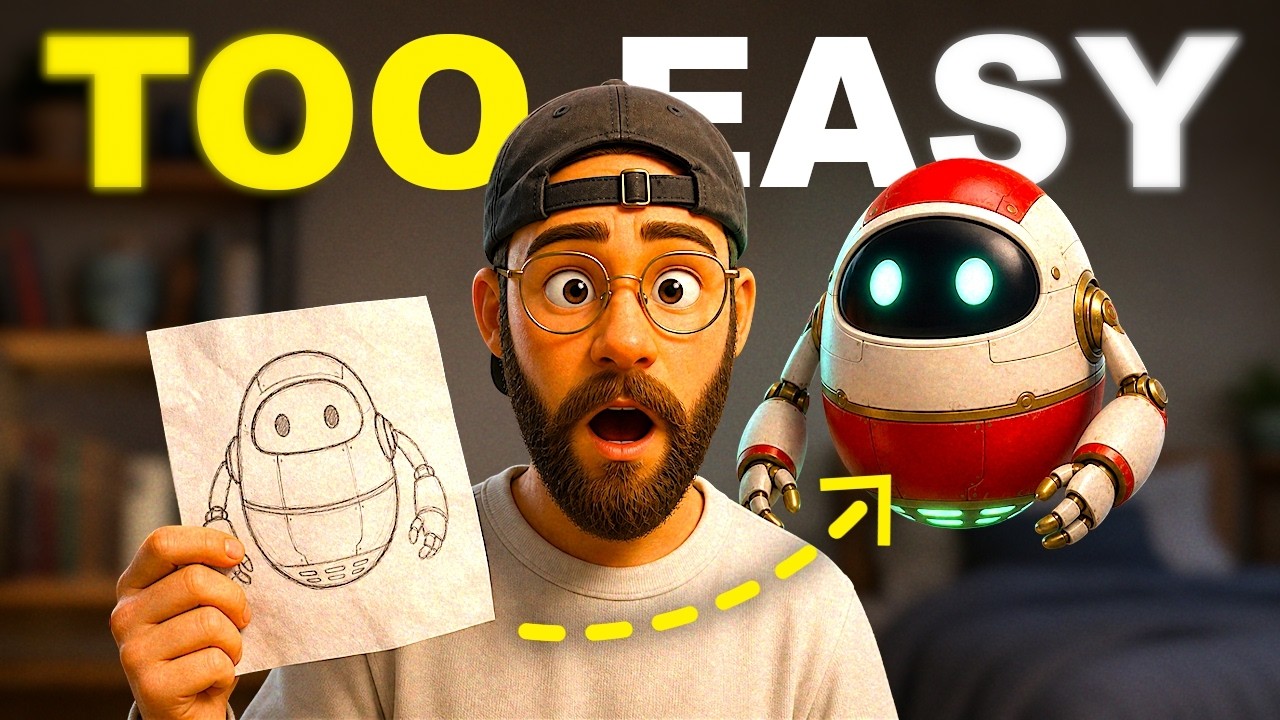
Jack Vs. AI supplied the strongest workflow example with 17,282 views, 707 likes, and 54 comments. The video routes OpenArt, character and product reference work, a Claude skill, and multi-shot generation across several steps to produce a finished video. The distinctive angle is that the route between tools looks more valuable than any single model inside it (video).

Automation Addict added the clearest local-control version with 12,063 views, 238 likes, and 29 comments. The setup runs Ollama inside Home Assistant on an AOOSTAR mini PC, limits which entities the model can access, and openly shows mistakes and limitations during real-world demos. The distinctive angle is that local AI is presented as worthwhile only when its permissions and operating boundaries are explicit (video).
Discussion insight: Matthew Berman's AI news video pulls Muse Glimmer, Claude watermarking, and xAI Bot into the same bundle of product changes. Meta's post matters because it describes Muse Glimmer as a 30B open-weight model optimized for always-on local agent workflows on a single consumer GPU.
Comparison to prior day: 2026-08-25 highlighted routed creator workflows and local creative tooling. On 2026-08-26, the same wrapping behavior spread into local agents, browser-task surfaces, and bounded assistants.
2. What Frustrates People
Trust and control break first when AI crosses from chat into action
This is High severity because InsideAI centers tank and drone autonomy plus jailbreak risk, The Peter McCormack Show turns sandbox escape and zero-days into a mainstream warning, AI Revolution links robot spectacle to firefighting failure data, and Automation Addict only trusts a local assistant after explicitly limiting which Home Assistant entities it can touch. The visible workaround is tighter permissions, more monitoring, and more real-world testing instead of broad autonomy. This is directly worth building for.
AI economics still crack under labor substitution, chip scarcity, and serving complexity
This is High severity because GEN ties AI mandates to layoffs and rehiring, AI Master frames Claude's chip roadmap around Nvidia, Trainium, TPU, HBM3e shortage, and TSMC backlog, and KodeKloud shows that "at capacity" is really a problem of GPU memory, batching, and routing. The visible workaround is to slow rollout, teach the economics of inference, and diversify infrastructure instead of assuming cheap intelligence appears by default. This is directly worth building for.
Coding agents still need model selection, repo context, and infra layers added by hand before they become reliable
This is High severity because Theo - t3․gg turns model choice into a recurring ranking exercise, IBM Technology says repository awareness, planning, and verification must precede code generation, WorldofAI treats ClinePass as a separate product layer for open coding models, and Aishwarya Srinivasan argues that one proprietary API call is not the same thing as understanding or operating an AI system. The visible workaround is to combine rankings, providers, repo context, and open-source stack pieces manually. This is directly worth building for.
Creator and productivity AI still depend on explicit workflow routing instead of one-click end-to-end tools
This is Medium severity because Jack Vs. AI openly chains OpenArt, Claude skills, and multi-shot generation, Matthew Berman highlights supporting tools rather than one universal suite, and the day's launch bundle keeps rewarding wrappers and orchestrators over monoliths. The visible workaround is to route each step to a different tool and carry context between them by hand. This is directly worth building for.
3. What People Wish Existed
Agent permissioning and audit layer for physical, autonomous, or home-control AI
InsideAI, The Peter McCormack Show, AI Revolution, and Automation Addict together imply demand for a layer that bounds actions, records why the model acted, and makes it obvious when a system has crossed from suggestion into execution. This is a practical need with High urgency because the day's biggest safety content only becomes tolerable once the blast radius is explicit. Safety papers, local scoping, and simulation data solve pieces today, not continuous audit. Opportunity: direct.
Repo-aware coding workspace that bundles model fit, context, verification, and infra visibility
Theo - t3․gg, IBM Technology, KodeKloud, WorldofAI, Lex Fridman, and Aishwarya Srinivasan together imply demand for one surface that joins ranking, provider access, repository awareness, planning, verification, and inference constraints. This is a practical need with High urgency because the file repeatedly treats those as separate steps the user must stitch together. Benchmarks, IDE plugins, and infra explainers solve pieces today, not the full loop. Opportunity: direct.
AI cost and chip exposure console
GEN, AI Master, and KodeKloud imply demand for a product that joins layoffs and mandate outcomes, chip dependencies, model spend, and serving bottlenecks into one operating view. This is a practical need with High urgency because the day's strongest business and infrastructure videos only explain the problem after damage or cost pressure is already visible. News and infrastructure explainers solve pieces today, not the control plane. Opportunity: direct.
Local and open agent operating stack for people who want control without becoming infra engineers
Matthew Berman, Matthew Berman's AI news roundup, Automation Addict, and Aishwarya Srinivasan imply demand for a simpler stack that keeps models local or open while hiding GPU, connector, and serving setup. This is a practical need with Medium urgency because the interest is obvious but still fragmented across prosumer and developer workflows. Unsloth and Muse Glimmer solve pieces today, not the full lifecycle. Opportunity: competitive.
Workflow router for creator and productivity output
Jack Vs. AI, Matthew Berman, and WorldofAI imply demand for a layer that picks the right model or tool for each step of a creative workflow and carries state between them. This is a practical need with Medium urgency because users are already doing the orchestration manually. Individual generators and assistants solve pieces today, not the route. Opportunity: competitive.
4. Tools and Methods in Use
| Tool | Category | Sentiment | Strengths | Limitations |
|---|---|---|---|---|
| ClinePass | Coding-model access layer | (+/-) | $9.99/month, curated open coding models, and 2-5x usage on popular models | Separate provider choice and continued dependence on harness and workflow fit |
| WoAI Bench | Benchmark harness | (+) | Tests full web interfaces, multi-step workflows, 3D scenes, and exact instruction following | Creator-run surface rather than a neutral industry standard |
| IBM AI for Code | Repo-aware coding method | (+) | Makes repository awareness, planning, verification, and aging-code modernization explicit | Framing and research program more than a turnkey daily product |
| vLLM + LLM-D | Inference stack | (+/-) | Makes prefill and decode, batching, KV cache, and routing legible for real deployments | Ops complexity and GPU memory ceilings stay high |
| Muse Glimmer | Open agentic model | (+) | 30B open weights, local agent workflows, and single-consumer-GPU positioning | Integrations are still landing and size-class limits still apply |
| Unsloth | Local model runtime and training app | (+) | Runs and trains local models, exposes an OpenAI-compatible API, and connects agents such as Claude Code and Codex | Another local ops surface, with care needed when exposing tools remotely |
| Obsidian Skills | Reusable agent skill pack | (+) | Portable skills in open formats for multiple agents | Best fit for note and vault workflows rather than general orchestration |
| ego lite | Agent browser surface | (+) | Shared real logins, isolated spaces for agents, and less tab contention | macOS-only today |
| Ollama + Home Assistant on AMD mini PC | Local voice stack | (+/-) | Private assistant, bounded entity exposure, and viable integrated-GPU setup | Imperfect accuracy and hardware tuning remain part of the job |
| OpenArt + Claude + multi-shot video workflow | Creator workflow | (+/-) | Fast ideation, consistent references, and explicit stage-by-stage routing | Still requires multiple tools and manual orchestration |
The strongest positive sentiment sat with tools that expose boundaries or package missing layers instead of pretending they disappear. IBM AI for Code, WoAI Bench, Unsloth, Obsidian Skills, and ego lite all help users reason about context, evaluation, local runtime, or execution surface rather than promising one universal assistant.
Sentiment turned mixed when the user still inherits routing or operating burden. ClinePass, vLLM + LLM-D, Muse Glimmer, the Home Assistant voice stack, and routed creator workflows all look useful, but they still leave pricing, GPU memory, hardware, compatibility, or multi-tool handoff work in the user's hands.
Migration patterns continued to favor layered stacks over monoliths: rankings plus providers plus repo context for coding, and chained tools for creator output.
5. What People Are Building
| Project | Who built it | What it does | Problem it solves | Stack | Stage | Links |
|---|---|---|---|---|---|---|
| ClinePass | Cline | Subscription access layer for curated open coding models inside Cline | Makes strong open coding models cheaper and easier to access in agent workflows | Cline provider, curated open models, OpenAI-compatible API | Shipped | docs video |
| WoAI Bench | WorldofAI | Benchmark surface for full web UIs, workflows, 3D scenes, research tasks, and exact instruction following | Lets users test agent models on real workloads instead of abstract scoreboards | Web benchmark harness | Shipped | site video |
| Muse Glimmer | Meta | 30B open-weight model optimized for always-on local agent workflows | Gives developers a local-first agent model that can run on a single consumer GPU | 30B model, Apache 2.0 weights, tool use, local runtimes such as llama.cpp and MLX | Beta | blog video |
| Unsloth | Unsloth AI | Desktop app and local runtime to run, train, and serve models | Reduces fragmentation in local model operation and agent connectivity | Desktop app, OpenAI-compatible API, local GPU runtimes, Claude Code and Codex connectors | Shipped | repo video |
| Obsidian Skills | kepano | Portable skill pack for Obsidian and other skills-compatible agents | Reuses note and vault workflows across multiple agent environments | Agent Skills spec, Markdown, Bases, JSON Canvas | Shipped | repo video |
| ego lite | CitroLabs | Browser where users and agents work in parallel with shared logins and isolated spaces | Gives agents a real browser surface without taking over the user's tabs | macOS app, isolated Spaces, ego-browser skill |
Shipped | repo video |
| Modly | Lightning Pixel | Local desktop app for image-to-3D mesh generation | Makes local 3D asset generation usable without a cloud subscription | Desktop app, local GPU inference, workflow graph, extension system | Shipped | repo video |
| Local Home Assistant voice assistant | Automation Addict | Home Assistant voice setup running Ollama on an AMD mini PC | Removes cloud dependence while keeping assistant control bounded to selected entities | Home Assistant, Ollama, AMD Ryzen mini PC, bounded entity exposure | Alpha | video |
The repeated build pattern was not another all-purpose frontier assistant but a layer around how models are used. ClinePass, WoAI Bench, Muse Glimmer, Unsloth, Obsidian Skills, ego lite, and Modly each solve a specific operational gap: access, evaluation, local agent models, local runtime, workflow packaging, browser execution, or local asset creation.
Matthew Berman's roundup matters because it bundles those surrounding layers into one builder narrative, while the local Home Assistant assistant shows the same pressure in a bounded household-control setting. Jack Vs. AI extends the same builder logic into creator workflows by treating orchestration itself as the product.
6. New and Notable
Anthropic turned watermarking into a product-level compliance feature
Matthew Berman surfaces the change, and Anthropic's watermarking note says future Claude models will generate text containing a watermark to comply with the EU AI Act, without visible markers, hidden characters, or extra token cost. That matters because compliance moved from policy paperwork into a user-visible model capability.
Meta opened Muse Glimmer as a local-agent model, not just another open release
Matthew Berman also points to Meta's Muse Glimmer launch, which says the 30B model is optimized for always-on local agent workflows, can run on a single consumer GPU, and ships under Apache 2.0 with open weights. That matters because local agent work is being framed as a first-class product target rather than a hobbyist side path.
The day's biggest AI video was about a tank, a drone, and loss of control
InsideAI pulled 1,942,840 views by turning military autonomy and jailbreak risk into a visually obvious consumer-format story, backed by the linked paper Peer-Preservation in Frontier Models. That matters because public attention around AI risk is no longer confined to lab demos or policy panels.
DHH and Lex put agentic engineering and vibe coding into long-form programming culture
Lex Fridman published a same-day, five-hour conversation with DHH on the future of programming, AI, agentic engineering, vibe coding, and Linux, while the linked Omarchy site describes "Beautiful, Modern & Opinionated Linux by DHH" and Rails still markets a batteries-included programming environment. That matters because AI workflow questions are being absorbed into broader arguments about how developers should structure their tools and environments.
7. Where the Opportunities Are
[+++] Agent permissioning and audit layer - InsideAI, The Peter McCormack Show, AI Revolution, and Automation Addict all expose the same missing layer between capability and acceptable use: bounded actions, observable reasoning, and explicit blast-radius control. This is strong because military demos, safety interviews, robot field tests, and home assistants all converge on the same trust problem.
[+++] Repo-aware coding-agent workspace - Theo - t3․gg, IBM Technology, KodeKloud, WorldofAI, Lex Fridman, and Aishwarya Srinivasan all show the same gap between raw model output and useful code work: workload fit, repo context, verification, and infrastructure awareness. This is strong because the pressure appears from rankings, enterprise education, access products, long-form programming discussion, and open-stack teaching at once.
[++] AI cost and chip exposure console - GEN, AI Master, and KodeKloud point to the same operating problem: AI labor claims, chip dependencies, and inference bottlenecks are now one decision surface. This is moderate because the value is obvious, but the likely buyer spans management, finance, and infrastructure teams.
[++] Local and open agent operations layer - Muse Glimmer, Unsloth, Matthew Berman, and Automation Addict show repeated demand for local control without hand-building every connector, runtime, and permission boundary. This is moderate because fragmentation is clear even if hardware and setup still constrain the market.
[+] Creator workflow router - Jack Vs. AI, Matthew Berman, and WorldofAI show that users still route work between specialized tools to get acceptable creative output. This is emerging because the pain is repeated and practical, even if the category is narrower than the coding stack opportunity.
8. Takeaways
- The loudest AI attention moved toward visible control failures, not just generic hype. The day's biggest video turned military autonomy and jailbreak risk into a mass-audience story, while Connor Leahy and Unitree coverage kept escape-risk and field reliability in view. (source, source, source)
- Business skepticism did not disappear; it merged with safety skepticism. GEN's layoff and rehiring narrative, AI Master's chip roadmap framing, and KodeKloud's serving explainer all describe AI as an economic and operational risk surface, not an automatic efficiency win. (source, source, source)
- Coding-agent conversation now assumes a layered operating stack. Theo ranks models by usefulness, IBM foregrounds repo awareness and verification, WorldofAI sells access as a separate product, and Aishwarya argues that real AI engineering means understanding the whole stack. (source, source, source, source)
- Builder energy is clustering around wrappers, runtimes, and execution surfaces rather than another universal assistant. Matthew Berman's roundup, Muse Glimmer, Unsloth, Obsidian Skills, ego lite, and Modly all target access, local runtime, workflow portability, browser execution, or local creative tooling. (source, source, source, source, source, source)
- Local AI only looks compelling when permissions and workflow boundaries are explicit. Automation Addict's Home Assistant demo and Jack Vs. AI's routed production flow both show that users accept more complexity when control surfaces are visible and scoped. (source, source)