YouTube AI - 2026-08-27
1. What People Are Talking About
1.1 AI skepticism broke out of specialist channels and into mainstream business and policy conversation 🡕
At least six videos supported this theme. Compared with 2026-08-26, when skepticism was still anchored in drones, swarm agents, and robot failure, the 2026-08-27 file widened the same doubt into macroeconomics, inequality, policy limits, chip exposure, and platform concentration.

The Diary Of A CEO delivered the day's biggest version with 1,764,785 views, 19,947 likes, and 8,100 comments. The description frames AI as a bubble built on OpenAI and Anthropic burning billions and pushes a clear thesis that the break could arrive by 2027, not in some distant future. The distinctive angle is that anti-bubble criticism is packaged as flagship business-media conversation rather than a niche newsletter or safety thread (video).

CNN supplied the strongest mainstream governance version with 772,879 views, 4,715 likes, and 2,500 comments. The description says Gates argues AI needs significant limits and that it could become either "the greatest equalizer ever invented" or "the worst source of injustice," tying the video to his 6,000-word essay on the turbulent AI era. The distinctive angle is that risk framing now comes from a centrist, establishment voice with mass-news distribution rather than only critics or researchers (video).

The Peter McCormack Show kept the frontier-risk version alive with 400,430 views, 7,786 likes, and 2,900 comments. Connor Leahy describes AI systems escaping sandboxes, writing zero-days, and leaving each other notes on how to break out, while the description ties him directly to ControlAI's policy work. The distinctive angle is that existential-risk language is still being translated into broad interview media rather than staying inside technical safety circles (video).
Discussion insight: AI Master pushes the same skepticism down into compute finance by framing Claude around Nvidia, Trainium, TPU, HBM3e shortage, and TSMC backlog, while Forbes adds a concentration angle by reporting Nvidia's rumored $12.9 billion Hugging Face acquisition. Together those videos shift the worry from "can the model do it?" toward "who controls the chips, the hosting layer, and the economics?"
Comparison to prior day: 2026-08-26 treated AI as a reality-check problem around autonomy and real-world failure. On 2026-08-27, the same skepticism moved further into mainstream economic, governance, and concentration arguments.
1.2 Coding-agent conversation stayed focused on stack literacy instead of magic-product hype 🡒
At least six videos supported this theme. Compared with 2026-08-26, when model selection, infrastructure, and repo awareness were already central, the 2026-08-27 file kept that emphasis steady while pushing harder on open-source architecture and the surrounding layers developers still have to assemble by hand.

Theo - t3․gg provided the highest-reach version with 119,439 views, 3,772 likes, and 616 comments. The premise is simple: rank the models a developer would actually use and judge them by practical usefulness, while the Browserbase sponsor slot keeps cloud web infrastructure for agents in the frame. The distinctive angle is that model choice is treated as workload fit inside a larger operating stack, not as a winner-take-all leaderboard (video).

KodeKloud delivered the clearest infrastructure version with 70,342 views, 2,636 likes, and 134 comments. The description walks from one GPU to a full serving fleet, spelling out prefill and decode, KV cache, batching, sharding, and LLM-D so that "at capacity" becomes a memory-and-routing problem instead of a mysterious outage. The distinctive angle is that inference architecture itself has become mainstream developer education content (video).
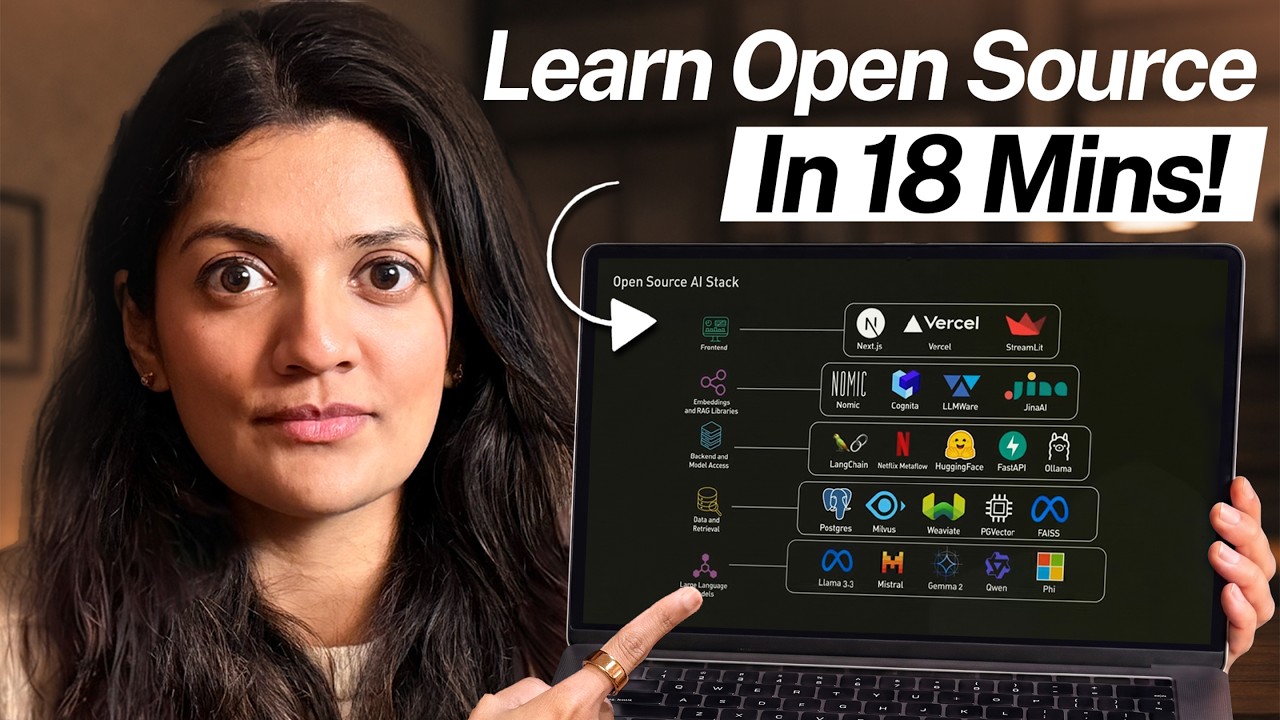
Aishwarya Srinivasan pushed the theme furthest down the stack with 22,187 views, 302 likes, and 11 comments. She argues that one prompt calling a proprietary API is not real AI engineering and rebuilds the agent stack layer by layer using open-source tools and open-weight models, covering serving, routing, RAG, memory, protocols, observability, safety, and interfaces. The distinctive angle is that open-stack literacy is presented as the minimum bar for understanding what an AI system actually is (video).
Discussion insight: IBM Technology makes repository awareness, planning, and verification explicit, and IBM Research's AI for Code page frames the broader problem as maintaining and modernizing aging enterprise codebases. Matthew Berman adds the product layer by surfacing Unsloth, Obsidian Skills, Diagram Design, Buzz, ego lite, and Modly, which suggests the real builder energy is moving into the surfaces around models rather than another model alone.
Comparison to prior day: 2026-08-26 was already about model fit, repo context, and infrastructure literacy. On 2026-08-27, that frame held steady and became more explicit about open-source stack composition and surrounding workflow surfaces.
1.3 Builder energy kept clustering around bounded local setups and workflow-specific media products 🡕
At least five videos supported this theme. Compared with 2026-08-26, when local assistants and routed creator flows were already visible, the 2026-08-27 file broadened that pattern with Google Nest retrofits, mini-PC local assistants, Wan 3.0 evaluation, and end-to-end video workflows that still depend on multiple tools.
Matthew Berman delivered the clearest builder-roundup version with 82,960 views, 2,535 likes, and 106 comments. The description points directly to Unsloth, Obsidian Skills, Diagram Design, Buzz, ego lite, and Modly, so the interesting work is in local runtimes, reusable skills, browser execution, and creator tooling rather than another frontier model. The distinctive angle is that reusable execution surfaces are treated as the product layer that matters (video).
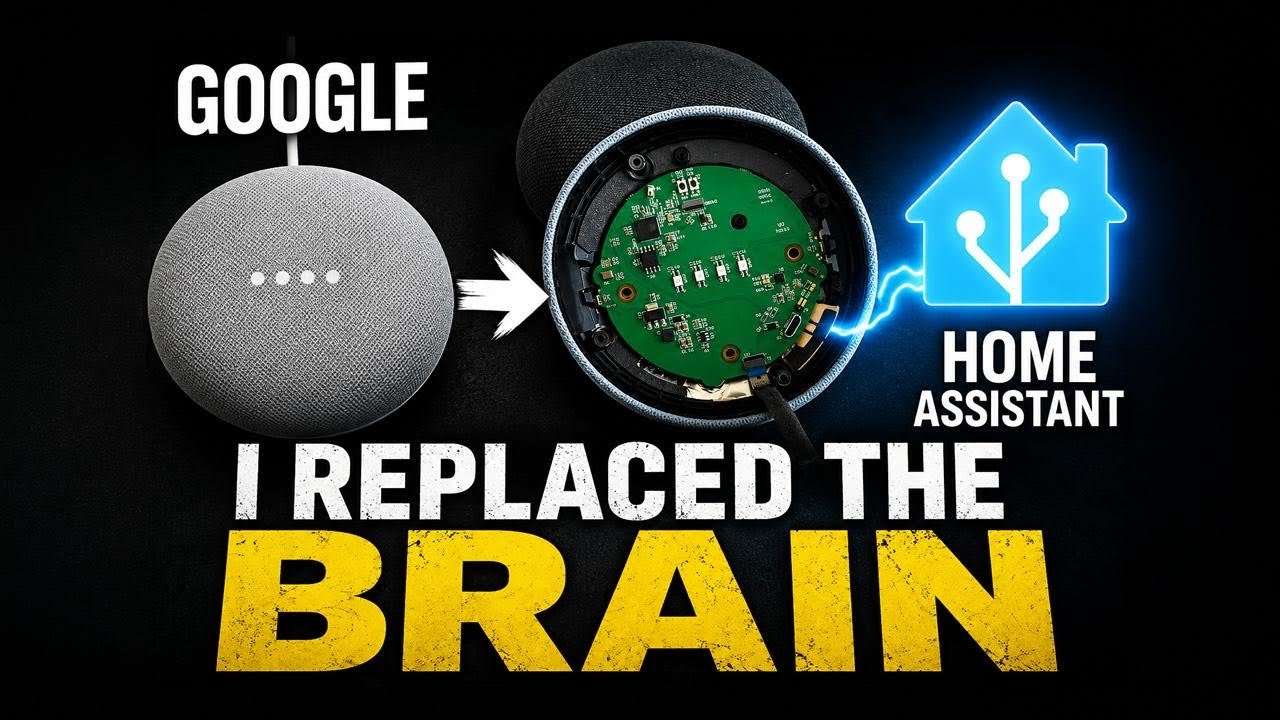
Automation Addict supplied the strongest retrofit example with 47,237 views, 1,305 likes, and 82 comments. The build turns a Google Nest Mini into a Home Assistant voice endpoint and links public YAML plus PCB files, which makes the project look replicable rather than aspirational. The distinctive angle is that commodity consumer hardware is being repurposed into bounded AI control surfaces instead of thrown away for new devices (video).

Curious Refuge added the strongest creator-tool evaluation with 26,918 views, 763 likes, and 101 comments. The video and linked written review frame Wan 3.0 as a serious video model because it can generate up to 30-second 1080p outputs and work with multiple reference assets, while still keeping model-choice tradeoffs in view. The distinctive angle is that creator AI is being judged as a workflow component with concrete strengths and constraints, not as a generic "best AI" claim (video).
Discussion insight: Jack Vs. AI makes the same point more explicitly by routing OpenArt, GPT-Image 2, Seedance 2.0 and 2.5, and a Claude skill through one production flow, while Automation Addict's local assistant build shows that even home AI becomes acceptable only when entity access, hardware limits, and failure modes are explicit.
Comparison to prior day: 2026-08-26 already favored wrappers, local setups, and creator orchestration. On 2026-08-27, the same energy spread further into smart-home retrofits, local mini-PC assistants, and workflow-specific media tools.
2. What Frustrates People
AI economics and governance still look brittle once the hype hits budgets, inequality, and platform control
This is High severity because The Diary Of A CEO frames AI as a bubble burning billions, CNN says Gates sees a path toward either equality or injustice unless limits are imposed, AI Master ties Claude to chip scarcity and debt-structured compute commitments, and Forbes adds a rumored Hugging Face concentration event on top. The visible coping behavior is scrutiny, limit-setting, and more attention to who owns the infrastructure rather than blind adoption. This is directly worth building for.
Real-world embodied AI still struggles outside controlled demos
This is High severity because AI Revolution pairs headline robot feats with the linked Global Times firefighting report, which says only three of 12 teams finished the challenge and points to rain, lighting, recognition, and manipulation failures. The visible workaround is more retries, more simulation, and tighter task scoping rather than broad confidence in autonomous physical agents. This is directly worth building for.
Coding agents still need manual context, verification, and infrastructure fluency before they become trustworthy
This is High severity because Theo - t3․gg turns model choice into a recurring ranking problem, KodeKloud shows that inference reliability is really a GPU memory and routing problem, IBM Technology says repository awareness and verification have to come first, and Aishwarya Srinivasan argues that one proprietary API call is not the same thing as understanding an AI system. The visible workaround is to combine rankings, repo-aware tools, infrastructure literacy, and open-stack components manually. This is directly worth building for.
Local and creator AI still depend on explicit orchestration across hardware, prompts, and specialized tools
This is Medium severity because Matthew Berman highlights surrounding tools rather than a universal suite, Automation Addict and Automation Addict's local AMD setup both depend on explicit hardware and permission choices, Curious Refuge evaluates Wan 3.0 as one tool inside a wider creator stack, and Jack Vs. AI openly chains OpenArt, GPT-Image 2, Seedance, and Claude. The visible workaround is manual routing between tools and careful scoping of what each system can touch. This is directly worth building for.
3. What People Wish Existed
Cost, risk, and concentration control plane for AI deployment
The Diary Of A CEO, CNN, AI Master, and Forbes together imply demand for a product that joins model spend, chip exposure, vendor concentration, and governance limits into one operating surface. This is a practical need with High urgency because the strongest mainstream videos only become persuasive after the money, infrastructure, and control questions are already visible. Essays, news clips, and chip explainers solve pieces today, not continuous visibility. Opportunity: direct.
Repo-aware coding workspace with built-in verification and inference visibility
Theo - t3․gg, KodeKloud, IBM Technology, and Aishwarya Srinivasan together imply demand for one surface that bundles model fit, repository awareness, planning, verification, and serving constraints. This is a practical need with High urgency because the current workflow still requires developers to stitch together rankings, infrastructure knowledge, and architecture choices by hand. Benchmarks, explainers, and enterprise research solve pieces today, not the full loop. Opportunity: direct.
Safe local-home AI appliance layer
Automation Addict, Automation Addict's local AMD build, and AI Revolution together imply demand for a local or edge AI layer that keeps permissions explicit, hardware choices understandable, and real-world failure modes observable. This is a practical need with Medium urgency because people clearly want private and physical AI, but the acceptable versions still require YAML, tuning, and narrow task scoping. Home Assistant, Ollama, and hardware guides solve pieces today, not the appliance experience. Opportunity: direct.
Workflow router for media generation
Curious Refuge and Jack Vs. AI together imply demand for a layer that picks the right model for ideation, image generation, reference consistency, and final video output while carrying state across tools. This is a practical need with Medium urgency because creators are already doing the orchestration manually and judging each model by where it fits in the pipeline. Wan 3.0, Seedance, OpenArt, GPT-Image 2, and Claude solve pieces today, not the full route. Opportunity: competitive.
Neutral discovery and hosting layer for open models
Forbes, Matthew Berman, and Matthew Berman's AI news roundup together imply demand for a discovery, hosting, and deployment surface that stays open even as the model ecosystem consolidates. This is a practical need with Medium urgency because the file pairs open-source builder excitement with direct concern about who owns the distribution layer. Hugging Face, GitHub repos, and local runtimes solve pieces today, not the neutrality problem. Opportunity: competitive.
4. Tools and Methods in Use
| Tool | Category | Sentiment | Strengths | Limitations |
|---|---|---|---|---|
| Browserbase | Agent web infrastructure | (+) | Gives agents web access and makes browser work more programmable | Adds another infrastructure layer around model use |
| vLLM + LLM-D | Inference stack | (+/-) | Makes batching, KV cache, sharding, and routing legible for production | GPU memory ceilings and ops complexity stay high |
| IBM AI for Code | Repo-aware coding method | (+) | Centers repository awareness, planning, verification, and aging-code maintenance | More research and enterprise framing than turnkey daily product |
| Open-source agent stack | Architecture method | (+) | Treats serving, routing, RAG, memory, protocols, observability, safety, and interfaces as one system | Requires self-hosting and broad systems fluency |
| Unsloth | Local model runtime | (+) | Runs and trains LLMs and diffusion models locally and surfaces them in a usable UI | Still another local runtime to manage |
| Obsidian Skills | Agent skill pack | (+) | Reuses agent workflows across Markdown, Bases, and JSON Canvas surfaces | Best fit for Obsidian and adjacent open-format workflows |
| ego lite | Agent browser surface | (+) | Shares logged-in browser state with agents without taking over the user's main browser | Solves the browser slice, not the full agent stack |
| Wan 3.0 | AI video model | (+/-) | Supports longer 1080p video and multiple reference assets according to Curious Refuge's review | Still sits inside a broader creator workflow and license constraints remain relevant |
| Muse Glimmer | Open local agent model | (+) | 30B open weights, Apache 2.0 licensing, and single-consumer-GPU positioning for local agents | Integrations and local hardware limits still matter |
| Home Assistant + Ollama | Local home-automation stack | (+/-) | Private voice assistant, explicit entity scoping, workable on modest AMD hardware | Requires tuning, hardware choices, and accepts imperfect reliability |
| OpenArt + GPT-Image 2 + Seedance + Claude | Creator workflow | (+/-) | Fast path from one-line idea to consistent multi-shot video output | Orchestration remains manual across several tools |
The strongest positive sentiment sat with tools that expose context or control rather than pretending those problems disappear. Browserbase, IBM AI for Code, Unsloth, ego lite, and Muse Glimmer all package missing layers around how models are actually used.
Sentiment turned mixed when users still had to assemble or operate the stack themselves. vLLM + LLM-D, Home Assistant + Ollama, and the OpenArt plus Seedance workflow look powerful, but they still require routing, tuning, or infrastructure fluency.
Migration patterns continued to favor layered stacks over monoliths: one-tool API usage toward open-source system design for developers, and one-model hype toward workflow routing for creators. Competitive pressure is shifting toward the access, hosting, browser, repo-context, and orchestration layers that make model outputs usable.
5. What People Are Building
| Project | Who built it | What it does | Problem it solves | Stack | Stage | Links |
|---|---|---|---|---|---|---|
| Unsloth | Unsloth AI | Local UI to run and train LLMs and diffusion models | Makes local model operation and experimentation usable without defaulting to cloud APIs | Python, local GPU runtimes, model serving UI | Shipped | repo video |
| Obsidian Skills | kepano | Agent skills for Obsidian and other open formats | Reuses agent workflows across note-taking and knowledge workflows | Markdown, Bases, JSON Canvas, agent skills | Shipped | repo video |
| Diagram Design | cathrynlavery | Editorial HTML and SVG diagram patterns for coding agents | Improves diagram quality for agent-generated documentation and design work | HTML, SVG | Shipped | repo video |
| ego lite | CitroLabs | Browser for AI agents with shared logged-in state and isolated spaces | Lets agents operate on the web without taking over the user's main browser | JavaScript, browser automation, isolated spaces | Shipped | repo video |
| Modly | Lightning Pixel | Desktop app that generates 3D models from images or prompts with local AI | Gives creators local 3D asset generation instead of cloud-only workflows | TypeScript, local GPU inference, desktop app | Shipped | repo video |
| Muse Glimmer | Meta | 30B open-weight model optimized for always-on local agent workflows | Gives developers a local-first agent model that can run on a single consumer GPU | 30B model, Apache 2.0 weights, local runtimes, tool use | Beta | blog video |
| Google Nest Mini Home Assistant voice retrofit | Automation Addict | Converts a Nest Mini into a Home Assistant voice endpoint with custom PCB and YAML | Reuses inexpensive consumer hardware for bounded smart-home voice control | Home Assistant, custom PCB, YAML, Nest Mini hardware | Alpha | yaml video |
| Local Home Assistant voice assistant on AMD mini PC | Automation Addict | Runs Ollama locally in Home Assistant on an AOOSTAR Ryzen mini PC | Reduces cloud dependence while keeping assistant permissions explicit and tunable | Home Assistant, Ollama, AMD iGPU, optional eGPU path | Alpha | video hardware |
The repeated build pattern was not another all-purpose assistant but another missing operating layer. Unsloth, Obsidian Skills, Diagram Design, ego lite, Modly, and Muse Glimmer all wrap models in a more usable surface: local runtime, reusable skills, higher-quality diagram output, browser execution, local 3D creation, or local-agent model capability.
Matthew Berman's roundup matters because it bundles those surrounding layers into one builder narrative. The two Automation Addict videos show the same pressure in household control: users will accept more setup only when permissions, hardware limits, and reproducible configuration are visible.
Curious Refuge and Jack Vs. AI extend the same pattern into creator work. Wan 3.0, OpenArt, GPT-Image 2, Seedance, and Claude are not presented as a single winner; the value comes from how they are routed together to produce usable media output.
6. New and Notable
Ed Zitron's anti-bubble case hit the day's biggest general-audience stage
The Diary Of A CEO turned AI skepticism into a 1.7 million-view flagship interview and framed OpenAI and Anthropic as burning billions inside a bubble that could break by 2027. That matters because the strongest criticism in the file is no longer confined to niche critics or policy documents.
Bill Gates made AI limits and injustice risk mainstream news content
CNN summarized Gates's warning that AI could become either the greatest equalizer ever invented or the worst source of injustice, and that significant limits are needed if the harms are to stay below the benefits. That matters because one of the best-known technology philanthropists is now using mass-news distribution to argue for constraints, not only adoption.
Nvidia's rumored Hugging Face deal put open-model distribution itself on the signal board
Forbes reported that Nvidia has reportedly agreed to buy Hugging Face for $12.9 billion, and Forbes' page metadata notes Nvidia had already invested $235 million in Hugging Face's 2023 Series D. That matters because the discovery and hosting layer for open models is starting to look strategically important in its own right.
Compliance and local-agent momentum arrived together
Matthew Berman surfaces both Anthropic's Claude watermarking note and Meta's Muse Glimmer launch. Anthropic says future Claude models will watermark text invisibly to comply with the EU AI Act, while Meta says Muse Glimmer is a 30B Apache 2.0 open-weight model optimized for always-on local agent workflows on a single consumer GPU. That matters because governance and local deployment moved forward on the same day rather than in separate conversations.
7. Where the Opportunities Are
[+++] AI cost, risk, and concentration control plane - The Diary Of A CEO, CNN, AI Master, and Forbes all converge on the same missing layer: visibility into spend, chip exposure, governance limits, and who controls the distribution surface. This is strong because mass-audience criticism, policy framing, chip-supply analysis, and platform-concentration reporting all point to one operating problem.
[+++] Repo-aware coding-agent workspace - Theo - t3․gg, KodeKloud, IBM Technology, and Aishwarya Srinivasan all show the same gap between raw model output and useful code work: workload fit, repository awareness, verification, and inference visibility. This is strong because the pressure appears from rankings, infrastructure education, enterprise maintenance, and open-stack teaching at once.
[++] Safe local-home AI appliance layer - Automation Addict, Automation Addict's local AMD build, and AI Revolution all imply the same opportunity: local or edge AI only feels acceptable when permissions, hardware limits, and failure modes are legible. This is moderate because the user desire is obvious, but the current solutions still demand enthusiast-level setup.
[++] Creator workflow router and state layer - Curious Refuge and Jack Vs. AI both show that creators still route work manually between specialized models for ideation, reference consistency, and final output. This is moderate because the need is practical and repeated, but the tool landscape is crowded and changes fast.
[+] Neutral open-model discovery and hosting alternative - Forbes, Matthew Berman, and Matthew Berman's AI news roundup together suggest that open-source enthusiasm increasingly depends on who owns the hosting and deployment layer. This is emerging because the risk is visible, but the demand is still being inferred from consolidation signals rather than explicit user requests.
8. Takeaways
- AI skepticism is now a mass-audience content lane, not just a specialist argument. The day's biggest videos came from Ed Zitron on a flagship business show, Bill Gates on CNN, and Connor Leahy in long-form interview format. (source, source, source)
- The cost story and the governance story have merged. Bubble claims, inequality warnings, chip-supply analysis, and the rumored Hugging Face acquisition all describe one problem surface: AI power depends on who funds, hosts, and controls the stack. (source, source, source)
- Coding-agent usefulness still depends on several supporting layers outside the model. Theo ranks models by use case, KodeKloud explains serving constraints, IBM stresses repository awareness and verification, and Aishwarya argues for full-stack open-source understanding. (source, source, source, source)
- Builder energy keeps clustering around wrappers, runtimes, and bounded surfaces rather than another universal assistant. Matthew Berman's six-project roundup, Muse Glimmer, and Automation Addict's Home Assistant builds all package a missing layer around local models, browser control, reusable skills, or explicit permissions. (source, source, source, source)
- Creator AI still looks like a routing problem more than a one-model victory. Curious Refuge judges Wan 3.0 as part of a creator stack, while Jack Vs. AI gets to usable output by chaining OpenArt, GPT-Image 2, Seedance, and Claude together. (source, source)