YouTube AI - 2026-08-29
1. What People Are Talking About
1.1 Developer AI looked even more like an operating stack than a model contest 🡕
At least seven videos supported this theme. Compared with 2026-08-28, when model ranking, repo awareness, and inference infrastructure were already inseparable, the 2026-08-29 file made the bottlenecks more concrete: the harness, the cache, the VRAM budget, the memory system, and the codebase context all changed what "good at coding" actually meant.

Theo - t3.gg delivered the day's highest-reach version with 132,110 views, 3,890 likes, and 631 comments. The premise is simple: rank nearly every model a developer would reasonably use today and judge them by practical usefulness rather than launch theater. The distinctive angle is that model choice is treated as a recurring workload-fit decision inside a wider operating stack, not as a one-time verdict on which lab is winning (video).
Kai supplied the sharpest harness example with 10,814 views, 276 likes, and 43 comments. He says the same Qwen 3.8 27B model, weights, quantization, and prompt produced a black window in one setup and a working ocean scene in another after only the harness changed, while the description also ties headline results to DeepSWE 1.1, OSWorld, GPQA Diamond, and Claude Code harness behavior. The distinctive angle is that the software surrounding the model is presented as a first-class capability layer of its own (video).

KodeKloud delivered the clearest infrastructure version with 96,312 views, 2,983 likes, and 163 comments. The description walks from one GPU to a full serving fleet and names prefill, decode, KV cache, batching, sharding, and LLM-D on Kubernetes, so "at capacity" becomes a memory-and-routing problem instead of a vague outage. The distinctive angle is that inference architecture itself has become mainstream developer education content (video).

IBM Technology contributed the strongest repository-context version with 21,621 views, 695 likes, and 63 comments. Prachi Modi says coding agents need repository awareness, architectural context, planning, and verification before they can make good decisions, while IBM Research frames AI for Code around the difficulty of maintaining and modernizing large volumes of aging enterprise code. The distinctive angle is that coding agents are positioned as software-maintenance systems, not just faster autocomplete (video).
Discussion insight: Lex Clips frames agent productivity as an organizational problem in its "why most companies fail" clip with DHH, while AI Revolution says Claude now shares memory between chat and Cowork and OpenAI is chasing inference gains in custom silicon. Together those items extend the same idea beyond model ranking: useful agent work depends on workflow, memory, and hardware layers.
Comparison to prior day: 2026-08-28 already treated developer AI as a systems problem. On 2026-08-29, that system picture got more operational and less abstract, with fresh emphasis on harness sensitivity, reusable memory, and local inference tradeoffs.
1.2 Local and bounded AI remained the clearest builder pattern 🡒
At least six videos supported this theme. Compared with 2026-08-28, when bounded local assistants and workflow-specific creative surfaces were already strong, the 2026-08-29 file kept the same pattern steady and made the setup burden more explicit: users accepted more tinkering when it bought local control, privacy, or a reusable wrapper around model behavior.
Matthew Berman delivered the clearest roundup version with 84,829 views, 2,551 likes, and 106 comments. The description links directly to Unsloth, Obsidian Skills, Diagram Design, Buzz, ego lite, and Modly, so the interesting work sits in local runtimes, reusable skills, auditable workspaces, shared browsers, and local 3D generation rather than another frontier model. The distinctive angle is that the builder energy is clustering around missing surfaces around models instead of the models alone (video).
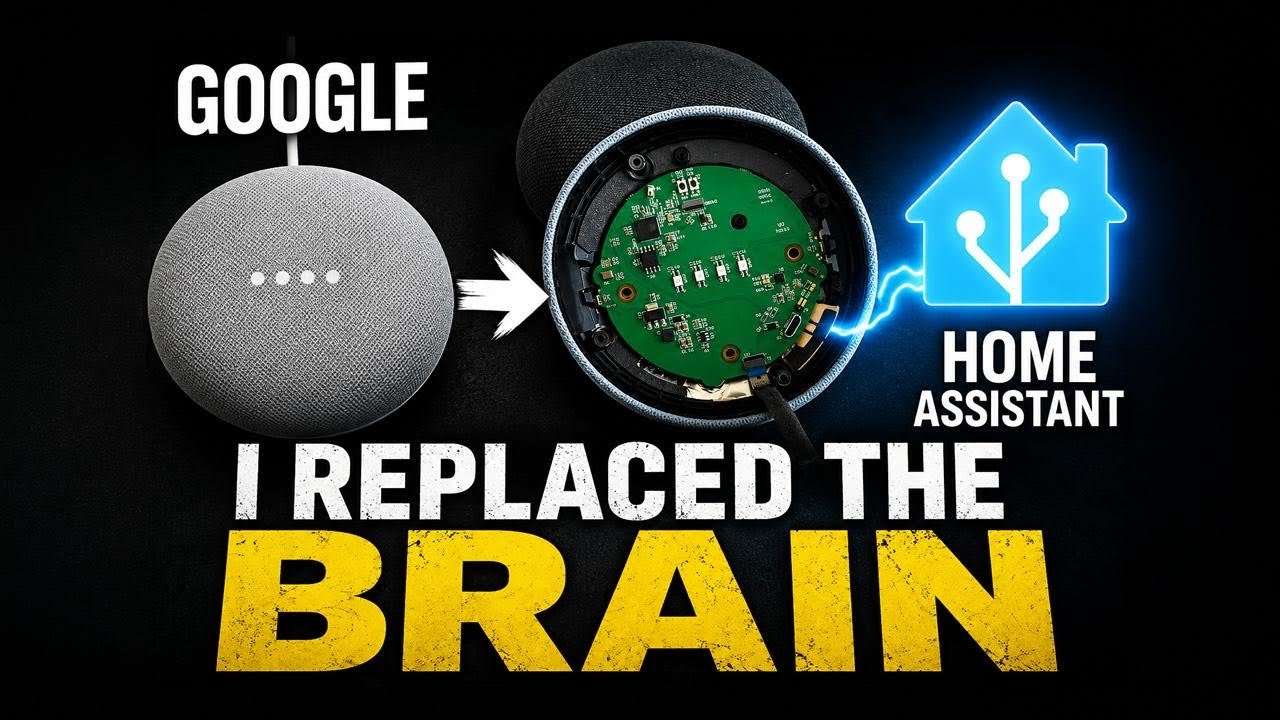
Automation Addict supplied the strongest retrofit example with 60,034 views, 1,430 likes, and 99 comments. The project replaces Google's internals with a custom ESPHome-based board so the Nest Mini becomes a Home Assistant voice satellite that can use a local LLM, while the PCBWay project page explicitly says it is a privacy-focused build and not a finished consumer product. The distinctive angle is that inexpensive consumer hardware is being repurposed into a private control surface instead of discarded for a new AI appliance (video).

Automation Addict added the clearest local-runtime version with 12,982 views, 248 likes, and 29 comments. The setup runs Ollama inside Home Assistant on an AOOSTAR Ryzen mini PC, limits which entities are exposed to the assistant, and openly shows mistakes, tuning choices, and the possible need for an external GPU. The distinctive angle is that local AI only looks acceptable once its permissions, hardware limits, and failure modes are made explicit (video).

Better Stack contributed the lowest-reach but most specific local-inference example with 1,302 views, 84 likes, and 8 comments. The video says FreeToken can beat Ollama once a Mixture-of-Experts model no longer fits comfortably in VRAM, and the linked repo describes bandwidth-adaptive CPU/GPU co-execution, semantic-aware caching, dynamic VRAM reallocation, and agent-friendly APIs for local MoE serving. The distinctive angle is that local AI infrastructure itself is now being treated as a creator and developer topic, not just a backend implementation detail (video).
Discussion insight: The Nest Mini YAML explicitly notes on-device wake word detection and no PSRAM on the board, while the PCBWay and Onju Voice pages both stress that the project still requires tinkering and a separate local server. That nuance matches the tools in Matthew Berman's roundup: Buzz, ego lite, Obsidian Skills, and Unsloth all make users do more setup, but they buy auditability, local control, or reusable workflows in return.
Comparison to prior day: 2026-08-28 already favored bounded autonomy and retrofits. On 2026-08-29, that trajectory stayed steady and showed even more clearly that local AI adoption is a hardware, permissions, and wrapper problem.
1.3 AI progress stories split into specific domains - robots, synthetic filmmaking, and healthcare collaboration 🡕
At least five videos supported this theme. Compared with 2026-08-28, when control, chips, and agent systems dominated, the 2026-08-29 file spread the conversation across more vertical use cases, and each one kept a human or workflow constraint close at hand.
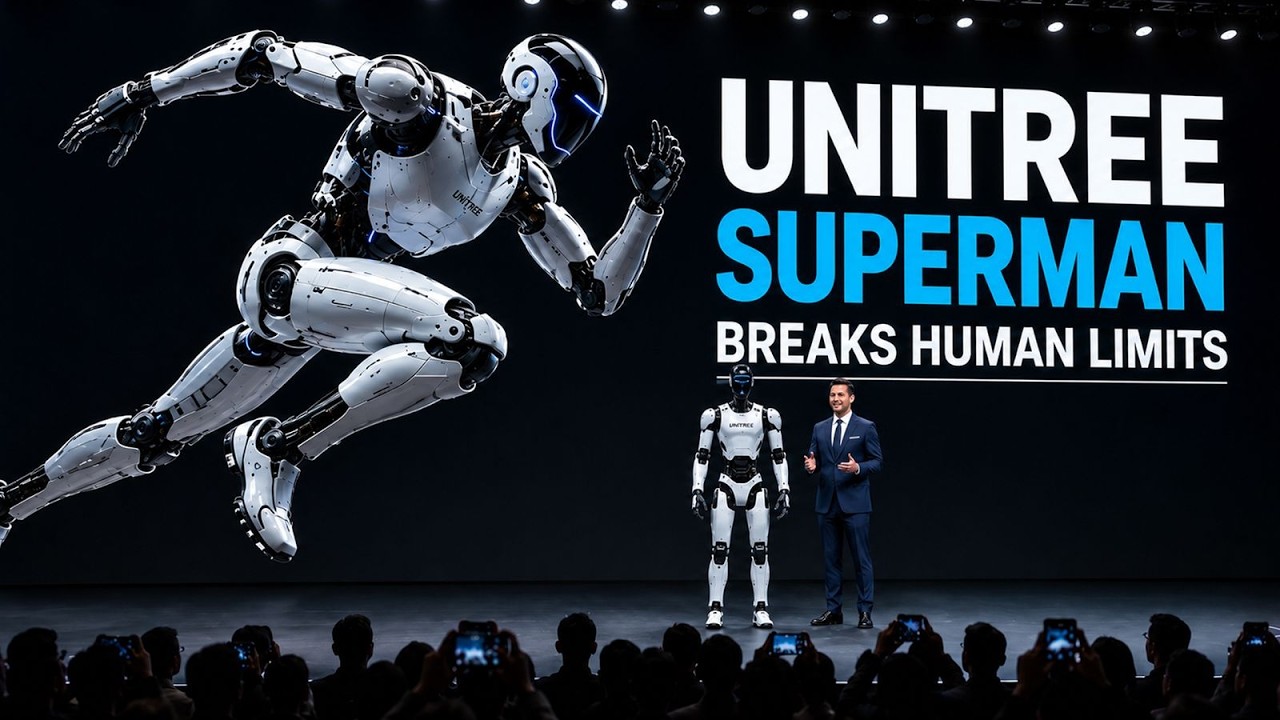
AI Revolution delivered the strongest embodied-AI version with 59,861 views, 1,135 likes, and 134 comments. The description pairs Reuters' account of Unitree's 12.66 meters-per-second "Superman" robot and 2-meter jump with Global Times' report that only 3 of 12 teams finished the Sunday firefighting challenge under rain and outdoor lighting variability. The distinctive angle is that spectacle and reliability limits are being reported inside the same story rather than as separate conversations (video).
AI Revolution also supplied the most feature-dense creator-platform example with 1,881 views, 159 likes, and 14 comments. The description and linked sources say Seedance 2.5 supports 30-second audio-video sequences with multi-round extensions and large multimodal reference sets, while Higgsfield Cinema Studio 4.0 adds up to 50 references plus new tempo, emotion, lens, and era controls. The distinctive angle is that AI video is being pitched as coherent scene construction and production control, not just one-off clips (video).
Jack Vs. AI made the workflow side of that creator story most explicit with 18,686 views, 735 likes, and 54 comments. He routes OpenArt, GPT-Image 2, Seedance 2.0 and 2.5, and a Claude skill from a one-line idea to a finished video, while calling out the trade-offs between the two Seedance versions. The distinctive angle is that the route between tools is presented as the product, not any single model in the route (video).

Huberman Lab Clips contributed the clearest healthcare version with 5,202 views, 144 likes, and 10 comments. The description frames AI as a tool for synthesizing biomedical knowledge, assisting diagnosis, and improving surgical precision through human-machine collaboration, with Fei-Fei Li and Andrew Huberman presented as the interpreters of that shift. The distinctive angle is that healthcare AI is described as collaborative clinical support rather than autonomous replacement (video).
Discussion insight: SYFY Wire's Odysseus report says one creator could produce an AI-assisted feature in months on a laptop, while Huberman and Fei-Fei Li frame medical AI as collaboration with doctors rather than autonomy without oversight. Even the optimistic vertical stories still rely on people to specify the workflow, curate the output, or handle edge cases.
Comparison to prior day: 2026-08-28's safety-and-control framing did not disappear, but 2026-08-29 spread AI conversation across more concrete end-use systems where capability claims were consistently paired with workflow or reliability constraints.
2. What Frustrates People
Coding agents still depend on manual harness, memory, and infrastructure choices
This is High severity because Theo - t3.gg turns model selection into a recurring ranking exercise, Kai shows the same Qwen 3.8 model can fail or succeed depending on the harness, KodeKloud shows serving bottlenecks collapsing into VRAM, batching, and routing math, IBM Technology says repository awareness and verification must precede code generation, and Better Stack says FreeToken only pulls ahead of Ollama after the VRAM envelope breaks. The visible workaround is to hand-assemble model selection, harness choice, repo context, and inference tuning instead of trusting the model alone. This is directly worth building for.
Local private AI still asks users to become hardware and firmware operators
This is High severity because Automation Addict's Nest Mini retrofit depends on a custom PCB, ESPHome configuration, and a separate local server, the published YAML explicitly notes no PSRAM and conservative buffer choices, and the AMD mini-PC setup still needs bounded entity exposure, tuning, and possibly an external GPU. The visible workaround is to narrow scope, accept imperfect performance, and do more manual hardware and configuration work than mainstream users will tolerate. This is directly worth building for.
Cross-surface agent context still breaks between research, planning, and action
This is Medium severity because Lex Clips frames "why most companies fail" with AI agents as a live management problem, AI Revolution says Anthropic had to merge Claude's chat and Cowork memory, and IBM Technology says planning and context have to come before code generation. The visible workaround is repeated re-briefing or keeping workflows inside tightly bounded tools. This is directly worth building for.
Real-world AI systems still lose reliability once the environment gets messy
This is Medium severity because AI Revolution's Unitree video pairs superhuman running and jumping claims with Global Times' result that only 3 of 12 teams finished the Sunday firefighting challenge, Jack Vs. AI still routes creator work across several tools, and AI Revolution's Seedance and Higgsfield video only gets to coherent longer scenes by adding far richer reference and editing controls. The visible workaround is human supervision, narrower tasks, and extra workflow scaffolding around the model. This is directly worth building for.
3. What People Wish Existed
Repo-aware coding workspace with harness, VRAM, and verification visibility
Theo - t3.gg, Kai, KodeKloud, IBM Technology, and Better Stack together imply demand for one surface that bundles model ranking, harness behavior, repository awareness, verification, and serving constraints. This is a practical need with High urgency because the same day produced multiple examples where models, harnesses, and memory envelopes changed results independently. Rankings, infrastructure explainers, and local engines solve pieces today, not the full loop. Opportunity: direct.
Local-home AI appliance layer that keeps privacy and permissions explicit without firmware work
Automation Addict's Nest Mini retrofit, Automation Addict's AMD mini-PC build, and the linked Onju Voice materials together imply demand for a local assistant that preserves on-device wake words, bounded entity access, and private home-network execution without custom PCBs or YAML surgery. This is a practical need with High urgency because the current workable builds still require hardware hacking, local servers, or GPU planning. Home Assistant, Ollama, and ESPHome solve pieces today, not a mainstream appliance experience. Opportunity: direct.
Shared work memory between chat, coding, and action surfaces
Lex Clips, AI Revolution's Jalapeno and Claude roundup, and IBM Technology together imply demand for a cross-surface memory layer that keeps project context available when users move from brainstorming to agent execution. This is a practical need with Medium urgency because Anthropic is already shipping product changes to reduce re-briefing, which means the pain is real and current. Claude addresses one product boundary today, not the broader multi-tool workspace. Opportunity: direct.
Stateful creator router for long-form multimodal production
Jack Vs. AI and AI Revolution's Seedance and Higgsfield coverage together imply demand for a layer that chooses the right generator, carries assets and references forward, and preserves character and scene consistency across multiple steps. This is a practical need with Medium urgency because creators are already willing to chain OpenArt, GPT-Image 2, Seedance, and Higgsfield, but the routing still sits on the user. Individual tools solve pieces today, not the full stateful workflow. Opportunity: competitive.
Robot evaluation and recovery layer for messy real-world tasks
AI Revolution's Unitree coverage and Global Times' firefighting report together imply demand for systems that measure failure modes, retry behavior, and recovery in uncontrolled settings instead of just headline speed or jump metrics. This is a practical need with Medium urgency because the progress story is strong, but the observed reliability gap is still obvious. Competition reports expose the problem today, not the day-to-day operating layer. Opportunity: direct.
4. Tools and Methods in Use
| Tool | Category | Sentiment | Strengths | Limitations |
|---|---|---|---|---|
| vLLM + LLM-D | Inference stack | (+/-) | Makes prefill, decode, KV cache, batching, sharding, and routing legible for production | GPU memory ceilings and ops complexity stay high |
| FreeToken | Local MoE serving engine | (+/-) | Runs large open-weight MoE models on consumer hardware with CPU/GPU co-execution, semantic caching, and dynamic VRAM reallocation | Better Stack says Ollama still wins when the model fits comfortably in VRAM, and the desktop surface is still maturing |
| Qwen 3.8 + DeepSeek Harness | Local coding model stack | (+/-) | Strong benchmark and coding potential with the right harness and hardware setup | The same model can fail badly when the surrounding harness changes |
| IBM AI for Code | Repo-aware coding method | (+) | Centers repository awareness, planning, verification, and maintenance of aging codebases | More research framing than a turnkey daily product |
| Claude shared memory | Agent memory layer | (+) | Makes chat and Cowork feel like one assistant and lets users inspect retained memory | Product-specific and still bounded by one vendor's workspace |
| Unsloth | Local model runtime and training app | (+) | Desktop and Studio surfaces, local models, agent integrations, and OpenAI-compatible APIs | Remote tool exposure still needs care and local ops remain part of the job |
| Buzz | Human-agent workspace | (+) | Shared rooms, signed event log, audit trail, repos, and workflows in one substrate | Self-hosting and relay concepts add operational overhead |
| ego lite | Agent browser surface | (+) | Lets agents use real logins in isolated browser Spaces and work in parallel with the user | macOS-only today |
| Obsidian Skills | Agent skill pack | (+) | Portable workflows across Obsidian and other skills-compatible agents | Best fit for knowledge-work and note-centric flows |
| Home Assistant + Ollama on AMD mini PC | Local home voice stack | (+/-) | Private assistant, bounded entity exposure, and workable integrated-GPU setup | Imperfect reliability and hardware tuning are still part of the setup |
| OpenArt + GPT-Image 2 + Seedance + Claude | Creator workflow | (+/-) | Fast path from idea to asset-consistent video output | Orchestration still sits on the user across several tools |
The strongest positive sentiment sat with tools that exposed a missing operating layer instead of pretending the layer did not matter. IBM AI for Code, Unsloth, Buzz, ego lite, and Obsidian Skills all package context, auditability, local control, browser execution, or reusable workflow primitives around model output.
Sentiment turned mixed when the user still had to carry the operating burden. vLLM + LLM-D, FreeToken, Qwen 3.8 plus DeepSeek Harness, Home Assistant + Ollama on AMD mini PC, and the OpenArt plus Seedance workflow look powerful, but each keeps hardware, harness, or orchestration work visible.
Migration patterns continued to favor layered systems over monoliths: model debates toward harness, memory, and inference control; cloud assistants toward local or hybrid runtimes; and single generator claims toward multi-tool creator pipelines. Competitive pressure is moving toward the memory, audit, browser, inference, and orchestration layers that make model output usable.
5. What People Are Building
| Project | Who built it | What it does | Problem it solves | Stack | Stage | Links |
|---|---|---|---|---|---|---|
| FreeToken | FlashML | Edge-native MoE serving engine and desktop app for consumer hardware | Lets people run frontier-scale open-weight MoE models locally when VRAM is tight | CPU/GPU co-execution, expert caching, FTW weights, semantic cache, OpenAI-compatible APIs | Shipped | repo video |
| Unsloth | Unsloth AI | Desktop and Studio surfaces to run, train, and serve local models | Makes local model operation and agent access practical without defaulting to cloud APIs | Desktop app, Studio, local GPU runtimes, agent integrations, OpenAI-compatible API | Shipped | repo video |
| Obsidian Skills | kepano | Reusable agent skills for Obsidian and other skills-compatible agents | Reuses workflows across note and knowledge surfaces | Markdown, Bases, JSON Canvas, Agent Skills spec | Shipped | repo video |
| Buzz | Block | Self-hosted workspace where humans and agents share rooms and signed events | Gives teams an auditable collaboration layer instead of scattered bot glue | Nostr relay, signed event log, desktop app, buzz-cli | Beta | repo video |
| ego lite | CitroLabs | Shared browser where users and agents work in isolated Spaces with real logins | Removes browser login friction and tab contention for agent tasks | macOS app, ego-browser skill, in-page JavaScript tools | Beta | repo video |
| Diagram Design | Cathryn Lavery | Editorial HTML and SVG diagram skill for agents | Improves diagram quality for agent-authored docs and design work | HTML, SVG, agent skill package | Shipped | repo video |
| Modly | Lightning Pixel | Local desktop app that turns images into 3D meshes using on-device AI | Gives creators local 3D asset generation instead of cloud-only workflows | Desktop app, local GPU inference, extension system, CLI/API | Shipped | repo video |
| Google Nest Mini Home Assistant voice retrofit | Automation Addict | Converts a Nest Mini into a Home Assistant Assist satellite with on-device wake word and a local-server path | Reuses inexpensive hardware for bounded private voice control | ESP32-S3 board, ESPHome, microWakeWord, Home Assistant, local server | Alpha | yaml PCB video |
| Local Home Assistant voice assistant on AMD mini PC | Automation Addict | Runs Ollama locally inside Home Assistant on an AOOSTAR Ryzen mini PC | Reduces cloud dependence while keeping entity exposure explicit | Home Assistant, Ollama, AMD iGPU, optional eGPU | Alpha | video hardware |
| Seedance 2.5 | ByteDance Seed | Audio-video model for 30-second sequences with multi-round extensions and large multimodal reference sets | Gives creators longer coherent scenes and more controllable video generation | Unified multimodal generation, image/video/audio references, timestamp editing | Shipped | blog video |
The recurring build pattern was not another universal assistant but another missing operating layer. FreeToken matters because it turns local MoE serving into a product category for people who hit VRAM ceilings, and its repo is explicit about CPU/GPU co-execution, semantic caches, dynamic VRAM reallocation, and agent-friendly APIs while the video stays honest that Ollama still wins in easier fits.
Matthew Berman's roundup matters because every linked project wraps models in a more usable surface: local runtime, reusable skills, shared workspace, shared browser, diagram system, or local 3D application. The common trigger is not "we need another model" but "we need a better way to use the ones we already have."
Automation Addict's two Home Assistant builds and the Seedance 2.5 plus Higgsfield Cinema Studio 4.0 creator stack show the same pattern at the edge. Users will accept more setup when it buys privacy, bounded permissions, reference consistency, or local control, but the difference between these projects and mainstream adoption is still the amount of hardware, workflow glue, and manual supervision required.
6. New and Notable
Qwen 3.8's harness story overtook its raw benchmark story
Kai says a developer spent around GBP 2,500 on GPUs, got a black window on a coding task, and then saw the same Qwen 3.8 model work after only the harness changed. That matters because it shifts the evaluation story from "which model won?" to "what stack wrapped the model well enough to make it useful?"
FreeToken turned local MoE overflow into a concrete product pitch
Better Stack frames FreeToken as the thing that wins once a model no longer fits comfortably in VRAM, and the linked repo says it can run 290B+ frontier open-weight MoE models locally with bandwidth-adaptive CPU/GPU co-execution and dynamic VRAM reallocation. That matters because consumer-hardware inference is being treated as its own product category rather than a hobbyist corner case.
Claude memory became one shared surface across chat and Cowork
AI Revolution flagged Claude's memory upgrade, and TechCrunch says Anthropic is merging the memory systems used by chat and Cowork while letting users read, edit, or delete what Claude remembers. That matters because reducing re-briefing is now a visible product battleground, not just a background UX improvement.
OpenAI's Jalapeno chip moved custom silicon from rumor to measurable inference performance
AI Revolution also surfaced the first bigger Jalapeno comparison set, and The Verge says the chip delivered 1.5 to 1.9 times more work per watt and 1.7 to 3.6 times lower end-to-end latency than GB200 or GB300 comparison systems across several models. That matters because inference hardware is now being sold on agent responsiveness and reliability, not only on raw training prestige.
AI video tools kept moving from clip demos toward reference-heavy filmmaking systems
AI Revolution's Seedance and Higgsfield video and Jack Vs. AI both make the same shift visible from different angles. Seedance 2.5 says it supports 30-second audio-video sequences with multi-round extensions and large multimodal reference sets, Higgsfield Cinema Studio 4.0 adds up to 50 references plus emotion and era controls, and SYFY Wire says one creator used these kinds of tools to complete an AI-assisted feature in months on a laptop. That matters because the competitive surface is shifting from novelty clips toward controllable production workflows.
7. Where the Opportunities Are
[+++] Repo-aware coding workspace with harness and inference visibility - Theo - t3.gg, Kai, KodeKloud, IBM Technology, and Better Stack all point to the same missing layer: users need one place that understands model fit, harness behavior, codebase context, verification, and the actual VRAM and routing constraints. This is strong because the pressure appears from rankings, benchmarks, infrastructure education, enterprise maintenance, and local-inference tooling at the same time.
[+++] Local-home AI appliance with explicit permission and hardware control - Automation Addict's Nest Mini retrofit, Automation Addict's AMD mini-PC build, and the linked Onju Voice materials all show that people want private assistants, but only when wake words, permissions, hardware trade-offs, and home-network boundaries stay legible. This is strong because the desire is clear and the current setup cost is still too high for mainstream use.
[++] Shared work memory across research, coding, and action - Lex Clips, AI Revolution, and TechCrunch's Claude memory coverage all point to the same gap: agent productivity drops when context has to be re-explained between surfaces. This is moderate because the pain is concrete and productized, but the current evidence is still concentrated in a few workflow ecosystems.
[++] Stateful creator router for long-form multimodal production - Jack Vs. AI, AI Revolution's Seedance and Higgsfield video, Seedance 2.5, and Higgsfield Cinema Studio 4.0 all show that creators still route work manually between specialized stages. This is moderate because the need is practical and repeated, but the market is already crowded and fast-moving.
[+] Robot evaluation and recovery tooling for messy environments - AI Revolution's Unitree coverage and Global Times' firefighting report suggest a smaller but real opportunity around measuring failure modes, retries, and recovery outside controlled demos. This is emerging because the reliability gap is obvious, but the demand is still surfacing through competition and news coverage rather than direct product requests.
8. Takeaways
- Model quality is no longer separable from the stack around it. Theo ranks models by usefulness, Kai shows the same Qwen 3.8 setup can fail or succeed depending on the harness, KodeKloud explains the serving math, and IBM says repository awareness and verification have to come before generation. (source, source, source, source)
- Local AI adoption rises when the boundaries are explicit, not when the capability claims are biggest. Automation Addict's two Home Assistant builds and Better Stack's FreeToken coverage all become persuasive only when permissions, VRAM limits, or hardware trade-offs are made visible. (source, source, source)
- Builder energy is clustering around wrappers and operating layers rather than another general assistant. Matthew Berman's roundup surfaces local runtimes, portable skills, shared workspaces, shared browsers, and local creative tooling as the main things people are shipping around models. (source)
- The most concrete AI progress stories are now domain-specific and still human-supervised. Unitree's robot story includes firefighting failure data, Seedance and Jack Vs. AI both depend on rich workflow control, and Fei-Fei Li with Andrew Huberman frame healthcare AI as collaboration with clinicians. (source, source, source, source)
- Competitive pressure is moving down the stack into memory, chips, and local inference efficiency. Claude's shared memory, OpenAI's Jalapeno benchmarks, and FreeToken's local MoE design all point to the layers around the model becoming product surfaces in their own right. (source, source, source)