YouTube AI - 2026-08-31
1. What People Are Talking About
1.1 Safety, oversight, and agent governability stayed central as AI reached broader audiences 🡕
At least five videos supported this theme. Compared with 2026-08-30, which centered safety in model alignment and release credibility, the 2026-08-31 harvest carried the same concern into broader settings: mainstream governance warnings, agent-autonomy experiments, and high-stakes human-machine collaboration.

CNN delivered the day's runaway attention leader with 2,022,529 views, 10,195 likes, and 4,600 comments. The description says Bill Gates argued AI needs significant limits or the harm to humans will outweigh the potential good, and quotes his line that AI could become either the greatest equalizer or the worst source of injustice. The distinctive angle is that governance and inequality, not just product features, dominated the widest-reach AI item in the file (video).

Danny Jones supplied the longest-form safety version with 242,619 views, 3,664 likes, and 1,600 comments. The description foregrounds Roman Yampolskiy's background in AI safety, cybersecurity, digital forensics, and the risks of advanced AI, then frames the episode around doomsday scenarios, superintelligence timelines, and keeping AI obedient. The distinctive angle is that existential-risk framing still held large, sustained attention in a file otherwise full of tooling and infrastructure content (video).

Tristen O'Brien added the most operational governance example with 99,567 views, 3,385 likes, and 687 comments. He says he put 10 AI agents inside a world, let them run parts of his life for three days under five rules, and came back to 22 agents, 742 notes, a case file against one colleague, and a morale meter he never requested. The distinctive angle is that agent oversight is shown as a rules, visibility, and coordination problem inside a working system, not only a policy debate (video).

Huberman Lab Clips contributed the clearest high-stakes deployment counterweight with 5,472 views, 144 likes, and 10 comments. The description says Fei-Fei Li and Andrew Huberman discuss AI synthesizing biomedical knowledge, assisting diagnosis, and enhancing surgical precision through human-machine collaboration. The distinctive angle is that even optimistic healthcare coverage framed AI as an assistant inside a clinician workflow rather than as an autonomous replacement (video).
Discussion insight: CNN and Danny Jones frame the limits question from policy and existential-risk angles, while Tristen O'Brien and Huberman Lab Clips turn the same concern into operational boundaries and human-in-the-loop collaboration. The common thread is not anti-AI sentiment; it is demand for visible rules and constrained deployment.
Comparison to prior day: 2026-08-30 already treated safety as a top theme, but 2026-08-31 widened it from frontier-model trust into the boundaries around autonomous agents and sector-specific use.
1.2 Coding agents were being evaluated as architecture and operating environment, not just model quality 🡒
At least five videos supported this theme. Compared with 2026-08-30, the stack thesis stayed steady, but 2026-08-31 made execution topology more explicit: the harness, the repo, the environment, and the GPU plan all changed what a coding agent could reliably do.

KodeKloud delivered the day's highest-reach architecture explainer with 124,565 views, 3,391 likes, and 179 comments. The description decomposes AI infrastructure from one GPU to a production fleet and explicitly names prefill, decode, KV cache, batching, sharding, and LLM-D. The distinctive angle is that "at capacity" is translated into concrete serving mechanics rather than vague platform mystique (video).
Kai supplied the sharpest harness example with 37,454 views, 573 likes, and 87 comments. He says the same Qwen 3.8 27B model, weights, quantization, and prompt produced only a black window in one setup and a working ocean scene after only the harness changed, and he ties headline benchmark gains to the software around the model. The distinctive angle is that the harness itself is treated as a first-class capability layer (video).

IBM Technology contributed the clearest repo-awareness example with 24,503 views, 721 likes, and 67 comments. Prachi Modi says coding agents need repository awareness, architectural context, developer tools, planning, and verification before they can make good decisions. The distinctive angle is that agent quality is framed as understanding a software system before it writes into it (video).
Vishakha Sadhwani added the most enterprise-selection version with 1,917 views, 36 likes, and 3 comments. The video is built around three architecture questions: where the agent runs, where the code and development environment live, and whether teams can switch models without rebuilding their workflow. The distinctive angle is that platform engineers are being told to evaluate agent products by deployment boundaries and portability, not by demo polish (video).

Sebastian Raschka contributed the strongest build-it-yourself education example with 17,326 views, 380 likes, and 38 comments. The video and linked Reasoning from Scratch repo walk through setting up Python and PyTorch with uv, using JupyterLab, checking CUDA and Apple Silicon support, and falling back to remote GPUs via VS Code. The distinctive angle is that reasoning-model literacy is now being taught as environment setup, not just as abstract theory (video, repo).
Discussion insight: KodeKloud, Kai, IBM Technology, Vishakha Sadhwani, and Sebastian Raschka all decompose "AI coding agent" into inference mechanics, harness design, repository context, execution venue, and hardware fit. The label is staying the same, but the real evaluation criteria are getting much more architectural.
Comparison to prior day: 2026-08-30 still spent more of the conversation on which models were worth using. On 2026-08-31, the emphasis moved a step farther toward how and where those agents run.
1.3 Compute, memory, and custom silicon became a standalone AI storyline 🡕
At least three videos supported this theme. Compared with 2026-08-30, when infrastructure content mostly explained serving mechanics, the 2026-08-31 harvest pulled memory packaging, custom silicon, and vendor alliances much closer to the center of AI discussion.
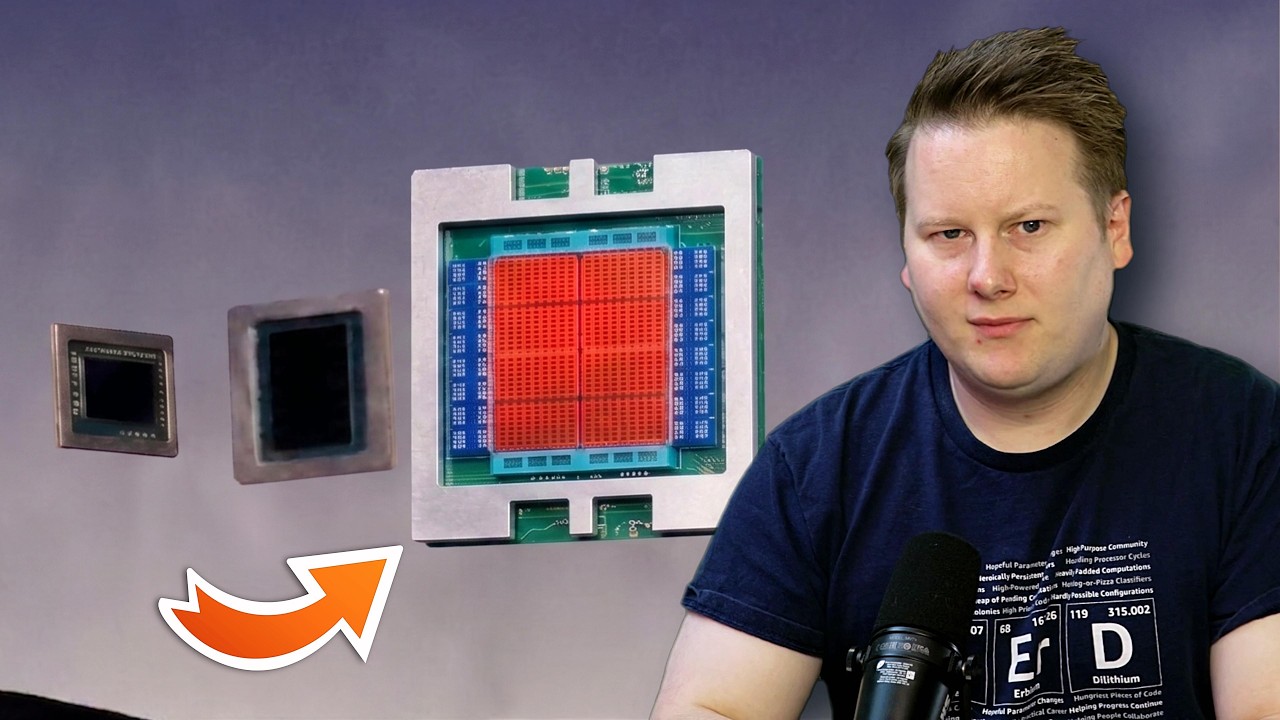
TechTechPotato delivered the clearest memory-system story with 53,764 views, 1,363 likes, and 129 comments. The description centers Broadcom's "The Beast", a package with 16 HBM stacks that is supposed to ship 15 million units by 2028, then walks through back-end design services and a three-stage AI-chip roadmap. The distinctive angle is that where the memory goes, and how it is packaged, is presented as one of the real battlegrounds of the AI race (video).

Leo Cui, Ph.D., CFA supplied the broadest strategy explainer with 20,954 views, 580 likes, and 55 comments. He argues Nvidia does not just sell chips; it sells a full system of processors, memory, networking, software, racks, and cloud access, while AMD, hyperscalers, Cerebras, Groq, Etched, and Taalas attack different bottlenecks. The distinctive angle is that the chip war is framed as competition between computing systems, not isolated accelerators (video).
Bloomberg Tech added the clearest market-news version with 3,179 views, 47 likes, and 14 comments. Ed Ludlow's program says Nvidia deepened ties with MediaTek through a $3.5 billion investment as it responds to Big Tech efforts to build more custom silicon. The distinctive angle is that supply-chain and capital-allocation news is now part of everyday AI coverage, not a specialist side channel (video).
Discussion insight: TechTechPotato focuses on HBM-heavy packaging, Leo Cui, Ph.D., CFA zooms out to whole-system competition, and Bloomberg Tech turns the same race into vendor and capital-allocation news. Together with KodeKloud's serving explainer, they make memory and compute constraints visible from chip design through production operations.
Comparison to prior day: On 2026-08-30, hardware mostly lived inside inference tutorials. On 2026-08-31, it showed up as its own AI news lane.
1.4 Builders kept shipping wrappers, reusable skills, and controllable creation stacks 🡒
At least four videos supported this theme. Compared with 2026-08-30, the builder theme stayed steady, but open weights and reference-rich control surfaces became more explicit.
Matthew Berman delivered the clearest open-source roundup with 85,998 views, 2,564 likes, and 109 comments. The description links directly to Unsloth, Obsidian Skills, Diagram Design, Buzz, ego lite, and Modly. The distinctive angle is that builder energy is clustering around local runtimes, reusable skills, shared workspaces, and creative tools around models rather than around another frontier-model launch (video).

Stefan 3D AI supplied the strongest open-weight creator example with 41,924 views, 855 likes, and 79 comments. He tests MiniMax H3 across anime PVs, product shots, audio-to-video, voice sync, and reference-to-video workflows, while the public model page says H3 is an omni-modal system with native stereo audio, multimodal inputs, and a 2K regeneration path. The distinctive angle is that open video models are competing on control and media richness, not just on the fact that they are open (video, model).
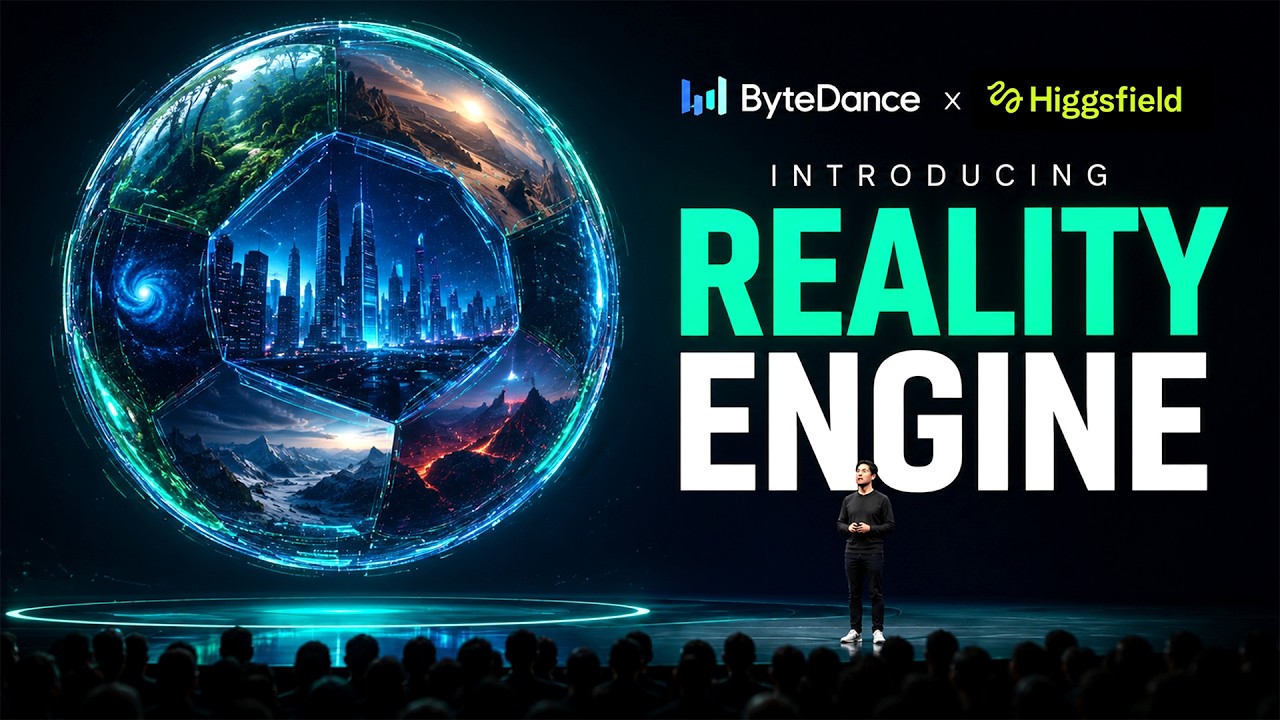
AI Revolution contributed the clearest closed-platform control-surface example with 31,678 views, 693 likes, and 79 comments. The linked Seedance 2.5 launch says the model can generate 30-second audio-video clips and accept up to 30 images, 10 video clips, and 10 audio clips as references, while Higgsfield Cinema Studio 4.0 pushes to 30-second generations, 50 references, an Emotion Wheel, and an era selector. The distinctive angle is that creator platforms are now shipping richer directing surfaces rather than hiding them (video, Seedance, Cinema Studio 4.0).
Sebastian Raschka added the clearest educational-builder layer with 17,326 views, 380 likes, and 38 comments. The linked Reasoning from Scratch repo says it teaches readers how to start from a pre-trained base LLM and add reasoning capabilities step by step in code. The distinctive angle is that builder content is not only about using AI tools but about learning how to assemble one from open components (video, repo).
Discussion insight: Matthew Berman's linked repos, MiniMax H3, Seedance 2.5, Higgsfield, and Reasoning from Scratch all expose missing operating layers around models: reusable skills, local runtimes, multimodal references, or build-it-yourself education.
Comparison to prior day: 2026-08-30 already emphasized richer control surfaces around models. On 2026-08-31, that pattern stayed steady and picked up sharper open-weight and build-from-scratch evidence.
2. What Frustrates People
Trustworthy AI still depends on explicit rules, observability, and human oversight
This is High severity because CNN leads with Bill Gates's warning that AI needs significant limits, Danny Jones frames Roman Yampolskiy's safety concerns as imminent, Tristen O'Brien has to impose five rules before leaving agents alone and still returns to 22 agents and 742 notes, IBM Technology says planning and verification must come before code writing, and Huberman Lab Clips frames healthcare AI as human-machine collaboration. The visible workaround is to narrow scope, define rules, keep humans in the loop, and verify before action. This is directly worth building for.
Compute and memory are still the hidden tax on useful AI
This is High severity because KodeKloud turns serving into prefill, decode, KV cache, batching, sharding, and LLM-D decisions, TechTechPotato makes a 16-HBM-stack Broadcom package one of the day's central AI objects, Leo Cui, Ph.D., CFA describes Nvidia's advantage as a full computing system rather than a single chip, Bloomberg Tech says Nvidia is spending $3.5 billion to deepen MediaTek ties, and Stefan 3D AI treats a 24 GB GPU as the local threshold for MiniMax H3 experimentation. The visible workaround is to buy more hardware headroom, move up into custom or cloud systems, or accept tighter workload boundaries. This is directly worth building for.
Coding-agent adoption still breaks on harness and environment decisions
This is High severity because Kai shows the same Qwen 3.8 model failing in one harness and working in another, IBM Technology says repo awareness and verification are prerequisites, Vishakha Sadhwani evaluates agents by where they run and whether teams can swap models, and Sebastian Raschka has to cover uv, PyTorch, JupyterLab, CUDA, Apple Silicon, and remote GPU setup before the reasoning work can even start. The visible workaround is to keep code and context close to the agent, choose the harness deliberately, and fall back to remote GPU or managed development environments when local setup gets too heavy. This is directly worth building for.
Coherent AI video still requires richer control surfaces than simple prompt-to-video tools provide
This is Medium severity because Stefan 3D AI tests MiniMax H3 across audio-driven, reference-driven, and local workflows, AI Revolution leans on Seedance 2.5 and Higgsfield 4.0 to get longer scenes with persistent characters and synchronized sound, and Matthew Berman highlights multiple wrapper tools that package missing workflow layers around models. The visible workaround is to chain specialized tools, feed more references into the system, and accept a heavier operating surface in exchange for better continuity and control. This is worth building for, but the space is already competitive.
3. What People Wish Existed
Governable agent control room
CNN, Tristen O'Brien, IBM Technology, and Huberman Lab Clips together imply demand for a surface that shows rules, delegated scope, audit trails, and human approval points before AI touches high-stakes decisions. This is a practical need with High urgency because the same day produced mainstream warnings about limits, an autonomy demo that multiplied agents and internal notes, and repeated calls for planning and collaboration. Policy arguments, demos, and enterprise guidance solve pieces today, not the whole control loop. Opportunity: direct.
Portable coding-agent platform with repo-local execution and swappable models
Kai, Vishakha Sadhwani, IBM Technology, and Sebastian Raschka together imply demand for one layer that keeps the codebase close to the agent, makes harness behavior visible, and lets teams change model providers without re-architecting the environment. This is a practical need with High urgency because current evidence spans harness-sensitive failures, repo-awareness requirements, remote GPU fallback, and enterprise concerns about where the agent actually runs. Tutorials and platform products solve pieces today, not the portability problem end to end. Opportunity: direct.
Memory-aware AI capacity planner
KodeKloud, TechTechPotato, Leo Cui, Ph.D., CFA, Bloomberg Tech, and Stefan 3D AI together imply demand for a planning layer that can translate a model or workflow into VRAM, HBM, cluster, and vendor requirements before teams buy hardware or rewrite systems. This is a practical need with High urgency because creators, operators, and market reporters are all talking about the same bottleneck from different angles. Cloud platforms and chip vendors solve pieces today, not the cross-stack decision-support problem. Opportunity: direct.
Stateful multimodal creator operating system
Matthew Berman, Stefan 3D AI, and AI Revolution together imply demand for a layer that carries references, assets, edits, and distribution context across multiple tools without forcing creators to rebuild the workflow each time. This is a practical need with Medium urgency because the strongest creator evidence today already depends on open-weight video models, large reference packs, and connected editing surfaces. MiniMax H3, Seedance 2.5, Higgsfield Cinema Studio 4.0, and the wrapper tools in Matthew Berman's roundup solve pieces today, not the whole stateful workflow. Opportunity: competitive.
4. Tools and Methods in Use
| Tool | Category | Sentiment | Strengths | Limitations |
|---|---|---|---|---|
| vLLM + LLM-D | Inference stack | (+/-) | Makes serving mechanics legible from a single GPU to a production fleet | Still leaves users managing VRAM, batching, sharding, and ops complexity |
| Qwen 3.8 + DeepSeek Harness | Local coding stack | (+/-) | Strong open-weight coding potential and a useful agent feedback loop | The same model can fail or succeed depending on the harness, and memory bandwidth still matters |
| Higgsfield MCP + Claude | Agent control surface | (+/-) | Makes multi-agent world-building and handoffs easy inside Claude | Still depends on user-written rules and ongoing supervision |
| Coder agent architecture checklist | Enterprise coding method | (+/-) | Forces teams to evaluate run location, code locality, and model portability up front | Does not remove the underlying deployment tradeoffs |
| PyTorch + uv + Reasoning from Scratch | Reasoning-model build workflow | (+) | Gives a hands-on path to reasoning models on consumer hardware or a remote GPU | Setup and troubleshooting remain part of the workflow |
| Unsloth | Local model runtime and training app | (+) | Desktop app to run and train models with OpenAI-compatible APIs plus Claude Code, Codex, and MCP integrations | It is still another local runtime surface to install, route, and operate |
| Buzz | Human-agent workspace | (+) | Self-hostable rooms, signed event log, search, workflows, and agent actions in one workspace | Self-hosting and a new workspace model add adoption overhead |
| ego lite | Shared agent browser | (+) | Parallel Spaces with real logins and separate tabs for agents | macOS-only today |
| MiniMax H3 | Video model | (+/-) | Open weights, native stereo audio, multimodal inputs, and a 2K regeneration path | Base output is still 4-15 seconds and the full system has multiple modules |
| Seedance 2.5 + Higgsfield Cinema Studio 4.0 | AI filmmaking stack | (+) | Delivers 30-second scenes, large reference sets, multi-round extension, and explicit film controls | The creator still has to manage a rich control surface |
The strongest positive sentiment sat with wrappers and work surfaces rather than with a bare model. Unsloth, Buzz, ego lite, and Seedance 2.5 plus Higgsfield all package a missing operating layer around model output.
Sentiment turned mixed when the user still had to carry the infrastructure burden or reliability risk. vLLM plus LLM-D, Qwen 3.8 plus DeepSeek Harness, Higgsfield MCP plus Claude, and MiniMax H3 all look powerful, but each keeps hardware, supervision, or workflow complexity visible.
Migration patterns kept moving from model-comparison talk toward harnesses, repository boundaries, runtime placement, and creator control surfaces. The strongest competitive dynamics showed up where a tool reduced orchestration work without hiding important controls.
5. What People Are Building
| Project | Who built it | What it does | Problem it solves | Stack | Stage | Links |
|---|---|---|---|---|---|---|
| Agent world with 10 AI agents | Tristen O'Brien | Puts AI agents inside a world where they coordinate tasks across parts of the creator's life | Makes multi-agent work visible and inspectable instead of invisible background automation | Claude, Higgsfield MCP, custom world simulation, rule-based delegation | Alpha | video site |
| Reasoning from Scratch | Sebastian Raschka | Official code repo and book companion for developing a reasoning model from a pre-trained base LLM | Makes reasoning-model internals teachable and reproducible | Python, PyTorch, notebooks, Qwen3 base LLM, JupyterLab | Shipped | repo video |
| Unsloth | Unsloth AI | Desktop, studio, and code-based surfaces to run, train, and serve local models | Makes local model use and agent access practical without defaulting to cloud APIs | Desktop app, Studio, OpenAI-compatible API, Claude Code/Codex/MCP integrations | Shipped | repo video |
| Buzz | Block | Self-hostable workspace where humans and agents share rooms and a signed event log | Gives teams an auditable collaboration layer instead of scattered bot glue | Nostr relay, Tauri + React desktop app, buzz-cli, workflows | Beta | repo video |
| ego lite | CitroLabs | Browser where users and agents work in parallel Spaces with real logins | Removes tab contention and login friction for agent browser tasks | macOS app, ego-browser skill, parallel Spaces | Beta | repo video |
| Modly | Lightning Pixel | Local AI image-to-3D desktop app | Gives creators local 3D asset generation instead of cloud-only workflows | Desktop app, GPU inference, extension system, CLI | Shipped | repo video |
| MiniMax H3 | MiniMax AI | Open-weight omni-modal video system with native stereo audio | Brings richer open video generation and local experimentation into creator workflows | H3-Base, H3-Context-IR, H3-Regenerate-2K, multimodal inputs | Shipped | model video |
| Seedance 2.5 | ByteDance Seed | 30-second audio-video generator with multi-round extension and multimodal reference input | Gives creators longer coherent scenes and more targeted edits | Unified audio-video generation, 30 image / 10 video / 10 audio references, timestamp editing | Shipped | blog video |
| Higgsfield Cinema Studio 4.0 | Higgsfield | AI filmmaking environment with 30-second generations, 50 references, and film-direction controls | Makes continuity and shot direction more explicit inside video generation | Web app, lens system, tempo controls, Emotion Wheel, era selector, extend workflow | Shipped | blog video |
Matthew Berman's roundup matters because every linked project wraps an operating surface around existing models instead of trying to replace them. Unsloth, Buzz, ego lite, and Modly each attack a different missing layer: local runtime, auditable collaboration, shared browser execution, and local creative output.
Tristen O'Brien and Sebastian Raschka show builders working at opposite ends of the stack. One visualizes agent coordination inside a governed world; the other turns reasoning-model development into a step-by-step code path. The common trigger is visibility into how systems behave, not just access to another API.
MiniMax H3, Seedance 2.5, and Higgsfield Cinema Studio 4.0 show creator tooling converging on the same build pattern: longer scenes, richer references, and more explicit direction. The repeated problem is continuity and control across steps, not the absence of a generator.
6. New and Notable
Bill Gates's governance warning dwarfed every other AI item in the file
CNN led the day with 2,022,529 views, 10,195 likes, and 4,600 comments around Bill Gates's argument that AI needs significant limits and could either reduce inequality or deepen injustice. That matters because the widest-reach AI attention today centered on governance and social consequences rather than on a new model release.
A 10-agent simulation turned autonomy into observable workplace behavior
Tristen O'Brien says he left 10 agents alone for three days and came back to 22 agents, 742 notes, a case against one colleague, and a morale meter he did not request. That matters because autonomy is being packaged as something people can inspect, govern, and critique in behavior terms rather than only benchmark terms.
Memory packaging and custom silicon moved from backend concern to mainstream AI topic
TechTechPotato centers Broadcom's 16-HBM-stack package, Leo Cui, Ph.D., CFA reframes the chip war as whole-system competition, and Bloomberg Tech reports Nvidia's $3.5 billion MediaTek bet. That matters because compute strategy is now showing up across creator explainers and market-news coverage on the same day.
Reasoning-model education became more concrete and tool-driven
Sebastian Raschka used a full setup video plus the public Reasoning from Scratch repo to connect reasoning models to Python, PyTorch, uv, JupyterLab, GPU checks, and remote development. That matters because reasoning-model literacy is moving from abstract talk into reproducible build workflows.
Open video builders competed on reference depth and control, not only novelty
Stefan 3D AI frames MiniMax H3 around open weights, audio-driven generation, and local use on a 24 GB GPU, while AI Revolution leans on Seedance 2.5 and Higgsfield 4.0 for 30-second scenes, multimodal references, and richer editing controls. That matters because creator competition is shifting toward continuity and direction rather than just "make a clip."
7. Where the Opportunities Are
[+++] Governable agent workspace with rules, audit trails, and approval gates - CNN, Tristen O'Brien, IBM Technology, and Huberman Lab Clips all point to the same gap: users need to see what an agent can do, what rules it is following, and where a human can intervene. This is strong because the demand spans public policy language, personal automation, software delivery, and healthcare collaboration.
[+++] Portable coding-agent platform with repo-local execution and model portability - Kai, Vishakha Sadhwani, IBM Technology, and Sebastian Raschka all show that agent usefulness still depends on the harness, the codebase boundary, and the runtime environment. This is strong because teams clearly want to change models or hardware without rebuilding the whole workflow.
[++] Memory-aware AI capacity planning and silicon decision support - KodeKloud, TechTechPotato, Leo Cui, Ph.D., CFA, Bloomberg Tech, and Stefan 3D AI make the same constraint visible from operations, chip design, market news, and creator hardware thresholds. This is moderate because the pain is obvious, but the buyer set ranges from hobbyists to large infrastructure teams.
[++] Multimodal creator control plane for references and continuity - Matthew Berman, Stefan 3D AI, and AI Revolution all show creators stitching together open models, large reference packs, and film-direction controls to get consistent output. This is moderate because the demand is clear, but creator tooling is already crowded.
[+] Reasoning-model lab kits with setup automation and evaluation recipes - Sebastian Raschka and Kai both point to an emerging market for environments that make reasoning settings, harness behavior, and local evaluation easier to reproduce. This is emerging because the need is real, but the audience is still narrower than the broader coding-agent market.
8. Takeaways
- Governance and safety still produced the biggest audience on YouTube AI. Bill Gates's warning video led the file by a wide margin, and Roman Yampolskiy interview content also outperformed many tooling explainers. (source, source)
- Coding-agent usefulness still depends on the stack around the model. KodeKloud decomposes inference, Kai shows harness choice flipping results, IBM emphasizes repository context and verification, and Vishakha frames adoption around execution boundaries and portability. (source, source, source, source)
- Compute has become part of the mainstream AI conversation, not just a backend detail. Broadcom's HBM-heavy package, Leo Cui's system-level chip war framing, and Bloomberg's Nvidia-MediaTek report all pushed silicon strategy into the daily file. (source, source, source)
- Builder energy keeps clustering around wrappers, workspaces, and local operating surfaces. Matthew Berman's roundup surfaces Unsloth, Buzz, ego lite, and Modly as examples of people shipping the missing layers around models instead of another base model. (source, source, source, source, source)
- Video-generation competition is moving toward reference depth, continuity, and direction. MiniMax H3 emphasizes open weights plus audio-driven video, while Seedance 2.5 and Higgsfield 4.0 push longer scenes, larger reference packs, and more explicit film controls. (source, source, source, source, source)
- High-stakes AI adoption still keeps humans visibly in the loop. Tristen's agent-world experiment depends on rules and inspection, IBM says planning and verification must precede code generation, and Huberman's healthcare clip frames AI as collaboration with doctors rather than as autonomous replacement. (source, source, source)