YouTube AI - 2026-09-02
1. What People Are Talking About
1.1 Agent control, safety, and human oversight stayed central, but the conversation moved closer to operating policy 🡒
At least four videos supported this theme. Compared with 2026-09-01, when CNN and PBD Podcast drove the loudest safety warnings in the file, the 2026-09-02 harvest kept safety central but pushed it toward operating policy: OpenAI leadership, enterprise control planes, and human-in-the-loop deployment.

Danny Jones delivered the day's strongest risk narrative with 258,222 views, 3,758 likes, and 1,600 comments. Roman Yampolskiy's episode outline runs from doomsday scenarios and mutually assured destruction to government slowing AI, keeping AI obedient, and the claim that AI-generated media is now hard to identify. The distinctive angle is that safety is framed as an operational control and authenticity problem, not only as a philosophical argument (video).

TIME brought the mainstream leadership version with 48,430 views, 649 likes, and 229 comments. Greg Brockman's interview description clusters AGI, AI agents, the Hugging Face cybersecurity incident, whether safety will slow model releases, and how Codex secured his website into one storyline about how OpenAI intends to ship while managing risk. The distinctive angle is that safety is discussed inside product velocity, cybersecurity, and deployment choices rather than outside them (video).

Will Phillips supplied the clearest enterprise implementation signal with 115,907 views, 1,091 likes, and 76 comments. The video says Guild.ai is building a control layer that lets organizations deploy, govern, and monitor agents with scoped permissions, approval gates, and audit trails, while Guild's public site adds model-neutral deployment, spend tracking, observability, and a shared agent hub. The distinctive angle is that oversight is presented as software infrastructure teams can buy, not only a principle they can agree with (video, site).

Huberman Lab Clips added the positive but still cautious endpoint with 5,702 views, 143 likes, and 10 comments. Fei-Fei Li and Andrew Huberman describe AI as a tool for biomedical knowledge synthesis, diagnosis support, and surgical precision through human-machine collaboration. The distinctive angle is that even the optimistic healthcare example keeps people inside the decision loop (video).
Discussion insight: Across Danny Jones, TIME, Guild.ai, and Huberman Lab Clips, the shared demand is not more autonomy at any cost. It is clearer permissions, clearer review boundaries, and better visibility into what AI is doing.
Comparison to prior day: 2026-09-01 safety coverage was louder and more mainstream because Bill Gates and a second Roman Yampolskiy interview dominated the file. On 2026-09-02, the theme stayed central but became more operational through OpenAI leadership, enterprise governance tooling, and human-in-the-loop healthcare framing.
1.2 Local AI became a real deployment spectrum, from beginner desktop apps to private edge devices and quad-GPU rigs 🡕
At least three videos supported this theme. Compared with 2026-09-01, when local AI was mostly framed through serving explainers and harness behavior, the 2026-09-02 file pushed the topic closer to deployable setups people can actually copy: desktop tools, home devices, and explicit GPU recipes.

Tech With Tim delivered the clearest mainstream explainer with 75,363 views, 961 likes, and 36 comments. He breaks local AI into weights, quantization, VRAM, inference engines, and hardware, then shows four different runtime paths: LM Studio, Ollama, Docker Model Runner, and full Python code. The distinctive angle is that local AI is treated as a stack of practical choices rather than a vague "run it offline" slogan (video).
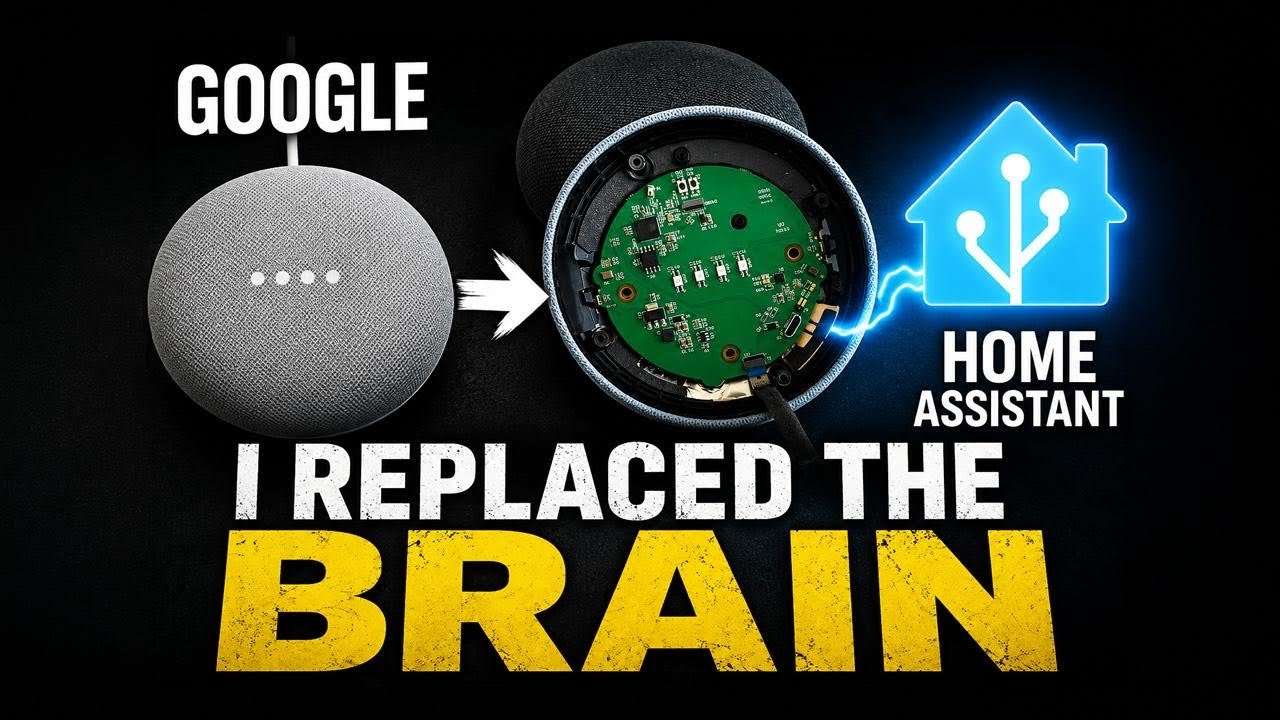
Automation Addict showed the clearest edge-device build with 75,127 views, 1,587 likes, and 106 comments. He replaces the original Google Nest Mini electronics with a custom ESPHome-based PCB so the device can work as a Home Assistant voice satellite with wake-word support, touch controls, and a local LLM running on an RTX 3060. The distinctive angle is that local AI is leaving the laptop and turning into a private smart-home interface (video, YAML).

Digital Spaceport supplied the most technical local-agent recipe with 29,483 views, 434 likes, and 45 comments. The video says Qwen 3.8 Flash Next with Hermes Agent is finally running fast enough to feel like a local agentic gold standard, and the linked setup article adds the concrete requirements: four 3090s for 96 GB of VRAM, 128+ GB of RAM, Debian 13 LXC, CUDA 13+, and hours of vLLM build time after llama.cpp timed out around a 45K context. The distinctive angle is that local AI performance is now being described as a reproducible hardware and runtime playbook (video, setup).
Discussion insight: Local AI no longer means one app. Tech With Tim, Automation Addict, and Digital Spaceport all show that model files, quantization, inference engines, hardware envelopes, and even device electronics are now part of the same conversation.
Comparison to prior day: 2026-09-01 emphasized serving internals and harness effects. On 2026-09-02, the same local-AI theme moved closer to setups people can install, tune, or physically build at home.
1.3 Coding AI was being evaluated by the surrounding workflow - model selection, repo context, and review surfaces - not just raw capability 🡕
At least three videos supported this theme. Compared with 2026-09-01, when the coding-agent conversation centered on harness architecture, the 2026-09-02 harvest made day-to-day selection and validation more explicit: people were ranking the model field, then asking how AI fits inside review and repo context.

Theo - t3.gg delivered the largest audience for this theme with 148,279 views, 4,051 likes, and 646 comments. The description says he is ranking nearly every model people would reasonably use today, which makes the competitive field itself the story. The distinctive angle is that model sprawl has become visible enough that a broad audience wants help deciding what is even worth using (video).
IBM Technology added the clearest review-loop example with 46,608 views, 451 likes, and 37 comments. The description says code review is moving from line-by-line inspection to AI-assisted outcome validation, and IBM's public AI code review write-up adds commit and pull-request triggers, diff plus surrounding-code analysis, IDE extensions, and static-analysis baselines. The distinctive angle is that AI is moving into the review loop rather than only the generation step (video, write-up).

IBM Technology also supplied the clearest repo-context signal with 25,776 views, 732 likes, and 67 comments. Prachi Modi says coding agents need repository awareness, architectural context, developer tools, planning, and verification before they can make better decisions. The distinctive angle is that good output depends on how much of the codebase and workflow the agent can actually see (video).
Discussion insight: Theo - t3.gg makes model choice itself a problem, but IBM's code review video and IBM's repo-awareness video both push the same conclusion: ranking models matters less if the review surface and codebase context are wrong.
Comparison to prior day: 2026-09-01 already treated coding agents as architecture. On 2026-09-02, that frame stayed intact and widened into explicit model selection pressure and AI-assisted validation inside the software workflow.
1.4 Chips, pricing, and energy stayed part of the mainstream AI feed rather than backend trivia 🡒
At least three videos supported this theme. Compared with 2026-09-01, compute remained a standalone storyline and rotated slightly toward economics: chip benchmarks, system competition, and pricing and energy pressure showed up in the same file.

Caleb Writes Code delivered the clearest product-level chip story with 75,020 views, 840 likes, and 59 comments. He says OpenAI's preliminary Jalapeno benchmark looks strong on inference even against NVIDIA Blackwell, and he calls out both HBM4 and an unusually short 13-month design-to-production timeline. The distinctive angle is that custom inference silicon is being discussed like mainstream AI product news rather than backroom infrastructure gossip (video).

Leo Cui, Ph.D., CFA supplied the broadest strategic framing with 23,518 views, 614 likes, and 57 comments. He argues NVIDIA is not just selling accelerators but a whole system of processors, memory, networking, software, racks, and cloud access, while AMD, hyperscalers, Cerebras, Groq, Etched, and Taalas attack different bottlenecks. The distinctive angle is that the chip war is framed as competition between whole computing systems rather than a single benchmark chart (video).

Peter H. Diamandis added the clearest economics overlay with 21,961 views, 1,271 likes, and 227 comments. The chapter list ties outcome-based pricing, an AI-designed chip claimed to outperform NVIDIA by 3.4x, and AI's growing energy bottleneck into one broad AI-news package. The distinctive angle is that hardware discussion is being bundled with pricing and energy, not treated as an isolated engineering concern (video).
Discussion insight: Caleb Writes Code, Leo Cui, Ph.D., CFA, and Peter H. Diamandis cover different layers of the same story: benchmark claims, system-level competition, and the economics of price and power all now sit inside everyday AI coverage.
Comparison to prior day: 2026-09-01 already gave compute its own lane. On 2026-09-02, that lane stayed steady and added a stronger price-and-energy frame on top of the chip narrative.
2. What Frustrates People
Trustworthy agents still need visible boundaries, approvals, and audit trails
This is High severity because Danny Jones centers slowing AI, obedience, and media-authenticity failure, TIME puts safety, AI agents, and cybersecurity in one OpenAI leadership interview, Guild.ai says most teams still cannot answer what agents are running, what they cost, or what happens if they fail, and Huberman Lab Clips still frames healthcare AI as collaboration instead of autonomous replacement. The visible workaround is to narrow permissions, keep humans in approval loops, and add observability before expanding autonomy. This is directly worth building for.
Local AI still comes with a hardware and setup tax
This is High severity because Tech With Tim has to explain weights, quantization, VRAM, inference engines, and four different runtime paths before beginners can even start, Digital Spaceport only reaches reliable local agentic performance with four 3090s, 128+ GB of RAM, CUDA 13+, and vLLM build steps, and Automation Addict needs a custom PCB, ESPHome, YAML, and a local RTX 3060-backed model just to make a private voice assistant work. The visible workaround is to accept smaller models, heavier setup, or purpose-built hardware. This is directly worth building for.
Coding AI still breaks when the repo and review loop are thin
This is High severity because Theo - t3.gg makes model choice itself a challenge, IBM's code review video moves review toward AI-assisted outcome validation with diff-aware pull-request flows and static-analysis baselines, and IBM's repo-awareness video says planning, verification, and architecture context have to precede generation. The visible workaround is to combine model selection with repository access, review automation, and more human validation than demo videos usually suggest. This is directly worth building for.
Fast AI video still depends on a multi-step asset and prompt choreography
This is Medium severity because Jack Vs. AI needs OpenArt, GPT-Image 2, Seedance 2.0 and 2.5, consistent reference sheets, and a Claude-generated multi-shot prompt to turn one idea into a finished sequence. The visible workaround is to chain specialized tools and carry consistency assets between them instead of expecting one model to do the whole job. This is worth building for, but the evidence in this file comes from one workflow rather than a broad creator cluster.
3. What People Wish Existed
Model-neutral agent control room with spend, policy, and approval flows
Danny Jones, TIME, Will Phillips, and Huberman Lab Clips together imply demand for a surface that shows what each agent can access, who owns it, how much it costs, where a human can intervene, and how safety tradeoffs affect release decisions. This is a practical need with High urgency because the same file combines existential-risk language, cybersecurity questions, enterprise governance tooling, and a clinical example that still keeps humans inside the loop. Guild.ai solves parts of this today, but the surrounding demand is broader than one vendor. Opportunity: direct.
Hardware-aware local AI runtime that maps models to real machines
Tech With Tim, Digital Spaceport, and Automation Addict together imply demand for one layer that can translate a model choice into VRAM, quantization, runtime, and device requirements before users waste time assembling the wrong stack. This is a practical need with High urgency because the evidence spans beginner confusion, workstation-class requirements, and DIY smart-home retrofits. LM Studio, Ollama, vLLM, and Home Assistant integrations solve pieces today, not the full planning and deployment path. Opportunity: direct.
Repo-aware coding workspace with built-in model evaluation and outcome validation
Theo - t3.gg, IBM's code review video, and IBM's repo-awareness video together imply demand for a workspace that helps teams compare models, keep repository context close to the agent, and validate outcomes against diffs, requirements, and business impact. This is a practical need with High urgency because current evidence spans model-ranking overload, pull-request review automation, and repeated warnings that generation without context or verification is not enough. Model dashboards and code-review tools solve pieces today, not the whole workflow. Opportunity: direct.
Cost-and-silicon planner for custom inference and energy tradeoffs
Caleb Writes Code, Leo Cui, Ph.D., CFA, and Peter H. Diamandis together imply demand for a planner that connects benchmark claims, system architecture, pricing models, and power constraints before teams commit to a chip or hosting direction. This is a practical need with High urgency because the same file spans HBM4-backed custom silicon, system-level vendor competition, and explicit outcome-based pricing and energy-bottleneck talk. Cloud vendors and chip vendors solve pieces today, not the cross-stack decision problem. Opportunity: direct.
Stateful creator workflow for consistent AI video from idea to finished sequence
Jack Vs. AI implies demand for a surface that carries characters, reference sheets, prompts, clips, and model-version tradeoffs across a multi-step AI-video workflow. This is a practical need with Medium urgency because even one tutorial depends on multiple tools before reaching a polished output. OpenArt, GPT-Image 2, Seedance, and Claude solve pieces today, not the whole stateful workflow. Opportunity: competitive.
4. Tools and Methods in Use
| Tool | Category | Sentiment | Strengths | Limitations |
|---|---|---|---|---|
| Guild.ai | Agent control plane | (+) | Model-neutral governance, observability, spend tracking, scoped credentials, approval gates, audit trails, and agent sharing | Best fit is still teams with enough agent sprawl to justify a dedicated control layer |
| LM Studio, Ollama, Docker Model Runner, and full Python | Local inference stack | (+/-) | Gives users multiple local execution paths and clear language for weights, quantization, VRAM, and inference engines | Still leaves hardware sizing and setup burden on the user |
| Qwen 3.8 Flash Next + Hermes Agent + vLLM | Local agent stack | (+/-) | Promises faster local agentic use and a concrete playbook for Qwen 3.8 Flash Next | Requires quad 3090-class hardware, 128+ GB of RAM, CUDA, and long build steps |
| AI code review | Review workflow | (+/-) | Connects AI review to diffs, surrounding code, pull requests, CI, and IDE flow | Still depends on static-analysis baselines and human judgment about intent and requirements |
| Repository-aware coding agents | Coding method | (+/-) | Emphasizes architecture context, tool access, planning, and verification before generation | Adds little value if the agent cannot see enough of the repo or workflow |
| OpenAI Jalapeno | Custom inference chip | (+/-) | Strong preliminary inference story and HBM4-backed custom-silicon momentum | Still benchmark-stage and inaccessible to most developers |
| Home Assistant voice satellite stack | Edge assistant stack | (+) | Reuses commodity hardware to keep voice and LLM behavior local and private | DIY PCB, firmware, and YAML work keep the setup niche |
| OpenArt + GPT-Image 2 + Seedance + Claude | Creator workflow | (+/-) | Turns rough ideas into consistent multi-shot AI video with references and prompts | Still requires multiple tools and explicit tradeoffs between model versions |
The strongest positive sentiment sat with layers that make AI more governable or more usable in a concrete environment. Guild.ai, the Home Assistant voice stack, and the OpenArt, GPT-Image 2, Seedance, and Claude workflow all wrap AI inside a workflow people can actually operate instead of a raw model endpoint.
Sentiment turned mixed when the user still had to carry hardware, context, or review burden. Tech With Tim's local stack, Digital Spaceport's Qwen and Hermes setup, IBM's AI code review flow, and OpenAI Jalapeno all look valuable, but each keeps some combination of infrastructure, model fit, and human oversight visible.
Migration patterns kept moving away from simple model-versus-model arguments toward local runtime choice, repo visibility, pull-request validation, and enterprise control layers. The clearest competitive dynamic is between neutral orchestration surfaces like Guild.ai and more vertical workflows like the Nest Mini retrofit or Jack Vs. AI's creator stack.
5. What People Are Building
| Project | Who built it | What it does | Problem it solves | Stack | Stage | Links |
|---|---|---|---|---|---|---|
| Guild.ai | Guild.ai team | Control plane that runs, governs, monitors, and shares AI agents across models and providers | Makes agent fleets visible, auditable, and cost-manageable instead of scattered and opaque | Model-neutral agent platform, observability, spend tracking, scoped credentials, approval gates, agent hub | Shipped | site video |
| Google Nest Mini Home Assistant voice assistant | Automation Addict | Replaces Nest Mini internals so the device becomes a Home Assistant voice satellite with local LLM support | Gives smart-home voice control without depending on Google's cloud stack | Custom ESPHome PCB, Home Assistant Assist, local LLM on RTX 3060, YAML configs | Beta | video YAML PCB |
| Qwen 3.8 Flash Next + Hermes Agent local rig | Digital Spaceport | Playbook for running a faster local agent stack on a quad-GPU workstation | Makes local agentic use more reliable than lighter local runtimes | Qwen 3.8 Flash Next, Hermes Agent, vLLM, Debian 13 LXC, quad 3090 GPUs, 128+ GB RAM | Alpha | video setup |
| Cinematic AI video workflow | Jack Vs. AI | Turns a one-line idea into a multi-shot AI video with character consistency and reference sheets | Gives creators a repeatable path from rough concept to polished sequence | OpenArt, GPT-Image 2, Seedance 2.0 and 2.5, Claude, prompt pack | Beta | video OpenArt |
Will Phillips and Guild.ai matter because they turn agent governance into a first-class product surface: spend, approvals, observability, and shared reuse are the product, not side utilities around a model. That is a stronger builder signal than another model demo because it assumes real organizations already have too many agents to track informally.
Digital Spaceport and Automation Addict show local AI builders splitting in two directions. One pushes toward workstation-scale throughput and reliable local agents; the other repurposes consumer hardware into a private voice interface. The shared trigger is keeping AI local, inspectable, and under the user's control.
Jack Vs. AI shows creator building patterns shifting from "one prompt, one clip" toward reusable workflows that carry references, prompt packs, and model-version tradeoffs across tools. Builder activity on 2026-09-02 was more workflow-heavy than model-launch heavy.
6. New and Notable
Guild surfaced agent governance as a product category, not just a policy wish
Will Phillips frames Guild.ai around scoped permissions, approval gates, and audit trails, while the public Guild.ai site adds model-neutral deployment, spend tracking, observability, and agent sharing. That matters because one of the day's clearest builder signals was not another agent demo but infrastructure for controlling agents already in production.
Greg Brockman's TIME interview packed AGI, safety, cybersecurity, and Codex into one mainstream conversation
TIME uses one interview to connect OpenAI leadership changes, AI agents, the Hugging Face cybersecurity incident, whether safety slows releases, and how Codex secured Brockman's site. That matters because the day's leadership conversation treated shipping, security, and AGI rhetoric as one product story.
Local AI showed up at both beginner and power-user ends of the stack on the same day
Tech With Tim explains local AI through LM Studio, Ollama, Docker Model Runner, and full Python code, while Digital Spaceport turns the same topic into a quad-3090, vLLM, CUDA, and context-window recipe. That matters because local AI is no longer one niche workflow; it is spanning mainstream tutorials and high-end workstation playbooks at once.
A DIY Nest Mini retrofit turned private AI into a household hardware story
Automation Addict replaces a Google Nest Mini's electronics so the device becomes a Home Assistant voice satellite with a local LLM running on an RTX 3060. That matters because the local-AI trend is moving beyond laptops and servers into consumer hardware that people already own.
Chip discussion connected benchmarks, outcome-based pricing, and energy pressure
Caleb Writes Code centers OpenAI Jalapeno and HBM4, Leo Cui, Ph.D., CFA reframes the chip war as system competition, and Peter H. Diamandis adds outcome-based pricing and energy bottleneck language. That matters because chip talk is widening from component benchmarks into business-model and power-planning questions.
7. Where the Opportunities Are
[+++] Model-neutral agent control plane with spend, permissions, and approval flows - Danny Jones, TIME, Guild.ai, and Huberman Lab Clips all point to the same gap: users want more AI capability, but they also want clearer access boundaries, better observability, and obvious human override points. This is strong because the evidence spans safety rhetoric, enterprise operations, and high-stakes clinical deployment.
[+++] Portable local AI operating layer that maps models to hardware, runtimes, and edge devices - Tech With Tim, Digital Spaceport, and Automation Addict all show the same decision problem from different scales: which model to run, how much VRAM and RAM it needs, which runtime to choose, and whether the result can fit into a private device. This is strong because the pain spans beginners, workstation builders, and home-automation tinkerers.
[++] Repo-aware coding workflow with model evaluation and AI-assisted review - Theo - t3.gg, IBM's code review video, and IBM's repo-awareness video show that teams still need one workflow for comparing models, exposing repository context, and validating outcomes inside pull requests and IDEs. This is moderate because the demand is clear, but the strongest evidence in this file is about workflow gaps rather than one dominant new build pattern.
[++] AI infrastructure planner for chips, pricing, and power - Caleb Writes Code, Leo Cui, Ph.D., CFA, and Peter H. Diamandis make the same gap visible from benchmark claims, system design, and energy economics. This is moderate because the pain is obvious, but the buyer set ranges from hobbyists to large infrastructure teams.
[+] Stateful creator workflow for consistent AI video - Jack Vs. AI shows that useful AI video still needs characters, references, prompts, and model-version choices carried across multiple steps. This is emerging because the workflow is concrete, but the evidence in this file is still concentrated in one tutorial rather than a broad cluster.
8. Takeaways
- Control stayed central, but 2026-09-02 made it more operational. Danny Jones, TIME, and Guild.ai all focus on how AI is governed, not only how powerful it is. (source, source, source)
- Local AI is now a spectrum from beginner desktop apps to custom edge devices and quad-GPU rigs. Tech With Tim, Automation Addict, and Digital Spaceport show the same trend at three very different scales. (source, source, source)
- The model-ranking conversation is increasingly downstream of workflow questions. Theo - t3.gg ranks the field, while IBM's code review video and IBM's repo-awareness video emphasize review loops and codebase context. (source, source, source)
- Chips, memory, pricing, and energy are now part of mainstream AI discourse. Caleb Writes Code, Leo Cui, Ph.D., CFA, and Peter H. Diamandis connect custom silicon to business-model and power questions. (source, source, source)
- The clearest builder energy sat in operating layers, not in a new base model launch. Guild.ai, the Nest Mini retrofit, Digital Spaceport's local rig, and Jack Vs. AI's creator workflow all package a missing layer around model use. (source, source, source, source)
- High-stakes adoption still keeps humans visibly in the loop. Huberman Lab Clips frames healthcare AI as collaboration, and Guild.ai sells governance and approval flows rather than unconstrained autonomy. (source, source)