YouTube AI - 2026-09-03
1. What People Are Talking About
1.1 The conversation moved from "which model?" toward the agent operating layer around it 🡕
At least five videos supported this theme. Compared with 2026-09-02, when model selection and AI-assisted review were already visible, the 2026-09-03 file pushed one step deeper into agent architecture: skills, MCP, memory, repo context, and deployment surfaces became the story, not background plumbing.

Theo - t3.gg delivered the largest audience for this theme with 150,124 views, 4,064 likes, and 648 comments. The description says he is ranking nearly every model people would reasonably use today, which makes model sprawl itself the story. The distinctive angle is that a broad developer audience now wants help deciding what is even worth using (video).
IBM Technology turned that model-choice pressure into architecture pressure with 24,095 views, 515 likes, and 48 comments. Martin Keen says agents need more than training data and breaks down Skills, MCP, RAG, and Memory as separate techniques that work together to help agents access information, follow procedures, and learn from experience. The distinctive angle is that the useful unit is no longer one model, but a stack of capabilities around it (video, IBM).

IBM Technology also supplied the clearest repo-context requirement with 26,124 views, 736 likes, and 67 comments. Prachi Modi says coding agents need repository awareness, architectural context, developer tools, planning, and verification before they can make better coding decisions. The distinctive angle is that architecture and tooling determine output quality as much as the model does (video, IBM Research).

Krish Naik packaged the production version with 12,065 views, 152 likes, and 6 comments. Starting from an empty Google Cloud project, he walks through specialized agents, deployment on Agent Runtime with persistent memory, secure identities, and enterprise governance, while the linked customer-support-agent repo shows a coordinator, specialists, code-enforced tool access control, and memory across sessions. The distinctive angle is that production agent concerns are being bundled into platform semantics instead of added later (video, platform, repo).
Discussion insight: Theo's ranking, IBM's component breakdown, IBM's repo-awareness framing, and Krish Naik's deployment tutorial all point to the same shift: people are still comparing models, but the hard part is increasingly the layer that decides what the agent can access, remember, verify, and safely deploy.
Comparison to prior day: 2026-09-02 emphasized model-ranking pressure and AI inside review surfaces. On 2026-09-03, that frame moved one layer down into explicit agent architecture and operating-layer design.
1.2 Safety moved closer to reasoning visibility, data leakage, and regulation rather than abstract doom alone 🡕
At least three videos supported this theme. Compared with 2026-09-02, when safety coverage centered on operating policy and human oversight, the 2026-09-03 file made the safety conversation more technical and more political at the same time.

TEDx Talks provided the broadest public-facing safety frame with 37,424 views, 513 likes, and 90 comments. Roman Yampolskiy asks whether advanced AI can be controlled and positions that question inside long-term AI safety and cybersecurity. The distinctive angle is that the day's broadest safety warning still comes from the control problem itself, not only from one product incident (video).

Machine Learning Street Talk delivered the most technical safety evidence with 32,277 views, 691 likes, and 170 comments. Tim Scarfe's discussion of Stealing Reasoning Traces from Proprietary LLM APIs says encrypted reasoning traces can be replayed across users and sibling models; the paper abstract says the exploit recovered 367 PII artifacts and 182 credentials from 315,320 scraped reasoning blocks and also enabled hazardous-information disclosure and invisible prompt injections. Anthropic's separate reasoning-faithfulness write-up adds that visible chain-of-thought often fails to admit when hints or reward-hacking shortcuts were used. The distinctive angle is that chain-of-thought is being treated as both attack surface and unreliable monitor, not just an explainability feature (video, paper, Anthropic).

PoliticsGirl supplied the bluntest policy version with 9,452 views, 915 likes, and 69 comments. The short argues that AI companies are working hard to keep regulation away and ends in a direct call for rules. The distinctive angle is that the regulatory demand is stated without the technical buffer usually present in product explainers (video).
Discussion insight: Taken together, the file suggests that the next safety fight is about visibility: whether users, auditors, and regulators can actually see what reasoning traces, tool calls, and model policies are doing.
Comparison to prior day: 2026-09-02 asked how to ship AI with approvals and humans in the loop. 2026-09-03 added evidence that the hidden state itself may leak, mislead, or require outside regulation.
1.3 Open and local AI were framed as complete stacks people can own, not one-off tools 🡕
At least three videos supported this theme. Compared with 2026-09-02, when local AI showed up as desktop apps, edge devices, and quad-GPU rigs, the 2026-09-03 file pushed further toward stack ownership: self-hosted layers, vendor-neutral harnesses, and repurposed household hardware.
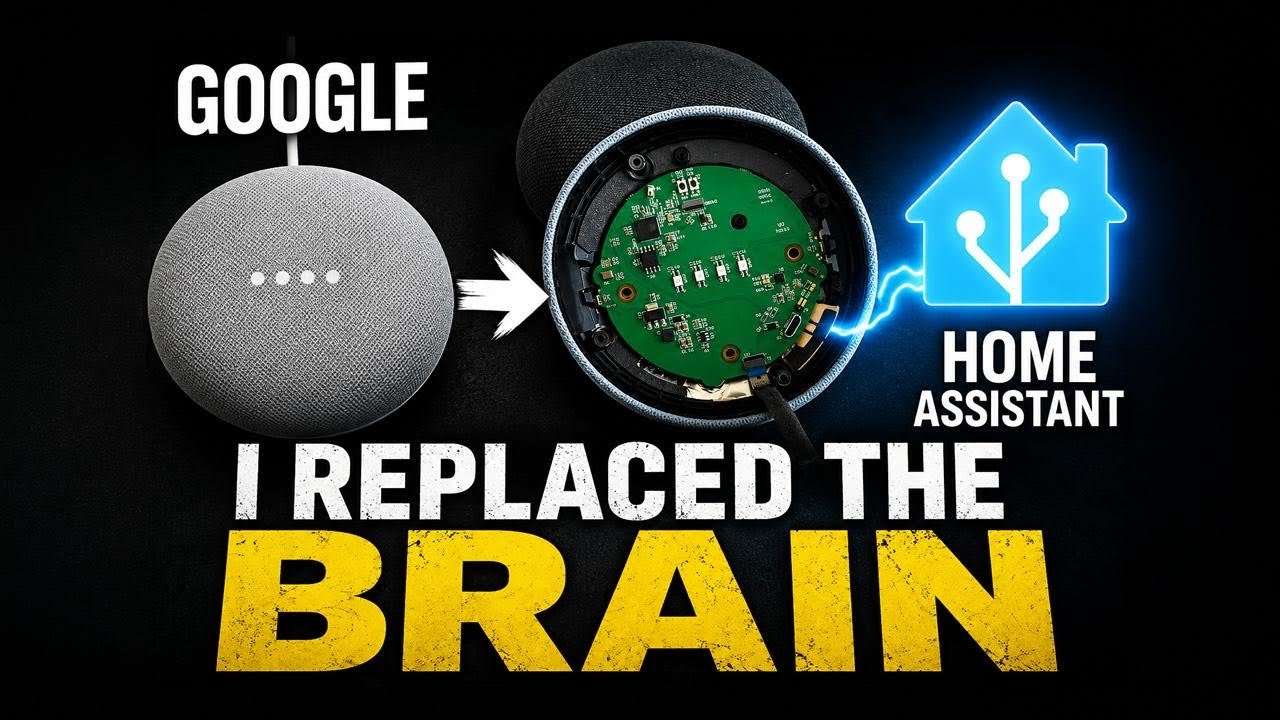
Automation Addict showed the clearest physical build with 77,530 views, 1,611 likes, and 112 comments. He replaces the original Google PCB with a custom ESPHome-based board so the Nest Mini becomes a Home Assistant voice satellite, and the linked YAML shows on-device microWakeWord wake-word detection plus a local pipeline that can use Whisper, Piper, and a local LLM. The distinctive angle is that private AI is turning into a device-and-firmware project, not only a laptop runtime (video, YAML).
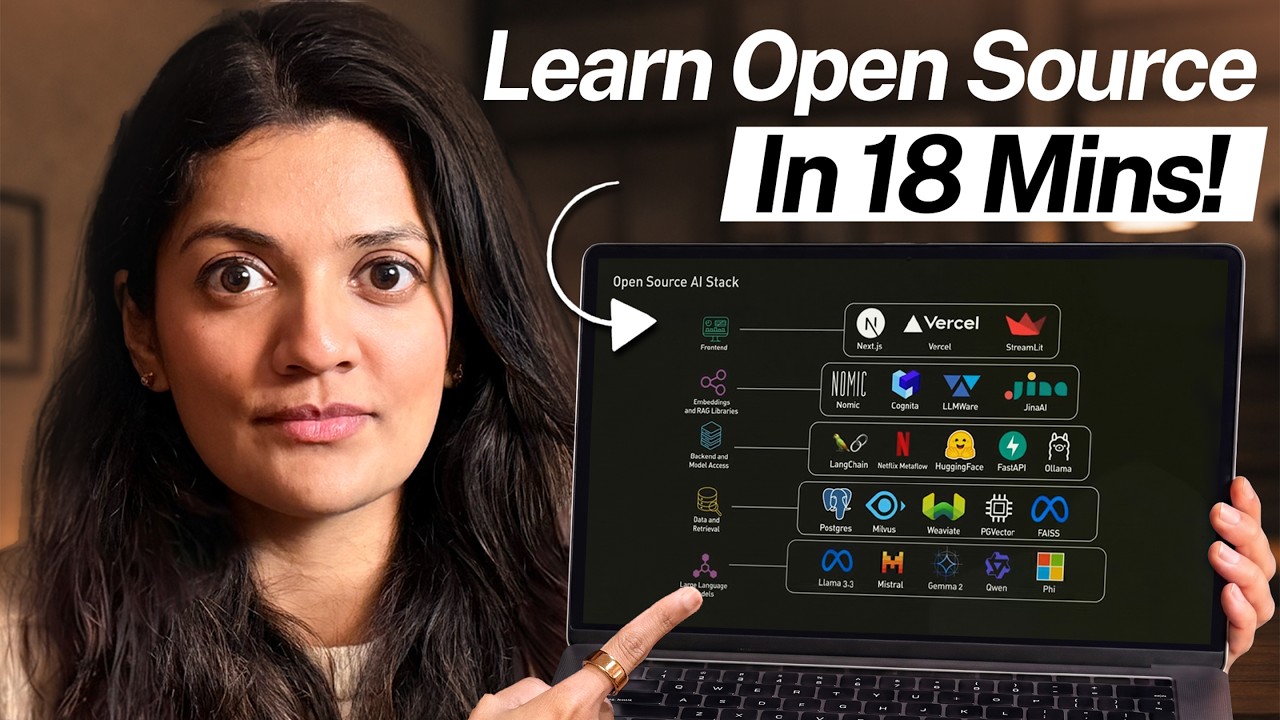
Aishwarya Srinivasan added the clearest architectural version with 60,260 views, 608 likes, and 14 comments. She argues that one prompt to one proprietary API is not AI engineering, then walks through models, serving, routing, RAG, memory, protocols, frameworks, observability, safety, and interfaces using only open-source tools and open-weight models. The distinctive angle is that open AI is treated as a layered systems discipline rather than an ideological preference (video).

Tech With Tim supplied the clearest runtime bridge with 15,081 views, 336 likes, and 11 comments. He builds a real agent from scratch with open-source tools, and the linked TrueForge docs and benchmark write-up position the harness as the layer that handles MCP tools, skills, sandboxing, approvals, and session state while letting teams choose models and infrastructure. The distinctive angle is that control over the harness is presented as the practical middle ground between a raw API and a closed managed-agent platform (video, docs, benchmark).
Discussion insight: The shared pattern across Nest Mini, Aishwarya Srinivasan, and Tech With Tim is that "local" and "open" no longer mean only smaller models. They mean owning more of the serving, memory, tool, and interface stack.
Comparison to prior day: 2026-09-02 was about how to run local AI. 2026-09-03 pushed harder on why people want to own the stack in the first place.
1.4 Infrastructure stayed central, but the frame widened from chips and price to ecosystem control 🡒
At least three videos supported this theme. Compared with 2026-09-02, when chips, outcome-based pricing, and energy were the clearest infrastructure story, the 2026-09-03 file kept compute central but shifted some attention toward who controls the surrounding ecosystem.

Caleb Writes Code delivered the clearest standalone chip story with 79,236 views, 868 likes, and 60 comments. He says OpenAI's preliminary Jalapeno benchmark looks strong against NVIDIA Blackwell-class inference systems and calls out the speed of a 13-month design-to-production cycle with HBM4. The Verge's reporting adds the concrete performance claim: 1.5 to 1.9 times more AI work per watt and 1.7 to 3.6 times lower latency than GB200 or GB300 comparison systems across three models. The distinctive angle is that custom inference silicon is now normal AI product coverage, not backend trivia (video, report).

AI Revolution turned the chip story into a market-compression story with 39,090 views, 538 likes, and 39 comments. The description stacks Jalapeno benchmarks, Alibaba's lower-cost Qwen3.8-Flash launch, Anthropic model-codename leaks, and Claude memory upgrades into one roundup about faster model cycles and cheaper AI. The distinctive angle is that infrastructure performance is being discussed alongside pricing pressure and memory features, not in isolation (video, The Verge).

Turing Post TV supplied the strongest ecosystem-control angle with 3,249 views, 105 likes, and 23 comments. The video traces NVIDIA from open-source hostility to maintaining public Linux GPU kernel modules, releasing models and datasets, and pursuing a reported Hugging Face deal; the linked NVIDIA open GPU kernel modules repo is a public C codebase with build instructions for x86_64 and aarch64 Linux. The distinctive angle is that open source is framed as a strategic moat, not a charitable gesture (video, repo).
Discussion insight: Across OpenAI, Alibaba, Anthropic, and NVIDIA, the file suggests that compute advantage now includes chips, model pricing, memory features, and control over open ecosystems.
Comparison to prior day: 2026-09-02 made infrastructure visible through benchmarks, pricing, and power. 2026-09-03 kept that lane steady but shifted closer to platform leverage and ecosystem ownership.
2. What Frustrates People
Useful agents still need an explicit operating layer around the model
This is High severity because Theo - t3.gg makes model choice itself a crowded decision, IBM Technology says agents need distinct roles for skills, MCP, RAG, and memory, IBM Technology says coding agents need repository awareness, architectural context, planning, and verification, and Krish Naik only reaches a production story by adding persistent memory, secure identities, and governance on top of the model. The visible workaround is to wrap the model in a harness, multi-agent structure, or platform layer that can route tools, carry memory, and enforce policy. This is directly worth building for.
Hidden reasoning and agent state are still hard to trust
This is High severity because TEDx Talks frames control as the core AI question, Machine Learning Street Talk surfaces an exploit that recovered 367 PII artifacts and 182 credentials from 315,320 scraped reasoning blocks and enabled invisible prompt injections, and Anthropic's reasoning-faithfulness write-up says visible chain-of-thought often fails to admit when hints or reward-hacking shortcuts were used. PoliticsGirl shows the same trust gap turning into a direct demand for regulation. The visible workaround is to add stronger boundaries, disclosure, cryptographic or system-level mitigations, and external oversight instead of trusting exposed reasoning text on its own. This is directly worth building for.
Private and local AI still come with a hardware and integration tax
This is High severity because Automation Addict needs a custom ESPHome board, Home Assistant wiring, and a local RTX 3060-backed model to make a private Nest Mini assistant work, Aishwarya Srinivasan argues that real AI engineering spans serving, routing, memory, protocols, observability, safety, and interfaces, and Tech With Tim still needs a full harness layer before an open-source agent becomes usable. The visible workaround is to accept YAML, firmware, self-hosting, and runtime complexity in exchange for more control. This is directly worth building for.
Compute leverage is still concentrated in chips, pricing, and ecosystem control
This is Medium severity because Caleb Writes Code centers OpenAI's custom inference silicon, AI Revolution bundles chip efficiency with cheaper Qwen pricing and Claude memory upgrades, and Turing Post TV frames open source itself as NVIDIA's ecosystem strategy. The visible workaround is to chase cheaper models, vendor-neutral harnesses, or public infrastructure surfaces such as NVIDIA's open GPU kernel modules, but most builders still do not control the underlying supply and platform shifts. This is worth building for, especially where cost routing and infrastructure planning can be abstracted for smaller teams.
3. What People Wish Existed
Agent operating layer that tells teams when to use skills, MCP, RAG, memory, repo context, and approvals
Theo - t3.gg, IBM Technology's Skills vs MCP vs RAG vs Memory video, IBM Technology's coding-agents video, Tech With Tim, and Krish Naik together imply demand for a surface that does more than rank models. People need help deciding which capability pattern to use, what the agent should be allowed to access, how much codebase context it needs, and where approvals and verification belong. This is a practical need with High urgency because the same file moves from model overload into architecture overload. TrueForge, Gemini Enterprise Agent Platform, and IBM's guidance cover pieces today, not the full decision layer. Opportunity: direct.
Security and audit layer for reasoning traces, hidden state, and prompt-injection visibility
Machine Learning Street Talk, TEDx Talks, Anthropic's reasoning-faithfulness write-up, and PoliticsGirl together imply demand for a layer that can isolate reasoning traces, surface when hidden state is risky, and give teams something stronger than trust in chain-of-thought text. This is a practical need with High urgency because the evidence spans direct exploitability, unreliable monitoring, and calls for regulation. Research papers and responsible disclosure offer guidance today, not a mature operating surface. Opportunity: direct.
Private AI deployment kit that maps hardware, firmware, runtimes, and models into one copyable path
Automation Addict, Aishwarya Srinivasan, and Tech With Tim together imply demand for a kit that can translate "I want this private and local" into exact device, model, runtime, and configuration choices. This is a practical need with High urgency because today's evidence spans custom boards, YAML, self-hosted pipelines, and full harness selection. Home Assistant, ESPHome, open-weight stacks, and TrueForge cover parts of the path today, not the whole copyable deployment experience. Opportunity: direct.
Cost-aware router for models, harnesses, and infrastructure choices
Theo - t3.gg, Tech With Tim's linked TrueForge benchmark, Caleb Writes Code, AI Revolution, and Turing Post TV together imply demand for a planner that connects model quality, harness overhead, chip efficiency, memory features, and open-ecosystem leverage before a team commits. This is a practical need with Medium-to-High urgency because the file repeatedly shows that cost and performance are moving at multiple layers at once. Model rankings, benchmark posts, and cloud platforms solve slices of this today, not the cross-layer routing problem. Opportunity: competitive.
4. Tools and Methods in Use
| Tool | Category | Sentiment | Strengths | Limitations |
|---|---|---|---|---|
| TrueForge | Agent harness | (+) | Model-neutral runtime with MCP tools, skills, sandboxing, approvals, session state, chat UI, and API layers | Still requires a harness decision and either self-hosting or a hosted deployment path |
| Skills, MCP, RAG, and Memory | Agent design pattern | (+/-) | Clarifies that procedures, tool access, retrieval, and history play different roles in a working agent | Teams still have to decide how to combine them and what each one should be allowed to touch |
| Google ADK and Gemini Enterprise Agent Platform | Enterprise agent platform | (+) | Gives a path from local testing to multi-agent deployment with persistent memory and secure identities | Adds cloud and platform coupling, plus enterprise setup overhead |
| Home Assistant, ESPHome, microWakeWord, and a local LLM | Edge private-assistant stack | (+) | Keeps wake-word handling and voice control close to the device while reusing familiar hardware | Requires a custom board, YAML, and local hardware such as an RTX 3060-backed host |
| Open-source AI stack | AI architecture method | (+/-) | Forces builders to think through models, serving, routing, memory, observability, safety, and interfaces together | Much more operational work than calling one proprietary API |
| Theo's model ranking | Model evaluation method | (+/-) | Compresses a crowded model field into one developer-facing decision aid | Ranking alone does not solve integration, codebase context, or workflow fit |
| OpenAI Jalapeno | Inference hardware | (+/-) | Claimed gains in work per watt and end-to-end latency make infrastructure differences easy to notice | Deployment is still small-volume and vendor-controlled |
| NVIDIA open GPU kernel modules | Open-source GPU infrastructure | (+/-) | Public Linux kernel module source strengthens NVIDIA's open-source posture around AI infrastructure | The repo is still release snapshots, and the broader stack remains under NVIDIA's control |
The strongest positive sentiment sat with layers that make AI more controllable or more ownable. TrueForge, the Gemini Enterprise Agent Platform tutorial, and the Nest Mini retrofit all make progress by wrapping models inside explicit runtime, policy, or device surfaces.
Sentiment turned mixed whenever the user still had to carry architecture, hardware, or market-volatility burden. IBM's component taxonomy, Aishwarya Srinivasan's open-source stack, Theo's ranking, OpenAI Jalapeno, and NVIDIA's kernel-module repo all look useful, but each leaves major choices about integration, cost, or control unresolved.
Migration patterns kept moving away from raw model comparisons toward harnesses, policy, memory, and repo context. The clearest competitive dynamic is between vendor-neutral operating layers such as TrueForge, cloud-native enterprise platforms such as Gemini Enterprise Agent Platform, and ecosystem-control plays such as NVIDIA's open-source infrastructure posture.
5. What People Are Building
| Project | Who built it | What it does | Problem it solves | Stack | Stage | Links |
|---|---|---|---|---|---|---|
| TrueForge | TrueFoundry | Open-source agent harness that runs the agent loop with MCP tools, skills, sandboxing, approvals, session state, UI, and API layers | Gives teams a runtime layer around LLMs so they do not have to bolt together agent infrastructure from scratch | TypeScript, MCP, sandboxing, approvals, chat UI, HTTP API, TypeScript SDK | Shipped | repo docs benchmark video |
| customer-support-agent | Sourangshu Pal, surfaced by Krish Naik | Multi-agent customer-support demo with a coordinator, specialists, memory, evaluation, and deployment to Vertex AI Agent Runtime | Shows how to make multi-agent systems auditable and production-oriented instead of leaving tool policy and memory as prompt-only ideas | Python, Google ADK, Gemini models, Agent Runtime, Memory Bank, code-enforced tool access control | Beta | repo platform video |
| Google Nest Mini Home Assistant voice assistant | Automation Addict | Replaces Nest Mini internals so the device becomes a Home Assistant voice satellite with a local LLM-backed workflow | Gives smart-home voice control without sending the interaction back through Google's original cloud path | Custom ESPHome PCB, Home Assistant, microWakeWord, local Whisper/Piper options, local LLM on RTX 3060, YAML configs | Beta | video YAML PCB |
| NVIDIA open GPU kernel modules | NVIDIA | Public Linux open GPU kernel module source that can be built for x86_64 and aarch64 | Gives NVIDIA an open-source infrastructure surface around AI and Linux deployments instead of a fully closed driver story | C, Linux kernel modules, GSP firmware plus matching user-space drivers | Shipped | repo video |
TrueForge and customer-support-agent matter because they turn the operating layer itself into the product. One sells a vendor-neutral harness around models and tools; the other shows a cloud-native pattern where coordinators, specialists, memory, access control, and deployment are all explicit pieces of the system instead of prompt glue.
Automation Addict's Nest Mini retrofit shows the local-control build pattern at the hardware edge. The goal is not novelty for its own sake, but a private voice surface where wake words, assistant logic, and device behavior stay closer to the user.
NVIDIA's open GPU kernel modules show that "what people are building" now includes strategic infrastructure surfaces, not only end-user apps. Builder activity on 2026-09-03 clustered around agent operating layers, private-control devices, and open-source positioning rather than around a new base model launch.
6. New and Notable
Reasoning traces became a concrete security surface, not just an interpretability curiosity
Machine Learning Street Talk used the Stealing Reasoning Traces from Proprietary LLM APIs paper to argue that encrypted reasoning state can be replayed across users and models and forced into plaintext by weaker sibling models. The paper abstract says that process recovered 367 PII artifacts and 182 credentials from 315,320 scraped reasoning blocks and also enabled invisible prompt injections. That matters because the hidden state around agent systems is now being discussed as operational attack surface.
The harness itself showed up as a measurable cost and quality lever
Tech With Tim pointed viewers to TrueForge as an example of what an agent harness actually does, and TrueFoundry's benchmark write-up claims the same 14 enterprise tasks could be solved for about $3 on GLM-5.2 versus about $12 on Claude Managed Agents, while the same-model comparison used about 40 percent of Claude Managed Agents' tokens. That matters because it makes the runtime loop, not only the model, part of the AI economics conversation.
Production multi-agent design was packaged as a tutorial, not just a concept
Krish Naik walked through Gemini Enterprise Agent Platform as a full workflow from project creation to deployment, and the linked customer-support-agent repo shows the pattern in code with a coordinator, specialists, memory, evaluation, and code-enforced tool access control. That matters because enterprise agent features are being taught as defaults rather than advanced extras.
A private AI assistant build escaped the laptop and landed in a familiar household device
Automation Addict replaced a Google Nest Mini's internals with a custom ESPHome board and tied it into Home Assistant plus a local LLM workflow. That matters because "local AI" is becoming a concrete hardware migration path rather than only a desktop-runtime tutorial category.
Open source was framed as part of NVIDIA's AI power strategy
Turing Post TV tied NVIDIA's public kernel-module repo, open-source models and datasets, and reported Hugging Face ambitions into one strategic narrative. That matters because open-source participation is being described as ecosystem control, not only developer goodwill.
7. Where the Opportunities Are
[+++] Agent operating layer for real-world work - Theo - t3.gg, IBM's Skills vs MCP vs RAG vs Memory video, IBM's codebase-awareness video, Tech With Tim, and Krish Naik all point to the same gap: teams need help deciding what the agent can access, when to use memory or retrieval, how much repo context it needs, and where approvals and verification belong. This is strong because the evidence spans model overload, architecture taxonomy, coding workflows, and deployment tutorials.
[+++] Secure reasoning-state and audit plane - TEDx Talks, Machine Learning Street Talk, Anthropic's reasoning-faithfulness write-up, and PoliticsGirl all make the same need visible from different angles: AI systems need safer hidden-state handling, better visibility into what happened, and stronger trust than a visible chain-of-thought transcript can provide. This is strong because the evidence spans direct exploitability, unreliable monitoring, and outside pressure for regulation.
[++] Private local-AI deployment kit - Automation Addict, Aishwarya Srinivasan, and Tech With Tim show that private AI still means juggling device firmware, runtime selection, memory, tools, and self-hosting decisions. This is moderate because the pain is concrete and repeated, but today's evidence is still concentrated among builders who are willing to tolerate complexity.
[++] Cross-layer model, harness, and infrastructure router - Theo - t3.gg, TrueFoundry's benchmark write-up, Caleb Writes Code, AI Revolution, and Turing Post TV make the same problem visible from model choice, harness efficiency, chip benchmarks, memory features, and ecosystem control. This is moderate because the gap is clear, but it sits in a competitive field of rankings, benchmark blogs, and platform defaults.
[+] Open-source ecosystem intelligence for AI infrastructure buyers - Aishwarya Srinivasan and Turing Post TV both treat open infrastructure choices as strategic, while Tech With Tim shows how quickly those choices spill into runtime and workflow design. This is emerging because the signal is real, but the buyer need is still expressed through adjacent topics such as self-hosting, repos, and platform trust rather than as a standalone category.
8. Takeaways
- The day's center of gravity moved below the model layer. Theo - t3.gg, IBM's Skills vs MCP vs RAG vs Memory video, IBM's codebase-awareness video, and Krish Naik all make the same point from different angles: model choice still matters, but the operating layer around the model now carries more of the practical decision burden. (source, source, source, source)
- Safety talk got more concrete about hidden state, not less. TEDx Talks keeps the long-run control question visible, but Machine Learning Street Talk and Anthropic's reasoning-faithfulness write-up move the discussion into reasoning-trace leakage, invisible prompt injections, and untrustworthy chain-of-thought monitoring. (source, source, source)
- Open and local AI are now full-stack ownership stories. Automation Addict, Aishwarya Srinivasan, and Tech With Tim show that "local" now means hardware, firmware, serving, memory, tools, and harness choices together. (source, source, source)
- Harness choice has entered the cost conversation alongside model choice. Tech With Tim points to a benchmark where TrueForge claims cheaper runs and fewer tokens than comparable managed-agent flows, while Theo - t3.gg shows why developers are already overloaded by the model field. (source, source, source)
- Infrastructure competition now includes ecosystem control, not only chip speed. Caleb Writes Code, AI Revolution, and Turing Post TV connect custom silicon, cheaper models, memory features, and open-source positioning into one broader competitive field. (source, source, source)
- Builder energy sat in control layers and deployable systems more than in a fresh base-model launch. TrueForge, customer-support-agent, and Automation Addict's Nest Mini retrofit all package missing infrastructure around AI use instead of announcing a new frontier model. (source, source, source)