YouTube AI - 2026-09-05
1. What People Are Talking About
1.1 AI talk widened from model economics into jobs, monetization, and ownership of the upside 🡕
At least four videos supported this theme. Compared with 2026-09-04, when open and local AI were framed mostly as a usability and economics decision, the 2026-09-05 file widened the value conversation into jobs, side-income narratives, and who ultimately captures the gains from automation.

Y Combinator supplied the clearest macro-economics version with 54,810 views, 374 likes, and 29 comments. Jeffrey Morgan says Ollama is used by 9 million developers and 85 percent of the Fortune 500, and argues that coding agents, falling costs, and narrowing capability gaps are shifting usage toward open models, with 150x token growth on Ollama Cloud since the start of the year. The distinctive angle is that open models are framed as a business and adoption story, not only a builder preference (video).

Tom Scryleus supplied the most societal version with 53,814 views, 1,860 likes, and 437 comments. His description asks what happens if AI replaces jobs but still produces inequality, UBI dependence, and concentrated ownership of the future. The distinctive angle is that the economics question is pushed past token price and into who benefits if work itself changes (video).

TechLead supplied the most explicit monetization framing with 19,070 views, 528 likes, and 121 comments. The title and description package AI agents as a path to profit and point viewers toward a paid private group, server credit, a linked ftree repo, and interview products. The distinctive angle is that agent talk is being marketed as an income tactic rather than only a technical workflow (video).
Discussion insight: Across Y Combinator, Tom Scryleus, TechLead, and even The Motley Fool's chip-revenue framing, the shared question was no longer just which model is best. The stronger signal was who gets cheaper leverage, who loses labor power, and who can turn AI attention into durable revenue.
Comparison to prior day: 2026-09-04 already treated open models as an economics story. On 2026-09-05, that same economics frame widened into jobs, monetization, and ownership.
1.2 The agent operating layer stayed central, but the emphasis shifted toward operating discipline and business control 🡒
At least four videos supported this theme. Compared with 2026-09-04, when control planes, harnesses, and repo-aware coding agents were already prominent, the 2026-09-05 file kept the same layer in view but tightened the framing around production discipline: permissions, cost, context, planning, and verification.

Will Phillips supplied the clearest enterprise version with 149,904 views, 1,372 likes, and 83 comments. The video says Guild.ai is building a control layer for deploying, governing, and monitoring AI agents, while the Guild site confirms spend visibility, scoped permissions, approvals, observability, and an agent hub across a model-neutral stack. The distinctive angle is that agent management is treated as production software infrastructure, not just an internal glue layer (video).

Tech With Tim supplied the clearest hands-on build version with 55,676 views, 854 likes, and 30 comments. He breaks agents into harness, MCP servers, skills, sandbox, and production layer, then links TrueForge, whose docs describe a core server plus API plus chat UI around those pieces and whose benchmark write-up argues the harness can materially change token cost for the same task quality. The distinctive angle is that the harness itself becomes a product decision because it changes workflow and spend, not only model access (video).

IBM Technology added the most concise coding-specific requirement with 26,785 views, 742 likes, and 68 comments. Prachi Modi says coding agents need repository awareness, architectural context, developer tools, planning, verification, and understanding before they can make useful decisions, while IBM's AI for Code page frames the broader problem as modernizing and refactoring aging enterprise codebases with AI. The distinctive angle is that coding-agent quality is presented as a context-and-tooling problem rather than a pure model problem (video).
Discussion insight: Guild, TrueForge, IBM, and even TechLead's adjacent profit framing all imply the same thing: model access is table stakes, and the differentiator is the operating layer that decides what an agent can see, do, verify, and cost.
Comparison to prior day: 2026-09-04 made the operating layer look newly productized. On 2026-09-05, the same layer looked more like day-to-day operating discipline.
1.3 AI video moved further into an access war: real-time, free, no-sign-up, and no-subscription workflows 🡕
At least three videos supported this theme. Compared with 2026-09-04, when AI video broke into real-time and low-cost creator workflows, the 2026-09-05 file pushed harder on removing friction around price, accounts, credits, and hardware.
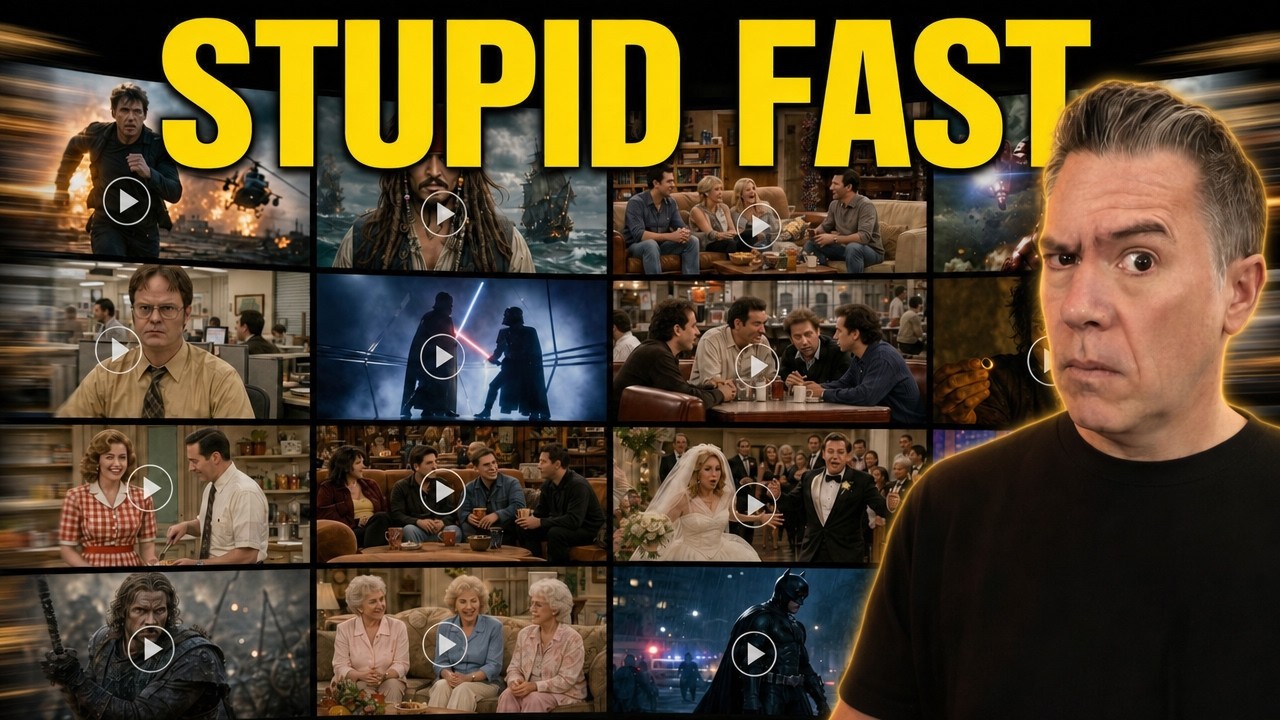
Theoretically Media supplied the strongest real-time example with 157,811 views, 2,417 likes, and 283 comments. The description says MiniMax H3 MAX on fal can generate a 5-second clip with audio in under 3 seconds, while the linked interdimensional-game repo shows a playable film built around fal and H3 Max with live Director mode and pre-filmed branches. The distinctive angle is that the video model becomes a runtime for interactive media, not only a render engine (video).

Ai With Harold supplied the clearest free-workflow version with 8,141 views, 115 likes, and 21 comments. The description walks through SnapGen AI, TikTok Symphony weekly credits, and a no-account MiniMax H3 path, while also warning about aspect-ratio limits, model availability swings, and the practical meaning of "free." The distinctive angle is that AI video is being taught as a set of access hacks and operating constraints, not only as a creative effect (video).

Becky the Ai Girl added the most explicit onboarding pitch with 2,373 views, 122 likes, and 18 comments. She promises four free AI platforms with zero sign-up and no watermarks, including free Seedance 2.5, Qwen 3.8 Max, and a local open-source model platform. The distinctive angle is that competition is being framed around who can remove the most onboarding friction for creators (video).
Discussion insight: The strongest creator-side signal was not just that models are improving. It was that distribution is shifting toward whoever can make video generation feel instant, free, or at least easy to try.
Comparison to prior day: 2026-09-04 highlighted the newness of real-time and all-in-one workflows. On 2026-09-05, the conversation moved closer to customer acquisition, access, and creator conversion.
1.4 AI safety stayed mass-market, but the emotional payload widened from abstract doom to work and control loss 🡒
At least two videos supported this theme. Compared with 2026-09-04, when Roman Yampolskiy interviews kept extinction risk visible, the 2026-09-05 file kept the same core warning but attached it more naturally to work, ownership, and everyday control anxiety elsewhere in the dataset.

PBD Podcast carried the day's largest audience for this theme with 392,733 views, 6,989 likes, and 2,700 comments. The description says Roman Yampolskiy argues that superintelligence cannot be controlled and could destroy humanity, while the timestamp list expands the conversation into unemployment, elections, governors, and regulation. The distinctive angle is that the same safety thesis is reaching a broad business-and-politics audience rather than staying inside specialist AI channels (video).

TEDx Talks added the most formal public-speech version with 58,735 views, 744 likes, and 123 comments. The description asks whether humanity can control what it creates and emphasizes Yampolskiy's AI safety and cybersecurity background. The distinctive angle is that the control question is framed as a civic and ethical problem, not only a product or policy dispute (video).
Discussion insight: Taken together with the file's separate future-of-work anxiety video, the strongest safety signal was not a new mechanism or policy. It was that control-loss remains the most legible way for the public to talk about AI risk.
Comparison to prior day: 2026-09-04 centered repeated extinction-risk interviews and operational control questions. On 2026-09-05, that same fear stayed visible while blending more naturally into work and ownership anxiety.
1.5 Compute leverage kept surfacing through efficiency claims and supply-chain concentration rather than model launches alone 🡒
At least two videos supported this theme. Compared with 2026-09-04, when hardware competition was discussed through Jalapeno benchmarks and whole-system narratives, the 2026-09-05 file pushed the compute story through two narrower but concrete angles: alternative architectures and public-market concentration.

MTS supplied the most alternative-compute version with 5,012 views, 62 likes, and 5 comments. Guillaume Verdon is introduced through the launch of the open-source Z1T model family, sparse transformer and thermodynamic hardware co-design, and a claimed 100x efficiency gain for data-center inference, while the timestamp list pushes that framing toward 140x efficiency, open-sourcing the training recipe, and breaking free from hardware lotteries. The distinctive angle is that compute architecture itself becomes a first-order AI topic rather than backend trivia (video).

The Motley Fool supplied the strongest public-market version with 2,512 views, 131 likes, and 12 comments. The description says Broadcom has line of sight to $115 billion in AI semiconductor revenue in fiscal 2027 and $230 billion in fiscal 2028, with AI chip revenue already up 221 percent, then shifts to customer concentration and laser and power constraints slowing AI data-center buildouts. The distinctive angle is that AI compute is framed as revenue concentration and physical bottlenecks, not only as a benchmark race (video).
Discussion insight: The compute conversation is not only about who has the best chip. It is also about who controls supply, who escapes the GPU default, and who absorbs the economics of scale.
Comparison to prior day: 2026-09-04 emphasized benchmark wins and whole-system control. On 2026-09-05, those concerns narrowed into efficiency claims at one edge and supply-bottleneck monetization at the other.
2. What Frustrates People
Organizations still cannot safely operate agents without an extra control layer
This is High severity because Will Phillips frames Guild.ai around the problem that businesses lose track of how many agents are running, what they can access, who owns them, and what they cost, while Tech With Tim says a usable agent still needs a harness, MCP tools, skills, sandboxing, and a production layer. IBM Technology adds that coding agents still need repository awareness, architectural context, planning, verification, and developer tools. The visible workaround is to add a control plane or harness around the model before trusting the system in real work. This is directly worth building for.
AI's upside is easier to advertise than to assign, measure, or trust
This is High severity because Y Combinator frames the shift through 9 million Ollama developers, 85 percent of the Fortune 500, and 150x token growth on Ollama Cloud, Tom Scryleus asks who owns the future if automation replaces work but not inequality, and TechLead packages AI agents as a path to profit through a paid group, infra credit, and adjacent products. The Motley Fool adds the public-market version by turning AI compute into concentration risk and supply bottlenecks. The visible workaround is to rely on ad hoc heuristics such as founder narratives, side projects, private communities, and investor framing to guess where value will settle. This is directly worth building for.
Free AI video workflows still depend on credits, sign-up tricks, and unstable availability
This is Medium-to-High severity because Theoretically Media raises cost and open-source questions even while showing faster-than-real-time generation, Ai With Harold has to mix SnapGen AI, TikTok Symphony, and a no-account MiniMax H3 path while warning about weekly credits, aspect-ratio limits, and temporary outages, and Becky the Ai Girl sells zero sign-up and no watermarks as core differentiators. The visible workaround is to juggle whichever free tier, credit cycle, or local option is available that week. This is directly worth building for.
Public AI trust is still overwhelmed by control-loss and job-loss narratives
This is High severity because PBD Podcast centers the claim that superintelligence cannot be controlled and explicitly connects it to unemployment, elections, and regulation, while TEDx Talks turns the same fear into a civic question about whether humanity can control what it creates. Tom Scryleus extends that fear into inequality and ownership of the future. The visible workaround is rhetorical rather than operational: large public channels keep returning to the same control-loss frame because cleaner evidence about safeguards, limits, and real labor impact is harder to see. This is directly worth building for.
Compute planning still sits behind bottlenecks, concentration, and early-stage hardware bets
This is Medium severity because MTS presents sparse thermodynamic hardware and the Z1T model family as a way to escape the hardware lottery, while The Motley Fool frames the current market through Broadcom concentration, laser constraints, and power constraints slowing data-center buildouts. Y Combinator reinforces that GPU access is still part of the open-model economics story through its chapter list. The visible workaround is to bet on incumbent suppliers, wait for alternative hardware claims to mature, or route work to whatever model and provider are cheapest today. This is worth building for, especially where buyer intelligence or routing can abstract the uncertainty.
3. What People Wish Existed
Agent control plane that also proves business value
Will Phillips, Tech With Tim, IBM Technology, and TechLead together imply demand for a layer that can connect permissions, repo context, approvals, cost, and business value in one place. Teams need more than a model picker: they need to know what an agent can do, what it can access, what codebase context it needs, and whether it is helping. This is a practical need with High urgency. Guild.ai and TrueForge cover major pieces today, but not the full proof-of-value surface. Opportunity: direct.
AI economics navigator across model, harness, hardware, and labor tradeoffs
Y Combinator, Tom Scryleus, TechLead, and The Motley Fool imply demand for a guide that maps open versus closed models, local versus cloud, model versus harness choice, and labor or ownership consequences into one legible decision surface. This is a practical need with High urgency because the dataset treats AI as an economic system, not only as a tool catalog. Benchmarks, runtimes, and investor commentary cover fragments today, not the whole decision flow. Opportunity: direct.
Video-generation workflow layer that absorbs credits, queueing, and provenance risk
Theoretically Media, Ai With Harold, and Becky the Ai Girl all point to a missing workflow layer around AI video. Creators want real-time output, free access, no sign-up, and reusable local or open-source options, but they still have to manage weekly credits, outages, aspect-ratio limits, changing access paths, and the question of what they can safely publish. This is a practical need with High urgency. Current tools solve generation itself more clearly than they solve the surrounding workflow. Opportunity: competitive.
Public evidence layer for AI safety, job impact, and ownership claims
PBD Podcast, TEDx Talks, and Tom Scryleus imply a need for public-facing evidence that says what AI can access, what it can replace, what safeguards exist, and who captures the gains if work changes. This is both a practical and an emotional need with High urgency, because the strongest narratives in the file are still control-loss and inequality narratives. Safety essays, product docs, and interviews cover the topic today, but not in a surface ordinary people can quickly trust. Opportunity: aspirational.
Alternative-compute scouting for teams that cannot do chip-market research by hand
MTS and The Motley Fool imply demand for a simpler way to understand sparse alternative hardware claims, supplier concentration, and physical bottlenecks without following every AI chip or equity narrative in detail. This is a practical need with Medium urgency. Current information arrives as podcasts, benchmark claims, or investing content rather than as a straightforward buyer guide. Opportunity: emerging.
4. Tools and Methods in Use
| Tool | Category | Sentiment | Strengths | Limitations |
|---|---|---|---|---|
| Guild.ai | Agent control plane | (+) | Model-neutral governance, spend visibility, scoped permissions, approval gates, observability, and agent sharing | Still another enterprise layer teams have to adopt and operate |
| TrueForge | Agent harness | (+) | MCP, skills, sandbox-as-tool, approvals, session persistence, API, and chat UI in one runtime | Teams still need to choose, run, and integrate the harness |
| Repo-aware coding agents | Coding-agent method | (+/-) | Makes repo context, tools, planning, and verification explicit | More operating discipline than turnkey product |
| Ollama / Ollama Cloud | Open-model runtime | (+) | Strong adoption signal and a clear business case for open models across local and cloud use | Does not remove hardware, routing, or GPU-access complexity on its own |
| MiniMax H3 MAX on fal | AI video runtime | (+) | Faster-than-real-time video generation and no local GPU requirement in the cited workflow | Cost, open-source status, and publishing guardrails remain unsettled |
| SnapGen AI / TikTok Symphony / MiniMax H3 free paths | Creator video workflow | (+/-) | Free entry points across text-to-video, image-to-video, and no-account generation | Weekly credits, aspect-ratio limits, and availability swings still matter |
| Seedance 2.5 / Qwen 3.8 Max / local open-source platforms | Video generation stack | (+/-) | No-sign-up, no-watermark positioning and a local open-source option | Details are sparse and access appears to depend on changing platform paths |
| Z1T model family | Alternative AI hardware | (+/-) | Sparse-model and thermodynamic-hardware co-design with large efficiency claims | Early signal with low reach and no mature buyer surface in the dataset |
| Broadcom-centered AI chip buildout thesis | AI infrastructure | (+/-) | Concrete revenue and demand signals around custom AI chips | Customer concentration plus laser and power constraints limit the upside story |
The strongest positive sentiment clustered around tools that make AI easier to govern or easier to try. Guild.ai, TrueForge, and Ollama are valuable because they shrink a confusing stack into something operationally legible, while the AI video items win attention by removing cost and account friction.
Sentiment turned mixed whenever users still had to absorb hidden complexity themselves. Free video workflows still depend on credits, aspect ratios, and unstable access, open-model adoption still depends on routing and GPU availability, and both Z1T and the Broadcom buildout story make clear that compute leverage is still concentrated.
Migration patterns kept moving away from one-dimensional "best model" arguments and toward control planes, harnesses, open runtimes, creator access funnels, and hardware economics.
5. What People Are Building
| Project | Who built it | What it does | Problem it solves | Stack | Stage | Links |
|---|---|---|---|---|---|---|
| Guild.ai | James Everingham, Chris Waterson, and the Guild team | Control plane for deploying, governing, and monitoring AI agents across an organization | Prevents teams from losing track of agent access, ownership, approvals, and spend as agent counts grow | Model-neutral agent platform, scoped permissions, approval gates, observability, spend tracking, agent hub | Beta | site video |
| TrueForge | TrueFoundry | Open-source agent harness that runs the model loop with tools, skills, sandboxing, approvals, and persistent sessions | Gives teams a runtime layer around LLMs so they do not have to assemble agent infrastructure from scratch | Core server, HTTP API, TypeScript SDK, chat UI, MCP, skills, sandbox-as-tool, SQLite/Postgres | Shipped | repo docs benchmark video |
| LAST FRAME / interdimensional-game | blendi-remade | Playable film where every shot is generated as the viewer plays, including live modes where the world keeps moving between prompts | Turns AI video from a static render task into an interactive runtime | fal, MiniMax H3 Max, Director mode, vision adjudicator, branch pre-filming, WebRTC | Alpha | repo video |
| Ollama / Ollama Cloud | Jeffrey Morgan and the Ollama team | Open-model runtime and cloud surface positioned as an OS layer for AI applications | Makes open models easier to run, distribute, and scale as costs fall and usage grows | Local runtime, cloud serving, model distribution, open-model operations | Shipped | video |
| Z1T model family | Guillaume Verdon / Extropic | Open-source sparse model family co-designed with thermodynamic hardware for AI workloads | Aims to reduce the energy and hardware cost of data-center inference | Sparse transformer variants, open training recipe, thermodynamic hardware co-design | Alpha | video |
Guild.ai and TrueForge matter because they attack the same agent problem from two adjacent layers. Guild is the governance and observability plane above the run, while TrueForge is the harness that decides how the loop, tools, approvals, and state actually work.
LAST FRAME / interdimensional-game is the clearest creator-side build in the file. Its README makes the key shift explicit: real-time video is interesting because it makes a game or playable film possible, not just because it makes prettier clips.
Ollama matters here because it is being discussed less like a hobby tool and more like an operating layer with enterprise reach. The Y Combinator interview frames open models as a scaled business system, not only as a community preference.
Z1T is earlier than the other projects, but it is notable because it treats model design and hardware design as one problem. That is a stronger signal than a generic "better chip" narrative, even if the current evidence is still mostly pre-deployment.
6. New and Notable
Roman Yampolskiy remained the day's dominant public AI safety narrator
PBD Podcast and TEDx Talks both centered Roman Yampolskiy's argument that advanced AI cannot be controlled. That matters because the same thesis reached both a mass-market business audience and a TEDx audience on the same harvest date, keeping uncontrollability as the most legible public safety story in the file.
Open-model economics got a concrete adoption signal rather than another abstract argument
Y Combinator says Ollama is used by 9 million developers and 85 percent of the Fortune 500, and that Ollama Cloud token usage is up 150x since the start of the year. That matters because the open-model case is being advanced with an explicit usage-growth claim rather than only with ideology or raw benchmark talk.
AI video free entry became a clearer competitive angle
Theoretically Media, Ai With Harold, and Becky the Ai Girl all present some combination of real-time, free, no-account, or no-sign-up access as a headline feature. That matters because AI video competition is starting to look like a distribution and onboarding fight, not only a quality fight.
Agents were marketed both as infrastructure and as a money surface
Will Phillips treats agent management as enterprise infrastructure, while TechLead presents AI agents through the language of profit, private communities, and adjacent products. That matters because the same dataset contains both the governance layer and the monetization layer of the agent wave.
Sparse thermodynamic hardware entered the daily feed as a concrete alternative-compute story
MTS brings the open-source Z1T model family and 100x to 140x efficiency claims into the conversation, while The Motley Fool turns AI compute into a story about Broadcom revenue, concentration risk, and physical buildout bottlenecks. That matters because compute is being discussed through both frontier alternatives and incumbent leverage at the same time.
7. Where the Opportunities Are
[+++] Agent control and ROI plane - Will Phillips, Tech With Tim, IBM Technology, and TechLead all point to the same gap: teams need one layer that governs permissions, repo context, approvals, spend, and proof that the agent is economically useful. This is strong because the evidence spans enterprise governance, coding quality, runtime cost, and monetization pressure.
[++] AI economics navigator - Y Combinator, Tom Scryleus, TechLead, and The Motley Fool describe a world where open-model adoption, labor displacement, side-income narratives, and chip concentration move together. This is moderate because the need is obvious, but it will face competition from benchmarks, runtimes, and media narratives that already own pieces of the audience.
[++] Creator-side AI video access orchestrator - Theoretically Media, Ai With Harold, and Becky the Ai Girl show a creator market that wants real-time rendering, free entry, no sign-up, and fewer publishing surprises. This is moderate because the category is clearly forming, but the underlying model and platform providers are moving quickly.
[++] Public evidence layer for AI safety and job impact - PBD Podcast, TEDx Talks, and Tom Scryleus show that the public still reaches first for control-loss and inequality stories. This is moderate because the pain is real and repeated, but the product surface is harder to define than a control plane or creator tool.
[+] Alternative-compute scouting and procurement intelligence - MTS and The Motley Fool suggest demand for a simpler way to evaluate sparse hardware claims, supplier concentration, and buildout bottlenecks. This is emerging because the signal is early, but it may matter more as teams start shopping below the hyperscaler layer.
8. Takeaways
- Value capture became the day's clearest meta-theme. Y Combinator, Tom Scryleus, TechLead, and The Motley Fool all approach AI through who gets cheaper leverage, revenue, or ownership rather than through raw capability alone. (source, source, source, source)
- The operating layer around agents is still where product differentiation sits. Will Phillips, Tech With Tim, and IBM Technology all focus on permissions, context, tools, planning, verification, and cost around the model rather than on the model alone. (source, source, source)
- AI video is entering an access and onboarding phase, not just a quality race. Theoretically Media, Ai With Harold, and Becky the Ai Girl all highlight some combination of real-time output, free tiers, no-account paths, and no-sign-up positioning. (source, source, source)
- Public AI fear still travels best as a control-loss story. PBD Podcast and TEDx Talks carry the same Roman Yampolskiy thesis to large audiences, while the file's future-of-work anxiety extends that fear into jobs and ownership. (source, source, source)
- Alternative compute showed up as a serious, if still early, design frontier. MTS brings sparse thermodynamic hardware and the Z1T model family into the day's feed, while The Motley Fool frames incumbent chip demand through concentration and physical bottlenecks. (source, source)
- Open-model demand is being pulled by practical workflows, not by ideology alone. Y Combinator ties the shift to coding agents and falling costs, and Tech With Tim shows why the harness and deployment layer matter once teams try to operationalize that demand. (source, source)