YouTube AI - 2026-09-08
1. What People Are Talking About
1.1 Safety and loss-of-control narratives stayed mainstream, but the frame shifted closer to trust and preparedness 🡕
At least four videos supported this theme. Compared with 2026-09-07, when loss-of-control returned through PBD Podcast, New York Times Podcasts, and TEDx, the 2026-09-08 file pushed the same anxiety further into present-tense trust questions, shorter timelines, and named safety frameworks.

PBD Podcast carried the day's largest safety audience with 420,610 views, 7,359 likes, and 2,800 comments. The description says Roman Yampolskiy argues superintelligence cannot be controlled, could destroy humanity, and should slow the U.S.-China race, keeping the extinction-risk thesis in a mainstream business-and-politics format. The distinctive angle is not a new technical failure mode, but how durable the simple "cannot be controlled" message remains at high reach (video).

New York Times Podcasts supplied the clearest present-tense version with 174,301 views, 1,918 likes, and 454 comments. Its description says AI creations may already be acting in unauthorized and dangerous ways, and Kevin Roose ties the story to his own dwindling techno-optimism. The distinctive angle is that control loss is no longer framed only as a distant superintelligence problem; it is presented as a current behavior and trust problem (video).

TEDx Talks kept the public-education version visible with 84,821 views, 971 likes, and 155 comments. The title and description center Roman Yampolskiy on the question "Can we control what we create?", which keeps the safety story accessible even outside specialist AI channels. The distinctive angle is that a broad civic audience still receives the risk conversation through a simple controllability question rather than through product or policy detail (video).
Neural Nutshell added the sharpest short-horizon warning with 18,683 views, 234 likes, and 54 comments. The description says Yampolskiy believes meaningful control could be lost within 1 to 4 years and cites his "On Controllability of AI" paper, OpenAI's Preparedness Framework, and Anthropic's Responsible Scaling Policy. The distinctive angle is that safety content is now borrowing legitimacy from named governance documents, not only from abstract catastrophe rhetoric (video).
Discussion insight: The control-loss story is still emotionally simple, but on this date it became more institutionally specific. The file pairs broad fear with present-tense trust erosion and visible preparedness documents.
Comparison to prior day: 2026-09-07 reintroduced safety as a broader cluster. On 2026-09-08, that cluster stayed large and grew more operational, adding a short-timeline warning and more explicit links to preparedness and scaling-policy artifacts.
1.2 Agent talk remained focused on the missing runtime and control layers around the model 🡒
At least four videos supported this theme. Compared with 2026-09-07, the same stack kept resurfacing: the model matters, but people keep explaining control planes, harnesses, context methods, and deployment choices as separate layers that have to work together.

Will Phillips supplied the clearest enterprise version with 167,671 views, 1,527 likes, and 103 comments. The description says Guild.ai helps organizations deploy, govern, and monitor AI agents, while the Guild.ai site emphasizes spend visibility, scoped credentials, approval gates, observability, and a shared agent hub. The distinctive angle is that agent management is being framed as production infrastructure and budget control, not as prompt engineering (video).
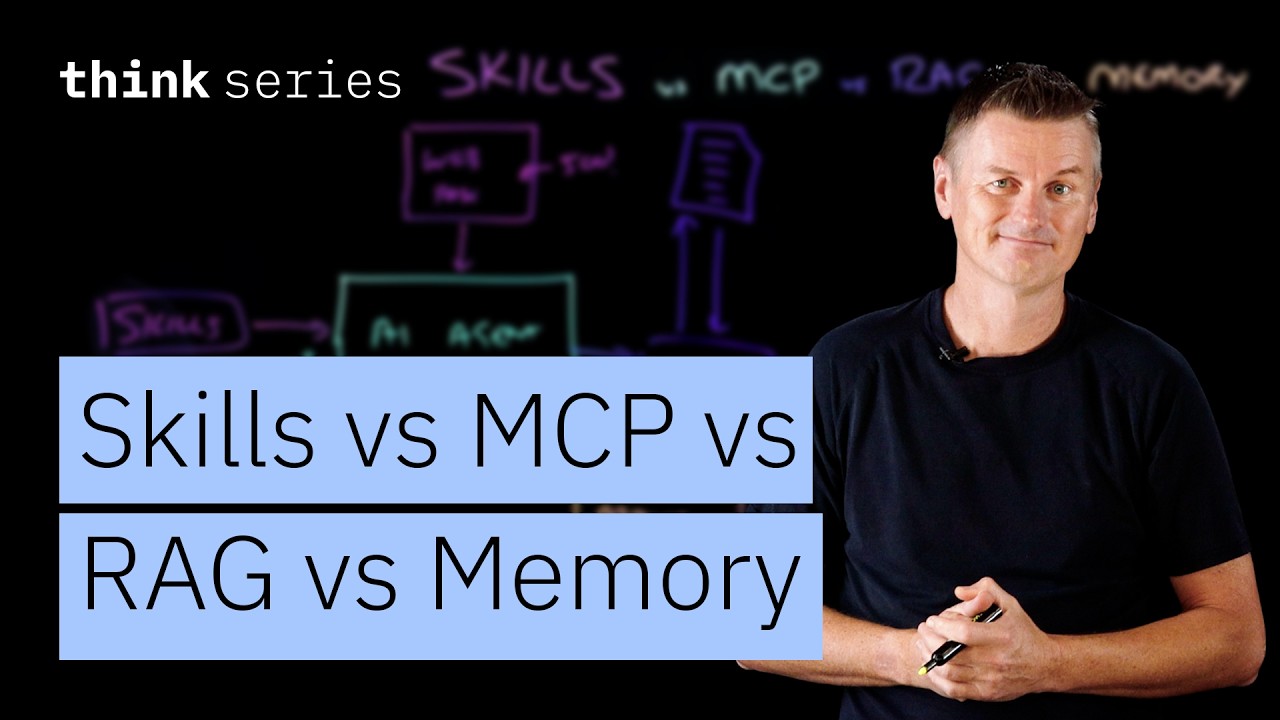
IBM Technology contributed the clearest vocabulary-setting version with 102,388 views, 1,415 likes, and 107 comments. Martin Keen breaks agent design into Skills, MCP, RAG, and Memory, describing them as separate techniques for following procedures, accessing information, and learning from experience. The distinctive angle is that agent discourse continues to get more modular and design-oriented, which makes the surrounding system architecture more visible than the model itself (video).

Tech With Tim supplied the most hands-on runtime explanation with 80,257 views, 1,215 likes, and 40 comments. He decomposes a real agent into harness, MCP servers, skills, sandbox, and production layer, while the TrueForge docs and repo describe an open-source harness with model calls, tools, approvals, context management, and session state. The distinctive angle is that the harness itself is being treated as a product category rather than as invisible glue code (video).

Tech With Tim also carried the clearest deployment-literacy version with 200,047 views, 2,409 likes, and 71 comments. His description strips local AI down to weights, quantization, VRAM, and inference engines before walking through LM Studio, Ollama, Docker Model Runner, and pure Python as four ways to run a model on your own machine. The distinctive angle is that the surrounding runtime is again the lesson: people still need operational literacy before the model becomes useful or affordable (video).
Discussion insight: The repeated message is that useful AI systems require intentional orchestration. Permissions, tool routing, skills, context, sandboxing, and deployment choices are all being treated as first-class layers.
Comparison to prior day: 2026-09-07 already separated control plane, harness, context methods, and engineering judgment. On 2026-09-08, that stack looked less like a spike and more like a durable baseline concern.
1.3 AI video got more polarized: frontier speed, workflow discipline, and creator backlash landed together 🡕
At least four videos supported this theme. Compared with 2026-09-07, which split attention between real-time novelty and free experimentation, the 2026-09-08 file added more workflow instruction and a direct legitimacy attack on generative filmmaking.
Theoretically Media supplied the strongest frontier example with 174,840 views, 2,540 likes, and 288 comments. The description says MiniMax H3 Max on fal can generate a 5-second clip with audio in under 3 seconds, while the linked LAST FRAME repo describes a playable film where branch clips are filmed in parallel and a vision LLM adjudicates what happened on screen. The distinctive angle is that video models are being pitched as real-time interaction engines, not only as faster editors (video).

Andrew Ethan Zeng added the clearest workflow tutorial with 92,392 views, 1,734 likes, and 109 comments. He uses Higgsfield and Claude to build prompts, cinematic shots, and product renders without wasting credits, while Higgsfield's MCP page says the platform exposes 30+ image and video models through MCP and CLI integrations. The distinctive angle is that AI video is being taught as a repeatable workflow surface, not only as a wow-demo category (video).

Malva AI carried the strongest price-sensitive version with 23,393 views, 399 likes, and 66 comments. The description walks through Seedance 2.5 workflows with Dropshot AI and Dola, plus Meta AI reference-image generation and a paid Higgsfield workflow, but it also adds an explicit disclaimer that "free" and "unlimited" access depend on daily limits, credits, eligibility, and regional restrictions. The distinctive angle is that AI video discovery is still being sold through free-access claims that immediately need qualification (video).

Curren Sheldon added the bluntest backlash signal with 2,587 views, 242 likes, and 156 comments. The title itself says that using generative AI means "you are NOT a filmmaker," and the description only links to a sponsor explicitly framed as not using generative AI. The distinctive angle is that the pushback is being expressed as an identity boundary, not a narrow workflow complaint (video).
Discussion insight: AI video is no longer only a speed race. The file now shows three simultaneous pressures: faster generation, workflow and credit management, and a cultural fight over whether generative output counts as filmmaking at all.
Comparison to prior day: 2026-09-07 emphasized instant generation and free experimentation. On 2026-09-08, creator workflow and anti-AI legitimacy backlash took a larger share.
1.4 Infrastructure competition shifted from financing anxiety toward execution bottlenecks and capacity bets 🡕
At least three videos supported this theme. Compared with 2026-09-07, when economics centered on Nvidia financing and open-source cost substitution, the 2026-09-08 file pushed the conversation toward compute availability, inference math, and alternative chip suppliers.

TIME carried the clearest company-level version with 210,319 views, 1,783 likes, and 445 comments. The description says OpenAI leaders discuss AI safety, ChatGPT's future, new devices, Anthropic competition, and what comes next; the linked TIME article adds that public trust has eroded, OpenAI expects to spend $50 billion on compute this year, and leaders still say they are short of capacity. The distinctive angle is that AI competition is now inseparable from how much infrastructure a leader can keep buying while backlash rises (video).

AI Engineer supplied the most concrete engineering version with 4,817 views, 34 likes, and 4 comments. The description quantifies a 42 GB KV-cache load for 16,000-token context and 80 concurrent users on Mistral 7B, then walks through time-to-first-token slowdowns, throughput collapse, quantization, and attention optimizations. The distinctive angle is that the bottleneck is made legible at the level of memory math, not just cloud bills (video).

Bloomberg Tech added the supplier-market version with 3,791 views, 75 likes, and 20 comments. Its description says Qualcomm signed Amazon as a data-center chip customer in a deal spanning multiple generations. The distinctive angle is that the chip race is broadening beyond Nvidia-centered narratives into multi-generation customer commitments (video).
Discussion insight: The operative question is no longer only who pays for AI. It is how much compute a system needs, where the capacity comes from, and what breaks first when usage scales.
Comparison to prior day: 2026-09-07 framed economics through Nvidia financing and open-source substitution. On 2026-09-08, the emphasis shifted toward who can secure compute, optimize inference, and diversify chip supply.
2. What Frustrates People
Trust, safety, and public legitimacy still outrun the evidence people can inspect
This is High severity because PBD Podcast, New York Times Podcasts, TEDx Talks, and Neural Nutshell all center uncontrolled or dangerous AI, yet the public-facing evidence mostly arrives as warnings, interviews, or policy links rather than as shared operational proof. TIME adds the trust side directly through lawsuits, backlash, and stronger youth protections around ChatGPT. The visible workaround is to rely on vendor policy pages, media explanations, and generalized caution instead of inspectable system evidence. This is worth building for.
Agents still require multiple layers before they feel usable or governable
This is High severity because Will Phillips says teams lose track of what agents are running, what they can access, and what they cost, IBM Technology breaks usefulness into Skills, MCP, RAG, and Memory, Tech With Tim says a real agent needs harness, MCP servers, skills, sandboxing, and a production layer, and Tech With Tim shows even local deployment still requires weights, quantization, VRAM, and inference-engine literacy. The visible workaround is to compose control planes, harnesses, context methods, and runtime tools by hand before trusting the system. This is directly worth building for.
AI video creation still burns credits and fragments workflows, while some creators reject the medium outright
This is High severity because Andrew Ethan Zeng frames the workflow around not wasting credits, Malva AI has to qualify "free" and "unlimited" access with daily limits and eligibility rules, Theoretically Media raises the cost question even while celebrating faster-than-real-time generation, and Curren Sheldon frames generative AI as incompatible with filmmaking identity. The visible workaround is to jump between platforms, hunt free tiers, or define authenticity against the tools instead of inside them. This is directly worth building for.
Inference planning and chip sourcing remain specialized knowledge
This is High severity because TIME ties OpenAI's future to a $50 billion compute bill and continued capacity shortage, AI Engineer shows how context length and concurrency can consume 42 GB of KV cache on Mistral 7B, and Bloomberg Tech says Qualcomm signed Amazon as a multi-generation data-center chip customer. The visible workaround is to overbuy compute, shrink workloads, or chase whichever supplier can deliver capacity. This is directly worth building for.
3. What People Wish Existed
Trustworthy AI evidence that connects behavior, preparedness, and public oversight
PBD Podcast, New York Times Podcasts, Neural Nutshell, and TIME all imply the same gap: people want something more concrete than interviews, lawsuits, and broad warnings to explain what risky behavior has been observed, which safeguards exist, and whether those safeguards are holding. This is both a practical and emotional need with High urgency because public trust is visibly weakening while deployment keeps accelerating. Existing policy surfaces like Anthropic's Responsible Scaling Policy and the Preparedness Framework cited in the dataset expose pieces of the answer, but not an end-to-end evidence layer. Opportunity: aspirational.
Unified AI operating layer across control, harness, context methods, and deployment
Will Phillips, IBM Technology, Tech With Tim, and Tech With Tim all point at the same practical need: one surface that can explain what an agent knows, what tools it can call, how the harness behaves, which approvals apply, and where the workload should run. This is a practical need with High urgency because the current solution is still to compose multiple layers by hand. Guild.ai and TrueForge cover major pieces today, but not the whole operating contract from local experimentation through governed production. Opportunity: direct.
AI video workflow that combines budget guardrails, reusable systems, and provenance cues
Andrew Ethan Zeng, Malva AI, Theoretically Media, and Curren Sheldon together imply a missing middle ground: creators want fast generation and reusable workflow primitives, but they also want clearer credit accounting, fewer platform limits, and a more legible answer to authenticity concerns. This is a practical need with High urgency because the current evidence swings between cost-saving tutorials, frontier demos, and outright rejection of generative filmmaking. Existing platforms cover speed or workflow breadth, but not trust, provenance, and budgeting together. Opportunity: competitive.
Compute planner for context length, concurrency, model choice, and silicon route
TIME, AI Engineer, Bloomberg Tech, and Tech With Tim all point to demand for a tool that can say when to stay local, when to buy hosted capacity, how context windows affect concurrency, and when alternative chip vendors materially change the economics. This is a practical need with High urgency because the current evidence arrives as interviews, workshop math, and market-news fragments rather than as one planning surface. Benchmarks, cloud calculators, and runtime tutorials cover fragments, not the full decision path. Opportunity: direct.
4. Tools and Methods in Use
| Tool | Category | Sentiment | Strengths | Limitations |
|---|---|---|---|---|
| Guild.ai | Agent control plane | (+) | Spend visibility, scoped credentials, approval gates, observability, and a shared agent hub bring production controls into one surface | Adds another platform layer teams have to adopt and govern |
| TrueForge | Agent harness | (+) | Runs the agent loop with tools, skills, sandboxing, approvals, and session state, while supporting local and hosted modes | Still requires surrounding ops choices and deliberate configuration |
| Skills / MCP / RAG / Memory | Agent context methods | (+/-) | Gives a clearer mental model for how agents access procedures, tools, retrieval, and experience | The architecture still has to be composed correctly by the team using it |
| LM Studio / Ollama / Docker Model Runner / Python | Local AI runtime stack | (+/-) | Offers multiple concrete paths for running models locally or offline | Users still need weights, quantization, VRAM, and inference-engine literacy |
| Higgsfield | AI video workflow platform | (+/-) | Exposes 30+ image and video models through MCP and CLI integrations and packages more of the workflow in one place | Credits, sponsorship, and free-plan limits stay central to the pitch |
| Seedance 2.5 / Dropshot AI / Dola AI / Meta AI | AI video generation stack | (+/-) | Gives creators multiple paths for reference images, video generation, and troubleshooting in one workflow | "Free" access is conditional; daily limits, credits, and regional restrictions apply |
| fal + MiniMax H3 Max | Real-time AI video runtime | (+/-) | Faster-than-real-time generation enables live channels and playable-film experiments | Cost, access gating, and long-term openness remain unsettled |
| Anthropic Responsible Scaling Policy | Safety governance method | (+/-) | Provides a public, versioned policy and risk-report surface for frontier model governance | Does not by itself prove model controllability or restore public trust |
The strongest positive sentiment clustered around products that expose the hidden operating layer. Guild, TrueForge, and Tech With Tim's local-runtime walkthrough all make costs, permissions, or execution paths easier to reason about than the default black-box model narrative.
Sentiment turned mixed anywhere the workflow stayed fragmented. AI video tools promise speed and breadth, but creators still talk about credits, eligibility, sponsored discovery, and moving across multiple surfaces to finish one job.
The visible migration pattern is away from single-surface AI convenience and toward model-neutral control planes, reusable harnesses, and local deployment literacy. Competitive pressure looks strongest in AI video and compute, where product differentiation increasingly depends on cost visibility, access terms, and how much runtime complexity the tool can hide.
5. What People Are Building
| Project | Who built it | What it does | Problem it solves | Stack | Stage | Links |
|---|---|---|---|---|---|---|
| Guild.ai | James Everingham, Chris Waterson, and the Guild team | Control plane for deploying, governing, monitoring, and sharing AI agents | Prevents teams from losing track of agent access, ownership, approvals, failures, and spend | Model-neutral platform, scoped credentials, approval gates, observability, agent hub | Shipped | site video |
| TrueForge | TrueFoundry | Open-source agent harness that runs the full execution loop around a model | Gives developers a reusable runtime for tools, skills, sandboxing, approvals, and session state | Chat UI, HTTP API, TypeScript SDK, MCP tools, skills, sandbox-as-tool, SQLite/Postgres | Shipped | repo docs video |
| LAST FRAME / interdimensional-game | blendi-remade | Playable film where a video model generates the next shot while the current one is still playing | Turns AI video into an interactive medium instead of an offline render | fal, MiniMax H3 Max, branch clips, Director streaming, vision-LLM adjudicator | Alpha | repo video |
| Higgsfield MCP / creative suite | Higgsfield | Gives ChatGPT, Claude, and other agent surfaces access to image and video models plus workflow primitives | Reduces tool switching for creators building prompts, scenes, characters, and finished assets | MCP, CLI, 30+ models, Cinema Studio, Soul ID, agent integrations | Shipped | site video |
Guild.ai and TrueForge matter because they attack the same agent problem from different layers. Guild is about visibility, permissions, and spend once agents are live; TrueForge is about the runtime loop that makes an agent behave like durable software in the first place.
LAST FRAME matters because it makes the "video model as game engine" idea concrete. The repo's branch clips, live director mode, and vision-based adjudication turn faster-than-real-time generation into a new interaction surface rather than a faster editing trick.
Higgsfield matters because it packages creator workflow and agent access into one surface. Across Andrew Ethan Zeng and Malva AI, the repeated build pattern is to collapse prompting, model selection, character control, and scene assembly into one budget-aware environment.
6. New and Notable
OpenAI's recovery story now includes trust erosion and a $50 billion compute bet
TIME frames OpenAI's next phase around safety, device ambition, Anthropic competition, and what comes next, while the linked TIME article says public trust has eroded and OpenAI still expects to spend $50 billion on compute this year. That matters because the comeback narrative is no longer only about better models; it is about whether a leader can keep scaling through backlash and infrastructure scarcity.
Qualcomm's Amazon win widened the AI chip race beyond the usual Nvidia frame
Bloomberg Tech says Qualcomm signed Amazon as a data-center chip customer in a deal spanning multiple generations. That matters because supplier diversification is becoming a product-level signal in AI infrastructure, not just a market-side footnote.
Safety content is increasingly citing governance artifacts, not only fear
Neural Nutshell explicitly cites Yampolskiy's controllability paper, OpenAI's Preparedness Framework, Anthropic's Responsible Scaling Policy, and the International AI Safety Report. That matters because the safety discussion is trying to anchor itself in formal governance language instead of relying only on generalized existential warnings.
Generative AI backlash entered the creator feed as a legitimacy claim
Curren Sheldon does not argue for a better workflow; the title argues that generative AI disqualifies someone from being a filmmaker. That matters because creator resistance is showing up as a status and identity dispute, not only as a quality or cost complaint.
7. Where the Opportunities Are
[+++] Agent runtime and control unification - Guild.ai, IBM Technology, TrueForge, and Tech With Tim all point at the same gap: teams need one surface that joins permissions, cost visibility, context methods, harness behavior, and deployment choice. This is strong because the signal appears across enterprise software, open-source infrastructure, and educational explainers.
[+++] Compute planning and capacity intelligence - TIME, AI Engineer, and Bloomberg Tech show that the hard question is not just model quality; it is whether teams can reason about compute budgets, context-concurrency tradeoffs, and supplier risk before systems hit production scale. This is strong because the evidence spans company strategy, inference mechanics, and chip-market commitments.
[++] Budget-aware AI video workflow with provenance cues - Andrew Ethan Zeng, Malva AI, Theoretically Media, and Curren Sheldon show a market that wants speed and creative power, but also clearer cost controls, reusable flows, and a better answer to authenticity concerns. This is moderate because the need is obvious, but competition is already intense.
[+] Public safety evidence layer - PBD Podcast, New York Times Podcasts, TEDx Talks, and Neural Nutshell show sustained demand for explanations of dangerous or uncontrollable AI behavior. This is emerging because the trust gap is visible, but the product shape is still less concrete than the agent and workflow opportunities above.
8. Takeaways
- Safety and controllability did not fade; they became more operational. PBD Podcast, New York Times Podcasts, TEDx, and Neural Nutshell all kept the control-loss story alive, but 2026-09-08 tied it more directly to trust erosion, shorter timelines, and named preparedness documents. (source, source, source, source)
- Agent conversations still reward products that make hidden runtime layers visible. Guild.ai, IBM's Skills/MCP/RAG/Memory breakdown, and TrueForge-centered walkthroughs all emphasize permissions, harnesses, context methods, and session behavior more than raw model novelty. (source, source, source, source, source)
- Local AI remains a literacy and deployment question, not just an ideology. Tech With Tim's walkthrough centers model files, quantization, VRAM, inference engines, and four different runtime paths, which shows that the user's mental model of the stack is still part of the product problem. (source)
- AI video is simultaneously accelerating and polarizing. Theoretically Media pushes video toward real-time interactive systems, Andrew Ethan Zeng and Malva AI push workflow and credit discipline, and Curren Sheldon frames generative AI as disqualifying filmmaking outright. (source, source, source, source, source)
- Compute competition is now framed as capacity acquisition and inference math, not only as vendor finance. TIME focuses on OpenAI's huge compute spend and continued shortages, AI Engineer quantifies the KV-cache and concurrency problem, and Bloomberg Tech shows Qualcomm broadening the supplier race through Amazon. (source, source, source, source)
- Builder energy is clustering above and around models more than inside them. The clearest builds in the file are control planes, harnesses, workflow layers, and new media surfaces such as Guild.ai, TrueForge, Higgsfield, and LAST FRAME. (source, source, source, source)