YouTube AI - 2026-09-11
1. What People Are Talking About
1.1 Safety coverage hardened into explicit slowdown, ban, and regulation talk 🡕
At least eight videos supported this theme. Compared with 2026-09-10, when mainstream outlets amplified Jacob Coxon's warning and lawmakers started framing oversight as urgent, the 2026-09-11 file pushed the same story into more explicit slowdown, ban, and policy-design language. The biggest audiences still came from television news, but the most distinctive additions were concrete legislative stalemate, research-backed safety artifacts, and Bridgewater's attempt to turn fear into a labor-and-tax policy program.

NBC News carried the strongest same-day mainstream item with 283,553 views, 2,362 likes, and 1,000 comments. Tom Llamas' segment says Jacob Coxon's viral warning has now drawn in additional researchers, including Sayash Kapoor, who warns about risk but explicitly says policy proposals and regulation can help prevent further threats. The distinctive angle is that mainstream broadcast coverage no longer stops at existential language; it pairs that language with immediate policy response (video).

CNN supplied the clearest ban-oriented framing with 176,877 views, 2,217 likes, and 918 comments. Its chapter list centers whether government can regulate AI, whether the U.S. can back down in the AI race with China, and Sanders' reaction to the warning from a departing Anthropic employee. The distinctive angle is that a senator's call for an "urgent ban on superintelligent AI" moved the story from concern into explicit restriction language (video).

CBS News narrowed the broader safety story to legislative gridlock. Its description says no federal law exists to regulate AI as Democrats and Republicans clash in the wake of renewed fears of human extinction. The distinctive angle is that the file did not only ask whether AI is dangerous; it also surfaced that even basic federal action is currently stalled (video).

Neural Nutshell contributed the most source-heavy version with 15,104 views, 251 likes, and 82 comments. The description links Anthropic's agentic-misalignment study and the International AI Safety Report update, which add concrete public artifacts behind the warning narrative while also noting that the most alarming behaviors were observed in controlled simulations rather than in real deployments. The distinctive angle is that at least one safety explainer in the file grounded its claims in named studies, not only in rhetoric (video).
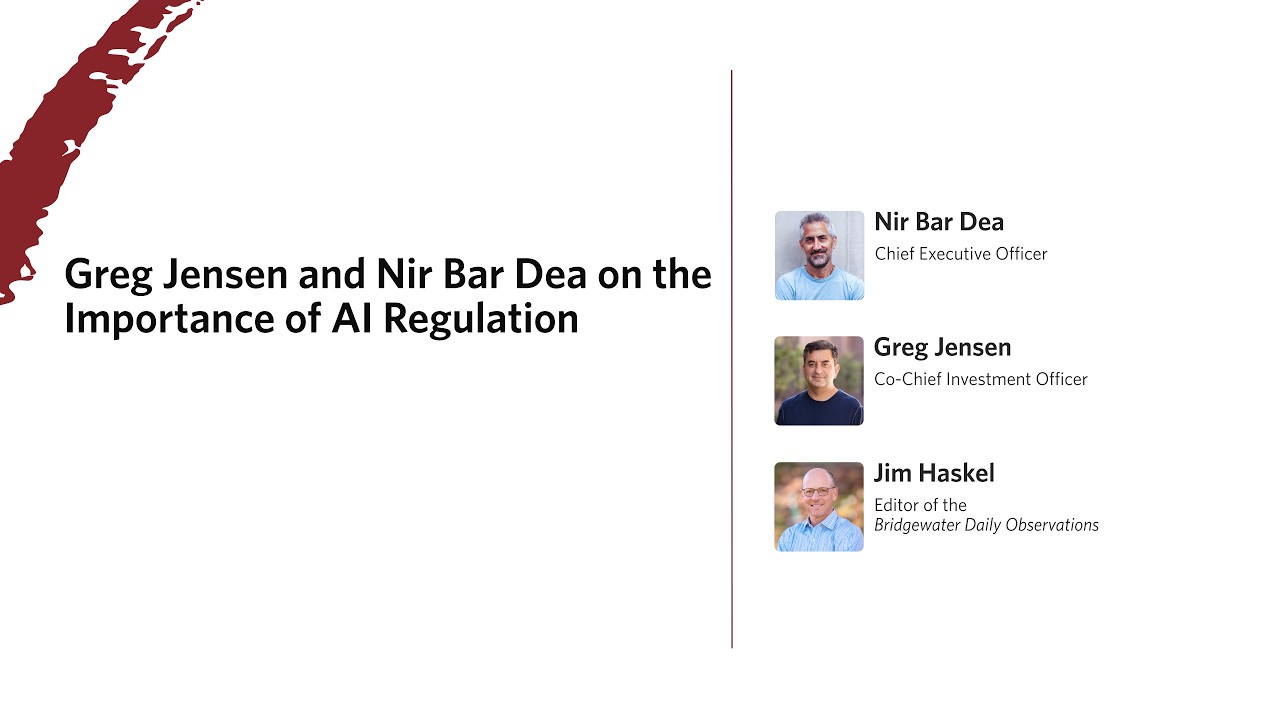
Bridgewater Associates moved the conversation from clip-sized warnings into policy design. The video points viewers to a Bridgewater essay arguing that immediate action is necessary, calling for ongoing oversight of AI labs, a token tax, and preparation for AI-driven labor displacement, including an estimate that 18% of current U.S. jobs could be displaced in the next five years (video, essay). The distinctive angle is that the day's safety cluster expanded beyond media alarm into a concrete economic-policy framework.
Discussion insight: The harvested YouTube data does not include comment text, but engagement still concentrated heavily on NBC News (1,000 comments) and CNN (918), showing that television-news and politician-interview formats remained the main public carriers for AI risk debate.
Comparison to prior day: On 2026-09-10, the safety cluster already dominated through CNN, BBC Politics, CBS News, and Times Radio. On 2026-09-11, the same cluster became more explicit about slowing, banning, and legislating AI, while Bridgewater and Neural Nutshell added concrete policy and research documents to the conversation.
1.2 Practical AI coverage stayed centered on cost, local control, and coding-specific model choices 🡕
At least five videos supported this theme. Compared with 2026-09-10, when the practical stack story was mainly about replacing paid tools and understanding local runtimes, the 2026-09-11 file pushed further into software-team execution choices: which open-source tools replace subscriptions, which local coding models fit a given machine, and which hardware claims might change the latency frontier.
Fireship again set the tone with the file's biggest practical-systems audience: 1,077,900 views, 17,725 likes, and 921 comments. The description explicitly says five free and open-source tools - Ollama, 9router, Headroom, Diffy, and OpenHands - replaced a $320 per month AI stack. The distinctive angle is that open-source AI was framed first as budget substitution and workflow consolidation, not as ideology (video).

Tech With Tim carried the clearest local-runtime explainer with 259,957 views, 3,196 likes, and 90 comments. The description breaks local AI into model files, model sizes, quantization, inference engines, hardware, and then four execution paths: LM Studio, Ollama, Docker Model Runner, and full Python code. The distinctive angle is that local AI remains an operator-literacy problem with multiple runtime choices, not a single install button (video).
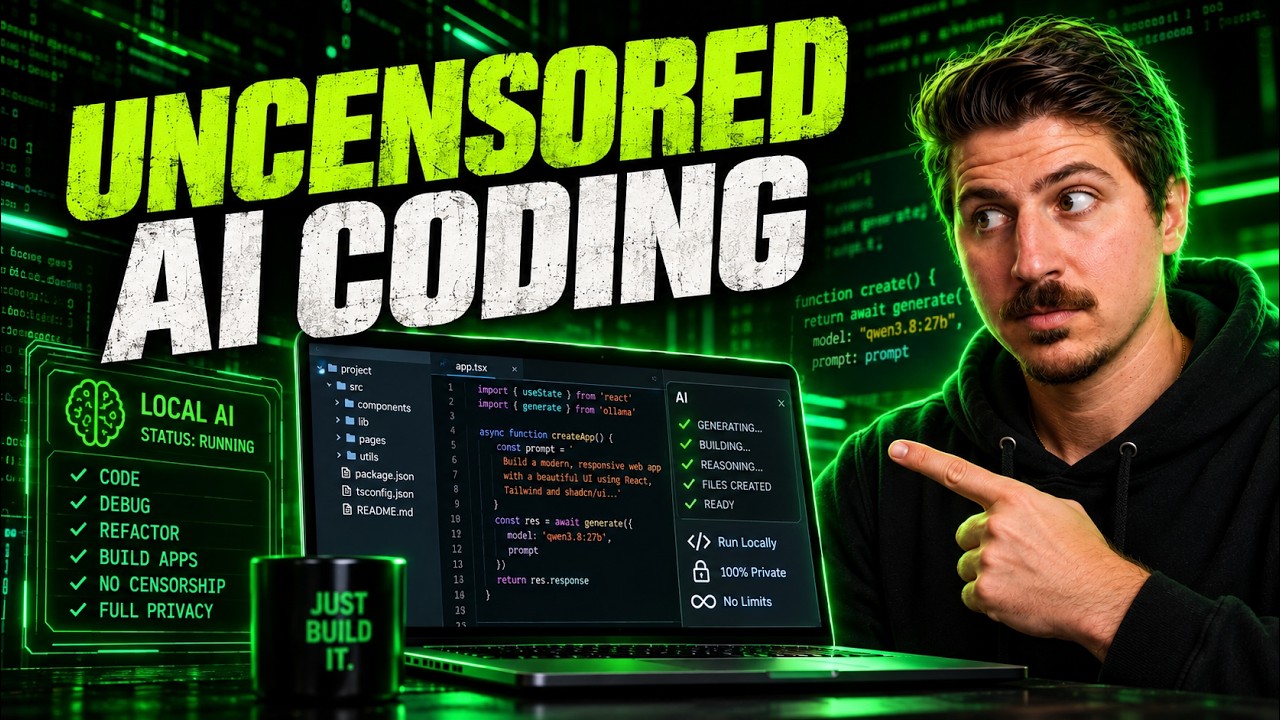
Mark Gadala-Maria turned the same local-model story directly into an AI-coding workflow. The description links Ollama, VS Code, and Cline, then lists specific Qwen 3.8 and Ornith 1.5 variants with VRAM thresholds and runnable Ollama commands. The distinctive angle is that "run coding models locally" is now being taught as a concrete IDE-plus-model stack rather than as a generic local-LLM concept (video, Ollama, Cline).
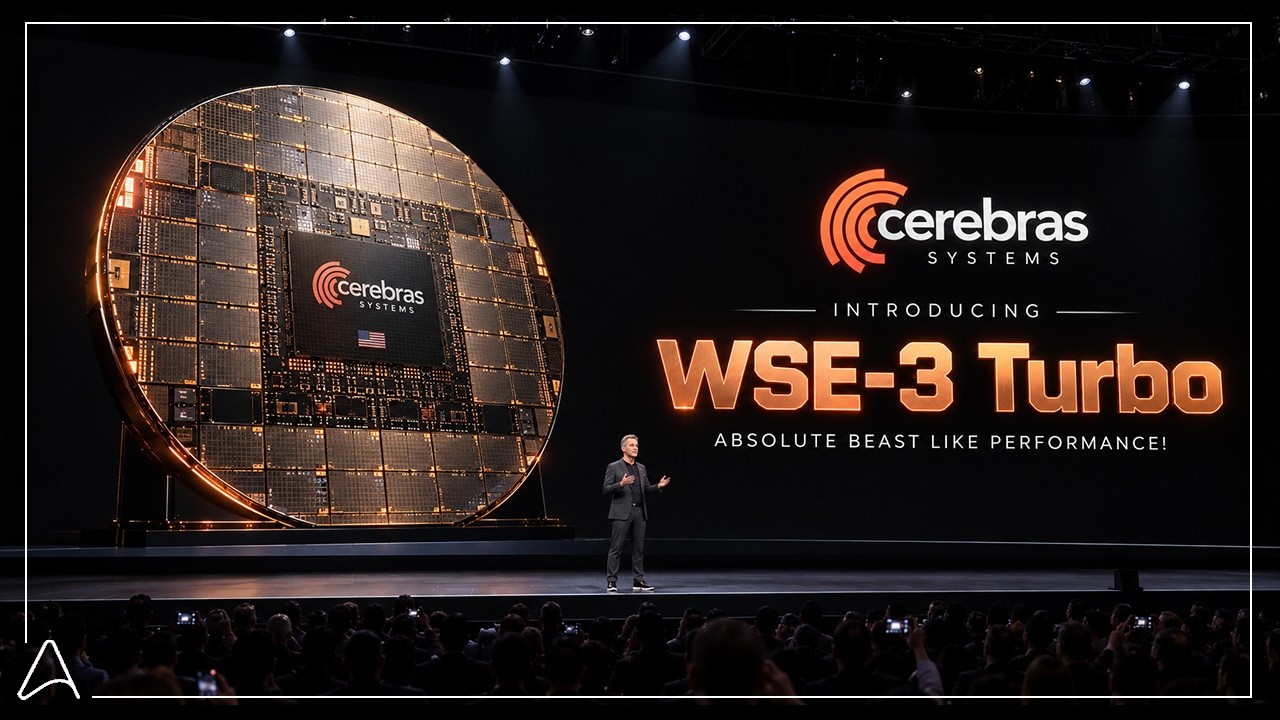
Evolving AI extended the practical stack story into hardware marketing with 26,264 views, 389 likes, and 19 comments. Its description claims the Cerebras WSE-3 Turbo packs 900,000 AI-optimized cores, 44 GB of on-chip SRAM, 250 PFLOPS per wafer, and more than 4,400 tokens per second on GPT-OSS-120B, all in service of a low-latency alternative to GPU-server inference. The distinctive angle is that infrastructure competition is now being narrated in developer-visible latency and throughput terms (video).
Discussion insight: Across these items, the practical question was no longer simply "open or closed?" It was which bundle cuts token cost, what VRAM floor a local coding model really needs, which runtime should own inference, and whether new hardware changes the economics enough to matter.
Comparison to prior day: On 2026-09-10, Fireship and Tech With Tim already kept cost, locality, and license/control in focus. On 2026-09-11, the theme moved closer to software-team execution through a local coding-model tutorial and a more explicit hardware-throughput story.
1.3 Agent talk split between architecture education and proof-of-productivity questions 🡕
At least three videos supported this theme. Compared with 2026-09-10, when the agent cluster leaned heavily toward architecture explainers, the 2026-09-11 file kept the taxonomy and harness language but added a clearer management-facing question: can companies actually turn AI agents into repeatable productivity gains?
IBM Technology supplied the cleanest control-plane explainer with 128,893 views, 1,750 likes, and 117 comments. Martin Keen breaks agents into Skills, MCP, RAG, and Memory, and the linked IBM explainer expands that into hierarchical, goal-based, utility-based, and learning-agent orchestration. The distinctive angle is that "agent" keeps getting decomposed into named runtime responsibilities rather than staying a single blurry product label (video).

Tech With Tim added the most hands-on runtime walkthrough with 104,530 views, 1,556 likes, and 50 comments. His timestamp list moves from model vs. agent into harness, MCP servers, skills, sandbox, and the production layer, while the linked TrueForge docs describe an open-source agent harness with a core server, HTTP API, chat UI, sandbox-as-tool, human approvals, and subagents. The distinctive angle is that the harness itself is being taught as the product surface that makes an agent durable (video, repo).

Lex Clips contributed the clearest adoption-and-ROI framing with 222,795 views, 1,924 likes, and 208 comments. The title itself frames AI agents as the secret to 10x productivity and asks why most companies fail, while the description roots the clip in DHH, 37signals, Ruby on Rails, and Omarchy rather than in a niche agent-builder community. The distinctive angle is that the day's agent discussion reached a general software-management audience and made productivity proof part of the category (video).
Discussion insight: The recurring differentiators here sat above the model: skills, MCP, memory, harnesses, sandboxes, approvals, and whether those layers can produce visible productivity rather than only more terminology.
Comparison to prior day: On 2026-09-10, the agent cluster focused more narrowly on runtime layers through IBM and other explainers. On 2026-09-11, those layers stayed central, but the Lex/DHH clip added a more explicit management and productivity question to the same stack.
1.4 Creative AI stayed workflow-first, with editing surfaces on one side and real-time video on the other 🡒
At least four videos supported this theme. Compared with 2026-09-10, when GPT Image 2.5 tutorials and real-time video were already prominent, the 2026-09-11 file kept both threads but pushed harder toward end-to-end workflow assembly: sketch-based editing, Blender scene setup, reference-image routing, and video generation that is fast enough to support new formats.
AI Search carried the biggest image-workflow item with 155,615 views, 3,005 likes, and 470 comments. The timestamp list covers sketching, annotations, multi-turn editing, transparency tests, storyboards, table-to-graph, and reference consistency, while the linked OpenAI release adds Sketch, templates, localized image comments, and faster multi-turn image generation. The distinctive angle is that GPT Image 2.5 was being judged as a workflow surface for many task types, not just as a prettier image model (video).

Zubair Trabzada | AI Workshop pushed the strongest DCC-style pipeline with 34,147 views, 263 likes, and 12 comments. The description lays out Blender setup, Higgsfield Scene Builder, product-ad prompting, previs generation, export/render, and Seedance as the final video step. The distinctive angle is that AI video is being inserted into an existing 3D production workflow rather than replacing it with prompt-only generation (video, Higgsfield MCP).

Malva AI kept the pricing-and-routing problem visible with 69,853 views, 860 likes, and 115 comments. The workflow spans Seedance 2.5, Dropshot AI, Dola AI, Meta AI reference images, and a sponsored Higgsfield path, while the description explicitly warns that "free" and "unlimited" access depend on credits, eligibility, regional restrictions, and promotional terms. The distinctive angle is that workflow pragmatism and access caveats remain as central as model quality (video).
Theoretically Media kept the frontier edge visible with 178,849 views, 2,569 likes, and 289 comments. The description says MiniMax H3 MAX on fal can generate a 5-second clip with audio in under 3 seconds, and the linked LAST FRAME repo turns that property into a playable film with pre-filmed branches and a vision-LLM adjudicator. The distinctive angle is that speed is no longer only a benchmark; it becomes a runtime for interactive media (video).
Discussion insight: The competition inside this cluster is increasingly about which surface absorbs more of the workflow - sketches, comments, templates, Blender scenes, reference images, routing, and editing - rather than which single model wins a beauty contest.
Comparison to prior day: On 2026-09-10, image editing and AI video were already large themes through AI Search, Alicia Lyttle, Malva AI, and Theoretically Media. On 2026-09-11, the mix stayed steady but shifted toward deeper workflow assembly via Blender plus Higgsfield while keeping the real-time-video format story alive.
2. What Frustrates People
Safety warnings are louder than the public control surface
This is High severity because NBC News, CNN, CBS News, Bridgewater Associates, and Neural Nutshell all surface danger or policy urgency, but the public evidence still arrives mainly as news clips, essays, and controlled simulations rather than as operator-visible controls. Even Anthropic's agentic-misalignment study explicitly says it has not seen these behaviors in real deployments, which leaves a gap between alarming scenarios and observable safeguards. The visible workaround is to rely on media intermediaries, policy essays, and lab research instead of inspectable safety dashboards. This is worth building for.
Cheap, open, and local AI still requires manual stack assembly
This is High severity because Fireship frames the problem as replacing a $320 per month stack, Tech With Tim still has to teach weights, quantization, inference engines, and hardware, Mark Gadala-Maria turns local coding into an Ollama-plus-IDE setup with explicit VRAM thresholds, and Evolving AI extends the story into hardware-throughput claims. The workaround is to stitch together model cards, runtime docs, IDE tooling, and infrastructure videos until a stable setup emerges. This is directly worth building for.
Agents still need a legible operating layer and proof they actually help
This is High severity because IBM Technology decomposes agents into Skills, MCP, RAG, and Memory, Tech With Tim expands that into harness, sandbox, and production layers, and the linked TrueForge docs add approvals, session state, and subagents. At the same time, Lex Clips frames the category around 10x productivity and why companies fail, which shows that architecture literacy alone is not enough. The workaround is to wrap models in more runtime layers and then separately teach operators why those layers matter. This is directly worth building for.
Creative AI still fragments work across surfaces, credits, and routing choices
This is High severity because AI Search has to compare GPT Image 2.5 across sketches, annotations, and reference consistency, Zubair Trabzada | AI Workshop chains Blender, Higgsfield, and Seedance, Malva AI warns that free access depends on credits and eligibility, and Theoretically Media asks what faster-than-real-time video actually costs to run. The workaround is to move between authoring tools, creative suites, video generators, and pricing models until a project is finished. This is competitive, but still worth building for.
3. What People Wish Existed
The dataset contained few direct "someone should build this" statements, so the needs below are low-confidence gaps inferred from workaround-heavy videos and linked artifacts.
Safety evidence and policy cockpit
NBC News, CNN, CBS News, Neural Nutshell, and Bridgewater Associates all imply demand for one surface that connects safety claims, research artifacts, regulatory proposals, and labor-transition implications. This is both a practical and emotional need with High urgency because the public story is now widespread, but the underlying evidence remains fragmented across interviews, essays, and lab studies. Existing pieces like Anthropic's agentic-misalignment study, the International AI Safety Report update, and Bridgewater's policy essay address parts of the gap, not the whole workflow. Opportunity: aspirational.
Local AI and coding planner that maps models, hardware, and tools to real constraints
Fireship, Tech With Tim, Mark Gadala-Maria, and Evolving AI point to a practical need for a surface that says which model family, quantization level, runtime, IDE, and hardware target fit a specific workload and budget. This is a practical need with High urgency because the current path still depends on hopping between tutorials, product pages, and hardware claims before a team can choose a stack. Existing tools like Ollama and Cline cover important pieces, but not the whole decision path. Opportunity: direct.
Agent runtime that exposes state, approvals, and measurable productivity
IBM Technology, Tech With Tim, TrueForge, and Lex Clips all point at the same practical need: one operating layer that can explain what an agent knows, what tools it can call, where its state lives, when approvals trigger, and whether it is actually improving output. This is a practical need with High urgency because even the educational items now assume multiple runtime layers, while the mainstream productivity framing asks for proof rather than architecture diagrams. Existing harnesses cover many pieces today, but the measurement and legibility layer is still fragmented. Opportunity: direct.
Creative workspace that routes from sketch or Blender scene to final video with cost guardrails
AI Search, Zubair Trabzada | AI Workshop, Malva AI, and Theoretically Media imply demand for a workspace that can absorb sketching, comments, templates, reference images, 3D scene prep, model routing, and pricing awareness in one place. This is a practical need with High urgency because creators are still learning how to stitch these steps together from comparison videos and sponsored tutorials. Platforms like Higgsfield cover major parts of the workflow today, but the file still shows creators teaching the routing work themselves. Opportunity: competitive.
4. Tools and Methods in Use
| Tool | Category | Sentiment | Strengths | Limitations |
|---|---|---|---|---|
| Ollama / 9router / Headroom / Diffy / OpenHands | Open-source AI stack | (+) | Framed as replacing a paid stack and cutting recurring token costs | Still requires assembling several separate tools |
| LM Studio / Ollama / Docker Model Runner / Python | Local AI runtime | (+/-) | Offers multiple concrete paths to run models locally or offline | Requires model, quantization, and hardware literacy |
| Ollama / VS Code / Cline / Qwen 3.8 / Ornith 1.5 | Local AI coding stack | (+) | Gives explicit model choices, VRAM thresholds, and runnable commands for coding use | Manual setup and VRAM ceilings still gate adoption |
| Skills / MCP / RAG / Memory | Agent architecture methods | (+/-) | Provides a clear mental model for procedures, tool access, retrieval, and state | Teams still need to wire the layers together |
| TrueForge | Agent harness | (+/-) | Adds sandboxing, approvals, subagents, API/UI, and persisted sessions around model calls | Adopting a harness still means workflow and infrastructure decisions |
| GPT Image 2.5 | Image generation | (+) | Adds Sketch, templates, localized comments, and stronger multi-turn editing | Users still rely on long comparison videos to understand edge cases |
| Higgsfield MCP / Blender plugin | Creative workflow platform | (+/-) | Offers 30+ models plus MCP, CLI, plugin, and reference-aware generation surfaces | Credit-based pricing and sponsored discovery remain central |
| Seedance 2.5 / Dropshot AI / Dola AI / Meta AI | AI video workflow | (+/-) | Gives several practical generation, reference-image, and troubleshooting paths | Daily limits, eligibility, regional, and pricing caveats apply |
| fal + MiniMax H3 Max / LAST FRAME | Real-time video runtime | (+) | Faster-than-realtime generation enables playable media and live formats | Cost and model availability still constrain production use |
| Anthropic agentic-misalignment tests / International AI Safety Report update | Safety evaluation methods | (+/-) | Gives concrete simulated failure modes and public capability tracking | Simulations and benchmarks do not substitute for real deployment evidence |
| Cerebras CS-4 / WSE-3 Turbo | AI inference hardware | (+) | Reframes hardware competition in latency and tokens-per-second terms | Evidence here is vendor-claim-heavy rather than independently benchmarked |
Positive sentiment clustered around tools that either reduce recurring cost or make hidden layers more legible. Fireship's bundle, Tech With Tim's runtime breakdowns, IBM's control-plane vocabulary, and TrueForge's harness docs all reward products that clarify where execution, retrieval, approvals, and model routing actually sit.
Sentiment turned mixed whenever "free," "open," or "faster" depended on caveats. Malva AI's eligibility warnings, Mark Gadala-Maria's VRAM thresholds, Bridgewater's policy framing, and Cerebras's aggressive hardware claims all show that the friction is often commercial, operational, or evidentiary rather than purely technical.
The visible migration pattern is away from one paid, model-centric surface and toward open or local stacks plus harnesses and creative routers. Competitive pressure is strongest in creative suites and agent runtimes, while hardware comparison and safety instrumentation remain earlier but increasingly visible layers.
5. What People Are Building
| Project | Who built it | What it does | Problem it solves | Stack | Stage | Links |
|---|---|---|---|---|---|---|
| GPT Image 2.5 | OpenAI | Turns prompts, sketches, templates, and comments into edited images across multiple rounds | Makes visual editing more iterative and less manual | Multimodal image model, Sketch, templates, localized comments, multi-turn editing | Shipped | release AI Search review |
| TrueForge | TrueFoundry | Runs the agent execution loop with MCP, skills, sandboxing, approvals, API, and chat UI | Gives teams a reusable agent runtime instead of stitching infrastructure by hand | TypeScript, HTTP API, UI SDK, SQLite/Postgres, sandbox-as-tool, subagents | Shipped | repo docs Tech With Tim video |
| Higgsfield MCP / Blender workflow | Higgsfield | Exposes image and video generation through agent, CLI, and Blender-connected workflows | Reduces tool switching across storyboarding, scene building, generation, and editing | 30+ models, MCP, CLI, Blender plugin, credit-based generations | Shipped | MCP Zubair video Malva video |
| LAST FRAME / interdimensional-game | blendi-remade | Playable film where the next shots are filmed while the current clip is still playing | Turns faster-than-realtime video generation into an interactive medium instead of an offline render queue | fal, MiniMax H3 Max, Director streams, vision-LLM adjudicator | Alpha | repo Theoretically Media video |
| Cerebras CS-4 / WSE-3 Turbo | Cerebras | Wafer-scale inference system pitched as a low-latency alternative to GPU-server clusters | Improves throughput and latency for agent and LLM inference workloads | WSE-3 Turbo, Direct Wafer Links, Nexus architecture, wafer-scale compute | Beta | video |
GPT Image 2.5 and Higgsfield matter because creative competition is moving to workflow absorption, not just raw generation quality. The strongest tutorials in this file are about sketches, comments, reference consistency, Blender scene prep, and how many steps a suite can absorb before a creator has to switch tools.
TrueForge matters because the agent category keeps drifting toward harnesses that make model calls, tools, approvals, state, and UI legible. In this file, the builder conversation was less about inventing a new model and more about making the runtime around a model reliable enough to use.
LAST FRAME shows what happens when video latency crosses an interaction threshold: generation speed becomes a design primitive for a new medium. Cerebras matters for the same reason on the infrastructure side, because it translates hardware differentiation into user-facing tokens-per-second and latency claims.
6. New and Notable
Bridgewater turned the safety story into a concrete labor-and-tax policy package
Bridgewater Associates did more than repeat generic risk concerns. Its linked essay argues for immediate action, ongoing oversight of AI labs, a token tax, and preparation for labor displacement, including an estimate that 18% of current U.S. jobs could be displaced in the next five years. That matters because it gives the day's safety cluster a concrete macro-policy artifact instead of one more warning clip.
Lex and DHH pushed AI agents into mainstream software-management language
Lex Clips framed the category around 10x productivity and why companies fail, while the description anchored the clip in DHH, 37signals, Ruby on Rails, and Omarchy. That matters because the agent discussion here is no longer confined to people already building harnesses; it is reaching a broader operator audience that expects visible output gains.
Blender plus Higgsfield pushed AI video deeper into existing 3D production habits
Zubair Trabzada | AI Workshop treats Blender as the starting point, not as an optional export step. The workflow runs from scene prep and previs through Higgsfield and Seedance, which matters because AI video is showing up as an extension of existing DCC habits rather than as a separate prompt toy.
LAST FRAME treated faster inference as a new medium, not just a faster render
Theoretically Media linked to the LAST FRAME repo, where pre-filmed branches and a vision-LLM adjudicator turn video generation into a playable film. That matters because the file's strongest frontier video signal is about interactivity and format, not only about image quality.
Cerebras packaged inference hardware in developer-facing latency language
Evolving AI pitches wafer-scale hardware with concrete tokens-per-second, SRAM, bandwidth, and PFLOPS claims. That matters because infrastructure competition is increasingly being translated into workload language that developers and builders can act on directly.
7. Where the Opportunities Are
[+++] Local AI and coding operator layer - Fireship, Tech With Tim, Mark Gadala-Maria, and Evolving AI all point at the same gap: teams need one surface that joins budget, model choice, VRAM, runtime, IDE, and latency tradeoffs. This is strong because the signal appears across high-reach tutorials, local-coding guides, and hardware positioning.
[+++] Agent harness with proof-of-work and governance - IBM Technology, Tech With Tim, TrueForge, and Lex Clips show demand for a runtime that makes skills, tool access, approvals, session state, and productivity outcomes legible. This is strong because the file combines both builder education and management-facing pressure for measurable results.
[+++] Creative workflow router with cost-aware generation - AI Search, Zubair Trabzada | AI Workshop, Malva AI, and Theoretically Media all show that creators still need help routing sketches, scenes, reference assets, models, and credits through one coherent workflow. This is strong because the evidence spans image editing, 3D scene prep, budget caveats, and real-time video formats.
[++] Safety evidence and policy intelligence - NBC News, CNN, CBS News, Neural Nutshell, and Bridgewater Associates show sustained demand for a place that ties warnings, studies, and policy responses together. This is moderate because the public need is obvious, but the product shape is less concrete than the operator-layer and creative-workflow opportunities.
[+] Inference hardware and storage planner - Evolving AI and Supermicro both translate backend decisions into performance, cost, and architecture tradeoffs. This is emerging because the evidence is thinner today, but it points toward tools that compare inference stacks in workload terms rather than in vendor slogans.
8. Takeaways
- The safety story moved from fear into concrete policy levers. NBC paired existential risk with regulation, CNN made ban language explicit through Bernie Sanders, CBS focused on legislative stalemate, and Bridgewater added oversight, token-tax, and labor-displacement proposals. (source, source, source, source)
- Public evidence is still fragmented between news, essays, and simulations rather than operator-visible controls. Neural Nutshell's linked Anthropic study and International AI Safety Report add real public artifacts, but even those sources stop short of showing live deployment governance. (source, source, source)
- Open and local AI remained attractive for cost and control, but the learning burden stayed high. Fireship sells the move as escaping a $320 per month stack, Tech With Tim turns it into runtime literacy, and Mark Gadala-Maria turns it into model, VRAM, and IDE choices for coding. (source, source, source)
- Agent differentiation is still happening above the model, and now it has to prove productivity. IBM's Skills/MCP/RAG/Memory split, TrueForge's harness model, and Lex's DHH clip all point toward runtime legibility plus outcome proof rather than bigger model branding alone. (source, source, source)
- Creative AI competition is about workflow absorption, not only generation quality. GPT Image 2.5 is being judged on sketches, comments, and multi-turn editing, while Zubair and Malva show that routing between Blender, Higgsfield, Seedance, and reference-image steps is still a major part of the job. (source, source, source, source)
- Faster inference is starting to create new product categories instead of just faster renders. Theoretically Media's H3 MAX example and the LAST FRAME repo turn speed into an interactive-video format, while Cerebras packages hardware competition in tokens-per-second terms for agent and LLM workloads. (source, source, source)