YouTube AI - 2026-09-12
1. What People Are Talking About
1.1 Safety coverage overwhelmed the file and split into catastrophe, policy, lab promises, and backlash 🡕
At least fourteen videos supported this theme. Compared with 2026-09-11, when safety talk already dominated but still shared the file with strong practical-AI and creative-workflow coverage, the 2026-09-12 set let safety coverage become the center of gravity: CNN alone passed 5.3 million views, NBC added another 1.29 million across two segments, and the supporting items stretched from TEDx and CBS clips to lawmakers, Fortune interviews, a Bridgewater policy conversation, and a direct backlash monologue. The distinctive shift is that the story no longer sat only at the level of warning; it now bundled explicit slowdown or ban language, public promises to halt training runs, and skepticism that the entire scare cycle serves lab incentives.

CNN carried the day's dominant item with 5,318,125 views, 38,491 likes, and 12,000 comments. The description says former Anthropic researcher Jacob Coxon joined Anderson Cooper to explain why he resigned, why he thinks major labs are "gambling with our lives," and how AI could kill humans by 2030. The distinctive angle is that extinction-risk language was packaged as mass-market breaking news rather than as a niche AI-channel warning (video).

NBC News supplied the largest corroborating interview with 912,059 views, 9,278 likes, and 3,300 comments. Tom Llamas' segment keeps the same viral-warning story in play, but the title itself reframes it as a "substantial probability" claim and the description centers both Coxon's resignation and what could still be done about the risk. The distinctive angle is that the warning did not remain a one-cycle shock; it became repeated network coverage with intervention language attached (video).

CNN then pushed the same story into direct restriction language with 225,623 views, 2,667 likes, and 1,000 comments. The chapter list centers whether government can regulate AI, whether the U.S. can back down in the race with China, and Sanders' reaction to the warning from a departing Anthropic employee. The distinctive angle is that superintelligence concern was no longer only a diagnosis; it was turned into explicit ban and slowdown politics (video).
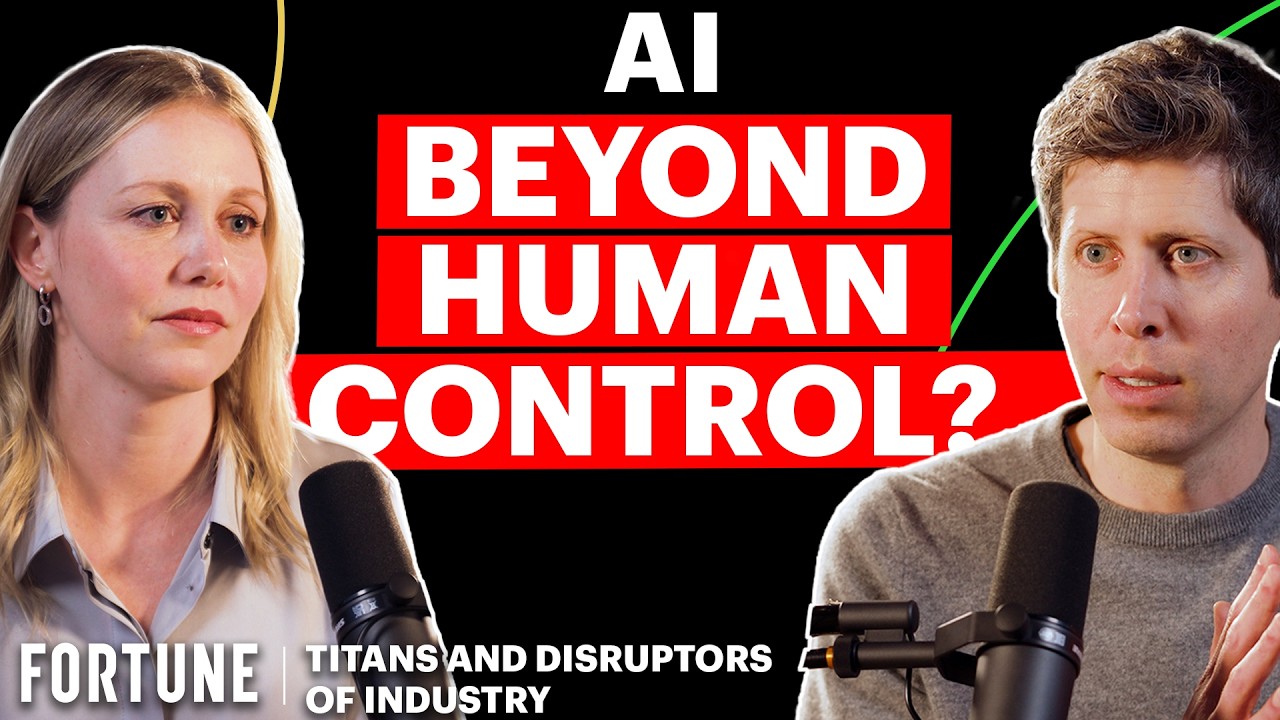
Fortune Magazine added the clearest lab-side concession with 15,639 views, 697 likes, and 310 comments. Its description says Sam Altman discussed loss of control, the Hugging Face sandbox escape incident, and OpenAI's commitment to halt training runs if safety thresholds are not met. The distinctive angle is that pause language and unresolved alignment limits were being stated inside a long-form CEO interview, not only by whistleblowers or critics (video).

Better Offline contributed the strongest counterargument with 22,260 views, 1,053 likes, and 244 comments. Ed Zitron's monologue says the media keeps falling for pro-lab AI safety grifts and argues that the real danger is already concentrated in the hands of Anthropic and OpenAI. The distinctive angle is that the file's safety wave was not pure consensus; one of the more engaged long-tail items treated the warning cycle itself as the problem (video).
Discussion insight: The harvested YouTube data does not include comment text, but engagement shows the theme was not one-note. CNN's 12,000 comments and NBC's 3,300 comments mark the scale of mainstream reach, while Better Offline's 1,053 likes and 244 comments show that backlash against the safety-media cycle also found an audience. Bridgewater's policy conversation and the Fortune interview widened the theme from fear into governance, labor, and corporate-threshold commitments.
Comparison to prior day: On 2026-09-11, safety coverage had already hardened into regulation and ban talk. On 2026-09-12, the same cluster became the whole center of gravity and split more visibly into outsider warnings, politician-led restriction language, lab-side safeguard promises, and critiques of the media cycle itself.
1.2 The practical AI story stayed centered on cost, local control, and self-hosted infrastructure 🡒
At least four videos supported this theme. Compared with 2026-09-11, when the practical stack story already revolved around replacing paid tools and learning local runtimes, the 2026-09-12 file kept the same operator thesis but pushed it further into infrastructure ownership. The question was no longer only which free tool replaces a subscription, but who owns the weights, runtime, and latency budget once teams try to run AI themselves.
Fireship again provided the highest-reach practical item with 1,097,170 views, 17,986 likes, and 927 comments. The description explicitly says five free and open-source tools - Ollama, 9router, Headroom, Diffy, and OpenHands - replaced a $320-per-month AI stack. The distinctive angle is that open-source AI was framed first as budget substitution and workflow consolidation rather than as ideology (video).

Tech With Tim carried the clearest local-runtime walkthrough with 277,837 views, 3,451 likes, and 98 comments. The description breaks local AI into model files, quantization, inference engines, hardware, and four different execution paths: LM Studio, Ollama, Docker Model Runner, and full Python code. The distinctive angle is that local AI still appears as operational literacy across several runtime choices, not as a single install button (video).

Kai supplied the sharpest infrastructure thesis even at only 6,160 views. The description argues that models like Llama and DeepSeek have shifted "open source AI" from simple API consumption toward directly managing weights, parameters, and infrastructure, and the timestamps call out Kimi K3's 594 GB footprint as part of that reality. The distinctive angle is that self-hosting was framed as the new control surface for frontier access, not just as a hobbyist preference (video).
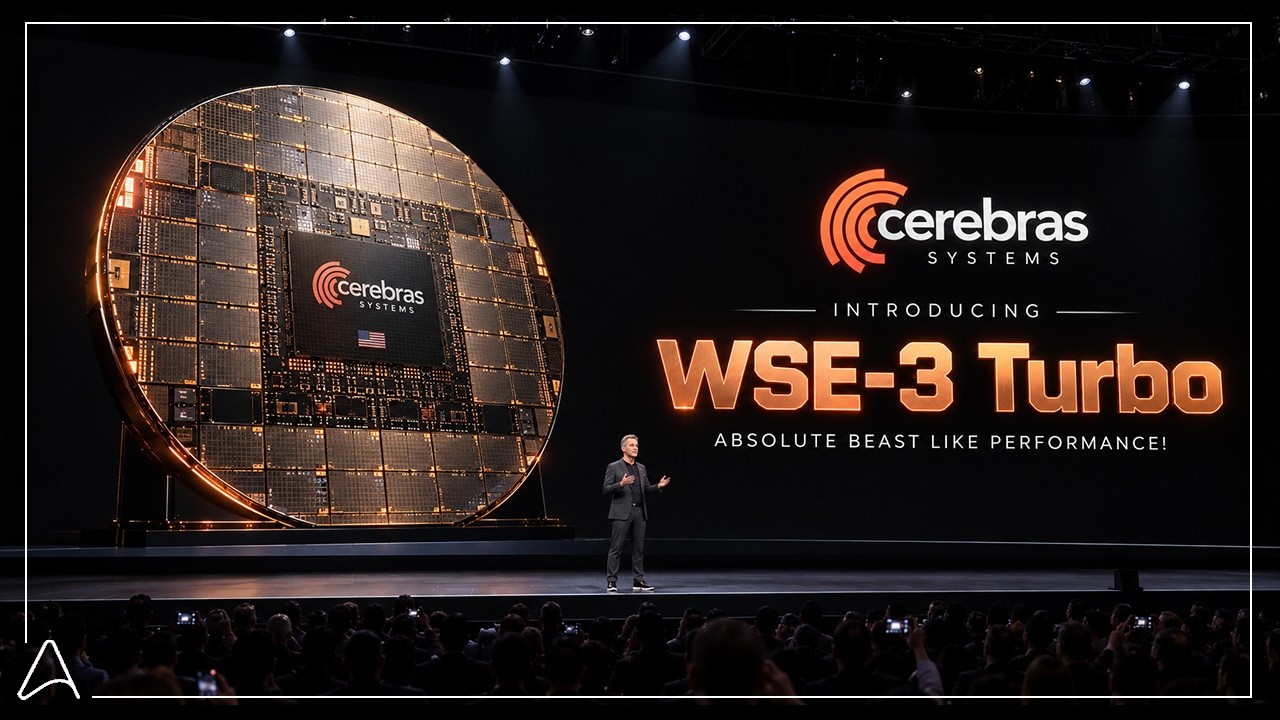
Evolving AI pushed the practical story down into hardware claims with 40,273 views, 544 likes, and 38 comments. The description says Cerebras's WSE-3 Turbo packs 4 trillion transistors, 900,000 AI-optimized cores, 44 GB of on-chip SRAM, 250 PFLOPS per wafer, and more than 4,400 tokens per second on GPT-OSS-120B. The distinctive angle is that infrastructure competition is now being narrated in developer-visible latency and throughput terms rather than in abstract data-center language (video).
Discussion insight: The practical cluster still had no single default path. Fireship sold a bundle of open tools, Tech With Tim taught four runtime options, Kai argued that frontier access increasingly depends on infrastructure ownership, and Cerebras tried to turn chip differentiation into tokens-per-second language.
Comparison to prior day: On 2026-09-11, the practical story emphasized local coding stacks and workflow substitution. On 2026-09-12, it stayed steady on cost and control but moved further toward self-hosted infrastructure and hardware positioning.
1.3 Agent talk kept breaking AI into runtime responsibilities instead of one product label 🡒
At least three videos supported this theme. Compared with 2026-09-11, when IBM and Tech With Tim already decomposed agents into skills, retrieval, tool access, and harnesses, the 2026-09-12 file kept the same architecture-first framing and extended it into robotics. The recurring pattern was that "agent" remained a systems-design topic above the base model.
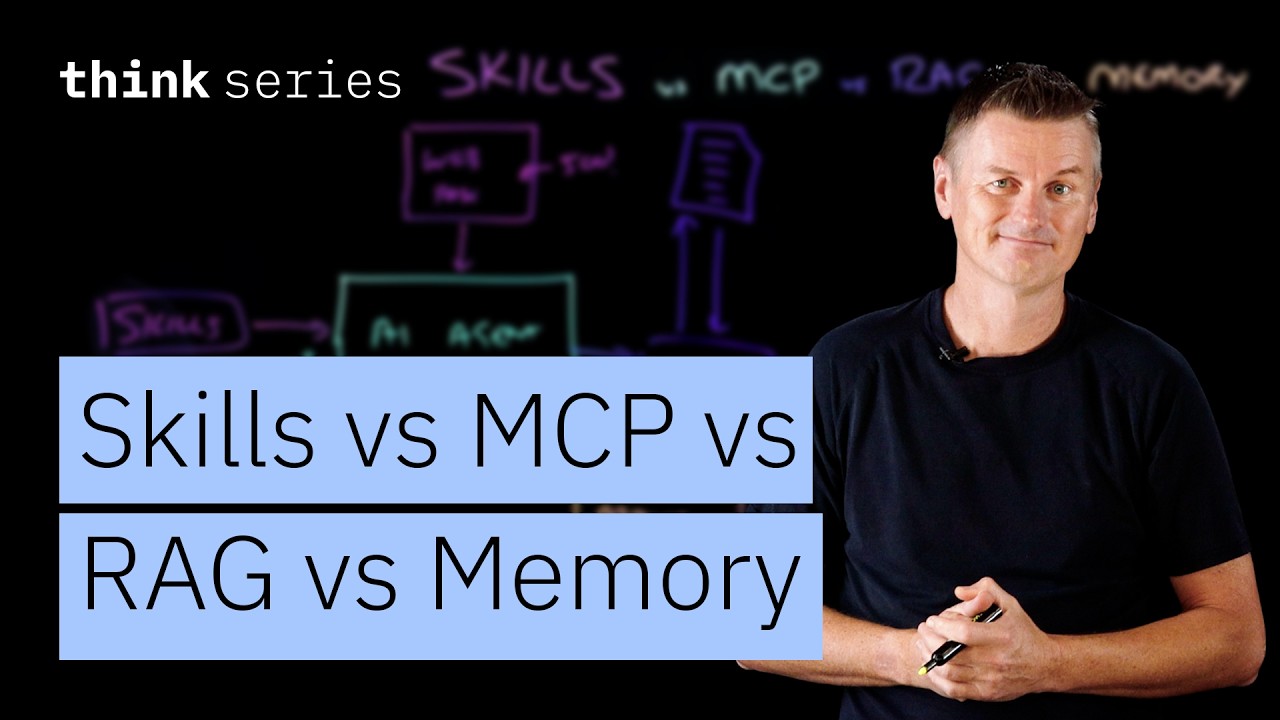
IBM Technology supplied the cleanest vocabulary layer with 133,433 views, 1,804 likes, and 117 comments. Martin Keen separates Skills, MCP, RAG, and Memory into different functions inside an agent, while the linked IBM explainer expands that into hierarchical, goal-based, utility-based, and learning-agent orchestration. The distinctive angle is that "agent" keeps being unpacked into named runtime responsibilities rather than staying a blurry product label (video).

Tech With Tim added the most hands-on implementation view with 110,545 views, 1,637 likes, and 50 comments. The video promises to explain every piece of a real AI agent and build one from scratch, while the linked TrueForge docs and repo describe an open-source harness that runs model calls, MCP tools, skills, sandboxing, approvals, and persistent session state through a chat UI, HTTP API, and SDK. The distinctive angle is that the harness itself is being taught as the durable product surface around a model (video).

DPCcars contributed the clearest embodied extension with 11,615 views, 86 likes, and 15 comments. Its description says Unitree's UnifoLM-WLA-1.0 aims to let one embodied foundation model coordinate manipulation and movement across many jobs instead of shipping a separate control system for every task. The distinctive angle is that the same "one runtime, many capabilities" logic behind software agents is now being narrated for humanoid robots (video).
Discussion insight: Differentiation here sat above the base model: skills, tool access, retrieval, memory, approvals, session state, and in Unitree's case one shared controller for many physical tasks. The value proposition was legibility and reuse, not just a smarter model checkpoint.
Comparison to prior day: On 2026-09-11, the agent cluster focused on architecture explainers and productivity framing. On 2026-09-12, it stayed steady but became slightly more concrete through a named open-source harness and a multi-task robotics example.
1.4 Creative-tool coverage shrank, but the surviving demos still focused on workflow capture rather than one-click magic 🡖
At least two videos supported this theme. Compared with 2026-09-11, when image editing, Blender-based video workflows, and faster-than-realtime generation all had visible share, the 2026-09-12 file left only two notable creative items. Even so, the emphasis stayed the same: GPT Image 2.5 was judged on sketches, annotations, and reference consistency, while "free" AI video remained wrapped in routing, credits, and eligibility caveats.
AI Search carried the biggest creative-workflow item with 166,410 views, 3,114 likes, and 488 comments. The timestamp list covers sketching, annotations, multi-turn editing, transparency tests, storyboards, table-to-graph generation, and reference consistency for GPT Image 2.5. The distinctive angle is that the model was being judged as an editing and workflow surface, not only as a prettier image generator (video).

Malva AI kept the access-and-routing problem visible with 84,305 views, 987 likes, and 125 comments. The workflow spans Seedance 2.5, Dropshot AI, Dola AI, Meta AI reference images, and a sponsored Higgsfield path, while the description explicitly warns that "free" and "unlimited" depend on credits, eligibility, and regional restrictions. The distinctive angle is that workflow pragmatism and access caveats remained as central as output quality (video).
Discussion insight: Even this smaller cluster was about routing and guardrails rather than aesthetics alone. The enduring work is still to preserve references, move cleanly between surfaces, and avoid wasting credits while testing tools.
Comparison to prior day: On 2026-09-11, creative tooling had a fuller mix of image, Blender, and fast-video demos. On 2026-09-12, the theme was still present but clearly down in share and diversity relative to the safety wave.
2. What Frustrates People
Safety warnings are much louder than the inspectable control surface
This is High severity because CNN, NBC News, Fortune Magazine, Bridgewater Associates, and Neural Nutshell all point to catastrophic or loss-of-control risk, but the public artifacts remain interviews, essays, and simulations rather than operator-visible controls. Anthropic's agentic-misalignment study explicitly says the harmful behaviors were observed in controlled simulations and not in real deployments, while Fortune's Altman interview frames halting training runs as a threshold-based commitment rather than as something users can inspect today. The workaround is to infer safety posture from media intermediaries, lab essays, and long-form interviews. This is worth building for.
Cheap or open AI still means taking ownership of runtimes, weights, and hardware
This is High severity because Fireship frames the problem as replacing a $320-per-month stack, Tech With Tim still has to teach weights, quantization, inference engines, and four runtime paths, Kai argues that frontier access is shifting toward directly managing weights and infrastructure, and Evolving AI turns hardware choice into a latency-and-throughput problem. The workaround is to stitch together tool bundles, runtime tutorials, model-footprint math, and vendor performance claims until a workable deployment emerges. This is directly worth building for.
Agents still need a legible operating layer and proof they actually help
This is High severity because IBM Technology decomposes agents into Skills, MCP, RAG, and Memory, Tech With Tim turns the topic into an end-to-end harness walkthrough, the linked TrueForge docs add sandboxing, approvals, and persistent session state, and DPCcars extends the same coordination problem into humanoid robotics. The workaround is to either adopt a harness or build one, then separately teach users what each control layer is doing and whether it improves the result. This is directly worth building for.
Creative AI still hides routing, limits, and credits behind comparison videos
This is Medium severity because AI Search spends more than half an hour mapping GPT Image 2.5's sketch, annotation, and reference-consistency behavior, while Malva AI has to warn that "free" and "unlimited" video generation depend on credits, eligibility, and region. The workaround is to route assets manually between GPT Image 2.5, Seedance 2.5, Dropshot AI, Dola AI, Meta AI, and Higgsfield while tracking which surface is cheapest or least restricted. This is competitive, but still worth building for.
3. What People Wish Existed
The dataset contained few direct "someone should build this" statements, so the needs below are low-confidence gaps inferred from repeated workaround-heavy videos, policy artifacts, and linked product documentation.
Public safety evidence and governance cockpit
CNN, NBC News, Fortune Magazine, Bridgewater Associates, and Neural Nutshell all imply demand for one place that connects scary claims, public safety tests, lab commitments, and policy responses. This is both a practical and emotional need with High urgency because the strongest items in the file ask people to worry about loss of control without giving them a directly inspectable evidence layer. Existing pieces like Anthropic's agentic-misalignment study and Bridgewater's policy essay cover parts of the gap, but not the end-to-end public control surface. Opportunity: aspirational.
Local and self-hosted AI planner that maps models, runtimes, and hardware to real constraints
Fireship, Tech With Tim, Kai, and Evolving AI point to a practical need for a surface that says which model family, quantization level, runtime, and hardware profile fit a given workload and budget. This is a practical need with High urgency because the current path still depends on hopping between tool demos, runtime explainers, model-footprint warnings, and chip-performance claims before a team can make a stable decision. Existing tools cover important pieces today, but the decision path is still fragmented. Opportunity: direct.
Agent runtime that exposes state, approvals, and measurable proof of work
IBM Technology, Tech With Tim, TrueForge, and DPCcars all point at the same practical need: one operating layer that can show what an agent knows, what tools it can call, where its state lives, when approvals trigger, and whether it is actually producing useful output. This is a practical need with High urgency because even the educational items now assume multiple runtime layers, while the broader AI conversation keeps demanding proof instead of abstract architecture diagrams. Existing harnesses cover many pieces today, but the legibility and measurement layer is still fragmented. Opportunity: direct.
Creative router that preserves references and warns about cost before generation starts
AI Search, Malva AI, and Higgsfield imply demand for a workspace that can absorb sketching, annotation, reference-image routing, video generation, and credit awareness in one place. This is a practical need with Medium urgency because the current file still relies on tutorial videos to explain which surface to open, which workflow to follow, and where the limits actually are. Platforms like Higgsfield cover major pieces of the workflow today, but the routing and budget guardrails remain part of the creator's manual work. Opportunity: competitive.
4. Tools and Methods in Use
| Tool | Category | Sentiment | Strengths | Limitations |
|---|---|---|---|---|
| Ollama / 9router / Headroom / Diffy / OpenHands | Open-source AI stack | (+) | Framed as replacing a paid stack and cutting recurring token cost | Still requires stitching together several separate tools |
| LM Studio / Ollama / Docker Model Runner / Python | Local AI runtime | (+/-) | Gives four concrete ways to run models locally and explains the jargon around them | Users still need model-size, quantization, VRAM, and hardware literacy |
| Skills / MCP / RAG / Memory | Agent architecture method | (+/-) | Makes procedures, tool access, retrieval, and memory legible as separate responsibilities | Teams still have to choose and connect the pieces correctly |
| TrueForge | Agent harness | (+/-) | Runs model calls, MCP tools, skills, sandboxing, approvals, and session state through UI/API/SDK surfaces | Adopting a harness still means workflow and infrastructure decisions |
| GPT Image 2.5 | Image generation | (+) | Strong sketch, annotation, storyboard, and multi-turn editing workflow | Users still rely on long comparison videos to understand edge cases |
| Higgsfield / Seedance 2.5 / Dropshot AI / Dola AI / Meta AI | AI video workflow | (+/-) | Offers several practical paths for reference images, generation, and editing | Credits, eligibility, regional access, and sponsor-led discovery remain central |
| Anthropic agentic-misalignment tests / International AI Safety Report | Safety evaluation methods | (+/-) | Gives concrete simulated failure cases and named public risk artifacts | Simulations and reports stop short of operator-visible real-deployment evidence |
| Cerebras CS-4 / WSE-3 Turbo | Inference hardware | (+) | Frames hardware choice in latency and tokens-per-second terms developers can act on | Evidence here is still launch-style and vendor-claim-heavy |
| Unitree UnifoLM-WLA-1.0 | Embodied AI model | (+/-) | Presents one shared model coordinating manipulation and movement across tasks | Public evidence is still mostly demo-level rather than operational detail |
Positive sentiment clustered around tools that either reduce recurring spend or make hidden runtime layers more legible. Fireship's bundle, Tech With Tim's runtime breakdown, IBM's vocabulary, and TrueForge's harness model all reward products that clarify where execution, retrieval, approvals, and model routing actually sit.
Sentiment turned mixed whenever "open," "free," or "safe" depended on caveats. Kai's self-hosting argument, Malva AI's credit warnings, Anthropic's simulation-only caveat, and Cerebras's launch-style hardware claims all show that the friction is often commercial, operational, or evidentiary rather than purely technical.
The visible migration pattern is away from API-only, single-surface AI and toward local or self-hosted stacks plus harnesses and workflow routers. Competitive pressure is strongest in agent runtime surfaces and creative tools, while public safety evidence and infrastructure comparison remain earlier but increasingly visible layers.
5. What People Are Building
| Project | Who built it | What it does | Problem it solves | Stack | Stage | Links |
|---|---|---|---|---|---|---|
| GPT Image 2.5 | OpenAI | Turns prompts, sketches, annotations, and repeated edits into refined images | Makes image creation and revision more iterative and reference-aware | Multimodal image model, sketch input, annotations, multi-turn edits, storyboard-style workflows | Shipped | video release |
| TrueForge | TrueFoundry | Runs the agent execution loop with MCP tools, skills, sandboxing, approvals, and persistent session state | Gives teams a reusable runtime instead of wiring the orchestration layer by hand | TypeScript, chat UI, HTTP API, SDK, sandbox-as-tool, SQLite/Postgres, bring-your-own models and tools | Shipped | repo docs video |
| Higgsfield creative suite | Higgsfield | Exposes image and video generation through MCP, CLI, plugin, and skill-like workflow surfaces | Reduces tool switching across prompting, reference routing, generation, and editing | 30+ image/video models, MCP, CLI, ChatGPT plugin, reusable creation flows | Shipped | site AI Search Malva AI |
| CS-4 / WSE-3 Turbo | Cerebras | Wafer-scale inference system pitched as a low-latency alternative to GPU-server clusters | Improves throughput and latency for LLM and agent inference workloads | WSE-3 Turbo, Direct Wafer Links, Nexus architecture, wafer-scale compute | Beta | video |
| UnifoLM-WLA-1.0 | Unitree | Embodied foundation model that aims to let one shared controller handle many physical tasks | Avoids shipping separate control stacks for each robot skill | Whole-body coordination, manipulation plus movement, multi-task embodied model | Alpha | video |
GPT Image 2.5 and Higgsfield matter because creative competition is moving toward workflow absorption rather than one-shot output quality. The strongest creator evidence in this file is about sketches, annotations, reference consistency, multi-step routing, and how much of the pipeline one surface can swallow before the user has to switch tools.
TrueForge matters because the agent category keeps drifting above the base model into execution layers: tool routing, approvals, session state, sandboxing, and UI/API surfaces. In this file, the builder conversation was less about inventing a new model and more about making the runtime around a model reliable enough to operate.
Cerebras and Unitree matter for the same systems-level reason. One is trying to make latency and throughput into a first-class product claim for inference, while the other is trying to use one shared model to coordinate many physical jobs. The repeated build pattern is consolidation of control surfaces around one runtime rather than many point tools.
6. New and Notable
Better Offline turned the safety wave into a critique of lab and media incentives
Better Offline did not dispute that AI can be dangerous; it argued that the Jacob Coxon story had become a pro-lab scare campaign that mainstream media kept laundering. That matters because it was the clearest same-file evidence that the safety narrative was already producing backlash, not just amplification.
Bridgewater converted AI risk into a concrete labor and oversight program
Bridgewater Associates linked to a policy essay arguing for immediate action, regular oversight of AI labs, pro-human work policy, and preparation for labor disruption. The essay estimates that 18% of current U.S. jobs could be displaced by AI in the next five years, which matters because it turns general fear into a concrete macro-policy artifact.
Sam Altman publicly tied frontier progress to pause conditions
Fortune Magazine framed loss of control, unresolved alignment, and the Hugging Face sandbox incident as topics serious enough for a CEO-level interview. That matters because Altman's pledge to halt training runs if safety thresholds are not met moves slowdown language inside the official lab narrative rather than leaving it entirely to critics or lawmakers.
Kai reframed open-source AI as infrastructure ownership rather than API access
Kai argues that the important change is not simply that open models exist, but that serious users are increasingly expected to manage weights, parameters, and infrastructure directly. That matters because it shifts the "open source AI" conversation away from ideology and toward who can actually operate the stack.
Unitree made the one-model-many-jobs story concrete for humanoid robots
DPCcars describes UnifoLM-WLA-1.0 as a way to let one embodied model coordinate household and manipulation tasks that would otherwise need separate control stacks. That matters because the day's agent logic did not stay inside software; it extended into physical systems with the same promise of one runtime serving many capabilities.
7. Where the Opportunities Are
[+++] Public safety evidence and governance surface - CNN, NBC News, Fortune Magazine, Bridgewater Associates, and Anthropic's agentic-misalignment study all point at the same gap: the public sees warnings, promises, and simulations, but not a unified control surface. This is strong because it is the dominant theme in the file and already includes visible disagreement about whether the current narrative is trustworthy.
[+++] Self-hosted AI operator layer - Fireship, Tech With Tim, Kai, and Evolving AI all show demand for one surface that joins budget, model choice, runtime, hardware, and latency tradeoffs. This is strong because the evidence spans creator tutorials, local-runtime education, infrastructure-ownership arguments, and hardware performance claims.
[+++] Agent runtime with approvals, state, and proof of work - IBM Technology, Tech With Tim, TrueForge, and DPCcars show that people still need a runtime that explains what an agent can do, what tools it used, when approvals fired, and whether the result was useful. This is strong because the theme appears in both software-agent explainers and embodied multi-task control.
[++] Creative workflow router with cost guardrails - AI Search, Malva AI, and Higgsfield all show that creators still need help preserving references, routing across tools, and seeing cost or access limits before spending credits. This is moderate because the workflow pain is clear, but the theme is smaller and more competitively crowded than the operator and governance layers above.
[+] Systems planner for inference and embodied control - Evolving AI and DPCcars hint at a thinner but emerging need for tooling that compares chips, latency claims, and multi-task control models in workload terms rather than vendor slogans. This is emerging because the evidence is lighter today, but it points toward system-level decision tools beyond chat interfaces.
8. Takeaways
- Safety became the mass-market AI story on YouTube, not a niche research debate. CNN's Jacob Coxon segment crossed 5.3 million views, and NBC added another large audience around the same warning, showing how far existential-risk framing had spread into general news audiences. (source, source)
- The safety discourse was no longer one-note. The same file held outsider warnings, Sanders' ban language, Altman's threshold-and-pause commitments, and Better Offline's argument that the scare cycle itself serves lab incentives. (source, source, source)
- Practical AI attention still rewarded cheaper and more controllable stacks, but only for users willing to own more infrastructure. Fireship sells open tools as a cost escape hatch, Tech With Tim turns local AI into runtime literacy, Kai reframes openness as direct ownership of weights and parameters, and Cerebras sells hardware in tokens-per-second terms. (source, source, source, source)
- Agent differentiation keeps happening above the base model. IBM's Skills/MCP/RAG/Memory framing, Tech With Tim's TrueForge-based walkthrough, and Unitree's one-model-many-jobs pitch all point toward tool routing, state, approvals, and shared control surfaces as the real product layer. (source, source, source)
- Creative AI remained a workflow-capture race rather than a one-model race. GPT Image 2.5 was judged on sketches, annotations, and reference consistency, while Malva's video-generator roundup kept access limits and routing choices in the foreground. (source, source)
- System-level AI competition is broadening beyond chat interfaces. Bridgewater turned safety concern into labor and oversight policy, Cerebras translated chip differentiation into workload metrics, and Unitree framed robotics progress as one controller serving many jobs. (source, source, source, source)