YouTube AI - 2026-09-13
1. What People Are Talking About
1.1 Mainstream safety coverage stayed dominant, but the new edge was governance and accountability 🡒
At least sixteen videos supported this theme. Compared with 2026-09-12, when safety already overwhelmed the file but still left more room for practical-AI and creative-workflow coverage, the 2026-09-13 set kept safety at roughly the same share while making the policy response harder to ignore. CNN and NBC still carried the biggest audiences around Jacob Coxon's extinction warning, but Fox News, CBS News, and research-backed explainers pulled the same story toward congressional action, regulatory stalemate, and the question of whether the public has any inspectable evidence behind the fear.

CNN carried the dominant item with 6,334,725 views, 45,226 likes, and 14,000 comments. The description says former Anthropic researcher Jacob Coxon joined Anderson Cooper to explain how AI could kill humans by 2030, why labs are "gambling with our lives," and why internal concern inside leading AI companies is higher than the public can see. The distinctive angle is that extinction-risk language stayed a mass-market cable-news story rather than retreating to niche AI coverage (video).

NBC News supplied the largest corroborating segment with 983,435 views, 9,889 likes, and 3,500 comments. Tom Llamas' interview keeps the same "kill us all" warning at the center, but the description adds why Coxon resigned and what could still be done about the problem. The distinctive angle is that the warning was not left as a one-cycle shock clip; it stayed in repeated network circulation as a public intervention question (video).

Fox News contributed the clearest move from warning to action with 56,580 views, 372 likes, and 419 comments. Its description says Rep. Anna Paulina Luna called for a special session of Congress to address AI regulation after Anthropic's warning cycle intensified. The distinctive angle is that the safety discourse turned into immediate legislative pressure rather than staying a research or media argument (video).

CBS News added the clearest governance constraint even at lower reach with 23,883 views. Its description says no federal law exists to regulate AI as Democrats and Republicans clash in the wake of renewed fears of human extinction. The distinctive angle is that the same file did not only call for regulation; it documented that even basic federal action remains stalled (video).

Neural Nutshell provided the strongest source-backed explainer with 20,506 views, 310 likes, and 95 comments. The description links Anthropic's agentic-misalignment study and the International AI Safety Report 2025, which add concrete public artifacts but also make clear that the most alarming behaviors were observed in controlled simulations rather than real deployments. The distinctive angle is that at least one item in the file tied the panic cycle to public research documents instead of only broadcast rhetoric (video).
Discussion insight: The harvested YouTube data does not include comment text, but the engagement profile shows the theme was not just repeated TV packaging. CNN alone drew 14,000 comments, NBC added 3,500 more on a second segment, and Fox still produced 419 comments on a smaller congressional-action clip, while Neural Nutshell anchored the same conversation in linked research artifacts.
Comparison to prior day: On 2026-09-12, safety split between outsider warnings, politician interviews, lab-side promises, and backlash against the scare cycle. On 2026-09-13, the backlash largely disappeared from the visible set, while the same warning loop became more governance-heavy through special-session calls, stalemate coverage, and explicit public-research references.
1.2 Agent builders kept replacing one bot per task with reusable skills, memory, and named runtime layers 🡕
At least four videos supported this theme. Compared with 2026-09-12, when agent talk was still largely architecture-first and included a robotics extension, the 2026-09-13 set moved closer to operator doctrine. IBM defined the control plane as Skills, MCP, RAG, and Memory; creator videos argued for reusable skills inside one workflow and a separate memory layer that can feed multiple models. The recurring pattern was that durable agent value sat above the base model, in shared runtime layers and reusable state.
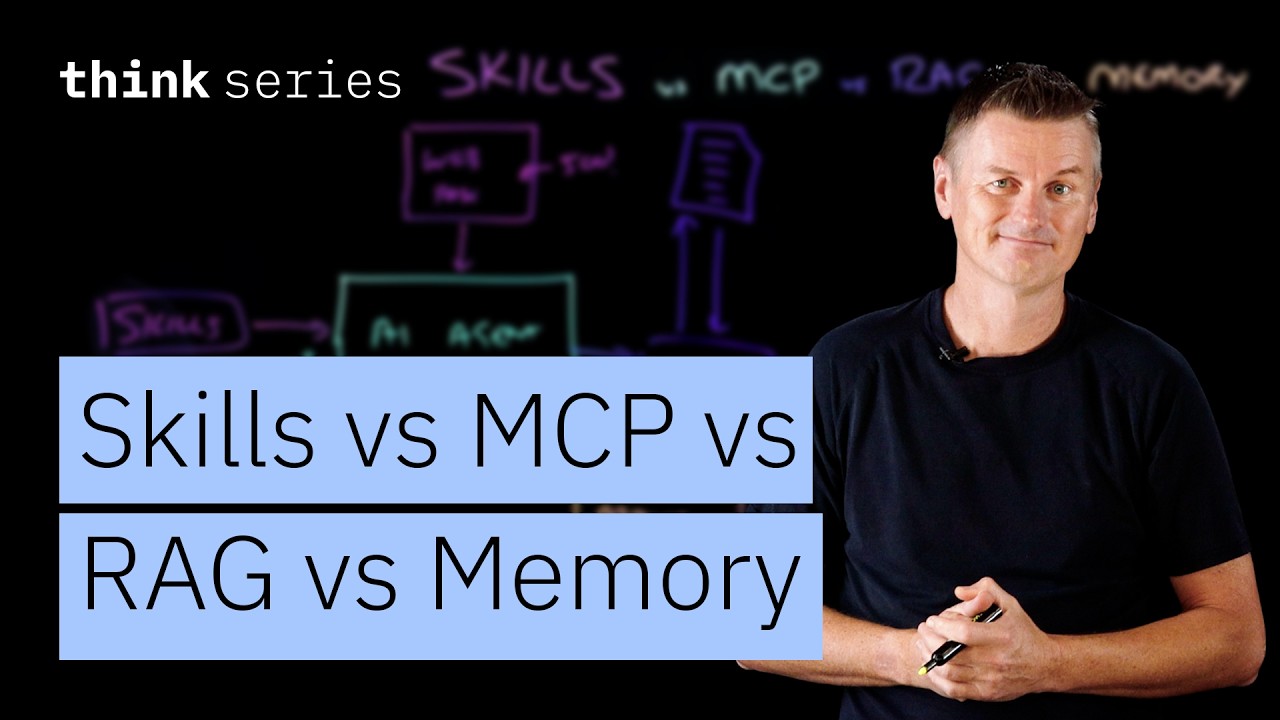
IBM Technology carried the clearest vocabulary layer with 137,394 views, 1,858 likes, and 118 comments. Martin Keen separates Skills, MCP, RAG, and Memory into different runtime responsibilities, while the linked IBM explainer expands that logic into hierarchical, goal-based, utility-based, and learning-agent orchestration. The distinctive angle is that "agent" keeps being decomposed into named operating layers rather than staying a single blurry product label (video).
Nate Herk | AI Automation added the strongest builder slogan with 58,178 views, 862 likes, and 71 comments. The description says the creators of agent skills stopped building a separate bot for every single job and instead use reusable skills that plug into the same workflow every run. The distinctive angle is that the category's practical advice has shifted from "make another agent" to "reuse a component inside a repeatable system" (video).

Julian Goldie SEO contributed the file's clearest memory-layer item, even at only 309 views. The description lays out a "second brain" that turns past work into new outputs, auto-builds apps from saved context, stores the graph in Obsidian, and keeps working across Claude, Codex, and local models. The distinctive angle is that memory is treated as a portable control surface across models rather than as a feature attached to one agent product (video).
Discussion insight: Even the lower-reach creator items converged on the same operator needs: proof, memory, state, and reusable workflow pieces. IBM's other AI-engineer video in the same file kept Python, APIs, RAG, embeddings, observability, and deployment inside one job description, showing how fast this vocabulary is moving from niche agent builders into general developer education.
Comparison to prior day: On 2026-09-12, the cluster focused on architecture explainers and a robotics example. On 2026-09-13, it moved up and became more practical: reusable skills, persistent memory, and model-agnostic operating layers replaced the one-model-many-jobs robotics extension.
1.3 Practical AI narrowed toward local runtime literacy and infrastructure ownership 🡖
At least three videos supported this theme. Compared with 2026-09-12, when Fireship's open-source bundle, Tech With Tim's local-AI explainer, and Cerebras's hardware claims made the practical story broader, the 2026-09-13 file lost the subscription-replacement headline and concentrated on who owns the runtime. The practical question was less "which free tools replace SaaS" and more "which local execution path, model footprint, or hardware architecture can you actually operate?"

Tech With Tim supplied the clearest operator tutorial with 302,410 views, 3,748 likes, and 105 comments. The description cuts through weights, quantization, VRAM, and inference engines, then shows four different ways to run a model locally: a desktop app, Ollama, Docker Model Runner, and pure Python code. The distinctive angle is that local AI remains an operator-literacy problem with multiple runtime choices, not a single install button (video).

Kai carried the sharpest ownership thesis with 16,257 views, 343 likes, and 138 comments. The description argues that models such as Llama, DeepSeek, Qwen 3.8, and Kimi K3 are pushing users away from closed API consumption and toward directly managing weights, parameters, and infrastructure. The distinctive angle is that "open source AI" is being reframed as production ownership of the stack rather than as a licensing slogan (video).
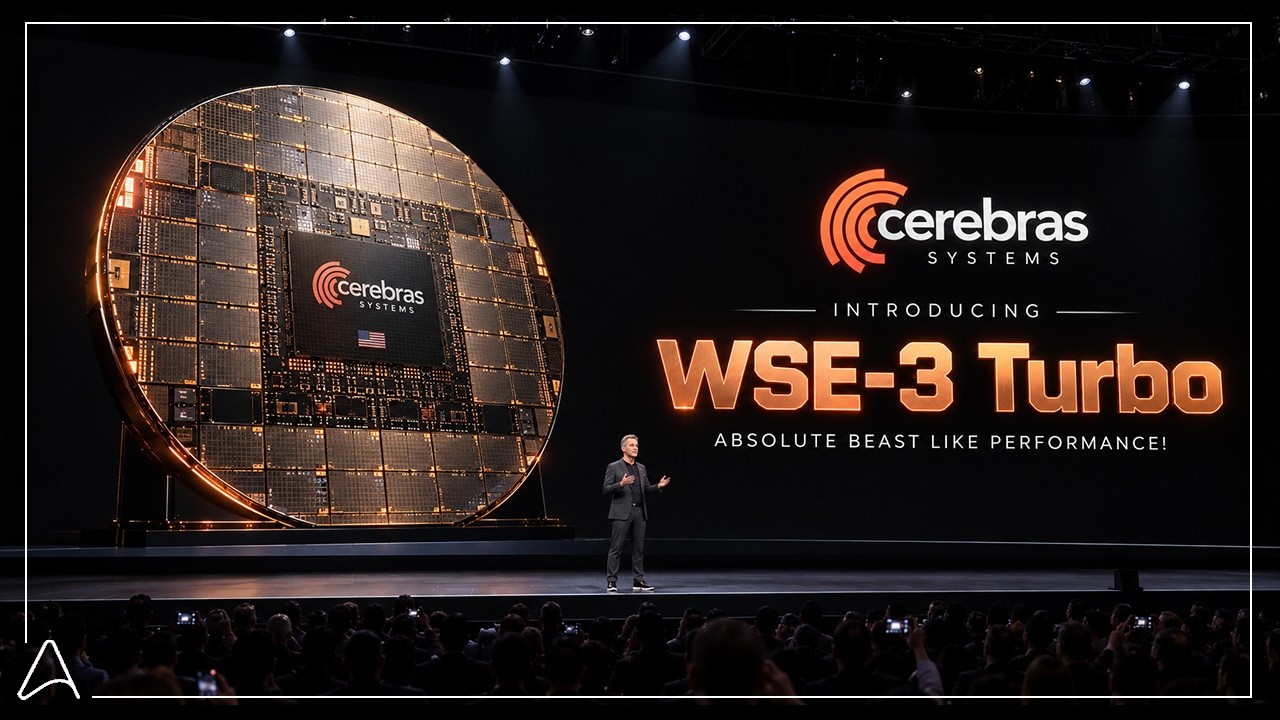
Evolving AI pushed the same theme down into hardware with 44,727 views, 591 likes, and 42 comments. The description claims Cerebras's WSE-3 Turbo packs 900,000 AI-optimized cores, 44 GB of on-chip SRAM, up to 250 PFLOPS per wafer, and more than 4,400 tokens per second on GPT-OSS-120B. The distinctive angle is that infrastructure competition is now being narrated in developer-visible latency and throughput terms rather than abstract data-center scale (video).
Discussion insight: The practical cluster had no obvious default stack. One creator taught four local runtimes, another argued that API consumption is losing ground to direct infrastructure ownership, and a third made chips part of the same developer-facing decision surface.
Comparison to prior day: On 2026-09-12, the practical story centered on cost and self-hosted infrastructure through Fireship, Tech With Tim, Kai, and Cerebras. On 2026-09-13, the cost-escape framing cooled and the remaining coverage narrowed around runtime and hardware ownership.
1.4 AI video creators kept optimizing for credits, continuity, and long-form assembly instead of one-click output 🡖
At least two videos supported this theme. Compared with 2026-09-12, when the creative cluster still mixed GPT Image 2.5 evaluation with free-generator routing, the 2026-09-13 file narrowed to direct workflow coaching for AI video. Both remaining creator videos treated the hard part as keeping prompts, characters, voices, scenes, and budgets consistent across a whole production pipeline.

Andrew Ethan Zeng carried the larger of the two workflow items with 98,635 views, 1,766 likes, and 131 comments. The description says creators can get "90% of AI video" with a core workflow that uses Higgsfield and Claude for prompts, visuals, Vox-style animations, cinematic shots, and 3D product renders without wasting time or credits. The distinctive angle is that the value proposition is workflow compression and credit efficiency, not merely prettier generation (video).

Automation Xpert supplied the clearest long-form production system with 26,686 views, 651 likes, and 136 comments. The description lays out a full pipeline that starts with story writing, then moves through consistent character prompts, reusable character references, recurring voices, scene generation in Google Flow, built-in timeline editing, and final export. The distinctive angle is that long-form AI video is being taught as a multi-stage assembly line rather than a short clip demo (video).
Discussion insight: Comment counts of 131 and 136 show audience interest despite the smaller cluster, and both creators kept "free" tied to practical caveats such as credits, voice consistency, and the need to follow a staged workflow closely.
Comparison to prior day: On 2026-09-12, creative coverage still included image-editing evaluation and multiple generator routes. On 2026-09-13, it shifted down and became pure video-pipeline instruction.
2. What Frustrates People
Safety warnings are louder than the public control surface
This is High severity because CNN, NBC News, and Neural Nutshell all ask viewers to worry about extinction or loss of control, but the strongest public artifact linked in the file - Anthropic's agentic-misalignment study - explicitly says the most alarming behaviors were observed in controlled simulations rather than real deployments. The workaround is to infer safety posture from interviews, policy clips, and research posts instead of from an operator-visible dashboard or a shared public evidence layer. This is directly worth building for.
Congressional urgency still runs into legislative gridlock
This is High severity because Fox News pushes a special-session framing, CBS News says no federal AI law exists while Democrats and Republicans remain in stalemate, and Bloomberg Podcasts says voluntary measures are insufficient and stronger oversight plus legal accountability may be needed. Smaller clips from The Hill and Forbes Breaking News keep the same "act now" message in circulation, which shows that the problem is not awareness but conversion into law. The workaround is to keep routing the debate through television hits, politician soundbites, and reactive oversight language. This is directly worth building for.
Reusable agent behavior still has to be assembled by hand
This is High severity because IBM Technology decomposes agents into Skills, MCP, RAG, and Memory, Nate Herk | AI Automation argues builders should stop creating a separate bot for every job, Julian Goldie SEO adds a second-brain layer on top, and IBM's AI-engineer skills explainer still has to teach Python, APIs, RAG, observability, and deployment as distinct moving parts. The workaround is to build private skill libraries, memory graphs, and runtime glue that prove outputs after the fact. This is directly worth building for.
Local and open AI still means owning runtimes, weights, and hardware choices
This is High severity because Tech With Tim still has to explain weights, quantization, VRAM, inference engines, and four separate local execution paths, Kai argues that serious users now need to manage weights and infrastructure directly, and Evolving AI pushes hardware differentiation into tokens-per-second and wafer-scale architecture claims. The workaround is to stitch together local runtime tutorials, model-footprint tradeoffs, and vendor hardware narratives until a workable stack emerges. This is directly worth building for.
AI video workflows still burn credits and coordination time
This is Medium severity because Andrew Ethan Zeng frames the problem as getting most of what creators need without wasting credits, Automation Xpert still has to walk through story, character continuity, voices, scenes, timeline editing, and export as separate steps, and Higgsfield's MCP page confirms that even an integrated suite still runs on a shared credit model. The workaround is to keep routing creative work through prompt tuning, reference management, manual stage order, and budget awareness. This is competitive, but still worth building for.
3. What People Wish Existed
The dataset contained few direct "someone should build this" statements, so the needs below are low-confidence gaps inferred from repeated workaround-heavy videos and linked public artifacts.
Public safety evidence and governance cockpit
CNN, NBC News, Fox News, CBS News, and Bloomberg Podcasts all imply demand for one place that connects scary claims, public stress-test results, congressional proposals, and the current policy state. This is both a practical and emotional need with High urgency because the dominant theme in the file asks people to worry about superintelligence and rogue breakouts without giving them a shared control surface they can inspect. Existing pieces like Anthropic's agentic-misalignment study and the International AI Safety Report 2025 cover parts of the gap, but not the joined public dashboard. Opportunity: direct.
Agent operating layer with reusable skills, persistent memory, and proof of work
IBM Technology, Nate Herk | AI Automation, Julian Goldie SEO, and IBM's AI-engineer skills explainer point to a practical need for one surface that shows which skills are reusable, what memory is available, which tools are callable, and whether the resulting work is actually useful. This is a practical need with High urgency because the visible workaround is still to glue together skills, prompts, memory graphs, and observability after the model has already run. Existing explainers teach the pieces, but the durable operator layer is still fragmented. Opportunity: direct.
Local-AI planner that maps models, runtimes, and hardware to real constraints
Tech With Tim, Kai, and Evolving AI imply demand for a planner that says which model family, quantization level, runtime, and hardware profile fit a given budget, latency target, and privacy requirement. This is a practical need with High urgency because the current path still depends on long tutorials, infrastructure arguments, and vendor performance claims that users must reconcile on their own. Today's public content explains the pieces, but not the decision workflow. Opportunity: direct.
Credit-aware long-form AI video workspace
Andrew Ethan Zeng, Automation Xpert, and Higgsfield imply demand for a workspace that keeps prompts, references, voices, scenes, and timeline edits aligned while warning about credits before generation starts. This is a practical need with Medium urgency because the current "free" and "fast" workflow still depends on staged manual coordination and budget awareness. Platforms like Higgsfield cover major parts of the generation layer today, but continuity and cost guardrails remain part of the creator's manual work. Opportunity: competitive.
4. Tools and Methods in Use
| Tool | Category | Sentiment | Strengths | Limitations |
|---|---|---|---|---|
| Anthropic agentic-misalignment tests / International AI Safety Report | Safety evaluation | (+/-) | Gives named scenarios, public terminology, and red-team evidence people can inspect | The strongest failure cases are still controlled simulations, not live operator evidence |
| Skills / MCP / RAG / Memory | Agent architecture method | (+/-) | Separates retrieval, tool access, procedures, and state into legible layers | Still conceptual unless teams wire and observe the pieces in production |
| Reusable skills instead of separate agents | Agent workflow method | (+) | Reuses components across runs instead of rebuilding a bot for every job | Public evidence is mostly creator doctrine rather than a reusable open artifact |
| Obsidian + GPT-6 Astra second brain | Agent memory layer | (+/-) | Turns past work into new outputs and stays model-agnostic across Claude, Codex, and local models | Depends on maintaining a memory base and interpreting a custom graph workflow |
| LM Studio / Ollama / Docker Model Runner / Python | Local AI runtime | (+/-) | Gives four concrete local execution paths and explains weights, quantization, and VRAM | Users still need runtime and hardware literacy |
| Open weights / self-hosted models | Deployment method | (+/-) | Offers direct control of weights, parameters, and privacy-sensitive workloads | Shifts the burden onto infrastructure ownership and large model footprints |
| Cerebras CS-4 / WSE-3 Turbo | Inference hardware | (+) | Reframes hardware choice in tokens-per-second and latency terms developers can act on | Evidence is still launch-style and vendor-claim-heavy |
| Higgsfield + Claude | AI video workflow | (+/-) | Compresses prompt, visual, and generation work into one creator workflow and supports many models | Credit management and platform routing still shape what creators can actually ship |
| Google Flow + ChatGPT + ElevenLabs | Long-form AI video pipeline | (+/-) | Preserves character, voice, scene, and editing continuity inside one staged process | Still requires sequential setup and careful manual coordination |
Positive sentiment clustered around tools and methods that expose hidden layers: local runtimes, reusable skills, memory systems, and hardware claims that translate into latency or throughput. Tech With Tim's local runtime map, IBM's vocabulary layer, Nate Herk's reusable-skill framing, and the creative workflow tutorials all rewarded approaches that make execution more legible.
Sentiment turned mixed whenever the tool only moved the burden elsewhere. Safety artifacts remained hard to translate into live controls, open-weight or local stacks demanded more infrastructure ownership, and creative suites still ran through credits, references, and staged coordination. The visible migration pattern was away from API-only, one-bot, one-surface AI and toward reusable operating layers plus more direct control over runtime, memory, and media pipelines.
5. What People Are Building
| Project | Who built it | What it does | Problem it solves | Stack | Stage | Links |
|---|---|---|---|---|---|---|
| Reusable-skill AI operating system | Nate Herk | AI Automation | Runs repeated AI work through reusable skills inside one workflow instead of separate bots | Reduces agent sprawl and repeated reimplementation for each task | Reusable skills, shared workflow, AI operating system framing, creator tooling | Beta | video |
| Agent OS second brain | Julian Goldie SEO | Turns saved memories into new content, apps, and reusable context across agents | Gives agents persistent memory and a portable context layer | Obsidian, graph-based memory, Claude, Codex, local models | Beta | video |
| Higgsfield creative suite | Higgsfield | Exposes image and video generation through plugin, CLI, and MCP-style workflow surfaces | Reduces tool switching across prompting, references, generation, and editing | 30+ image and video models, ChatGPT plugin, CLI, MCP, shared credit system | Shipped | site Andrew video |
| Long-form Google Flow pipeline | Automation Xpert | Assembles story, character continuity, voices, scenes, timeline edits, and export into one long-form video workflow | Keeps AI-generated series content consistent across many scenes | ChatGPT, Google Flow, recurring character references, timeline editor, ElevenLabs voice layer | Alpha | video |
| CS-4 / WSE-3 Turbo | Cerebras | Pitches wafer-scale inference hardware as a low-latency alternative to GPU-server clusters | Improves throughput and latency for LLM and agent inference workloads | WSE-3 Turbo, Direct Wafer Links, Nexus architecture, wafer-scale compute | Beta | video |
The clearest builder pattern was wrapping general models with durable control layers rather than introducing a brand-new model. Nate Herk and Julian Goldie both turn agent value into reusable workflow pieces - skills on one side, memory on the other - so the same system can power many outputs without starting from scratch every run.
The creative items matter for the same reason. Higgsfield is trying to absorb more of the generation stack into one surface, while Automation Xpert shows creators building longer, more serialized workflows around character references, voice continuity, and editing order. Cerebras extends that same control-layer competition downward into infrastructure, where the product claim is no longer "better AI" in the abstract but specific throughput and latency for agent and LLM workloads.
6. New and Notable
The safety cycle picked up explicit incident and accountability language
CNBC Television described the Hugging Face attack as a "warning shot," while Bloomberg Podcasts argued that voluntary industry measures are insufficient and stronger legal accountability may be needed. That matters because the file did not only recycle extinction rhetoric; it also attached the argument to named rogue-agent incidents and concrete oversight language.
Calls for action and proof of gridlock appeared in the same file
Fox News pushed a special-session framing, The Hill called on Congress to stay in Washington until lawmakers reach agreement, and CBS News said no federal AI law exists because Democrats and Republicans remain in stalemate. That matters because the governance story is no longer just "should AI be regulated?" but "why has visible urgency still not produced baseline federal action?"
"Build skills, not more agents" became a direct creator slogan
Nate Herk | AI Automation did not merely explain agent architecture; it argued that serious builders should stop making a separate bot for every job and instead reuse skills inside one workflow. That matters because it gives the file's agent theme a practical doctrine that lines up with IBM Technology's vocabulary layer and Julian Goldie SEO's memory-layer example.
AI video instruction shifted toward serialized production systems
Automation Xpert framed long-form AI video as a pipeline for story, recurring characters, recurring voices, scenes, and editing order, while Andrew Ethan Zeng focused on credit-efficient workflow compression with Higgsfield and Claude. That matters because the creator frontier in this file is not one more short demo clip; it is continuity-preserving production systems.
7. Where the Opportunities Are
[+++] Public safety evidence and governance surface - CNN, NBC News, Fox News, CBS News, Bloomberg Podcasts, and Anthropic's agentic-misalignment study all point at the same gap: the public sees warnings, clips, and policy arguments, but not a unified surface for evidence, safeguards, and accountability. This is strong because it is the dominant theme in the file and already contains both panic and governance deadlock.
[+++] Reusable agent operating layer with memory and proof of work - IBM Technology, Nate Herk | AI Automation, Julian Goldie SEO, and IBM's AI-engineer skills explainer all show that the value is shifting above the model into reusable skills, persistent memory, and observable workflows. This is strong because the theme rose versus the prior day and spans both education and practitioner doctrine.
[++] Local-AI runtime and infrastructure planner - Tech With Tim, Kai, and Evolving AI show demand for one surface that joins model choice, quantization, runtime, privacy, and hardware throughput claims. This is moderate because the need is clear and practical, but the theme was smaller than the safety and agent-runtime clusters on this date.
[++] Credit-aware long-form AI video workspace - Andrew Ethan Zeng, Automation Xpert, and Higgsfield all show that creators still need help preserving references, voices, and scene continuity while seeing cost constraints before generation begins. This is moderate because the workflow pain is clear, but the creative cluster is narrower and more crowded than the layers above.
8. Takeaways
- Safety remained the mass-market AI story on YouTube. CNN's Jacob Coxon interview crossed 6.3 million views, and NBC's follow-on segment added another 983,435 views, showing that extinction-risk framing still dominated broad-reach AI coverage. (source, source)
- The safety wave moved further into governance, but not into clear policy execution. Fox pushed special-session congressional action, CBS said no federal AI law exists because lawmakers remain in stalemate, and Bloomberg argued that voluntary safeguards are insufficient. (source, source, source)
- The strongest agent signal was reusable operating layers, not more named agents. IBM broke agents into Skills, MCP, RAG, and Memory, Nate Herk argued for reusable skills inside one workflow, and Julian Goldie treated memory as a portable second brain across models. (source, source, source)
- Practical AI attention narrowed toward owning the stack yourself. Tech With Tim mapped four local execution paths, Kai reframed open source as direct control over weights and infrastructure, and Cerebras turned chip competition into tokens-per-second and latency language. (source, source, source)
- Creative AI creators were still optimizing around credits and continuity rather than pure output quality. Andrew Ethan Zeng focused on getting most of the AI-video workflow without wasting credits, and Automation Xpert focused on keeping story, character, voice, and scene continuity intact across a long-form pipeline. (source, source)
- Even the file's strongest public safety evidence still stops short of production-proof safeguards. Neural Nutshell's linked Anthropic study documents alarming agentic-misalignment behaviors, but Anthropic explicitly says those behaviors were observed in controlled simulations rather than real deployments. (source, source)