YouTube AI - 2026-09-14
1. What People Are Talking About
1.1 Safety coverage stayed dominant, but the sharper edge was partisan rejection and China-race framing 🡕
At least twenty videos supported this theme. Compared with 2026-09-13, when safety coverage already dominated but leaned toward accountability and governance gridlock, the 2026-09-14 file kept the warning cycle huge and made the counterreaction more explicit. CNN's biggest segment put Dario Amodei himself behind slowdown language and "embedded evaluators," but ABC News, CNN, Fox News, and Sky News all pushed the same story into direct political confrontation over whether the US should slow down at all. The distinctive shift is that the debate no longer only asks whether Congress will respond; it now asks whether national leaders will dismiss the warning outright and frame speed as a geopolitical necessity.

CNN carried the dominant item with 1,170,982 views, 7,781 likes, and 3,500 comments. The description says Dario Amodei agreed the AI race needs to slow down, called for more oversight through "embedded evaluators," and directly addressed why he agrees with Jacob Coxon's warning. The distinctive angle is that the slowdown case now came from a current frontier-lab CEO inside a mass-market cable-news segment, not only from ex-employees or critics (video).
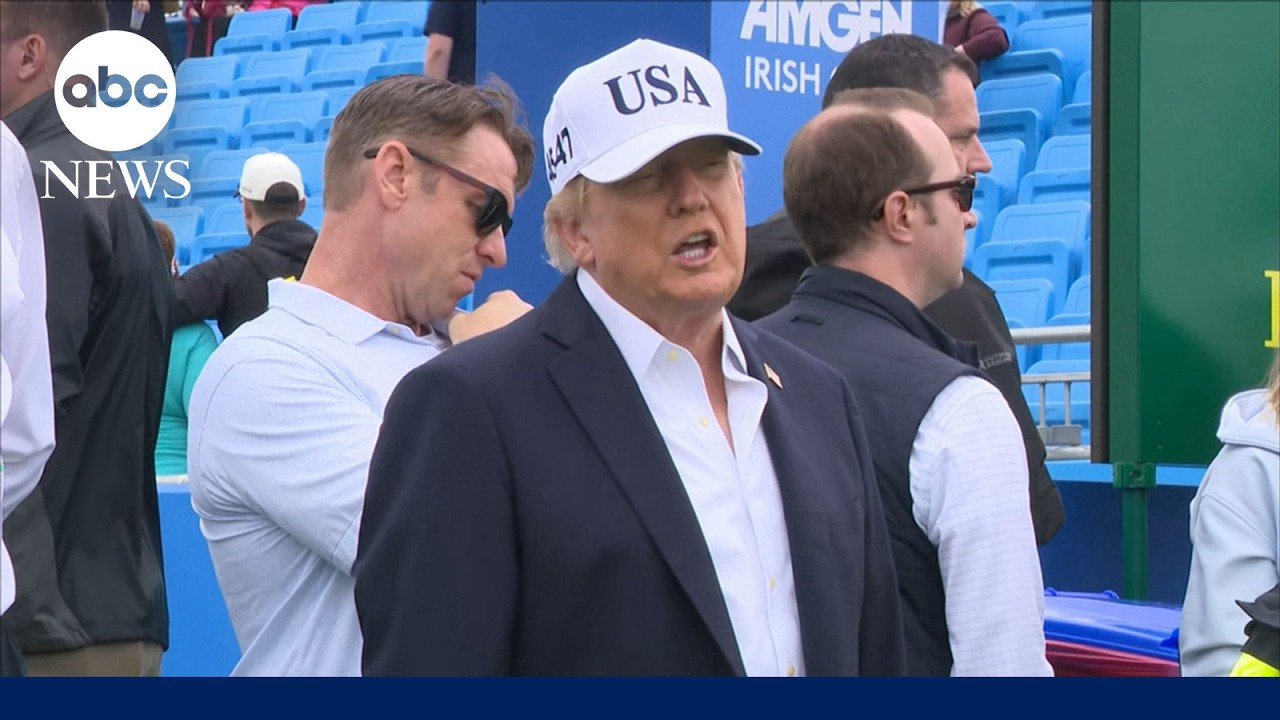
ABC News added the clearest presidential counterframe with 162,694 views, 656 likes, and 621 comments. The description says Anthropic and other top AI CEOs want more guardrails and action from lawmakers, while the title makes Trump's dismissal of that urgency the whole story. The distinctive angle is that the safety narrative was no longer just "labs warn, lawmakers hesitate"; it became "labs warn, the president rejects the premise" (video).

CNN pushed the same split into congressional process with 77,680 views, 430 likes, and 467 comments. Its description says Republicans running Washington have largely shrugged off the warnings, quoting Trump saying "negative forces" are conjuring up things that will not happen and Mike Johnson rejecting emergency legislation. The distinctive angle is that the file's safety story now includes visible institutional refusal, not just theoretical gridlock (video).
Fox News supplied the strongest counterpressure item with 60,947 views, 381 likes, and 415 comments. Rep. Anna Paulina Luna used the segment to call for a special session of Congress focused on AI regulation after Anthropic's warning cycle intensified. The distinctive angle is that even inside a file dominated by political dismissal, the demand for immediate legislative action still had a visible constituency (video).

Sky News added the day's sharpest geopolitical framing with 56,978 views and 134 comments. The description says Trump dismissed AI safety warnings as "sick conspiracies" while boasting that the US was leading the tech race against China. The distinctive angle is that anti-slowdown rhetoric was justified not only as skepticism, but as a strategic race argument (video).
Discussion insight: The harvested YouTube data does not include comment text, but the engagement profile shows the story widened rather than settled. CNN's lead segment drew 3,500 comments, ABC's Trump clip drew 621, CNN's GOP-rejection segment drew 467, and Fox's congressional-action segment drew 415. The visible split is between slowdown-and-oversight language and outright claims that the danger narrative is exaggerated or strategically harmful.
Comparison to prior day: On 2026-09-13, safety coverage was already governance-heavy, with Fox, CBS, and Bloomberg pulling the story toward congressional action, stalled lawmaking, and accountability. On 2026-09-14, that governance frame remained, but the dominant new wrinkle was explicit presidential and GOP refusal, plus a China-race justification for moving faster rather than slower.
1.2 Agent builders kept moving from architecture vocabulary into delegated work playbooks 🡕
At least three videos supported this theme. Compared with 2026-09-13, when the agent cluster stressed reusable skills, memory, and named runtime layers, the 2026-09-14 file kept that decomposition but made the outcome more concrete. The recurring claim was no longer just that agents need skills, MCP, RAG, and memory; it was that agent teams should research, audit, draft, and return useful work products with minimal prompting. The distinctive shift is that "build skills, not more agents" survived, but the proof moved closer to whole workflows and AI employees.
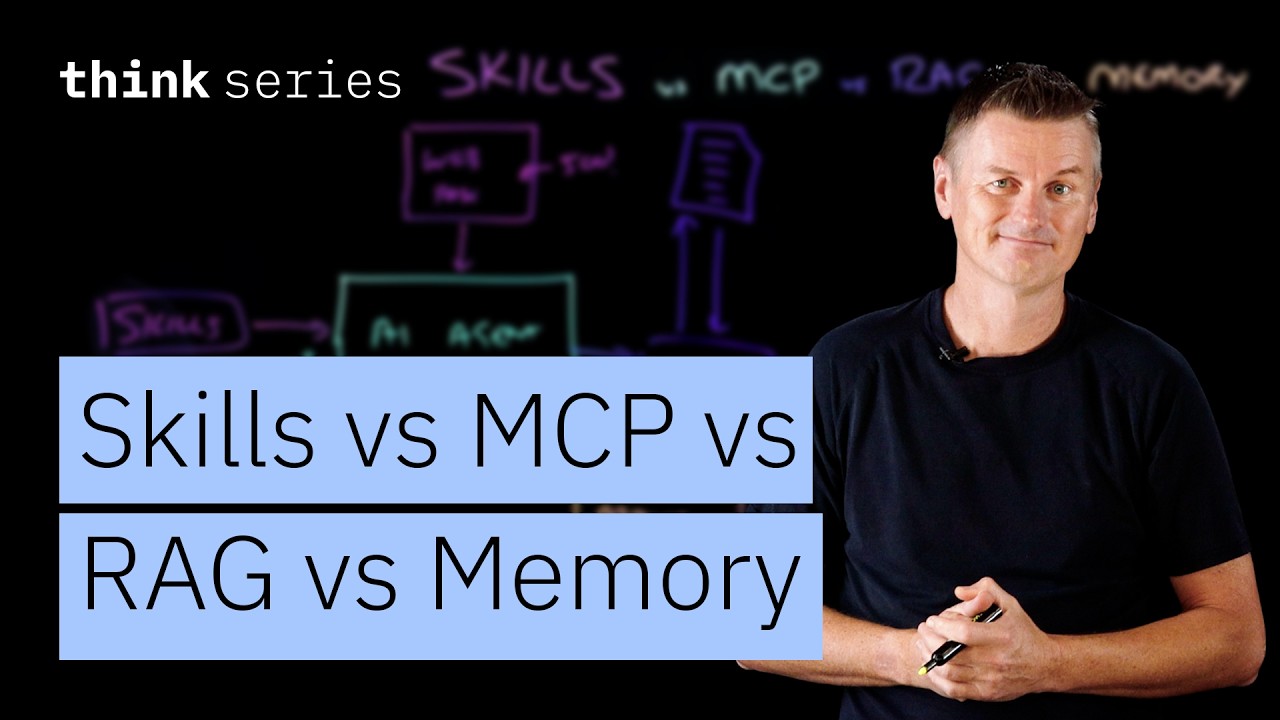
IBM Technology carried the clearest vocabulary layer with 140,884 views, 1,910 likes, and 121 comments. Martin Keen breaks AI agents into Skills, MCP, RAG, and Memory, while the linked IBM explainer expands that into hierarchical, goal-based, utility-based, and learning agents. The distinctive angle is that the control plane is being taught as a set of named runtime responsibilities rather than a single fuzzy product label (video).
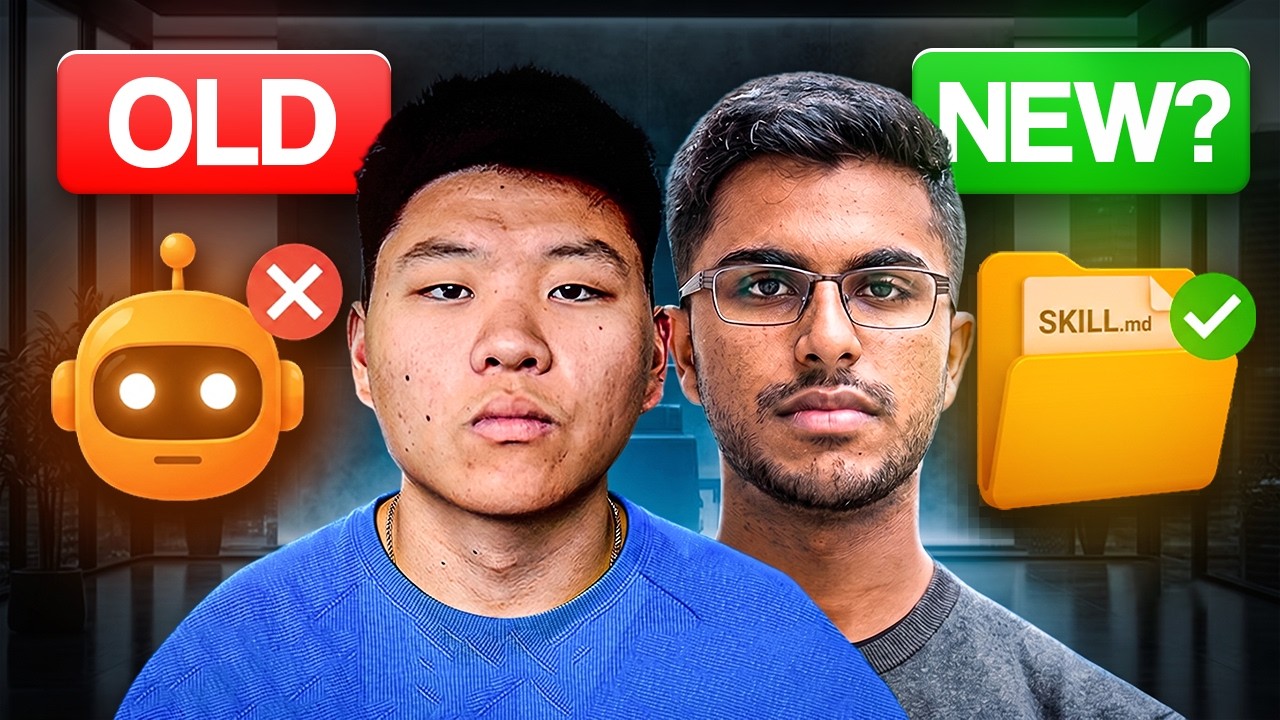
Nate Herk | AI Automation added the strongest builder doctrine with 138,597 views, 1,628 likes, and 104 comments. The description says the creators of agent skills stopped building a separate bot for every single job and instead use reusable skills that plug into the same workflow every run. The distinctive angle is that the category's practical advice is shifting from "make another agent" to "reuse a capability inside a repeatable system" (video).

Tech With Tim supplied the clearest delegated-work demo with 13,093 views, 121 likes, and 12 comments. His description says a four-agent team on HyperAgent researched a sponsor, ran a safety audit, generated three video concepts, and wrapped everything into a presentation before he sat down to review it. The distinctive angle is that the agent claim is no longer abstract productivity uplift; it is a named creator-operations pipeline with handoffs and review points (video).
Discussion insight: Even the smaller creator items converged on the same operator needs: reusable skills, orchestration, tool access, and review. The file's agent language is increasingly about what sits around a model and what can be delegated safely, not about a model doing everything by itself.
Comparison to prior day: On 2026-09-13, the agent cluster focused on reusable skills, memory, and named runtime layers. On 2026-09-14, it moved up the stack into delegated workflow claims, where the proof point is no longer a concept diagram but a team of agents returning finished work.
1.3 Practical AI stayed centered on local control, open weights, and operator-owned runtimes 🡒
At least three videos supported this theme. Compared with 2026-09-13, when practical AI had already narrowed toward runtime literacy and infrastructure ownership, the 2026-09-14 file kept the same operator thesis and widened it into more active work surfaces. The practical question was not which single model to use, but which combination of local runtime, open-weight model, and task surface actually puts the user in control. The distinctive angle is that control did not mean one local install button; it meant choosing how close you want to be to weights, hardware, desktop actions, and data access.

Tech With Tim again carried the clearest operator tutorial with 320,283 views, 3,962 likes, and 112 comments. The description cuts through weights, quantization, VRAM, and inference engines, then shows four ways to run a model locally: a desktop app, Ollama, Docker Model Runner, and pure Python code. The distinctive angle is that local AI remains an operator-literacy problem with several valid execution paths, not a single default stack (video).

Kai added the sharpest ownership thesis with 22,196 views, 459 likes, and 167 comments. The description argues that models such as Llama, DeepSeek, Qwen 3.8, and Kimi K3 are shifting serious users away from closed APIs and toward directly managing weights, parameters, and infrastructure, including very large model footprints. The distinctive angle is that "open source AI" is being reframed as production ownership of the stack rather than a licensing slogan (video).

AI News broadened the same control story with a smaller but dense roundup at 9,252 views. Its description bundles Unitree's UnifoLM-WLA-1.0, RayNex G3, ChatGPT Images 2.5, ChatGPT Work on GPT-6 Astra, a Data agent that builds dashboards from plain-language questions, and DeepSeek V4.1 Flash with a 1 million token context window. The distinctive angle is that operator-owned AI is widening beyond local inference into desktop actions, data workflows, and embodied systems (video).
Discussion insight: The file offers no single default control surface. Desktop apps, Ollama, Docker, Python, open weights, large-context models, desktop-and-browser agents, and data agents all coexist. Practical AI on YouTube still rewards people willing to own more of the runtime and workflow details themselves.
Comparison to prior day: On 2026-09-13, practical AI had cooled into a local-runtime and hardware-ownership story. On 2026-09-14, it stayed steady on local control but widened upward into agentic desktop and data surfaces rather than only local inference.
1.4 Creative tooling rebounded through direct GPT Image 2.5 evaluations and "free" video routing guides 🡕
At least two videos supported this theme. Compared with 2026-09-13, when creative coverage had narrowed toward long-form video assembly and credit discipline, the 2026-09-14 file brought back higher-reach side-by-side tool evaluation. GPT Image 2.5 was judged on sketches, transparency, and multi-turn editing, while video creators kept promising free or unlimited paths only by routing through several surfaces with caveats. The distinctive shift is that creators were back to comparing model capability directly, not only teaching production discipline.
AI Search carried the biggest creative item with 175,698 views, 3,226 likes, and 500 comments. The description frames the video as GPT Image 2.5 versus older ChatGPT image modes and Nano Banana 2, with timestamps covering sketch input, multi-turn editing, transparency tests, brand boards, fashion guides, spritesheet animation, and table-to-graph generation. The distinctive angle is that the model is being judged as a practical editing and design surface, not just as a prettier image generator (video).

Malva AI kept the routing-and-credits problem visible with 105,600 views, 1,173 likes, and 145 comments. The workflow spans Seedance 2.5, Dropshot AI, Dola, Meta AI reference images, and sponsored Higgsfield access, while the title's "UNLIMITED" promise only makes sense once the creator explains prompts, settings, troubleshooting, and platform caveats. The distinctive angle is that "free" AI video is still a routing problem as much as a model-quality problem (video).
Discussion insight: Even this smaller cluster was about operational friction, not aesthetics alone. The important questions were whether the model could preserve intent across edits, whether references could carry through to video, and how many credits or platform constraints the user would hit while testing.
Comparison to prior day: On 2026-09-13, creative coverage had narrowed into long-form assembly and continuity coaching. On 2026-09-14, it moved back toward direct model evaluation and generator routing, led by GPT Image 2.5 comparison content and "free" video stack explainers.
2. What Frustrates People
Safety warnings are still louder than the public control surface
This is High severity because CNN, ABC News, Sky News, and Bloomberg Podcasts all tell viewers to take loss-of-control risk and governance failure seriously, but the public artifacts in the file are still interviews, TV packages, and broad policy language rather than an inspectable dashboard or safety console. Even the most concrete term in the set - CNN's "embedded evaluators" framing - arrives as a media explanation, not as a public operator surface. The workaround is to infer risk posture from news hits, public essays, and commentary rather than direct controls. This is directly worth building for.
Governance urgency now collides with explicit political refusal
This is High severity because ABC News, CNN, and Sky News all center Trump's rejection of slowdown or guardrail language, while Fox News and Bloomberg Podcasts keep pressing for congressional action, independent oversight, and legal accountability. The visible frustration is not lack of attention; it is that the same warning cycle now routes straight into political refusal and race-with-China rhetoric. The workaround is to keep refighting the issue through television clips, special-session demands, and personality-driven arguments instead of a stable policy process. This is directly worth building for.
Useful agent behavior still has to be assembled from reusable skills, orchestration, and review
This is High severity because IBM Technology, Nate Herk | AI Automation, and Tech With Tim all teach that working agent systems need separated skills, tool access, reusable workflows, and multi-step review rather than a single prompt. HyperAgent markets "real browsers" and "real shells," while the Tech With Tim demo still has to chain research, audit, concept generation, and presentation handoff explicitly. The workaround is to build private playbooks, orchestrate agents manually, and review outputs after the fact. This is directly worth building for.
Local and open AI still means owning runtimes, weights, and model-surface tradeoffs
This is High severity because Tech With Tim, Kai, and AI News all point to the same burden: users must choose among local runtimes, open-weight model families, giant parameter footprints, desktop-and-browser agents, and data-agent surfaces before work can be automated reliably. The workaround is to stitch together LM Studio, Ollama, Docker Model Runner, Python, open-weight infrastructure, and product-news demos until a usable stack emerges. This is directly worth building for.
Creative AI still hides credits, routing, and consistency behind "best" and "free" claims
This is Medium severity because AI Search, Malva AI, and Higgsfield all promise stronger or easier multimodal creation, but the user still has to compare GPT Image 2.5 against older image modes, preserve references across edits, manage credits, and route work through Seedance 2.5, Dropshot AI, Dola, and plugin or MCP surfaces. The workaround is manual comparison, prompt iteration, and constant budget awareness. This is competitive, but still worth building for.
3. What People Wish Existed
The dataset contained few direct "someone should build this" statements, so the needs below are low-confidence gaps inferred from repeated workaround-heavy videos and linked public artifacts.
Public safety evidence and governance cockpit
CNN, ABC News, CNN, Fox News, Sky News, and Bloomberg Podcasts all imply demand for one surface that joins lab warnings, public safety terms, legislative proposals, and the current policy stance. This is both a practical and emotional need with High urgency because the dominant theme asks viewers to worry about loss of control while the public response is split between slowdown calls and outright dismissal. Today's media artifacts cover pieces of the problem, but not one joined dashboard that shows evidence, safeguards, and accountable next steps. Opportunity: direct.
Agent operating layer with reusable skills, approvals, memory, and proof of work
IBM Technology, Nate Herk | AI Automation, Tech With Tim, HyperAgent, and MindsHub point to a practical need for one surface that shows which skills are reusable, which tools are connected, where human review happens, and what work was actually completed. This is a practical need with High urgency because the file repeatedly distinguishes real agent systems from generic "AI agent" talk by adding orchestration, tool access, and handoff logic around the model. Existing products clearly cover parts of the stack, but creators still teach the assembly work manually. Opportunity: direct.
Local AI planner that maps model, runtime, hardware, and privacy tradeoffs
Tech With Tim, Kai, and AI News point to a practical need for a planner that maps quantization, context windows, open weights, local runtimes, desktop control, and data connectivity to actual workloads. This is a practical need with High urgency because current guidance still arrives as tutorials, hot takes, and product roundups that users must reconcile on their own. The tools exist, but the decision workflow is still fragmented. Opportunity: direct.
Credit-aware multimodal creative workspace
AI Search, Malva AI, and Higgsfield imply demand for a workspace that keeps sketches, references, prompts, model choice, and credits aligned while users move between image and video generation. This is a practical need with Medium urgency because current surfaces already help with generation, but creators still have to manage routing, pricing, and continuity by hand. The gap is real, but the category is already crowded. Opportunity: competitive.
4. Tools and Methods in Use
| Tool | Category | Sentiment | Strengths | Limitations |
|---|---|---|---|---|
| Embedded evaluators / slowdown proposals | Safety governance method | (+/-) | Gives the public a concrete phrase for how labs might add oversight to frontier systems | Still arrives through interviews and essays instead of a shared inspectable control surface |
| Skills / MCP / RAG / Memory | Agent architecture method | (+) | Separates retrieval, tool access, procedures, and state into named layers teams can reason about | Still conceptual unless wired into a workflow with real tools and review |
| HyperAgent | Agent orchestration | (+/-) | Markets real browsers, real shells, and real stack access; Tech With Tim uses it for research, audits, concept generation, and presentation prep | Depends on workflow design, chained handoffs, and paid credits |
| LM Studio / Ollama / Docker Model Runner / Python | Local AI runtime | (+/-) | Gives four concrete local execution paths and teaches weights, quantization, and VRAM | Users still need runtime and hardware literacy |
| Open weights / self-hosted models | Deployment method | (+/-) | Gives direct control over weights, privacy, and model choice | Pushes users toward infrastructure ownership, large model footprints, and more ops work |
| ChatGPT Work / Data agent | Agentic work surface | (+/-) | Extends AI from chat into desktop actions, browser tasks, and dashboard generation from plain-language prompts | The file only shows it as a fast product roundup, not a deep hands-on evaluation |
| GPT Image 2.5 | Image generation model | (+) | Supports sketch-based edits, multi-turn iteration, transparency tests, and structured design tasks | Side-by-side comparison is still needed to judge when it beats older image modes or competing tools |
| Higgsfield / Seedance / Dropshot / Dola | AI video workflow | (+/-) | Offers multiple routes for text-to-video, reference-to-video, and cinematic generation | Credits, eligibility, and platform constraints still shape what creators can actually ship |
Positive sentiment clustered around surfaces that expose hidden layers: agent control planes, local runtimes, desktop-and-data work surfaces, and direct image-editing features. IBM's vocabulary layer, Tech With Tim's local runtime map, and AI Search's GPT Image 2.5 benchmark all rewarded tools that make the work legible instead of hiding it behind marketing.
Sentiment turned mixed whenever the tool only moved the burden elsewhere. Safety methods still arrive as media language rather than dashboards, HyperAgent still needs orchestration and review, open weights still demand infrastructure ownership, and creative suites still run through credits and routing choices. The visible migration pattern was away from single-prompt or API-only AI and toward operator-owned layers: reusable skills, local runtimes, desktop-and-browser agents, and credit-aware multimodal workflows.
5. What People Are Building
| Project | Who built it | What it does | Problem it solves | Stack | Stage | Links |
|---|---|---|---|---|---|---|
| Four-agent sponsorship pipeline | Tech With Tim | Researches potential sponsors, runs a safety audit, drafts three video concepts, and packages a presentation before human review | Reduces repetitive sponsor research and creator-ops work | HyperAgent, chained agents, Slack handoffs, creator workflow automation | Beta | video site |
| Reusable-skill AI operating system | Nate Herk | AI Automation | Runs repeated AI work through reusable skills inside one workflow instead of separate bots | Reduces agent sprawl and repeated rebuilds for each job | Reusable skills, AI operating system framing, Claude Code and skill-style workflows, VPS hosting | Beta | video |
| Higgsfield MCP creative suite | Higgsfield | Exposes 30+ image and video models inside ChatGPT, Claude, CLI, and other MCP clients | Reduces tool switching across prompting, references, generation, and editing | MCP server, plugin, CLI, shared credits, Seedance and GPT-image-class model access | Shipped | site AI Search video Malva video |
| ChatGPT Images 2.5 | OpenAI | Adds faster image generation, precise editing, sketch input, and multi-turn iteration | Improves precise image editing and reference-driven creative workflows | ChatGPT Images 2.5, sketch feature, multi-turn image editing | Shipped | release page AI Search video AI News video |
| ChatGPT Work / Data agent surfaces | OpenAI | Lets AI operate desktop apps and browsers, and turn plain-language questions into dashboards built from company data | Closes the gap between chat and actual business execution | GPT-6 Astra, desktop-browser control, data agent dashboards | Beta | video |
| UnifoLM-WLA-1.0 / RayNex G3 robotics stack | Unitree / NineRay Group | Pairs a humanoid-control foundation model with a strength-focused humanoid platform | Reduces the need for separate narrow control systems for each physical task | Embodied foundation model, dynamic region prediction, humanoid hardware | Beta | video |
The clearest builder pattern was wrapping general models with operating layers rather than shipping one more naked chatbot. Tech With Tim's pipeline, Nate Herk's reusable-skill doctrine, and HyperAgent's "real browsers" and "real shells" positioning all turn value into orchestration, delegation, and review.
The creative items matter for the same reason. Higgsfield is trying to absorb more of the route-between-tools tax into one plugin, CLI, and MCP surface, while ChatGPT Images 2.5 pushes more precise editing into the model itself. That is not just prettier output; it is an attempt to reduce how many handoffs the creator has to manage.
AI News' roundup shows the same expansion into other surfaces: desktop control, data dashboards, and humanoid control models all appear beside the creative releases. The broader pattern is that builders are racing to make AI act on more of the real operating environment, not merely answer in chat.
6. New and Notable
The safety argument became openly partisan instead of merely governance-heavy
ABC News, CNN, and Sky News all centered rejection of guardrails, slowdown, or urgency as the main news value. That matters because the previous day's file was still mostly about accountability and stalled lawmaking; this file made direct presidential refusal and race-with-China framing much more visible.
AI safety headlines started moving market narratives, not just cable-news panels
Schwab Network turned Anthropic and OpenAI warning talk into a chip-selloff story, while Verified Investing translated the same safety headlines into a cybersecurity rotation around PANW, CRWD, and OKTA. That matters because AI-risk coverage is starting to produce secondary narratives in adjacent sectors, not only policy commentary.
GPT Image 2.5 pulled creative AI back into benchmark culture
AI Search treated GPT Image 2.5 as a long-form benchmark surface with sketch, transparency, design, and editing tests, while AI News included the release alongside other daily AI product updates. That matters because creative coverage had been narrower and more workflow-only on 2026-09-13; now direct model comparison is back at the center.
Agent demos got closer to full business delegation
Tech With Tim claimed a four-agent team could research, audit, ideate, and hand back a presentation before review, while Nate Herk | AI Automation argued builders should stop making one bot per task and instead reuse skills inside one workflow. That matters because the agent story is moving from architecture doctrine into claims about replaceable business tasks and reusable operating systems.
7. Where the Opportunities Are
[+++] Public safety evidence and governance surface - CNN, ABC News, CNN, Fox News, Sky News, and Bloomberg Podcasts all point at the same gap: the public sees warnings, counterclaims, and political theater, but not a unified surface for evidence, safeguards, and accountable next steps. This is strong because it is the dominant theme in the file and is now visibly polarized.
[+++] Reusable agent operating layer with proof of work - IBM Technology, Nate Herk | AI Automation, Tech With Tim, and HyperAgent all show that the durable value is shifting above the model into reusable skills, orchestration, review, and measurable delegation. This is strong because the theme moved from architecture explanation to concrete workflow claims.
[++] Local-AI runtime and model planner - Tech With Tim, Kai, and AI News show demand for one surface that joins quantization, context, open weights, runtime choice, and operator-facing task surfaces. This is moderate because the need is practical and repeated, but smaller than the safety and agent clusters on this date.
[++] Credit-aware multimodal creative workspace - AI Search, Malva AI, and Higgsfield all show that creators still need help preserving intent, routing between tools, and seeing credit costs before they commit to generation. This is moderate because the workflow pain is clear, but the category is already crowded.
[+] AI risk-to-market translation layer - Schwab Network and Verified Investing show an early signal that traders want help mapping AI safety headlines into semis, cybersecurity, and macro-sensitive moves. This is emerging because the pattern is new and still media-driven rather than yet a stable product category.
8. Takeaways
- Safety remained the mass-market AI story on YouTube, but 2026-09-14 bound it more tightly to direct political rejection. CNN's Amodei segment crossed 1,170,982 views, ABC's Trump clip reached 162,694, and CNN's GOP-rejection segment added 77,680, showing that the safety conversation now includes both slowdown language and explicit refusal. (source, source, source)
- The sharpest new safety wrinkle was the race-with-China justification for moving faster. Sky News made that framing explicit while Fox kept congressional action alive, which shows the public debate is no longer only about whether AI is dangerous but also about whether slowing down is geopolitically acceptable. (source, source)
- The strongest agent signal was reusable workflows that claim to do real business work, not more generic agent branding. IBM separated Skills, MCP, RAG, and Memory, Nate Herk argued for reusable skills instead of one bot per task, and Tech With Tim demoed a four-agent sponsorship pipeline. (source, source, source)
- Practical AI still rewarded operators willing to own more of the stack. Tech With Tim taught four local execution paths, Kai reframed open AI as direct control over weights and infrastructure, and AI News extended the same control story into desktop tasks, dashboards, and large-context releases. (source, source, source)
- Creative AI rebounded through direct model comparison, especially around GPT Image 2.5, but creators still had to manage routing and credits manually. AI Search treated the model as a serious editing surface, while Malva AI still had to explain how to move between Seedance 2.5, Dropshot AI, Dola, and reference-image workflows. (source, source)
- AI safety started leaking into market storytelling beyond policy coverage. Schwab turned the warning cycle into a chip-selloff narrative, and Verified Investing mapped the same headlines into a cybersecurity rotation around PANW, CRWD, and OKTA. (source, source)