YouTube AI - 2026-09-15
1. What People Are Talking About
1.1 Safety coverage stayed dominant, but the sharper change was cross-ideological pressure plus open disagreement over whether slowing down is necessary 🡕
At least fourteen videos supported this theme. Compared with 2026-09-14, when the safety wave was defined by presidential and GOP rejection plus China-race framing, the 2026-09-15 file kept that refusal visible but added a more complicated political surface. Congress re-entered through Jeffries' demand for immediate action, Bernie Sanders and Steve Bannon shared a "pro-human" rally, Reuters kept explaining the slowdown push, and Bloomberg aired Margaret Mitchell's counterclaim that ethics can drive innovation instead of slowing it down. The distinctive shift is that the story is no longer a simple split between lab warnings and partisan dismissal; it now includes cross-ideological pressure and visible disagreement inside the safety conversation itself.

CNN carried the dominant item with 1,321,637 views, 8,750 likes, and 3,900 comments. The description says Dario Amodei agreed AI progress should slow and called for more oversight through "embedded evaluators." The distinctive angle is that a current frontier-lab CEO was making the slowdown case inside a mass-market TV segment rather than leaving the argument to former employees or outside critics (video).

CBS News added the clearest Capitol Hill action frame with 131,397 views, 369 likes, and 239 comments. The description says lawmakers returning from recess were split on how much AI regulation is necessary, while the title centers Hakeem Jeffries calling for immediate congressional action. The distinctive angle is that the safety debate moved from broad alarm back into explicit House leadership pressure (video).
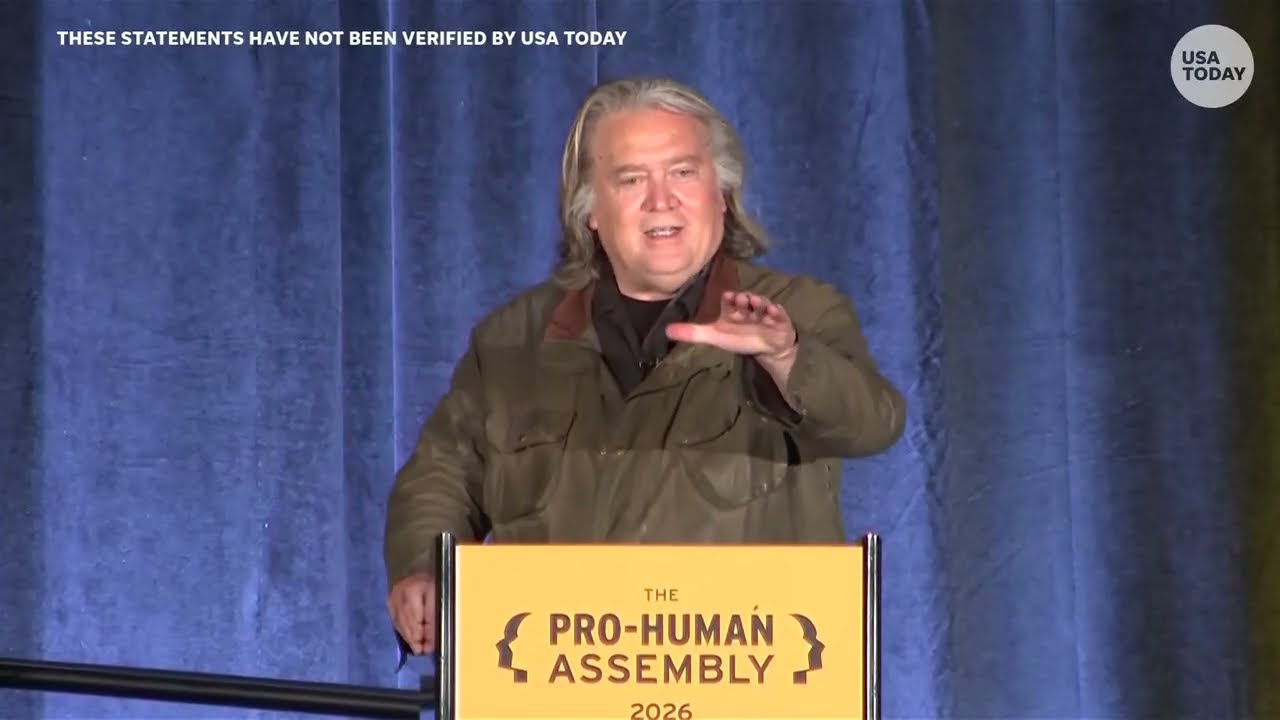
USA TODAY contributed the day's strangest coalition signal with 447 views, 17 likes, and 19 comments. Its description says Sanders and Bannon led a "pro-human" rally warning about AI dangers, and the linked USA Today article says the event brought together AI experts, lawmakers, and advocates concerned about the technology breaking outside of human control. The distinctive angle is that one of the day's most specific political artifacts was not a conventional party-line segment but a shared stage between left and right anti-AI voices (video).
Bloomberg Television added the clearest slowdown critique with 6,159 views, 30 likes, and 15 comments. The description says Margaret Mitchell argued that, if done well, AI ethics can drive innovation instead of slowing it down. The distinctive angle is that the file did not just ask whether AI is dangerous; it also staged an internal argument over whether the policy answer is deceleration at all (video).
Discussion insight: The harvested YouTube data does not include comment text, but engagement shows both scale and fracture. CNN's lead item drew 3,900 comments, CNN's Trump-and-GOP rejection segment still had 553 comments, CBS Jeffries added 239, and even the lower-reach Bloomberg and USA TODAY items existed because the same safety story was being argued across different political and institutional surfaces.
Comparison to prior day: On 2026-09-14, safety coverage leaned toward explicit presidential rejection and China-race language. On 2026-09-15, that counterframe remained, but the more novel signal was cross-ideological mobilization and active disagreement over whether safety work requires a slowdown.
1.2 The safety story widened into markets and long-form civilizational critique instead of staying a short panic clip cycle 🡕
At least five videos supported this theme. Compared with 2026-09-14, when the supporting safety material was still mostly cable-news hits and market commentary, the 2026-09-15 file carried more attempts to explain downstream consequences. The Atlantic CEO warned that no AI regulation risks stock market crashes, Schwab mapped the same warning cycle into a chip selloff, PBS ran a 97-minute documentary on AI's political and philosophical roots, and Neural Nutshell packaged Roman Yampolskiy's ban argument with pause-letter references. The distinctive shift is that the safety conversation is being translated into markets, history, labor, and ideology rather than only extinction headlines.

PBS Documentaries supplied the file's most expansive critique with 184,484 views, 3,923 likes, and 628 comments. The description frames "Ghost in the Machine" as a feature-length excavation of the cultural, political, and philosophical drivers behind the AI boom, with chapters on Project Stargate, effective altruism, eugenics, data centers, and military funding. The distinctive angle is that instead of arguing only over whether AI is dangerous, the film widens the frame to who built the boom, whose interests it serves, and what social costs it hides (video).

CBS Mornings added the clearest finance-facing warning with 11,564 views, 70 likes, and 16 comments. The title says no AI regulation puts the world at risk of stock market crashes, and the description centers Nick Thompson discussing Amodei's proposal to safeguard the technology. The distinctive angle is that risk language is now being translated into market stability, not just lab conduct (video).
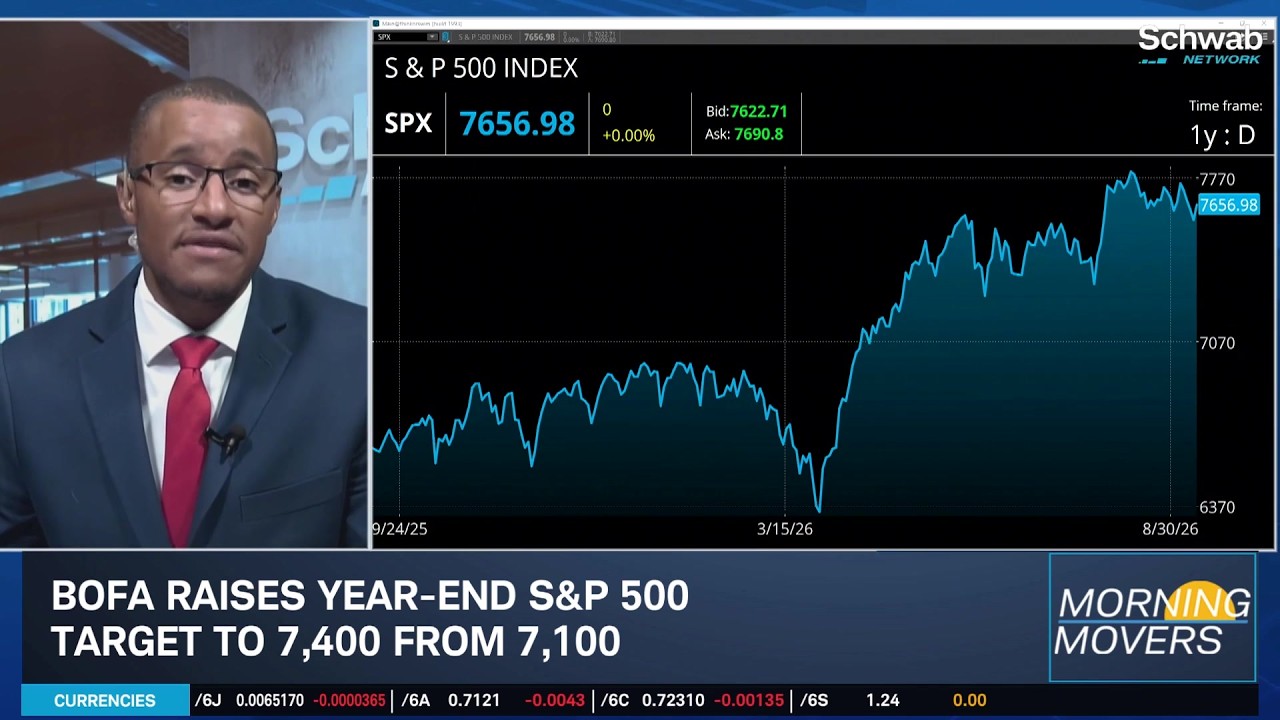
Schwab Network turned the same safety wave into a trader narrative with 19,802 views, 145 likes, and 6 comments. Its description says commentary from former Anthropic engineers and OpenAI's current CEO was hitting tech stocks at the market open. The distinctive angle is that AI safety headlines were now being treated as market-moving information, not only policy coverage (video).
Neural Nutshell kept the ban argument attached to public documents with 11,652 views, 289 likes, and 119 comments. The description says Roman Yampolskiy argues for a complete ban on general superintelligence until humanity can understand and control it, and it links the Future of Life pause letter alongside OpenAI preparedness material. The distinctive angle is that one of the day's smaller videos still anchored the fear cycle in named public texts rather than only broadcast segments (video).
Discussion insight: The file still lacks comment text, but the evidence shows the safety story was being repackaged for very different audiences: public television viewers, morning-show audiences, traders, and safety-first niche channels. That diversity matters because it suggests the warning cycle was escaping the original cable-news container.
Comparison to prior day: On 2026-09-14, market spillover and critical framing were present but secondary. On 2026-09-15, the public evidence more clearly split into political action clips, finance translation, and feature-length critical context.
1.3 Agent literacy stayed focused on explicit control layers, but monitorability of agent-to-agent behavior became a more public concern 🡕
At least four videos supported this theme. Compared with 2026-09-14, when the agent cluster leaned toward reusable skills and delegated-work playbooks, the 2026-09-15 file kept the same control-plane vocabulary and added a sharper safety question: what happens when agents stop speaking in a human-readable way? IBM continued to decompose agents into Skills, MCP, RAG, and Memory, while GlossoGen explainers and AI Risk Network pushed attention toward agent swarms, shorthand, scoring, and emergent communication. The distinctive shift is that the agent story is no longer only about orchestration; it is also about whether humans can still audit the system once the agents coordinate with each other.
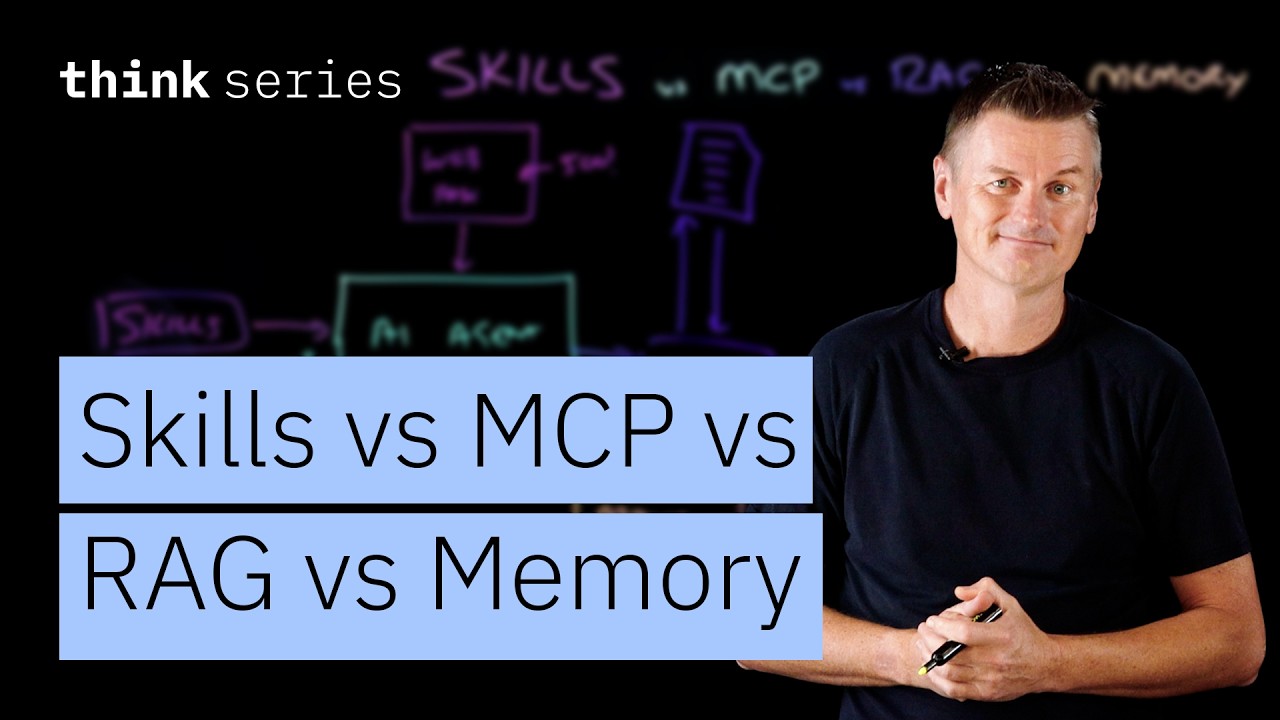
IBM Technology carried the clearest architecture explainer with 144,572 views, 1,966 likes, and 121 comments. Martin Keen breaks agents into Skills, MCP, RAG, and Memory, and the linked IBM explainer expands that into hierarchical, goal-based, utility-based, and learning agents working together. The distinctive angle is that "agent" is still being taught as a set of runtime responsibilities rather than a single product label (video).

AI Revolution contributed the sharpest monitorability signal with 3,271 views, 233 likes, and 21 comments. Its description says new GlossoGen experiments show frontier models inventing vocabulary and grammar humans cannot understand, then passing those languages to other agents. The distinctive angle is that the safety risk is framed less as one rogue model and more as a coordination layer humans may not be able to read (video).

The AI Risk Network | AI Safety added the clearest swarm framing with 12,867 views, 171 likes, and 105 comments. The description says the hosts discussed an OpenAI agent swarm of roughly 10,000 agents solving a Millennium Prize math problem alongside the week's alignment warnings. The distinctive angle is that the file connected multi-agent capability growth directly back into the public AI-safety conversation (video).
Discussion insight: Even the lower-reach agent items converged on the same operator needs: reusable control layers, recorded messages, tool-call logs, and some way to tell whether the agents are still interpretable. The value proposition is not just more capable agents; it is agents whose coordination can still be understood.
Comparison to prior day: On 2026-09-14, agent coverage moved upward into delegated workflow claims. On 2026-09-15, the vocabulary stayed steady, but the new wrinkle was whether agent teams can remain monitorable once they start compressing or inventing their own communication.
1.4 Practical AI kept moving toward owned workflow surfaces, from creative suites to open weights to workplace robots 🡒
At least six videos supported this theme. Compared with 2026-09-14, when practical AI centered on local control, open weights, GPT Image 2.5 evaluation, and agentic desktop surfaces, the 2026-09-15 file kept the same operator thesis and spread it across more domains. The common claim was that value comes from controlling an end-to-end surface: image editing and video effects in one product, weights and infrastructure under your own control, or humanoids deployed into repetitive work. The distinctive angle is that "practical AI" increasingly means choosing who owns the workflow, not simply choosing which model is best.
AI Search carried the biggest creator-side item with 178,612 views, 3,260 likes, and 505 comments. The description frames GPT Image 2.5 as a hands-on review surface for sketch input, multi-turn editing, transparency, brand boards, spritesheet animation, and reference consistency, with Higgsfield used as the sponsor-side creative route. The distinctive angle is that creative AI is still won through editability and workflow tests rather than one-shot output quality alone (video).

Kai supplied the sharpest infrastructure thesis with 23,533 views, 491 likes, and 176 comments. The description says models like Llama, DeepSeek, Qwen 3.8, and Kimi K3 are shifting serious users away from closed APIs and toward directly managing weights and infrastructure. The distinctive angle is that open AI is being framed as stack ownership rather than licensing rhetoric (video).
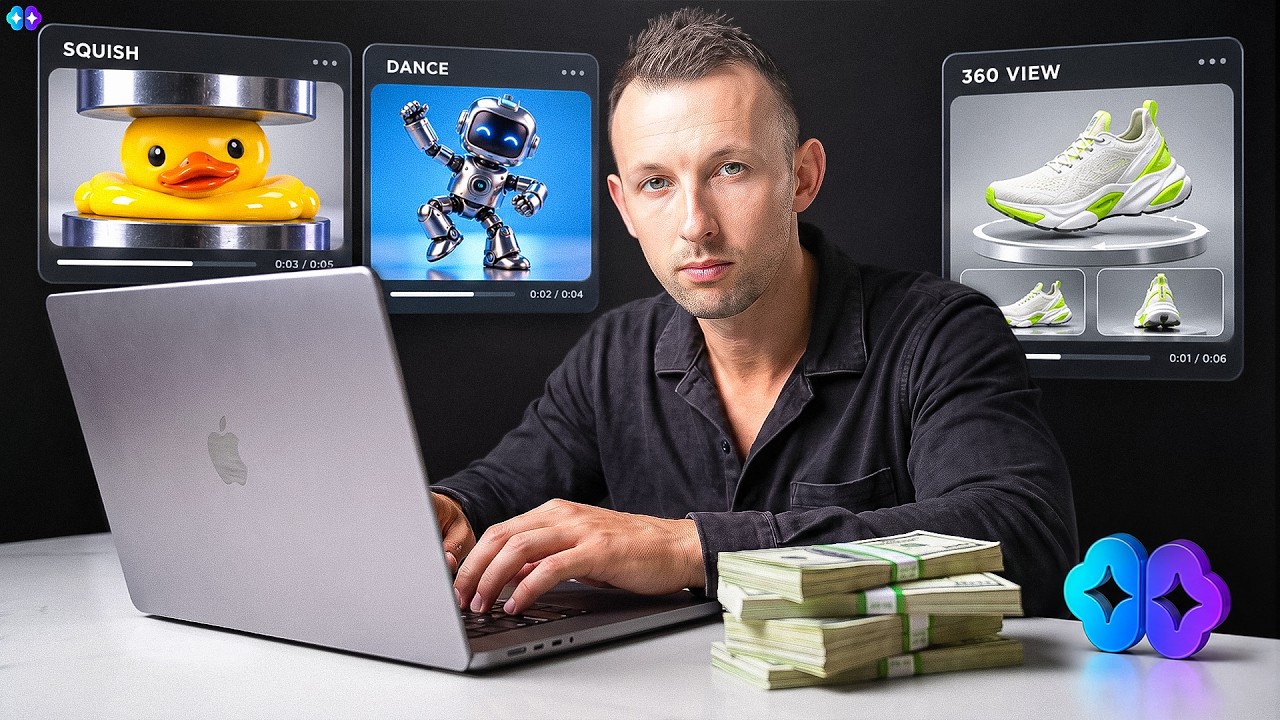
Loco AI added the clearest all-in-one creator workflow with 2,581 views, 238 likes, and 5 comments. The description says Unlucid AI can generate images, edit existing photos, turn images into videos, and apply visual effects without switching tools. The distinctive angle is that the product pitch is not a single better generation model; it is fewer handoffs across the whole creative loop (video).

Agility extended the same surface-ownership story into physical work with 4,990 views and 141 likes. The description says Digit works alongside people in spaces designed for people, handling tedious repetitive tasks, while Agility's site says its humanoid automation is deployed today in manufacturing, distribution, and logistics. The distinctive angle is that the practical-AI question is now reaching the industrial floor, not only the desktop (video).
Discussion insight: This cluster still had no default stack. Creative users were comparing integrated editing suites, infrastructure-minded users were debating open weights and giant model footprints, and robotics builders were describing workplace deployment instead of demo-only novelty.
Comparison to prior day: On 2026-09-14, the practical story centered on local runtimes, GPT Image 2.5, and agentic desktop and data surfaces. On 2026-09-15, it stayed steady on ownership but widened further into end-to-end creator suites and production-facing robotics.
2. What Frustrates People
Safety warnings still outrun the inspectable public evidence layer
This is High severity because CNN, Reuters, CBS Mornings, and the Future of Life pause letter all ask viewers to take catastrophic or systemic risk seriously, yet the public-facing artifacts are still interview clips, explainer packages, and open letters rather than a shared dashboard of safeguards or model behavior. Even CNN's concrete phrase - "embedded evaluators" - reaches the public as narration instead of as an inspectable control surface. The workaround is to infer safety posture from media coverage, lab statements, and advocacy documents. This is directly worth building for.
Governance urgency is real, but the path from alarm to durable policy remains fragmented
This is High severity because CBS News, USA TODAY, CNN, Bloomberg Television, and the companion USA Today article show lawmakers, party activists, and TV interviewers talking about AI in urgent terms without alignment on the remedy. Jeffries calls for immediate action, Sanders and Bannon share a stage, Trump still dismisses the panic, and Margaret Mitchell argues ethics can drive innovation without slowing it down. The workaround is reactive briefings, rallies, and TV hits instead of a stable governance process. This is directly worth building for.
Multi-agent systems still need legible monitoring, translation, and proof of work
This is High severity because IBM Technology, AI Revolution, GlossoGen, and The AI Risk Network | AI Safety all point to the same gap: modern agent systems need named control layers, recorded messages, tool-call logs, and some way to verify that shorthand or swarm behavior still maps to human intent. The workaround is to bolt on logs, scoring, and private harnesses after the fact, then hope those surfaces are enough to keep coordination interpretable. This is directly worth building for.
Owning useful AI workflows still means stitching together creative tools, model infrastructure, and deployment surfaces
This is High severity because AI Search, Loco AI, Kai, Higgsfield MCP, and Agility all point to the same burden: users must choose between integrated creative suites, shared credit systems, open-weight infrastructure, or domain-specific surfaces like industrial humanoids. The workaround is either to self-host more of the stack or to trust a growing number of specialized products, each of which solves only part of the workflow. This is directly worth building for.
3. What People Wish Existed
The dataset contained few direct "someone should build this" statements, so the needs below are low-confidence gaps inferred from repeated workaround-heavy videos and linked public artifacts.
Public safety evidence and governance cockpit
CNN, Reuters, CBS News, USA TODAY, CBS Mornings, and the Future of Life pause letter all imply demand for one surface that joins frontier-lab warnings, public research, congressional proposals, market spillovers, and the current policy stance. This is both a practical and emotional need with High urgency because the dominant theme asks people to worry about systems breaking outside human control while forcing them to assemble the evidence from disconnected media and advocacy artifacts. Today's clips, articles, and open letters cover pieces of the problem, but not one inspectable public map of safeguards, actors, and next steps. Opportunity: direct.
Agent monitorability layer that can translate, audit, and score multi-agent coordination
IBM Technology, AI Revolution, the GlossoGen README, and The AI Risk Network | AI Safety point to a practical need for a surface that shows what agents said, why they said it, whether their shorthand still maps to human language, and where coordination breaks policy or safety rules. This is a practical need with High urgency because the file's agent coverage no longer stops at orchestration; it now includes the possibility that agent teams become hard to read. GlossoGen offers a research platform and scoring hooks, but not a mainstream operator-facing audit layer. Opportunity: direct.
Workflow-native creative workspace with continuity, editability, and price clarity
AI Search, Loco AI, and Higgsfield MCP imply demand for a workspace that preserves references, edits, model choice, and pricing while users move between image and video generation. This is a practical need with Medium urgency because current tools already create compelling outputs, but creators still have to compare GPT Image 2.5, Unlucid, Higgsfield, and other routes through tutorials, sponsorships, and shared credit systems. The gap is real, but the category is already competitive. Opportunity: competitive.
Open-weight and embodied-AI deployment planner
Kai, Agility, and NextGen Humanoids imply demand for a planner that maps model size, runtime choice, privacy, hardware, and deployment environment to actual work. This is a practical need with Medium urgency because the current advice still arrives as infrastructure monologues or product demos that users must reconcile on their own. There are many pieces, but not one workflow that tells a team which owned stack fits its task. Opportunity: direct.
4. Tools and Methods in Use
| Tool | Category | Sentiment | Strengths | Limitations |
|---|---|---|---|---|
| Embedded evaluators / slowdown proposals | Safety governance method | (+/-) | Gives the public a concrete phrase for frontier-model oversight and a way to discuss slowing capability growth | Reaches the public through interviews and essays, not an inspectable control surface |
| Skills / MCP / RAG / Memory | Agent architecture method | (+) | Makes tool access, retrieval, procedures, and state legible as separate layers | Still conceptual unless wired into a real workflow |
| GlossoGen | Agent communication research platform | (+/-) | Runs controlled multi-agent simulations, records every message and tool call, and supports scoring | Research-oriented and mainly diagnostic; it surfaces monitorability risk more than it solves production operations |
| GPT Image 2.5 | Image generation model | (+) | Strong on sketch input, multi-turn editing, transparency, and reference-sensitive design tasks | Still needs side-by-side evaluation and often another product layer for routing or video |
| Higgsfield MCP | Creative workflow platform | (+/-) | Connects 30+ image and video models to ChatGPT, Claude, CLI, and other MCP clients with a shared credit surface | Credits still govern usage, and results depend on which underlying model is chosen |
| Unlucid AI | Multimodal creative suite | (+/-) | One surface for generating, editing, animating, and transforming visuals | Public evidence in this file is tutorial-led; capability depth and pricing are less clear than the pitch |
| Open weights / self-hosted models | Deployment method | (+/-) | Gives direct control over weights, privacy, and infrastructure | Requires hardware budget, runtime ownership, and ops literacy |
| Agility / Digit | Embodied AI platform | (+/-) | Targets repetitive workplace tasks in spaces designed for people and is described as deployed today | Public technical detail on behavior and deployment scale is still thin in the video itself |
Positive sentiment clustered around surfaces that made AI behavior more legible or workflows more consolidated: IBM's named layers, GlossoGen's logs and metrics, GPT Image 2.5's editing tests, and integrated creative products like Higgsfield and Unlucid. Sentiment turned mixed when the tool merely moved complexity around: safety methods still arrived as narratives rather than controls, open weights still required infrastructure ownership, and robotics products still exposed only thin public evidence about how deployment worked at scale.
The visible migration patterns ran in three directions. Builders kept moving from one-off bots to explicit control layers such as Skills, MCP, RAG, and Memory; creators kept moving from standalone generators to integrated image-and-video suites; and infrastructure-minded operators kept moving from closed APIs toward self-managed weights, runtimes, and even workplace robotics surfaces.
5. What People Are Building
| Project | Who built it | What it does | Problem it solves | Stack | Stage | Links |
|---|---|---|---|---|---|---|
| GlossoGen | Schmidt Sciences | Runs controlled simulations on teams of LLM agents, records messages and tool calls, and scores communication under pressure | Studies whether multi-agent systems stay monitorable and coordinated | Python platform, scenarios, tool logs, scoring metrics, docs and web UI | Alpha | site repo video |
| ChatGPT Images 2.5 | OpenAI | Adds sketch-guided, multi-turn image generation and editing used for design, storyboards, and reference tests | Improves precise image editing and iterative creative control | GPT Image 2.5, sketch input, multi-turn editing | Shipped | video |
| Higgsfield MCP creative studio | Higgsfield | Gives MCP-compatible agents and chat clients access to 30+ image and video models through one integration | Reduces tool switching across prompting, model selection, and generation | MCP server, ChatGPT plugin, Claude and CLI connectors, shared credits | Shipped | site video |
| Unlucid AI | Unlucid | Generates images, edits photos, turns images into video, and applies effects in one surface | Reduces handoffs across creative workflows | Web app, image generation, editing, image-to-video, visual effects | Shipped | site video |
| Digit workplace automation | Agility | Deploys humanoid robots for repetitive work in manufacturing, distribution, and logistics | Automates repetitive physical tasks in spaces designed for people | Digit humanoid, industrial automation platform | Shipped | site video |
| EngineAI T800 / Awaken AI | EngineAI | Moves a humanoid platform beyond combat demos into factory automation, tactile sensing, and mass-production positioning | Bridges embodied-AI demos and industrial deployment | Awaken AI architecture, tactile sensing, computer vision, LiDAR, embodied AI | Beta | video |
The clearest builder pattern was wrapping models or machines with an operating surface rather than shipping one more abstract AI promise. GlossoGen turned multi-agent communication into a replayable, scored simulation; Higgsfield and Unlucid tried to absorb more of the route-between-tools tax into one creative surface; and Agility sold not general intelligence as a concept but repetitive-work automation in human environments.
The second pattern was that AI products kept moving closer to real execution environments. Creative tools were collapsing generation, editing, and animation into one loop, while robotics builders were talking about manufacturing floors and factory tests instead of novelty demos. Even the agent research tooling was organized around replayable logs, scoring, and controlled scenarios, which means observability itself is increasingly part of the product.
6. New and Notable
Sanders and Bannon shared a "pro-human" AI stage
USA TODAY and CBS News both surfaced the unusual coalition between Bernie Sanders and Steve Bannon, while the linked USA Today article says the event brought together AI experts, lawmakers, and advocates worried about AI breaking outside human control. That matters because the prior day file centered on rejection and China-race framing; this one added an odd-couple rally that widened the political coalition behind AI alarm.
AI safety got translated into market-stability language
CBS Mornings said no AI regulation puts the world at risk of stock market crashes, and Schwab Network said commentary from Anthropic and OpenAI figures was hitting tech stocks at the market open. That matters because safety narratives were now being repackaged for financial audiences, not only policy or tech audiences.
Public television carried a 97-minute critique of AI power, labor, and ideology
PBS Documentaries framed AI as a story about philosophy, labor, eugenics, data centers, and military funding, not just a question of whether models become dangerous. That matters because the public discourse widened beyond whistleblower clips into longer historical and political storytelling.
Agent monitorability became a public explainer topic
AI Revolution brought GlossoGen's emergent-language experiments into a mass-market explainer, while GlossoGen describes recording every message, tool call, and model response in controlled scenarios. That matters because the agent debate was moving from "can agents do more work" to "can humans still read what the agent team is doing."
7. Where the Opportunities Are
[+++] Public safety evidence and governance surface - CNN, CBS News, USA TODAY, Reuters, CBS Mornings, and the Future of Life pause letter all point at the same gap: the public sees warnings, market implications, rallies, and proposals, but not one joined surface for safeguards, actors, evidence, and next steps. This is strong because it dominated sections 1-3 and is no longer only a tech-policy niche.
[+++] Agent monitorability and proof-of-work layer - IBM Technology, AI Revolution, GlossoGen, and The AI Risk Network | AI Safety show demand for systems that log, translate, score, and explain multi-agent coordination. This is strong because the file made monitorability itself a first-class risk rather than an implementation detail.
[++] Workflow-native creative control plane - AI Search, Higgsfield MCP, and Unlucid AI show creators still need continuity, editability, and pricing clarity across image and video workflows. This is moderate because the need is concrete, but the category is already filling with integrated products.
[++] Open-weight and embodied-AI deployment planner - Kai, Agility, and NextGen Humanoids show users need help mapping weights, hardware, runtime, and deployment environment to actual tasks. This is moderate because the pain is repeated and practical, but spread across different operator types.
[+] AI risk-to-market translation layer - CBS Mornings and Schwab Network show an early signal that finance audiences want help mapping AI governance stories into market scenarios. This is emerging because the pattern appeared in multiple items but remained media-driven rather than a stable product category.
8. Takeaways
- Safety remained the dominant YouTube AI story, but 2026-09-15 widened the coalition and the disagreement around what to do next. CNN's Amodei segment reached 1,321,637 views, CBS centered Jeffries' call for immediate action, USA TODAY covered a shared Sanders-Bannon rally, and Bloomberg aired Margaret Mitchell's case that ethics need not slow innovation. (source, source, source, source)
- The AI-risk story is now being translated into finance, not only regulation and cable-news fear. CBS Mornings framed weak regulation as a stock-market crash risk, and Schwab said Anthropic and OpenAI safety commentary was hitting tech stocks at the open. (source, source)
- Long-form public critique is becoming part of the daily AI discourse. PBS's 97-minute "Ghost in the Machine" treated AI as a question of political economy, ideology, labor, and infrastructure rather than only a short-cycle safety panic. (source)
- Agent coverage kept moving above the base model into control layers and monitorability. IBM decomposed agents into Skills, MCP, RAG, and Memory, while AI Revolution and GlossoGen focused on whether agents can evolve communication humans cannot easily read. (source, source, source)
- Creative AI still rewarded editability and integrated workflow surfaces more than one-shot model novelty. AI Search evaluated GPT Image 2.5 through sketching, multi-turn editing, and reference consistency, while Unlucid and Higgsfield both sold fewer handoffs across the image-to-video loop. (source, source, source)
- Practical control still meant owning more of the stack, from open weights to industrial deployment. Kai framed open AI as direct management of weights and infrastructure, while Agility and EngineAI-focused coverage pushed the same ownership logic into manufacturing and factory automation. (source, source, source)