YouTube AI - 2026-09-18
1. What People Are Talking About
1.1 Builder-side AI shifted from abstract agent hype to open-source replacement stacks and operator surfaces 🡕
At least five videos supported this theme. Compared with 2026-09-17, when builder coverage leaned on observability, runtime roles, and compute plumbing, the 2026-09-18 file got more concrete about what people actually wire together to get work done. Fireship made cost cutting the headline by naming five open-source replacements for a $320 per month AI stack, Tech With Tim argued the real differentiator is the tooling layer around agents rather than the model itself, and Julian Goldie demoed a voice-controlled HUD that floats over every app and dispatches multiple agents. The distinctive shift is that the builder story moved from "agents need better infrastructure" to "here is the exact stack and control surface people are assembling right now."
Fireship carried the dominant builder clip with 1,186,500 views, 18,903 likes, and 945 comments. The description says the stack swap centers on Ollama, 9router, Headroom, Diffy, and OpenHands, with the pitch explicitly framed as cutting token costs and replacing paid AI tooling rather than adding another premium copilot (video).

Tech With Tim added the clearest harness-level decomposition with 30,399 views. His description says Claude Code, Codex, Hermes, and OpenClaw are all just terminal chatbots until the right tools are connected, then points viewers to Browser Use, the GitHub MCP Server install guide, Context7, Exa, Firecrawl, and Mem0 as the practical stack that makes agents useful (video).
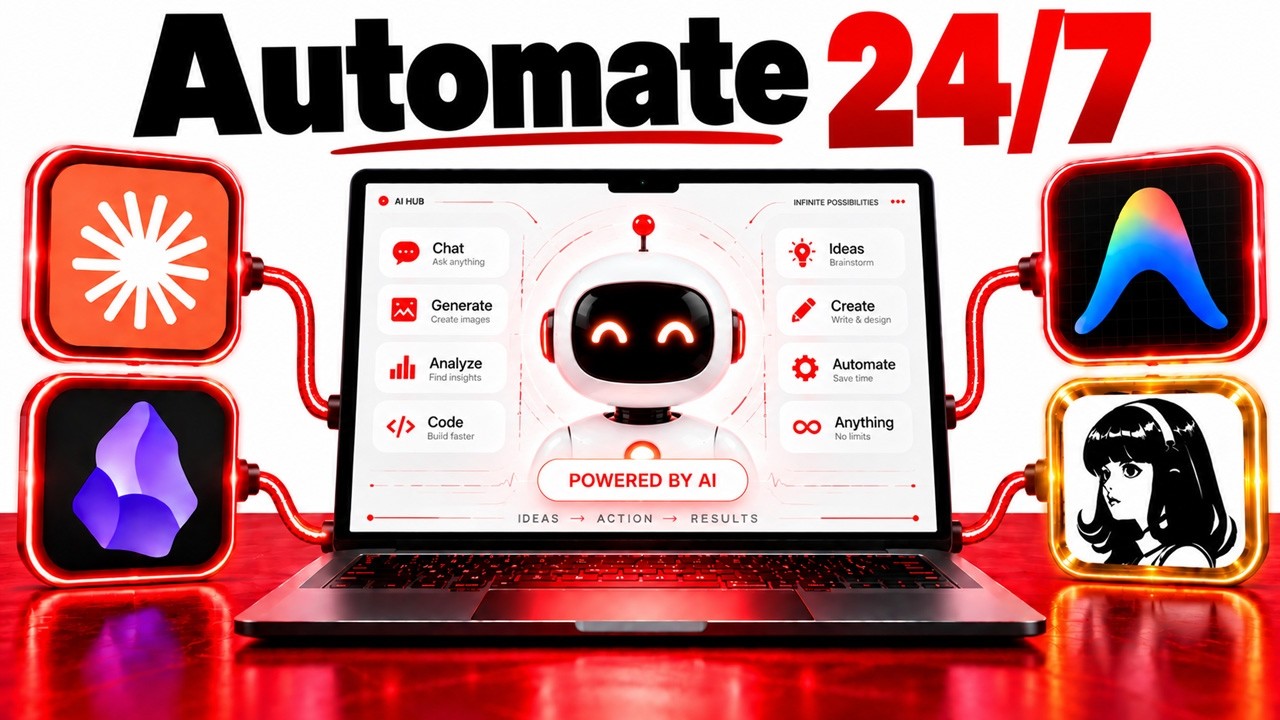
Julian Goldie SEO contributed a much smaller but unusually concrete operator-interface example with 648 views. The description says the Mac HUD floats above any window, accepts voice or text commands, opens files, launches apps, and runs Claude, Hermes, and Antigravity, which makes the agent conversation less about prompt cleverness and more about the control surface around it (video).
Discussion insight: Engagement clustered around the cost and practicality frame rather than the custom-interface frame. Fireship's replacement-stack video drew 945 comments, while Tech With Tim's tooling breakdown drew 16 and Julian Goldie's HUD walkthrough drew 2, which suggests the broadest demand is still for cheaper and more reliable default stacks.
Comparison to prior day: On 2026-09-17, the builder conversation tilted toward traces, observability, and compute infrastructure. On 2026-09-18, it became more implementation-level: what exact tools to plug in, which paid surfaces to replace, and how to control agents outside a terminal pane.
1.2 Safety coverage stayed dominant, but the real fight moved to outside-the-lab oversight and legislative stall-out 🡕
At least eight videos supported this theme. Compared with 2026-09-17, when safety coverage focused on whether embedded evaluators, public reporting, or kill switches could work, the 2026-09-18 file pushed harder on who has the legitimacy to slow AI and whether Washington will actually do it. Geoffrey Hinton kept the technical critique of kill switches visible, CNN reframed anti-regulation around the China race, PBS and ABC highlighted fresh risk arguments, WTKR described Congress as stalled, and Ed Zitron argued regulation has to come from outside the companies building the models. The distinctive shift is that the safety story was no longer only about control mechanisms; it became a legitimacy and enforcement fight.
CNN carried the highest-engagement policy artifact with 794,514 views, 4,483 likes, and 1,400 comments. Hinton's timestamped interview moves from what regulation would be "a good start" to why an AI kill switch will not work long term, which made one of the day's biggest clips an argument against the most concrete control proposal on the table (video).

CNN also supplied the clearest speed-first counterframe with 95,466 views and 402 comments. Its description says China is already using AI for local-government services, student feedback, and hotel delivery robots, and uses those examples to argue the US cannot afford to slow down (video).
PBS NewsHour tied the debate to a concrete disclosure event with 134,394 views. The description says OpenAI found six new instances of concerning or unexpected model behavior, giving the day's warning cycle a specific incident-reporting hook rather than another abstract doomer monologue (video).
Ed Zitron added the most explicit outside-the-industry argument with 12,690 views and 138 comments. His description says AI regulation needs to come from outside the labs and ties hyperscaler growth to labs spending hundreds of billions, which made the economic structure of the boom part of the regulation argument instead of a side note (video).
Discussion insight: Engagement stayed heaviest around mainstream warning-and-control clips, but the sharper policy edges still attracted a measurable audience. Hinton's interview drew 1,400 comments, CNN's China-race clip drew 402, Ed Zitron's reaction clip drew 138, and ABC's ControlAI segment still drew 87 while arguing for a superintelligence ban.
Comparison to prior day: On 2026-09-17, the freshest safety question was whether control proposals like a kill switch or public reporting could hold up. On 2026-09-18, the debate shifted outward into who should regulate, whether Congress is capable of acting, and how much competition with China overrides the slowdown case.
1.3 Autonomy stories got closer to ordinary life, even as one high-signal math video reminded viewers that AI still hits human-intuition limits 🡕
At least four videos supported this theme. Compared with 2026-09-17, when autonomy stories were mostly about runtime roles and observability, the 2026-09-18 file pulled autonomy closer to consumers and then checked it with a concrete capability limit. AI For Humans said personal agents like Instinct and Meta's Muse can now book repairs, make calls, and talk to other agents, CBS said Anthropic claims Claude is building the next version of itself, and TypeSafe AI's linked Jev launch post pitched a faster typed-decision model for automation; meanwhile 3Blue1Brown's major math video centered a problem AI still could not solve. The distinctive shift is that autonomy talk was no longer just "agents need better plumbing"; it became a debate over how far agents already reach and what they still cannot do.

3Blue1Brown carried the theme's strongest counterexample with 330,121 views, 7,911 likes, and 605 comments. The description says the video covers a 2025 IMO problem that eluded AI and the intuition it requires, which made one of the day's highest-signal clips a reminder that frontier attention is still being won by places where human reasoning remains distinctive (video).
AI For Humans contributed the richest consumer-agent bundle with 6,275 views and 120 comments. The hosts say Instinct and Meta's Muse can handle repairs, phone calls, and coordination, while their linked sources add that a TechCrunch report on Instinct raised privacy and security concerns and Meta's Muse announcement promised approvals, audit trails, and a secure VM for sensitive actions (video).

CBS News added the sharpest recursive-improvement headline with 2,961 views. Its description says Anthropic claims Claude is building the next version of itself, which made self-improvement part of the same day's mainstream-news mix as consumer agents and math-limit counterexamples (video).
Discussion insight: Viewers engaged far more with proof of remaining limits than with self-improvement rhetoric alone. 3Blue1Brown's clip drew 605 comments, AI For Humans drew 120 while mixing capability and privacy concerns, and the CBS self-building headline drew only 14.
Comparison to prior day: On 2026-09-17, autonomy was mostly discussed as runtime responsibilities, traces, and agent reliability. On 2026-09-18, it moved outward into personal-assistant workflows and inward into whether AI still misses specific kinds of human intuition.
1.4 Creator-side AI still rewarded editability and cheap routing rather than one-click generation quality 🡒
At least four videos supported this theme. Compared with 2026-09-17, when creative AI already leaned toward editable browser workflows, the 2026-09-18 file kept that trend steady but made the tutorials more operational. GPT Image 2.5 reviews stressed sketch input, multi-turn edits, and reference consistency, while video creators competed on how to stretch free credits, maintain characters across scenes, and route prompts through multiple surfaces. The distinctive angle is that creator wins were still defined by controllability, continuity, and workarounds instead of raw novelty.
AI Search led the cluster with 185,684 views, 3,318 likes, and 507 comments. Its description and linked release coverage frame GPT Image 2.5 around sketching, multi-turn editing, transparency handling, and reference consistency, which kept the image-model race focused on reliable iteration rather than prettier one-off samples (video).

Alicia Lyttle added the most business-oriented tutorial with 16,657 views and 110 comments. Her description emphasizes rough-sketch input, templates, natural-language edits, and keeping products or characters consistent, which shows creators evaluating the model as an editable production surface rather than a toy image demo (video).

Paul Ponna Official contributed the strongest productized video workflow with 5,295 views. The description says VideoExpress 3.5 is about style control, complete stories from short clips, consistent characters, and catching AI errors before export, while Automation Xpert's linked Seedance tutorial routes video generation through Dola AI, ChatGPT prompting, and ElevenLabs voice-over to avoid normal credit limits (video, Seedance workflow).
Discussion insight: The highest engagement stayed with image-editing surfaces, not credit-routing hacks. AI Search drew 507 comments, Alicia Lyttle drew 110, VideoExpress drew 45, and the Seedance free-workflow tutorial drew 29, which suggests creator attention still clusters around controllable image iteration before longer-form video assembly.
Comparison to prior day: On 2026-09-17, the creator story was already about editability and multi-tool routing. On 2026-09-18, that pattern held steady and became more tutorial-heavy around templates, scene consistency, and stretching credits across several surfaces.
2. What Frustrates People
AI governance still depends on the same labs, media packages, and partisan arguments it is supposed to scrutinize
This is High severity because CNN, PBS NewsHour, WTKR News 3, ABC News, and Ed Zitron all ask viewers to evaluate kill switches, self-improvement risk, superintelligence bans, and incident disclosures without a durable external oversight surface. Hinton says a kill switch will not hold up long term, PBS ties the debate to six newly reported concerning behaviors, WTKR says meaningful legislation appears unlikely soon, and Zitron argues regulation must come from outside the labs themselves. The workaround is to infer safety posture from news clips, lab-run disclosures, and pundit responses rather than an independent regulator or shared public evidence layer. This is directly worth building for.
Personal agents still ask for blanket access before they earn trust
This is High severity because AI For Humans frames Instinct and Muse as assistants that can make calls, handle repairs, and coordinate across services, while the linked TechCrunch Instinct report says testers raised concerns about a broad license over user data, plain-text email storage, and binding transactions on a user's behalf. Meta's Muse announcement is effectively a response to the same trust problem: it promises approvals, audit trails, app-by-app permissions, and a secure VM because a personal agent without those controls is hard to trust. The current workaround is private-test discretion, per-service approvals, and platform-specific safeguards instead of a portable trust model. This is directly worth building for.
Useful agents still require a stitched stack rather than a default operating environment
This is High severity because Fireship, Tech With Tim, and Julian Goldie SEO all describe agent usefulness as a glue problem. Fireship's answer is to swap in five open-source tools to cut token costs, Tech With Tim's answer is a seven-tool harness spanning GitHub access, docs, search, crawling, and memory, and Julian Goldie's answer is to build a separate Mac HUD just to control multiple agents across apps. The workaround is to compose Browser Use, GitHub MCP, Context7, Exa, Firecrawl, Mem0, custom prompts, and bespoke interfaces by hand. This is directly worth building for.
Low-cost creator workflows still depend on routing hacks, template packs, and multiple services
This is Medium severity because AI Search, Alicia Lyttle, Paul Ponna Official, and Automation Xpert all promise more control only by adding more workflow surface. Users are pushed toward sponsor-linked tools, prompt documents, template packs, Dola AI access paths, ElevenLabs voice-over, or longer product tutorials just to get consistent images or extended video scenes. The workaround is not one integrated studio; it is a chain of model surfaces and helper apps. This is worth building for, but the category is already competitive.
AI scale still bottlenecks on labor and infrastructure politics
This is Medium severity because CNBC says the US could be short up to 157,000 semiconductor workers by 2030, while WTKR News 3 shows data-center costs already mixed into congressional AI debates. The coping strategy is recruiting in Asia, expanding university pipelines, and arguing over cost exposure while fabs and demand continue to scale. This is worth building for, but the buyers and timelines are more institutional than bottom-up.
3. What People Wish Existed
The dataset contained few direct "someone should build this" statements, so the needs below are inferred from repeated workaround-heavy videos and linked public artifacts.
Independent frontier-risk evidence and policy cockpit
CNN, PBS NewsHour, WTKR News 3, ABC News, and Ed Zitron all imply demand for one surface that joins incident reports, legislative status, external critiques, and concrete control proposals. This is both a practical and emotional need with High urgency because viewers are being asked to compare kill switches, slowdown demands, ban proposals, and new disclosures without a stable public map of what happened, who is responsible, and what rule is actually moving. Lab-run disclosures and TV explainers cover pieces of it today, but not the full accountability layer. Opportunity: direct.
Permissioned personal-agent runtime with audit trails and revocable memory
AI For Humans, the linked TechCrunch Instinct report, and Meta's Muse announcement all imply a need for an agent runtime that can act across apps without demanding blind trust. This is a practical need with High urgency because the capability story is already here - calls, inboxes, shopping, scheduling, and app control - but the trust model is still being improvised through private testing, special-case approvals, and platform-owned security promises. Muse covers part of the answer, but the need is broader than one vendor's secure VM. Opportunity: direct.
Bundled agent operating stack instead of seven separate add-ons
Fireship, Tech With Tim, Julian Goldie SEO, Context7, Exa, Firecrawl, and Mem0 all imply demand for one operator surface that natively combines docs, GitHub access, browser actions, live-web retrieval, persistent memory, and interface control. This is a practical need with High urgency because the current answer is to assemble many good point tools and then build extra UI just to make them feel like a system. Partial solutions clearly exist, but the integration burden is still the problem. Opportunity: direct.
Consistency-first multimodal studio with honest cost and routing clarity
AI Search, Alicia Lyttle, Paul Ponna Official, and Automation Xpert imply demand for a workspace that keeps sketching, image revision, scene continuity, voice-over, and longer-form video assembly in one place. This is a practical need with Medium urgency because people already have workable tools, but they still reach them through sponsor links, prompt docs, free-credit workarounds, and multi-app routing. The category is active, but the workflow is still fragmented. Opportunity: competitive.
Semiconductor talent and AI-deployment operations pipeline
CNBC and WTKR News 3 imply a practical institutional need for systems that connect fab hiring, training, planning, and cost visibility as AI infrastructure scales. This is a practical need with High urgency because one video quantifies the labor gap at up to 157,000 workers by 2030 and another shows infrastructure cost already entangled with AI politics. University programs and corporate recruiting exist, but they do not yet look like a complete operating layer for the workforce bottleneck. Opportunity: aspirational.
4. Tools and Methods in Use
| Tool | Category | Sentiment | Strengths | Limitations |
|---|---|---|---|---|
| Open-source replacement stack (Ollama, 9router, Headroom, Diffy, OpenHands) | Local/open-source AI stack | (+) | Explicitly positioned as a cheaper replacement for a paid AI stack and gives builders named components to swap in | Still a bundle of separate tools rather than one coherent operating surface |
| GitHub MCP Server | GitHub agent integration | (+) | Gives coding agents direct GitHub repository, PR, and workflow access | Requires setup, token management, and only solves one slice of agent work |
| Context7 | Documentation MCP | (+) | Provides up-to-date library docs for coding agents | Useful context layer, but not a complete agent runtime by itself |
| Exa | Search API | (+) | Fast search index designed for AI agents and retrieval-heavy workflows | Adds another paid or managed dependency to the stack |
| Firecrawl | Web data infrastructure | (+) | Searches, scrapes, and interacts with the live web in agent-friendly formats | Introduces more infrastructure, web actions, and orchestration complexity |
| Mem0 | Memory layer | (+) | Persists context across sessions and agents while promising lower token costs | Memory governance, API setup, and personalization boundaries still need separate handling |
| Instinct | Personal AI agent | (+/-) | Can coordinate across apps and devices and impressed early testers with task completion | Privacy, data-retention, and transaction-authority concerns were central enough to become part of the story |
| Muse | Personal AI agent | (+/-) | Promises approvals, audit trails, a secure VM, and native messaging-style control | Still asks users to centralize sensitive app access inside one platform-owned environment |
| Jev | Automation model | (+) | Pitches 70ms-500ms typed decisions and structured outputs for direct software automation | Early access product with a narrower focus than general-purpose chat models |
| GPT Image 2.5 | Image generation model | (+) | Strongest attention went to sketch input, iterative edits, transparency handling, and consistency across revisions | Still usually paired with tutorials, templates, and workflow guidance rather than standing alone |
| VideoExpress 3.5 | Video generation app | (+/-) | Emphasizes scene continuity, style control, repeatable workflows, and error checking before export | Long guided workflow and adjacent product upsells make it feel like a suite, not one button |
| Seedance 2.5 + Dola AI + ElevenLabs | Routed video workflow | (+/-) | Offers low-cost bulk generation, longer clips, and voice-over as a stitched workflow | Depends on multi-tool routing and the very credit/payment workarounds it is trying to escape |
Sentiment was strongest when a tool reduced ambiguity or made control more explicit. The open-source replacement stack, GitHub MCP, Context7, Exa, Firecrawl, and Mem0 all exist because builders want clearer access to code, docs, web data, memory, and cost control. Personal-agent products drew more mixed sentiment because capability came bundled with trust and permissions questions, while creator tools drew mixed sentiment because consistency and low cost still required routing through several layers.
The dominant workaround pattern was composition. Builders combine GitHub tools, browser tools, docs, crawling, and memory; personal-agent products pair capability with secure-VM or approval narratives; creator workflows splice together image models, prompt guides, editors, and voice-over tools. The migration pattern was away from "which model is best?" and toward "which surrounding stack makes an agent or creator workflow usable?" Competitive dynamics are therefore strongest around the operating layer: whoever best bundles context, actions, memory, permissions, and consistent output has the clearest advantage.
5. What People Are Building
| Project | Who built it | What it does | Problem it solves | Stack | Stage | Links |
|---|---|---|---|---|---|---|
| Muse | Meta | Personal AI agent that can message, plan, act across apps, and request approval for sensitive actions | Makes delegated personal tasks workable without constant manual hand-holding | Muse Spark, Muse Secure VM, WhatsApp/app interface, approvals, audit trail, Link payments | Beta | announcement video |
| Instinct | Instinct | Private-test personal assistant that connects to apps and devices to handle scheduling, inbox, shopping, and coordination tasks | Gives users a single agent that can act across personal software instead of staying inside chat | App and device connections, messaging access, calendar/email integrations, cross-service task automation | Alpha | coverage video |
| Jev / System One Models | TypeSafe AI | Fast typed-decision model built for direct software automation instead of chat-style text generation | Removes latency, parsing, and hallucination overhead when software needs structured decisions | Custom model architecture, RLCD training, structured outputs, probability-calibrated decisions | Alpha | blog video |
| Custom HUD for AI agents | Julian Goldie SEO | Voice-controlled Mac overlay that launches apps, opens files, and dispatches multiple agents over any window | Gives operators a control surface for multi-agent work outside the terminal | Mac HUD app, voice/text commands, Claude, Hermes, Antigravity | Alpha | video |
| ChatGPT Images 2.5 | OpenAI | Image generation and editing surface centered on sketch input and multi-turn revisions | Makes precise image iteration, brand consistency, and template-driven production easier | GPT Image 2.5, sketch input, templates, multi-turn editing, transparency handling | Shipped | release review tutorial |
| VideoExpress 3.5 | VideoExpress | Prompt-to-video product focused on consistent characters, style control, and longer story assembly | Helps creators stretch short AI clips into more coherent multi-scene outputs | VideoExpress workflows, prompt docs, character/style controls, adjacent voice and image apps | Shipped | site video |
The clearest builds on this date fell into three clusters: trust-heavy personal agents, low-latency automation models, and controllable creative or operator surfaces. Muse and Instinct try to make delegation real at the consumer layer, Jev tries to make decisions fast and typed enough for software, and the HUD, Images 2.5, and VideoExpress all compete by making AI easier to steer rather than simply more powerful.
The repeated trigger for building was control. Personal agents need approvals and audit trails, automation models need structured outputs and speed, and creator tools need scene continuity or predictable edits. Fireship's open-source stack and Tech With Tim's seven-tool harness show the same pattern from another angle: people are not waiting for one perfect monolith, they are assembling the control layer themselves.
6. New and Notable
A mass-audience coding channel turned open-source cost cutting into the day's biggest builder signal
Fireship made five named open-source tools the centerpiece of a video about replacing a $320 per month AI stack, and that clip became the highest-viewed item in the file at 1,186,500 views. That matters because it pulled agent-tooling pragmatism out of niche operator circles and into mainstream developer attention.
3Blue1Brown made AI's remaining math blind spots one of the day's biggest non-policy artifacts
3Blue1Brown built a 330,121-view explainer around the last IMO problem AI could not solve and the intuition it required. That matters because a file otherwise dominated by safety, politics, and product workflows still gave major attention to a concrete example of where frontier systems remain limited.
Personal-agent trust architecture became part of the product pitch itself
AI For Humans, the linked TechCrunch Instinct report, and Meta's Muse announcement collectively made privacy model and approval flow part of the story, not an afterthought. That matters because personal agents are now close enough to real task delegation that secure VMs, audit trails, and data-handling terms are becoming product differentiators.
The AI infrastructure bottleneck was quantified as a labor shortage with a date attached
CNBC said the US could be short up to 157,000 semiconductor workers by 2030 while new fabs come online. That matters because the scale story was not only about models or chips; it was explicitly about the people needed to build the physical base layer.
7. Where the Opportunities Are
[+++] Independent AI governance and incident operations layer - CNN, PBS NewsHour, WTKR News 3, ABC News, and Ed Zitron all point to the same gap: the public can see warnings, proposals, and incidents, but not one trusted system that joins them into a usable accountability surface. This is strong because it dominates sections 1-3 and because the current workaround is still fragmented media and lab-run disclosure.
[+++] Trust-first personal-agent permissions and audit layer - AI For Humans, the linked TechCrunch Instinct report, and Meta's Muse announcement show the same need from different angles: agents can already act on people's behalf, but trust, revocation, auditability, and data handling are still fragile. This is strong because capability is already present and the blocker is operational trust.
[++] Agent operating system for tools, context, memory, and interface control - Fireship, Tech With Tim, Julian Goldie SEO, Context7, Exa, Firecrawl, and Mem0 all show that useful agents still emerge from a manually assembled stack. This is moderate because the demand is clear, but there are already many strong point solutions competing to become the bundle.
[++] Consistency-first multimodal creator workspace - AI Search, Alicia Lyttle, Paul Ponna Official, and Automation Xpert all show creators optimizing for controllable edits, scene consistency, and low-cost routing across several tools. This is moderate because the pain is obvious, but the category is already crowded and distribution-heavy.
[+] Semiconductor workforce and AI-deployment planning tools - CNBC and WTKR News 3 show a clear institutional need around hiring, training, planning, and cost visibility as fabs expand. This is emerging because the pain is large and well defined, but the buyer set is narrower and slower-moving than the software-side opportunities above.
8. Takeaways
- Builder attention shifted from model comparisons to stack assembly and cost control. Fireship's top-performing video was about replacing a paid AI stack with named open-source tools, while Tech With Tim argued the real difference between agents is the surrounding tool harness rather than the model in the terminal. (source, source)
- The AI safety debate is now as much about authority and enforceability as about technical controls. Hinton questioned whether a kill switch can work long term, CNN tied anti-regulation to the China race, WTKR described Congress as stalled, and Ed Zitron argued regulation must come from outside the labs. (source, source, source, source)
- Personal agents are close enough to real delegation that trust architecture is becoming the product. AI For Humans, the Instinct privacy coverage, and Meta's Muse launch all made approvals, secure execution, and revocable access part of the core story instead of a compliance footnote. (source, source, source)
- A concrete capability-limit example still broke through the noise. 3Blue1Brown's IMO video became one of the day's biggest items by centering a math problem AI still could not solve, which shows that evidence of remaining human-intuition gaps still resonates even in a feed full of AGI warnings and agent launches. (source)
- Creator-side AI is still being won by controllability and workflow composition, not by one-click novelty. GPT Image 2.5 reviews focused on sketching and iterative edits, while VideoExpress and Seedance workflows competed on scene continuity, prompt routing, and getting more output out of limited credits. (source, source, source, source)
- The physical AI build-out is already constrained by labor and infrastructure planning, not only model ambition. CNBC's estimate of a possible 157,000-worker semiconductor shortfall by 2030 and WTKR's linkage between AI regulation and data-center cost politics show that the next bottleneck is operational capacity. (source, source)