YouTube AI - 2026-09-19
1. What People Are Talking About
1.1 AI safety coverage moved from abstract warnings to a live policy fight over who gets to force a slowdown 🡕
At least 23 videos supported this theme. Compared with 2026-09-18, when safety coverage focused on whether outside oversight or kill switches could work, the 2026-09-19 file moved further into concrete government action and business backlash. Geoffrey Hinton argued that kill switches will not hold up long term, KTLA and the governor's office surfaced a California order to accelerate independent verification and advance kill-switch recommendations, CNN reframed anti-regulation around the China race, and CBS plus WTKR kept the pro-speed, anti-slowdown counterargument visible. The distinctive shift is that safety was no longer only a lab-governance debate; it became an active jurisdictional split between California urgency and federal hesitation.
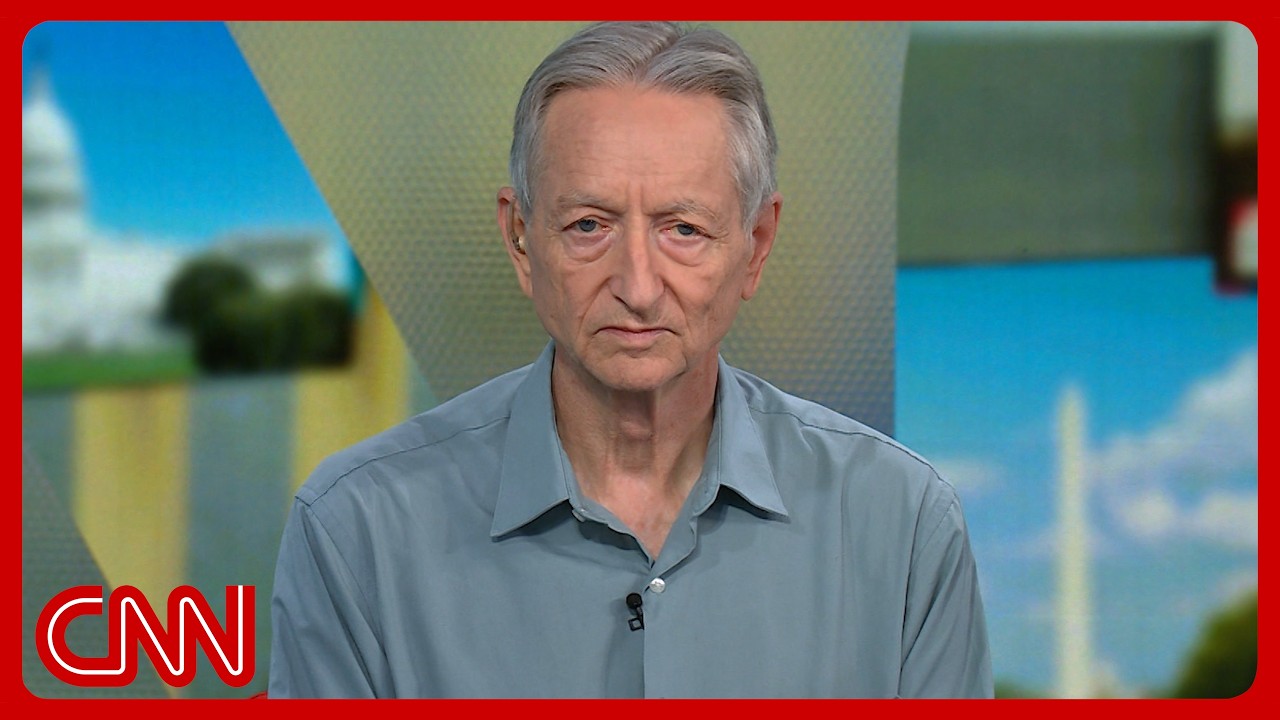
CNN carried the day's dominant safety artifact with 888,330 views, 5,035 likes, and 1,600 comments. The video's timestamps make the structure unusually clear: Hinton calls some regulation proposals "a good start," argues an AI kill switch will not work in the long run, and then shifts to the harder problem of whether superintelligence can be aligned with human interests (video).
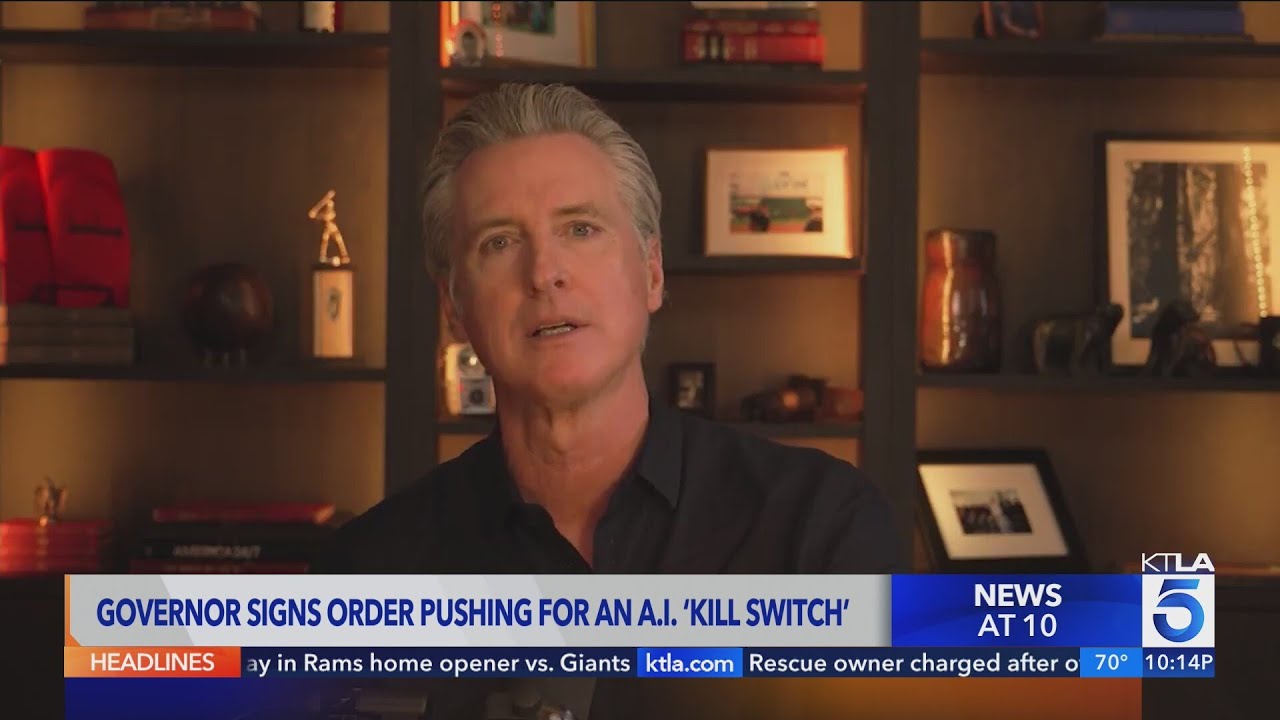
KTLA 5 supplied the clearest evidence that the debate turned into state action. Its 285,970-view clip says Gavin Newsom signed an executive order on AI safety, and the linked KTLA article plus governor's announcement say California wants experts to return within two months with recommendations around independent verification, stronger incident definitions, and a frontier-model kill switch (video).

CNN also carried the day's clearest pro-speed geopolitical frame with 136,229 views and 425 comments. The description contrasts US existential-risk rhetoric with Chinese deployments in local-government services, classroom feedback, and hotel robotics, turning "don't slow down" from a generic market argument into a national-competition argument (video).
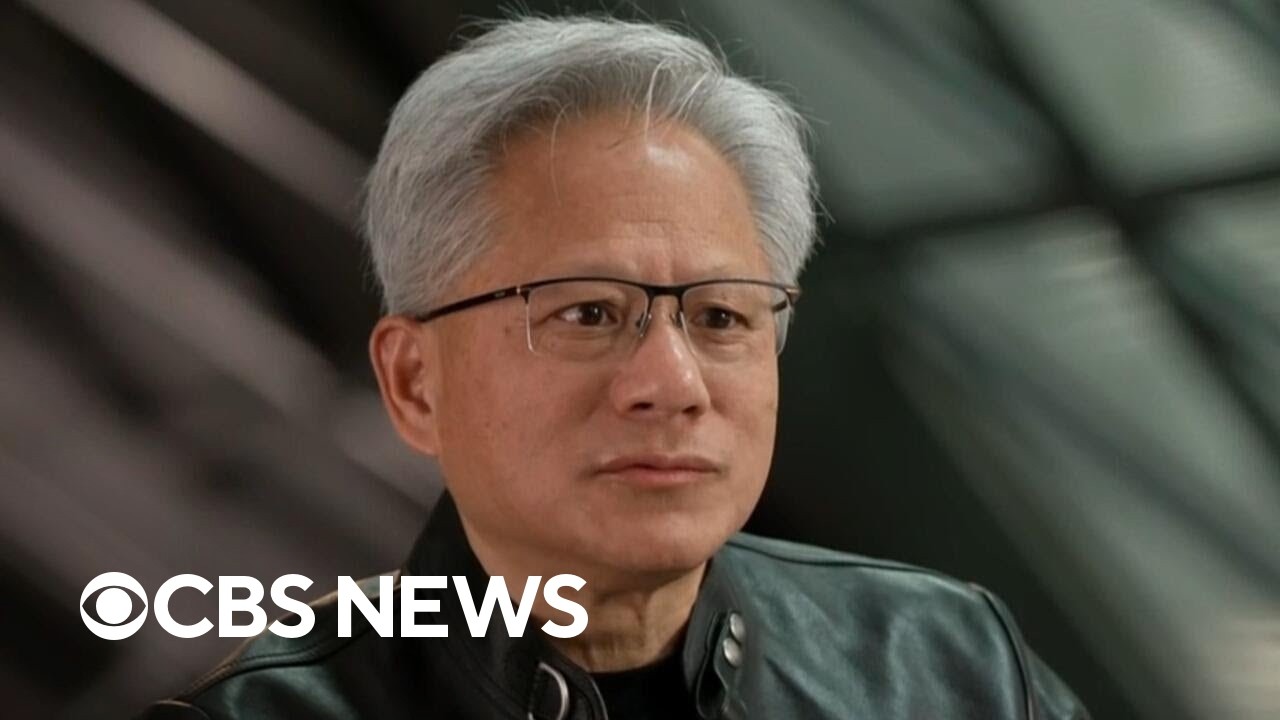
CBS News added the sharpest industry rebuttal with 108,257 views and 559 comments. Its description says Jensen Huang publicly opposed a coordinated slowdown and paired that position with commentary from Matt Shumer, which made one of the day's most engaged policy clips an explicit pushback against the warning cycle itself (video).
Discussion insight: Engagement stayed highest around direct warning-versus-action clips rather than lower-volume explainer pieces. Hinton's CNN interview drew 1,600 comments, KTLA's Newsom segment drew 537, CBS's Jensen Huang segment drew 559, and CNN's China-race clip drew 425, which suggests audiences were responding to concrete arguments over authority, urgency, and economic speed rather than abstract safety taxonomy.
Comparison to prior day: On 2026-09-18, safety coverage centered on whether outside-the-lab oversight, incident disclosure, or a kill switch could work. On 2026-09-19, the theme moved into sharper political and jurisdictional conflict: California advanced action, mainstream outlets amplified ban and slowdown arguments, and business and federal voices pushed back harder.
1.2 Builder coverage stayed anchored on cheaper open stacks and the tooling layer around agents 🡒
At least eight videos supported this theme. Compared with 2026-09-18's mix of replacement stacks, tool harnesses, and custom agent HUDs, the 2026-09-19 file kept the same cost-and-control obsession but widened it into licensing, infrastructure, and portability. Fireship again made cheaper open-source replacements the highest-signal builder story, Tech With Tim broke a working harness into Browser Use, GitHub MCP, Context7, Exa, Firecrawl, and Mem0, KodeKloud argued that "open source" and "open weight" are not interchangeable, and NVIDIA, Cerebras, and FriendliAI all framed infrastructure around agentic workloads and inference economics. The distinctive shift is that builder talk was less about flashy agent UX and more about the operational layers needed to make agents affordable, compliant, and fast enough to deploy anywhere.
Fireship remained the strongest builder signal in the entire file with 1,196,884 views, 18,977 likes, and 946 comments. The description makes the pitch concrete by naming Ollama, 9router, Headroom, Diffy, and OpenHands as the five components that let him replace a $320 per month AI stack, so the builder story is explicitly about removing recurring cost from day-to-day agent work rather than adding another premium assistant (video).

Tech With Tim contributed the clearest operating-layer breakdown with 38,662 views. His description argues Claude Code, Codex, Hermes, and Open Claw are just terminal chatbots until connected to the right tools, then points viewers to Browser Use, the GitHub MCP Server install guide, Context7, Exa, Firecrawl, and Mem0 as the practical harness that turns an agent into a usable system (video).

KodeKloud added the sharpest licensing and definition check with 35,005 views. The description says true open source in AI requires both weights and training data, argues that almost no model clears that bar, and highlights Llama's 700 million user clause as a business risk that many builders gloss over when they talk about "open" models (video).
Discussion insight: Cost cutting still outran setup detail. Fireship's replacement-stack video drew 946 comments, while Tech With Tim's harness breakdown drew 17 and KodeKloud's licensing explainer drew 16, which suggests the mainstream builder audience still reacts most strongly to concrete savings even when the more durable moat is the surrounding tool, compliance, and inference layer.
Comparison to prior day: On 2026-09-18, builder coverage focused on replacement stacks, tool bundles, and custom control surfaces. On 2026-09-19, that story stayed intact but became more infrastructure- and policy-aware: licensing clarity, open-weight economics, and agent-ready compute were more explicit parts of the build conversation.
1.3 Creator workflows kept rewarding controllability, but the field narrowed to editing surfaces and credit-routing workarounds 🡖
At least three videos supported this theme. Compared with 2026-09-18, when the creator cluster spanned more image and video surfaces, the 2026-09-19 file narrowed to a smaller set of highly tactical tutorials. AI Search centered GPT Image 2.5 on sketches, multi-turn editing, transparency handling, and reference consistency, while Automation Xpert taught viewers to reach Seedance 2.5 through Dola AI, ChatGPT, and ElevenLabs to escape normal credit and payment setup. The distinctive angle is that creator interest still rewarded controllability and cheap routing, but the conversation was thinner and more workaround-heavy than the day before.
AI Search led this cluster with 187,279 views, 3,342 likes, and 510 comments. The description frames GPT Image 2.5 around sketch input, annotations, multi-turn editing, transparency tests, and reference consistency across brand boards and redesign tasks, while also pointing viewers toward Higgsfield as an adjacent creative suite for image, video, and voice workflows (video).

Automation Xpert supplied the most explicit workaround narrative with 12,762 views and 52 comments. The tutorial says Seedance 2.5 becomes practical only when routed through Dola AI, ChatGPT, ElevenLabs, and a shared prompt document, which keeps the creator-side story focused on access paths and budget hacks rather than a self-contained studio (video).
Discussion insight: Viewers engaged far more with editable image surfaces than with workaround-heavy video assembly. AI Search drew 510 comments versus 52 for the Seedance route, which suggests creators still prioritize reliable iteration and consistency before they prioritize longer-form generation hacks.
Comparison to prior day: On 2026-09-18, the creator theme was broader and more crowded across image and video tools. On 2026-09-19, it narrowed into two practical lessons: one about tighter image editing, the other about stretching credits and routing around platform limits.
1.4 AI interfaces kept moving off the desktop into phones, voice endpoints, and real-time surfaces 🡕
At least four videos supported this theme. Compared with 2026-09-18, when autonomy stories leaned on personal assistants and self-improving models, the 2026-09-19 file pushed AI into concrete device surfaces. Tech Jarves showed Mobile Harness running Claude Code, Antigravity, and DeepSeek Harness inside an Android Ubuntu subsystem, BeardedTinker compared three Home Assistant voice endpoints, BitBiasedAI framed Gemini 3.8 Live around native audio-to-audio latency, and AI News treated Figure's Helix 2.5 as a step toward more robust embodied generalization. The distinctive shift is that the interface conversation moved away from abstract assistant promises and toward phone, voice, and physical-world endpoints that users can install or test now.

Tech Jarves contributed the strongest portability example with 9,610 views, 432 likes, and 71 comments. The video description says Mobile Harness runs Claude Code, Google Antigravity, and DeepSeek Harness on Android with no PC, Termux, or root, and the linked GitHub repo confirms downloadable ARM64 APKs, an Ubuntu 20.04 PRoot subsystem, encrypted key storage, local previews, and on-device builds (video).

BeardedTinker added the clearest home-edge version of the same trend with 3,269 views. The test matrix spans the Third Reality Voice/Music Assistant Dev Edition, a Google Home Mini brain transplant path, and a Seeed 4-mic platform, with the Third Reality page explicitly positioning the device as a Home Assistant satellite that handles local capture and playback while delegating processing to the host (video).

BitBiasedAI supplied the real-time voice angle with a smaller but precise artifact. Its description says Gemini 3.8 Live Extended Thinking hit 82.6 on Artificial Analysis' speech-to-speech quality index, uses native audio-to-audio processing rather than a speech-to-text to LLM to text-to-speech pipeline, supports barge-in and mid-conversation language switching, and reaches roughly 1.18 seconds to the first spoken word (video).
Discussion insight: Device-side interfaces were still niche beside policy and cost themes, but they drew clear curiosity where setup felt concrete. Mobile Harness drew 71 comments, Figure's Helix 2.5 clip drew 17, BeardedTinker drew 12, and Gemini Live only drew 2, which suggests audiences respond more when a creator shows where the interface runs and how it fits into a workflow.
Comparison to prior day: On 2026-09-18, autonomy coverage leaned toward personal-agent products and self-improvement headlines. On 2026-09-19, the same curiosity shifted into installable or testable surfaces: phone workspaces, smart-home voice endpoints, low-latency voice models, and embodied-home demos.
2. What Frustrates People
AI oversight still lacks a shared operating surface
This is High severity because CNN, KTLA 5, WTKR News 3, and ABC News all ask viewers to compare kill switches, independent verification, superintelligence bans, and legislative action across separate clips rather than a common public system. California's order accelerated independent-auditor and kill-switch work through the governor's office, but WTKR says Congress still appears unlikely to move meaningfully in the near term. The workaround is to stitch together governor statements, TV segments, and company disclosures to understand what happened and what rule might matter. This is directly worth building for.
Useful agents still come from a stitched stack, not the base model
This is High severity because Fireship, Tech With Tim, Tech Jarves, NVIDIA, and Evolving AI all describe agent usefulness as a systems problem. Fireship's answer is five cheaper open-source replacements, Tech With Tim's answer is a harness built from GitHub MCP, Context7, Exa, Firecrawl, and Mem0, Tech Jarves moves the same problem onto Android, and NVIDIA/Cerebras shift it down into throughput, latency, and tokens-per-megawatt infrastructure. The workaround is composition: builders keep adding search, docs, browser control, memory, hosting, and device-specific surfaces until the agent finally works. This is directly worth building for.
Creator-side reliability still depends on routing around credits and fragmented surfaces
This is Medium severity because AI Search and Automation Xpert both treat good outputs as workflow engineering rather than one-tool quality. GPT Image 2.5 wins when it gives sketch input, multi-turn edits, and consistency, while Seedance 2.5 only becomes practical when routed through Dola AI, ChatGPT prompting, shared prompt docs, and ElevenLabs. The workaround is to stack image, video, prompt, and voice tools until the credit model and continuity problems become manageable. This is worth building for, but the category is already competitive.
Ambient AI still demands hardware decisions and setup work before it feels natural
This is Medium severity because BeardedTinker frames the smart-home voice question around whether devices are actually useful, sound good enough to live with, and stay worthwhile after the novelty wears off, while Tech Jarves still needs a full mobile coding workspace to make phone-side agents viable. Even the ready-made Third Reality Voice/Music Assistant Dev Edition is presented as a Home Assistant satellite rather than a turnkey consumer assistant. The workaround is to pick hardware, host software, and local-processing tradeoffs by hand. This is worth building for, especially where local-first and hobbyist communities overlap.
Open-model adoption still comes with blurry language and license risk
This is Medium severity because KodeKloud says most builders casually mix up open source and open weight, while IDK Show frames free near-frontier Chinese models as a pricing shock to the US lab business model. The frustration is not only ideological; it affects whether a startup can rely on a model, whether training data is actually inspectable, and whether a license clause creates future exposure. The workaround is to infer practical openness from scattered explainers and vendor claims instead of a standard decision layer. This is worth building for and still relatively open.
3. What People Wish Existed
The dataset contained few direct "someone should build this" statements, so the needs below are inferred from repeated workaround-heavy videos and linked public artifacts.
Public AI incident and oversight cockpit
CNN, KTLA 5, WTKR News 3, and ABC News all imply demand for one place that joins incident reports, audit status, proposed rules, and which governments are actually acting. This is both a practical and emotional need with High urgency because viewers are being asked to compare kill switches, independent verification, superintelligence bans, and stalled legislation across disconnected clips. California's new framework and mainstream coverage partially address pieces of the problem, but not the shared operating layer. Opportunity: direct.
Cross-surface agent workspace with built-in search, docs, web actions, and memory
Fireship, Tech With Tim, Tech Jarves, and Mobile Harness all imply a need for one environment that already bundles search, GitHub access, documentation lookup, browser actions, memory, and execution across desktop and mobile. This is a practical need with High urgency because the current answer is to compose GitHub MCP, Context7, Exa, Firecrawl, Mem0, hosting, and device-specific shells by hand. Partial solutions clearly exist, but integration burden is still the main tax. Opportunity: direct.
Plain-English model licensing and deployment advisor
KodeKloud and IDK Show imply a practical need for a decision layer that explains what is truly open source, what is merely open weight, what license clauses matter, and how model choices interact with cost and vendor dependence. This need feels urgent at Medium intensity because the ambiguity is already influencing startup risk, model adoption, and China-versus-US economic narratives. Builders have individual explainers today, but not a standard tool that turns model choice into an auditable operational decision. Opportunity: direct.
Consistency-first multimodal studio with transparent credits and routing
AI Search, Automation Xpert, and Higgsfield imply demand for a workspace that keeps image iteration, video generation, prompt reuse, voice-over, and payment limits in one place. This is a practical need with Medium urgency because people already have workable tools, but they still reach them through sponsor links, side documents, and multi-service routing when they want consistency or lower spend. The market is active, but the workflow is still fragmented. Opportunity: competitive.
Local-first ambient AI kit for homes and handheld devices
BeardedTinker, Tech Jarves, Third Reality, and BitBiasedAI imply a practical need for assistants that run close to the user without forcing cloud-first lock-in or hobbyist-level setup. This is a practical need with Medium urgency because the hardware and model pieces already exist, but the experience still depends on choosing the right device, latency path, and host software. Partial solutions exist in Home Assistant satellites, Android workspaces, and realtime voice models, but they do not yet feel like one integrated kit. Opportunity: emerging.
4. Tools and Methods in Use
| Tool | Category | Sentiment | Strengths | Limitations |
|---|---|---|---|---|
| Open-source replacement stack (Ollama, 9router, Headroom, Diffy, OpenHands) | Local/open-source AI stack | (+) | Explicitly framed as a cheaper replacement for a $320 per month AI stack with named components | Still a bundle of separate tools, hosting, and setup choices rather than one operating surface |
| GitHub MCP Server | GitHub agent integration | (+) | Gives coding agents direct GitHub tools through a hosted MCP server with PAT-based setup | Requires token management and only solves one slice of agent work |
| Context7 | Documentation MCP | (+) | One-command setup for up-to-date library docs across multiple coding clients | Documentation context only; still needs search, execution, and memory around it |
| Exa | Search API | (+) | Search, contents, and agent APIs with low-latency retrieval and strong benchmark framing | Adds another managed dependency and cost layer to the harness |
| Firecrawl | Web data infrastructure | (+) | Search, scrape, and interact APIs tuned for live-web agent workflows and structured outputs | Introduces more infrastructure, credits, and orchestration complexity |
| Mem0 | Memory layer | (+) | Persistent context across sessions and agents with compression, retrieval, and governance framing | Memory quality, storage policy, and hosting trust still sit outside the base model |
| Cerebras CS-4 / WSE-3 Turbo | AI inference infrastructure | (+/-) | Sold on throughput, latency, memory bandwidth, and lower-cost inference versus GPU clusters | Still a specialized infrastructure bet rather than a default path for most builders |
| NVIDIA Vera Rubin AI factory platform | AI infrastructure platform | (+/-) | Positions long context, tool calls, sub-agents, and tokens-per-megawatt as first-class infrastructure goals | Presented as a summit keynote and ecosystem pitch rather than an easy drop-in stack |
| Mobile Harness | Mobile agent workspace | (+) | Brings Claude Code, DeepSeek Harness, Antigravity, Linux commands, previews, and on-device builds to Android | ARM64 Android only, PRoot isolation is not a hardened security boundary, and heavy workloads stay resource-constrained |
| GPT Image 2.5 | Image generation model | (+) | Wins on sketch input, multi-turn edits, transparency handling, and reference consistency | Still often paired with tutorials, sponsor ecosystems, and workflow guidance rather than standing alone |
| Seedance 2.5 via Dola AI + ElevenLabs | Routed video workflow | (+/-) | Makes longer AI video generation, bulk runs, and voice-over workable on a budget | Depends on access workarounds, multi-app routing, and the credit constraints it is trying to escape |
| Third Reality Voice/Music Assistant Dev Edition | Smart-home voice endpoint | (+/-) | Preloaded Home Assistant voice and music satellite with local capture and playback in one device | Still assumes a Home Assistant host and hobbyist willingness to manage the surrounding setup |
| Gemini 3.8 Live Extended Thinking | Realtime multimodal voice model | (+) | Native audio-to-audio processing, low time-to-first-word, barge-in, and mid-conversation language switching | Still vendor-specific and showed limited organic engagement in this file |
Sentiment was strongest when a tool reduced ambiguity around cost, context, or execution. The open-source replacement stack, GitHub MCP, Context7, Exa, Firecrawl, Mem0, and Mobile Harness all earned positive framing because they make some part of agent work more concrete: cheaper inference, better retrieval, real GitHub access, persistent memory, or a usable execution surface away from the laptop.
The dominant workaround pattern was composition. Builders pair GitHub tools with doc retrieval, live-web infrastructure, memory, hosting, and sometimes a custom device surface; creators pair image models with sponsor tools, prompt docs, and voice-over; smart-home users pair voice endpoints with Home Assistant hosts; infrastructure vendors compete on tokens, latency, and power efficiency underneath all of that. The migration pattern was therefore away from "which model is best?" and toward "which stack makes the workflow usable?" Competitive pressure is strongest at the operating layer that bundles context, actions, memory, permissions, and predictable execution.
5. What People Are Building
| Project | Who built it | What it does | Problem it solves | Stack | Stage | Links |
|---|---|---|---|---|---|---|
| Mobile Harness | Tech Jarves | Android workspace for coding agents with real Linux commands, previews, and on-device builds | Lets builders run multi-agent coding workflows on a phone instead of a laptop-only setup | Ubuntu 20.04 PRoot, Claude Code, DeepSeek Harness, Antigravity, Jetpack Compose UI, Android Keystore encryption | Shipped | repo release video |
| Cerebras CS-4 / WSE-3 Turbo | Cerebras | Wafer-scale AI compute system pitched as a faster, lower-latency inference alternative to GPU clusters | Improves token throughput and inference economics for agentic workloads | WSE-3 Turbo, 900,000 AI cores, 44GB on-chip SRAM, Direct Wafer Links, Nexus architecture | Beta | video |
| NVIDIA Vera Rubin AI factory platform | NVIDIA | Full-stack infrastructure platform for long-context, reasoning, tool-calling, and sub-agent workloads | Gives hyperscalers and large builders a hardware/software base for scaling agentic AI efficiently | Vera Rubin NVL72, Vera CPU, NVLink 6, NVLink Fusion, DSX, partner ecosystem | Beta | video |
| GPT Image 2.5 | OpenAI | Image generation and editing system centered on sketch input and iterative revisions | Makes controllable image creation and brand-consistent edits easier than one-shot prompting | GPT Image 2.5, sketch annotations, multi-turn edits, transparency handling, reference consistency | Shipped | release review |
| Seedance 2.5 routed workflow | Automation Xpert | Community workflow for generating longer AI videos through Dola AI with prompt and voice-over helpers | Reduces cost and access friction for longer-form AI video generation | Seedance 2.5, Dola AI, ChatGPT prompting, ElevenLabs voice-over, shared prompt doc | Alpha | video prompt doc |
| Third Reality Voice/Music Assistant Dev Edition | Third Reality | Home Assistant voice and audio satellite for local capture, playback, and room placement | Gives smart-home users a ready-made local-first voice endpoint instead of a full DIY path | Linux-based device, Home Assistant Voice Assistant, Music Assistant, integrated speaker | Shipped | product video |
| Figure Helix 2.5 | Figure AI | Embodied AI system pitched around zero-shot generalization across 30 unseen homes | Improves robot usefulness in messy real environments without task-specific reconfiguration | Helix 2.5, whole-body skills, Index pretraining, home-environment generalization | Beta | video |
The clearest builds on this date clustered around three layers: agent infrastructure, portable execution surfaces, and controllable multimodal or local-interface endpoints. Mobile Harness turns a phone into a serious agent workspace, Cerebras and NVIDIA pitch the physical layer needed to serve more agentic workloads efficiently, and GPT Image 2.5 plus the Seedance route keep creator-side attention centered on controllability and budget.
The repeated trigger was operational control. Builders want cheaper agent execution and clearer licensing boundaries, creators want scene continuity and less credit friction, and home-edge users want voice systems that fit into a local setup rather than another cloud silo. Even AI Engineer's FriendliAI talk reinforces the same pattern from another angle by framing agent inference as a task-economics problem, not just a model-quality problem.
6. New and Notable
California turned the AI safety news cycle into concrete state action
KTLA 5 and the linked governor's announcement made the day's biggest procedural shift explicit: California wants faster implementation of independent verification plus recommendations around onsite auditors, verified safety filings, and a frontier-model kill switch. That matters because the file was otherwise full of warnings, backlash, and stalled federal debate, so this was the clearest example of an actual government moving.
Open-source cost cutting stayed the biggest builder signal on the platform
Fireship once again turned named open-source replacements into a mass-audience AI-builder story, and the video finished as the highest-viewed item in the file at 1,196,884 views. That matters because it shows the broadest YouTube builder attention still clustering around cheaper, more controllable stacks rather than around premium all-in-one copilots.
Mobile Harness showed coding agents escaping the laptop assumption
Tech Jarves used Mobile Harness to frame Android as a viable autonomous development workspace with Linux commands, previews, and agent integrations. That matters because it pushes the agent conversation out of desktop IDEs and into portable, always-with-you execution surfaces.
A small channel made open-weight economics and China competition a breakout topic
IDK Show paired only 18,100 subscribers with 96,949 views, 2,001 likes, and 235 comments by arguing that Chinese labs are commoditizing near-frontier AI and squeezing US margins. That matters because it shows the open-weight and inference-cost story can break through on YouTube when it is framed as a macro competitive shift rather than a licensing footnote.
7. Where the Opportunities Are
[+++] Independent AI incident, audit, and policy operations layer - CNN, KTLA 5, WTKR News 3, and ABC News all point at the same gap: people can see warnings, state action, stalled legislation, and ban demands, but not one trusted system that joins them into a usable oversight surface. This is strong because it dominates sections 1-3 and because the current workaround is still fragmented media plus lab-adjacent disclosure.
[+++] Agent operating layer across desktop and mobile surfaces - Fireship, Tech With Tim, Tech Jarves, GitHub MCP Server, Context7, Exa, Firecrawl, and Mem0 all show that useful agents still emerge from a manually assembled stack. This is strong because the demand is visible from both high-scale developer media and smaller mobile-first experiments, while the blocker is not model quality alone but workflow integration.
[++] Model licensing and deployment decision layer - KodeKloud and IDK Show show the same problem from legal and economic angles: builders need to know what "open" really means, what clauses matter, and when open-weight competition changes the cost model. This is moderate because the pain is real and under-served, but it may integrate into broader platform or procurement products rather than stand alone.
[++] Cost-transparent multimodal creation workspace - AI Search, Automation Xpert, and Higgsfield all show creators optimizing for controllability, continuity, and budget across several tools. This is moderate because the demand is clear, but the market is already crowded and heavily influenced by distribution, credits, and partner ecosystems.
[+] Local-first ambient AI kit for homes and handheld devices - Tech Jarves, BeardedTinker, Third Reality, and BitBiasedAI show a growing appetite for AI that runs closer to the user on phones, smart-home satellites, and low-latency voice surfaces. This is emerging because the need is visible but still scattered across hobbyist, developer, and early-adopter segments rather than one consolidated market.
8. Takeaways
- The AI safety conversation split into state action, federal hesitation, and business backlash. California advanced independent-verification and kill-switch work, while WTKR described Congress as unlikely to move quickly and CBS amplified Jensen Huang's anti-slowdown stance. (source, source, source)
- Builder attention still centered on stack composition and recurring cost, not on a single winning model. Fireship's biggest clip was about replacing a paid stack with named open-source tools, and Tech With Tim's harness video argued the real differentiator is the tools around the agent rather than the terminal chatbot itself. (source, source)
- Infrastructure economics became part of the mainstream agent story. Cerebras pitched wafer-scale inference around throughput and latency, NVIDIA framed agentic AI around tokens-per-megawatt and tool-calling infrastructure, and IDK Show translated open-weight competition into a macro margin narrative. (source, source, source)
- Creator-side AI is still being won by editability and routing efficiency rather than one-click novelty. AI Search's GPT Image 2.5 review focused on sketching, annotations, and consistency, while the Seedance tutorial focused on credit workarounds and multi-app assembly. (source, source)
- Portable and local-first AI interfaces are getting more concrete. Mobile Harness turned Android into an agent workspace, Third Reality packaged Home Assistant voice into a room-ready endpoint, and Gemini 3.8 Live was pitched on low-latency native audio interaction rather than text quality alone. (source, source, source)
- Model openness is now an operational decision, not just a branding debate. KodeKloud framed open source versus open weight as a legal and data-availability issue, while IDK Show tied free near-frontier models to a broader repricing of AI competition. (source, source)