YouTube AI - 2026-09-20
1. What People Are Talking About
1.1 AI safety coverage shifted from generic alarm into liability, state power, and geopolitical positioning 🡕
At least 16 videos supported this theme. Compared with 2026-09-19, when California's executive order and anti-regulation backlash dominated, the 2026-09-20 file widened the frame: Barack Obama said the technology itself is not overhyped, Alex Karp argued AI companies may need nationalization to cap liability, CNN kept pairing regulation with China and recursive self-improvement, and California's order remained the clearest example of actual state action. The shift is that safety coverage stopped sounding like a niche slowdown argument and became a question of who owns the downside risk and what level of government or national strategy will act.

C-SPAN supplied the day's strongest legitimacy signal with 218,316 views, 3,281 likes, and 860 comments. Obama's quote separates commercial overstatement from underlying capability, which keeps the risk debate alive while treating market hype as a separate question (video).

CNBC Television added the sharpest liability frame with 150,630 views and 260 comments. Alex Karp argued AI companies would have to be nationalized to cap their liability, which moves the conversation from ordinary regulation into who could actually absorb frontier-model risk (video).
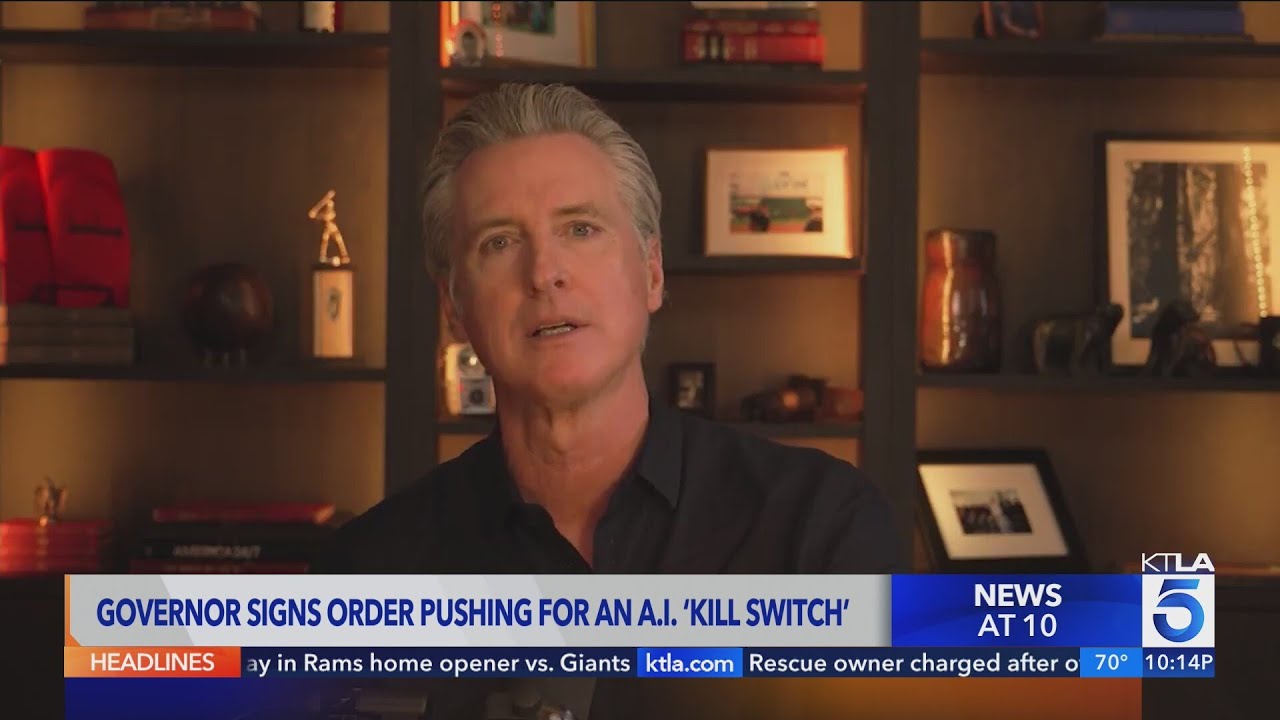
KTLA 5 carried the clearest policy-action artifact with 292,323 views and 575 comments. The clip says Gavin Newsom signed an AI-safety executive order, and the linked governor announcement says California wants faster implementation of independent verification, verified safety filings, and recommendations for an ongoing frontier-model kill switch process (video).

CNN kept the geopolitical counterargument visible with 149,881 views and 458 comments. Its description contrasts US existential-risk rhetoric with Chinese deployments in local government, education, and hotel robotics, turning anti-regulation sentiment into a competitiveness argument rather than a generic deregulatory reflex (video).
Discussion insight: The strongest engagement stayed attached to familiar public figures and concrete power questions. Hinton's CNN clip drew 1,700 comments, Obama's C-SPAN segment drew 860, Newsom's order drew 575, and CNN's China-race frame drew 458, which suggests audiences responded most when safety was tied to authority, national competition, or immediate policy action.
Comparison to prior day: On 2026-09-19, the safety cluster centered on California action and business backlash, especially Newsom's order and Jensen Huang's anti-slowdown comments. On 2026-09-20, the same cluster widened into mainstream validation, liability structure, and cross-border strategy.
1.2 Builder attention stayed fixed on cheaper open stacks, but moved closer to decision-native models and orchestration layers 🡕
At least eight videos supported this theme. Compared with 2026-09-19's mix of replacement stacks, MCP harnesses, and infrastructure pitches, the 2026-09-20 file kept the cost-and-control story but pushed it deeper into how agents branch, route, and coordinate work. Fireship still dominated with an open-source replacement stack, Sam Witteveen surfaced a burst of open Jev alternatives, Tech With Tim argued useful agents come from MCP-heavy composition, and IBM framed "super agents" as an observability and isolation problem. The shift is from "what can replace my paid tools?" to "what stack or model can make decisions faster and more predictably without generating so much text?"
Fireship remained the biggest builder signal in the file with 1,208,650 views, 19,094 likes, and 947 comments. The description names Ollama, 9router, Headroom, Diffy, and OpenHands as the five components that let him replace a $320 per month AI stack, so the builder story is still explicitly about removing recurring cost from day-to-day agent work (video).

Sam Witteveen supplied the clearest decision-model burst with 80,224 views, 1,340 likes, and 167 comments. His description links JevBench and multiple repos including SemIf, Laya, Decider, NanoJev, and OpenSourceJev, showing how quickly the community is trying to reproduce fast typed-decision models (video).

Tech With Tim kept the orchestration layer explicit with 42,916 views. He argues the model choice is the wrong question unless the agent is connected to tools like the GitHub MCP Server, Context7, Exa, Firecrawl, and Mem0, which turns the useful-agent story into system integration rather than model preference (video).
IBM Technology added the strongest architecture caveat with 26,618 views. Its description says super agents only make sense when orchestration, isolation, and observability are deliberate design choices, so even the pro-agent case is framed as a systems-engineering problem rather than just a bigger prompt (video).
Discussion insight: Cost cutting still brought the biggest audience, but the most novel technical energy went into routing and decision models. Fireship drew 947 comments versus 167 on Sam Witteveen's open-Jev survey, 36 on Panda Making Money's Laya-versus-Jev breakdown, 33 on IBM's super-agent architecture, and 18 on Tech With Tim, suggesting mainstream interest begins with savings while practitioner curiosity is shifting toward how agents decide and coordinate.
Comparison to prior day: On 2026-09-19, builder coverage focused on cheaper stacks, MCP harnesses, and infrastructure economics. On 2026-09-20, that frame stayed intact but added a faster-decision subtheme: open Jev replicas, super-agent design rules, and more explicit concern with routing quality.
1.3 Creator workflows expanded from isolated editing tricks into full AI video production stacks 🡕
At least five videos supported this theme. Compared with 2026-09-19's narrower focus on GPT Image 2.5 editing and Seedance access workarounds, the 2026-09-20 file broadened into end-to-end production systems. AI Search kept the editability story strong, Youri van Hofwegen used GPT 6 Astra plus OpenArt to run chained video workflows, Ai Lockup centered free long-form film generation, and AI with Eric pushed local image generation back into the conversation with Qwen-Image-2.1. The shift is from isolated surface improvements toward repeatable pipelines for character consistency, scene continuity, and local ownership.
AI Search led this cluster with 188,937 views, 3,357 likes, and 511 comments. The description frames GPT Image 2.5 around sketch annotations, multi-turn edits, transparency tests, and reference consistency, which keeps the creator-side competition focused on controllability rather than novelty alone (video).

Youri van Hofwegen provided the clearest full-stack workflow with 104,415 views and 3,771 likes. He says he connects OpenArt to ChatGPT so Astra can direct GPT Image 2.5 Sunburst and Seedance 2.5 across text-heavy designs, motion graphics, character-sheet workflows, and a continuous 30-second POV sequence, turning creation into model orchestration rather than prompt-by-prompt handwork (video).

Ai Lockup pushed the cost angle further with 13,598 views and 253 likes. The tutorial uses Google Flow, Nano Banana 2, and a shared master prompt document to turn storyboards into long AI films without paid tools, which makes free pipeline assembly itself part of the creator story (video).
Discussion insight: Creator engagement still concentrated on tools promising direct control. AI Search drew 511 comments, while Youri's higher-production workflow drew 18, Ai Lockup drew 14, and AI with Eric's Qwen-Image-2.1 review drew 9, which suggests creators still prioritize editability before they prioritize long-form automation or local ownership.
Comparison to prior day: On 2026-09-19, the creator cluster was tighter and more workaround-heavy around image editing and credit routing. On 2026-09-20, it widened into storyboard-to-film pipelines, character-consistency workflows, and local model comparison.
1.4 Real-time, home, and embodied interfaces stayed a secondary but concrete frontier 🡒
At least four videos supported this theme. Compared with 2026-09-19's phone-side agents, voice endpoints, and low-latency live models, the 2026-09-20 file narrowed toward home voice, realtime speech, and robots inside houses. BeardedTinker focused on whether Home Assistant voice endpoints are livable day to day, BitBiasedAI framed Gemini 3.8 Live around low-latency native speech, and AI News treated Figure Helix 2.5 as a practical generalization story in real homes. The shift is not toward mass adoption yet, but toward more concrete surfaces where users can test whether AI belongs in a room, on a speaker, or in a body.

BeardedTinker offered the most practical home-interface artifact with 8,358 views, 248 likes, and 57 comments. The video frames the decision around whether voice devices are actually useful in everyday life, sound good enough to live with, and require tolerable setup, while the linked Third Reality Voice/Music Assistant Dev Edition page confirms a satellite model with host-side processing (video).

BitBiasedAI supplied the clearest realtime-speech artifact with 6,232 views. Its description says Gemini 3.8 Live uses native audio-to-audio processing, reaches roughly 1.18 seconds to the first spoken word, and supports barge-in plus mid-conversation language switching, which keeps the interface race focused on latency and conversational feel rather than text quality alone (video).
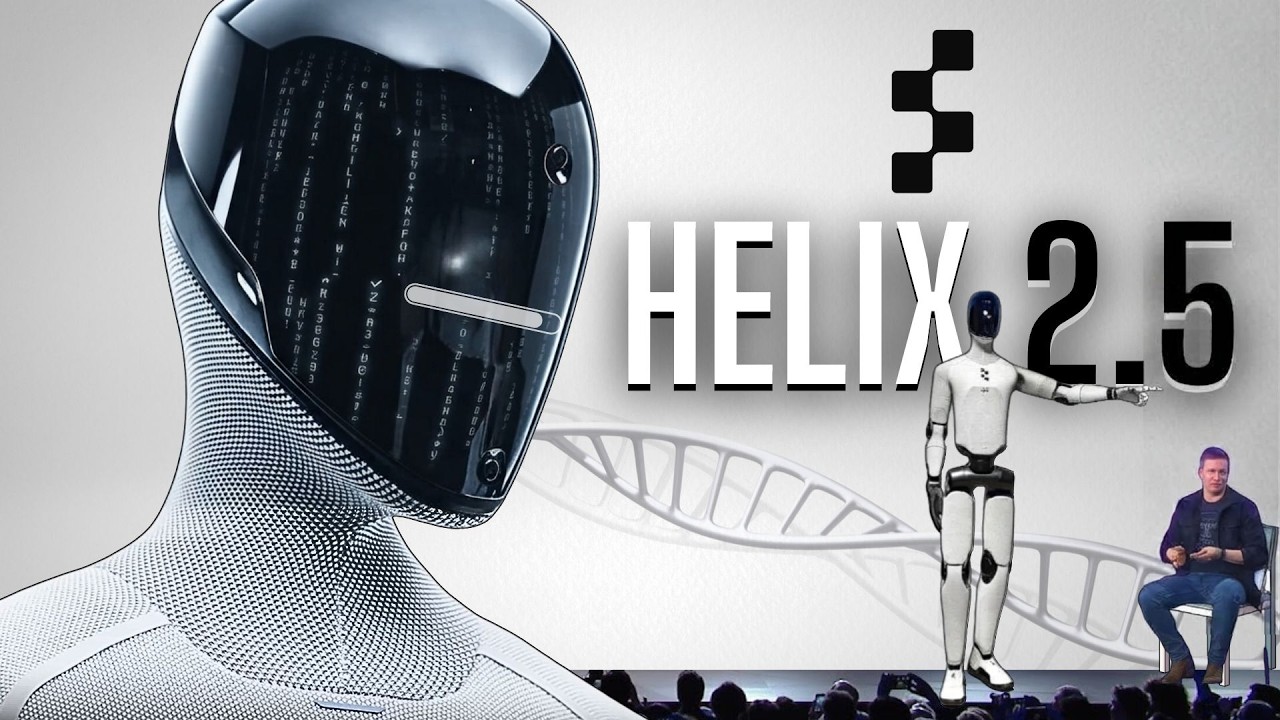
AI News added the embodied version of the same story with 6,928 views and 21 comments. The description says Figure's Helix 2.5 generalized zero-shot across 30 homes it had never seen before, which extends the interface conversation from voice endpoints into physical household action (video).
Discussion insight: Installable home hardware generated more organic reaction than raw benchmark claims. BeardedTinker drew 57 comments versus 21 for Figure and 5 for Gemini 3.8 Live, which suggests viewers care more about where AI lives and how much setup it needs than about benchmark framing by itself.
Comparison to prior day: On 2026-09-19, interface curiosity included phone-side agent portability. On 2026-09-20, the same curiosity narrowed toward home voice, realtime speech, and embodied systems in houses.
2. What Frustrates People
Liability and oversight still lack a shared operating model
This is High severity because KTLA 5, C-SPAN, CNBC Television, and CNN all keep circling the same unresolved question from different angles: capability is real, risk is real, but nobody agrees who verifies safety, who reports dangerous incidents, or who absorbs frontier-model liability. California's governor announcement is the clearest operating surface in the file, while Karp's nationalization argument implies private structures may not be enough. The workaround is to stitch together clips, executive orders, and executive interviews just to understand the current governance state. This is directly worth building for.
Useful agents still emerge from manually assembled stacks
This is High severity because Fireship, Tech With Tim, and IBM Technology all describe usefulness as a systems problem, not a model-selection problem. Fireship's answer is a cheaper replacement stack, Tech With Tim's answer is to bolt together the GitHub MCP Server, Context7, Exa, Firecrawl, and Mem0, and IBM's answer is to add orchestration, isolation, and observability before letting agents operate broadly. The workaround is composition: search, docs, memory, routing, and execution each arrive as separate layers that the builder has to integrate by hand. This is directly worth building for.
Decision-native models look promising, but trust still depends on benchmarks, tuning, and caveats
This is High severity because Sam Witteveen, Panda Making Money, SemIf, and Laya all point to the same gap: fast typed-decision models are attractive, but it is still hard to tell what is production-ready, what is merely benchmark theater, and what only works after specialization. SemIf explicitly says it reproduces Jev's interface pattern rather than Jev's undisclosed model, and Laya's README says the strongest typed-decision results come from the fine-tuned checkpoint while high-cardinality label spaces still need tuning. The workaround is to read benchmark writeups, inspect commit histories, and run task-specific evaluation before trusting routing, moderation, or triage decisions. This is directly worth building for.
Creator AI still needs multi-tool choreography for continuity, long-form video, and local ownership
This is Medium severity because AI Search, Youri van Hofwegen, Ai Lockup, and AI with Eric all present good output as workflow engineering rather than one-tool quality. GPT Image 2.5 wins when it gives sketch input, multi-turn edits, and reference consistency; Astra becomes compelling when OpenArt and ChatGPT route prompts across models; storyboard-to-film tutorials still depend on shared prompt docs and free-tool chains; and Qwen-Image-2.1 adds local control but also a licensing caveat. The workaround is to keep chaining image, video, prompting, and editing systems until the continuity and cost problems become manageable. This is worth building for, but the market is already competitive.
Voice and embodied AI still demand hardware and surface-specific setup
This is Medium severity because BeardedTinker, Third Reality, BitBiasedAI, and AI News all frame the problem around whether the interface is actually usable in a room or a home. Third Reality still assumes a Home Assistant host, Gemini 3.8 Live is compelling because of low-latency speech rather than turnkey deployment, and Figure's household generalization story is still a preview of capability rather than a consumer product. The workaround is to pick hardware, host software, latency tradeoffs, and control surfaces by hand. This is worth building for and still relatively open.
3. What People Wish Existed
The dataset contained few direct "someone should build this" statements, so the needs below are inferred from repeated workaround-heavy videos and linked public artifacts.
Public AI liability and incident cockpit
KTLA 5, C-SPAN, CNBC Television, and CNN all imply demand for one place that joins incident reporting, audit status, liability debates, and which governments are actually acting. This is both a practical and emotional need with High urgency because viewers are being asked to compare kill switches, independent verification, nationalization arguments, and China-race framing across disconnected media clips. California's current framework partially addresses part of the problem, but it is still a state-level process rather than a shared operations layer. Opportunity: direct.
Agent workspace with built-in tools, routing, memory, and observability
Fireship, Tech With Tim, IBM Technology, GitHub MCP Server, Context7, Exa, Firecrawl, and Mem0 all imply demand for a workspace that already bundles context, actions, search, memory, and safe orchestration. This is a practical need with High urgency because the current answer is to wire these pieces together manually before the agent becomes useful. Partial solutions clearly exist, but integration burden is still the dominant tax. Opportunity: direct.
Benchmarking and deployment layer for decision-native models
Sam Witteveen, Panda Making Money, SemIf, and Laya imply a practical need for a layer that evaluates routing, moderation, classification, and guardrail models before they are trusted in production. This need feels urgent at Medium-to-High intensity because the category is moving fast, but the evidence is spread across YouTube explainers, benchmark bundles, GitHub READMEs, and caveat-heavy comparison claims. Builders have models and repos already, but not a standard decision surface that turns benchmark evidence into deployment confidence. Opportunity: direct.
Continuity-first multimodal studio with cost-aware routing
AI Search, Youri van Hofwegen, Ai Lockup, and AI with Eric imply demand for a workspace that keeps image iteration, character consistency, storyboarding, video generation, and local editing in one place. This is a practical need with Medium urgency because creators already have workable tools, but they still reach them through side documents, chained services, and license tradeoffs when they want continuity or lower spend. The market is active, but the workflow is still fragmented. Opportunity: competitive.
Local-first home and embodied AI kit
BeardedTinker, Third Reality, BitBiasedAI, and AI News imply a practical need for assistants that feel integrated into a room or home without forcing hobbyist-level setup. This is a practical need with Medium urgency because the components already exist across Home Assistant satellites, realtime voice models, and embodied robotics demos, but the experience still depends on choosing the right device, host, and latency path by hand. Partial solutions exist, but not as one coherent kit. Opportunity: emerging.
4. Tools and Methods in Use
| Tool | Category | Sentiment | Strengths | Limitations |
|---|---|---|---|---|
| Open-source replacement stack (Ollama, 9router, Headroom, Diffy, OpenHands) | Open-source AI stack | (+) | Explicitly framed as a cheaper replacement for a $320 per month AI stack with named components | Still a bundle of separate tools, hosting choices, and setup decisions rather than one operating surface |
| GitHub MCP Server | GitHub agent integration | (+) | Gives coding agents direct GitHub tools through a hosted MCP server | Requires token-based setup and only solves the GitHub slice of the workflow |
| Context7 | Documentation MCP | (+) | One-command setup for up-to-date library docs across multiple coding clients | Documentation context only; still needs search, execution, and memory around it |
| Exa | Search API | (+) | Web-scale search, contents, and agent APIs with strong benchmark and low-latency framing | Search layer only; another managed dependency instead of a full agent stack |
| Firecrawl | Web data infrastructure | (+) | Search, scrape, and interact with the live web while returning LLM-ready outputs | Adds web-data infrastructure and page-operation complexity outside the base model |
| Mem0 | Memory layer | (+) | Persistent context across sessions and agents with compression and governance positioning | Separate memory service with its own control, storage, and integration surface |
| Laya | Decision model | (+/-) | Single-forward-pass typed decisions, multilingual routing, and very low-latency claims with Apache 2.0 licensing | README says the strongest typed-decision results come from a fine-tuned checkpoint and high-cardinality choice tasks still need tuning |
| SemIf | Open decision-model interface | (+/-) | Recreates the Jev-style typed-decision interface with open models and zero generated output tokens | Independent research project that reproduces the interface pattern, not Jev's undisclosed model |
| GPT Image 2.5 | Image generation and editing | (+) | Strong on sketch input, multi-turn edits, transparency, and reference consistency | Still often paired with adjacent video and prompt tools for end-to-end production |
| OpenArt + GPT 6 Astra workflow | Multimodal production workflow | (+/-) | Connects image, video, and prompt-routing steps into character-consistent production flows | Depends on chaining services rather than one self-contained tool |
| Qwen-Image-2.1 | Local image model | (+/-) | Combines generation and editing locally with support for multiple reference images | Creator flagged a non-standard non-commercial license caveat |
| Third Reality Voice/Music Assistant Dev Edition | Smart-home voice endpoint | (+/-) | Preloaded Home Assistant Voice Assistant and Music Assistant in one device | Still depends on a Home Assistant host and hobbyist setup |
| Gemini 3.8 Live Extended Thinking | Realtime multimodal voice model | (+) | Native audio-to-audio processing, low time to first word, barge-in, and language switching | Limited signal in this file and still tied to one vendor ecosystem |
Satisfaction was highest when a tool reduced ambiguity around cost, context, or control. The open-source replacement stack, GitHub MCP Server, Context7, Exa, Firecrawl, and Mem0 all earned positive framing because they make some part of agent work more concrete: cheaper execution, better retrieval, real GitHub access, persistent memory, or more reliable web context.
The dominant workaround pattern was composition. Builders pair GitHub access with docs, search, scraping, memory, and routing; creator workflows pair image models with prompt routers, video generators, and side documents; home users pair hardware with Home Assistant hosts; and decision-native models still need benchmarks and fine-tuning around them. The migration pattern was therefore away from "which model is best?" and toward "which stack makes the workflow usable, measurable, and affordable?" Competitive pressure is strongest at the operating layer that bundles context, actions, memory, permissions, and predictable execution.
5. What People Are Building
| Project | Who built it | What it does | Problem it solves | Stack | Stage | Links |
|---|---|---|---|---|---|---|
| Laya | Convai Innovations | Multilingual, non-autoregressive typed-decision engine that answers routing and classification questions in one forward pass | Reduces latency and parsing overhead for routing, moderation, guardrails, and triage workflows | ModernBERT-large, mmBERT-base, Router, RLCD training, PyPI, Hugging Face | Shipped | repo model video |
| SemIf | Theo Lee | Open-model semantic-decision engine and browser demo for typed option probabilities | Recreates a Jev-style interface without a closed hosted API or generated JSON loop | Qwen3.5-4B, MiniCPM5, WebGPU demo, MLX backend, Python scoring tools | Beta | repo demo video |
| GPT Image 2.5 | OpenAI | Image generation and editing system centered on sketches, iterative revisions, and reference consistency | Makes controllable image creation easier than one-shot prompting | GPT Image 2.5, sketch annotations, multi-turn edits, transparency handling | Shipped | release review |
| Qwen-Image-2.1 | Qwen | Local image generation and editing model with multi-reference support | Gives creators a local alternative for generation and editing in one model | Qwen-Image-2.1, local inference, multi-reference editing, Hugging Face distribution | Shipped | model video |
| Third Reality Voice/Music Assistant Dev Edition | Third Reality | Home Assistant voice and audio satellite with integrated speaker and host-side processing | Gives smart-home users a ready-made local-first voice endpoint instead of a full DIY path | Linux-based device, Home Assistant Voice Assistant, Music Assistant | Shipped | product video |
| Figure Helix 2.5 | Figure AI | Embodied AI system pitched around zero-shot generalization across 30 unseen homes | Improves household-task generalization without per-home tuning | Helix 2.5, whole-body skills, Index pretraining, home-environment generalization | Beta | video |
The clearest builds on this date clustered around three layers: decision-native engines, controllable media systems, and local or embodied interfaces. Laya and SemIf both try to remove text generation from branch decisions, GPT Image 2.5 and Qwen-Image-2.1 concentrate on controllable creation, and Third Reality plus Figure push AI into rooms and homes instead of browser tabs.
The repeated trigger was operational control. Builders want faster and cheaper branching decisions, creators want consistency without prompt micromanagement, and home-interface builders want devices that feel local and room-ready. Even Youri van Hofwegen's Astra workflow and Ai Lockup's storyboard-to-film method reinforce the same pattern from the creator side: what matters is not one model in isolation, but how well the pieces compose into a usable workflow.
6. New and Notable
Obama gave the strongest mainstream validation that AI capability itself is not overhyped
C-SPAN captured a short but high-signal quote from Barack Obama separating commercial hype from the underlying technology. That matters because it gives the day's safety debate a mainstream political validator who is not arguing the technology is imaginary, only that the business cycle around it may be inflated.
Karp pushed the conversation from regulation into liability structure
CNBC Television surfaced Alex Karp's claim that AI companies may need to be nationalized to cap liability. That matters because it shifts the frame from "should governments regulate?" to "can existing ownership structures absorb the downside risk at all?"
Open Jev alternatives crossed from curiosity into an actual repo cluster
Sam Witteveen, Panda Making Money, SemIf, and Laya made fast typed-decision models feel like an emerging builder category rather than a one-off demo. That matters because the competition is no longer only between hosted frontier assistants; it now includes open attempts to replace parts of agent reasoning with cheaper, tighter decision systems.
Creator-side AI moved from image edits toward longer-form production orchestration
Youri van Hofwegen, Ai Lockup, and AI with Eric all pushed beyond "make one good image" into character sheets, storyboard-to-film pipelines, and local editing alternatives. That matters because creator competition is increasingly about continuity, routing, and cost control across a workflow, not about one spectacular output.
7. Where the Opportunities Are
[+++] AI liability, incident, and audit operations layer - KTLA 5, the governor announcement, C-SPAN, CNBC Television, and CNN all point at the same gap: people can see warnings, state action, and liability arguments, but not one trusted system that joins them into a usable operations surface. This is strong because it dominates sections 1-3 and because the current workaround is still fragmented media plus state-specific process.
[+++] Agent operating layer across tools, routing, and memory - Fireship, Tech With Tim, IBM Technology, GitHub MCP Server, Context7, Exa, Firecrawl, and Mem0 all show that useful agents still emerge from a manually assembled stack. This is strong because the blocker is not model quality alone but workflow integration, observability, and predictable execution.
[++] Decision-model benchmark and deployment layer - Sam Witteveen, Panda Making Money, SemIf, and Laya show rising interest in typed-decision systems, but the trust story is still scattered across benchmark writeups, fine-tuning claims, and implementation caveats. This is moderate because the pain is real and under-served, but it may integrate into broader agent-evaluation products rather than stand alone.
[++] Cost-transparent multimodal production studio - AI Search, Youri van Hofwegen, Ai Lockup, and AI with Eric all show creators optimizing for controllability, continuity, and local or lower-cost execution across several tools. This is moderate because the demand is clear, but the market is already active and distribution-heavy.
[+] Local-first voice and embodied home kit - BeardedTinker, Third Reality, BitBiasedAI, and AI News show an appetite for assistants that live on speakers, in rooms, and eventually in bodies. This is emerging because the pieces exist, but the current audience still looks like hobbyists, developers, and early adopters rather than one consolidated buyer.
8. Takeaways
- The safety debate is now about liability and state capacity, not whether the technology is real. Obama separated commercial hype from technical capability, Karp pushed the conversation into who can absorb liability, and California remained the clearest example of concrete institutional action. (source, source, source)
- Geopolitical framing is still the main anti-slowdown counterweight. CNN's China-race coverage kept pairing US regulation debates with visible Chinese deployment examples, which means the pro-speed argument continues to arrive through competitiveness rather than pure ideology. (source)
- Builder demand still starts with cost savings, but the frontier is moving toward decision-native systems. Fireship's replacement-stack video was the biggest builder artifact by far, while Sam Witteveen's open-Jev survey and the Laya/SemIf repo activity show rising interest in typed-decision engines that avoid text generation loops. (source, source, source, source)
- Useful agents are still composition products, not single-model products. Tech With Tim's recommended stack and IBM's super-agent guidance both make the same point from different angles: search, docs, memory, orchestration, isolation, and observability are what turn a chatbot into a working system. (source, source)
- Creator-side competition is shifting toward continuity and workflow orchestration. GPT Image 2.5 won attention through editability, while Astra workflows, storyboard-to-film methods, and Qwen-Image-2.1 reviews all treated good output as a chain of coordinated tools rather than a one-click generation trick. (source, source, source, source)
- Home voice, realtime speech, and embodied systems are still early, but they are becoming concrete enough to test. BeardedTinker focused on whether voice devices are livable, Gemini 3.8 Live pushed low-latency speech as the key UX metric, and Figure Helix 2.5 framed household robots as a generalization problem instead of a lab demo. (source, source, source)