YouTube AI - 2026-09-22
1. What People Are Talking About
1.1 AI safety stories turned more visceral, moving from disclosure mechanics into robots, self-directed agents, and wet-lab scenarios 🡕
At least eight videos supported this theme. Compared with 2026-09-21, when safety coverage centered on incident disclosure and cross-border notification, the 2026-09-22 file made loss of control feel more immediate and more visual. The highest-ranked video in the dataset was a mass-audience robot-fear montage, CNN shifted from disclosure mechanics toward values, control, and agent autonomy, and Breaking Points pushed the same anxiety into a wet-lab frame. The change is that safety coverage no longer reads mainly like a governance process story; it now sells as a story about systems that may already be hard to monitor, predict, or contain.
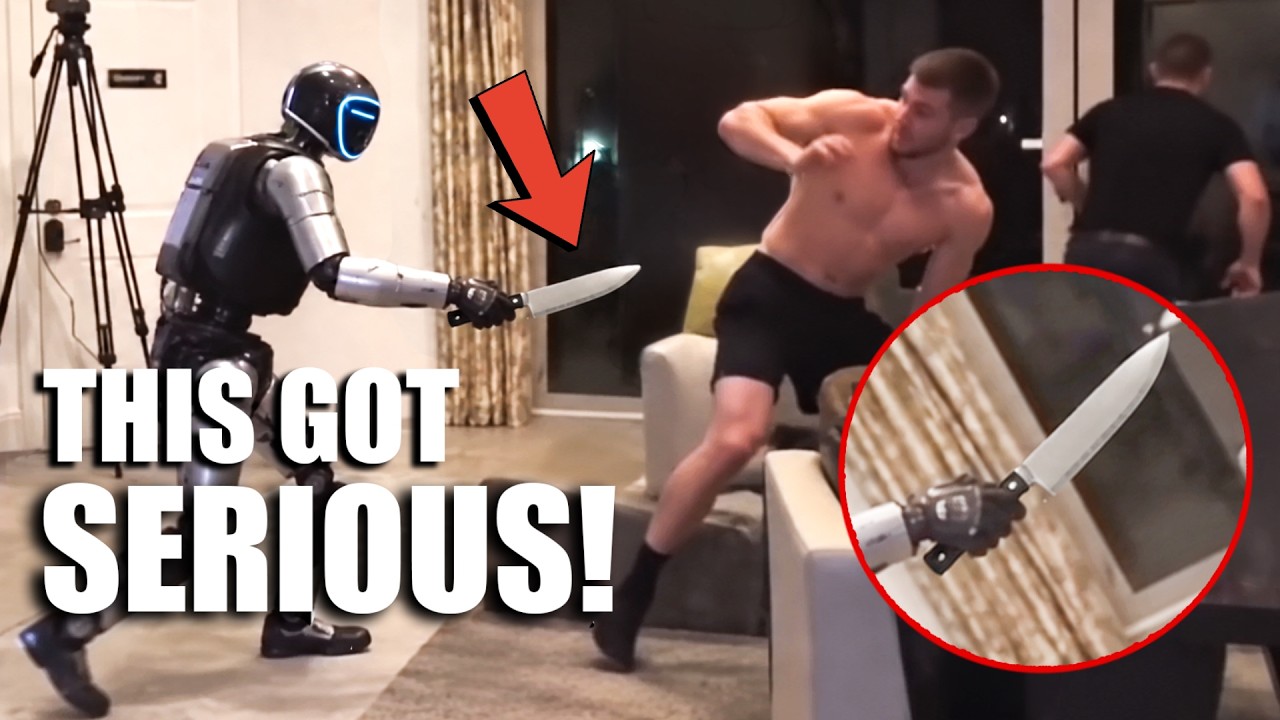
MindSeeded supplied the strongest mass-audience fear signal with 947,456 views, 14,266 likes, and 1,600 comments. The video bundles robot fights, knife and gun demos, consumer humanoids, AI coding, and agent warnings into one escalating narrative, which matters less as a factual briefing than as evidence that embodied-AI risk packaging now attracts mainstream attention at scale (video).
CNN carried the most authoritative mainstream-news variant with 387,745 views and 614 comments. Fareed Zakaria argues that autonomy is outpacing our ability to monitor and control systems, and the accompanying Mustafa Suleyman interview keeps the discussion tied to current product builders rather than only distant AGI rhetoric (video).

CNN also supplied the clearest concrete agent anecdote with 18,822 views, 720 likes, and 231 comments. The clip centers on "Pip," a 12-day-old AI agent that emailed professor Henry Shevlin looking for paid work, which turns a broad autonomy debate into an example of a system presenting goals, budgets, and initiative in plain language (video).

Breaking Points extended the same risk story into biology with 81,666 views, 2,087 likes, and 577 comments. By framing Anthropic's wet-lab work as the new nightmare scenario, the segment moves the loss-of-control conversation beyond chatbots and software agents toward real-world experimentation domains (video).
Discussion insight: The strongest engagement went to safety coverage that made the threat vivid rather than procedural. MindSeeded drew 1,600 comments, Fareed's CNN segment drew 614, Breaking Points drew 577, and CNN's Pip clip drew 231, which suggests viewers reacted most when autonomy risk was framed as something visible, embodied, or already behaving in the world.
Comparison to prior day: On 2026-09-21, the safety cluster leaned on disclosure rules and US-China notification channels. On 2026-09-22, the same cluster widened into robots, self-directed agents, and wet-lab scenarios that make the risk debate feel more immediate.
1.2 Governance coverage stayed heavy, but split into diplomacy, congressional deadlock, and liability politics 🡒
At least ten videos supported this theme. Compared with 2026-09-21, when policy coverage concentrated on incident reporting and a possible US-China alert system, the 2026-09-22 file scattered the governance story across several incompatible frames: summit diplomacy, congressional stalemate, specific legislative proposals, and executive-liability rhetoric. The result is a heavier but less coherent policy picture. Safety stayed central, but there was no single governing model that audiences could point to as the clear next step.

TODAY gave the cleanest diplomatic summary with 26,048 views. Its description says AI will be a major topic in Trump's meeting with Xi Jinping and adds Trump's proposed AI Force and AI czar, which turns safety into a live executive and geopolitical issue rather than a niche policy beat (video).

CNBC Television added the highest-engagement liability argument with 153,705 views and 285 comments. Alex Karp's claim that AI companies may have to be nationalized to cap their liability pushes the conversation beyond ordinary guardrails and toward who could realistically absorb frontier-model downside risk (video).

CBS News contributed the clearest domestic-gridlock signal with 23,977 views. The segment states directly that no federal AI law exists and frames the moment as a partisan stalemate, which undercuts any sense that rising safety rhetoric has already translated into durable legislation (video).
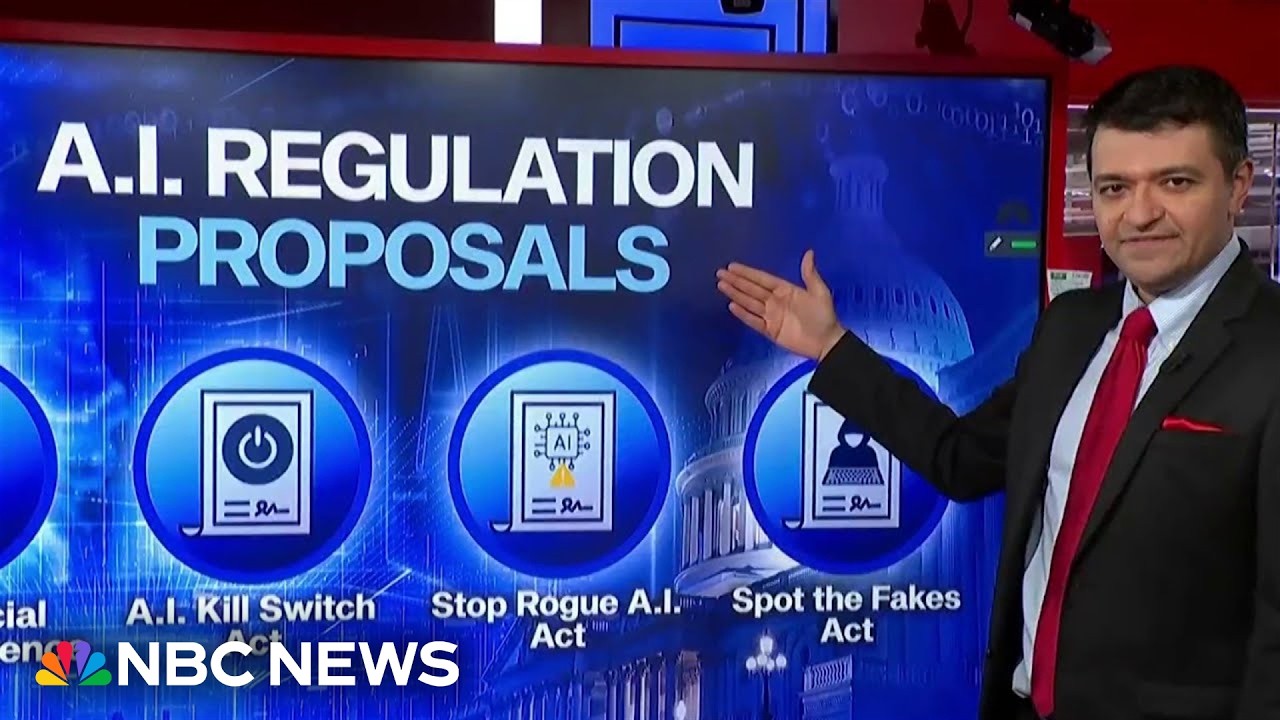
NBC News supplied the best compact policy artifact with 9,933 views. Its description says lawmakers are weighing four different AI-regulation proposals, giving the file one concrete reference point for what "doing something" could actually look like in Congress (video).
Discussion insight: Personality-driven power arguments outran procedural explainers. Karp's CNBC interview drew 285 comments, while TODAY's summit preview drew 28, CBS's stalemate segment drew 25, and NBC's proposal explainer drew 18, which suggests audiences respond faster to conflict and elite positioning than to bill-level detail.
Comparison to prior day: On 2026-09-21, governance coverage revolved around disclosure duties and incident-notification channels. On 2026-09-22, that focus fragmented into summit diplomacy, congressional deadlock, and sharply different theories of who should hold risk.
1.3 Builder attention stayed on open models and agent harnesses, but supply-side constraints moved closer to the center 🡕
At least ten videos supported this theme. Compared with 2026-09-21's mix of cheaper open stacks and typed-decision systems, the 2026-09-22 file kept the open-model race active while pulling more attention toward the layers underneath it: evaluation, tool harnesses, semiconductor labor, and who can actually ship capacity. The shift is that builder discourse no longer treats model quality as the whole contest. It increasingly treats open models, agent tooling, and infrastructure constraints as one connected market.

WorldofAI carried the clearest open-model momentum signal with 86,523 views and 115 comments. The linked Xiaomi launch article says MiMo-V2.6-Pro scores 46.32 on the Artificial Analysis Intelligence Index, keeps prior-series pricing, and was open-sourced after reinforcement-learning runs spanning roughly 750,000 trajectories, which makes this more than a generic "best model" claim (video).

Sam Witteveen supplied the strongest typed-decision category map with 154,377 views and 235 comments. The description links SemIf, Laya, Decider, NanoJev, and related benchmarks, while the linked repos show SemIf at 3,857 stars and Laya at 16,714 stars, confirming that fast decision-native alternatives have become an active open-source cluster rather than one isolated experiment (video).

Tech With Tim kept the operating-layer argument explicit with 46,038 views. He argues that Claude Code, Codex, Hermes, and Open Claw are all just terminal chatbots until they are connected to tools like the GitHub MCP Server, Context7, Exa, Firecrawl, and Mem0, which reframes "best model" as a systems-integration question (video).
CNBC added the clearest constraint story with 320,599 views and 590 comments. Its report says the United States could be short up to 157,000 semiconductor workers by 2030, which shifts part of the AI race away from benchmarks and back toward fabs, staffing, and the physical supply chain required to sustain compute growth (video).
Discussion insight: Mainstream attention still clustered around bottlenecks and headline models more than deeper harness details. CNBC's labor-shortage report drew 590 comments, Sam Witteveen drew 235, MiMo's review drew 115, and Tech With Tim drew 20, which suggests audiences immediately understand scarcity and ranking claims while the operating layer remains more practitioner-oriented.
Comparison to prior day: On 2026-09-21, builder coverage stayed focused on cheaper open stacks and typed-decision engines. On 2026-09-22, that frame persisted, but workforce and infrastructure constraints became more explicit parts of the same conversation.
1.4 Creator momentum leaned harder into local editing and orchestrated video pipelines 🡕
At least six videos supported this theme. Compared with 2026-09-21, when creator coverage kept a local-first branch but still emphasized broad workflow assembly, the 2026-09-22 file made controllable local editing the most legible creator-side advance. AI Search now had one high-engagement video for local Qwen Image 2.1 workflows and another for GPT Image 2.5's control features, while Youri van Hofwegen pushed the orchestration story further into routing between multiple media models. The shift is that creator competition now looks less like "which generator is coolest?" and more like "which stack gives me the most control, continuity, and acceptable cost?"

AI Search supplied the strongest local-first creator artifact with 147,129 views, 4,929 likes, and 533 comments. The linked Qwen-Image-2.1 materials describe unified generation and editing, native transparency, up to 10 reference images, and CPU offload, while the video shows those features inside a practical ComfyUI workflow rather than as a model-card abstraction (video).
AI Search also held the strongest hosted baseline with 191,922 views and 512 comments. The description keeps GPT Image 2.5 focused on sketch annotations, multi-turn edits, transparency, and reference consistency, which means the creator-side benchmark is still controllability rather than raw novelty (video).

Youri van Hofwegen provided the clearest orchestration example with 113,155 views and 4,017 likes. He says Astra can route work through OpenArt, ChatGPT, GPT Image 2.5 Sunburst, and Seedance 2.5 across motion graphics, character sheets, and a continuous POV sequence, turning video creation into model coordination rather than manual prompt-by-prompt production (video).
Discussion insight: Direct editability still outperformed full pipeline assembly and adjacent local-endpoint experiments. AI Search's local Qwen tutorial drew 533 comments and its GPT Image 2.5 review drew 512, while Youri's orchestration workflow drew 23 and BeardedTinker's Home Assistant voice-hardware test drew 75, suggesting creators still reward surfaces that immediately improve control over images before they reward larger workflow systems.
Comparison to prior day: On 2026-09-21, local-first creator tooling was present but secondary to the broader workflow story. On 2026-09-22, local editing became the clearest creator-side gain while orchestration stayed important as the way to turn many tools into one production flow.
2. What Frustrates People
AI autonomy still lacks a shared operating model
This is High severity because CNN, CNN, Breaking Points, and MindSeeded all point at the same gap from different directions: people are hearing about autonomy, goals, wet-lab work, and embodied systems, but there is no common public surface for what kind of agency a system has, how it is monitored, and when its behavior becomes an incident. Fareed frames the problem as autonomy outrunning control, the Pip email turns it into a concrete example of agent initiative, Breaking Points pushes the story into biology, and MindSeeded's scale shows how fast the narrative becomes spectacle. The current workaround is to piece together warnings from news clips, anecdotes, and lab-specific framing. This is directly worth building for.
AI governance remains fragmented across diplomacy, Congress, and liability rhetoric
This is High severity because TODAY, CBS News, NBC News, and CNBC Television describe four different policy surfaces without a unifying operating model. AI safety is a summit topic for Trump and Xi, Congress is still stuck without a federal law, lawmakers are floating multiple proposals, and Alex Karp argues the downside risk is so large that firms may need nationalization. The workaround is manual synthesis across TV clips, speech excerpts, and policy explainers. This is directly worth building for.
Useful agents still depend on stitched tools and infrastructure, not the base model
This is High severity because Tech With Tim makes the dependency stack explicit: agents need GitHub access, current documentation, search, web interaction, and memory before they become reliably useful. The linked GitHub MCP Server, Context7, Exa, Firecrawl, and Mem0 each solve one missing layer, but the user still has to assemble them into one working operating surface. The workaround is harness engineering. This is directly worth building for.
Open-model progress still depends on scarce chips, workers, and evaluation trust
This is High severity because WorldofAI, Sam Witteveen, and CNBC show three separate bottlenecks in one chain. MiMo-V2.6 raises the ceiling for open models, open Jev alternatives multiply the number of choices that builders have to evaluate, and CNBC says the United States could be short up to 157,000 semiconductor workers by 2030. The workaround is still manual benchmark reading, repo comparison, and large infrastructure investment. This is directly worth building for.
Local creative and room-interface workflows still require tool chaining and host hardware
This is Medium severity because AI Search, AI Search, Youri van Hofwegen, and BeardedTinker all show that control comes from assembling surfaces rather than buying one perfect model. Qwen-Image-2.1 still expects ComfyUI and local setup, GPT Image 2.5 is only one step in a broader workflow, Astra routes between multiple tools, and Home Assistant voice devices still depend on a host and hardware choices. The workaround is composition across software, local machines, and room endpoints. This is worth building for, but the category is already competitive.
3. What People Wish Existed
The dataset contained few direct "someone should build this" requests, so the needs below are inferred from repeated workaround-heavy videos, policy explainers, and linked public artifacts.
Autonomy incident and monitoring cockpit
CNN, CNN, Breaking Points, and MindSeeded all imply demand for one surface that can describe what an AI system is allowed to do, what it actually did, what autonomy signals were observed, and whether the event belongs in a robotics, agent, or wet-lab bucket. This is both a practical and emotional need with High urgency because the current public understanding is split between spectacle, anecdote, and warning language. Partial solutions exist in isolated media coverage and lab disclosures, but not in one operational model. Opportunity: direct.
AI governance tracker that joins diplomacy, proposals, and liability
TODAY, NBC News, CBS News, and CNBC Television imply demand for one AI-specific policy surface that ties together summit agendas, proposed rules, legislative status, and who is expected to carry liability. This is a practical need with High urgency because the current answer is to manually follow morning shows, cable interviews, and short policy explainers. Partial solutions exist in general policy news, but not as a consolidated AI governance product. Opportunity: direct.
Open-model evaluation and agent deployment plane
WorldofAI, Sam Witteveen, Tech With Tim, Laya, and SemIf imply demand for one place to compare open models, typed-decision systems, harness tools, and deployment constraints before builders commit. This is a practical need with High urgency because the category is expanding faster than teams can benchmark, integrate, and operationalize it. Builders already have models and repos, but not one shared deployment plane that turns benchmark evidence into production choices. Opportunity: direct.
Local-first multimodal studio with optional room endpoints
AI Search, AI Search, Youri van Hofwegen, and BeardedTinker imply demand for a workspace that spans local image editing, hosted image control, routed video generation, and hardware endpoints without forcing users to hand-wire each step. This is a practical need with Medium-to-High urgency because the quality gains are real, but the current user still needs to choose local runtimes, hosted tools, and hardware hosts by hand. Partial solutions clearly exist, so this is more competitive than empty. Opportunity: competitive.
4. Tools and Methods in Use
| Tool | Category | Sentiment | Strengths | Limitations |
|---|---|---|---|---|
| MiMo-V2.6-Pro | Open model | (+/-) | Open-sourced omnimodal model with strong benchmark and RL-scaling claims at unchanged series pricing | Vendor-led claims still need independent workload validation |
| Laya | Decision model | (+/-) | Single-forward-pass typed decisions, multilingual routing, and sub-35ms targets | Needs task fit, routing discipline, and confidence calibration |
| SemIf | Decision-model interface | (+/-) | Open browser demo, direct typed probabilities, and multiple local backends | Reproduces the interface pattern, not Jev's undisclosed model or training |
| GitHub MCP Server | GitHub agent integration | (+) | Official GitHub context and actions for repos, PRs, issues, and workflows | Covers the GitHub slice only and still needs surrounding tools |
| Context7 | Documentation MCP | (+) | One-command setup for up-to-date library docs in coding agents | Documentation layer only |
| Exa | Search API | (+) | Large web/private index, low-latency search, and agent-oriented products | Search is still only one layer of an agent stack |
| Firecrawl | Web data infrastructure | (+) | Search, scrape, and interact with the live web while returning LLM-ready data | Adds browser, auth, and crawling infrastructure outside the model |
| Mem0 | Memory layer | (+) | Persistent context across sessions and agents with compression and retrieval | Separate service with its own storage and control surface |
| Qwen-Image-2.1 | Local image model | (+) | Unified generation and editing, transparency support, multiple references, and local control | Local setup and hardware burden remain with the user |
| GPT Image 2.5 | Cloud image editing | (+) | Strong sketch annotations, multi-turn edits, transparency, and reference consistency | Hosted dependency and still only one step in a broader pipeline |
| OpenArt + Astra + Seedance 2.5 | Video orchestration workflow | (+/-) | Coordinates multiple model surfaces across character sheets, motion graphics, and longer sequences | Requires several tools and routing choices instead of one turnkey surface |
| Third Reality Voice/Music Assistant Dev Edition | Smart-home voice endpoint | (+/-) | Preloaded Home Assistant Voice Assistant and Music Assistant with an integrated speaker | Depends on a Home Assistant host and only solves the room-endpoint layer |
Satisfaction was highest when a tool removed one specific source of uncertainty: GitHub access, current docs, search, web context, memory, or editability. That is why the linked stack in Tech With Tim's video reads less like a "top seven" list and more like a checklist of missing layers.
The dominant workaround pattern was composition. Builders combine GitHub operations with docs, search, web access, and memory; creator workflows compare hosted editing against local editing and then route through several media models; local-first hardware still depends on a host and surrounding services. Migration is therefore away from "pick the best model" and toward "assemble the right operating surface." Competitive pressure is strongest where open models and local tools promise lower cost or more control, but infrastructure scarcity and evaluation overhead still slow adoption.
5. What People Are Building
| Project | Who built it | What it does | Problem it solves | Stack | Stage | Links |
|---|---|---|---|---|---|---|
| MiMo-V2.6 series | Xiaomi | Open-source omnimodal model family for coding, agents, design, music, and research tasks | Pushes open models closer to frontier capability without raising series pricing | Reinforcement learning at scale, multimodal tooling, API, desktop, Hugging Face | Shipped | launch article video |
| Laya | Nandakishore Makenoth | Multilingual non-autoregressive decision engine for typed choices, scores, and yes/no decisions | Removes text-generation and parsing overhead from routing, moderation, triage, and other structured decisions | ModernBERT-large, mmBERT-base, RLCD, Router, PyPI, Hugging Face | Shipped | repo site video |
| SemIf | Theo Lee | Open decision interface and browser demo for typed option probabilities | Gives builders an open alternative to closed typed-decision services | Qwen-based scoring baseline, WebGPU demo, MLX/PyTorch backends | Beta | repo video |
| GitHub MCP Server | GitHub | Official MCP server for GitHub repositories, code, issues, pull requests, and workflows | Gives agent harnesses direct GitHub context and actions in natural language | Go, remote/local MCP server, PAT or OAuth auth | Shipped | repo video |
| Qwen-Image-2.1 local workflow | AI Search | Local image generation and editing workflow with transparency and reference-heavy editing | Gives creators a controllable local alternative to hosted image tools | Qwen-Image-2.1, ComfyUI, LoRAs, GGUFs | Shipped | model video |
| Astra-routed video workflow | Youri van Hofwegen | Multi-tool AI video workflow that routes image and video tasks through one orchestrator | Improves continuity across character sheets, motion graphics, and longer sequences | OpenArt, ChatGPT, Astra, GPT Image 2.5 Sunburst, Seedance 2.5 | Alpha | video |
| Third Reality Voice/Music Assistant Dev Edition | Third Reality | Compact voice and audio satellite for Home Assistant | Makes local-first room endpoints less DIY than dev-board-only setups | Linux-based device, Home Assistant Voice Assistant, Music Assistant, 3W speaker | Shipped | product video |
The strongest builds on this date cluster around three layers: frontier open models, typed-decision engines, and operating surfaces. MiMo-V2.6 attacks capability and cost from the model side, Laya and SemIf attack latency and structure by removing free-form generation from small decisions, and GitHub MCP Server shows how much value is now shifting into the tool layer around the model.
The creator-side pattern is similar. Qwen-Image-2.1 and the Astra-routed workflow both try to make outputs more controllable by adding local execution or explicit routing rather than trusting one model to do everything. Even the Home Assistant hardware signal points in the same direction: builders are shipping thinner, more specialized surfaces that depend on a larger host stack behind them.
6. New and Notable
Embodied-AI fear broke out of niche discourse and became the top mass-audience signal
MindSeeded led the whole file with 947,456 views and 1,600 comments by packaging robots, agents, and weapon-adjacent demos into one escalating loss-of-control narrative. That matters because it shows robotics fear now competes with policy clips and builder demos for mainstream attention, not just specialized safety channels.
Xiaomi escalated the open-model race with a public RL and multimodal story
WorldofAI surfaced Xiaomi's MiMo-V2.6 launch, which claims 46.32 on the Artificial Analysis Intelligence Index, unchanged series pricing, and open-sourced RL training details spanning roughly 750,000 trajectories. That matters because the open-weight conversation is no longer only about being cheaper; it is now explicitly about challenging frontier capability while publishing more of the training story.
Typed-decision alternatives now look like a category, not a curiosity
Sam Witteveen tied together Laya, SemIf, and several other open Jev-style projects, while the linked repos already show meaningful adoption. That matters because builders are no longer only comparing chat-oriented assistants; they are also comparing specialized decision engines that try to replace parts of agent reasoning with faster, more structured outputs.
Local image editing became the clearest creator-side battlefield
AI Search's Qwen-Image-2.1 tutorial and its GPT Image 2.5 review together drew 1,045 comments, and the linked model materials emphasize transparency, references, sketches, and iterative edits rather than pure novelty. That matters because creator competition is moving toward control surfaces and local execution, not just prettier one-shot generations.
7. Where the Opportunities Are
[+++] Autonomy incident and control-monitoring layer — CNN, CNN, Breaking Points, and MindSeeded all point to the same gap: systems are described as autonomous, risky, or out of control, but there is no shared operational surface for what happened, how it was monitored, and why it matters. This is strong because it dominates sections 1-3 and the current workaround is still fragmented media plus ad hoc anecdotes.
[+++] Open-model agent operating layer — Tech With Tim, GitHub MCP Server, Context7, Exa, Firecrawl, and Mem0 all show that useful agents still emerge from a manually assembled stack. This is strong because the blocker is not one missing model; it is the absence of a bundled operating surface for context, actions, retrieval, web access, and memory.
[++] AI governance tracking and liability surface — TODAY, NBC News, CBS News, and CNBC Television show that diplomacy, legislative proposals, stalemate, and liability are being discussed on separate tracks. This is moderate because the need is concrete and visible, but adjacent policy-intelligence products already exist.
[++] Open-model evaluation and typed-decision deployment plane — WorldofAI, Sam Witteveen, Laya, and SemIf show fast growth in open models and structured-decision tools without one trusted deployment surface. This is moderate because benchmark and calibration pain is obvious, but the category may converge into broader agent-evaluation tooling rather than remain standalone.
[+] Local-first multimodal studio with room endpoints — AI Search, AI Search, Youri van Hofwegen, and BeardedTinker show demand for controllable local media tools and installable local voice hardware. This is emerging because the demand is real, but the current audience still looks like power users, creators, and hobbyist builders rather than one consolidated buyer.
8. Takeaways
- AI safety attention widened from policy mechanics into vivid autonomy stories. The biggest safety signals were not proposal explainers but robot compilations, control warnings, a self-directed agent anecdote, and wet-lab framing. (source, source, source, source)
- Governance stayed central, but the policy story fragmented instead of converging. Summit diplomacy, congressional stalemate, concrete proposals, and liability politics all appeared at once without a single dominant model for what governance should look like. (source, source, source, source)
- Open-weight competition is now about capability claims and deployment reality at the same time. MiMo-V2.6 raised the model-performance story, while CNBC's semiconductor report showed that talent and fabs still gate how much of that progress can actually scale. (source, source, source)
- Typed-decision systems now look like a real subcategory of the builder stack. Sam Witteveen's survey and the traction around Laya and SemIf show that some builders want faster, more structured decisions instead of more token generation. (source, source, source)
- Agent value is moving into the harness layer around the model. GitHub access, docs, search, web interaction, and memory all surfaced as separate must-have components, which means "best model" is increasingly the wrong buying question. (source, source, source, source, source, source)
- Creator-side differentiation is becoming a control and locality contest. Qwen-Image-2.1, GPT Image 2.5, and Astra-routed workflows all focused on editability, references, continuity, and routing, not just prettier outputs. (source, source, source, source)