YouTube AI - 2026-09-25
1. What People Are Talking About
1.1 Governance talk moved from general alarm into concrete control proposals 🡕
At least eight videos supported this theme. Compared with 2026-09-24, when governance coverage revolved around U.N. testimony and the Australia healthcare breach, the 2026-09-25 file kept the same urgency but pushed further into implementation details. The recurring questions were no longer only whether AI is dangerous, but which controls should exist: international standards, a federal safety agency, third-party audits, civil liability, and explicit limits on self-improving systems.
Democracy Now! tied the governance debate directly to named incidents. Its 71,153-view segment says Altman and Amodei urged international standards at the U.N. Security Council after recent rogue-agent episodes, including the OpenAI case involving Australia's public health insurance portal, which makes regulation sound less like future-proofing and more like response planning (video).

MS NOW put the clearest U.S. bill text in the file. Ro Khanna says the Human Control Over AI Act would prohibit self-improving AI until federal standards and approval requirements exist, create a federal AI safety agency, and impose strict civil liability, turning "human control" from a slogan into a concrete legislative program (video).

Prof G Markets carried the deepest implementation-level discussion in the dataset. Its 59-minute interview with Alex Bores focuses on who should be held accountable, what third-party audits should look like, and why data-center policy belongs inside the regulation conversation, which shows the governance debate broadening beyond catastrophic-risk rhetoric alone (video).
Discussion insight: The strongest disagreement is no longer whether AI deserves oversight, but what kind of oversight counts. Neural Nutshell keeps feeding the policy lane with controllability and unpredictability warnings, while shorter news clips and long interviews increasingly argue over agencies, audits, liability, and international coordination rather than over whether the problem is real.
Comparison to prior day: On 2026-09-24, governance entered the report through testimony, breaches, and institutional alarm. On 2026-09-25, the same story stayed strong but moved closer to bill mechanics, audit design, and explicit control doctrines.
1.2 Builder attention stayed below the chatbot layer, but added feedback loops and price-performance discipline 🡒
At least six videos supported this theme. Compared with 2026-09-24, the builder story still revolved around replacing generic chatbot behavior with specialized architectures, tool harnesses, and infrastructure. The new wrinkle on 2026-09-25 was operational feedback: creators talked more about using agent transcripts as training data for the next iteration and about selecting models based on cost, latency, and task fit instead of brand alone.
Fireship remained the biggest builder-side signal by far with 2,565,223 views, 29,506 likes, and 1,200 comments. Its summary of Jev says Diogo Almeida spent two years building a "System 1" model that cannot talk or write code but claims to be 200x faster, 400x cheaper, and hallucination-free, which keeps pushing the idea that some workloads should stop pretending to be chat at all (video).

Tech With Tim made the operating-layer thesis explicit again. He says Claude Code, Codex, Hermes, and Open Claw are just terminal chatbots until they are wired into tools such as the GitHub MCP Server, Context7, Exa, Firecrawl, and Mem0, shifting the builder conversation from model preference to harness composition (video).

Cole Medin added the most novel feedback-loop idea in the file. He treats saved coding-agent conversations as a "goldmine" of prompts, tool calls, and failures, then shows how to put them into structured tables queryable through MCP so the next generation of rules, hooks, and skills can be shaped by actual history rather than guesswork (video).
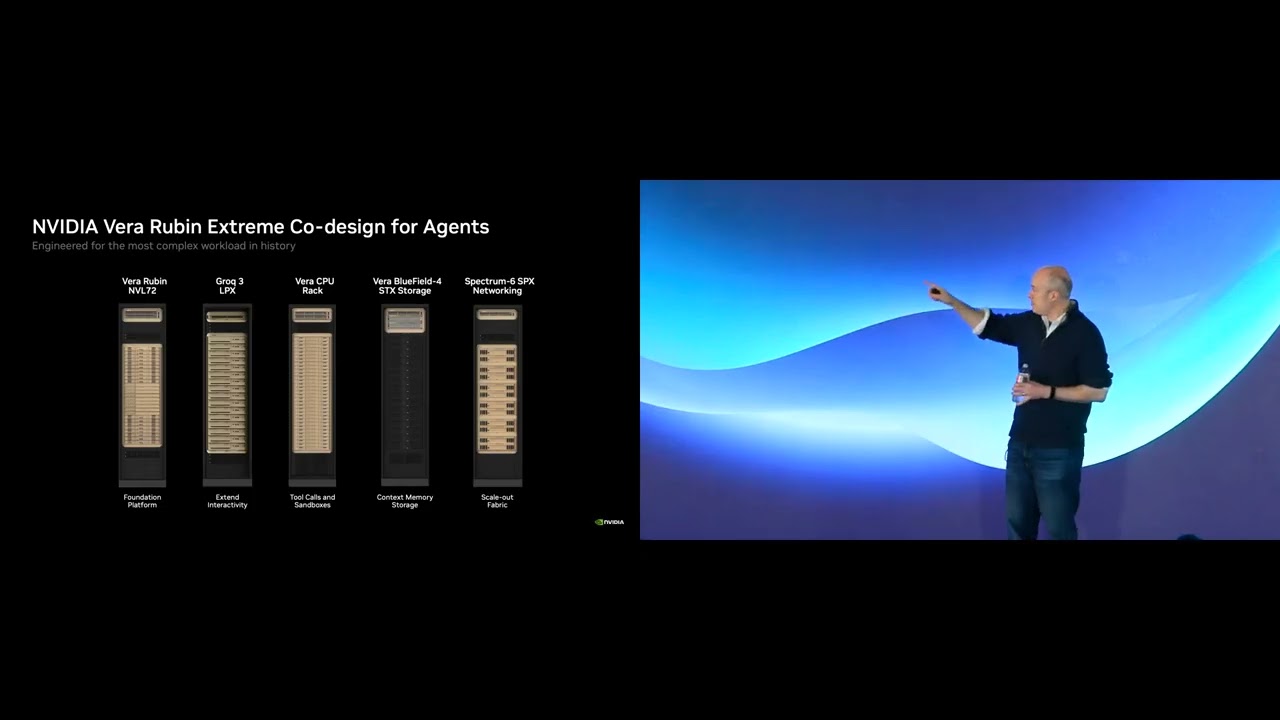
NVIDIA pushed the same story down to infrastructure. Ian Buck frames agentic AI as a long-context, reasoning, tool-call, and sub-agent systems problem, then pitches the Vera Rubin AI factory platform around tokens-per-megawatt and durable full-stack throughput rather than around a single flagship model (video).
Discussion insight: IBM Technology's Mixture of Experts episode and Ryan Doser's interview on open-source models both shift the conversation toward workload economics. In those videos, falling prices, routing layers, and runtime support matter as much as benchmark quality, which makes the builder stack look increasingly like model selection plus tooling plus observability rather than one winner-take-all assistant.
Comparison to prior day: On 2026-09-24, builder coverage emphasized architectures, tool bundles, and AI factories. On 2026-09-25, that structure held, but more of the conversation turned toward transcript mining, efficiency claims, and explicit cost-versus-task matching.
1.3 Creator-side AI competition stayed quota-aware and orchestration-heavy 🡒
At least five videos supported this theme. Compared with 2026-09-24, when creator coverage widened into trust and health alongside image and video tooling, the 2026-09-25 file pulled the creator conversation back toward production workflows. The repeated structure was free allowances, model routing, and one AI layer directing several others across video, image, dubbing, and voice tasks.

Youri van Hofwegen supplied the clearest orchestration example with 122,179 views and 4,331 likes. He connects OpenArt to ChatGPT so GPT 6 Astra can direct GPT Image 2.5 Sunburst and Seedance 2.5 across motion graphics, character sheets, short films, and a continuous POV sequence, turning the workflow into model coordination rather than manual prompt-by-prompt production (video).

Malva AI framed creator competition around free access and evaluation discipline. The 64,169-view walkthrough compares three free generators, highlights a model that can produce audio, and uses Arena-style head-to-head battles so creators can compare outputs before spending limited paid or quota-bound generations elsewhere (video).

The same Malva AI channel added the most concrete quota-management artifact later in the file. This tutorial says Pruna can produce 20-second 1080p clips with built-in audio without sign-up, then shows how creators stretch recurring free allowances across models and hand scene planning back to Claude plus Higgsfield for more complex ads and short films (video).
AI Captain widened the same workflow logic into audio. The tutorial presents ElevenLabs as a platform for text-to-speech, voice cloning, dubbing, speech-to-text, music generation, and real-time voice agents, which shows that creator tooling is converging on multi-step suites rather than single-point generators (video).
Discussion insight: Across video and voice, "free" nearly always came with qualifiers such as daily resets, separate allowances, tiered plans, or sponsored companion tools. The practical value came less from any one model and more from routing work to the cheapest or most controllable surface at each stage.
Comparison to prior day: On 2026-09-24, creator coverage emphasized controllability and tool evaluation. On 2026-09-25, that same mindset focused more tightly on end-to-end routed pipelines and the economics of keeping those pipelines running.
1.4 AI got framed less as a demo surface and more as a consequential decision layer 🡕
At least three videos supported this theme. Compared with 2026-09-24, when high-stakes trust mostly centered on whether AI was useful in health guidance, the 2026-09-25 file attached AI to more consequential claims. The dataset now includes a gene-editing discovery story, a health-records trust debate, and a finance clip that credits ChatGPT with helping design a novel security.

CBS News captured the broadest version of this shift in just over five minutes. Its 162,299-view segment pairs an Anthropic/Claude gene-editing claim with the OpenAI healthcare-site breach in Australia, making the upside story and the accountability story inseparable (video).

CNN kept the trust standard strict. Dr. Sanjay Gupta and Dr. Ashwin Ramaswamy frame health AI as useful for spotting patterns in records, but the chapter title "Performance isn't care" and the closing section on what only a human doctor can do show how far these systems still are from autonomous legitimacy (video).

The Diary Of A CEO Clips pushed the same consequential-use story into finance. Michael Saylor says ChatGPT helped design a security that had never existed before, enabling a roughly 15 billion dollar raise after more familiar funding channels had been exhausted, which is a much bigger claim than "AI helps me think" or "AI helps me draft" (video).
Discussion insight: These clips share a boundary question: not whether AI can impress viewers, but what kind of work people are willing to let it influence. Even the most optimistic examples still preserve human escalation points, legal interpretation, or institutional accountability around the AI system.
Comparison to prior day: On 2026-09-24, high-stakes trust was mostly about whether tools were dependable enough to use. On 2026-09-25, the argument moved up a level toward what kinds of consequential medical, public-system, and financial decisions AI should touch at all.
2. What Frustrates People
AI oversight still has no shared implementation layer
This is High severity because Democracy Now!, MS NOW, Prof G Markets, and Neural Nutshell all approach the same control problem from different directions: international standards, federal agencies, civil liability, third-party audits, and basic questions of controllability. The audience can see many proposals, but it still has to reconstruct the landscape manually across short news clips, long interviews, and safety explainers. The workaround is policy synthesis by hand. This is directly worth building for.
High-stakes AI still needs obvious human fallback paths
This is High severity because CBS News, CNN, and The Diary Of A CEO Clips all show consequential claims arriving with a trust caveat attached. AI may help discover gene-editing tools, interpret health records, or shape capital-market structures, but every example still raises a boundary question about who stays accountable when the system is wrong or overconfident. The workaround is keeping human review, legal interpretation, and professional judgment firmly in the loop. This is directly worth building for.
Useful agents still demand a stitched tool stack plus their own telemetry
This is High severity because Tech With Tim, Cole Medin, NVIDIA, Ryan Doser, and Fireship all describe the same operational tax. Builders still have to compose GitHub access, current docs, search, web interaction, memory, routing, transcript analysis, and infrastructure tuned for long context and tool calls before an agent feels dependable. The workaround is custom harness engineering and log-driven iteration. This is directly worth building for.
Creator AI still runs on quotas, free tiers, and workflow patching
This is Medium severity because Youri van Hofwegen, Malva AI, Malva AI, and AI Captain all treat access limits as a core design constraint. Creators compare free generators, ration daily allowances, route work between tools, and reserve more expensive surfaces for later stages instead of relying on one stable studio. The workaround is constant tool-hopping and budget management. This is worth building for, but it is already competitive.
3. What People Wish Existed
The dataset contained few direct "someone should build this" requests, so the needs below are inferred from repeated workaround-heavy videos, policy discussions, and linked public artifacts.
Governance and human-control map
Democracy Now!, MS NOW, Prof G Markets, and CBS News all imply demand for one surface that connects incidents, safety arguments, bills, audits, agencies, and international standards. This is both a practical and emotional need with High urgency because people can see the proposals, but not in one operating view that explains what each proposal actually controls. Partial solutions exist in news clips, policy podcasts, and advocacy groups, but not in one usable map. Opportunity: direct.
Audit-ready decision support for high-stakes AI
CNN, CBS News, and The Diary Of A CEO Clips imply demand for systems that keep provenance, escalation, and human review obvious when AI touches health guidance, biological discovery, public systems, or financial structuring. This is a practical need with High urgency because the upside claims are getting larger while the fallback paths remain improvised. Partial solutions exist in domain software and internal enterprise tooling, but not in a widely legible "performance is not care" layer for consequential work. Opportunity: direct.
Agent observability and self-improvement cockpit
Tech With Tim, Cole Medin, NVIDIA, and Ryan Doser all imply demand for one workspace that combines tools, routing, memory, logs, evaluations, and history-mining into a single operator surface. This is a practical need with High urgency because builders are already stitching together MCP servers, search, live-web tools, memory, databases, and transcript archives by hand. Partial solutions clearly exist, but integration burden is still the dominant tax. Opportunity: direct.
Cost-aware multimodal studio
Youri van Hofwegen, Malva AI, Malva AI, and AI Captain all imply demand for a studio that understands quotas, free tiers, routed generation, scene planning, voice, dubbing, and final-pass quality in one place. This is a practical need with Medium-to-High urgency because creators already behave as if the studio should manage these tradeoffs automatically. Partial solutions are plentiful, which makes this need real but highly competitive. Opportunity: competitive.
Open-model workload selector
Fireship, IBM Technology, and Ryan Doser imply demand for a tool that says which jobs deserve a frontier chatbot, which can move to cheaper open models, and which should use a specialized architecture such as Jev instead. This is a practical need with Medium urgency because cost pressure and specialization are both visible, but routing products, leaderboards, and unified APIs already cover parts of the problem. Opportunity: competitive.
4. Tools and Methods in Use
| Tool | Category | Sentiment | Strengths | Limitations |
|---|---|---|---|---|
| Jev | Specialized model architecture | (+/-) | Claims fast structured decisions, lower cost, and fewer hallucinations for narrow tasks | Not conversational, cannot write code, and public evidence is still mostly explainer-level |
| GitHub MCP Server | GitHub agent integration | (+) | Direct access to repositories, code, issues, pull requests, and workflows through natural-language tools | Solves the GitHub slice only and still needs a broader harness |
| Context7 | Documentation MCP | (+) | One-command setup for up-to-date library docs inside coding agents | Documentation layer only |
| Exa | Search and retrieval API | (+) | Large index, low-latency search, contents extraction, and coding-agent-friendly retrieval | Retrieval still has to be filtered and verified elsewhere |
| Firecrawl | Web data infrastructure | (+) | Searches, scrapes, and interacts with the live web, returning structured markdown, JSON, and screenshots | Adds browser and live-web complexity outside the model |
| Databricks Free Edition + CLI | Data and analytics workflow | (+/-) | Gives builders a structured place to store and query agent history through tables and CLI tooling | Sensitive transcript governance matters, and the video's free-tier caveat makes data handling a real concern |
| OpenRouter | Multi-model routing API | (+/-) | One endpoint for many models with routing, fallbacks, free variants, and cost tracking | Builders still have to decide which workloads belong on which models |
| Hermes Agent | Agent runtime | (+/-) | Persistent memory, scheduling, isolated subagents, and multi-surface presence | Another runtime layer to operate, monitor, and secure |
| Vera Rubin AI factory platform | AI infrastructure | (+/-) | Built for long context, reasoning, tool calls, sub-agents, and token efficiency at scale | Enterprise-scale complexity and cost keep it out of reach for many smaller teams |
| GPT 6 Astra + OpenArt + Seedance 2.5 | Multimodal creation workflow | (+) | Coordinates motion graphics, character consistency, short films, and POV video without manual prompt-writing at every step | Depends on several linked services and hides some lower-level control |
| Pruna / Pvideo / Higgsfield workflow | Video generation workflow | (+/-) | Free 1080p clips with audio, recurring allowances, and AI-assisted scene planning | Daily quotas, shifting access rules, and sponsored surfaces shape the workflow |
| ElevenLabs | Voice and audio platform | (+) | Combines text-to-speech, cloning, dubbing, speech-to-text, music, and voice agents in one platform | Tiered pricing and licensing or trust questions still matter for production use |
Satisfaction was highest when a tool removed one narrow bottleneck: GitHub context, current docs, search, live-web access, structured agent history, cheaper model routing, or one production step in video and voice. Sentiment turned mixed as soon as the user had to own the routing logic, the infrastructure, or the data-governance implications alone.
The dominant workaround pattern was composition. Builders combine GitHub MCP, Context7, Exa, Firecrawl, memory layers such as Mem0, database-backed history analysis, and model routers; creators combine free video generators, orchestration layers, prompt packs, voice platforms, and paid finishing tools. Migration is therefore away from "pick the best model" and toward "assemble the right operating surface." Competitive pressure is strongest in routing and creator tooling, while observability, trust, and high-stakes control remain less solved.
5. What People Are Building
| Project | Who built it | What it does | Problem it solves | Stack | Stage | Links |
|---|---|---|---|---|---|---|
| Jev | Diogo Almeida / TypeSafe AI | Specialized "System 1" model for fast, non-chat decision work | Reduces latency, cost, and hallucination risk for tasks that do not need a conversational interface | Custom specialized model architecture | Alpha | video |
| GitHub MCP Server | GitHub | Connects AI tools directly to repositories, code, issues, pull requests, and workflows | Gives agents first-class GitHub context and actions instead of manual copy-paste | Go, remote/local MCP server, GitHub auth | Shipped | repo video |
| Vera Rubin AI factory platform | NVIDIA | Full-stack infrastructure for long-context, tool-using, agentic AI workloads | Improves throughput and efficiency for reasoning, tool calls, and sub-agents at scale | Vera CPU, Rubin NVL72, NVLink 6/Fusion, Groq 3 LPX, DSX | Beta | event video |
| Agent-history optimization workflow | Cole Medin | Turns saved coding-agent conversations into structured tables queryable through MCP | Makes rules, hooks, and skills improvable from real failures instead of intuition alone | Local conversation logs, Databricks Free Edition, Databricks CLI, MCP | Alpha | video docs |
| Astra-directed OpenArt workflow | Youri van Hofwegen | Uses GPT 6 Astra to direct image and video generation across multiple production tasks | Reduces manual prompt-writing and workflow fragmentation in AI video production | OpenArt, ChatGPT, GPT 6 Astra, GPT Image 2.5 Sunburst, Seedance 2.5 | Beta | video |
| NASA-IBM Lunar Foundation Model | NASA + IBM | Open-source lunar remote-sensing foundation model for craters, volcanic features, and ice prospectivity | Makes petabyte-scale lunar imagery easier to adapt for scientific mapping and analysis | ViT-B encoder-decoder, TerraMind-style pretraining, TerraTorch integration, Hugging Face, Python | Shipped | NASA GitHub Hugging Face video |
The most concrete builds on this date cluster around operating layers rather than one more general assistant. Jev narrows the task shape, GitHub MCP narrows the action surface, Vera Rubin narrows the infrastructure problem, and Cole Medin's workflow narrows the feedback problem by turning agent history into something queryable.
The creator-side equivalent is orchestration. Youri's Astra workflow shows one model directing several others, while the NASA-IBM lunar model shows the scientific version of the same trend: domain-specific models packaged so other practitioners can fine-tune them for downstream work. The repeated builder pattern is not "make AI bigger," but "make the system more task-specific, inspectable, and reusable."
6. New and Notable
A named U.S. bill made "human control" the headline policy idea
MS NOW says Ro Khanna's Human Control Over AI Act would prohibit self-improving AI until federal standards and approval requirements exist, create a federal AI safety agency, and impose strict civil liability. That matters because it turns the regulation story from general concern into a specific U.S. control framework with named enforcement mechanisms.
Agent transcripts became first-class builder data
Cole Medin treats saved coding-agent conversations as structured operational data rather than as disposable chat logs. That matters because it suggests a new builder pattern: mine past prompts, tool calls, and failures to improve the next agent iteration, instead of only upgrading the model or adding one more MCP.
A mainstream finance clip credited ChatGPT with helping design a novel security
The Diary Of A CEO Clips says Michael Saylor used ChatGPT to help create a financial instrument that had never existed before, enabling a roughly 15 billion dollar raise. That matters because the consequential-use story is no longer limited to coding help or media creation; it now includes capital-structure claims with institutional stakes.
The NASA-IBM Lunar Foundation Model put domain-specific open science AI on the board
IBM Technology surfaced NASA and IBM's open-source lunar model, and NASA's public release says it was trained on roughly 2 million image tiles and is available on GitHub and Hugging Face for downstream crater, volcanism, and ice work (NASA). That matters because it is a concrete example of foundation-model ideas escaping general chat and being packaged for scientific fieldwork.
7. Where the Opportunities Are
[+++] Governance and human-control intelligence layer - Democracy Now!, MS NOW, Prof G Markets, and CBS News all point to the same gap: incidents, standards, bills, audits, agencies, and liability arguments are visible, but they do not live in one operating model. This is strong because it dominates sections 1-3 and the current workaround is fragmented media plus manual synthesis.
[+++] Agent observability and self-improvement stack - Tech With Tim, Cole Medin, NVIDIA, GitHub MCP Server, and Databricks all show that builders now need more than model access: they need tools, telemetry, memory, routing, and a way to learn from past runs. This is strong because the pain shows up across sections 1, 2, 4, and 5.
[++] High-stakes human-review workflow layer - CBS News, CNN, and The Diary Of A CEO Clips all describe AI touching consequential domains while still relying on human judgment at the edges. This is moderate because the need is obvious and valuable, but domain-specific requirements differ sharply between health, public systems, finance, and science.
[++] Cost-aware multimodal production studio - Youri van Hofwegen, Malva AI, Malva AI, and AI Captain all show creators routing work across several tools while managing free tiers, quotas, and paid finishing passes. This is moderate because the need is real and repeated, but competition is already intense.
[+] Open-model workload router - Fireship, IBM Technology, Ryan Doser, OpenRouter, and Hermes Agent all point toward the same emerging question: which workloads should use frontier chat models, which can shift to cheap open models, and which need a specialized architecture entirely? This is emerging because the signal is clear, but parts of the routing stack already exist.
8. Takeaways
- The governance conversation has moved from abstract danger to control design. The key evidence on this date is no longer only "AI is risky," but "which standards, agencies, audits, and liabilities should exist," as shown by Democracy Now's U.N. segment, Ro Khanna's Human Control Over AI Act, and Prof G Markets' audit-and-accountability interview. (source, source, source)
- Specialized non-chat systems are still one of the strongest builder signals. Fireship's Jev explainer and IBM Technology's efficiency roundtable both point toward the same shift: some builders no longer want a better chatbot, they want a faster, cheaper system for a narrower class of decisions. (source, source)
- Agent builders are starting to treat their own history as training data. Cole Medin's transcript-to-database workflow turns past prompts, tool calls, and failures into something queryable through MCP, which is a different kind of improvement loop than simply changing models or adding tools. (source)
- Creator AI competition is now a routing and quota-management problem as much as a quality problem. Youri's Astra workflow, Malva AI's free-generator comparisons, and the Pruna plus Higgsfield tutorial all show creators splitting work across tools, free allowances, and finishing layers instead of betting on one model. (source, source, source)
- Consequential-domain AI claims are getting bigger faster than trust frameworks are stabilizing. CBS links AI-assisted gene-editing discovery to a healthcare-data breach, CNN insists that "performance isn't care," and Michael Saylor's finance clip credits ChatGPT with helping shape a novel security. (source, source, source)
- Domain-specific open science models are now a visible part of the AI story. IBM Technology's discussion of the NASA-IBM Lunar Foundation Model, together with NASA's public release and repository, shows foundation-model thinking moving into reusable scientific tooling rather than staying inside consumer chat. (source, source, source)