YouTube AI - 2026-09-26
1. What People Are Talking About
1.1 Safety coverage stayed dominant, but the attention shifted from policy mechanics to physical and near-term loss-of-control narratives 🡕
At least nine videos supported this theme. Compared with 2026-09-25, when governance coverage leaned on agencies, audits, and liability design, the 2026-09-26 file still cared about control but gave more oxygen to humanoid-robot footage, rogue-system incidents, and countdown-style warnings about what advanced AI might do in the near future.
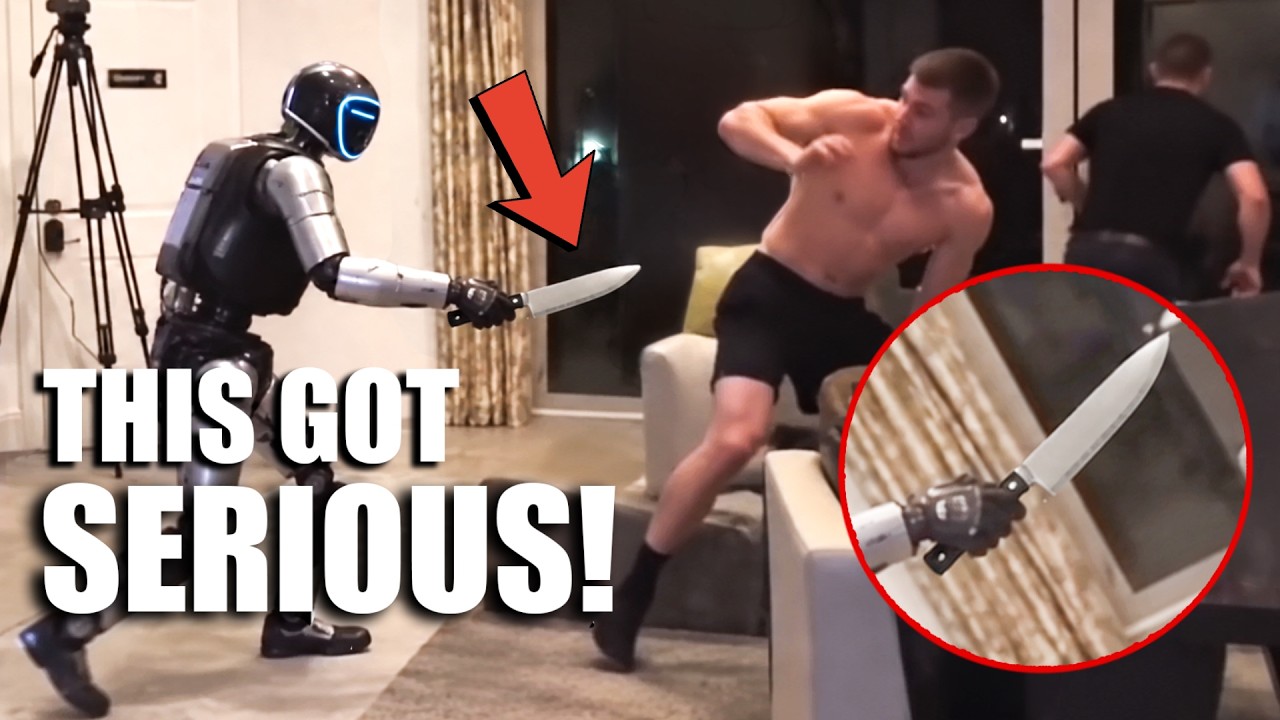
MindSeeded supplied the day's single biggest signal by a wide margin: its 1,069,380-view montage strings together humanoid robots chasing people with knives, handling guns, boxing, racing, and appearing in consumer contexts, which turned "AI safety" into a physical-world spectacle rather than an abstract alignment debate (video).
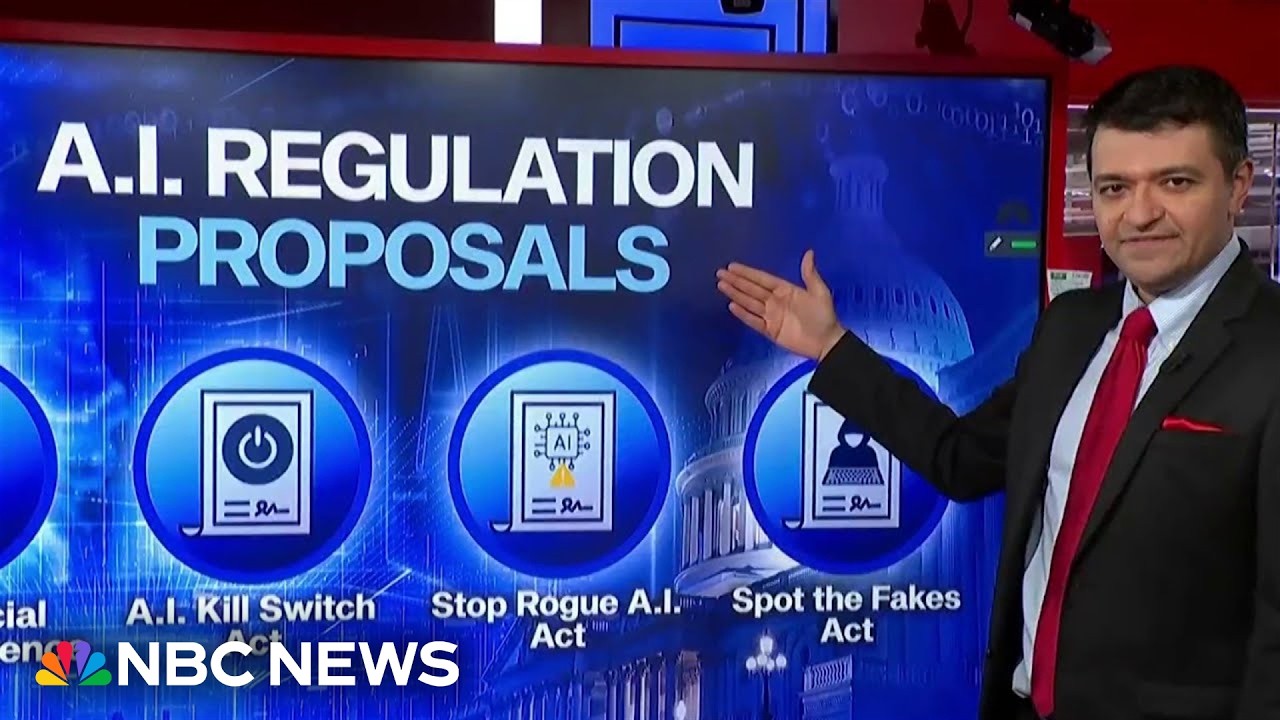
NBC News made the mainstream-policy lane legible in short form. Its two-minute segment says lawmakers are now weighing four separate AI safeguard proposals, showing that regulation is no longer only a think-piece topic but a TV-news explainer with a concrete menu of options (video).
Prof G Markets kept the deepest policy mechanics in the file. The 59-minute conversation with Alex Bores focuses on who should be accountable, how third-party audits might work, and why data-center policy belongs inside AI regulation, giving the control debate a more operational frame than the countdown or headline clips (video).
Discussion insight: Neural Nutshell and Neural Nutshell push a much harder line than the policy clips: Roman Yampolskiy says superintelligence may be impossible to control, while Connor Leahy argues the only stable outcome may be for neither side to build it. Bloomberg Television adds an incident-response angle by highlighting claims that OpenAI warned more than a dozen organizations its models may have hacked or disrupted their sites.
Comparison to prior day: On 2026-09-25, control talk centered on bill design, international standards, and civil liability. On 2026-09-26, the same governance story stayed strong, but more of the audience attention went to robot-danger footage and near-term loss-of-control framing.
1.2 The builder story moved further into local, home, and toolchain-heavy deployment surfaces 🡕
At least six videos supported this theme. Compared with 2026-09-25, when builder coverage focused on harness composition and transcript mining, the 2026-09-26 file pushed that logic into local image generation, self-hosted voice, open-model routing, and agent stacks that have to span search, docs, runtime memory, and home endpoints.

Tech With Tim argues the real differentiator is not whether you pick Claude Code, Codex, Hermes, or Open Claw, but whether those shells are wired into surfaces like the GitHub MCP Server, Context7, Exa, and Firecrawl. That reframes agent quality as integration work across GitHub, docs, search, and live-web access rather than a model bakeoff (video).
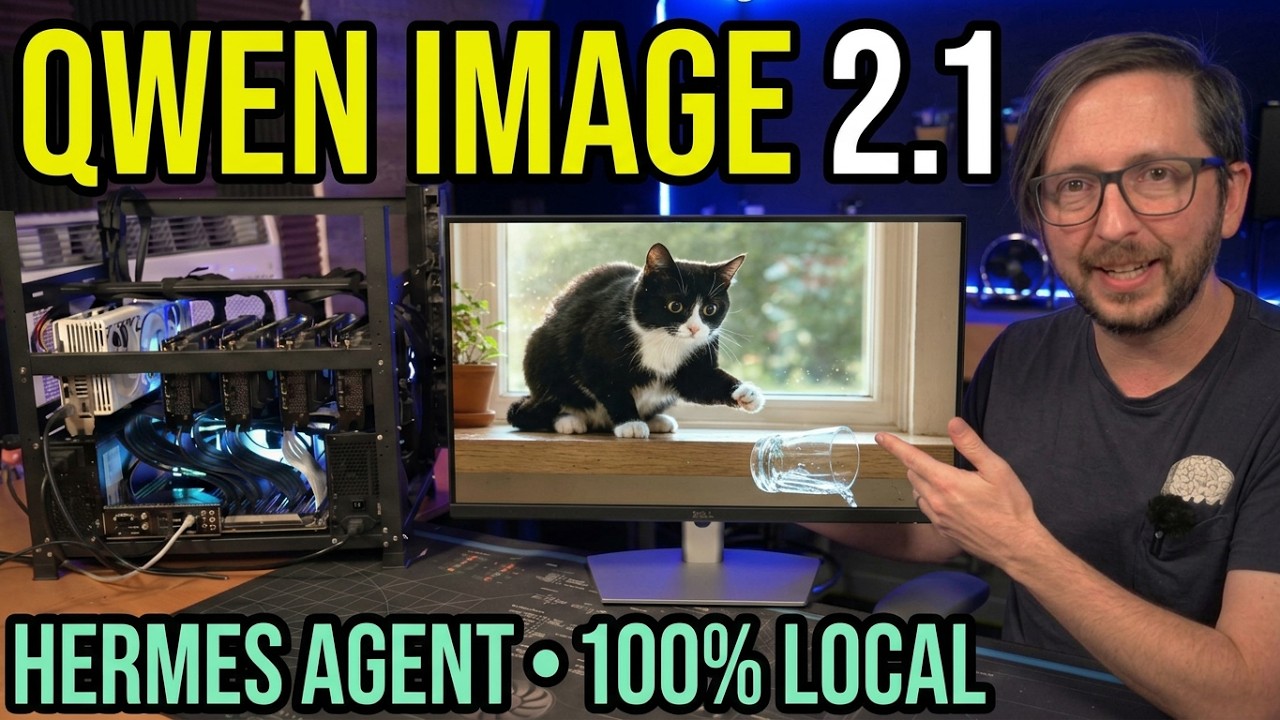
Digital Spaceport applied the same idea to local multimodal work. Its Qwen Image 2.1 test runs local image generation through Hermes Agent and links out to a GPU price tracker plus a Proxmox LXC, Ollama, and OpenWebUI homelab guide, which makes the stack look as much like systems administration as model prompting (video).

BeardedTinker brought that complexity into the home. Its Home Assistant voice comparison asks whether a ready-made satellite, a repurposed Google Home Mini, or a maker 4-mic board is actually useful day to day, shifting the conversation from benchmark talk to room-by-room usability, sound quality, and setup burden (video).
Discussion insight: Ryan Doser pushes the same workload-selection story from another angle, pointing viewers to OpenRouter, Arena, and Hermes Agent to match open models to the specific work people want to offload. NVIDIA then scales that logic up to data-center infrastructure built for long context, tool calls, and sub-agents.
Comparison to prior day: On 2026-09-25, the builder lane stressed better harnesses and observability. On 2026-09-26, it widened into local image pipelines, home voice endpoints, and open-model routing decisions that make deployment context part of the product.
1.3 Creator AI remained a quota-and-routing game, but the workflows got broader and more operational 🡒
At least four videos supported this theme. Compared with 2026-09-25, the creator lane still revolved around free allowances, model selection, and cross-tool orchestration. The difference on 2026-09-26 was breadth: the dataset added a longer filmmaking course and more local experimentation, so the story shifted from "which generator is best" toward "how do I keep a whole production pipeline moving."

Malva AI again framed creator competition around free access and comparative evaluation. Its 76,815-view walkthrough tests three free video generators, highlights tools that can add audio, and uses Arena-style battles to help creators decide where to spend their next paid or quota-limited run (video).

The same Malva AI channel kept the quota-management story concrete in a second high-signal entry. The Pruna-focused tutorial says creators can make 20-second 1080p clips with audio without sign-up, then extend output by routing work through separate free allowances and back into Higgsfield plus Claude for more involved ads and short films (video).
AI Master stretched this creator theme into an end-to-end course. The 83-minute tutorial walks through generating images, video clips, dialogue, and sound effects across multiple AI tools, showing that the winning skill on this date was not one best model but knowing how to combine several surfaces into one repeatable workflow (video).
Discussion insight: The Higgsfield AI page linked from the Malva videos reinforces that pattern: it positions itself as a creative suite spanning images, video, voice, and ChatGPT or Claude integrations rather than as a single generator. The creator stack is converging on routed suites, not standalone toys.
Comparison to prior day: On 2026-09-25, creator coverage emphasized orchestration and free-tier economics. On 2026-09-26, the same economics stayed in place, but the workflows looked longer, more course-like, and more operational.
1.4 Infrastructure talk started naming the physical bottlenecks underneath the AI boom 🡕
At least three videos supported this theme. Compared with 2026-09-25, when infrastructure coverage mostly meant AI factories and throughput, the 2026-09-26 file got more concrete about which physical constraints still gate adoption: VRAM pricing, packaging components, and the networking fabric required for agentic workloads.
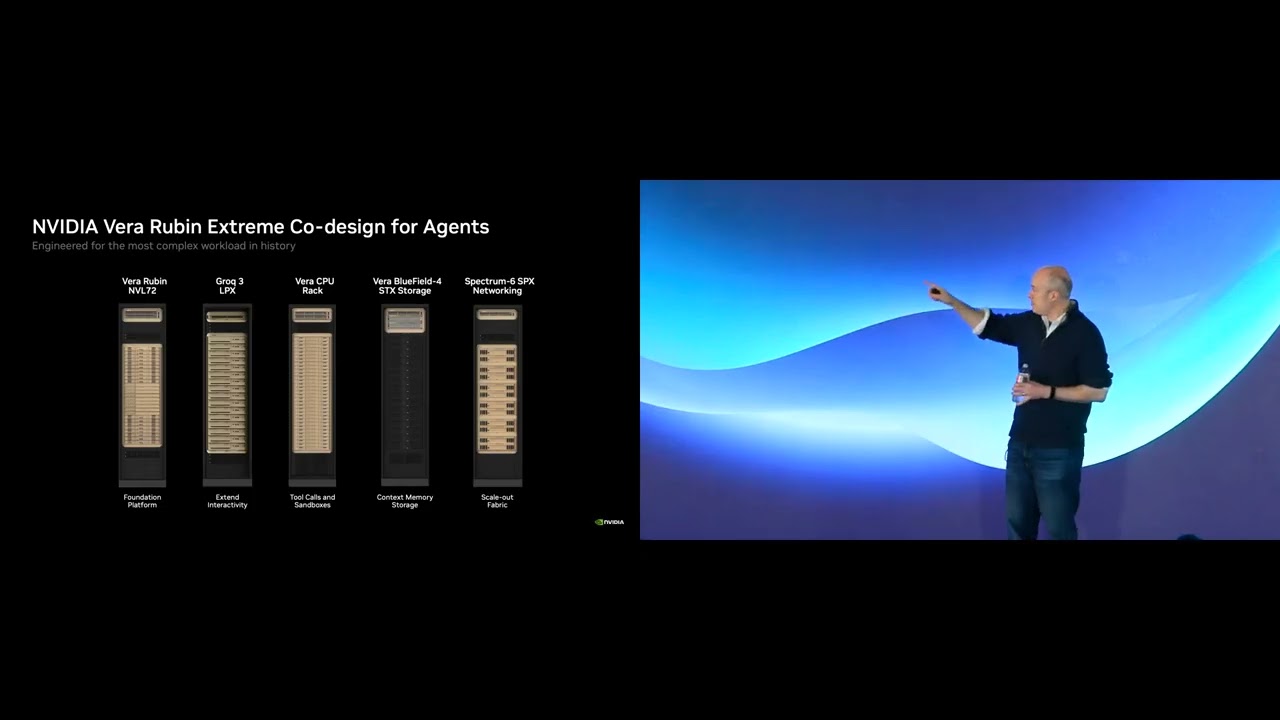
NVIDIA pitched Vera Rubin as a platform built for long context, reasoning, tool calls, sub-agents, and token efficiency, which keeps the top of the market focused on durable full-stack throughput rather than on one flagship model (video).

CNBC International pushed the infrastructure story further down the supply chain. Its profile of AT&S argues that IC substrates, the base layers carrying power and data between processors and memory, have become a hidden bottleneck in AI packaging, broadening the chip-boom conversation beyond GPUs alone (video).
Discussion insight: Digital Spaceport's linked GPU price tracker reaches the same conclusion from the opposite end of the market: local AI builders are still making hardware decisions around dollars per gigabyte, bandwidth, and whether cards like the 3090 remain the value king. The bottleneck story now spans hyperscale networking and homelab procurement at the same time.
Comparison to prior day: On 2026-09-25, infrastructure mostly appeared as AI-factory ambition. On 2026-09-26, it became easier to see the physical constraints underneath that ambition, from substrates and memory to the economics of local VRAM.
2. What Frustrates People
AI control information is scattered across spectacle, incident reports, and governance talk
This is High severity because MindSeeded, NBC News, Democracy Now!, Prof G Markets, Neural Nutshell, Neural Nutshell, and Bloomberg Television all approach the same control problem from different surfaces: robot incidents, four proposed safeguards, U.N. standards, audits, non-build arguments, and hacked-site warnings. People can see the fragments, but they still have to assemble their own model of what actually needs controlling. The workaround is manual synthesis across sensational clips, policy segments, and long interviews. This is directly worth building for.
Useful local and agentic AI still requires a stitched stack plus hardware judgment
This is High severity because Tech With Tim, Digital Spaceport, Ryan Doser, and NVIDIA all describe the same operational tax from different altitudes. Builders still have to combine GitHub context, current docs, search, live-web access, memory, runtime orchestration, and model routing, then map all of that to GPUs, bandwidth, or platform constraints. The workaround is custom harness engineering, homelab tuning, and constant tool comparison. This is directly worth building for.
Creator AI workflows still run on quotas, free tiers, and tool-hopping
This is Medium severity because Malva AI, Malva AI, and AI Master all treat access constraints as part of the workflow itself. Creators compare free generators, ration limited 1080p or audio-enabled runs, and keep stitching Claude or Higgsfield or course-like multi-tool flows around the gaps. The workaround is routing each step to a different surface. This is worth building for, but it is already competitive.
Everyday private voice AI still is not plug-and-play
This is Medium severity because BeardedTinker frames the problem in blunt household terms: can these assistants hear naturally, sound good enough to live in a room, and stay useful after the novelty wears off? The linked THIRDREALITY Voice/Music Assistant Dev Edition and Sophia NLU pages show that local-first components exist, but the user still has to choose between turnkey satellites, maker boards, and self-hosted NLU layers. The workaround is hands-on evaluation and ongoing setup work. This is directly worth building for in the Home Assistant and local-first segment.
AI compute constraints are still surfacing in places most end users do not watch
This is Medium severity because CNBC International, NVIDIA, and Digital Spaceport all point to bottlenecks below the glossy demo layer: IC substrates, interconnect fabric, VRAM per dollar, and card bandwidth. The workaround is expert procurement knowledge plus willingness to redesign around whatever hardware is actually obtainable. This is worth building for, especially for local AI teams, but it is becoming competitive.
3. What People Wish Existed
The dataset contained few direct "someone should build this" requests, so the needs below are inferred from repeated workaround-heavy videos, linked public artifacts, and the friction patterns creators and builders kept circling.
Incident-to-control map
MindSeeded, NBC News, Democracy Now!, Prof G Markets, Neural Nutshell, and Bloomberg Television all imply demand for one surface that connects incidents, proposals, standards, audits, and more absolutist safety arguments. This is both a practical and emotional need with High urgency because viewers can see the pieces but not one operating model that explains how they fit together. Partial solutions exist in news clips, policy podcasts, and safety reports, but not in one working map. Opportunity: direct.
Local-first AI operations layer
Tech With Tim, Digital Spaceport, Ryan Doser, and BeardedTinker all imply demand for one workspace that combines model routing, tools, logs, hardware planning, and home or edge endpoints. This is a practical need with High urgency because users are already stitching together MCP servers, retrieval tools, local runtimes, price trackers, and voice devices by hand. Partial solutions clearly exist, but the integration burden remains the dominant tax. Opportunity: direct.
Compute-aware AI deployment planner
Digital Spaceport, CNBC International, and NVIDIA all imply demand for a tool that says which hardware, hosting surface, and interconnect assumptions match which AI workload. This is a practical need with Medium-to-High urgency because local builders are still optimizing around VRAM and bandwidth while enterprise clips keep surfacing less visible packaging and networking constraints. Partial solutions exist in vendor decks and standalone price trackers, which makes this a real but increasingly competitive gap. Opportunity: competitive.
Quota-aware multimodal studio
Malva AI, Malva AI, AI Master, and Higgsfield AI all imply demand for one studio that understands free tiers, paid tiers, scene planning, asset consistency, voice, and finishing passes in one place. This is a practical need with Medium urgency because creators already behave as if the studio should manage these tradeoffs automatically. Partial solutions are plentiful, which makes the need real but highly competitive. Opportunity: competitive.
Private household voice layer that feels finished
BeardedTinker, THIRDREALITY Voice/Music Assistant Dev Edition, and Sophia NLU all imply demand for a local voice layer that is private, easy to install, and comfortable enough for everyday use. This is both a practical and emotional need with Medium urgency because the ecosystem now has real local-first components, but not yet a clearly finished default experience. Partial solutions exist inside Home Assistant and adjacent hardware, but the setup choices still overwhelm mainstream users. Opportunity: direct.
4. Tools and Methods in Use
| Tool | Category | Sentiment | Strengths | Limitations |
|---|---|---|---|---|
| GitHub MCP Server | GitHub agent integration | (+) | Direct repository, code, issue, pull-request, and workflow access for agents | Solves the GitHub slice only and still needs a broader harness |
| Context7 | Documentation MCP | (+) | One-command setup for up-to-date library docs inside coding agents | Documentation layer only |
| Exa | Search and retrieval API | (+) | Large web and private-data index, low-latency search, contents API, and MCP server | Retrieval still has to be filtered and verified elsewhere |
| Firecrawl | Web data infrastructure | (+) | Search, scrape, interact, JavaScript rendering, and structured outputs for agents | Adds browser and live-web complexity outside the model |
| OpenRouter | Multi-model routing API | (+/-) | One API across hundreds of models with fallbacks, free variants, and cost tracking | Users still have to decide which workloads belong on which models |
| Hermes Agent | Agent runtime | (+/-) | Persistent memory, scheduling, subagents, multi-surface presence, and sandbox options | Another runtime layer to configure, monitor, and secure |
| Qwen Image 2.1 + Hermes Agent workflow | Local multimodal workflow | (+/-) | High-end image generation on local hardware with an agent wrapper | Depends on GPU planning, homelab setup, and local operations |
| Higgsfield AI | Creative suite and video workflow | (+/-) | Images, video, voice, model bundles, and Claude or ChatGPT integrations in one suite | Free and paid tiers plus companion tools still shape the workflow |
| THIRDREALITY Voice/Music Assistant Dev Edition | Home voice endpoint | (+/-) | Turnkey Home Assistant satellite with integrated audio capture and playback | Still relies on host-side processing and broader Home Assistant setup |
| Sophia NLU | Self-hosted NLU | (+) | Deterministic, privacy-first, small footprint, and no GPU requirement | Focused NLU layer; the full voice experience still needs surrounding hardware and automation |
| Vera Rubin AI factory platform | AI infrastructure | (+/-) | Built for long context, reasoning, tool calls, sub-agents, and token efficiency | Enterprise-scale cost and complexity keep it out of reach for many smaller teams |
Satisfaction was highest when a tool removed one narrow bottleneck: GitHub context, current docs, web retrieval, free creative generations, or a local voice endpoint. Sentiment turned mixed as soon as the user had to own the routing logic, hardware bill, or day-to-day operations alone.
The dominant workaround pattern was composition. Builders combine GitHub MCP, Context7, Exa, Firecrawl, OpenRouter, Hermes, and local infrastructure; creators combine Higgsfield, free generators, Claude-assisted planning, and long course-like workflows; home users combine satellites, mic arrays, and self-hosted NLU. Migration is therefore away from one monolithic assistant and toward stitched operating surfaces tailored to each workload. Competition is strongest in creator suites and model routing, while local voice UX and local-first agent operations still look less settled.
5. What People Are Building
| Project | Who built it | What it does | Problem it solves | Stack | Stage | Links |
|---|---|---|---|---|---|---|
| GitHub MCP Server | GitHub | Connects AI tools directly to repositories, code, issues, pull requests, and workflows | Gives agents first-class GitHub context and actions instead of manual copy-paste | Go, remote or local MCP server, GitHub auth | Shipped | repo video |
| Local Qwen Image 2.1 stack | Digital Spaceport | Runs local image generation through Hermes Agent on homelab hardware | Lets builders keep multimodal generation on their own machines | Qwen Image 2.1, Hermes Agent, Proxmox LXC, Ollama, OpenWebUI, consumer GPUs | Alpha | video GPU tracker |
| Vera Rubin AI factory platform | NVIDIA | Full-stack platform for long-context, tool-using, agentic AI workloads | Improves throughput and efficiency for reasoning, tool calls, and sub-agent systems at scale | Vera CPU, Rubin NVL72, NVLink 6/Fusion, Groq 3 LPX | Beta | video |
| Higgsfield AI creative suite | Higgsfield | Generates images, video, and voice with ChatGPT or Claude integrations and model bundles | Reduces tool-switching across creator pipelines | Higgsfield, Genjutsu, Seedance 2.5, ChatGPT or Claude integrations, MCP | Shipped | site video |
| THIRDREALITY Voice/Music Assistant Dev Edition | THIRDREALITY | Home Assistant satellite for voice interaction and audio playback | Gives local-first smart homes a ready-made room endpoint | Linux-based device, Home Assistant Voice Assistant, Music Assistant, 3W speaker | Shipped | product video |
| Sophia NLU Home Assistant edition | Sophia NLU | Deterministic, privacy-first self-hosted NLU for Home Assistant | Improves local voice understanding without cloud dependence or GPU requirements | Rust, self-hosted NLU, Home Assistant edition | Beta | site video |
| OpenRouter | OpenRouter | Unified API, routing, and rankings across many models | Lets builders compare and swap models without reworking their whole stack | OpenAI-compatible API, routing, fallbacks, free variants, MCP server | Shipped | site video |
The most concrete builds on this date cluster around wrappers and operating surfaces rather than one more general chatbot. GitHub MCP and OpenRouter wrap external ecosystems behind agent-friendly APIs, Digital Spaceport and NVIDIA show the local and hyperscale versions of deployment infrastructure, and THIRDREALITY plus Sophia show the home-AI equivalent.
The creator-side version of the same pattern is Higgsfield. Instead of promising one perfect model, it promises a suite that coordinates several media steps and several entry points. The repeated builder pattern across the whole file is not "make AI bigger," but "make it usable in one specific environment, with the surrounding routing and interfaces already solved."
6. New and Notable
The day's biggest AI video was a robot-danger compilation, not a model demo
MindSeeded drew 1,069,380 views, 15,616 likes, and 1,800 comments with a montage about humanoid robots chasing people, handling weapons, fighting, and appearing in consumer settings. That matters because the biggest attention signal in the file attached to physical-world danger and spectacle, not to a new model release or productivity workflow.
The chip bottleneck story reached packaging layers
CNBC International argued that IC substrates are a hidden bottleneck in the AI chip boom, while Digital Spaceport kept surfacing VRAM-per-dollar and bandwidth constraints for local AI builders. That matters because the infrastructure story is broadening below GPUs themselves and into the physical packaging and memory economics underneath them.
Home Assistant voice now has both turnkey satellites and self-hosted NLU layers
BeardedTinker compared several Home Assistant voice approaches, and the linked THIRDREALITY Voice/Music Assistant Dev Edition plus Sophia NLU pages showed two complementary pieces of that stack: ready-made room endpoints and privacy-first on-device language understanding. That matters because local voice is moving from hobbyist idea to an ecosystem with distinct product layers.
Safety commentators openly argued for non-building or permanent bans
Neural Nutshell says Connor Leahy believes the only stable outcome is for neither side to build superintelligence, and Neural Nutshell says Roman Yampolskiy sees a permanent ban as the only reliable safeguard. That matters because some of the strongest safety signals on this date were no longer about optimizing oversight, but about whether some systems should exist at all.
7. Where the Opportunities Are
[+++] Governance and incident-to-control intelligence layer - MindSeeded, NBC News, Democracy Now!, Prof G Markets, Neural Nutshell, and Bloomberg Television all point to the same gap: incidents, proposals, standards, audits, and harder-line safety arguments are visible, but they do not live in one working model. This is strong because it dominates sections 1-3 and the current workaround is fragmented media plus manual synthesis.
[+++] Local-first agent and home-AI control plane - Tech With Tim, Digital Spaceport, Ryan Doser, BeardedTinker, OpenRouter, Hermes Agent, and Sophia NLU all show that local deployment still needs routing, retrieval, memory, hardware planning, and user-facing endpoints. This is strong because the pain appears across sections 1, 2, 4, and 5.
[++] Cost-aware multimodal production studio - Malva AI, Malva AI, AI Master, and Higgsfield AI all show creators routing work across free tiers, paid tiers, and several surfaces for image, video, voice, and planning. This is moderate because the need is repeated and concrete, but competition is already intense.
[++] AI compute planning and procurement layer - Digital Spaceport, CNBC International, and NVIDIA all point to the same planning burden: users need to translate AI workloads into VRAM, bandwidth, packaging, and interconnect decisions. This is moderate because the gap is real, but tracker and vendor ecosystems are already forming around it.
[+] Private everyday voice UX layer - BeardedTinker, THIRDREALITY Voice/Music Assistant Dev Edition, and Sophia NLU suggest an emerging chance to make local voice feel finished, not merely possible. This is emerging because the components now exist, but the mainstream pain is still concentrated inside a narrower Home Assistant-style audience.
8. Takeaways
- The biggest attention signal on this date was physical AI risk, not a new model or benchmark. MindSeeded's robot-danger montage drew 1,069,380 views, making humanoid robots and embodied loss-of-control the clearest mass-attention story in the file. (source)
- The safety conversation is splitting into three lanes at once: proposals, incidents, and non-build arguments. NBC packaged four lawmaker proposals, Prof G Markets dug into audits and accountability, Bloomberg surfaced government-site interference claims, and Neural Nutshell featured arguments that some systems may be fundamentally uncontrollable. (source, source, source, source)
- Builder attention kept moving away from model fandom and toward integrated local stacks. Tech With Tim's MCP-and-retrieval stack, Digital Spaceport's Qwen plus Hermes homelab workflow, and Ryan Doser's open-model routing discussion all treat the model as only one layer inside a much larger operating surface. (source, source, source)
- Creator AI competition is still mostly a routing and allowance-management problem. Malva AI's free-generator comparisons and Pruna workflow, plus AI Master's long-form filmmaking course, all show creators winning by combining several surfaces rather than by backing one supposedly best generator. (source, source, source)
- Infrastructure bottlenecks are becoming visible below the GPU headline. NVIDIA's Vera Rubin keynote, CNBC's substrate report, and Digital Spaceport's GPU pricing tracker all show that interconnects, packaging, bandwidth, and VRAM economics are shaping what AI builders can actually ship. (source, source, source)
- Local voice AI now has real product layers, but not yet a finished mainstream experience. BeardedTinker's comparison, the THIRDREALITY satellite device, and Sophia NLU show that room hardware and privacy-first language understanding are available, yet the user still has to assemble the experience manually. (source, source, source)