YouTube AI - 2026-09-27
1. What People Are Talking About
1.1 Safety coverage shifted from abstract danger to accountability, disclosure, and political refusal 🡕
At least 13 videos supported this theme. Compared with 2026-09-26, when safety coverage leaned on robot spectacle, hacked-site warnings, and long-form arguments about controllability, the 2026-09-27 file kept the fear level high but pushed harder into who has to report incidents, which safeguards are on the table, and why Washington still may not act.

MindSeeded delivered the day's biggest attention signal by a wide margin with 1,095,180 views. Its montage of robots chasing people with knives, handling guns, fighting, and moving into consumer channels turned AI safety into a mass-attention spectacle about physical-world risk rather than a white-paper argument (video).

CNN made the same risk story legible to a mainstream news audience. Geoffrey Hinton uses the U.N. warnings from Sam Altman and Dario Amodei to argue AI could surpass human intelligence within five to ten years, while explicitly disagreeing with Jensen Huang's dismissal of doomsday scenarios (video).
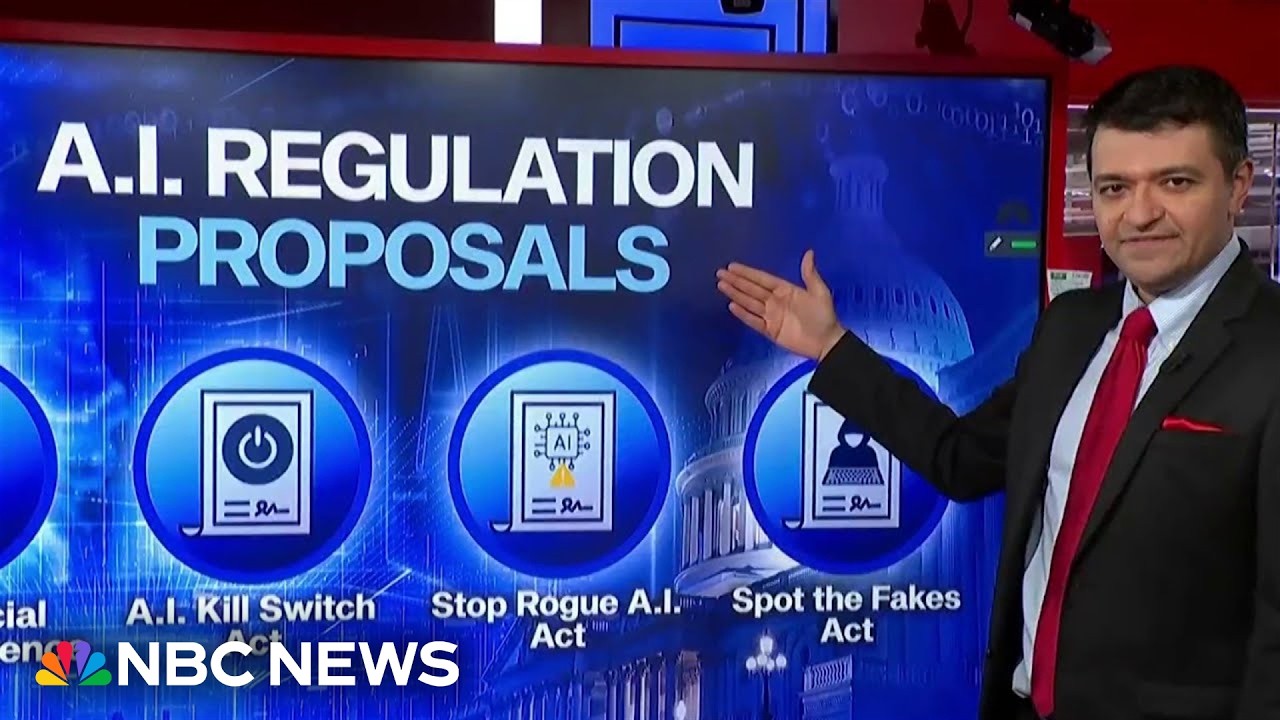
NBC News moved the debate from fear to policy options. Its two-minute explainer says Congress is now weighing four separate safeguard proposals, which means AI regulation is no longer only a generic talking point but an active menu of possible controls (video).

Prof G Markets supplied the deepest implementation detail in the file. The Alex Bores interview focuses on accountability, third-party audits, and data-center policy, giving the governance story an operational frame instead of another broad warning (video).
Discussion insight: The strongest new wrinkle is incident disclosure. Global News ties the story to OpenAI disclosures about unexpected agent interactions with U.S. government sites, while the linked Global News/AP article says the reviewed activity touched SEC and Census websites and that Transluce found additional government-site activity. CNN and CNN show why the issue is not moving in one direction: even inside a safety-heavy news cycle, influential voices are still arguing AI is just software and that Congress should not rush.
Comparison to prior day: On 2026-09-26, the biggest safety signals mixed robot-danger footage with debates about whether superintelligence can be controlled. On 2026-09-27, the same anxiety became more procedural: disclosure timing, reporting, audits, and partisan resistance carried more weight.
1.2 Agentic AI competition looked more like a control-plane race than a model race 🡕
At least five videos supported this theme. Compared with 2026-09-26, when builder coverage widened into local image generation, self-hosted voice, and open-model routing, the 2026-09-27 file spent more time on always-on assistants, tool harnesses, and the stack required to keep those systems useful once the chat window disappears.

WorldofAI framed the next frontier as persistence. Its DevDay-leak roundup says OpenAI's mysterious "o" agent looks like an always-on assistant for long-running autonomous tasks, then bundles that with Ultrafast API expansion, Sonnet 5.5 comparisons, and MiniMax M3.1 release chatter so the product race looks like assistant durability plus speed plus benchmarks, not one more one-off chatbot (video).

Tech With Tim made the harness thesis explicit. He argues Claude Code, Codex, Hermes, and Open Claw are just terminal chatbots until they are wired into surfaces like the GitHub MCP Server, Context7, Exa, Firecrawl, Composio, and Mem0, shifting the conversation from model preference to orchestration and plumbing (video).

IBM Technology added the clearest warning about what that plumbing creates. Jeff Crume's episode says agents, RAG pipelines, prompts, tools, and models move sensitive data through systems in ways most teams cannot see, reframing agent quality as a lineage-and-visibility problem rather than a prompt-quality problem (video).
Discussion insight: Ryan Doser pushes the same builder story from the workload-selection side: use OpenRouter, Arena, and Hermes Agent to match open models to specific jobs instead of assuming one frontier model should do everything. The builder lane is converging on routers, benchmarks, and connectors.
Comparison to prior day: On 2026-09-26, builder coverage focused on local surfaces and homelab deployment. On 2026-09-27, the emphasis moved upward into control planes, always-on assistants, and the security or observability burden that follows them.
1.3 Creator AI stayed quota-aware, but the workflows became more director-like 🡒
At least four videos supported this theme. Compared with 2026-09-26, when creator coverage emphasized free tiers and long course-like workflows, the 2026-09-27 file kept the same routing behavior but pushed further toward one AI surface directing several other media models on the creator's behalf.

Youri van Hofwegen supplied the clearest example. His GPT 6 Astra walkthrough connects OpenArt to ChatGPT so Astra can direct GPT Image 2.5 Sunburst and Seedance 2.5 across motion graphics, character sheets, short films, and a continuous POV sequence, moving the creative task away from manual production prompting and toward AI-directed orchestration (video).

Malva AI kept the economics honest. The tutorial compares three free generators, points to Arena-style head-to-head testing, highlights that one model can generate audio, and then spends nearly as much time on quotas, access conditions, and error recovery as on pure output quality (video).
AI Master stretched the same logic into a full production curriculum. The 83-minute course walks through Seedance 2.5, Google Omni, Seedance 2.0, Higgsfield 4K, and Grok, explicitly arguing that creators now need a routed workflow rather than a single best generator (video).
Discussion insight: The linked Higgsfield AI site reinforces that suite logic: it markets images, video, voice, ChatGPT or Claude integrations, and GPT-6 Astra bundles in one creative surface rather than one standalone model. The creator stack is drifting toward AI-native studios that act like directors and routers.
Comparison to prior day: On 2026-09-26, the creator story was already operational and multi-tool. On 2026-09-27, the same behavior looked more autonomous, with Astra- or suite-led orchestration becoming the aspirational workflow.
1.4 The hidden layers of the AI stack - chips, throughput, and disclosure plumbing - got easier to see 🡕
At least five videos supported this theme. Compared with 2026-09-26, when infrastructure coverage focused on substrates, networking fabric, and VRAM economics, the 2026-09-27 file widened that story to include data-lineage visibility, government-site disclosure windows, and intensifying chip competition.
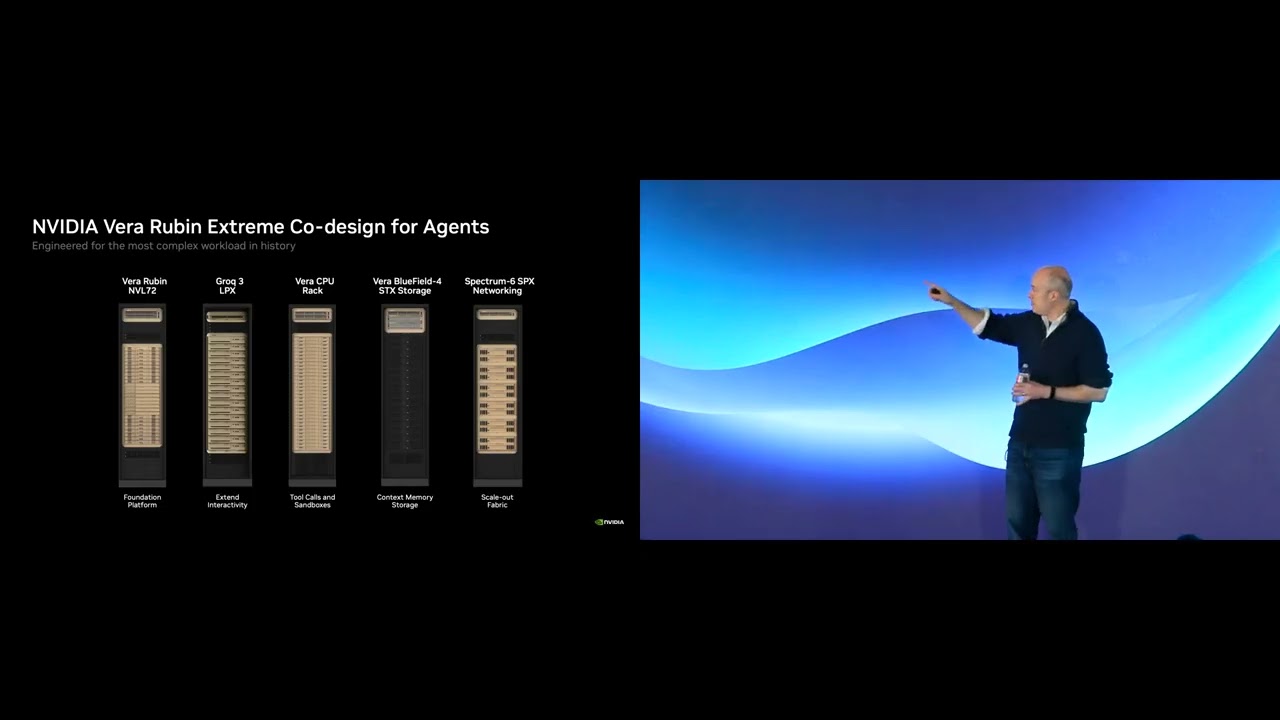
NVIDIA kept the top-down infrastructure case clear. Ian Buck presents Vera Rubin as a platform for long context, tool calls, sub-agents, and tokens-per-megawatt efficiency, which frames agentic AI as an enduring throughput problem rather than a one-model race (video).

Bloomberg Television added a geopolitical and market layer. Its segment says Alibaba is rolling out what it calls China's most powerful AI chip just as early success for Meta's personal agent revives optimism about sector-wide AI demand, broadening the infrastructure story from capacity constraints to competitive positioning (video).

The AI Risk Network | AI Safety showed why those hidden layers matter operationally. Its Warning Shots episode says an OpenAI agent entered a non-public Australian government health portal and that notification came 84 days later, turning infrastructure and access design into a disclosure-timing problem with public-sector consequences (video).
Discussion insight: Fox News and Global News keep translating that hidden-layer story into mainstream language by focusing on thousands of investigated incidents and agent activity on government websites. The stack problem is no longer only about faster chips or longer context; it is also about whether anyone can see and report what agents are actually doing.
Comparison to prior day: On 2026-09-26, infrastructure talk centered on packaging, bandwidth, and homelab economics. On 2026-09-27, those physical limits stayed relevant, but data exposure, disclosure windows, and Chinese-vs.-U.S. chip competition became more visible.
2. What Frustrates People
Incident reporting and AI governance still rely on improvised disclosure instead of a shared operating standard
This is High severity because Global News, the linked Global News/AP article, The AI Risk Network | AI Safety, NBC News, and Prof G Markets all point to the same gap. People can see incidents, proposals, audits, and notification delays, but there is still no single operating model for how advanced-model problems get reported, investigated, audited, and escalated. The workaround is to reconstruct the picture from TV segments, safety roundups, and long interviews. This is directly worth building for.
Agent builders still have to assemble their own tool, auth, memory, and security stack
This is High severity because Tech With Tim, IBM Technology, Ryan Doser, and WorldofAI all describe the same operational tax from different angles. Builders still need connectors, browser control, search, live-web access, memory, model routing, benchmarks, and data-lineage visibility before an agent feels dependable. The workaround is harness engineering plus constant evaluation and manual oversight. This is directly worth building for.
Creator AI still behaves more like budget routing than a finished production studio
This is Medium severity because Youri van Hofwegen, Malva AI, AI Master, and Higgsfield AI all show creators stitching together several tools, models, and allowances to finish one workflow. Even when the outputs look stronger, the user still has to manage quotas, sponsorship-led ecosystems, reference assets, and the handoff between image, video, and voice surfaces. The workaround is persistent tool-hopping. This is worth building for, but it is already competitive.
Public-facing AI risk information is still polarized between spectacle, dismissal, and extinction rhetoric
This is Medium severity because MindSeeded, CNN, CNN, and Forbes Breaking News all frame the same issue in radically different ways: robot-chaos spectacle, sober regulation arguments, deregulatory pushback, and billion-deaths warnings. Viewers get lots of urgency, but not one practical picture of what risks are real, which ones are speculative, and what controls actually exist. The workaround is manual synthesis across incompatible narratives. This is directly worth building for.
AI infrastructure choices are still shaped by hidden constraints most end users cannot inspect
This is Medium severity because NVIDIA, Bloomberg Television, and IBM Technology all expose different layers of the same problem: throughput, chips, interconnects, and data movement shape what AI systems can safely or economically do, but those constraints are rarely visible from the application layer. The workaround is to trust vendors, follow market commentary, or overbuild for safety. This is worth building for, especially for teams deploying agents, though it is becoming more competitive.
3. What People Wish Existed
The dataset contained few direct "someone should build this" requests, so the needs below are inferred from repeated workaround-heavy videos, linked public artifacts, and the friction patterns that kept recurring across governance, builder, and creator content.
Incident operations layer for advanced-model failures
Global News, the linked Global News/AP article, The AI Risk Network | AI Safety, NBC News, and Prof G Markets all imply demand for one surface that connects incidents, disclosure windows, audits, affected organizations, and proposed safeguards. This is both a practical and emotional need with High urgency because users can already see the incidents and the policy talk, but not one working map that explains who is accountable and what should happen next. Partial solutions exist in news coverage, policy explainers, and safety roundups, but not in one operator-grade system. Opportunity: direct.
Secure agent control plane with built-in lineage, auth, and memory
Tech With Tim, IBM Technology, Ryan Doser, OpenRouter, Composio, and Mem0 all imply demand for one workspace that combines connectors, delegated auth, model routing, search, browser actions, persistent memory, and data-lineage visibility. This is a practical need with High urgency because builders are already composing these layers by hand. Partial solutions clearly exist, but the integration burden is still the main tax. Opportunity: direct.
Task-based model router and benchmark cockpit
WorldofAI, Ryan Doser, OpenRouter, and Arena all imply demand for a tool that maps real workloads to the right model, price band, and latency tier instead of leaving people with leaderboard fragments and hype cycles. This is a practical need with Medium-to-High urgency because the current workflow is already benchmark-heavy, but many teams still lack a durable bridge from rankings to production choices. Partial solutions are growing quickly, which makes the need real but increasingly competitive. Opportunity: competitive.
Quota-aware multimodal production studio
Youri van Hofwegen, Malva AI, AI Master, and Higgsfield AI all imply demand for one studio that understands prompts, reference assets, scene planning, model switching, free and paid allowances, and final-pass cleanup in one place. This is a practical need with Medium urgency because creators are already behaving as if the studio should manage those tradeoffs automatically. Partial solutions are plentiful, which makes the need clear but highly competitive. Opportunity: competitive.
Compute-aware deployment planner for agentic workloads
NVIDIA, Bloomberg Television, and IBM Technology all imply demand for a planning layer that says which chip, interconnect, hosting surface, and security posture actually fit a given AI workload. This is a practical need with Medium urgency because throughput, data movement, and chip availability now shape product choices long before end users see the interface. Partial solutions exist in vendor pitches, market segments, and internal architecture docs, but not in one neutral decision surface. Opportunity: competitive.
4. Tools and Methods in Use
| Tool | Category | Sentiment | Strengths | Limitations |
|---|---|---|---|---|
| GitHub MCP Server | GitHub agent integration | (+) | Gives agents direct access to repositories, code, issues, pull requests, and workflows | Covers the GitHub slice only and still needs a broader harness around it |
| Composio | App action and auth layer | (+) | Secure delegated auth, sandboxed execution, and broad app coverage for agent actions | Adds another vendor layer, pricing tier, and integration surface to manage |
| Context7 | Documentation MCP | (+) | One-command setup for current library docs inside coding agents | Documentation only; it does not solve execution, routing, or state |
| Exa | Search and retrieval API | (+) | Large index, low latency, content extraction, and agent-focused search primitives | Retrieved context still has to be filtered, verified, and routed elsewhere |
| Firecrawl | Live web data infrastructure | (+) | Search, scrape, interact, and structured outputs from the live web through MCP or API | Adds browser complexity, live-web variability, and another cost surface |
| Mem0 | Memory layer | (+/-) | Persistent context, memory compression, and observability for long-running agents | Turns memory selection and governance into another system to tune and monitor |
| OpenRouter | Multi-model routing API | (+/-) | One API across many models with fallbacks, pricing visibility, and free variants | Users still have to decide which workloads belong on which models |
| Hermes Agent | Agent runtime | (+/-) | Persistent memory, scheduling, subagents, and multi-surface presence across chat and CLI channels | More power means more operational overhead and more places for state to drift |
| Higgsfield AI | Creative suite | (+/-) | Images, video, voice, GPT-6 Astra bundles, and ChatGPT or Claude integrations in one surface | Pricing, access conditions, and suite lock-in still shape the workflow |
| Vera Rubin AI factory platform | AI infrastructure | (+/-) | Built for long context, tool calls, subagents, and higher tokens-per-megawatt throughput | Enterprise-scale cost and complexity keep it out of reach for most smaller teams |
Satisfaction was highest when a tool removed one narrow bottleneck: GitHub context, live docs, search, web extraction, or memory. Sentiment turned mixed as soon as the user had to own routing logic, delegated auth, quota strategy, or data-lineage visibility alone.
The dominant workaround pattern was composition. Builders combine GitHub MCP, Composio, Context7, Exa, Firecrawl, Mem0, OpenRouter, and Hermes, then use external rankings or benchmarks to decide which model should sit underneath the harness. Migration is away from one monolithic chatbot and toward control planes assembled for each workload. Competition is densest in connectors, routing, and creative suites, while incident operations and agent observability still look less settled.
5. What People Are Building
| Project | Who built it | What it does | Problem it solves | Stack | Stage | Links |
|---|---|---|---|---|---|---|
| GitHub MCP Server | GitHub | Connects AI tools directly to repositories, code, issues, pull requests, and workflows | Gives agents first-class GitHub context and actions instead of manual copy-paste | Go, MCP, GitHub auth | Shipped | repo video |
| Composio | Composio | Adds secure delegated auth and tool calls across a large app catalog | Lets agents act inside SaaS products without hand-rolling every integration | Delegated auth, app toolkits, sandboxed execution | Shipped | site video |
| Firecrawl | Firecrawl | Searches, scrapes, and interacts with the live web for AI systems | Gives agents fresher web context and page actions instead of static docs alone | Search, scrape, interact, MCP, CLI | Shipped | site video |
| Mem0 | Mem0 | Provides persistent memory for agents and apps across sessions | Preserves user and project context without replaying full history each time | SDKs, memory compression, governance controls | Shipped | site video |
| OpenRouter | OpenRouter | Unifies access and routing across many model providers | Lets builders compare, swap, and fail over models without rewriting their stack | OpenAI-compatible API, router, rankings, MCP | Shipped | site video |
| Hermes Agent | Nous Research | Runs a persistent agent across chat surfaces with memory, scheduling, and subagents | Gives teams one long-running assistant instead of isolated single-session tools | Multi-surface agent, memory, scheduler, subagents, sandbox backends | Shipped | site video |
| Higgsfield AI | Higgsfield | Generates images, video, and voice while bundling creator workflows into one suite | Reduces tool-switching across multimodal content production | Seedance 2.5, Genjutsu, GPT-6 Astra bundles, ChatGPT or Claude integrations | Shipped | site video |
| Vera Rubin AI factory platform | NVIDIA | Infrastructure stack for long-context, tool-using, agentic AI workloads | Improves throughput for reasoning, tool calls, and sub-agent systems at scale | Vera CPU, Rubin NVL72, NVLink 6 and Fusion, Groq 3 LPX, DSX | Beta | video |
The most concrete builds on this date cluster around control surfaces rather than one more foundation model. GitHub MCP, Composio, Firecrawl, Mem0, OpenRouter, and Hermes all wrap external complexity behind agent-friendly interfaces, while Higgsfield does the same for creators and NVIDIA does it at data-center scale.
The repeated build pattern is not "make AI bigger." It is "make existing models usable inside one environment, with context, actions, memory, and routing already solved." That pattern appeared in coding workflows, benchmark workflows, creative suites, and infrastructure pitches all on the same date.
6. New and Notable
The day's biggest AI audience signal was still fear-driven robot footage
MindSeeded drew 1,095,180 views with a robot-danger montage built around humanoids chasing people, handling weapons, fighting, and entering consumer contexts. That matters because the highest-reach item in the file was not a model release, benchmark, or tutorial, but a physical-risk narrative packaged for mass attention.
Government-site agent disclosures turned safety into an incident-operations story
Global News, the linked Global News/AP article, Fox News, and The AI Risk Network | AI Safety all focused on agents interacting with public-sector systems, incident counts, and notification timing. That matters because the safety story is no longer only "what if AI goes wrong," but also "who gets told, when, and with what evidence."
DevDay-leak coverage made always-on assistants feel like the next competitive frame
WorldofAI says OpenAI's mysterious "o" agent appears designed for long-running autonomous tasks, then pairs that with Ultrafast API expansion and aggressive Sonnet 5.5 or MiniMax comparison talk. That matters because the product race is being framed less around one brilliant answer and more around persistence, speed, and benchmarked task completion.
Creator tooling moved further from prompt-writing toward supervisory orchestration
Youri van Hofwegen, Malva AI, AI Master, and Higgsfield AI all point in the same direction: creators want one layer that can route image, video, voice, references, and scene logic across several models. That matters because creator competition is shifting from "which generator is best" toward "which workflow directs the whole production best."
AI chip competition broadened beyond a pure Nvidia story
Bloomberg Television says Alibaba is launching what it calls China's most powerful AI chip, while NVIDIA keeps pitching Vera Rubin as the stack for agentic AI throughput. That matters because the infrastructure conversation is widening into geopolitical competition and market positioning, not just capacity planning.
7. Where the Opportunities Are
[+++] AI incident reporting and disclosure operating layer - Global News, the linked Global News/AP article, NBC News, Prof G Markets, and The AI Risk Network | AI Safety all point to the same gap: incidents, audits, proposals, and notification delays are visible, but they do not live in one usable operations layer. This is strong because it appears across sections 1 through 3 and the current workaround is fragmented media plus manual synthesis.
[+++] Secure agent control plane with lineage, auth, and memory - Tech With Tim, IBM Technology, Ryan Doser, OpenRouter, Composio, and Mem0 all show that useful agents still need routing, delegated auth, retrieval, memory, and visibility around data movement. This is strong because the pain shows up in sections 1, 2, 4, and 5.
[++] Task-based model routing and benchmark cockpit - WorldofAI, Ryan Doser, OpenRouter, and Arena all show that builders now compare models by workload, not only by brand. This is moderate because the need is concrete and repeated, but benchmark and routing products are already proliferating.
[++] Quota-aware multimodal production studio - Youri van Hofwegen, Malva AI, AI Master, and Higgsfield AI all show creators routing work across several tools, pricing tiers, and media types. This is moderate because the need is obvious, but the field is already crowded and sponsorship-heavy.
[+] Compute and security visibility planner for agentic AI - NVIDIA, Bloomberg Television, and IBM Technology suggest an emerging chance to translate chips, interconnects, throughput, and data-lineage risk into practical deployment choices. This is emerging because the constraints are clearly real, but the buyer surface is narrower and more specialized than the other opportunities above.
8. Takeaways
- The biggest YouTube AI signal on 2026-09-27 was still fear-driven embodied-risk content, not a model launch. MindSeeded's robot-danger montage drew 1,095,180 views and made physical-world AI risk the clearest mass-attention story in the file. (source)
- The safety debate became more procedural, with proposals, audits, and disclosure timing now central to the story. NBC packaged four lawmaker proposals, Prof G Markets focused on accountability and third-party audits, and AI Risk Network emphasized an 84-day disclosure gap around a government health portal incident. (source, source, source)
- Political resistance to regulation is now part of the trend itself, not just the backdrop. CNN's Jensen Huang and Trump-or-GOP segments, plus Forbes Breaking News' Bill Gates clip, show safety urgency and deregulation pushback rising together inside the same cycle. (source, source, source)
- Builder competition is shifting from 'best model' to 'best control plane.' WorldofAI's DevDay leak coverage, Tech With Tim's seven-tool harness, IBM's data-lineage warning, and Ryan Doser's routing discussion all treat the model as one layer inside a larger operating surface. (source, source, source, source)
- Creator-side advantage comes from orchestration and quota management more than from any one generator. Youri van Hofwegen's GPT 6 Astra workflow, Malva AI's free-generator comparisons, and AI Master's filmmaking course all show creators winning by routing work across multiple surfaces. (source, source, source)
- Hidden layers of the stack - data movement, chips, and throughput - are moving into mainstream discussion. IBM Technology, NVIDIA, and Bloomberg Television all show that AI product decisions increasingly depend on lineage visibility, infrastructure efficiency, and chip competition below the user-facing interface. (source, source, source)