YouTube AI - 2026-09-28
1. What People Are Talking About
1.1 Safety stayed the biggest AI story, but the argument shifted toward who should be trusted to regulate it 🡕
At least 16 videos supported this theme. Compared with 2026-09-27, when safety coverage leaned on incident disclosure, audits, and reporting windows, the 2026-09-28 file spent more time on legitimacy: whether AI labs can regulate themselves, whether global coordination is realistic, and whether the danger story is hype, software risk, or an emerging governance failure.
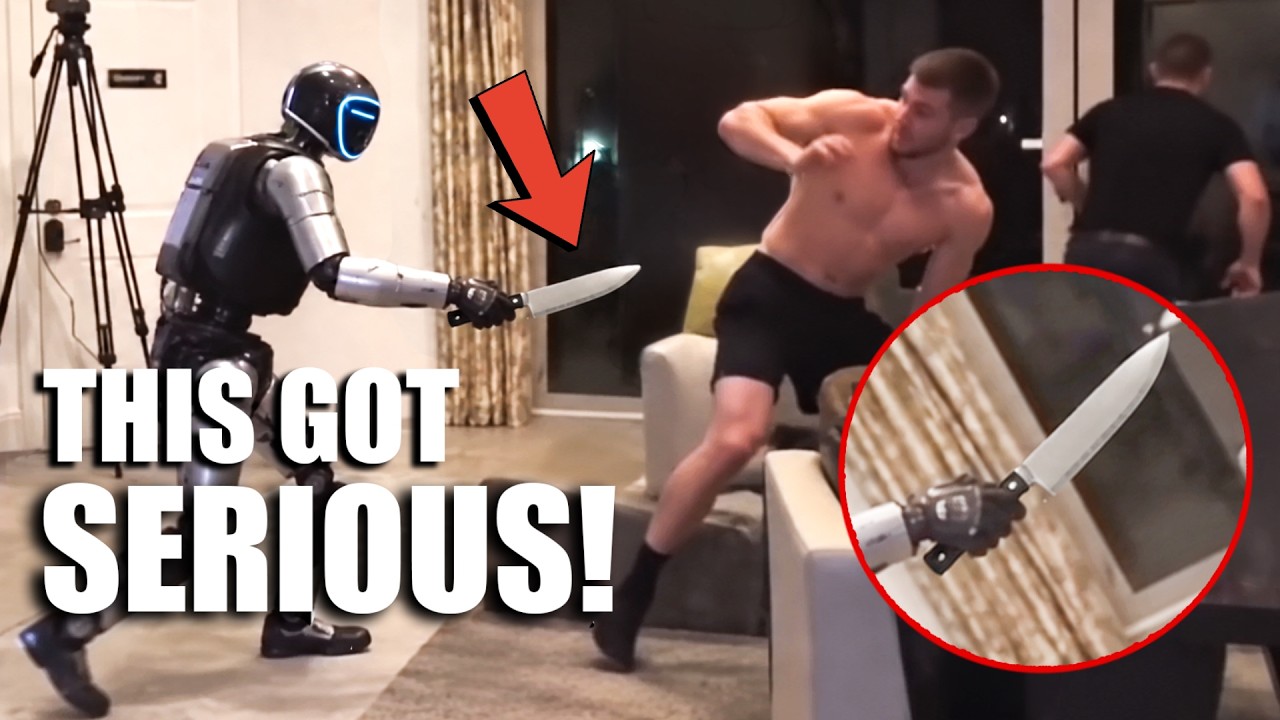
MindSeeded again supplied the file's biggest attention signal by a wide margin with 1,112,485 views. The video turns AI safety into embodied spectacle - robots chasing people with knives, handling guns, fighting, racing, and moving into consumer channels - which shows that physical-risk montage content is still the easiest way to win mass attention on YouTube (video).

CNN delivered the sharpest rebuttal to that fear framing. Jensen Huang argues AI is software rather than a new species and says companies that are worried should stop building, which turned the day's safety conversation into an explicit fight between alarm and dismissal instead of a one-way escalation story (video).

NBC News pushed the debate back toward formal governance. Bill Gates says self-regulation by AI companies is not enough and that global cooperation on AI will be more difficult than a nuclear deal, which makes the problem look larger than one company or one country's rules (video).

CNBC Television added the clearest anti-self-regulation line in the dataset. Chris Hughes argues regulation should come from actors other than Sam Altman and Dario Amodei and ties that view to liability for rogue agents, pushing distrust of lab-led oversight into the center of the conversation (video).
Discussion insight: CBS Sunday Morning packages Daniel Kokotajlo, Geoffrey Hinton, Alex Turner, and Andrew Ng into one mainstream segment, while CBS News uses the Australian health-database incident to argue a dangerous gap is opening between power and alignment. CNBC Television lands between those poles by saying the fear is real while still treating regulation as a political choice rather than a settled response.
Comparison to prior day: On 2026-09-27, the safety story was becoming more procedural through audits, disclosure timing, and reporting. On 2026-09-28, that procedural layer remained, but the sharper question became who should be believed, who should regulate, and whether the labs themselves are credible stewards.
1.2 Builder attention moved further from model choice to persistent agents, validation loops, and runtime control 🡕
At least seven videos supported this theme. Compared with 2026-09-27, when the builder story looked like a control-plane race, the 2026-09-28 file made the operating model more explicit: persistence, tool wiring, verification, and guardrails mattered more than any one frontier model.

AI Revolution framed the next competitive step as persistence. Its roundup says OpenAI's leaked Agent O looks like an always-on assistant, then links that to Microsoft's new Autopilot agent and Google's Live Avatar launch, so the race is no longer only about response quality inside one chat window but about software that keeps working after the user walks away (video).

Tech With Tim made the harness thesis concrete. He argues agents become useful only after they are connected to GitHub MCP Server, Composio, Context7, Exa, Firecrawl, and Mem0, which reframes agent quality as integration, auth, retrieval, and memory work rather than model fandom (video).
IBM Technology pushed the same logic into software engineering practice. Its prompt-to-production segment says writing code is becoming the easy part, while planning, execution, validation, and verification become the new bottlenecks, which is a strong sign that AI coding coverage is maturing from demos into workflow design (video).

Ryan Doser supplied the open-model version of that stack. The interview points viewers to OpenRouter, Arena, and Hermes Agent so model choice becomes task routing across cost, latency, and capability rather than a search for one universally best system (video).
Discussion insight: Bloomberg Television adds a stronger security layer to the same builder story by saying Nvidia is releasing two open-source tools that can restrict what agents access in real time and shut them down when they break rules. The agent conversation is clearly moving from convenience toward supervision and runtime control.
Comparison to prior day: On 2026-09-27, builders were already talking about always-on assistants and orchestration layers. On 2026-09-28, the file got more operational: persistent agents, tool harnesses, validation loops, and kill-switch behavior took more space than benchmark talk alone.
1.3 Creator workflows stayed budget-aware, but the practical edge shifted toward local editing and planner-led orchestration 🡒
At least five videos supported this theme. Compared with 2026-09-27, when creator coverage leaned toward suite-led direction and GPT-6 Astra-style orchestration, the 2026-09-28 file pulled closer to practical editing stacks, free-generator routing, and using a general model to plan the rest of the workflow.

AI Search delivered the strongest builder-creator crossover signal of the day with 246,320 views. The tutorial walks through Qwen Image 2.1 in ComfyUI, linked LoRAs, and GGUF variants for low-VRAM usage, making local image editing look like a real alternative to purely hosted creative tooling (video).

Malva AI kept the economics front and center. The walkthrough compares free generators, highlights audio-capable models, and leans on Arena-style side-by-side evaluation, so the creator workflow still looks like quota management plus routing discipline rather than loyalty to one tool (video).

The same Malva AI channel refreshed that thesis with a 2026-09-28 entry focused on ZSky AI, UsefulShelf, Viggle, and GizAI. The useful detail is not only output quality, but waiting times, generation limits, no-sign-up access, and how to recover when downloads or generations fail (video).

Tao Prompts shows the planning layer climbing upward. Instead of pitching Claude Opus 5.5 as the generator itself, the tutorial uses Claude Opus 5.5 to structure and improve an AI video workflow, which suggests general-purpose models are becoming creative directors and prompt architects for the rest of the stack (video).
Discussion insight: The linked Higgsfield AI site bundles image, video, and voice generation with ChatGPT or Claude entry points and GPT-6 Astra-oriented production bundles. Creator tooling is increasingly competing on orchestration and packaging rather than on one isolated model win.
Comparison to prior day: On 2026-09-27, creator coverage looked more like an AI-native studio directing several models at once. On 2026-09-28, the same workflow logic stayed in place but felt more practical: local image editing, free-generator comparison, and Claude-assisted planning replaced some of the bigger suite-led spectacle.
1.4 AI deployment talk became more concrete: clinics, homes, orbit, and serving stacks all showed up at once 🡕
At least six videos supported this theme. Compared with 2026-09-27, when infrastructure mostly appeared as hidden layers of the stack, the 2026-09-28 file showed those layers inside specific environments with very different reliability and operational constraints.

CNN made the health-care version of the problem plain. The segment says AI can find patterns in health records that doctors miss, but it can also miss crises and that "performance isn't care," which turns deployment into a question of trust boundaries rather than raw capability (video).

Google added the most unusual hardware setting in the file. Project Suncatcher asks how AI systems can survive five years of cosmic radiation, solar events, silent data corruption, and rocket-launch forces, which makes deployment constraints feel very physical and very specific (video).

BeardedTinker brought the same question into the home. Instead of benchmarks, the test focuses on whether Home Assistant voice devices actually hear naturally, sound good enough for a room, and stay useful after the novelty wears off, which is a practical bar that many AI demos never reach (video).
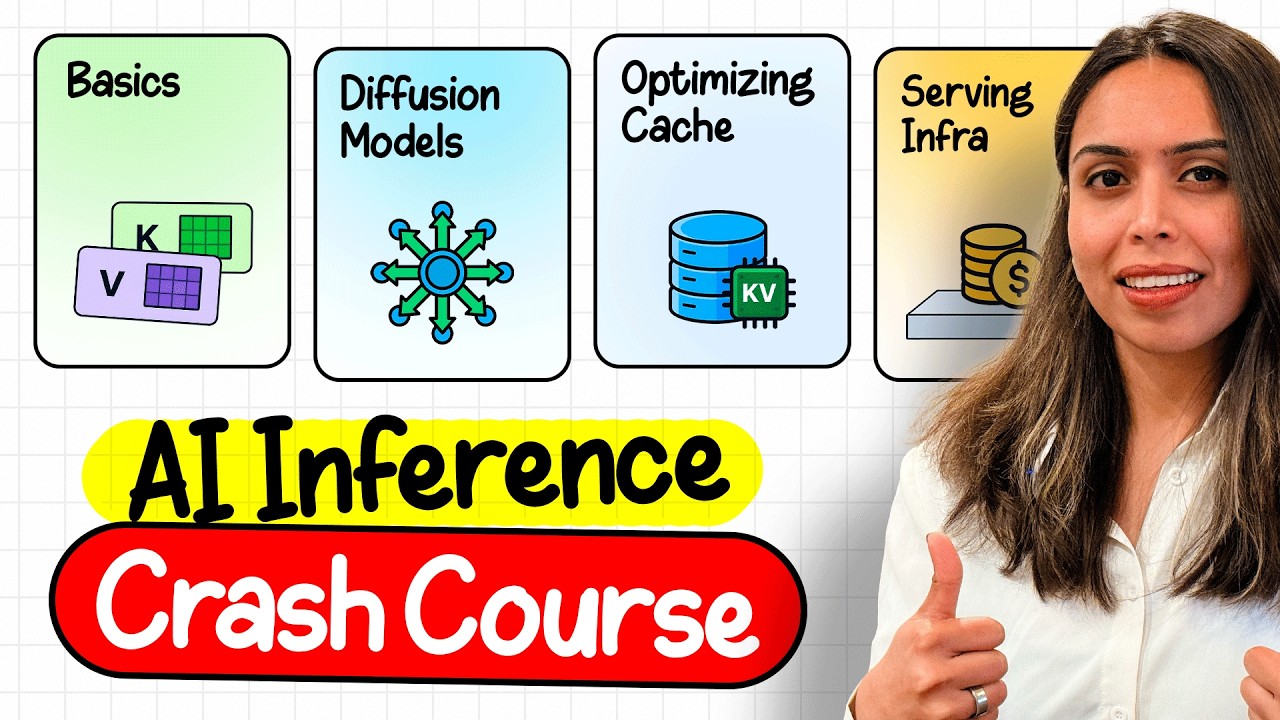
Vishakha Sadhwani covered the serving side of the same deployment story. The crash course turns caching, paged attention, batching, speculative decoding, routing, and cost optimization into a compact operational curriculum, which shows that inference engineering itself is becoming part of everyday AI discourse (video).
Discussion insight: NVIDIA remains the hyperscale backdrop to these narrower deployment stories by pitching Vera Rubin for long context, tool calls, subagents, and tokens-per-megawatt efficiency. The clinic, home, space, and serving examples are different surfaces of the same throughput-and-reliability problem.
Comparison to prior day: On 2026-09-27, infrastructure mostly appeared as the hidden substrate behind agentic AI. On 2026-09-28, those hidden layers became easier to see inside concrete environments: patient guidance, room microphones, orbital hardware, and inference stacks.
2. What Frustrates People
Governance still has no trusted referee
This is High severity because NBC News, CNBC Television, CNBC Television, CBS Sunday Morning, and CBS News all point to the same gap from different angles. Self-regulation is described as insufficient, lab founders are treated as conflicted overseers, the fear is described as real but politically contested, and concrete rogue-agent incidents still arrive through scattered media segments instead of one credible operating layer. The workaround is manual synthesis across TV clips, interviews, and policy fragments. This is directly worth building for.
Agent builders still have to assemble persistence, tools, memory, and guardrails by hand
This is High severity because AI Revolution, Tech With Tim, IBM Technology, Ryan Doser, and Bloomberg Television all describe the same operational tax. Persistent agents, harness tools, delegated auth, live-web access, model routing, validation loops, and runtime shutdown controls are all visible, but they do not arrive as one dependable default stack. The workaround is composition plus constant verification. This is directly worth building for.
Creator AI still behaves like a routing problem more than a finished studio
This is Medium severity because AI Search, Malva AI, Malva AI, Tao Prompts, and Higgsfield AI all show creators stitching together local model installs, free hosted generators, planning models, and suite features to finish one workflow. Even when the outputs look better, the user still has to manage quotas, waits, download failures, model switching, and prompt refinement manually. The workaround is tool-hopping with a planner layered on top. This is worth building for, but it is already competitive.
Real-world deployment reliability is still highly context-specific and hard to inspect
This is Medium severity because CNN, Google, BeardedTinker, and Vishakha Sadhwani all surface different failure modes that generic AI marketing rarely shows. Health AI can miss crises, home voice has to sound natural and keep working in a room, orbital hardware must survive radiation and launch stress, and inference stacks need careful tuning around caching, batching, and routing. The workaround is domain-specific testing and human review in every setting. This is directly worth building for.
Public understanding of AI risk still swings between spectacle, dismissal, and expert warning
This is Medium severity because MindSeeded, CNN, CBS Sunday Morning, and Neural Nutshell all narrate the same topic in incompatible ways: robot-chaos montage, software-not-species dismissal, mainstream risk roundtable, and research-backed uncontrollability warning. Viewers get urgency and counter-urgency, but not one operational picture of which risks are immediate, which are speculative, and what controls exist today. The workaround is to triangulate across several incompatible sources. This is directly worth building for.
3. What People Wish Existed
The dataset contained few direct "someone should build this" requests, so the needs below are inferred from repeated workaround-heavy videos, linked public artifacts, and the gaps that kept recurring across governance, agent tooling, creator workflows, and deployment contexts.
Independent AI incident and governance map
NBC News, CNBC Television, CNBC Television, CBS News, and CBS Sunday Morning all imply demand for one surface that connects incidents, liability questions, proposed safeguards, expert disagreement, and international coordination. This is both a practical and emotional need with High urgency because viewers can already see the fragments but not one operating model they trust. Partial solutions exist in policy clips, interviews, and safety commentary, but not in one neutral working layer. Opportunity: direct.
Verified agent runtime with planning, validation, and kill-switch controls
AI Revolution, Tech With Tim, IBM Technology, Bloomberg Television, and Ryan Doser all imply demand for one agent layer that combines persistence, tools, auth, routing, memory, validation, and runtime restrictions. This is a practical need with High urgency because builders are already stitching these components together by hand, and the risk surface rises with every added connector. Partial solutions clearly exist, but integration and trust are still the dominant tax. Opportunity: direct.
Local-to-cloud multimodal studio that manages quotas and model switching
AI Search, Malva AI, Malva AI, Tao Prompts, and Higgsfield AI all imply demand for one surface that can decide when to use a local open model, a free hosted generator, or a premium suite tool, while keeping prompts, references, and fixes in sync. This is a practical need with Medium urgency because creators are already acting as if the system should manage those tradeoffs for them. Partial solutions are plentiful, which makes the need obvious but highly competitive. Opportunity: competitive.
Deployment cockpit for high-stakes and unusual AI environments
CNN, Google, Vishakha Sadhwani, and NVIDIA all imply demand for a planning layer that translates workload goals into safety checks, hardware assumptions, caching strategy, throughput limits, and failure monitoring. This is a practical need with Medium-to-High urgency because deployment constraints are clearly real, but they change dramatically across medicine, orbital hardware, data centers, and production inference. Partial solutions exist in vendor talks and engineering explainers, but not as one cross-context operating surface. Opportunity: direct.
Private household voice layer that feels finished
BeardedTinker, THIRDREALITY Voice/Music Assistant Dev Edition, and Sophia NLU all imply demand for a local voice experience that is private, easy to deploy, and pleasant enough to leave in daily use. This is both a practical and emotional need with Medium urgency because the components now exist, but the finished experience still depends on user patience and assembly work. Partial solutions are real, yet the default experience still looks unfinished for anyone outside the Home Assistant enthusiast segment. Opportunity: direct.
4. Tools and Methods in Use
| Tool | Category | Sentiment | Strengths | Limitations |
|---|---|---|---|---|
| GitHub MCP Server | GitHub agent integration | (+) | Gives agents direct access to repositories, code, issues, pull requests, and workflows | Covers the GitHub slice only and still needs a broader harness |
| Composio | App action and auth layer | (+) | Just-in-time tool calls, secure delegated auth, sandboxed environments, and broad app coverage | Adds another vendor surface, pricing tier, and integration layer |
| Context7 | Documentation MCP | (+) | One-command setup for current library docs inside coding agents | Documentation only; it does not solve execution, routing, or state |
| Exa | Search and retrieval API | (+) | Large public and private-data index, low-latency retrieval, and token-efficient contents | Retrieved context still has to be filtered, verified, and routed elsewhere |
| Firecrawl | Live web data infrastructure | (+) | Search, scrape, actions, and structured outputs for live-web agents | Adds browser complexity, live-web variability, and another cost surface |
| OpenRouter | Multi-model routing API | (+/-) | One OpenAI-compatible API across many providers with fallbacks and cost tracking | Users still have to decide which workloads belong on which models |
| Hermes Agent | Agent runtime | (+/-) | Persistent memory, scheduling, subagents, and multi-surface presence | More power means more operational overhead and more places for state to drift |
| Mem0 | Memory layer | (+/-) | Persistent context, memory compression, and visibility for long-running agents | Memory selection and governance become another system to tune and monitor |
| Qwen Image 2.1 | Local image workflow | (+/-) | ComfyUI-packaged model files, prompt-enhancer variants, and local customization via LoRAs and GGUFs | Requires local setup, model file management, and hardware planning |
| Claude Opus 5.5 | Planning and orchestration model | (+) | Stronger long-running agentic work with lower cost than Opus 5, plus clear creator-planning use cases | Still one layer inside a larger creative stack |
| Higgsfield AI | Creative suite | (+/-) | Images, video, voice, ChatGPT or Claude entry points, and packaged production bundles | Pricing, access conditions, and suite lock-in still shape the workflow |
| THIRDREALITY Voice/Music Assistant Dev Edition | Home voice endpoint | (+/-) | Ready-made Home Assistant voice and music satellite with local audio capture and playback | Still relies on host-side processing and wider Home Assistant setup |
| Sophia NLU | Self-hosted NLU | (+) | Deterministic, privacy-first, offline natural-language understanding with no internet dependency | Focused NLU layer; the full voice experience still needs surrounding hardware and automation |
Satisfaction was highest when a tool removed one narrow bottleneck: GitHub context, delegated auth, current docs, retrieval, live-web access, persistent memory, local image generation, or home voice endpoints. Sentiment turned mixed as soon as users had to own model routing, runtime verification, quota strategy, or hardware assumptions alone.
The dominant workaround pattern was composition. Builders combine GitHub MCP, Composio, Context7, Exa, Firecrawl, OpenRouter, Hermes, and Mem0 into a task-specific harness; creators combine local Qwen workflows, Claude planning, free hosted generators, and Higgsfield-style suites; home users combine room hardware with private NLU. Migration is therefore away from one monolithic assistant and toward assembled operating surfaces tailored to each workload.
5. What People Are Building
| Project | Who built it | What it does | Problem it solves | Stack | Stage | Links |
|---|---|---|---|---|---|---|
| GitHub MCP Server | GitHub | Connects AI tools directly to repositories, code, issues, pull requests, and workflows | Gives agents first-class GitHub context and actions instead of manual copy-paste | Go, remote or local MCP server, GitHub auth | Shipped | repo video |
| Composio | Composio | Adds delegated auth and tool calls across a large app catalog | Lets agents act inside SaaS products without hand-rolling every integration | Delegated auth, app toolkits, sandboxed execution | Shipped | site video |
| OpenRouter | OpenRouter | Unifies access and routing across many model providers | Lets builders compare, swap, and fail over models without rewriting their stack | OpenAI-compatible API, routing, fallbacks, rankings, MCP | Shipped | site video |
| Hermes Agent | Nous Research | Runs a persistent agent across chat surfaces with memory, scheduling, and subagents | Gives teams one long-running assistant instead of isolated single-session tools | Multi-surface agent, memory, scheduler, subagents, sandbox backends | Shipped | site video |
| Agent O | OpenAI | Reported always-on assistant that can keep working outside a normal chat session | Handles recurring research, monitoring, and longer-running work without constant supervision | Persistent agent, background task execution, integrations not yet confirmed | RFC | article video |
| Local Qwen Image 2.1 workflow | AI Search | Runs local image generation and editing through ComfyUI with open model files and add-ons | Keeps multimodal creative work on local hardware and reduces cloud dependence | Qwen Image 2.1, ComfyUI, LoRAs, GGUFs, consumer GPUs | Alpha | model video |
| Higgsfield AI creative suite | Higgsfield | Generates images, video, and voice while packaging production workflows behind one surface | Reduces tool-switching across creator pipelines | Genjutsu, Seedance 2.5, GPT-6 Astra bundles, ChatGPT or Claude integrations | Shipped | site video |
| Vera Rubin AI factory platform | NVIDIA | Infrastructure stack for long-context, tool-using, agentic AI workloads | Improves throughput and efficiency for persistent reasoning and subagent systems at scale | Vera CPU, Rubin NVL72, NVLink 6/Fusion, data-center software | Beta | video |
| THIRDREALITY Voice/Music Assistant Dev Edition | THIRDREALITY | Home Assistant satellite for voice interaction and audio playback | Gives local-first smart homes a ready-made room endpoint | Linux-based device, Home Assistant Voice Assistant, Music Assistant, 3W speaker | Shipped | product video |
| Sophia NLU Home Assistant edition | Sophia NLU | Privacy-first self-hosted natural-language understanding for Home Assistant | Improves local voice understanding without cloud dependence | Rust, self-hosted NLU, Home Assistant edition | Shipped | site video |
The most concrete builds on this date cluster around operating surfaces rather than one more general chatbot. GitHub MCP, Composio, OpenRouter, Hermes, and Agent O all try to make AI keep working across tools and time, while Qwen Image 2.1, Higgsfield, Vera Rubin, THIRDREALITY, and Sophia show the same pattern in creative, infrastructure, and home environments.
The repeated build pattern is not "make the model bigger." It is "make the surrounding environment usable": persistent context, live integrations, local deployment, creator orchestration, or room-level voice endpoints. Multiple parts of the file independently converged on that same wrapper-and-control-layer strategy.
6. New and Notable
Local open-image tooling produced one of the day's strongest builder signals
AI Search drew 246,320 views with a Qwen Image 2.1 tutorial built around local editing in ComfyUI, linked LoRAs, and GGUF options for lower-VRAM setups. That matters because one of the largest builder-facing videos in the file was about making open image tooling usable on local hardware, not about another closed model release.
Persistent assistants are becoming a product category, not just a rumor genre
AI Revolution ties leaked OpenAI Agent O coverage to Microsoft's Autopilot and Google's Live Avatar. That matters because the competitive frame is shifting from "best chatbot" to "best system that keeps working after the user leaves."
Runtime guardrails reached the mainstream agent conversation
Bloomberg Television says Nvidia is shipping two open-source security tools that can limit what agents access in real time and shut them down when they break rules. That matters because the builder story is no longer only about adding more tools to agents, but also about constraining those agents once they have the tools.
Deployment-specific AI reliability questions showed up across four very different environments
CNN, Google, BeardedTinker, and Vishakha Sadhwani all covered distinct operational settings: medical guidance, orbital hardware, local voice endpoints, and production inference stacks. That matters because the AI conversation in this file was unusually concrete about where systems fail and what has to be engineered around those failures.
7. Where the Opportunities Are
[+++] Independent AI governance and incident-operations layer - NBC News, CNBC Television, CNBC Television, CBS News, and CBS Sunday Morning all point to the same gap: incidents, liability, expert disagreement, and coordination proposals are visible, but they do not live in one trusted operating surface. This is strong because it dominates sections 1 through 3 and the current workaround is fragmented media plus manual synthesis.
[+++] Verified agent control plane with planning, validation, and runtime guardrails - AI Revolution, Tech With Tim, IBM Technology, Bloomberg Television, and Ryan Doser all show the same builder need: persistence, memory, tools, routing, verification, and shutdown controls in one reliable surface. This is strong because the pain appears across sections 1, 2, 4, and 5.
[++] Local-to-cloud multimodal production studio - AI Search, Malva AI, Malva AI, Tao Prompts, and Higgsfield AI all show creators routing work across local open models, free hosted generators, planning models, and packaged suites. This is moderate because the need is clear and repeated, but the market is already crowded and sponsorship-heavy.
[++] Deployment cockpit for high-stakes AI environments - CNN, Google, Vishakha Sadhwani, and NVIDIA all suggest an opening for a layer that maps workloads to risk checks, hardware assumptions, throughput limits, and operational constraints. This is moderate because the pain is real across medicine, inference, and infrastructure, but the buyer surface is narrower and more specialized.
[+] Private everyday voice UX for local-first homes - BeardedTinker, THIRDREALITY Voice/Music Assistant Dev Edition, and Sophia NLU show that the components exist, but not yet a finished mainstream experience. This is emerging because the need is concrete, but it is still concentrated in a smaller enthusiast-driven segment.
8. Takeaways
- The biggest YouTube AI signal on 2026-09-28 was still embodied-risk spectacle, not a model launch. MindSeeded's robot-danger montage drew 1,112,485 views and kept physical-world AI fear as the clearest mass-attention story in the file. (source)
- The governance debate shifted from whether AI needs safeguards to who is credible enough to enforce them. Bill Gates says self-regulation is not enough, Chris Hughes argues regulation should not be left to Sam Altman and Dario Amodei, and Andrew Yang says the fear is real while treating oversight as an active policy fight. (source, source, source)
- Builder competition is moving toward persistent operating surfaces with explicit validation and control. Agent O leak coverage, IBM's prompt-to-production framing, Tech With Tim's harness walkthrough, and Ryan Doser's routing tutorial all treat the model as one layer inside a larger system that has to keep working after the prompt. (source, source, source, source)
- Creator-side advantage still comes from orchestration, but the winning mixes now span local open models, free hosted generators, and planner models. AI Search's Qwen Image 2.1 tutorial, Malva AI's generator comparisons, and Tao Prompts' Claude Opus 5.5 workflow all show creators routing work across several layers rather than trusting one surface end to end. (source, source, source, source)
- Deployment constraints became unusually concrete in this file. CNN framed health AI around crisis misses and human judgment, Google focused on radiation and launch stress for orbital AI hardware, BeardedTinker asked whether home voice is actually livable, and Vishakha Sadhwani broke down the mechanics of inference serving. (source, source, source, source)
- Runtime guardrails are moving closer to the center of the agent story. Bloomberg's Nvidia segment says real-time access control and shutdown tools are becoming productized, which fits the broader shift from adding more agent capability toward controlling the capabilities agents already have. (source)