YouTube AI - 2026-09-29
1. What People Are Talking About
1.1 AI safety turned into a White House power struggle over self-regulation 🡕
At least 18 videos supported this theme. Compared with 2026-09-28, when the main safety argument was whether AI labs could be trusted to regulate themselves, the 2026-09-29 file moved that dispute into U.S. political institutions: Trump hosted executives, lawmakers pushed a vote, and multiple channels argued over whether frontier systems should face outside review before release.

MindSeeded again supplied the file's biggest attention signal by a wide margin with 1,124,578 views. The video turns AI safety into embodied spectacle - humanoid robots chasing people with knives, handling guns, fighting, and entering consumer channels - which shows that public fear on YouTube still scales fastest when risk is visual and physical instead of procedural (video).

CNN translated that fear into explicit casualty language. Bill Gates says AI could be powerful enough to cause "a billion deaths" if left unchecked, and the segment frames legislation rather than voluntary company promises as the necessary response (video).

NBC News captured the day's core conflict most directly. Trump says tech companies will "police themselves" even as the segment positions that stance against growing demands for stronger guardrails and formal regulation, making self-governance the argument that everything else in the file is reacting to (video).

CNBC Television added the clearest anti-self-regulation line in the dataset. Chris Hughes argues oversight cannot be left to Sam Altman and Dario Amodei and ties regulation to liability for rogue agents, pushing the debate from generic "be careful" rhetoric into institutional accountability (video).
Discussion insight: The strongest non-video artifact in the file was the Senate push behind the Artificial Intelligence Risk Management and Security Act of 2026, which proposes a permanent AI Safety Board, pre-release access for reviewers, an incident database, and standards for autonomous agents. The policy conversation is no longer only about warning the public; it is about which release gates and reporting obligations should exist before the next incident.
Comparison to prior day: On 2026-09-28, the big question was whether labs themselves were credible stewards. On 2026-09-29, that trust problem hardened into an institutional fight over White House self-policing, Senate release gates, and who gets to set the rules.
1.2 Agent talk kept shifting from capability demos to control planes, guardrails, and background execution 🡕
At least nine videos supported this theme. Compared with 2026-09-28, when persistent agents and tool harnesses were becoming the story, the 2026-09-29 file spent even more time on how those systems should be wired, supervised, and constrained once they can keep working after the prompt ends.

Tech With Tim made the harness thesis concrete. He argues agents become useful only after they are connected to GitHub MCP Server, Composio, Context7, Exa, and Firecrawl, which reframes agent quality as tool access, auth, retrieval, and live-web execution rather than raw model preference (video).

CBS News pushed the same story into the safety layer. Reuters' Stephen Nellis says Nvidia has unveiled a security platform meant to stop AI agents from going rogue, which is strong evidence that runtime guardrails are moving from research concern into shippable product surface (video).

Futurepedia made the background-execution version of the same trend explicit. Its early-access test of Dots describes an always-on, proactive personal assistant agent, so the competitive frame is no longer only "best chatbot" but "best system that keeps working after the user leaves" (video).
IBM Technology supplied the workflow discipline behind those product claims. Its prompt-to-production segment says writing code is becoming the easy part while planning, execution, validation, and verification become the new bottlenecks, which is a strong sign that agentic coding coverage is maturing from demos into control systems (video).
Discussion insight: The linked GitHub MCP, Composio, Context7, Exa, and Firecrawl pages all reinforce the same pattern: the differentiator is now the operating surface around the model, not the model alone. The winning stacks expose context, delegated permissions, current docs, retrieval, and live-web actions in a way the agent can actually use.
Comparison to prior day: On 2026-09-28, builders were already talking about persistent agents and tool wiring. On 2026-09-29, that operating model got sharper: guardrails, background execution, and verification became as important as the agent itself.
1.3 Free access and packaged workflows kept outrunning official model narratives 🡕
At least six videos supported this theme. Compared with 2026-09-28, when creator coverage was already budget-aware and workflow-heavy, the 2026-09-29 file leaned harder into distribution advantages: stealth models, benchmark tools, bundled Astra pipelines, and packaged creative stacks.

WorldofAI delivered the cleanest example. The video frames Space Bunny Alpha as a free stealth model that can compete with GPT-6 Astra on coding and agentic tasks, and its linked OpenCode usage page shows why the claim landed: Space Bunny ranked #1 across the last week's usage with 6.0% of observed 2M volume and 15,262,150 completed sessions at zero spend (video).

Youri van Hofwegen showed the creator-side version of the same dynamic. His walkthrough connects OpenArt to ChatGPT so GPT-6 Astra can direct GPT Image 2.5 Sunburst and Seedance 2.5 across several video tasks, turning a frontier model into a packaged production pipeline instead of a one-off generation demo (video).

Malva AI kept the economics front and center. The comparison across ZSky AI, UsefulShelf, Viggle, and GizAI focuses on waiting times, generation limits, no-sign-up access, and how to recover from failures, which means workflow reliability and access conditions matter at least as much as raw output quality (video).
Discussion insight: The linked Higgsfield MCP pages make the packaging layer even clearer: 30+ image and video models, ChatGPT and Claude integration, and reusable production bundles are being sold as a workflow surface. Creator tooling is increasingly competing on orchestration and distribution, not only on which model name wins one benchmark.
Comparison to prior day: On 2026-09-28, creators were still routing around quotas and free tools. On 2026-09-29, that logic extended into stealth releases, benchmark sites, and turnkey Astra workflows, so access and packaging took more narrative space than official launch pedigree.
1.4 The most practical AI coverage came from domain-specific deployment tests, not generic demos 🡒
At least six videos supported this theme. Compared with 2026-09-28, when deployment started showing up across clinics, homes, orbit, and serving stacks, the 2026-09-29 file kept the same spread but leaned harder into implementation detail: what fails in medicine, what physical AI needs from data, what makes local voice livable, and how serving actually works.

CNN made the health-care version of the problem explicit. The segment says AI can see patterns in records that doctors miss but can also miss medical crises, and its "performance isn't care" line is one of the clearest statements in the file about why domain success metrics cannot be borrowed from generic AI demos (video).
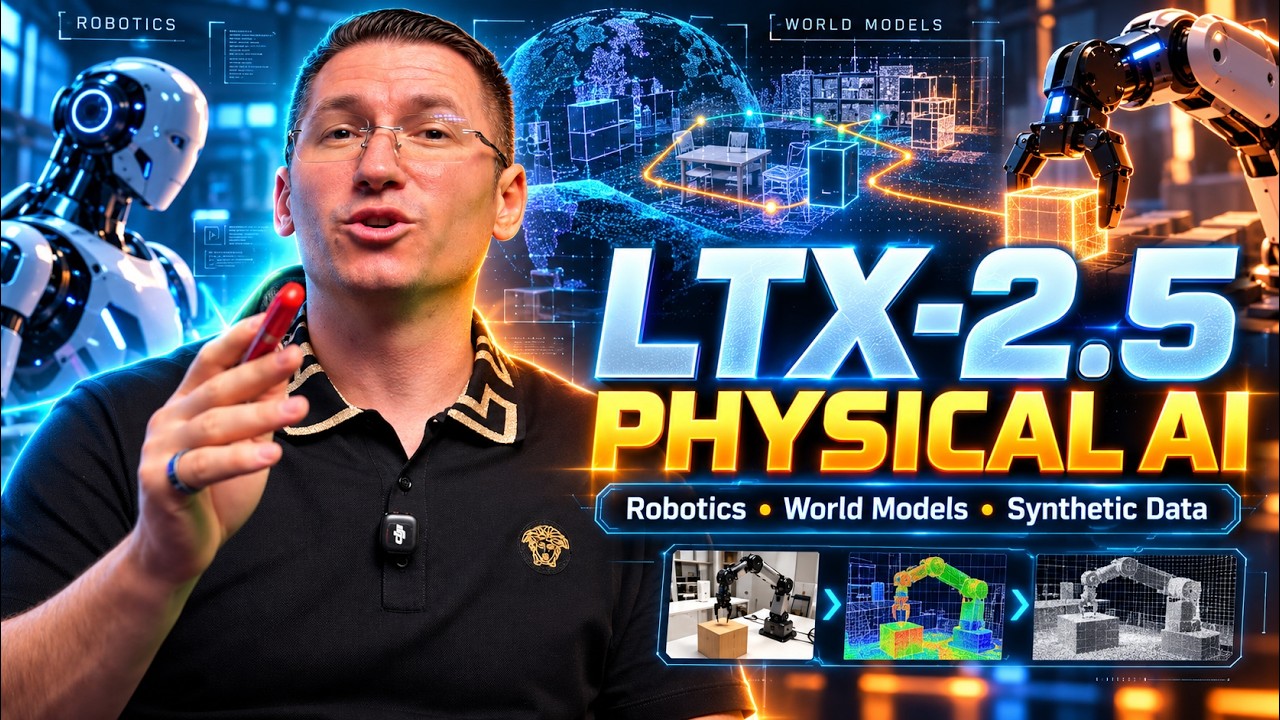
BMF MEDIA pushed that same logic into robotics. The video argues LTX-2.5 matters less as a cinematic model than as an open checkpoint for synthetic data, domain adaptation, egocentric views, industrial environments, and world prediction, which is a much more operational frame for "physical AI" than hype clips alone usually provide (video).

BeardedTinker brought the same question into the home. Instead of asking which voice stack sounds futuristic, the test asks whether devices hear naturally, sound good enough for a real room, and stay useful after the novelty fades, which is a much tougher deployment bar than a benchmark screenshot (video).
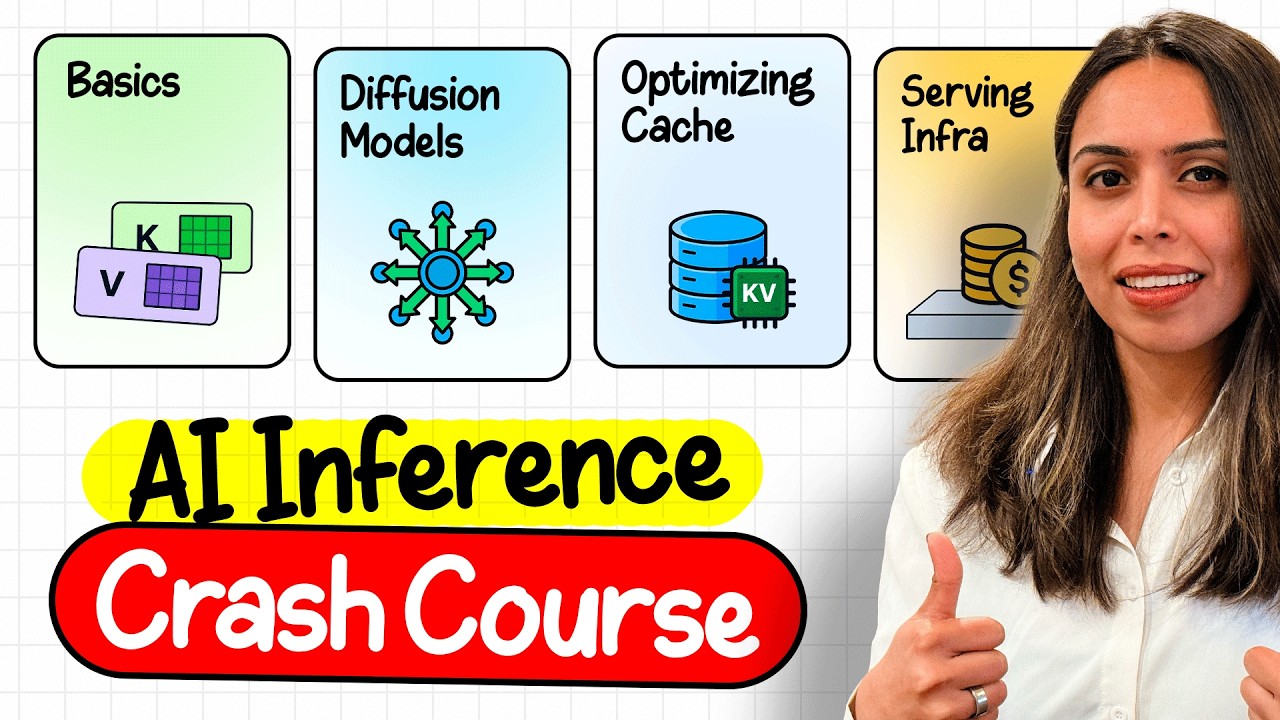
Vishakha Sadhwani covered the serving side of the same story. The crash course turns prefix caching, paged attention, continuous batching, speculative decoding, routing, quantization, and cost optimization into a compact operating curriculum, showing that inference engineering itself is becoming mainstream AI content (video).
Discussion insight: The linked Sophia Home Assistant Edition page and AI Infra Summit 2026 overview point to the same pattern from opposite ends of the stack: AI deployment is getting more concrete, whether the target is a Raspberry Pi smart home or an AI factory built for agentic workloads.
Comparison to prior day: On 2026-09-28, deployment coverage was broad and cross-domain. On 2026-09-29, the same theme stayed steady but got more implementation-heavy, with more emphasis on evaluation criteria, local hardware, synthetic data, and serving mechanics.
2. What Frustrates People
Governance is still fragmented between self-policing, legislation, and public fear
This is High severity because CNN, NBC News, CNBC Television, and the proposed Artificial Intelligence Risk Management and Security Act of 2026 all point to the same gap from different angles. Safety warnings are louder, but the operating question - who can inspect frontier systems, who can slow them down, and who is liable when they fail - still has no settled answer. The workaround is manual synthesis across summit clips, interviews, legislation, and incidents. This is directly worth building for.
Agent capability is advancing faster than runtime control
This is High severity because Tech With Tim, CBS News, IBM Technology, and Futurepedia all describe the same tax. Agents now have better tools, broader context, and longer-lived execution models, but builders still have to assemble permissions, validation, monitoring, and shutdown paths by hand. The workaround is layered harnesses plus human verification. This is directly worth building for.
Tool and model selection still depends on hype cycles, bundles, and continual benchmarking
This is Medium severity because WorldofAI, the linked OpenCode usage page, Youri van Hofwegen, Malva AI, and Higgsfield MCP all show discovery happening through stealth launches, affiliate-heavy walkthroughs, free-access experiments, and packaged workflows. Users can try more options than before, but they still have to benchmark those options themselves to know what is real, cheap, and reusable. The workaround is constant task-specific testing. This is worth building for, but it is already competitive.
Real-world AI quality is still hard to judge outside the target environment
This is Medium severity because CNN, BMF MEDIA, BeardedTinker, Vishakha Sadhwani, and Sophia Home Assistant Edition all surface a different evaluation problem. Health guidance, robotics data generation, smart-home voice, and inference serving each fail in their own way, so generic AI quality claims travel poorly across domains. The workaround is local testing, synthetic data, and environment-specific review. This is directly worth building for.
3. What People Wish Existed
The dataset contained few direct "someone should build this" requests, so the needs below are inferred from repeated workaround-heavy videos, linked public artifacts, and the gaps that kept recurring across governance, agent tooling, model selection, and deployment.
Release-gated AI governance and incident layer
CNN, NBC News, CNBC Television, and the proposed Artificial Intelligence Risk Management and Security Act of 2026 all imply demand for one operating surface that combines incident reporting, pre-release review, liability boundaries, and model-specific safety standards. This is both a practical and emotional need with High urgency because viewers can see the risks and the political conflict, but not a stable process they trust. Partial solutions exist in legislation, interviews, and media coverage, but not as one live system. Opportunity: direct.
Verified agent control plane with least-privilege access and human checkpoints
Tech With Tim, CBS News, IBM Technology, and Futurepedia all imply demand for an agent layer that combines tools, auth, retrieval, validation, monitoring, and shutdown controls in one reliable surface. This is a practical need with High urgency because persistent agents are already arriving before the default guardrails feel finished. Partial solutions clearly exist, but they are still assembled stack by stack. Opportunity: direct.
Benchmark-first router for models and creative workflows
WorldofAI, the linked OpenCode usage page, Youri van Hofwegen, Malva AI, and Higgsfield MCP all imply demand for a layer that helps users compare free and paid models, preserve workflow recipes, and route work across the right stack without re-testing everything from scratch. This is a practical need with Medium-to-High urgency because experimentation is cheap but decision-making is still expensive. Partial solutions exist in benchmark sites, creator guides, and bundles, but not as one neutral decision surface. Opportunity: competitive.
Local-first deployment kit for everyday ambient AI
BeardedTinker, Sophia Home Assistant Edition, CNN, BMF MEDIA, and Vishakha Sadhwani all imply demand for deployment kits that are private, testable, and domain-specific instead of generic. This is both a practical and emotional need with Medium urgency because users want AI that works in a room, clinic, or production stack without sending them back into a full systems-integration project. Partial solutions exist, but they remain fragmented by domain. Opportunity: direct.
4. Tools and Methods in Use
| Tool | Category | Sentiment | Strengths | Limitations |
|---|---|---|---|---|
| GitHub MCP Server | GitHub agent integration | (+) | Gives agents direct access to repositories, code, issues, PRs, and workflows | Covers the GitHub slice only and still needs a broader harness |
| Composio | App action and auth layer | (+) | Secure delegated auth, just-in-time tool calls, sandboxed execution, and 1,500+ app connections | Adds another vendor surface and runtime layer to manage |
| Context7 | Documentation MCP | (+) | One-command setup for current library docs inside coding agents | Docs only; it does not solve execution or state |
| Exa | Search and retrieval API | (+) | Large public/private index, strong retrieval benchmarks, and low-latency results | Retrieved context still has to be filtered and routed elsewhere |
| Firecrawl | Live web data layer | (+) | Search, scrape, and interact with the live web through an MCP-ready surface | Browser variability and hosted infrastructure add operational overhead |
| Nvidia agent security platform | Agent guardrails | (+/-) | Puts rogue-agent prevention and runtime restriction into a concrete product story | Coverage still frames it as an early answer rather than a finished solution |
| OpenRouter | Multi-model routing API | (+/-) | One key across providers, rapid access to new models, and easy comparison workflows | Users still have to decide which workloads belong on which models |
| Space Bunny Alpha | Frontier model | (+/-) | Free access, strong coding buzz, and immediate OpenCode adoption | Anonymous provenance and unclear stewardship remain open questions |
| Higgsfield MCP | Creative MCP and suite | (+/-) | 30+ image/video models, ChatGPT or Claude integration, and reusable production bundles | Workflow packaging can become ecosystem lock-in and pricing risk |
| LTX-2.5 | Physical AI and world modeling | (+/-) | Open checkpoint suited to synthetic data, domain adaptation, and self-hosted robotics workflows | Needs narrow-task tuning and careful environment-specific evaluation |
| Sophia Home Assistant Edition | Local NLU | (+) | Private, deterministic, lightweight, and benchmarked against real home commands | Solves NLU only; users still need surrounding hardware and automations |
| THIRDREALITY Voice/Music Assistant Dev Edition | Home voice endpoint | (+/-) | Gives local-first smart homes a ready-made room device instead of a scratch build | Full quality still depends on host-side setup, audio tuning, and workflow choices |
Satisfaction was highest when a tool removed one narrow bottleneck: GitHub context, delegated auth, current docs, live-web retrieval, local NLU, or packaged creative workflows. Sentiment turned mixed as soon as users had to own routing, governance, or runtime safety themselves.
The dominant migration pattern was away from one monolithic assistant and toward assembled control surfaces. Builders combine GitHub MCP, Composio, Context7, Exa, and Firecrawl into an agent harness; creators combine OpenRouter, Space Bunny, Astra workflows, and Higgsfield bundles; home users combine room hardware with local NLU. The stack is getting more capable, but also more modular and responsibility-heavy.
5. What People Are Building
| Project | Who built it | What it does | Problem it solves | Stack | Stage | Links |
|---|---|---|---|---|---|---|
| GitHub MCP Server | GitHub | Connects AI tools directly to repositories, code, issues, PRs, and workflows | Gives coding agents first-class GitHub context and actions instead of manual copy-paste | Go, remote/local MCP server, GitHub auth | Shipped | repo video |
| Dots | OpenAI | Runs as an always-on, proactive personal assistant agent | Handles background personal tasks and ongoing work outside a normal chat session | Personal agent runtime, proactive actions, background execution | Alpha | video |
| Nvidia agent security platform | NVIDIA | Adds controls intended to stop AI agents from going rogue | Brings runtime restrictions and oversight into agent deployments | Access controls, monitoring, agent guardrails | Beta | video |
| WoAI Bench | WorldofAI | Lets users benchmark models on practical tasks instead of only reading leaderboard claims | Replaces model hype with repeatable tests on real workloads | Web benchmark app, model comparisons, evaluation workflows | Beta | site video |
| Space Bunny Alpha | Unknown creator via OpenRouter/OpenCode | Exposes a stealth multimodal model promoted as free and strong at coding and agentic tasks | Gives users frontier-style experimentation without paid frontier pricing | OpenRouter routing, OpenCode distribution, large-context model | Beta | model usage video |
| Higgsfield MCP | Higgsfield | Brings image/video generation and production bundles into ChatGPT, Claude, and other MCP clients | Reduces tool-switching across creator workflows | MCP server, 30+ models, reusable creative bundles | Shipped | site video |
| Vera Rubin AI factory platform | NVIDIA | Supplies full-stack infrastructure for long-context, tool-using, agentic AI workloads | Improves throughput and efficiency for persistent reasoning and subagent systems at scale | Vera CPU, Rubin NVL72, NVLink 6/Fusion, DSX | Beta | video summit |
| THIRDREALITY Voice/Music Assistant Dev Edition | THIRDREALITY | Provides a ready-made room endpoint for Home Assistant voice and audio playback | Gives local-first smart homes an easier everyday voice interface | Home Assistant Voice Assistant, Music Assistant, local audio hardware | Shipped | product video |
| Sophia Home Assistant Edition | Sophia NLU | Runs a self-hosted NLU engine for Home Assistant without LLM overhead | Improves local voice understanding while keeping data on-device | Rust, self-hosted NLU, Home Assistant integration | Shipped | site video |
The most concrete builds on 2026-09-29 cluster around wrapper layers, not one more standalone chatbot. GitHub MCP, Dots, Nvidia's security platform, WoAI Bench, Higgsfield MCP, THIRDREALITY, and Sophia all sit above or around models to add context, control, evaluation, or a usable endpoint.
The repeated build pattern is operationalization at two scales. At the hyperscale end, Vera Rubin is presented as infrastructure for long-context agentic systems. At the room-scale end, THIRDREALITY and Sophia turn the same ambition into private, everyday voice surfaces. Multiple projects in the file are solving the same trust problem from opposite ends of the stack.
6. New and Notable
White House AI politics finally collided with concrete release-gate proposals
NBC News frames Trump's "police themselves" stance as the day's central political choice, while the proposed Artificial Intelligence Risk Management and Security Act of 2026 adds specific mechanisms such as a safety board, pre-release access, and an incident database. That matters because the safety conversation moved beyond abstract warning and into proposed operating rules.
Free stealth model distribution reached platform-scale attention immediately
WorldofAI argues that Space Bunny Alpha can compete with GPT-6 Astra while staying free, and the linked OpenCode usage page shows exceptional early adoption: #1 rank, 6.0% of observed 2M volume, and 15,262,150 completed sessions. That matters because free access can now outrun model provenance and brand clarity.
Always-on personal agents are becoming a real product category
Futurepedia describes Dots as an always-on, proactive personal assistant that the channel had already tested in early access. That matters because the AI product race is shifting from "best answer in one chat" toward systems that persist, monitor, and act over time.
Local smart-home voice is maturing into a benchmarked product surface
BeardedTinker evaluates voice stacks by room usefulness rather than novelty, while Sophia Home Assistant Edition claims a 99.0% test-suite score across thousands of real-world commands. That matters because private, local voice assistants are starting to look more like deployable products and less like hobby experiments.
7. Where the Opportunities Are
[+++] Release-gated AI governance and incident operations layer - CNN, NBC News, CNBC Television, and the proposed Artificial Intelligence Risk Management and Security Act of 2026 all point to the same missing surface: one place for incidents, release gates, audit results, and liability boundaries. This is strong because it dominates sections 1 through 3 and the current workaround is fragmented media plus manual synthesis.
[+++] Verified agent control plane with least-privilege tools and shutdowns - Tech With Tim, CBS News, IBM Technology, and Futurepedia all show the same need: tool access, auth, validation, monitoring, background execution, and runtime restrictions in one dependable surface. This is strong because the pain appears across sections 1, 2, 4, and 5.
[++] Benchmark-first routing layer for models and creator stacks - WorldofAI, the linked OpenCode usage page, Youri van Hofwegen, Malva AI, and Higgsfield MCP all show that users can access many models and workflows, but still lack a trusted way to decide what to use for a given task. This is moderate because the need is clear and repeated, but the market is already crowded.
[++] Private local voice surface for ambient assistants - BeardedTinker, THIRDREALITY Voice/Music Assistant Dev Edition, and Sophia Home Assistant Edition all point to a concrete opening for everyday voice systems that stay local, feel finished, and can live in a room. This is moderate because the components now exist, but the polished default experience is still not there.
[+] Domain-specific AI deployment testbeds - CNN, BMF MEDIA, and Vishakha Sadhwani all suggest demand for evaluation kits tailored to health guidance, physical AI, and production inference rather than generic model QA. This is emerging because the pain is real, but the buyer surface is narrower and more specialized.
8. Takeaways
- The biggest YouTube AI attention signal on 2026-09-29 was still embodied-risk spectacle, not a benchmark chart or product keynote. MindSeeded's robot-danger montage drew 1,124,578 views and again made physical-world fear the easiest safety narrative to scale. (source)
- The safety debate moved from trust questions to an explicit fight over state power and release gates. Trump's self-policing stance, Bill Gates' warning, Chris Hughes' anti-self-regulation line, and the Senate proposal for an AI Safety Board all point to the same shift from commentary into governance design. (source, source, source, source)
- Agent builders are now optimizing for control surfaces, not just smarter models. Tool harnesses, runtime guardrails, always-on assistants, and verification-heavy coding workflows all took more space than raw model comparison in the dataset. (source, source, source, source)
- Free access can outweigh provenance when distribution is fast enough. Space Bunny Alpha's unknown origin did not stop it from becoming the top-ranked model on OpenCode's recent usage page, which shows how quickly a free stealth release can pull attention away from branded launches. (source, source)
- Creator-side AI competition is becoming packaging competition. The strongest workflow evidence came from GPT-6 Astra routed through OpenArt and from Higgsfield-style bundles sitting beside free video generators, which means users increasingly buy access to an assembled production flow rather than to one model in isolation. (source, source, source)
- The most actionable AI coverage in this file came from domain-specific deployment tests. Health guidance, physical AI synthetic data, local smart-home voice, and production inference all surfaced practical evaluation criteria that generic AI demos usually hide. (source, source, source, source)