YouTube AI - 2026-09-30
1. What People Are Talking About
1.1 The White House's AI accord turned safety into a voluntary audit and branding fight 🡕
At least 18 videos supported this theme. Compared with 2026-09-29, when the main argument was whether tech companies should police themselves, the 2026-09-30 file revolved around a specific White House deal: Trump met leading AI executives, broadcasters kept repeating that the accord was voluntary or "morally binding," and several outlets treated the rename from "artificial intelligence" to "super intelligence" as part of the same political theater. The safety story did not cool off; it became more procedural, more branded, and more openly contested.

CNN again supplied the biggest attention signal in the file with 210,499 views. Bill Gates says AI could be powerful enough to cause "a billion deaths" if government oversight does not arrive, keeping catastrophic-risk legislation at the center of mainstream coverage even as the White House tried to frame industry cooperation as enough (video).

USA TODAY showed the political center of gravity directly. Dario Amodei, Mark Zuckerberg, and Sundar Pichai stood beside Trump after the White House meeting, with Amodei saying the U.S. can "win safely" and Pichai emphasizing that risks still have to be addressed, so the day's story became less about abstract safety and more about who gets to define the rules in public (video).

NBC News supplied the sharpest critique of the deal itself. Its Meet the Press segment says the accord with top CEOs appears "purely voluntary," which turns the promised safeguards into a question of enforceability rather than a question of tone (video).

TODAY added the most concrete mechanism in the file: companies agreed to partner with an independent external auditor, but the segment also says Trump rejected calls for stronger regulation. The result is a story built around partial oversight inside an explicitly anti-regulatory political frame (video).
Discussion insight: The pushback was consistent across the rest of the review set. PBS NewsHour says self-regulation is "not enough" through Gary Marcus (video), while Iowa's News Now shows Trump formalizing the rename to "super intelligence" in a full executive-order clip (video). Governance, branding, and political messaging were no longer separable stories.
Comparison to prior day: On 2026-09-29, the main conflict was whether companies should police themselves. On 2026-09-30, that question hardened into a signed but weakly enforceable accord, outside-auditor language, and an official vocabulary fight over what the technology should even be called.
1.2 Agent coverage moved closer to usable interfaces: code tools, voice surfaces, and infrastructure 🡕
At least seven videos supported this theme. Compared with 2026-09-29, when background execution and guardrails were the main talking points, the 2026-09-30 file spent more time on the surfaces users actually touch: tool harnesses for coding agents, voice front ends, and infrastructure built for long-context subagents.

Tech With Tim made the harness argument directly. He says Claude Code, Codex, Hermes, and Open Claw are "just fancy chatbots in a terminal" until they are connected to GitHub MCP Server, Composio, Context7, Exa, Firecrawl, and Mem0, which reframes agent quality as context, auth, retrieval, live-web access, and memory plumbing rather than model fandom (video).

Pritam Sahoo - LearnAI brought that agent story into voice. Its Fish Audio tutorial shows a custom assistant gaining expressive speech and emotion tags through an API rather than local GPU work, which is strong evidence that voice is becoming a practical extension layer for LLM applications (video).

BeardedTinker tested three very different Home Assistant voice-assistant paths and deliberately asked whether they feel usable in a room, hear naturally, and remain helpful after the novelty wears off. That is a more mature agent question than "can it work?" because it treats voice as a lived endpoint, not just a demo (video).
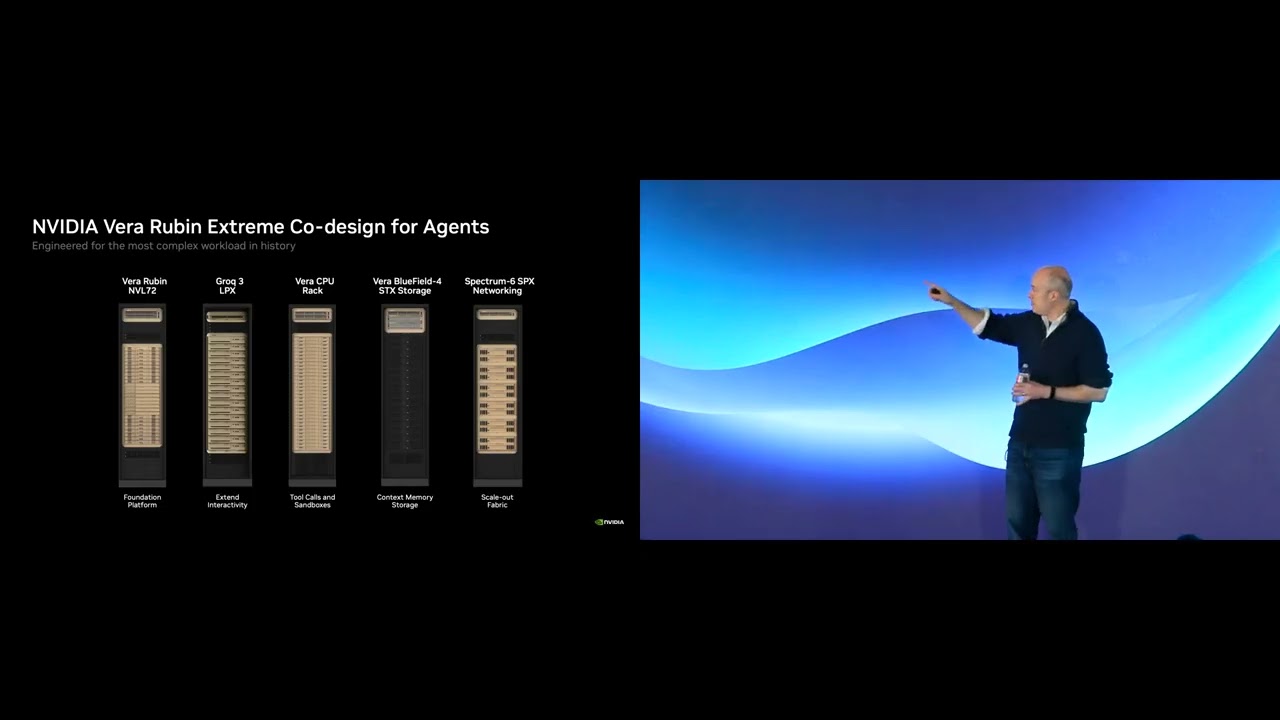
NVIDIA moved the conversation upstream. Ian Buck's AI Infra Summit keynote describes long context, reasoning, tool calls, and sub-agents as first-class infrastructure requirements, which means agent behavior is now influencing chips, networking, and power-efficiency design rather than staying inside application demos (video).
Discussion insight: The linked tools all point the same way. GitHub MCP Server connects agents to repositories, code, issues, PRs, and workflows, Composio adds delegated auth across 1,500+ apps, Context7 installs current docs in one command, Exa and Firecrawl turn retrieval and live-web actions into APIs, and Mem0 positions persistent memory as production infrastructure. The differentiator is increasingly the control surface around the model, not the model by itself.
Comparison to prior day: On 2026-09-29, persistent agents and runtime guardrails were the main story. On 2026-09-30, the same idea got more tangible through voice assistants, coding-tool stacks, and infrastructure explicitly designed for sub-agents.
1.3 Creative AI looked even more like a workflow business than a model business 🡕
At least six videos supported this theme. Compared with 2026-09-29, when creators already cared more about free access and packaged workflows than official launch narratives, the 2026-09-30 file went further toward end-to-end production kits: free stealth models, benchmark dashboards, critique loops, sponsored bundles, and full filmmaking courses.

WorldofAI supplied the clearest attention magnet in this cluster. The video treats Space Bunny Alpha as a free stealth model that can challenge GPT-6 Astra on coding and agentic tasks, and the linked OpenCode usage page shows why that claim spread fast: rank #1 over the last week, 7.1% of observed 2M volume, 19,145,946 completed sessions, and $0 spend (video).

Lukas Margerie makes the strongest anti-"just prompt better" argument in the file. He says the prompt is only 10% of the result and the other 90% is the harness: motion rules, brand assets, cloned voice, reference videos, beat-synced sound, and a critique loop packaged into a reusable kit (video).

Malva AI kept the economics layer just as explicit. Its walkthrough of Pruna, Roar.art, and Dola is less about one magical generator and more about free allowances, queue times, sign-up friction, 1080p limits, and avoiding download mistakes, which shows how much creator behavior is still shaped by operational constraints (video).
AI Master pushed the same logic to its endpoint with an 83-minute filmmaking course covering Seedance 2.5, Google Omni, Higgsfield, and Grok. The important signal is not one tool winning; it is the normalization of multi-model production stacks as the default way to make AI video (video).
Discussion insight: The linked Higgsfield MCP page makes the packaging layer even clearer: more than 30 image and video models, no API key required, and reusable production bundles for editing, motion design, and ads. Creator tooling is increasingly sold as workflow orchestration, not only as raw generation.
Comparison to prior day: On 2026-09-29, packaged Astra workflows and free generators were already a major theme. On 2026-09-30, that logic matured into full workflow kits, benchmarked model adoption dashboards, and long-form courses that assume creators will route across several tools on every project.
1.4 The most grounded AI coverage still came from narrow deployment tests and local trade-offs 🡒
At least five videos supported this theme. Compared with 2026-09-29, when deployment coverage stretched across medicine, homes, and inference stacks, the 2026-09-30 file kept the same practical lens but leaned harder into everyday trade-offs: trust boundaries in health, room-scale voice usability, inference mechanics, and when open models are worth self-hosting.

CNN made the medical boundary explicit. Dr. Ashwin Ramaswamy says AI can spot patterns in records that doctors miss but can also miss crises, and the segment's "performance isn't care" line is one of the clearest reminders in the file that domain accuracy is not the same thing as domain trust (video).
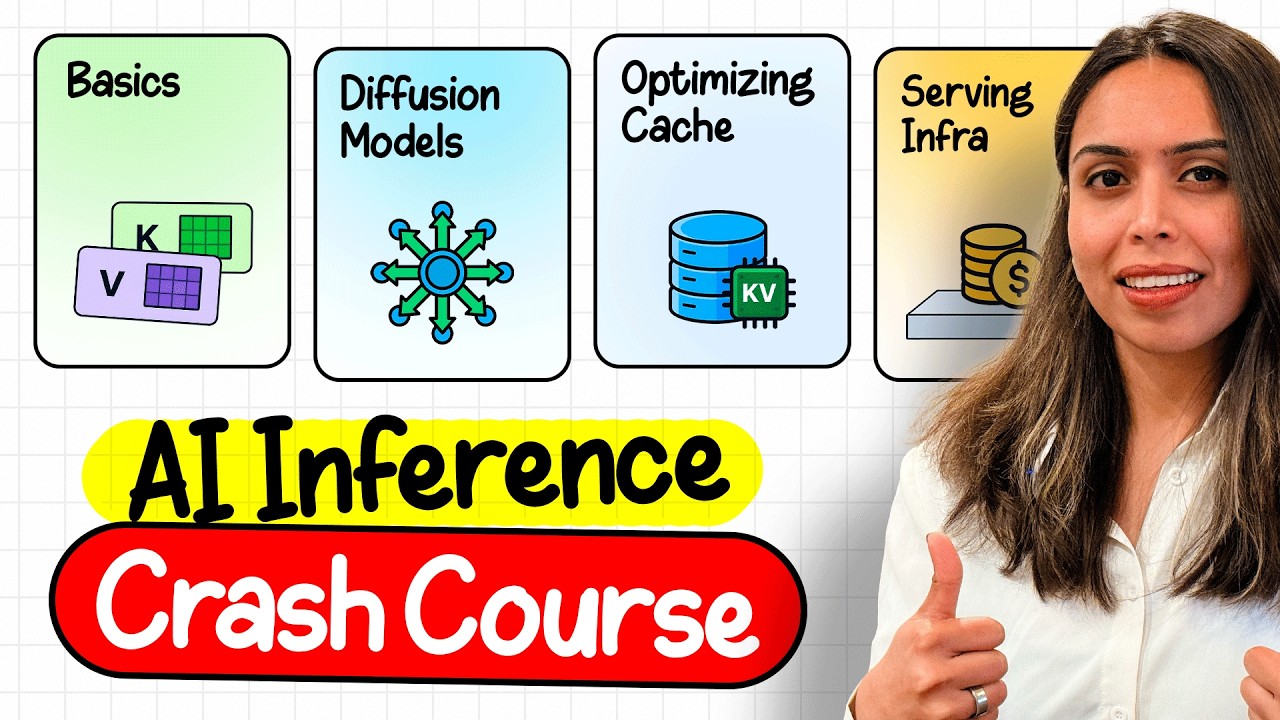
Vishakha Sadhwani turned inference engineering into a practical operations lesson. Prefix caching, paged attention, continuous batching, speculative decoding, routing, quantization, and local inference are presented as the real levers behind production AI, not hidden implementation trivia (video).

Ryan Doser added the budget and privacy calculus. His interview with Aaron Makelky moves from a 3GB offline screenshot-renaming model to cloud-versus-local cost trade-offs, phone-side Gemma, and a warning that free models may train on user data, which is a much more operational framing than a leaderboard screenshot (video).
Discussion insight: The linked Sophia Home Assistant Edition page strengthens the same local-first trend: a self-hosted 24MB binary, 160MB RAM footprint, and a published 99.0% accuracy score across thousands of Home Assistant commands. Private, narrow AI surfaces are getting good enough to be compared on lived experience instead of only on ideology.
Comparison to prior day: On 2026-09-29, deployment coverage was broad and cross-domain. On 2026-09-30, it stayed steady but became more explicit about cost, privacy, room acoustics, and the difference between a demo that works and a system someone can actually live with.
2. What Frustrates People
Voluntary AI governance still has no trusted enforcement layer
This is High severity because NBC News, TODAY, PBS NewsHour, NewsNation, and Iowa's News Now all describe the same gap. The White House accord has outside-auditor language and a nationally staged signing moment, but several outlets stress that it remains voluntary or morally binding rather than a clear regulatory regime. The workaround is rhetorical: rebranding, pledges, and piecing together conflicting TV segments to understand what actually changed. This is directly worth building for.
Useful agents still have to be assembled from too many moving parts
This is High severity because Tech With Tim, Pritam Sahoo - LearnAI, BeardedTinker, and NVIDIA all point to the same tax. GitHub context, delegated auth, current docs, retrieval, memory, voice, and room hardware all matter, but almost none of it arrives as one dependable default stack. The workaround is manual composition plus repeated testing. This is directly worth building for.
Creator AI still behaves like a routing and operations problem
This is Medium severity because WorldofAI, Lukas Margerie, Malva AI, AI Master, and Ryan Doser all show the same pattern. Users keep hopping between free models, benchmark dashboards, workflow kits, sponsor-driven bundles, and long tutorials because there is no neutral layer that tells them which stack is cheapest, safest, and good enough for a given job. The workaround is continual retesting and template reuse. This is worth building for, but it is already competitive.
Real-world AI quality is still highly context-specific
This is Medium severity because CNN, BeardedTinker, Vishakha Sadhwani, and Sophia Home Assistant Edition all surface different failure modes. A model can look impressive in a demo and still miss a medical crisis, fail in room noise, waste compute in production, or break privacy expectations. The workaround is domain-specific evaluation and local pilots. This is directly worth building for.
3. What People Wish Existed
The dataset contained few direct "someone should build this" requests, so the needs below are inferred from repeated workaround-heavy videos, linked public artifacts, and the gaps that kept recurring across governance, agent tooling, creator workflows, and local deployment.
Enforceable external AI audit and incident layer
NBC News, TODAY, PBS NewsHour, and Iowa's News Now all imply demand for one operating surface that combines external audits, incident disclosure, binding obligations, and clear public evidence of what changed after a high-level agreement. This is both a practical and emotional need with High urgency because viewers can see the pledge language and the fear rhetoric, but not a stable enforcement model they trust. Partial solutions exist in White House accords and media coverage, but not as a live system. Opportunity: direct.
Unified agent runtime for tools, memory, voice, and supervision
Tech With Tim, Pritam Sahoo - LearnAI, BeardedTinker, and NVIDIA all imply demand for one agent layer that combines GitHub access, delegated auth, current docs, retrieval, memory, voice, and runtime safeguards without forcing users to stitch the stack together manually. This is a practical need with High urgency because the component pieces already exist, but dependable integration is still the dominant tax. Partial solutions clearly exist, but the working default remains fragmented. Opportunity: direct.
Budget-aware router for creator and open-model workflows
WorldofAI, Lukas Margerie, Malva AI, AI Master, and Ryan Doser all imply demand for a layer that compares free and paid models, tracks queue times and limits, preserves workflow recipes, and recommends the cheapest good-enough stack for a specific creative or coding job. This is a practical need with Medium-to-High urgency because experimentation is cheap but decision-making is still expensive. Partial solutions exist in OpenRouter, benchmark sites, and creator bundles, but not as one neutral surface. Opportunity: competitive.
Local-first assistant kit for smart homes and sensitive workflows
BeardedTinker, Sophia Home Assistant Edition, CNN, and Ryan Doser all imply demand for AI systems that stay private, stay usable in the real environment, and make the cloud-versus-local trade-off explicit. This is both a practical and emotional need with Medium urgency because people want AI that works in a room or on sensitive data without turning setup into a second job. Partial solutions exist, but they remain fragmented by domain and skill level. Opportunity: direct.
4. Tools and Methods in Use
| Tool | Category | Sentiment | Strengths | Limitations |
|---|---|---|---|---|
| GitHub MCP Server | GitHub tool access | (+) | Connects agents to repositories, code, issues, PRs, and workflows through natural language | Still needs surrounding planning, auth policy, and runtime controls |
| Composio | App action and auth layer | (+) | Just-in-time tool calls, secure delegated auth, sandboxed environments, and 1,500+ app connections | Adds another vendor surface and runtime layer to govern |
| Context7 | Documentation MCP | (+) | One-command setup for current library docs inside coding agents | Docs only; it does not solve execution or state |
| Exa | Search and retrieval API | (+) | Large web and private-information index, strong retrieval benchmarks, and low-latency results | Retrieved context still has to be filtered and routed elsewhere |
| Firecrawl | Live web data layer | (+) | Search, scrape, and interact with the live web in structured LLM-ready formats | Dynamic sites and hosted infrastructure add operational overhead |
| Mem0 | Memory layer | (+/-) | Persistent context across sessions and agents with token-saving memory compression | Adds another stateful system that has to be audited and controlled |
| Fish Audio S2.1 Pro API | Voice and TTS API | (+) | Rich voiceovers, emotion tags, and no local GPU requirement for expressive speech | Hosted API dependency, credits, and external service risk remain |
| OpenRouter | Multi-model routing API | (+/-) | One key across providers and easy access to new models for side-by-side testing | Users still have to decide provenance, pricing, and task fit |
| Space Bunny Alpha | Frontier model | (+/-) | Free access, large context, and immediate OpenCode adoption at scale | Anonymous provenance and unclear stewardship remain open questions |
| Higgsfield MCP | Creative workflow suite | (+/-) | 30+ image and video models, reusable production bundles, and no API key requirement | Bundle dependence and sponsored workflow framing can distort tool choice |
| Sophia Home Assistant Edition | Local NLU | (+) | Self-hosted, privacy-first, 24MB binary, 160MB RAM footprint, and 99.0% published test accuracy | Solves NLU only; users still need hardware, automations, and room tuning |
| Vera Rubin AI factory platform | AI infrastructure | (+/-) | Purpose-built for long context, tool calls, sub-agents, and tokens-per-megawatt efficiency | Hyperscale-focused and out of reach for most individual builders |
Satisfaction was highest when a tool removed one narrow bottleneck: GitHub context, delegated auth, current docs, retrieval, live-web actions, expressive voice, or local NLU. Sentiment turned mixed as soon as users had to own provenance, governance, or workflow assembly themselves.
The dominant migration pattern was away from one monolithic assistant and toward assembled control surfaces. Builders combine GitHub MCP, Composio, Context7, Exa, Firecrawl, and Mem0 into agent harnesses; creators combine OpenRouter, Space Bunny, Higgsfield, and reusable video kits; local-first users combine Fish Audio, Sophia, and Home Assistant hardware. The stack is getting more capable, but also more modular and responsibility-heavy.
5. What People Are Building
| Project | Who built it | What it does | Problem it solves | Stack | Stage | Links |
|---|---|---|---|---|---|---|
| GitHub MCP Server | GitHub | Connects AI tools directly to repositories, code, issues, PRs, and workflows | Gives coding agents first-class GitHub context and actions instead of manual copy-paste | Go, remote/local MCP server, GitHub auth | Shipped | repo video |
| WoAI Bench | WorldofAI | Benchmarks models on practical workloads instead of only relying on hype or leaderboards | Helps users verify which model actually works for their tasks | Web benchmark app, evaluation workflows | Beta | site video |
| Space Bunny Alpha | Unknown creator via OpenRouter/OpenCode | Exposes a free stealth model promoted as strong at coding and agentic work | Gives users frontier-style experimentation without paid frontier pricing | OpenRouter routing, OpenCode distribution, large-context multimodal model | Beta | model usage video |
| Fish Audio voice assistant demo | Pritam Sahoo - LearnAI | Builds a voice assistant with natural TTS and emotion tags | Adds expressive speech to tutors, avatars, and assistants without local GPU work | Fish Audio API, TTS, API integration, emotion tags | Alpha | site video |
| Opus 5.5 video harness | Lukas Margerie | Turns a one-line brief into a branded launch video with critique loops and reusable rules | Replaces generic AI video output with a repeatable production workflow | Opus 5.5, Claude Code, Fish Audio, MagicPath, reference videos, critique loop | Beta | video workspace |
| Higgsfield MCP | Higgsfield | Brings image and video generation plus production bundles into MCP clients | Reduces tool switching across creative workflows | MCP server, 30+ models, reusable bundles | Shipped | site video |
| Sophia Home Assistant Edition | Sophia NLU | Runs a self-hosted NLU engine for Home Assistant | Improves private voice understanding while keeping data on-device | Rust, self-hosted NLU, Home Assistant integration | Shipped | site video |
| Vera Rubin AI factory platform | NVIDIA | Supplies infrastructure for long-context, tool-using, agentic AI workloads | Improves throughput and efficiency for subagent-heavy systems at scale | Vera CPU, Rubin NVL72, NVLink 6/Fusion, DSX, Groq 3 LPX | Beta | summit video |
The most concrete builds on 2026-09-30 sit above or around models rather than replacing them. GitHub MCP, WoAI Bench, Fish Audio, Higgsfield MCP, Sophia, and Vera Rubin all add context, evaluation, voice, orchestration, or infrastructure to make an underlying model more usable.
The repeated build pattern is operationalization. Creator-side builders package prompts, brand rules, voice, and critique loops into reusable video harnesses. Agent-side builders package GitHub access, auth, retrieval, and memory into dependable control surfaces. Local-first builders do the same for room-scale voice, where usability, privacy, and hardware constraints matter as much as raw model quality. Multiple people in the file are solving the same trust problem from different ends of the stack.
6. New and Notable
The White House made "external auditors" and "super intelligence" part of the same AI news cycle
TODAY says the accord includes an independent external auditor, NBC News says the deal still looks purely voluntary, and Iowa's News Now shows the executive order renaming the field to "super intelligence." That matters because the 2026-09-30 file did not just debate AI safety in the abstract; it turned oversight mechanics and political branding into the public story.
Free stealth-model distribution hit platform scale immediately
WorldofAI argues that Space Bunny Alpha can compete with GPT-6 Astra while staying free, and the linked OpenCode usage page shows exceptional adoption: rank #1 over the last week, 7.1% of observed 2M volume, 19,145,946 completed sessions, and $0 spend. That matters because free access can now outrun model provenance and brand clarity at very large scale.
Expressive voice is becoming a first-class agent layer
Pritam Sahoo - LearnAI uses Fish Audio to give a custom assistant natural speech and emotion tags, while Lukas Margerie uses the same voice layer inside a video-production harness. That matters because voice is no longer only a consumer-facing polish feature; it is becoming a reusable interface component for agents and creator workflows.
AI video production is being packaged as reusable workflow bundles
Malva AI, AI Master, and Higgsfield MCP all point to the same shift: creators are being sold bundles, courses, and full-stack recipes rather than one winning generator. That matters because competition is moving from model novelty toward repeatable process design.
7. Where the Opportunities Are
[+++] External AI audit and incident operations layer - NBC News, TODAY, PBS NewsHour, and Iowa's News Now all point to the same missing surface: one place for binding audit evidence, incident disclosures, vocabulary changes, and regulator-facing proof. This is strong because it dominates sections 1 through 3 and the current workaround is fragmented TV coverage plus political branding.
[+++] Unified agent runtime across GitHub, app auth, retrieval, memory, voice, and supervision - Tech With Tim, Pritam Sahoo - LearnAI, BeardedTinker, and NVIDIA all show the same need: useful agents span repositories, apps, docs, search, web actions, memory, voice, and runtime constraints. This is strong because the pain appears across sections 1, 2, 4, and 5.
[++] Creator workflow router with price, rights, and queue observability - WorldofAI, Lukas Margerie, Malva AI, AI Master, and Ryan Doser all show users routing across free models, workflow kits, and multi-tool stacks without a neutral control plane. This is moderate because the need is repeated and concrete, but the market is already crowded.
[++] Local-first ambient voice surface for home and private assistants - BeardedTinker, Sophia Home Assistant Edition, and Pritam Sahoo - LearnAI all point to a concrete opening for private, room-ready voice systems that sound natural and do not depend on heavy local compute. This is moderate because the components now exist, but the polished default experience still looks fragmented.
[+] Domain-specific AI evaluation kits for health and production inference - CNN, Vishakha Sadhwani, and Ryan Doser suggest demand for evaluation layers tailored to medicine, inference serving, and privacy-sensitive local tasks rather than generic chatbot QA. This is emerging because the pain is real, but the buyer surface is narrower and more specialized.
8. Takeaways
- The White House accord was the center of gravity for YouTube AI coverage on 2026-09-30. Trump standing with Amodei, Zuckerberg, and Pichai, plus repeated references to a voluntary or morally binding agreement, made the governance ceremony itself the story. (source, source, source)
- The agreement's biggest weakness was repeated in plain language: it still did not look enforceable. NBC called it "purely voluntary," PBS framed self-regulation as insufficient, and local coverage showed that the same news cycle also spent time renaming the field rather than clarifying obligations. (source, source, source)
- Agent builders are optimizing for control surfaces, not only for better models. The strongest builder evidence in the file came from GitHub-connected tool stacks, voice layers, local endpoints, and infrastructure for long-context subagents. (source, source, source, source)
- Free distribution can now overwhelm provenance if the workflow value is high enough. Space Bunny Alpha's unknown origin did not stop it from reaching the top of OpenCode's recent usage rankings with zero spend. (source, source)
- Creator-side AI competition is increasingly about harnesses, bundles, and repeatable process design. The most practical creative coverage came from workflow kits, multi-model courses, and free-tool routing rather than from one isolated generator win. (source, source, source, source)
- The most actionable deployment evidence still came from narrow real-world tests. Health guidance, Home Assistant voice, inference serving, and local open-model workflows all surfaced constraints that broad AI marketing usually hides. (source, source, source, source)