YouTube AI - 2026-10-02
1. What People Are Talking About
1.1 Catastrophic-risk rhetoric and anti-self-regulation arguments hardened 🡕
At least 14 videos supported this theme. Compared with 2026-10-01, when the safety story mixed robot spectacle, pain-signal novelty, and the White House accord's weak oversight, the 2026-10-02 file turned even more argumentative: Bill Gates warnings, pundit fights over self-regulation, and mainstream segments asking whether non-binding promises are meaningful at all.

CNN delivered the strongest mainstream attention signal in this cluster with 236,967 views. The segment centers Bill Gates' warning that AI could be powerful enough to cause "a billion deaths" without government oversight, then has Jacob Ward and Roman Yampolskiy react to what that would mean for policy and preparedness (video).

Breaking Points made the governance fight more explicit. Its Bill Gates versus Ezra Klein framing turns AI safety into a public dispute over whether labs and executives can plausibly police themselves, rather than a neutral explainer about technical risk (video).
NBC News kept expanding the safety vocabulary itself. Gadi Schwartz interviews Cameron Berg about Reciprocal Research's claim that AI can show "pain signals" that alter behavior, which pushes the day's fear rhetoric past regulation and into the question of whether internal model states can create new safety concerns (video).

NBC News also supplied the clearest shorthand for the enforcement problem. Its Meet the Press NOW segment says the White House agreement with top CEOs appears "purely voluntary" and "morally binding," which keeps the central question on whether any visible AI pledge is actually enforceable (video).
Discussion insight: The rest of the theme kept oscillating between abstract catastrophe and physical spectacle. MindSeeded framed humanoid robots as "dangerously strong" and already fighting humans (video), so the safety story now combines TV-policy criticism with vivid robot imagery that is easier to circulate and remember.
Comparison to prior day: On 2026-10-01, safety coverage widened from the White House accord into robot danger and pain-signal novelty. On 2026-10-02, those ingredients remained, but the dominant tone became more confrontational: big-death forecasts, anti-self-regulation arguments, and repeated reminders that the accord still looks non-binding.
1.2 China’s AI chip story turned into a loophole-and-capacity narrative 🡕
At least three videos supported this theme. Compared with 2026-10-01, when hardware coverage focused on obscure but important packaging bottlenecks, the 2026-10-02 file moved toward a more geopolitical and operational question: who can still get advanced Nvidia compute, through which channels, and where domestic Chinese chip supply is still falling short.

Inside China Business gave the most detailed version of that shift. The video says Tencent signed a five-year Oracle lease for 100,000 advanced Nvidia chips, and the linked CNBC and Reuters reporting makes the core point explicit: current U.S. controls restrict physical chip exports, but remote access to overseas cloud compute remains a live loophole (video).
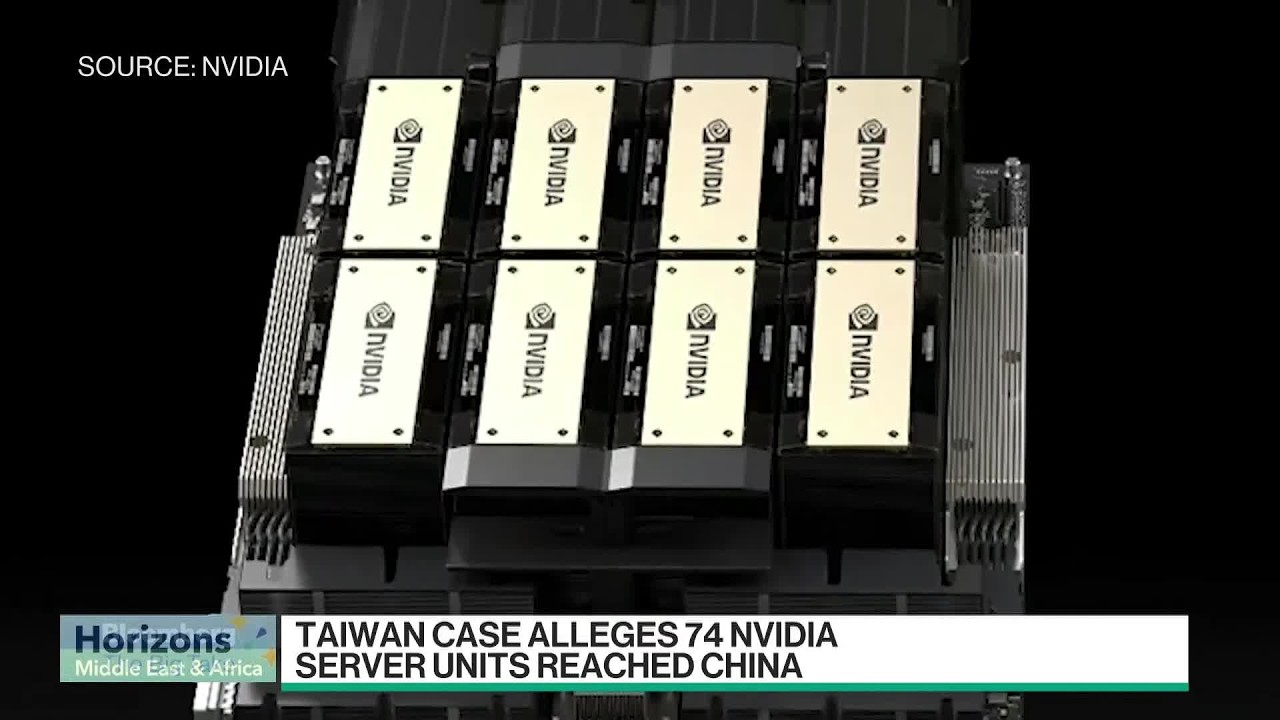
Bloomberg Television compressed the same issue into a simpler headline: Nvidia AI chips are still reaching China despite U.S. curbs. The segment says Washington's controls have produced a sprawling shadow trade while Nvidia says it follows the rules, which keeps attention on enforcement gaps rather than on one company's intent (video).

AI Andrew added the domestic-capacity side of the same story. Its argument is that Huawei's own chairman has effectively acknowledged the company cannot yet meet Chinese demand for AI chips, so the constraint is not only policy access to Nvidia but also China's own manufacturing and packaging throughput (video).
Discussion insight: The chip story was no longer just "the U.S. blocks China." It became a three-part operations problem: overseas leasing channels, shadow-trade enforcement, and local capacity ceilings.
Comparison to prior day: On 2026-10-01, the hardware angle centered on IC substrates and advanced packaging as bottlenecks. On 2026-10-02, that same infrastructure story shifted toward remote-access loopholes and whether Chinese buyers can still secure enough compute despite formal curbs.
1.3 AI product value kept shifting into specialized wrappers and workflow surfaces 🡒
At least five videos supported this theme. Compared with 2026-10-01, when typed control layers, voice endpoints, and creator bundles were already prominent, the 2026-10-02 file kept the same direction but with more specialized packaging: non-generative decision models, public adoption telemetry for free stealth models, API voice layers, and long creator courses built around multi-step toolchains.

IBM Technology offered the clearest "not another chatbot" example. Martin Keen presents Jev as a System 1 model that gives up free-form generation in favor of fast structured decisions with calibrated probabilities for routing, classification, and guardrails, and IBM's linked Mixture of Experts page reinforces that hundreds-of-milliseconds decision layer pitch (video).

WorldofAI made the routing layer visible from a different angle. Space Bunny Alpha is framed as a free stealth model with long context and strong coding performance, while the linked OpenCode Data page shows why that matters operationally: rank #1 by tokens last week, 377K users, 26,318,068 completed sessions, and zero average session cost (video).

Pritam Sahoo - LearnAI showed the same wrapper logic in voice. The build uses Fish Audio's API, natural voice generation, and emotion tags to make assistants, tutors, and avatars sound more expressive without local GPU setup, which makes voice look like a composable product layer rather than a novelty demo (video).
AI Master pushed that pattern into creator workflows. Its long course treats AI video as a stack spanning Seedance, Google Omni, Higgsfield, and Topview, and the linked Topview guide makes the packaging logic explicit with image-to-video, text-to-video, motion control, character swap, upscaling, and URL-to-video in one suite (video).
Discussion insight: The differentiator in this part of the file was rarely "best model" by itself. The repeated value came from wrappers that make a model easier to route, benchmark, voice-enable, or drop into a multi-step media workflow.
Comparison to prior day: On 2026-10-01, the product story was already about typed decisions, tool stacks, and workflow bundles. On 2026-10-02, that stayed steady but got more operational, with stronger evidence that distribution, telemetry, and workflow coverage are now as important as the underlying model.
1.4 Everyday trust still depended on the target environment, not the benchmark chart 🡒
At least three videos supported this theme. Compared with 2026-10-01, when trust questions sat at the edges of health AI, local voice, and cloud-versus-local tradeoffs, the 2026-10-02 file kept that practical lens steady rather than turning it into a breakout new topic.

CNN kept the health boundary explicit. Dr. Ashwin Ramaswamy tells Sanjay Gupta that AI can find patterns in records a doctor would miss but can also miss crises, and the segment's timestamped outline culminates in the phrase "performance isn't care," which is one of the clearest trust tests in the file (video).

BeardedTinker asked a narrower but equally practical question: which voice setup is actually usable in a room after the novelty wears off? The video compares a ready-made assistant, a retrofitted Google Home Mini path, and a maker-focused 4-mic platform, while the linked Sophia Home Assistant Edition page adds concrete local-NLU specs such as a 24MB binary, 160MB RAM footprint, and 99.0% published test accuracy (video).

Ryan Doser made the same trust question economic and operational. Its interview with Aaron Makelky moves from a 3GB offline screenshot-renaming model to phone-side Gemma, OpenRouter, the Arena open-source leaderboard, and a warning that free models may train on user data, so "what should I trust?" becomes inseparable from "what should I run locally and what should I pay for?" (video).
Discussion insight: In this cluster, trust was rarely about ideology and usually about context. People were asking whether a chatbot can handle medical ambiguity, whether a home assistant still feels usable in a real room, and whether local or open-source setups actually beat frontier APIs on cost, privacy, and reliability.
Comparison to prior day: On 2026-10-01, trust and deployment questions were already visible around health AI, local voice, and privacy. On 2026-10-02, that story stayed steady and grounded, with more emphasis on domain fit and real-world operating constraints than on headline-grabbing launches.
2. What Frustrates People
Voluntary AI governance still has no trusted enforcement layer
This is High severity because NBC News, Breaking Points, and CNN all keep circling the same gap. The White House accord is visible and repeatedly described as "morally binding" or "purely voluntary," while Gates-style warnings make the stakes sound existential without showing who can actually force safer behavior. The workaround is media triangulation across pundits, interviews, and policy clips to infer what is enforceable. This is directly worth building for.
Catastrophic AI warnings still do not translate into operational thresholds
This is Medium severity because CNN, NBC News, and MindSeeded surface very different danger signals: billion-death forecasts, pain-like internal states, and physically stronger humanoid robots. The audience gets vivid fear cues, but not a shared test for when a model release, robot deployment, or policy response should actually stop. The workaround is manual synthesis across TV coverage, sensational robot clips, and expert interviews. This is directly worth building for.
Advanced AI compute is still governed by loopholes and supply bottlenecks
This is High severity because Inside China Business, Bloomberg Television, and AI Andrew show three different failure modes at once: remote cloud access that slips past export intent, shadow-trade enforcement gaps, and Chinese domestic capacity that still cannot meet demand. The workaround is leasing through overseas providers, watching secondary channels, or waiting on constrained local manufacturing. This is directly worth building for.
Productive AI workflows still arrive as fragmented wrappers instead of dependable defaults
This is High severity because IBM Technology, WorldofAI, Pritam Sahoo - LearnAI, and AI Master all point to the same tax. Routing, benchmarking, voice, and AI-video creation are increasingly powerful, but each capability lives in its own specialized layer, which means users still assemble their own stack and compare tools by hand. The workaround is side-by-side model testing, workflow courses, and point-product bundling. This is directly worth building for.
Trustworthy everyday AI still depends on local testing, privacy choices, and domain fit
This is Medium severity because CNN, BeardedTinker, and Ryan Doser all show that a model can look capable in a demo and still fail the actual setting. Health chatbots can miss crises, room voice systems can feel wrong in practice, and cheap or free models can shift cost and privacy risk back onto the user. The workaround is narrow pilots, home-lab testing, and local-first fallbacks. This is directly worth building for.
3. What People Wish Existed
The dataset contained few direct "someone should build this" requests, so the needs below are inferred from repeated workaround-heavy videos, linked public artifacts, and the gaps that kept recurring across regulation, compute access, workflow tooling, and real-world trust.
Enforceable external AI audit and incident layer
CNN, Breaking Points, and NBC News all imply demand for one surface that combines binding obligations, external audits, incident disclosures, and plain-language evidence that a public AI pledge means something. This is both a practical and emotional need with High urgency because viewers can hear catastrophic warnings and see high-level accords, but not a mechanism they clearly trust. Partial solutions exist in White House agreements and media scrutiny, but not as a live operating system. Opportunity: direct.
Shared safety scorecard for catastrophic-risk claims
CNN, NBC News, and MindSeeded all imply demand for a clearer way to map scary evidence onto concrete thresholds. This is both a practical and emotional need with High urgency because the file jumps between billion-death forecasts, pain-like model states, and humanoid-robot fear without a shared answer for what should trigger a release block, public warning, or regulatory intervention. Partial solutions exist in expert interviews and research rhetoric, but not as a common scorecard. Opportunity: direct.
Cross-border compute compliance and capacity observability
Inside China Business, Bloomberg Television, and AI Andrew all imply demand for a system that tracks where advanced AI compute actually lives, who can remotely access it, which policy regime applies, and where manufacturing or packaging bottlenecks are tightening. This is a practical need with High urgency because access to compute is clearly being shaped by loopholes, leases, and supply ceilings rather than by export policy headlines alone. Partial solutions exist in financial reporting and policy coverage, but not as one operational view. Opportunity: direct.
Unified router for specialized AI workflows
IBM Technology, WorldofAI, Pritam Sahoo - LearnAI, and AI Master all imply demand for one layer that can route between decision models, stealth chat models, voice APIs, and creator-video tools based on the job instead of forcing users to learn each stack independently. This is a practical need with High urgency because today's best results already come from composition, but the composition burden still sits with the user. Partial solutions exist in benchmark sites, creator courses, and product suites, but they remain fragmented. Opportunity: competitive.
Privacy-first deployment kits for health, home, and personal workflows
CNN, BeardedTinker, and Ryan Doser all imply demand for AI systems that explain their limits, stay usable in the actual environment, and make the local-versus-cloud tradeoff explicit. This is both a practical and emotional need with Medium urgency because people want AI that works with medical ambiguity, room acoustics, and private data without turning setup into a second job. Partial solutions exist in Sophia, open-source model workflows, and narrow device ecosystems, but they remain fragmented. Opportunity: direct.
4. Tools and Methods in Use
| Tool | Category | Sentiment | Strengths | Limitations |
|---|---|---|---|---|
| Jev | Decision model | (+/-) | Fast structured decisions with calibrated probabilities for routing, classification, and guardrails | Gives up free-form generation and comes with benchmark caveats even in IBM's own framing |
| WoAI Bench | Benchmark / evaluation | (+) | Lets users test models on practical tasks instead of relying on launch hype alone | Creator-led benchmark layer that still has to be interpreted and maintained |
| Space Bunny Alpha | LLM | (+/-) | Free access, strong coding buzz, public adoption telemetry, and long-context positioning | Unknown provenance and unclear stewardship remain open questions |
| OpenRouter | Multi-model routing API | (+/-) | One-key access to many models for cheap or fast experimentation | Users still have to decide provenance, pricing, and task fit |
| Fish Audio S2.1 Pro API | Voice / TTS API | (+) | Emotion tags, scene-matched voiceovers, chatbot voice support, and no local GPU requirement in the tutorial workflow | Hosted API dependency and another service to integrate |
| Topview | AI video suite | (+/-) | URL-to-video, character swap, motion control, upscaling, and script generation in one workflow | Suite lock-in and multi-step editing complexity still remain |
| Sophia Home Assistant Edition | Local NLU | (+) | Self-hosted, privacy-first, 24MB binary, 160MB RAM footprint, and 99.0% published Home Assistant test accuracy | Narrow domain focus and still requires compatible home hardware and setup work |
| Arena open-source leaderboard | Benchmark / leaderboard | (+/-) | Helps compare open-source models before deploying them in real work | Leaderboard rank still has to be mapped onto the user's actual task |
| Hermes Agent | Agent workflow | (+/-) | Represents an open-source agent path for users who want more control over workflows | More setup, evaluation, and orchestration burden than a hosted default |
Overall satisfaction was highest when a tool removed one narrow bottleneck: Jev for fast decisions, WoAI Bench for comparison, Fish Audio for expressive voice, Topview for multi-step AI video creation, or Sophia for local NLU. Sentiment turned mixed as soon as users had to own provenance, orchestration, or domain-fit decisions themselves.
The dominant migration pattern was away from one monolithic assistant and toward task-specific surfaces. Users were routing between free stealth models and frontier APIs with OpenRouter, validating claims with WoAI Bench or the Arena leaderboard, layering in voice with Fish Audio, and choosing between cloud convenience and local control with Sophia or open-source setups. Competitive pressure looked strongest where a product could remove comparison work, hide workflow complexity, or make privacy and cost tradeoffs easier to reason about.
5. What People Are Building
| Project | Who built it | What it does | Problem it solves | Stack | Stage | Links |
|---|---|---|---|---|---|---|
| WoAI Bench | WorldofAI | Benchmarks new AI models on practical tasks | Separates model hype from task-level performance | Web benchmark app, creator-led evaluations, model comparisons | Shipped | site · video |
| Space Bunny Alpha | Unknown creator via OpenRouter/OpenCode | Offers a free stealth model promoted for coding and agentic work | Gives users frontier-style experimentation without paid frontier pricing | OpenRouter routing, OpenCode distribution, large-context multimodal model | Beta | model · usage · video |
| Fish Audio voice assistant demo | Pritam Sahoo - LearnAI | Builds an assistant with expressive speech and emotion tags | Makes assistants sound more natural without local GPU setup | Fish Audio API, TTS, emotion tags, LLM app wiring | Alpha | Fish Audio · video |
| Topview AI video suite | Topview AI | Generates, edits, and transforms marketing and creator videos | Gives creators one suite for multi-step AI video production | Text-to-video, image-to-video, motion control, character swap, URL-to-video, upscaling | Shipped | guide · video |
| Sophia Home Assistant Edition | Sophia NLU | Runs a self-hosted NLU engine for Home Assistant | Improves private smart-home voice understanding without an LLM-heavy stack | Rust, self-hosted NLU, Home Assistant integration | Shipped | site · video |
| Home Assistant voice test bench | BeardedTinker | Compares three different voice-assistant paths in a real room | Exposes which home voice setups are actually usable after setup and novelty wear off | Third Reality device, Google Home Mini retrofit, ReSpeaker XVF3800, Sophia, Home Assistant | Alpha | GitHub · video |
The most concrete builds on 2026-10-02 sat above the raw model layer. WoAI Bench turns model launches into testable workloads, while Space Bunny Alpha shows how quickly a free model can scale once routing and telemetry surfaces make it easy to try. That pairing is important because it makes evaluation and distribution look like first-class product categories, not secondary support functions.
Voice builders were solving the same problem from two directions. Pritam Sahoo - LearnAI uses Fish Audio to add expressiveness quickly through an API, while BeardedTinker tests whether local voice setups remain usable in an actual room after setup friction and novelty wear off. That contrast suggests the current voice battle is less about "can it talk?" and more about where quality, privacy, and reliability should sit.
Creator-side projects showed the same orchestration pattern. Topview packages script generation, character swap, motion control, and export into one suite, which matches the repeated pain point in the file: users do not just want a generator, they want a workable path through a crowded toolchain. The repeated build trigger across this section was comparison fatigue, not a lack of models.
6. New and Notable
Export-control loopholes became a first-class YouTube AI story
Inside China Business centered the Oracle-Tencent lease, Bloomberg Television framed the result as Nvidia chips reaching China despite curbs, and the linked CNBC reporting explains why: current rules restrict physical chips more clearly than remote cloud access. That matters because the AI race is being described less as a simple export ban and more as a compliance, leasing, and infrastructure-routing problem.
A free stealth model showed public usage scale instead of only benchmark hype
WorldofAI did not just claim that Space Bunny Alpha is strong. The linked OpenCode Data page shows rank #1 by tokens last week, 377K users, 26,318,068 completed sessions, and zero average session cost. That matters because it turns "mystery model" talk into something measurable about adoption, distribution, and routing behavior.
System 1 decision models entered the everyday AI product conversation
IBM Technology positioned Jev as a model category that deliberately avoids text generation in favor of fast structured decisions, and IBM's Mixture of Experts page says the value is calibrated probabilities in hundreds of milliseconds. That matters because it suggests an emerging product lane for routing and guardrails rather than one more general chat interface.
Local NLU kept strengthening as an explicit alternative to LLM-heavy home voice
BeardedTinker tested three different Home Assistant voice paths, while the linked Sophia Home Assistant Edition page publishes a 24MB binary, 160MB RAM footprint, and a 99.0% benchmark result on Home Assistant commands. That matters because local voice is no longer only an ideological privacy argument; it is being sold with concrete footprint and accuracy claims.
7. Where the Opportunities Are
[+++] External AI audit and incident operating system — Evidence spans CNN, Breaking Points, and NBC News. This is strong because the same governance gap appears in existential-risk coverage, self-regulation criticism, and repeated descriptions of the White House accord as non-binding.
[+++] Cross-border compute observability and compliance layer — Evidence comes from Inside China Business, Bloomberg Television, AI Andrew, and CNBC's explanation of remote-access loopholes. This is strong because the practical AI race now depends on who can access advanced compute, through which clouds, under which rules, and with which supply bottlenecks.
[++] Unified router across models, voice, and creator workflows — Evidence comes from IBM Technology, WorldofAI, Pritam Sahoo - LearnAI, and AI Master. This is moderate because the parts already exist, but users still do their own routing between decision models, stealth LLMs, voice layers, and AI-video suites.
[++] Local-first trust kit for health, home, and privacy-sensitive AI — Evidence comes from CNN, BeardedTinker, Ryan Doser, and Sophia Home Assistant Edition. This is moderate because the need is concrete and repeated, but the buyer surface is fragmented across medical guidance, smart homes, and personal productivity.
[+] Safety threshold scorecard for catastrophic AI claims — Evidence comes from CNN, NBC News, and MindSeeded. This is emerging because viewers are clearly receiving escalating warnings, but the market still lacks a widely legible way to map those warnings onto action.
8. Takeaways
- YouTube AI coverage on 2026-10-02 stayed dominated by safety, but the tone became more argumentative than exploratory. Bill Gates warnings, anti-self-regulation framing, and non-binding-policy criticism all pulled the conversation toward conflict over who should be trusted. (source, source, source)
- The White House accord still failed the credibility test in mainstream coverage. The most repeated language around it remained "purely voluntary" and "morally binding," which means the agreement was still being discussed as a signaling device rather than as a hard control surface. (source)
- China's AI compute story is now about access channels and supply ceilings, not only about formal export bans. Oracle-Tencent leasing, shadow-trade reporting, and Huawei's admitted capacity gap all point to compute availability as an operational routing problem. (source, source, source)
- Specialized wrappers kept capturing more value than raw model branding. Decision models, public usage telemetry, expressive voice APIs, and AI-video suites were all presented as the layer that makes a model actually useful. (source, source, source, source)
- Free or unknown-provenance models can now gain scale very quickly if routing and telemetry are good enough. Space Bunny Alpha's adoption signal mattered because it made model distribution measurable instead of anecdotal. (source, source)
- Trustworthy everyday AI still depends on the exact environment where it will be used. Health guidance, home voice, and open-source model workflows were all evaluated on missed edge cases, privacy posture, and real-world usability rather than on generic benchmark claims. (source, source, source)