YouTube AI - 2026-10-03
1. What People Are Talking About
1.1 Self-regulation skepticism stayed the default AI politics frame 🡒
At least eight videos supported this theme. Compared with 2026-10-02, when Bill Gates warnings and TV arguments over self-regulation dominated, the 2026-10-03 file kept governance at the center but grounded it more directly in the White House summit itself, repeated doubts about enforceability, and who absorbs labor disruption if AI adoption keeps accelerating.
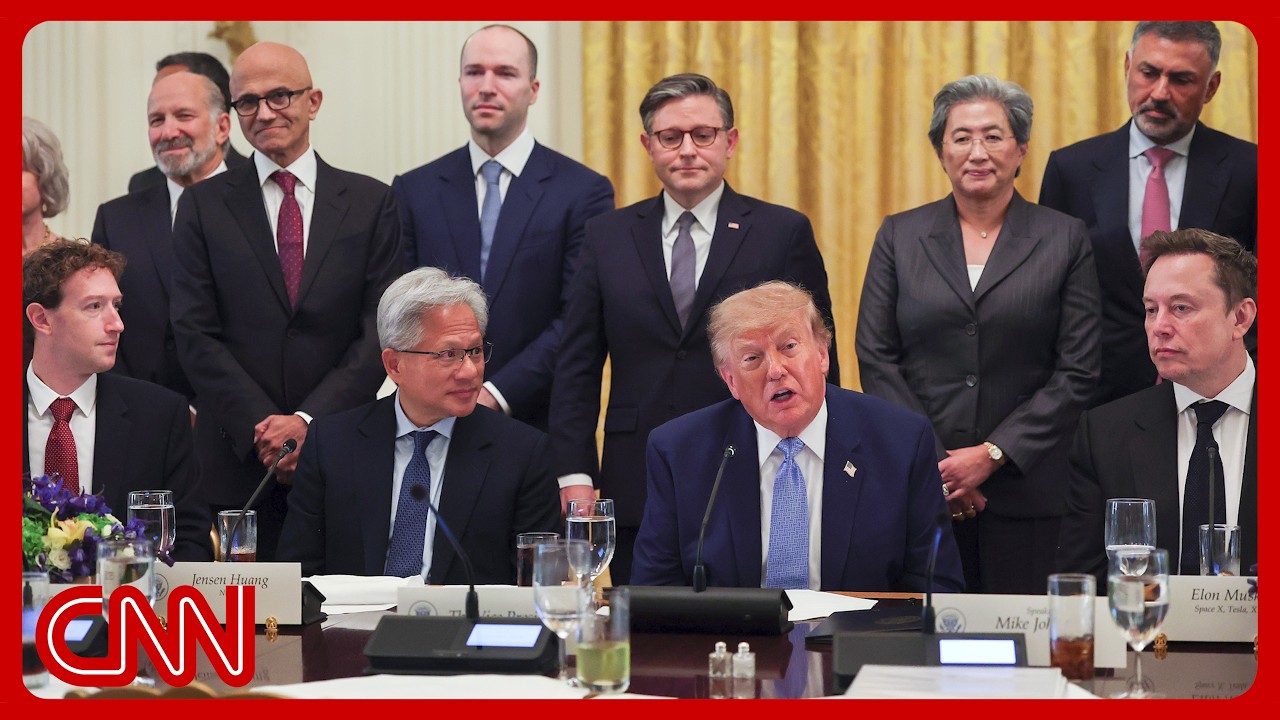
CNN supplied the highest-reach version of that frame with 150,789 views. The segment is less about a new rule than about political optics: Trump says he does not want AI slowed down, praises the executives in the room, and presents their commitment as "morally binding," which makes the summit look more symbolic than operational (video).

NBC News made the enforcement gap explicit. Its Meet the Press NOW segment says the agreement appears "purely voluntary" and focuses on how White House ceremony still falls short of hard obligations or visible penalties (video).

PBS NewsHour brought in Gary Marcus to sharpen the critique. The segment argues that stronger safeguards are still needed even as competitiveness pressure against China is being used to justify moving faster (video).

Anthony Scaramucci extended the same governance story into labor economics. By citing McKinsey's estimate that 11 million U.S. workers may need to switch jobs and asking who pays for that transition, the video turns AI policy from a summit-photo issue into a mass-adjustment problem (video).

Neural Nutshell kept the catastrophic edge alive. Its Roman Yampolskiy segment argues that superintelligence could outcompete humans across jobs, science, cybersecurity, and warfare, which raises the stakes of the otherwise symbolic summit coverage (video).
Discussion insight: Across these items, the disagreement was no longer whether AI matters. It was whether any visible commitment counts as governance once labor displacement and loss-of-control rhetoric are treated as near-term risks.
Comparison to prior day: On 2026-10-02, governance coverage leaned on Bill Gates warnings and TV fights over non-binding accords. On 2026-10-03, the same distrust stayed in place but attached more directly to the White House event, to explicit "self-regulation is not enough" claims, and to transition costs outside the lab.
1.2 Local and open tooling became the clearest builder signal 🡕
At least three videos supported this theme. Compared with 2026-10-02, when specialized wrappers and benchmark telemetry were prominent, the 2026-10-03 file pushed further into the mechanics of actually running and routing models: local image editing, inference engines, one-key multi-model access, and practical local-versus-cloud tradeoffs.

AI Search delivered the day's biggest builder signal with 270,814 views. The video treats Qwen Image 2.1 as a local creative workbench rather than a demo alone, and the linked Qwen model page spells out why: a 7B visual-generation component, unified text-to-image and image-editing support, transparent RGBA output, up to 10 reference images, and memory-optimized local deployment paths (video).

Caleb Writes Code moved down one layer in the stack. Instead of comparing end-user models, the video explains why people now choose between llama.cpp, vLLM, SGLang, TensorRT-LLM, and TGI, which makes serving infrastructure itself part of the day-to-day AI tool conversation (video).

Ryan Doser and Aaron Makelky turned the same builder impulse into workflow economics. The segment goes from a 3GB offline screenshot-renaming model to OpenRouter, Arena-driven model selection, Hermes, Gemma on a phone with Wi-Fi off, and a warning that free models may be training on user data, so the practical question becomes which work should stay local and which work should stay in the cloud (video).
Discussion insight: The interesting shift here was not "which model is best?" It was how much guidance users still need on runtimes, routing, provenance, and privacy before a good model becomes a dependable workflow.
Comparison to prior day: On 2026-10-02, product value was already shifting into wrappers like decision models and voice APIs. On 2026-10-03, attention moved even closer to self-hostable assets, serving layers, and routing surfaces.
1.3 AI video creation kept fragmenting into multi-tool orchestration 🡕
At least three videos supported this theme. Compared with 2026-10-02, when creator coverage already emphasized bundled suites, the 2026-10-03 file got more explicit about the routing logic: free generators for initial production, Claude as a planning layer, and full-stack suites for finishing and export.

Malva AI framed AI video as a scavenger hunt across free surfaces. The tutorial walks through Pruna, Roar.art, and Dola for text-, image-, and audio-to-video, but it also highlights daily allowances, queue times, sign-up friction, and download pitfalls, which makes "free" look like an operational constraint rather than a stable category (video).

Tao Prompts made the frontier-model layer visible inside that workflow. The creator uses Claude Opus 5.5 as part of an AI-video process, and Anthropic's Opus page supports the appeal: Opus 5.5 is positioned as Anthropic's strongest Opus model for coding, agents, and vision while costing about 40% less to run than Opus 5 (video).
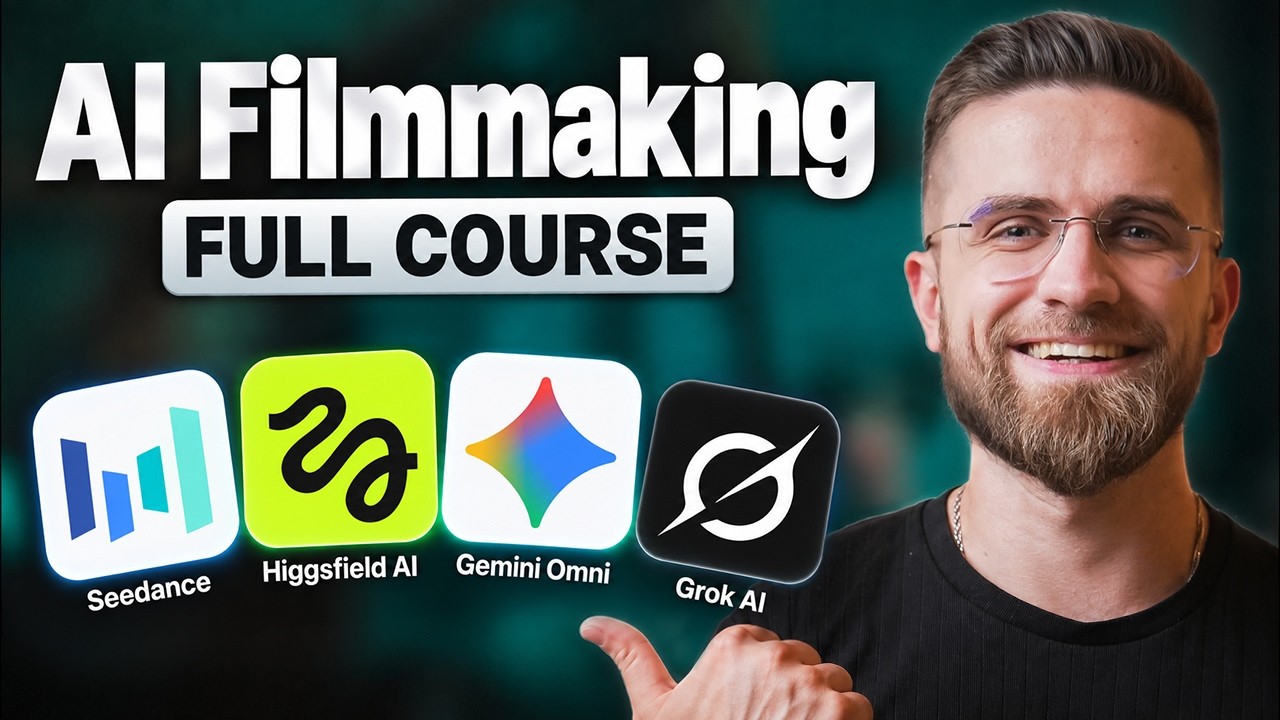
AI Master turned the same pattern into a long-form course. The video builds an AI filmmaking stack across Seedance, Google Omni, Higgsfield, and Topview, and Topview's guide makes the suite logic explicit with image-to-video, text-to-video, character swap, motion control, upscaling, and URL-to-video inside one product (video).
Discussion insight: The creator side of AI no longer looks like "pick the best generator." It looks like routing between free quotas, premium planning models, and all-in-one export layers that remove some of the assembly work.
Comparison to prior day: On 2026-10-02, creator tooling already favored suites such as Topview and long workflow guides. On 2026-10-03, that trend intensified into more explicit multi-tool choreography and more attention to pricing, quotas, and workflow coverage.
1.4 AI infrastructure stories got more physical and operational 🡕
At least two videos supported this theme. Compared with 2026-10-02, when the hardware story focused on who could still lease Nvidia compute despite export controls, the 2026-10-03 file moved down into the physical layers and lifecycle costs underneath AI hardware headlines.

CNBC International put IC substrates at the center of the AI chip boom. The segment goes inside AT&S's Kulim facility and argues that the less-visible base layers beneath processors and memory are now a real scaling constraint, which turns the chip story into an advanced-packaging and throughput problem rather than only a product-race story (video).

AI Revolution made robotics look theatrical, but the linked Figure note reveals a more mundane operational reality underneath the molten-steel footage: Figure retired most of its F.02 fleet because F.03 growth made maintenance uneconomic and protecting proprietary hardware mattered more than salvaging the old robots (video).
Discussion insight: Even the flashy robot item turned out to be about fleet management, IP protection, and replacement cycles. The hardware story is becoming less about abstract "AI power" and more about packaging, throughput, maintenance, and disposal.
Comparison to prior day: On 2026-10-02, hardware attention centered on geopolitical access to chips. On 2026-10-03, it centered more on the physical and operational limits that determine whether hardware can be produced, maintained, and retired.
1.5 Trust still depended on the target environment, not the demo 🡒
At least two videos supported this theme. Compared with 2026-10-02, this part of the file stayed steady: AI still got judged on the room, the patient, and the user's device rather than on broad model claims.

CNN kept the medical boundary explicit. Dr. Ashwin Ramaswamy tells Sanjay Gupta that AI can see patterns in records that a doctor might miss, but can also miss medical crises, and the segment's own timestamp outline culminates in the phrase "performance isn't care" (video).

BeardedTinker applied the same lens to smart-home voice. Rather than benchmark a single assistant, the video compares a ready-made device, a retrofitted Google Home Mini path, and a maker-oriented 4-microphone platform, while the linked Sophia Home Assistant Edition page adds concrete local-NLU specs: a 24MB binary, 160MB RAM footprint, a 106,322-word vocabulary, and a claimed 99.0% Home Assistant test score (video).
Discussion insight: In both health and home voice, the winning system is not the one with the broadest abstract capability. It is the one whose failure modes, setup burden, and privacy tradeoffs still make sense in the actual environment.
Comparison to prior day: On 2026-10-02, trust questions were already visible in health AI, smart-home voice, and open-source workflows. On 2026-10-03, that story held steady and stayed concrete, with little evidence that viewers were willing to outsource high-stakes decisions just because the model layer improved.
2. What Frustrates People
Symbolic AI governance still has no trusted enforcement layer
This is High severity because CNN, NBC News, and PBS NewsHour all return to the same gap. The White House summit is highly visible, but the most repeated language around it is still "morally binding," "purely voluntary," and "self-regulation is not enough," which means the audience is being asked to trust signaling without seeing audits, penalties, or hard stop conditions. The workaround is media triangulation across multiple outlets and commentators. This is directly worth building for.
AI-driven labor disruption is being discussed faster than transition support
This is High severity because Anthony Scaramucci cites McKinsey's claim that 11 million U.S. workers may need to switch jobs, while CNN frames the summit around continued acceleration rather than slowdown. The file shows more confidence that change is coming than clarity about who funds retraining, how transitions are staged, or how exposed workers are supposed to prepare. The workaround is speculation through macro and policy commentary rather than operational planning. This is directly worth building for.
Open-model and creator workflows still require too much manual routing
This is High severity because AI Search, Caleb Writes Code, Ryan Doser, Malva AI, and AI Master all show users stitching together runtimes, inference engines, routers, free quotas, and export suites by hand. Even when the tools are powerful, users still have to decide what runs locally, what runs through a router, which free limit is real, and where the final edit should happen. The workaround is tutorial-heavy stack assembly plus one-off comparison work. This is directly worth building for.
Real-world trust still breaks on domain fit, privacy, and setup burden
This is Medium severity because CNN shows that health AI can miss crises even when it sees useful patterns, and BeardedTinker treats home voice as a room-level usability problem rather than a benchmark contest. The linked Sophia Home Assistant Edition page provides concrete local-first specs, but the burden still sits with the user to test whether privacy, latency, hardware, and accuracy line up in practice. The workaround is narrow pilots, human fallback, and hands-on room testing. This is directly worth building for.
AI infrastructure still depends on bottlenecks users cannot easily see
This is Medium severity because CNBC International turns IC substrates into a central AI scaling constraint, while Figure's F.02 decommission note shows that even robot fleets run into maintenance, disposal, and IP-protection costs. The friction is not a missing model; it is hidden dependency on packaging throughput, replacement cycles, and operational overhead that sits below the headline product layer. The workaround is to overbuild capacity, replace fleets, or wait on suppliers. This is directly worth building for.
3. What People Wish Existed
The dataset contained few direct "someone should build this" requests, so the needs below are inferred from repeated workaround-heavy videos, linked public artifacts, and the gaps that kept recurring across policy, creator tooling, local AI workflows, and real-world deployment.
Enforceable public AI governance layer
CNN, NBC News, PBS NewsHour, and Neural Nutshell all imply demand for one surface that combines public commitments, third-party evaluations, incident disclosure, and plain-language evidence that a safety promise is more than symbolism. This is both a practical and emotional need with High urgency because the file keeps pairing voluntary language with high-stakes loss-of-control rhetoric. Partial solutions exist in NIST's AI RMF and lab-published evaluations, but not as a live accountability layer. Opportunity: direct.
Worker-transition planning for AI exposure
Anthony Scaramucci explicitly raises the question of who pays when millions of workers need to switch jobs, while CNN frames the summit around continued acceleration. This is a practical need with High urgency because displacement is discussed as a large-scale outcome without a corresponding operating surface for workers, employers, or policymakers. Partial solutions exist in labor-market reports and policy commentary, but not as a practical transition system. Opportunity: direct.
Unified local/open-model workbench
AI Search, Caleb Writes Code, and Ryan Doser all imply demand for one place that helps users choose a model, choose an inference engine, decide what runs locally, and understand privacy and cost tradeoffs before they start wiring tools together. This is a practical need with High urgency because today's best open workflows still require too much knowledge of runtimes, routers, and serving layers. Partial solutions exist in OpenRouter, Hermes, and tutorial channels, but they do not collapse the decision burden into one dependable default. Opportunity: competitive.
Creator router across free and premium AI video tools
Malva AI, Tao Prompts, and AI Master all imply demand for a workflow layer that knows when to use a free tool, when to invoke a premium planning model, and when to hand off to a suite such as Topview. This is a practical need with High urgency because creators are clearly solving around quotas, queue times, prompt iteration, and finishing complexity already. Partial solutions exist in bundled suites and community tutorials, but not as a neutral router. Opportunity: competitive.
Context-aware trust kits for health and home voice
CNN and BeardedTinker both imply demand for systems that explain failure modes, stay private by default, and can be tested in the exact environment where they will be used. This is both a practical and emotional need with Medium urgency because people want help from AI without having to guess whether the model is safe enough for a patient, a room, or a family device. Partial solutions exist in Sophia Home Assistant Edition and narrow domain workflows, but they are still fragmented and setup-heavy. Opportunity: direct.
4. Tools and Methods in Use
| Tool | Category | Sentiment | Strengths | Limitations |
|---|---|---|---|---|
| Qwen Image 2.1 | Image model / editor | (+) | Open-source local image generation and editing, transparent RGBA output, up to 10 references, and low-cost deployment framing | Still requires local setup, GPU planning, and a research-license workflow |
| ComfyUI Qwen package | Local workflow runtime | (+/-) | Gives creators packaged local workflows, prompt enhancement, and model-file structure for Qwen | File placement, workflow assembly, and model management still sit with the user |
| Inference engines: llama.cpp / vLLM / SGLang / TensorRT-LLM / TGI | Inference / serving | (+/-) | Make runtime choice a visible optimization layer for latency, hardware fit, and deployment style | Choice overload and setup complexity remain high for non-experts |
| OpenRouter | Multi-model routing API | (+/-) | One OpenAI-compatible API with routing, fallbacks, and cost tracking across many models | Users still have to own model provenance, privacy tradeoffs, and evaluation |
| Hermes | Agent workflow system | (+/-) | Persistent memory, subagents, multi-surface access, and sandboxed delegation | More orchestration overhead than a simple hosted assistant |
| Claude Opus 5.5 | Frontier LLM | (+) | Strong coding, agents, and vision positioning plus lower cost than prior Opus tier in Anthropic's own framing | Premium dependency and not a creator workflow by itself |
| Pruna / Roar.art / Dola | AI video generation | (+/-) | Cheap or free entry points for text-, image-, and audio-to-video creation | Daily caps, queues, signup friction, and unstable availability |
| Topview | AI video suite | (+/-) | Covers image-to-video, text-to-video, URL-to-video, character swap, motion control, editing, and export in one place | Suite lock-in and multi-step creative complexity still remain |
| Sophia Home Assistant Edition | Local NLU | (+) | Self-hosted, lightweight, privacy-first, with published footprint and Home Assistant accuracy claims | Narrow domain scope and hardware/setup assumptions still matter |
Overall satisfaction was highest when a tool removed one narrow bottleneck: Qwen for local image editing, OpenRouter for one-key model access, Topview for finishing a video workflow, or Sophia for local voice understanding. Sentiment turned mixed as soon as users had to own runtime choice, routing logic, or free-tier volatility themselves.
The dominant migration pattern was away from one monolithic model or generator and toward routed stacks. Users were pairing local assets with cloud routers, free video tools with premium planning models, and smart-home hardware with local NLU layers. Competitive pressure looked strongest where a product could hide setup complexity without hiding the underlying cost, trust, or quality tradeoffs.
5. What People Are Building
| Project | Who built it | What it does | Problem it solves | Stack | Stage | Links |
|---|---|---|---|---|---|---|
| Qwen Image 2.1 local workflow | Qwen | Runs open image generation and editing locally, including transparent assets and reference-guided edits | Gives creators a capable local alternative to closed image tools | Qwen Image 2.1, ComfyUI packaging, LoRAs, GGUF variants, local GPU workflow | Shipped | model · Comfy package · video |
| Open-source AI workbench | Ryan Doser | Combines routers, leaderboards, local models, and agent tooling for practical work tasks | Lowers cost and raises control for users who want more than a single hosted chatbot | OpenRouter, Hermes, local LLMs, Gemma phone-side tests, benchmark-led selection | Alpha | OpenRouter · Hermes · video |
| Topview AI video suite | Topview | Generates, edits, upscales, and transforms videos from prompts, images, or URLs | Gives creators one suite for multi-step AI video production instead of stitching every step manually | Text-to-video, image-to-video, URL-to-video, motion control, character swap, editing/export | Shipped | guide · video |
| Sophia Home Assistant Edition | Sophia NLU | Runs a self-hosted NLU engine for Home Assistant voice control | Improves private smart-home voice understanding without an LLM-heavy stack | Rust, self-hosted NLU, Home Assistant integration | Shipped | site · video |
| Home Assistant voice test bench | BeardedTinker | Compares three very different smart-home voice-assistant paths in a real room | Exposes which local voice setups stay usable after setup friction and novelty wear off | Third Reality device, Google Home Mini retrofit, ReSpeaker XVF3800, Sophia, Home Assistant | Alpha | GitHub · video |
The strongest concrete build on 2026-10-03 was Qwen Image 2.1, because it makes local image creation look less like a hobbyist compromise and more like a mainstream creative workflow. The combination of open weights, editing support, transparent output, and ComfyUI packaging maps directly to the file's wider demand for more control over where AI runs.
The open-model workbench theme mattered for the same reason. Ryan Doser is not pitching one canonical model; he is showing how routing, evaluation, delegation, and privacy decisions become a reusable system once users mix OpenRouter with agent tooling such as Hermes. That suggests the real project category is not "another chatbot," but an operator surface for people who want lower cost and more control.
Voice and creator projects showed the same wrapper pattern from different angles. Sophia and BeardedTinker focus on smart-home fit, privacy, and setup burden, while Topview focuses on collapsing a creator's tool maze into one exportable workflow. The repeated build trigger across all three was not missing model intelligence; it was workflow friction.
6. New and Notable
Local image editing became a mainstream AI builder story
AI Search did not just pitch another model checkpoint. The linked Qwen Image 2.1 page shows an open model that combines text-to-image, image editing, transparent RGBA output, and multi-reference support with memory-optimization guidance. That matters because the highest-engagement builder item in the file centered local control rather than a hosted frontier release.
IC substrates entered the public AI bottleneck conversation
CNBC International built a whole segment around AT&S and IC substrates, the layers beneath processors and memory inside advanced packages. That matters because it shifts the hardware story from generic "AI chips" into the less glamorous but more actionable manufacturing layer that constrains throughput.
Robot-fleet disposal turned into a signal about hardware reality
AI Revolution packaged the Figure story as spectacle, but Figure's own note makes the important point plain: maintaining the old F.02 fleet no longer made sense once F.03 scale became the priority. That matters because it exposes lifecycle cost, proprietary hardware handling, and operational replacement cycles as part of the humanoid story.
Safety alarmism got a rare dose of named technical artifacts
Neural Nutshell linked its Nate Soares warning directly to OpenAI scheming and cyber-evaluation posts, Anthropic's agentic-misalignment writeup, and NIST's AI RMF page. That matters because the day's safety discussion was otherwise dominated by TV framing and summit politics rather than by concrete evaluation documents.
7. Where the Opportunities Are
[+++] Enforceable AI accountability layer — Evidence spans CNN, NBC News, PBS NewsHour, and NIST's AI RMF. This is strong because the same enforcement gap appears across summit coverage, self-regulation criticism, and technical-risk rhetoric.
[+++] Unified local/open-model workbench — Evidence comes from AI Search, Caleb Writes Code, Ryan Doser, OpenRouter, and Hermes. This is strong because users already have the pieces; the missing value is a dependable operator surface that hides routing, runtime, and privacy complexity.
[++] Creator workflow router for AI video — Evidence comes from Malva AI, Tao Prompts, AI Master, and Topview. This is moderate because the demand is obvious, but the field is already crowded with tutorials, free tools, and bundled suites.
[++] Worker-transition planning surface — Evidence comes from Anthony Scaramucci and the broader summit framing in CNN. This is moderate because the pain point is large and concrete, but the buyer and policy pathways are less straightforward than in tool markets.
[++] Context-aware trust kits for health and home voice — Evidence comes from CNN, BeardedTinker, and Sophia Home Assistant Edition. This is moderate because the need is repeated and practical, but the market is fragmented across healthcare, smart home, and privacy-sensitive consumer use.
[+] Infrastructure observability for packaging and robot-fleet operations — Evidence comes from CNBC International and Figure's decommission note. This is emerging because the operational pain is real, but the customers and workflows are narrower than the broader governance and creator-tool opportunities.
8. Takeaways
- The White House summit still failed the credibility test. The most repeated language in mainstream coverage remained "morally binding," "purely voluntary," and "not enough," so public discussion stayed focused on whether visible AI commitments have any enforcement behind them. (source, source, source)
- The strongest builder signal of the day was local and open, not closed and frontier-only. AI Search's Qwen Image 2.1 tutorial led the file's builder content, and the linked Qwen page shows a concrete local workflow story around editing, transparent assets, and reference control. (source, source)
- Practical AI adoption is moving down-stack into routing and runtime choices. Inference-engine explainers and open-source workflow videos show that users now spend meaningful effort choosing serving layers, routers, and privacy boundaries instead of just choosing a model name. (source, source, source)
- Creator AI is increasingly an orchestration problem. The day's video-creation coverage was not about one winning generator; it was about combining free tools, premium planning models, and suites such as Topview into a workflow that survives quotas, queues, and finishing work. (source, source, source, source)
- Physical AI constraints are back in view. IC substrates and advanced packaging were treated as real AI bottlenecks, and Figure's F.02 retirement showed that fleet maintenance and hardware disposal are now part of the public AI narrative. (source, source)
- Trustworthy AI still depends on the exact environment where it will be used. Health guidance and smart-home voice were both judged on missed edge cases, room-level usability, and privacy posture rather than on generic model strength. (source, source, source)