YouTube AI - 2026-10-05
1. What People Are Talking About
1.1 AI governance debate turned into a labor and implementation story 🡕
At least seven videos supported this theme. Compared with 2026-10-04, when the file widened the safety vocabulary around "super intelligence," pain signals, and congressional action, the 2026-10-05 file kept distrust of self-regulation but made it more operational: workers teaching AI the substance of their jobs, Congress being asked to legislate, the White House accord still looking voluntary, and New York City spelling out where humans must stay in the loop.
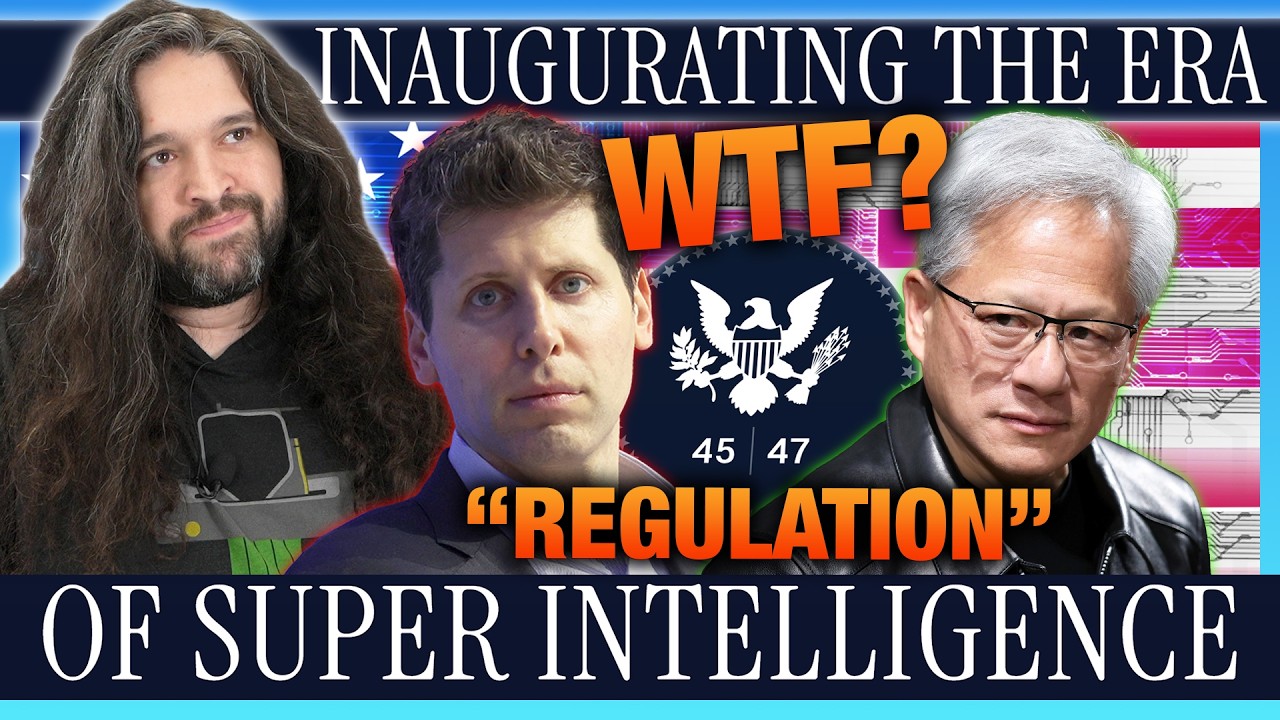
Gamers Nexus delivered the highest-engagement governance critique with 686,161 views and 5,100 comments. Steve Burke calls the industry's new "AI Constitution" a form of self-policing that "effectively does nothing," then ties it to executive-order rebranding of AI as "super intelligence" and to data-center deregulation pressure, which turns safety talk into a question of who benefits from the rules being written (video).

NBC News supplied the clearest mainstream enforcement gap. Its Meet the Press NOW segment says the White House/CEO agreement appears "purely voluntary," and the description keeps returning to "morally binding" self-regulation rather than hard obligations or penalties (video).

60 Minutes made the labor angle concrete. The segment is built around Americans teaching AI the skills and knowledge accumulated over a career, which turns AI adoption from an abstract productivity topic into a live transfer of expertise from worker to model (video).

ABC News added the clearest federal-policy demand. Lina Khan argues that Congress needs to legislate on AI, which stands out because much of the rest of the file is still dominated by voluntary language and summit optics rather than enforceable standards (video).

Hook Global showed what policy looks like when it becomes local service design. Zohran Mamdani's plan for New York City is not generic AI rhetoric: the description calls out restrictions on AI-generated apartment listings, limits on generative AI use in schools, and a requirement for human assistance after extended chatbot interactions (video).
Discussion insight: The disagreement was not whether AI needs oversight. It was whether any meaningful governance exists before companies absorb worker knowledge, TV networks translate the accord as voluntary, and cities begin inventing their own human-handoff rules.
Comparison to prior day: On 2026-10-04, the governance story still revolved around broadened safety language and whether Congress might act. On 2026-10-05, the sharper question was who will write enforceable rules before labor capture and local public-service safeguards get decided piecemeal.
1.2 AI infrastructure coverage shifted from model hype to capex, power, and chip routing 🡕
At least five videos supported this theme. Compared with 2026-10-04, when the builder side focused more on token efficiency and codebase context, the 2026-10-05 file cared much more about whether the physical and financial substrate underneath AI can actually be financed, powered, and accessed across borders.

Market Talk with George Noble provided the strongest skeptical frame. Ed Zitron says $1.3 trillion of compute commitments do not add up, estimates that $200 billion to $350 billion of GPUs are sitting in warehouses or unpowered data centers, and pairs that with Julien Garran's $1.7 trillion AI-capex figure, which shifts the debate from model progress to stranded hardware and depreciation risk (video).

Forbes zoomed out from company balance sheets to national buildout. Its description says Adani Group will invest $100 billion by 2035 in renewable-powered data centers and Reliance Industries will invest $110 billion over seven years in data-center and AI initiatives, while also emphasizing that India still has far less data-center capacity per person than China (video).
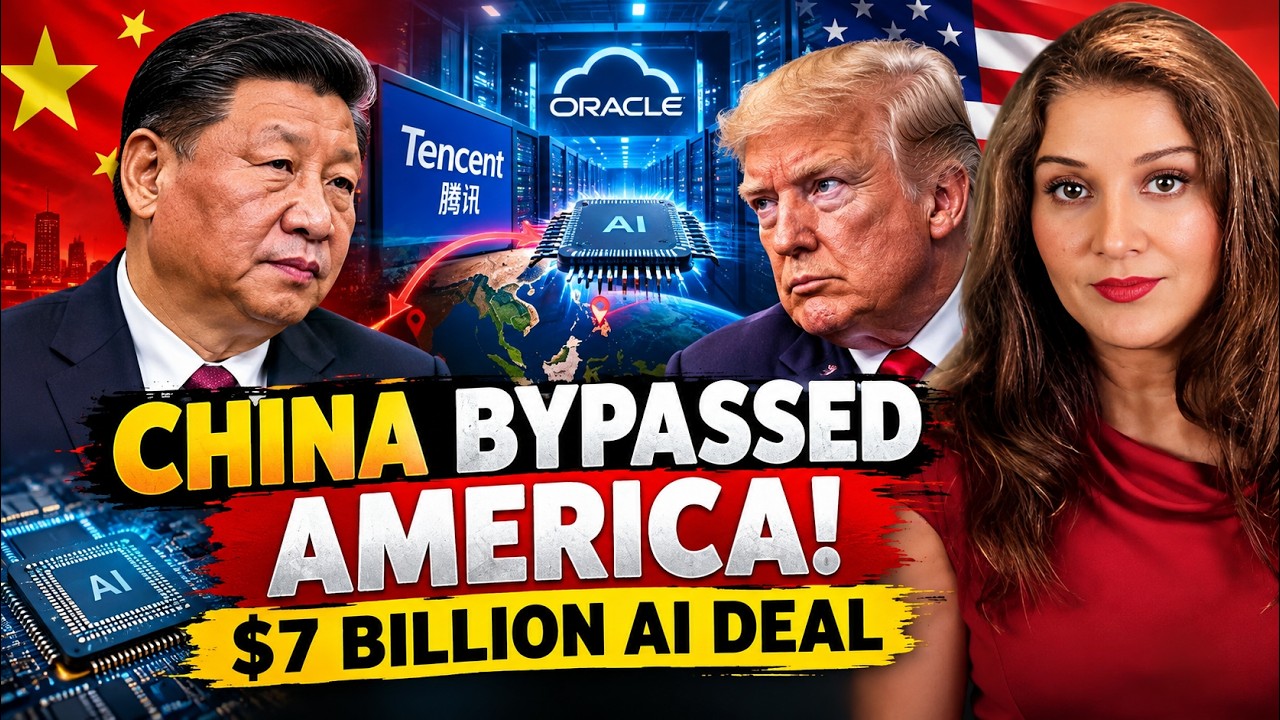
GVS Deep Dive made compute access itself the geopolitical story. The channel says Tencent has a reported $7 billion, five-year Oracle deal for access to around 100,000 advanced AI chips through Southeast Asian data centers, which frames chip restrictions as something companies route around through geography as much as through hardware design (video).

AI Andrew pushed the same story inside China. Eric Xu's admission that Huawei cannot satisfy even domestic demand, plus the description's note that the price of Huawei's best AI chip jumped by roughly 60 percent over the summer, makes capacity shortfall look like a market fact rather than a talking point (video).
Discussion insight: The recurring question was no longer "who has the smartest model?" It was whether the promised AI future can be physically powered, financed, and legally reached before the depreciation schedule or export regime catches up to it.
Comparison to prior day: On 2026-10-04, efficiency claims and codebase context were the clearer builder differentiators. On 2026-10-05, the substrate itself became the story: warehouse GPUs, national data-center races, offshore chip access, and unresolved manufacturing bottlenecks.
1.3 Builder energy kept moving toward layered, local, and provenance-aware AI stacks 🡒
At least four videos supported this theme. Compared with 2026-10-04, when the file already favored decision efficiency and creator-stack assembly, the 2026-10-05 file kept the same modular direction but made the control surfaces more explicit: a non-generative decision model, inference-engine choice, one-key model routing, and a local media lab that records license provenance.

IBM Technology delivered the day's clearest builder artifact with 826,127 views. Martin Keen presents Jev as a "System One" model that gives up open-ended text generation for fast structured decisions, and IBM's linked article says the pitch is calibrated probabilities and hundreds-of-milliseconds response times for routing, classification, and guardrails rather than a chatbot replacement (video).

Caleb Writes Code moved the conversation down one layer into serving infrastructure. Instead of asking which model is best, the video explains why users now choose among llama.cpp, vLLM, SGLang, TensorRT-LLM, and TGI, making inference engines part of ordinary AI tool selection rather than niche backend trivia (video).

Ryan Doser and Aaron Makelky turned the same builder impulse into workflow economics. The interview ranges from OpenRouter and Arena-driven model selection to Hermes and offline Gemma on a phone, while OpenRouter's own homepage positions it as one API with routing, fallbacks, and cost tracking across hundreds of models (video).

PixelArtistry pushed creator tooling in the same modular direction. The video highlights UniMate, whose README now includes code, checkpoints, and a bring-your-own-rig flow for diverse skeletons, and image-to-3dlab, which runs Pixal3D, TRELLIS.2, and Hunyuan3D locally with browser/CLI access and provenance sidecars for every run (video).
Discussion insight: The strongest product story was not a single general model. It was a stack that decides which layer handles classification, serving, routing, privacy, and asset generation without forcing the operator to improvise every handoff.
Comparison to prior day: On 2026-10-04, the modular story centered on token efficiency and creator-tool choreography. On 2026-10-05, it leaned further into local/hybrid control planes that make those stacks more operable and more inspectable.
2. What Frustrates People
Symbolic AI governance still has no trusted enforcement layer
This is High severity because Gamers Nexus, NBC News, ABC News, and Hook Global all point to the same gap. The public gets an "AI Constitution," a "morally binding" accord, national pleas for Congress to act, and city-by-city rules, but not a clear nationwide system for audits, penalties, or incident disclosure. The workaround is media triangulation and local improvisation instead of a shared operating standard. This is directly worth building for.
Strange safety claims still do not map to a common action threshold
This is High severity because NBC News introduces "pain signals," Neural Nutshell argues superintelligence could become impossible to control, and Gamers Nexus shows political rebranding around "super intelligence" without any operational threshold behind it. The file has no shared answer to what should trigger a release block, public warning, or mandatory evaluation. The workaround is expert-by-expert interpretation. This is directly worth building for.
Workers are being asked to transfer expertise without a clear social contract
This is High severity because 60 Minutes turns AI adoption into knowledge capture from working professionals, Hook Global frames AI as already reshaping jobs and public interactions, and Neural Nutshell treats competition with human labor as a likely consequence of general superintelligence. The data shows more confidence that expertise will be absorbed than clarity on who benefits, who gets compensated, or how transition is managed. The workaround is ad hoc retraining and human-handoff rules. This is directly worth building for.
Compute economics are opaque even for insiders
This is High severity because Market Talk with George Noble questions the reality of $1.3 trillion in compute commitments, Forbes shows nation-scale capex racing to expand capacity, GVS Deep Dive describes offshore chip access as a workaround, and AI Andrew shows that even China's flagship domestic vendor cannot satisfy local demand. Users, investors, and policymakers can see the race, but not a dependable picture of what capacity is usable, powered, or compliant. The workaround is overbuilding, rerouting, or waiting on constrained suppliers. This is directly worth building for.
Open-model and local-media workflows still require too much routing, runtime choice, and license checking
This is High severity because IBM Technology, Caleb Writes Code, Ryan Doser, and PixelArtistry all assume the operator will stitch together decision models, inference engines, routers, devices, and license constraints by hand. Even the strongest tools solve one layer at a time rather than the whole operating surface. The workaround is tutorials, spreadsheets, and wrapper tooling. This is directly worth building for.
High-trust deployments still depend on explicit human fallback
This is Medium severity because CNN says health AI can miss medical crises and "performance isn't care," Hook Global highlights a rule requiring human assistance after extended chatbot interactions, and NIST's AI RMF remains voluntary even as it expands toward critical-infrastructure guidance. The pattern is clear: trust arrives only when a human escalation path is obvious. The workaround is keeping doctors, agents, or public employees in the loop. This is directly worth building for.
3. What People Wish Existed
The dataset contained few direct "someone should build this" requests, so the needs below are inferred from repeated workaround-heavy videos, linked public artifacts, and the gaps that kept recurring across policy, labor, compute, and deployment.
Public AI accountability and implementation layer
Gamers Nexus, NBC News, ABC News, Hook Global, and NIST's AI RMF all imply demand for one surface that combines accords, laws, evaluations, incidents, and plain-language proof that an AI promise means more than branding. This is both a practical and emotional need with High urgency because the file pairs high-stakes claims with voluntary language and piecemeal local rules. Partial solutions exist in frameworks and hearings, but not as a live accountability layer. Opportunity: direct.
Safety claim scorecard for strange model-behavior warnings
NBC News, Neural Nutshell, and Gamers Nexus all imply demand for a way to interpret "pain signals," "super intelligence," and loss-of-control warnings without relying on whichever expert or anchor is on screen. This is both a practical and emotional need with High urgency because the file expands the danger vocabulary faster than it expands the response framework. Partial solutions exist in expert interviews and risk frameworks, but not as a common threshold for action. Opportunity: direct.
Worker knowledge-transfer and transition contract
60 Minutes, Hook Global, and Neural Nutshell all imply demand for tooling and policy that tracks what workers teach models, what rights or compensation follow, and how human fallback persists during transition. This is both a practical and emotional need with High urgency because expertise capture is no longer hypothetical. Partial solutions are weak and fragmented. Opportunity: direct.
Compute reality dashboard for capacity, power, and compliance
Market Talk with George Noble, Forbes, GVS Deep Dive, and AI Andrew all imply demand for one view of powered capacity, stranded hardware, regional restrictions, and cross-border access. This is a practical need with High urgency because capital deployment and chip access are already being routed around the edges of formal policy. Partial solutions exist in market research and vendor statements, but not as a trusted shared dashboard. Opportunity: competitive.
Open-model operations console
IBM Technology, Caleb Writes Code, Ryan Doser, OpenRouter, and PixelArtistry all imply demand for a control surface that chooses inference engines, decision layers, routing, local/cloud placement, and license posture together. This is a practical need with High urgency because composition is already the norm. Partial solutions exist in routers and single-vendor suites, but not as one dependable operator console. Opportunity: competitive.
Human-escalation and provenance kit for high-trust AI
CNN, Hook Global, and NIST's AI RMF all imply demand for systems that make provenance, confidence, and handoff to a human explicit in the moment of use. This is both a practical and emotional need with Medium urgency because health and public-service adoption still turns on trust rather than raw capability. Partial solutions exist in policy guidance and domain-specific review, but not as an integrated deployment kit. Opportunity: direct.
4. Tools and Methods in Use
| Tool | Category | Sentiment | Strengths | Limitations |
|---|---|---|---|---|
| Jev / System One AI | Decision model / guardrails | (+/-) | Fast structured decisions with calibrated probabilities that can sit beside LLM workflows | Narrower than a general model, and IBM flags benchmark caveats |
| OpenRouter | Model router / API | (+) | One OpenAI-compatible API across hundreds of models, with routing, fallbacks, and cost tracking | Free usage is rate limited, and the operator still has to choose the right model and privacy posture |
| llama.cpp / vLLM / SGLang / TensorRT-LLM / TGI | Inference engine | (+/-) | Lets builders optimize for hardware, latency, and deployment shape | Too many choices for non-specialists; deployment tradeoffs still leak into app work |
| UniMate | Open-source animation | (+/-) | Text-to-animation across diverse skeletons, with released code, checkpoints, and a bring-your-own-rig flow | Early-stage; many motions still fail, and source-asset licenses vary |
| image-to-3dlab | Local 3D workflow | (+/-) | Local browser + CLI, multiple backends, no mandatory cloud upload, and provenance sidecars for each run | Large downloads, hardware or regional constraints, and model-license caveats |
| NIST AI RMF | Governance framework | (+/-) | Gives a common language for AI risk management and is expanding toward critical-infrastructure guidance | Voluntary by design and not an enforcement mechanism |
Overall satisfaction was highest when a tool collapsed one narrow bottleneck: Jev on structured decisions, OpenRouter on provider sprawl, UniMate on cross-skeleton animation, or image-to-3dlab on local 3D generation with provenance. Sentiment turned mixed as soon as the user had to own runtime choice, licensing, hardware fit, or evaluation methodology themselves.
The strongest migration pattern was away from one monolithic "best model" and toward layered systems: a decision model beside an LLM, a router beside the provider, an inference engine beneath the model, and a provenance-aware local lab beside cloud services. High-trust deployments were treated less like ordinary tools than like governance problems, which is why human handoffs and voluntary frameworks mattered as much as model capability.
5. What People Are Building
| Project | Who built it | What it does | Problem it solves | Stack | Stage | Links |
|---|---|---|---|---|---|---|
| Jev / System One AI | TypeSafe AI | Makes fast structured decisions instead of open-ended text generation | Reduces wasted tokens and adds routing, classification, and guardrail decisions beside LLMs | Decision model, calibrated probabilities, LLM handoff workflows | Alpha | article · video |
| UniMate | Linzhan Mou et al. | Animates diverse rigged skeletons from text prompts | Opens text-to-animation beyond one human rig type | UniML3D dataset, Hugging Face checkpoints, training and inference code | Beta | project · repo · video |
| image-to-3dlab | Bingeljell | Converts a single image into a textured 3D model locally and records provenance | Gives creators game-ready 3D assets without mandatory cloud upload | Pixal3D, TRELLIS.2, Hunyuan3D, Qwen Image 2.1, browser + CLI | Beta | repo · video |
| OpenRouter | OpenRouter | Exposes hundreds of models behind one OpenAI-compatible API with routing and fallbacks | Simplifies provider sprawl and model comparison | Model router, fallbacks, cost tracking, rankings | Shipped | site · video |
The most meaningful build pattern on 2026-10-05 was not another frontier-model demo. It was control-surface software. Jev narrows one hard decision class, OpenRouter narrows provider sprawl, UniMate narrows cross-skeleton animation setup, and image-to-3dlab narrows local 3D generation while preserving a license trail.
The repeated trigger behind all four is the same: people do not want more raw capability unless they can route it, inspect it, or ship it without losing provenance or blowing up cost. That is why the strongest builder items in this file look more like orchestration layers and focused workbenches than like general-purpose chat products.
6. New and Notable
Worker knowledge transfer became a mainstream AI story
60 Minutes frames AI progress through workers teaching the system the skills and knowledge accumulated across a career. That matters because the labor debate is no longer only about future displacement forecasts; it is visibly about present-day capture of expertise. (source)
Non-generative decision models broke into mainstream builder discourse
IBM Technology and the linked IBM article present Jev as a model that trades open-ended generation for fast, calibrated decisions in routing, classification, and guardrails. That matters because it shifts attention from "better chatbot" competition toward narrower decision layers that sit beside LLMs. (source, source)
City-level AI policy got operational
Hook Global does not stay at the level of slogans. Its NYC example names apartment listings, school use, and mandatory human assistance after extended chatbot interactions, which makes the policy story look like service design and consumer protection rather than abstract alignment talk. (source)
The AI bubble critique arrived with warehouse and depreciation numbers
Market Talk with George Noble pushes past generic bubble language into concrete claims about unused GPUs, capital commitments, and depreciation schedules. That matters because the skepticism is being framed less as vibe and more as a measurable infrastructure-allocation problem. (source)
Cross-border compute routing became part of the chip-war story
GVS Deep Dive, AI Andrew, and Forbes all describe a world where chip access depends on geography, power buildout, and regional capacity rather than on a clean national boundary. That matters because the compute race is being fought through overseas data centers, domestic shortages, and national infrastructure bets at the same time. (source, source, source)
7. Where the Opportunities Are
[+++] Public AI accountability and implementation layer — Evidence comes from Gamers Nexus, NBC News, ABC News, Hook Global, and NIST's AI RMF. This is strong because attention is already high, but enforcement, disclosure, and local implementation are fragmented across actors that do not share one operating surface.
[+++] Worker knowledge-transfer and transition platform — Evidence comes from 60 Minutes, Hook Global, and Neural Nutshell. This is strong because expertise capture is visibly happening now, while the rights, compensation, and transition tooling around it are still missing.
[++] Compute-capacity observability and compliance layer — Evidence comes from Market Talk with George Noble, Forbes, GVS Deep Dive, and AI Andrew. This is moderate because the pain is expensive and urgent, but the buyer is more infrastructure, enterprise, and government than self-serve.
[++] Open-model operations workbench — Evidence comes from IBM Technology, Caleb Writes Code, Ryan Doser, OpenRouter, and PixelArtistry. This is moderate because many partial products exist, but no single surface yet resolves routing, inference, privacy, local-versus-cloud placement, and license posture together.
[+] Human-escalation and provenance kit for high-trust AI — Evidence comes from CNN, Hook Global, and NIST's AI RMF. This is emerging because the need is obvious in health and public services, but distribution still depends on domain-specific buyers, regulation, and operational integration.
8. Takeaways
- AI policy talk is now being judged on implementation, not ceremony. The file keeps returning to voluntary accords, demands that Congress legislate, and city-level service rules, which means the market is already asking who writes enforceable policy rather than whether AI matters. (source, source, source, source)
- Worker knowledge capture is no longer an abstract future risk. 60 Minutes makes it explicit that people are teaching AI the skills and knowledge of their jobs, which turns automation anxiety into an expertise-transfer question happening in the present. (source)
- AI infrastructure debate has shifted from model progress to stranded capital and routed access. Warehouse GPUs, India-scale data-center bets, Oracle-hosted chip access for Tencent, and Huawei's domestic shortage all point to compute as the binding constraint. (source, source, source, source)
- The strongest builder products are layered systems, not bigger chatbots. Jev, inference-engine explainers, OpenRouter, UniMate, and image-to-3dlab all compete by narrowing one operational bottleneck such as decision routing, runtime choice, provider sprawl, or provenance-aware asset creation. (source, source, source, source)
- Weird safety claims still lack a shared response framework. "Pain signals," "super intelligence," and loss-of-control warnings all appeared in the same file without a common threshold for when those claims should trigger audits, release blocks, or public escalation. (source, source, source)
- High-trust AI still depends on obvious human fallback. The health-AI discussion and NYC's chatbot rule say the same thing from different directions: people may accept AI assistance, but only when a human can still take over at the moment of failure. (source, source)