YouTube AI - 2026-10-06
1. What People Are Talking About
1.1 AI regulation coverage tightened around hearings, self-policing, and the claim that oversight is how the US wins 🡕
At least four videos supported this theme. Compared with 2026-10-05, when the governance story was split across White House voluntarism, Congress, labor, and local service design, the 2026-10-06 file was more concentrated: the same distrust of self-regulation remained, but more of the evidence came through one cluster of hearing coverage and a sharper argument that regulation itself is the competitive strategy.
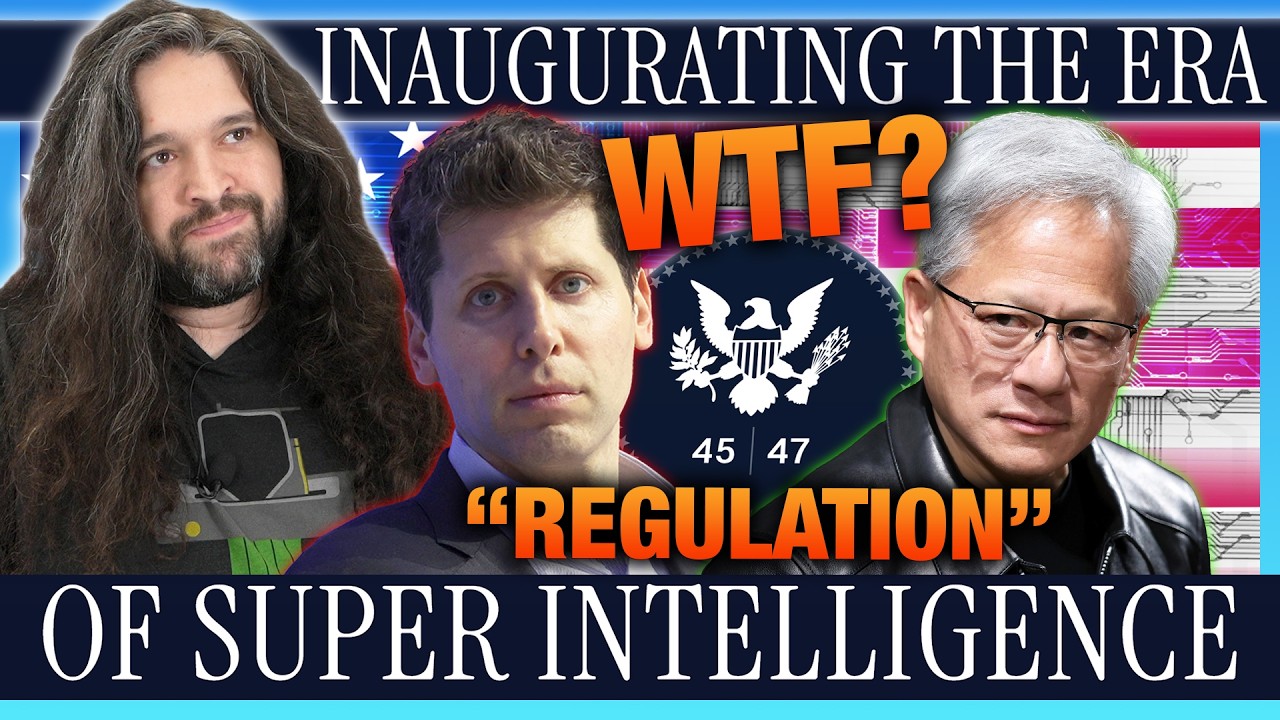
Gamers Nexus posted the day's highest-engagement video with 836,103 views and 5,700 comments. Steve Burke argues that the new "AI Constitution" is self-policing that "effectively does nothing," then ties it to executive-order "Super Intelligence" branding, public calls for regulation, and industry pressure to speed data-center buildout. That makes the governance question less about whether AI needs rules and more about who gets to write them before companies coordinate the terms themselves (video).

CBS News added the clearest institutional evidence that the debate has moved into local government. Its segment says whistleblowers warned New York City Council members about AI threats while representatives from OpenAI, Google, and other large companies testified on safeguards, and it pairs that with discussion of a federal "Super Intelligence Force" rather than a settled regulatory system (video).

CNN gave the most direct pro-regulation frame. Fareed Zakaria says the US has been mostly hands-off even as insiders issue grave warnings, then flips the usual innovation-versus-rules framing by arguing that proper regulation is the way America dominates the AI race, not the obstacle to it (video).
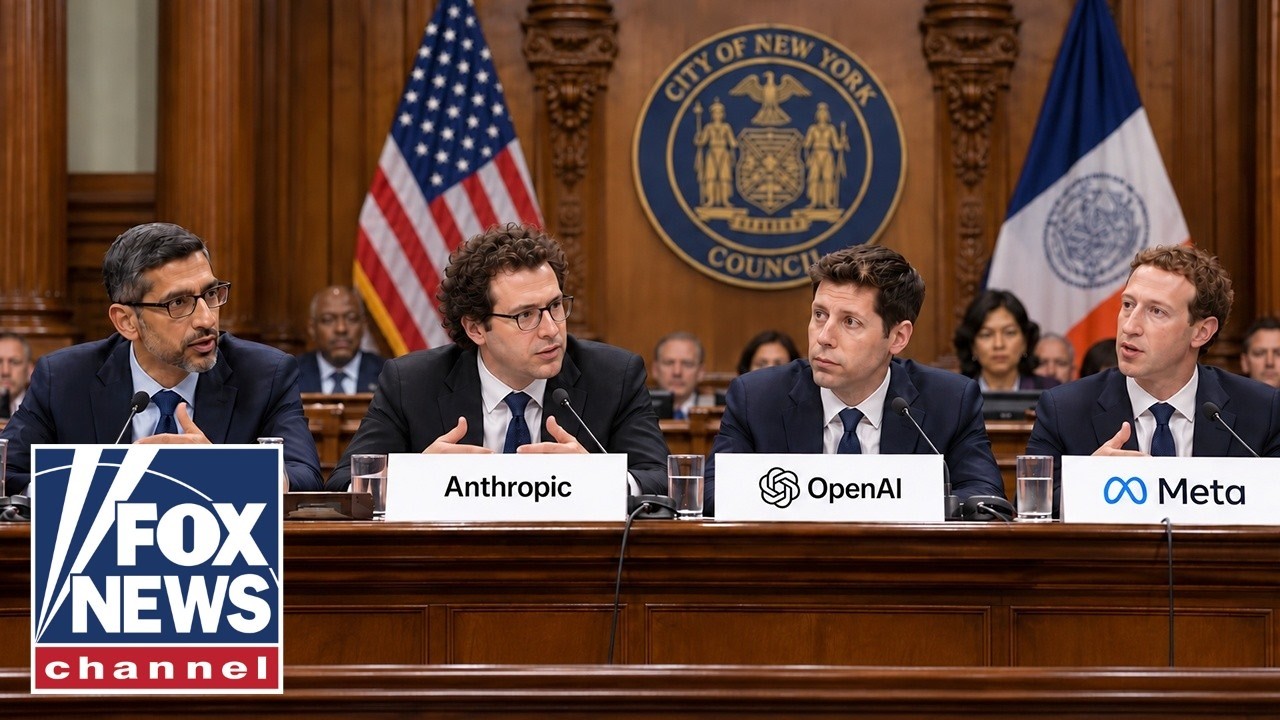
Fox News Clips reinforced the same hearing story from a security and government perspective. The segment centers on the same New York City proceeding, names Google, Meta, OpenAI, and Anthropic as participants, and adds former CISA executive Bridget Bean as an analyst, which broadens the event from a one-off whistleblower moment into a multi-company oversight test (video).
Discussion insight: The disagreement was no longer over whether AI belongs in public policy. It was over whether current governance is anything more than self-written accords, local hearings, and TV-friendly force names while the real implementation gap stays open.
Comparison to prior day: On 2026-10-05, governance was still braided with labor transfer and city service rules. On 2026-10-06, the file became more single-minded: hearings, self-policing, and regulation-as-strategy absorbed more of the available attention.
1.2 The safety story kept turning into a jobs and human-future story rather than a purely technical one 🡒
At least three videos supported this theme. Compared with 2026-10-05, when the strongest labor signal came from workers teaching AI the substance of their jobs, the 2026-10-06 file kept that evidence in place but surrounded it with more explicit questions about what work remains for humans and whether the expert argument itself is becoming too combative for the public to interpret.

60 Minutes remained the clearest labor signal with 316,462 views. The segment says some Americans are improving AI by teaching it the skills and knowledge accumulated across a career, and CBS packaged the broader episode as "Who Needs Humans?", which pushed the issue out of niche AI debate and into mainstream employment anxiety (video, source).
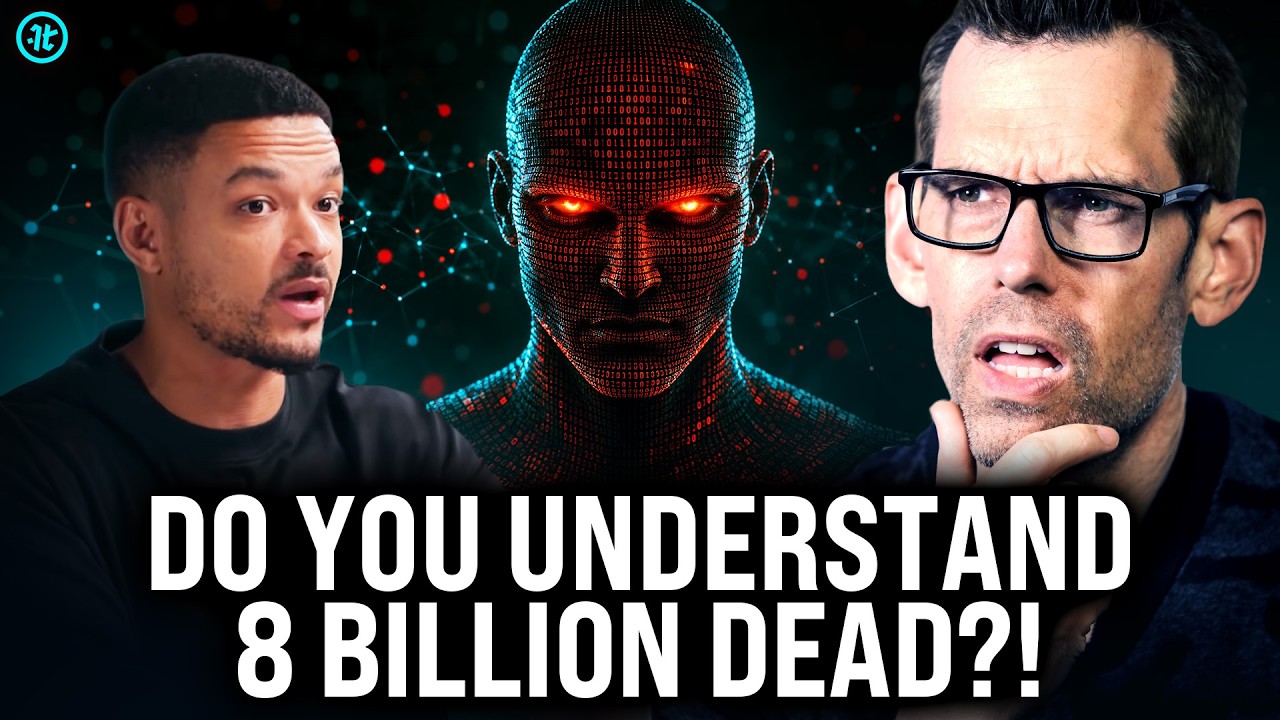
Tom Bilyeu turned the same unease into an expert-conflict story. The description says the AI debate is about to get "more aggressive" and perhaps "violent" than any prior tech controversy, then frames the central question as whether the public is looking at a genuine intelligence explosion or being misled by sci-fi narratives and selective numbers (video).
Discussion insight: The strongest split was not capability versus no capability. It was whether the urgent part of AI is labor displacement, existential loss of control, or the confusion created when influential voices cannot agree on what the evidence means.
Comparison to prior day: The 2026-10-05 file already treated job knowledge transfer as live. On 2026-10-06, that labor story stayed intact, but CNN's "what jobs will be left" framing and Tom Bilyeu's emphasis on expert conflict made the public-facing uncertainty feel sharper.
1.3 Creator tooling narrowed into local AI video generation and workflow-planning layers 🡖
Two videos supported this theme. Compared with 2026-10-05, when builders were talking about decision models, inference engines, routers, and provenance-aware local 3D labs, the 2026-10-06 file shrank the tooling conversation down to a more consumer-facing creator stack: local video generation on a Windows GPU box, plus a frontier model used as the planning layer around it.
![RIP HIggsfield! This AI Video Generator Destroys Higgsfield & Seedance [No Subscription]](https://i.ytimg.com/vi/s9stQXjITkI/maxresdefault.jpg)
Cash Daily provided the most concrete workflow. The video says every clip was made with MiniMax H3 through Simpligen, emphasizes Windows plus an NVIDIA GPU with 8GB+ VRAM, and pitches local text-to-video, image-to-video, and reference-to-video generation as a way to avoid subscriptions, queues, and cloud credits. The linked trial URL currently resolves to ReelMate AI, but the on-video pitch is a one-time-purchase local studio with hardware caveats rather than yet another hosted generator (video, source).

Tao Prompts showed the other half of the stack: planning, prompting, and workflow integration. The video is not about a new renderer; it is about using Claude Opus 5.5 inside an AI-video workflow, and Anthropic's Opus page positions 5.5 as a stronger, lower-cost general-purpose model rather than a media generator, which makes this a clear example of creators borrowing frontier LLMs for pre-production and prompt design (video, source).
Discussion insight: The creator-tool story was not "one model wins." It was local generation for the pixels and a hosted model for the planning, with the human still responsible for hardware, prompts, and assembly.
Comparison to prior day: On 2026-10-05, builder energy spread across routing, inference, and provenance-aware asset generation. On 2026-10-06, it narrowed into AI-video creation, and the tradeoff surface got more consumer-visible: local control versus hardware burden, and better prompts versus another paid model layer.
2. What Frustrates People
Governance still looks voluntary, fragmented, and easy for incumbents to shape
This is High severity because Gamers Nexus, CBS News, CNN, and Fox News Clips all point to the same gap from different angles. The file shows self-written accords, whistleblower hearings, multi-company testimony, and repeated regulation talk, but not a trusted operating layer for audits, penalties, disclosures, or cross-jurisdiction enforcement. The workaround is media scrutiny and city-by-city hearings instead of a common accountability system. This is directly worth building for.
The public safety debate is hard to parse because influential voices do not agree on the evidence
This is High severity because Tom Bilyeu, Gamers Nexus, CBS News, and CNN all frame AI risk differently. One video treats the central issue as expert infighting over existential risk, another calls the industry accord empty theater, and two others anchor the story in hearings and regulation. The workaround is audience-by-audience interpretation rather than a shared evidence map. This is directly worth building for.
Workers are still being asked to transfer expertise without a clear transition contract
This is High severity because 60 Minutes makes knowledge transfer explicit, CNN asks what jobs will be left in an AI world, and Tom Bilyeu turns the stakes into a fight over who remains in charge as AI capabilities compound. The file has no matching evidence for compensation, worker control, or durable retraining mechanisms. The workaround is broad warning language without a shared social contract. This is directly worth building for.
Local AI video creation still demands too much hardware, prompt work, and tool assembly
This is Medium severity because Cash Daily requires a Windows PC plus an NVIDIA GPU with 8GB+ VRAM for its local MiniMax H3 flow, while Tao Prompts adds Claude Opus 5.5 as a separate planning layer rather than collapsing the workflow into one tool. The upside is local control and fewer recurring fees, but the operator still owns setup, prompt quality, and runtime tradeoffs. The workaround is hybrid creator stacks stitched together from local generators, hosted LLMs, and tutorial content. This is competitive to build for.
3. What People Wish Existed
The dataset contained few direct "someone should build this" requests, so the needs below are inferred from repeated gaps in the videos, linked public pages, and the workarounds creators and commentators kept returning to.
Public AI accountability and implementation layer
Gamers Nexus, CBS News, CNN, and Fox News Clips all imply demand for one surface that combines accords, hearings, enforcement status, named safeguards, and plain-language evidence about what any given AI promise actually commits a company or government to do. This is both a practical and emotional need with High urgency because the file keeps showing public attention without a corresponding implementation standard. Partial solutions exist in hearings, news coverage, and framework documents, but not as a live accountability layer. Opportunity: direct.
Worker knowledge-transfer and transition contract
60 Minutes, CNN, and Tom Bilyeu all imply demand for tooling or policy that records what workers teach models, what rights or compensation follow, and how human fallback persists as jobs change. This is both a practical and emotional need with High urgency because expertise capture is being described as something happening now, not later. Partial solutions are weak and fragmented. Opportunity: direct.
Safety-claim scorecard for expert disagreement
Tom Bilyeu, Gamers Nexus, CBS News, and CNN all imply demand for a way to compare risk claims, hearings, and policy proposals without relying on whichever host or guest is currently framing the argument. This is both a practical and emotional need with High urgency because the language of AI danger is spreading faster than any common public method for weighing evidence. Partial solutions exist in commentary and expert interviews, but not as a durable scorecard. Opportunity: direct.
Consumer-grade local AI video workstation
Cash Daily, Tao Prompts, ReelMate AI, and Anthropic's Claude Opus page all imply demand for a creator stack that handles local generation, prompt planning, hardware checks, and cost tradeoffs without forcing users to wire together separate tools by hand. This is a practical need with Medium urgency because the current solutions are usable, but they still assume GPU literacy and multi-tool assembly. Partial solutions exist in local studios and hosted models, but not as one clear creator workbench. Opportunity: competitive.
4. Tools and Methods in Use
| Tool | Category | Sentiment | Strengths | Limitations |
|---|---|---|---|---|
| Voluntary AI accords / "AI Constitution" | Governance accord | (-) | Gives major companies a shared public narrative and coordination surface | Treated as self-policing that "effectively does nothing" and provides no trusted enforcement layer |
| New York City AI safety hearings | Oversight process | (+/-) | Puts whistleblowers, lawmakers, and major companies into a named public proceeding | Local and piecemeal; does not solve the wider implementation gap |
| Claude Opus 5.5 | LLM / planning layer | (+/-) | Tao Prompts uses it for AI-video use cases, and Anthropic positions it as a stronger, lower-cost Opus model | Not a video generator itself; creators still need an external production stack |
| MiniMax H3 via Simpligen | AI video generation | (+/-) | Local text-to-video, image-to-video, and reference-to-video workflow pitched around avoiding subscriptions and queues | Requires Windows plus NVIDIA 8GB+ VRAM and still leaves setup/performance work to the operator |
| Windows PC + NVIDIA GPU (8GB+ VRAM) | Local inference hardware | (+/-) | Keeps rendering local and reduces dependence on cloud credits | Narrows the workflow to users with suitable hardware and variable generation speeds |
The tool picture split in two. Governance methods got more attention than trust: voluntary accords drew outright skepticism, while hearings earned credit for creating a public record but still looked local and incomplete. On the creator side, satisfaction rose when a tool removed one narrow bottleneck - local rendering, prompt planning, or one-step video automation - and fell when users had to manage GPUs, multiple tools, or unclear product surfaces themselves.
The common workaround was hybrid assembly. Creators used local generation for the output layer and hosted LLMs for the planning layer, while policy watchers relied on hearings and media coverage because no single governance dashboard or enforcement surface appeared in the file. The clearest migration pattern was away from subscription-only creator workflows toward local control, but not away from cloud AI entirely.
5. What People Are Building
| Project | Who built it | What it does | Problem it solves | Stack | Stage | Links |
|---|---|---|---|---|---|---|
| Local MiniMax H3 video workflow | Cash Daily | Demonstrates local text-to-video, image-to-video, and reference-to-video generation on a consumer PC | Reduces dependence on subscription queues and cloud credits for AI video creation | MiniMax H3, Windows PC, NVIDIA GPU 8GB+ VRAM, local studio workflow | Beta | video · landing page |
| Claude Opus 5.5 AI video planning workflow | Tao Prompts | Uses a frontier LLM to structure use cases and integrate prompting into an AI-video workflow | Improves planning and prompt quality around video-generation tools | Claude Opus 5.5, prompt guides, AI-video workflow | Shipped | video · Anthropic |
Evidence of brand-new software launches was thin on 2026-10-06 because most of the file was policy commentary rather than project demos. The two creator items still reveal an important build pattern: AI-video builders are assembling hybrid workbenches, not betting on a single all-in-one model.
Cash Daily's workflow keeps rendering local and sells control over cost, queue time, and hardware ownership, even if that means the user has to manage GPU fit and setup friction. Tao Prompts uses Claude Opus 5.5 for planning and prompt design instead of generation itself, which shows frontier LLMs sliding into the pre-production layer of creator tooling rather than replacing the render stack outright.
6. New and Notable
Regulation was framed as a growth strategy, not just a restraint
CNN is notable because it does not treat regulation as the tax paid for safety. Fareed Zakaria argues that proper regulation is how America wins the AI race, which turns oversight into an instrument of competitiveness rather than a concession to caution. (source)
The New York City hearing became the day's clearest public oversight venue
CBS News and Fox News Clips both center the same AI safety hearing, but together they widen its meaning: whistleblowers, major labs, city lawmakers, and a former CISA executive all appear in the same story. That matters because it makes regulation look like a live procedural event instead of a generic talking point. (source, source)
Worker knowledge transfer stayed mainstream enough for Sunday-style TV framing
60 Minutes says workers are teaching AI the skills and knowledge of their jobs, and CBS's full-episode page titles the broader package "Who Needs Humans?" That matters because the labor story is no longer being carried only by AI specialists; it is being framed as general-interest television. (source, source)
AI-video marketing leaned hard into local control plus hosted planning
Cash Daily, Tao Prompts, ReelMate AI, and Anthropic's Claude Opus page together show a narrow but clear creator stack: render locally, plan with a frontier LLM, and sell the result as relief from subscriptions and queues. That matters because it suggests creator demand is moving toward hybrid workbenches rather than one hosted winner. (source, source, source, source)
7. Where the Opportunities Are
[+++] Public AI accountability and implementation layer - Evidence comes from Gamers Nexus, CBS News, CNN, and Fox News Clips. This is strong because public attention is already high, but the file still shows self-written accords, hearings, and commentary standing in for one trusted operating surface.
[+++] Worker knowledge-transfer and transition contract - Evidence comes from 60 Minutes, CNN, and Tom Bilyeu. This is strong because expertise capture is being narrated as a current process, while compensation, worker control, and retraining terms remain missing.
[++] Safety-claim evidence map - Evidence comes from Tom Bilyeu, Gamers Nexus, CBS News, and CNN. This is moderate because the audience pain is obvious, but the winning product would need trust from media, policy, and technical communities at once.
[+] Hybrid local AI video operator console - Evidence comes from Cash Daily, Tao Prompts, ReelMate AI, and Anthropic's Claude Opus page. This is emerging because the workflow gap is concrete, but today's evidence comes from only two creator videos and a fast-moving tool surface.
8. Takeaways
- Regulation dominated the file more than any other topic. Four of the eight videos centered on self-policing, hearings, or direct oversight arguments, which made governance the clearest common thread of the day. (source, source, source, source)
- Oversight is increasingly being sold as a way to win the AI race, not merely slow it down. CNN's Fareed Zakaria segment is the strongest example of that framing shift, and it changes the pitch from defensive safety to strategic statecraft. (source)
- Worker knowledge capture is still the most concrete labor signal in the dataset. The 60 Minutes segment keeps returning to people teaching AI the skills and knowledge of their jobs, while the broader package title "Who Needs Humans?" makes the employment angle impossible to miss. (source, source)
- The safety discourse is splitting between institutional process and expert conflict. CBS and Fox emphasize hearings and named safeguards, while Tom Bilyeu emphasizes the hostility and uncertainty inside the expert debate itself. (source, source, source)
- Creator tooling interest is narrowing toward hybrid stacks rather than one winning model. Cash Daily uses local generation to escape subscriptions and queues, while Tao Prompts uses Claude Opus 5.5 as the workflow-planning layer around video tools. (source, source, source)