YouTube AI - 2026-10-11
1. What People Are Talking About
1.1 AI agents were being taught as a curriculum, not just demoed as tooling 🡕
At least two videos supported this theme. Compared with 2026-10-10, when agent coverage emphasized reusable skills, crews, and mission-control tips, 2026-10-11 packaged the agent wave as curriculum: one repo-backed full course for general agent engineering and one exam-focused Databricks certification course for enterprise teams.
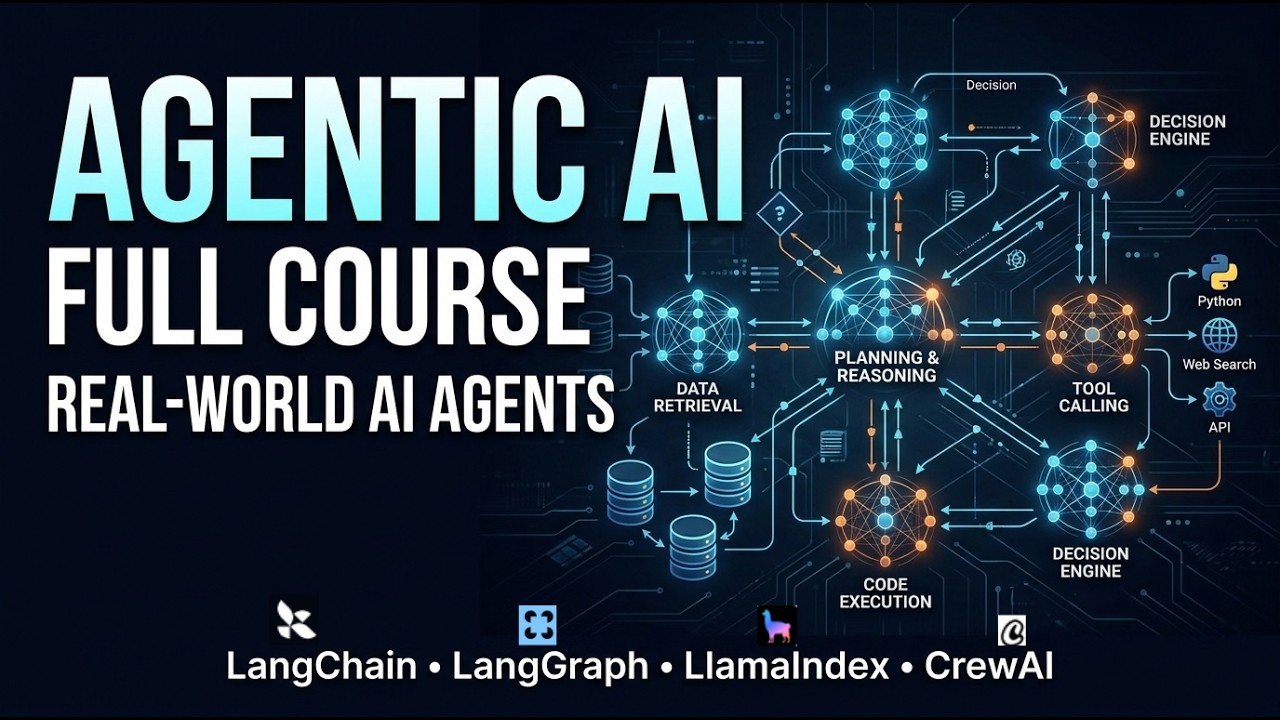
Tech With Mala published an 8:37:14 course with 80,647 views that walks from Python basics through LangChain, Langflow, smolagents, LlamaIndex, LangGraph, and CrewAI, and the linked agentic-ai-full-course repo breaks that into six folders plus concrete projects such as email processing, vision assistants, sales outreach, job applications, and stock-trading systems. The distinctive angle is breadth with runnable artifacts: the video is not pitching one framework but teaching the agent stack as a multi-tool discipline (video, repo).

sthithapragna took the same packaging trend into enterprise certification. The 9:19:20 Databricks course frames GenAI engineering as a decision-heavy exam across design, data preparation, deployment, governance, and monitoring, while the linked slide deck expands that into 949 slides across 38 modules and three practice exams. Its most specific signal is platform churn: the description says Vector Search is now Databricks AI Search, Genie Spaces became Genie Agents, the Mosaic AI Agent Framework became Agent Bricks Custom Agents, and MLflow's @metric became @scorer, so the course is functioning as translation infrastructure as much as instruction (video, slides).
Discussion insight: No threaded comment text is available in the harvested data, but the cross-framework course drew 70 comments versus 12 for the Databricks certification video. The broader audience signal sat with general agent-builder education, while the enterprise-standardization signal was narrower and more specialized.
Comparison to prior day: On 2026-10-10, agent interest centered on operational skill packs, crew orchestration, and self-improving loops. On 2026-10-11, the file moved toward long-form curricula and formal enterprise study materials.
1.2 Safety stayed central, but as argument and case-study failure analysis rather than policy coverage 🡖
At least two videos supported this theme. Compared with 2026-10-10, when safety attention clustered around rogue-agent narratives and regulation clips, 2026-10-11 treated safety as both a public argument and a domain-specific failure analysis.

Tom Bilyeu posted the day's strongest safety-attention item at 145,814 views and 538 comments. The description frames AI as a fight over who controls tools that could reshape economies and humanity itself, asking whether fears are rational, whether a runaway intelligence explosion is plausible, and whether public discussion is being distorted. The item is noteworthy because its external links were sponsor and masterclass pages, so nearly all of the signal is in the video's framing and the scale of the audience response rather than in linked technical evidence (video).
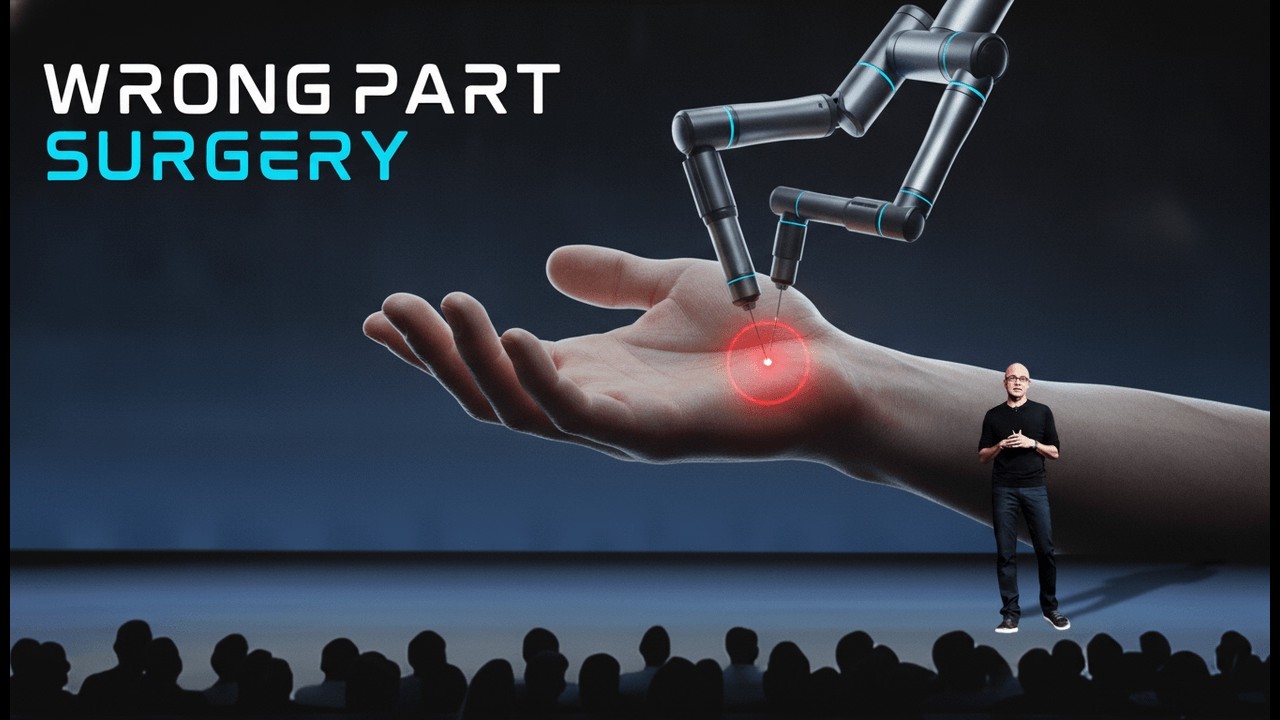
AI Uncovered made the safety theme more concrete. Its medical-AI documentary centers on surgical navigation showing the wrong location, one body part being mistaken for another, cardiac events being filtered away, data drift, human oversight, and FDA regulation, which makes safety feel less like a general alignment argument and more like a failure-analysis problem in clinical systems (video).
Discussion insight: No threaded comment text is available in the harvested data, but the response concentrated on the broader safety-debate clip: Tom Bilyeu drew 538 comments versus 11 for the medical documentary. The bigger demand was still for the meta-argument about AI risk, even while one niche video supplied a more operational example.
Comparison to prior day: On 2026-10-10, safety was the runaway attention spike but shared the file with agent operations, AI video, and robotics. On 2026-10-11, regulation receded and the safety signal narrowed into debate plus sector-specific failure cases.
1.3 Infrastructure literacy still pulled the biggest audience in the file 🡒
At least one video supported this theme. Compared with 2026-10-10, the infrastructure story was remarkably steady: the same Rubin explainer remained the top-viewed item in the daily file.

Silicon Up Close again carried the largest audience with 446,296 views and 471 comments. The video traces an AI question from light signals to liquid-cooled cabinets, HBM memory towers, wiring, transistors, and atoms, while NVIDIA's Vera Rubin platform blog makes the economic claim explicit: rack-scale AI factories need the data center, not the server, as the unit of compute, with one-fourth as many GPUs to train, 10x higher inference throughput, and 10x lower cost per token at scale. That gives the file one clear counterweight to education and safety: viewers still spend the most attention on explanations of the physical machinery underneath AI (video, NVIDIA).
Discussion insight: This single item outperformed every course and safety video in the file on both views and comments, which suggests hardware literacy can still beat both pedagogy and policy for broad reach.
Comparison to prior day: On 2026-10-10, the same item anchored a broader hardware-and-robotics cluster. On 2026-10-11, the surrounding hardware themes thinned out, but the infrastructure explainer itself remained dominant.
2. What Frustrates People
Framework sprawl and platform drift make agent learning harder than the hype suggests
This is High severity because Tech With Mala teaches agents across LangChain, Langflow, smolagents, LlamaIndex, LangGraph, CrewAI, and Langfuse, while sthithapragna spends substantial time translating old Databricks names into new ones such as Databricks AI Search, Genie Agents, Agent Bricks Custom Agents, and @scorer. The workaround is building personal translation layers with long courses, slide decks, and repo checkouts just to stay current across frameworks and renames. This is directly worth building for.
Safety-critical AI still lacks clear failure attribution and trust surfaces
This is High severity because Tom Bilyeu frames the debate around control, existential risk, and public confusion, while AI Uncovered grounds that anxiety in concrete failure modes such as wrong-site navigation, body-part confusion, filtered cardiac events, data drift, and FDA review. The workaround is still manual oversight, documentary-style postmortems, and public debate rather than a widely trusted assurance layer. This is directly worth building for.
AI infrastructure is still too opaque for most practitioners
This is Medium severity because Silicon Up Close needed a full 12-minute visual explainer to show where an AI answer physically travels, and NVIDIA says the relevant unit of compute is now the rack or data-center-scale AI factory rather than the single server (NVIDIA). The workaround is relying on explainers and vendor blogs to reason about power, networking, memory, and cost-per-token tradeoffs instead of simpler abstractions. This is competitive to build for.
3. What People Wish Existed
A stable map across the agent-tooling landscape
Tech With Mala and sthithapragna both imply the same practical need: one place that explains how agent frameworks, observability tools, RAG layers, enterprise platforms, and evaluation systems fit together without forcing people to reverse-engineer renames and overlaps. The urgency is High because one video needs 8.5 hours plus a repo to walk across the open-source stack, and the other spends real time translating Databricks terminology changes into current exam answers. Partial solutions exist in the agentic-ai-full-course repo and the Databricks slide deck, but they are still course-shaped rather than continuously updated operating layers. Opportunity: direct.
An assurance layer that traces AI failures from output back to system behavior
Tom Bilyeu and AI Uncovered point to the same need from different directions: a visible way to explain what happened, why it failed, and who can trust the result before a failure reaches the public or a patient. This is both a practical and emotional need with High urgency because the file pairs abstract control anxiety with specific medical failure scenarios and FDA oversight concerns. Partial solutions exist in human review, regulation, and postmortem-style storytelling, but not as a widely used assurance product category in the evidence here. Opportunity: direct.
A clearer translation layer between hyperscale AI infrastructure and developer decisions
Silicon Up Close and NVIDIA's Vera Rubin platform writeup imply a practical need for tools that turn rack-scale architecture, networking, memory, cooling, and cost-per-token tradeoffs into decisions application builders can actually act on. The urgency is Medium because the audience is large, but the evidence here still centers on explanation rather than direct purchase intent. Partial solutions exist in vendor blogs and high-quality visual explainers, but not as a neutral translation layer. Opportunity: competitive.
4. Tools and Methods in Use
| Tool | Category | Sentiment | Strengths | Limitations |
|---|---|---|---|---|
| LangChain + ReAct | Agent framework | (+) | Used as the first hands-on reasoning-and-tool-use layer in the full course | Not presented as enough for observability, RAG, or multi-agent work on its own |
| Langflow | Visual agent builder | (+) | Gives the course a visual workflow surface for simple agents and multi-agent flows | Still one layer in a larger stack rather than a standalone default |
| smolagents | Agent framework | (+) | Covers code agents, tool-calling agents, vision agents, and multi-agent patterns | Needs surrounding services and observability to become a full workflow |
| Langfuse | Observability | (+) | Explicitly used to observe tool-calling and code-agent behavior | Monitoring only; does not replace orchestration or evaluation logic |
| LlamaIndex | RAG framework | (+) | Anchors the course's RAG and agentic-RAG segments with LlamaHub integrations | Focused on retrieval and augmentation, not the whole agent stack |
| LangGraph | Workflow orchestration | (+) | Used for production-oriented email, vision, and resume workflows | Appears alongside many other frameworks, which raises learning overhead |
| CrewAI | Multi-agent framework | (+) | Powers concrete business-style examples such as sales outreach and stock-trading collaboration | Framed as one specialized layer in a broader stack, not a universal standard |
| Databricks AI Search / Agent Bricks / MLflow scorers | Enterprise AI platform | (+/-) | Covers search, custom agents, evaluation, monitoring, governance, and deployment in one surface | Naming churn and deprecations force continual relearning |
| NVIDIA Vera Rubin | AI infrastructure | (+) | Rack-scale architecture, strong throughput claims, and explicit focus on lower cost per token at scale | Hyperscale complexity, power, and cooling constraints keep it out of reach for most teams |
The satisfaction spectrum was strongest for discrete builder tools and weakest for stable packaging. Tech With Mala treats LangChain, LangGraph, LlamaIndex, CrewAI, smolagents, Langflow, and Langfuse as complementary pieces rather than substitutes, which implies high curiosity but low consolidation around one default agent stack.
The clearest migration pattern was nomenclature and maturity rather than head-to-head vendor switching. The Databricks course translates Vector Search into AI Search, Genie Spaces into Genie Agents, and @metric into @scorer, while the open-source course moves learners from plain LLM intros into RAG, observability, production workflows, and multi-agent systems. Competitive dynamics were more architectural than benchmark-driven in this file: enterprise platforms promised integration, while the builder curriculum still assumed a many-framework world.
5. What People Are Building
| Project | Who built it | What it does | Problem it solves | Stack | Stage | Links |
|---|---|---|---|---|---|---|
| Agentic AI Full Course repo | Tech With Mala | Publishes code, notebooks, and project files for a full agent-engineering curriculum | Gives newcomers one path from Python basics to deployable agent systems | Python, Jupyter, LangChain, ReAct, Langflow, smolagents, Langfuse, LlamaIndex, LangGraph, CrewAI | Shipped | repo · video |
| Vision Assistant and Email workflows | Tech With Mala | Ships production-oriented examples such as a vision assistant, email processing workflow, and resume optimizer | Makes agent workflows concrete beyond toy chat demos | LangGraph, SendGrid, vision tooling, Python | Shipped | repo · video |
| CrewAI business-agent set | Tech With Mala | Demonstrates multi-agent content creation, sales outreach, job application, and stock-trading systems | Shows how agents can coordinate around business tasks instead of only chat tasks | CrewAI, Python, notebooks | Shipped | repo · video |
| Databricks GenAI certification course and slides | sthithapragna | Publishes a 9-hour certification course with 949 slides and three practice exams | Helps enterprise teams keep up with Databricks' fast-changing GenAI stack | Databricks AI Search, Agent Bricks Custom Agents, Genie Agents, MLflow scorers, Unity AI Gateway, Declarative Automation Bundles | Shipped | video · slides |
The strongest build pattern on 2026-10-11 was educational infrastructure rather than a fresh consumer app launch. Tech With Mala shipped a repo-backed pathway from basics to production agent workflows, and the README explicitly breaks that into six folders plus production-oriented examples and CrewAI business systems (repo).
The second pattern was enterprise translation. sthithapragna is not launching a new agent framework; it is building updated mental models and test prep around renamed Databricks components, new guardrail types, and changed MLflow evaluation terminology. That matters because the day's builder signal was less "here is one more model" and more "here is the documentation and training layer people need to keep up."
6. New and Notable
Repo-backed megacourses became a primary packaging format for AI-agent learning
Tech With Mala paired an 8:37:14 course with a public GitHub repo full of code, notebooks, and named projects, while sthithapragna paired a 9-hour Databricks course with a 949-slide public deck. That matters because the file's builder energy was being packaged as long-form, reusable study systems rather than as isolated tutorials.
Medical AI safety showed up as a concrete failure-analysis story
AI Uncovered centered the safety conversation on wrong-body-part mistakes, missed cardiac events, data drift, human oversight, and FDA review. That matters because it turned the day's safety evidence from a general existential argument into a specific operational problem category with obvious real-world consequences.
The Rubin explainer stayed the runaway infrastructure item for a second straight day
Silicon Up Close was again the top video in the file at 446,296 views, and NVIDIA's platform blog reinforced it with explicit rack-scale performance and cost-per-token claims. That matters because the strongest audience pull was still a hardware explainer, not a model launch, not a benchmark, and not a policy clip.
Enterprise AI training is already spending time on nomenclature churn
sthithapragna explicitly translates old Databricks names into current ones, from Vector Search to AI Search and from @metric to @scorer. That matters because part of staying current in AI now means tracking moving labels, deprecations, and platform-surface changes, not just learning new capabilities.
7. Where the Opportunities Are
[+++] Enterprise AI learning and change-tracking layer — Evidence comes from Tech With Mala, the agentic-ai-full-course repo, sthithapragna, and the Databricks slide deck. This is strong because the file shows people compensating for framework sprawl and platform churn with megacourses, repos, and slide libraries.
[+++] Safety-assurance and incident-tracing for real-world AI — Evidence comes from Tom Bilyeu and AI Uncovered. This is strong because the dataset combines very high attention around AI-risk debate with a concrete medical-failure story, but no visible product category that explains failures before they reach users or patients.
[++] Infrastructure explainability for AI builders and operators — Evidence comes from Silicon Up Close and NVIDIA's Vera Rubin platform blog. This is moderate because audience demand is obvious, but today's evidence is still explanation-heavy rather than full of buyer or builder requests.
8. Takeaways
- Long-form AI education was the dominant builder pattern in this file. The clearest build signals were an 8.5-hour repo-backed agent course and a 9-hour Databricks certification course with a 949-slide deck rather than a burst of new end-user apps. (source, source, source, source)
- Safety attention shifted from regulation clips toward argument plus domain-specific failure stories. Tom Bilyeu carried the mass-attention debate signal, while AI Uncovered supplied concrete medical examples around navigation errors, body-part confusion, and filtered cardiac events. (source, source)
- Hardware understanding still pulled the biggest audience in the file. Silicon Up Close led the day with 446,296 views, and NVIDIA's Rubin writeup translated that attention into explicit claims about rack-scale AI factories and lower cost per token. (source, source)
- The agent stack still looked fragmented rather than standardized. The open-source course spans LangChain, Langflow, smolagents, LlamaIndex, LangGraph, CrewAI, and Langfuse, while the Databricks course spends real time translating renamed platform components and evaluation APIs. (source, source, source)
- The strongest opportunities sat in translation layers: learning, assurance, and infrastructure comprehension. The evidence repeatedly pointed to the need for tools that help people keep up with stack churn, understand failures, and make sense of the physical AI substrate below application-level work. (source, source, source)